 thobbes
To be fair, modern concept of BVR in a peer level environment is an unknown quality.
Exercises are too artificial – you cannot capture actual experience with them, especially when enemy takes gloves off and is using their EW to their fullest capability.
thobbesI say let them butcher each other.
No fan of “humanitarian” interventions like the stuff up in Libya.
If we’re going to war, could it at least be for some sort of national interest like oil or territory?
Though we finally might get two quesitons answered:
1. Does Syria have S300?
2. And how good the system really is?
thobbesThere is one other big factor besides training – numbers.
You could have the best trained, best equipped force in the world, but if you barely have enough planes to do peace time air policing and training, you will still be ineffective. That is why I believe 4th generation planes for an affordable price are still the best option for many countries.
Good point.
thobbesGood point Swerve.
It’s amazing that the military has not got it’s act together and restructured itself in 30 years!
thobbesI can’t believe I got the Viscount and VC-10 confused.
thobbesI’d say it’s more powerful force than any of the above.
thobbesThe USMC operates just a single squadron of F/A-18A’s. So, what 95% of the fleet is gone and has been for many many years.
Yep, and they managed to sell a total of about 24 of them. Rest are in the boneyard or scrapped whilst F-16s sold like relative hot cakes.
By the way USMC has 2 squadrons equipped with F/A-18A+:
VMFA-112 Cowboys
VMFA-115 Silver Eagles
VMFAT101 Sharpshooters has mixed fleet as Fleet Training Unit
USN also still operates F/A-18A+:
VFC-12
VFA 204 River Rattlers
VFA 87 recently transitioned from F/A-18A+ to F/A-18C, though this is standard procedure as aircraft were due for servicing following deployment. The A+s will probably be assigned to another squadron.
Sounds like your talking about when the final aircraft is retired of said model. I am talking about a majority of the fleet. I bet if you looked you could find F-14’s, F-15’s, or F-16’s retired. While some F-4’s were still flying………..
Point was more that there will be large number of old F/A-18C/Ds that’ll go much sooner than F/A-18E/F.
Whatever F/A-18E/Fs are retired earlier will probably be too junky for second hand sales as their flight hours have been much higher than anticipated due to combat operations.
That is your opinion………..Nonetheless, my point was if (my opinion) the Super Hornet was retired early. Then secondhand sales were a possibility.
My opinion is supported by the fact of second hand F-16 sales v second hand F/A-18 sales.
Users generally prefer land based platforms that haven’t been battered during carrier ops. Also anyone buying second hand Western fighters is usually too poor to operate medium-large aircraft – again look at sales of used US aircraft and most are lighter aircraft – i.e. since 1990s F-16. Most second hand F-4s were pretty much transferred free as part of Cold War.
Second hand transfers of medium-to-large fighters (F-14, F-15, F/A-18) have been limited to transfer of small number of F-15 to Israel (apparently as payment for not retaliating in Desert Storm), 24 F-15 to Saudi Arabia (during Desert Shield/Storm) and small number of F/A-18s to Spain.
Don’t remember saying anything about an export market for secondhand Hornets in any of my remarks???
To quote you:
“You seem to focus on one thing an hear nothing else??? “
thobbesEarly F/A-18E/F retirement is pure speculation. As it stands even F/A-18A-D will be flying around in mid-2020s. From memory final retirement for F/A-18C/D and F-16s is 2030.
Given over abundance of surplus F-16s I don’t see prospects for any sales of used F/A-18E/Fs – remember anyone buying used jets generally can’t afford advanced airframes so lighter F-16 is preferrable.
I don’t think ex-RAAF/RCAF/Spanish F/A-18A/Bs are very marketable either – these will be at least 35-40 years old when they are retired. Indeed surplus RCAF F/A-18A/Bs have gone nowhere.
There is potential for sales of second hand F/A-18C/Ds when current users withdraw them, and especially Kuwait who is looking at buying Eurofighter/Rafale as replacement in next few years.
thobbesThe Super Hornet will likely still be operated in supporting roles or sold secondhand as time goes. Which, has always been the case.
Unfortunately Hornets and ex-USN aircraft in general don’t do well on second hand market due to extensive wear and tear during carrier ops.
So F/A-18 has had one second hand sale to Spain (24 aircraft in 1990s) and that’s it.
USN/USMC F-4B/J/S also only had one second hand sale (to UK for 15 F-4Js in 1980s).
In both cases, users had acquired new build aircraft initially.
Compare that to:
Second hand F-16 sales: Chile, Denmark, Israel, Indonesia, Jordan, Portugal, Romania, Thailand.
Second hand USAF F-4D/E: Egypt, Greece, Israel, South Korea, Turkey.
So unless F/A-18E/F sells to more land based users, it’s second hand export potential is next to nil.
thobbesI totally agree with both Rii and Obligatory.
The number and type of airframe should be based on capability required.
E.g. if you want to move a company of infantry via helicopter, how many helicopters do you need given environmental conditions, maintenance requirements etc.
Also ask yourself if you have a requirement to move a company of infantry via helicopter in the first place!
I’m not a big fan of basing defence procurements on basis of industrial offsets.
Interestingly enough Eastern European countries whose air forces are primarily air policing orientated aren’t even managing 100 hours a year in the air. Croatia can’t even maintain an all weather air policing capability and pilot hours are insanely low.
In essence their fighter capability is a waste of tax payer dollars and in reality it’d be more efficient outsouring it to another NATO partner.
The greatest joke in ADF is the token tank ability – 59 M1’s of which about half are mothballed.
thobbes. Brazil is in no position to exercise influence over France by buying Rafale. so whats the point of buying expensive.
That’s the question they have to answer themselves. I think the main goal is probably technology transfer and industrial development as given current and probable future threat levels, Brazil’s F-5s are quite sufficient for the next 20 years.
why would you rely on world banks statistic which is also depended on unreliable 3rd world data. US had 200 million population in 1990. It is now 330m. Brazil had 37 years to go.
I’d sooner trust World Bank stats than vague statements made by people posting on an internet forum.
You also forget USA has a large immigration intake.
thobbesMy bad.
I can’t even find the article anymore to find what was mean’t.
Rasmussen (and Gates in past) have all been very critical of European investment in defence.
thobbesHi, from memory report was referencing Europe only.
Britain has not had all Voyagers delivered.
Forgot about Germany (brings total to 51)
As far as I am aware no other operators fly KC-130s.
14-15 French C-160NGs can be air to air refuellers – brings total to 65-66 a/c.
Even if they scrape up 80 a/c, it was still completely deficient by NATO standards which placed requirement at 200+.
thobbesI wouldn’t expect any moves until after World Cup in 2014 and Olympics in 2016.
thobbesCurrent equipment (according to Wikipedia – sorry no better source):
24 x MiG-29/UB (older MiGs retired)
33 x Su-25 (apparently upgraded to Scorpion standard)
5 x Su-24
28 x L-39
5 x Il-76
84 x Mi-24/-35
100 x Mi-8/-17.
Investment has been made in various Israeli UAVs (Hermes, Heron, Searcher etc).
Map of country:
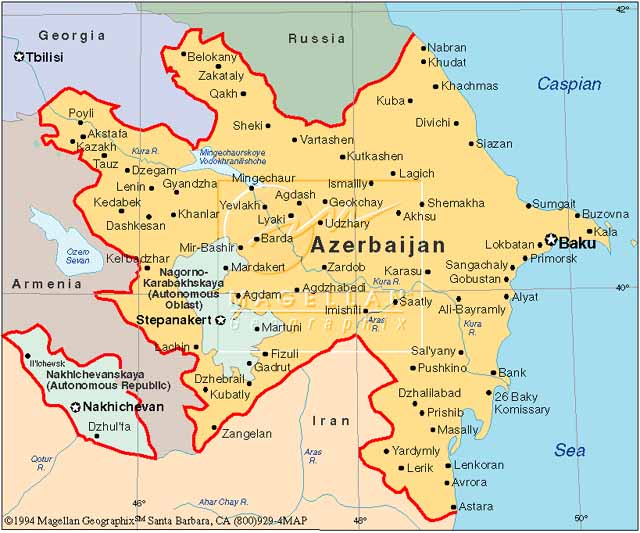
Population is about 9 million.


 Sign In







