 topspeed
You put the radar in, but made no room for the electronics rack(s). Trying to connect the radar to the mission computer by a cable is problematic for high speed processing as it adds major latencies. You have to move the nose forward a good meter IMHO. You also have more wetted area by upwards of 50% if that shaded area is what you propose as the fuel tanks. It also looks like your weapons bays overlap other areas. What kind of landing gear is it supposed to have? As it is now there is no accounting for a nose wheel.
I have simply different system than several existing types. J-35 and Kfir and HA-300 have same distance from end of the cockpit to to tip of the nose cone.
topspeedAndraxxus has a great point about design. Start with mission requirements and “work backwards” to determine airframe attributes. If you start with a predetermined airframe, you may have to omit key capabilities because there is not sufficient volume, weight, power or cooling to support critical mission capabilities.
1. Define the mission. This means taking a payload to a point in the battlespace where it can be employed successfully.
What is the payload? Missiles? Bombs? How many? What type of sensor support does the payload require? Clear weather only? Night/foul weather? What type of sensor range is required? (this determines sensor size) Does the payload require communications support? Datalinks? Does the payload require accurate navigation data? (this determines need for GPS/INS, star tracker, Etc.)2. Define threats to accomplishing the mission. Does the mission take place in contested airspace? What is primary threat? SAMs? AIs? What is the secondary threat? What technology is needed to counter the threat? What size/weight/power/cooling constraint does the countermeasure technology require?
3. Define operational parameters for the mission. How far is the mission area from your operating bases? What operating profile gives your aircraft the best ability to arrive unmolested at the mission area, use its sensors and successfully employ its weapons? How fast does your airplane need to get to/from the mission area? (These 3 questions give a general idea of the quantity of fuel needed and airframe’s fineness ratio). Your operating bases might define the need for wing design (span, area, high lift devices) and thrust for balanced field operations.
4. Other parameters. Is your airplane manned or unmanned? (This determines human physiology constraints for your airplane) Does mission duration exceed 8-12 hours? (If manned, this increases crew size since human effectiveness drops dramatically and a relief crew may be needed to continue an effective mission)
5. Finally, we get to airplane design specifics. Once you know the answers to 1-4 above, you are able to define volume, weight, power, cooling needed to support the payload, fuel load and aircrew. You also have critical mission information about airframe fineness and propulsion. Historical information will define a weight class for your airplane. Airframe structure (Metallic, composite, metallic/composite hybrid), detailed propulsion design, landing gear design, flight management/control design, electric power generation & distribution, cooling, fuel management, auxiliary power, hydraulics, ATC communications, sense and avoid, and external lighting are up to you.
This is very helpful yes…thank you !
I may have gone to extreme to let the pilot “rest” in downright position.
My point is to search why all planes are so big. So far I have only found one Mach 2+ jet that is smaller than this.
Even that has a cockpit height defined by the engine behind it.
topspeedTo be honest, I haven’t gone through all the post in this topic, but I would like to state out some fundemental errors regarding to design, (which may be pointed out or already solved in the posts i lazily skipped)
First and most important issue is, drag is mostly related to the wing area, not the frontal area. In most basic calculations in fluid dynamics course, drag from body and inlet are all neglected.
Speaking of subsonic, and level flight, thickness of airfoil or even airfoil geometry is second to wing area. When we are talking about a modern fighter with energy maneuverability in consideration, its sometimes better (like on F-16) to have smaller wings.
going from your F-16 example;
A4’s 27,7 m2 vs F-16’s 27,9 m2 will mean they will have very similar level flight drag. They will require same amount of thrust for sustained flight, and same amount of fuel for the same range. With 30% inferior thrust, it will have around 30% worse acceleration. Assuming your design is lighter, lower wingloading will allow it will reach 9G limit earlier. With 30% inferior thrust, it will have inferior sustained turns, with gap closing at higher altitude/slow speed conditions due to lower wing loading.
What is more troubling is the lack of volume inside the aircraft; F-16 can carry 3175 kg fuel internally. Using 800 kg/m3 for fuel density, you will need approximately 4 m3 fuel tank area, and that is NET capacity, excluding the structural components, fuel pumps, piping and other equipment that would go inside the fuel tank. I am designing -a rather flawed- aircraft for fun myself, and I ended up in 15560 kg fuel capacity from 26.1 m3 fuel tank, Resulting around 600kg/m3. F-22 for example total fuel capacity of 13022 litres, and 8200kgs, results in 629 kg/m3.
Assuming your design carry 500 kg fuel inside your wings just like F-16C, you need to put 2675 kg fuel inside your fuselage to match F-16’s range. Going from 629kg/m3 just like on F-22, you need to put a 0,6x1x4,5 meter box inside, and you clearly don’t have such volume on your design. Worse, 4 smaller turbofans will certainly have higher SFC, and as an EFT is out of question for a 5th gen fighter, you will need much greater fuel capacity than F-16.
4 smaller engines will result in much greater maintanence costs, and 4 auxillary gearboxes, 4 individual inlets will all contribute to weight and take volume, which your design clearly lacks. Also you have to spare additional volume for APU, all the avionics, FCS, oxygen generators/bottles, hydrolics tanks, oil tanks, coolant tanks at least, plus additional equipment of 4+ 5th gen fighters such as IRST, MAWS, internal ECM will take space. In the end your design will end up in similar size to Typhoon at least.
When designing an aircraft, design requirements dictate the shape, engine number etc etc. If I were to suggest; Find a easy-to-use 3d program, draw placeholders for all the equipment you want to put onto your aircraft. Chose an engine and approximate fuel volume for an approximate empty weight.. Select and use an appropirate airfoil and wing area, for the maneuverability criteria you desire, and determine its level flight drag. You will find your allocated fuel and/or thrust to be excessive or insufficient, resize fuel tank, re-select a new engine, and re-calculate the wing specifications accordingly, required thrust/fuel capacity will be changed again and after several iterations, this will result in a preliminary design study, which you can go on by adding structural calculations into these iterations. Since you are doing this for fun, basic formulae from strength of materials should suffice, giving you some structural material and weight data. Weight will be changed once again, and likely the load bearing structures will not fit to the areas you desire, so you will have to -once again- recalculate fuel capacity, wing geometry etc from the start. You can test your end result in ANSYS fluent or similar CFD capable FIA programs. Which by then you can add lerx, chines etc to modify/control vortices, determine the size/need of stabilizers, rudders, fins etc etc. Those results will likely to force you to modify your original design, and as a result, you will have to re-iterate everything from the start, until you have met all the design criteria you wanted to match.
Maybe you went too lazily past my design..the supersized engine inside F-16 aerodynamically perfect body makes it a flying missile. There are lotsa details concerning G-1 that you missed or did not understand.
I agree 100% with you in your comparison otherwise. Slightly wider wing like in F-35 makes it carry more fuel inside the wing than in F-16.
The biggest point is that it has nearly nonexistent RCS.
topspeedYou pilot is supposed to be six feet three inches tall yet when you compare it to the F-15 either your pilot is the size of a six year old boy or the F-15 landing gear is six-feet three inches long.
I am amazed at how gullible to your cartoon dimensions and cartoon physics so many here are, but as you most post to your self with your aircraft, that is expected.
It is incredible how you don’t learn a thing. Light weight fighter mafia has proofed this.
topspeedI think @over-G has it right with regards to basic layout on a small fighter, make it a delta,
but tilted tails has proven susceptible to buffeting at speed.Another design that would be interesting is a supersonic attack a/c with no trade-offs from rcs & speed going into agility.
I won’t attempt to make a drawing in paint, but an SR-71 body without wings and without tail section,
propelled by a single F119 without afterburner, would be exceptionally hard to catch.
Here is a version with F119 as 6 AMRAAM carrying bird.
This is a canard delta with a stealth tail.
It beats also F-22 ( with a clear marin ).
Is this what you had in mind ?
Hardly faster than MACH 3.
topspeedI think that’s comparing apples and oranges. Depends on what the gizmos are that you talk about. However it seems you are finding out for yourself how it is very difficult to create a small fighter with the capabilities of larger fighters. I’ll go so far as saying you are moving away from your own goals. I however do agree with others why you are persisting with this and paying no attention to valid points others are making.
I just said Falcon Dude had a valid point.
Why do you say I don’t pay attention to them ?
I have a jet that is more capable than an F-16 or JAS-Gripen still smaller ( marginally in main dimensions ), which neither are stealth nor carry internal weapons.
There are few downsides like I have said before. This carries less armament…this has less capable radar.
Size has been reached by spreading the engines…which are very small in dia yet very capable ( state of the art ). Also the pilot position with non regular e-seat is a must.
Folland Gnat had even less frontal area than G-1 ( which is bound to grow bigger like Falcon Dude estimated ).
I think I have shown very clearly that a magnitude smaller stealth jets would be possible to be made, but no one seems to have the interest to do them.
Then again you could ask..if you make a 3 times stealthier AC than F-22 is it good enough if you have ½ the range 3 missiles less and 500 rounds less ammo ?
I think this would work for Finland..definitely not to defend countries with large oceans and thousands of more miles to reach targets.
In my opinion this is not a MUNCHKIN anymore. G-1 is actually huge compared to early jets and WW II fighters.
topspeedThis may fly as a model, but it can never be a plane in the dimensions you imagine. There is no space for all the components that make a fighter.
Look up some 3D cut outs of other fighters. See how much stuff is needed to make them fly the way they do and the size they have.
That is a valid statement since I haven’t fitted all the gizmos inside.
Still proportionally I do have room to grow it bigger.
I wonder if J-31 has all the gizmos in since it is 25% smaller in frontal area than F-35.
topspeedThe mods more visible in this.
I am still waiting for someone to give a good comment on this fuselator control surface ?
topspeedM88-2 isn’t a huge size jump from F125, bridging the size from F125 to F404. Why does it have to be American?
That would be a tramendous engine; http://en.wikipedia.org/wiki/Snecma_M88
Actually almost fits as it is. Definitely not longer than the F125 ( which is a good thing ).
150 kN would make it to able to carry even amount of AMRAAMs as F-22..and ( or ) two GBU 31s concealed.
Price would go from 30 mio to 50 mio per plane as it would be bigger…much bigger ( for the increased fuel consumption ).
topspeedI hate to destroy Fantasy Island here but this says in abstract considreations for storing fuel in an aircraft:
1 Introduction
A fighter aircraft fuel system is a system of many
parts. Fuel fills up large parts of the aircraft not occupied
with other equipment and the many different
systems of the aircraft often pass through the tanks.
To keep control of the center of gravity the tanks are
divided into smaller parts and are interconnected by
pipes. Fuel is pumped between the tanks to a collector
tank which has a negative g-load compartment to
enable the aircraft to fly inverted. The tanks are also
pressurized to avoid evaporation of the fuel at high
altitudes.
When designing aircraft fuel systems several issues
demand detailed simulation models for analysis.
The most important are
x Is it possible to provide the engine with fuel
with enough pressure regardless of what pilot
maneuvers and equipment faults that occur?
x Can the amount of accessible fuel be correctly
determined at all times?
x Can the structural strength of the hull and all
installation parts be estimated with good
precision?
When these problems are solved, questions related
to optimization of weight, fuel consumption,
and heat storing capabilities as well as other issues
need to be considered.
The fuel system simulation models needed to describe
the system tend to be large (~400 state variables,
~16000 time-varying variables) due to the
high number of parts involved. The combination of
fuel (incompressible fluid) and pressurization air
(compressible fluid) and the necessity to handle both
fast time constants (as when a tank get full) and slow
time constants (heat storage) make the models stiff
and a bit awkward to work with. Still, the information
gained from using the simulation models more
than pays off the work spent to keep the models executable
and is seen as a prerequisite for successful
fuel system design work at Saab Aeronautics. A
theoretical background on fuel system design can be
found in [1] and how Dymola and other simulation
tools are used in the system design process is described
in [2] and [3].His “pinching” comment amplifies how clueless on aircraft construction he actually is, oh wait, it is here, ZEE PLANE–ZEE–PLANE!
RpR ahoy !
I am really fond of your technician sparring help on this.
I was able to improve the internal volume size on this to house more fuel and make greater compartments for the fuel.
Also the RCS got better ( less edges ).
Mods have taken place in the air intake / gear / front fuselage area.
I estimate mach 1.6 at supercruise !
topspeedCold War era J-35 has 16 % more wetted area.
topspeedSeems that the 43.8 kN Garrett/Honeywell is thirsty; http://en.wikipedia.org/wiki/Honeywell/ITEC_F124
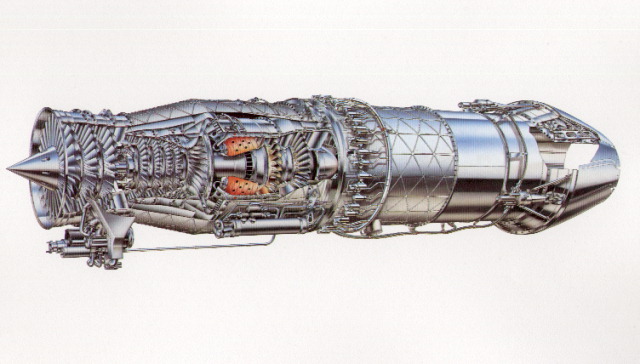
http://imagery.vnfawing.com/archive/Engines/TFE1042-70/g0462.jpg
I am afraid the estimated range is going to go down….unless it has a high supercruise mach number ( 1.4 or better ).
I get only 3300 liters of fuel on it.
—
Edit: After pinching every corner I get 4000 liters of fuel inside. Some cavities may ad 300-400 liters, but that is it then.
topspeedAnyone wanna comment on the feasability of the fuselator ?
topspeedHow about now…..a new tail surface…fuselator !
topspeedRear end neeeds still some attention ! I am definitely closing in there.


 Sign In







