Here is an another take on it with 2 x 30 kW electric engines using 2/3 battery power to get to 12 km to fly at 20% efficiency gliderlike twin boom having 72 x more power from the sun than the MIT Daedalus in the 80ies.
This 28 m spanning craft could carry 9 people on board in prone position. Panel area is 75 m2…thanks for the lifting fuselage concept.
Hercules 2014 Renny Harlin version…and I sorta liked it.
this picture is I believe from turkey RSAF deployment. No heavy wingtip pods, big tanks, less powerfull engines, older g limited airframe. how it going to accelerate with Su-35/Su-30SM. They need to put Meteor on such platforms.
I am sure 40 F-15s would do nicely.
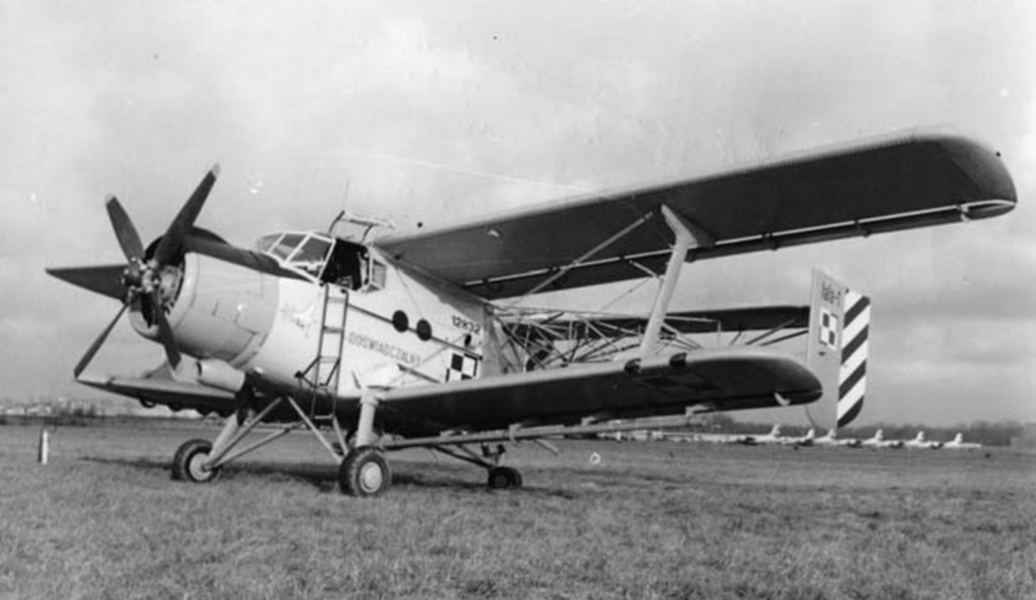
and another one from real life. AN-2
L.129 Hindenburg mated with soviet Antonov.
I was wondering, would a collapsible airframe be possible? Has there been any project to try it?
Also would it be possible to build collapsible internal fuel tanks? The fuel tanks would be along the fueselage, and as they empty the airframe would collapse to reduce drag.
Collapsible fuel tanks exist but not on military aircraft. They could be used for EFTs too.
I was throwing frisbee eyesterday and thought about having a frisbee that turns into TACO shape when about to touch a tree.
This was pretty cool looking yes.
Gripen E official; https://www.youtube.com/watch?v=1YDtpEiQL4Q
Solar/battery powered hybrid airliner.
-deleted by the author-
Only way to stop F-35B for Argentina is to either hire Steven Seagal or find a one with familiar with the FORCE.
Steven can stop any army…so does few Jedis.
The F-22 skin doesn’t necessarily look much better.. Those shiny pics we are all get used to are machines fully covered with RAM..
Without RAM they look like this:
So the RCS has risen from pin head to a large beach ball ?
This may be true, but fact is that Finland was completely broke, and could not afford even almost free airplanes. Also, the view of Soviets had to be taken into account, situation in Finland was really dangerous, there was still a possibility of Soviet occupation. Added to this, the Allied forces (read: Soviets) had grounded Finnish Air Force, all flights required a special permission. After the end of the war there was no more any intention of series production of Pyörremyrsky. The test flights were made more out of curiosity to see how the airplane that had been painstakingly designed and built would actually perform.
Yes finns collected marriage rings to get money for arms. Me-109s were never paid ( Germany also never paid for burned Lappland etc )…and also the bounty P-36s were paid to Germany. Brewsters were very expensive for the finns.
There is some data available, and indeed at low level the max speed was about the same as Bf 109G-2’s, at altitude Pyörremyrsky was 15-20 kph slower. Its rate of climb was considerably worse than that of the Messerschmitt. Obviously, full performance data did not become available due to limited test flying. And as topspeed mentioned, the glues available for aircraft production were less than perfect, to put it mildly.
As for leaving pieces behind, well yes, on the first flight some pieces of engine cowling detached, causing exhaust to flow into cockpit, which again caused a bit of an emergency, but after that there were no big problems.
Wiki has the climb rate wrong on PM-1 definitely. Me-109 excelled in climb rate.
there is Poland deal of 48 planes for $3.5b in 2003. in 2016 those prices will simply double. they haven’t order any follow up. so Poland airforce is reduced to 48 airframes.
just 40 JASSM cost $500m.
https://www.flightglobal.com/news/articles/lockheed-secures-contract-to-install-jassm-on-poland-416703/
If Finland reduced its AF in the same proportion to population as Poland has done we’d have 7,5 first line fighters. It would possibly be just enough to to do the border patrolling and give education for the AF.
However, there seems little evidence that the Pyorremyrsky would actually have matched Bf109G performance overall. A smooth shape may have given it a good top speed but the heavier weight of a wooden structure would have meant inferior climb, ceiling, acceleration and agility. It could only have entered service in significant numbers after the Bf109 was approaching obsolescence: some would argue that it already had done so by late 1943. An interesting design study for the industry, yes, a realistic hope for the air force, no.
It says in the first ling it was able to outclimb and maneuvre the 109, but real factual data is missing. Plane was leaving pieces behind as it was flying….like the other side of the engine cowl.
It wasn’t an impossible task to build a wooden fighter with wartime glues – the British did the Mosquito, the Germans used wood on a number of types, the Russians made almost all their fighters out of wood, the Japanese were increasing their use of wood. It wasn’t desirable, but it worked.
However, there seems little evidence that the Pyorremyrsky would actually have matched Bf109G performance overall. A smooth shape may have given it a good top speed but the heavier weight of a wooden structure would have meant inferior climb, ceiling, acceleration and agility. It could only have entered service in significant numbers after the Bf109 was approaching obsolescence: some would argue that it already had done so by late 1943. An interesting design study for the industry, yes, a realistic hope for the air force, no.
Generally not a problem but Finland was pretty small country and remote. They had to use substitute glues which were really miserable.
Myrsky is being renovated nicely. Which was also a VL aeroplane.