dark light

low'n'slow

Forum Replies Created

Viewing 15 posts - 1 through 15 (of 1,179 total)
  • Author
    Posts
  • in reply to: DH Tiger Moth Fuselage Enquiry #1158905
    low’n’slow
    Participant

    Yes Hugh. I can confirm that some of the information you may need is indeed in the Haynes Manual of the Tiger Moth. Airframe repair and service manuals for the DH82A, as well as parts lists, are also readily available and contain the information you need.

    It may also be worth contacting Stuart McKay at the de Havilland Moth Club…

    Attached too, pictures used for the Haynes Manual, which might be of help…..

    Steve S.

    in reply to: DH Tiger Moth Fuselage Enquiry #1158828
    low’n’slow
    Participant

    Relevant words from Chapter 3 of Haynes Manual. Strongly suggest you buy a copy Hugh, as I have old aeroplane habit that needs funding!! :diablo:

    …….
    FUSELAGE
    The main fuselage frame is constructed in three sections, using various gauges of mainly 7/8″ (22.2 mm) round and 7/8″ square section T45 low-carbon steel tube, which is welded to form individual rigid structures, which are bolted together. The engine mounts, forward fuselage and rear fuselage can therefore be replaced individually to speed repairs.

    The core of the airframe is the forward fuselage, to which the engine, centre section struts, lower wing mountings, undercarriage and rear fuselage are bolted. It also makes up the cockpit area, with the wooden floor, seats and ‘control box’ containing the linkages for all the primary aircraft controls, being bolted to the structure.

    The two main parts of the forward fuselage are the side frames which when assembled to cross members form the parallel sides of a box structure 7 feet 2 inches (2.18m) long.

    The front of each side frame is raked backward to reflect the slope of the non-structural aluminium engine firewall, while the top longerons provide the mounting points for the steel centre-section struts supporting the upper wings.

    The two side frames are separated by steel tube cross-members and two 8 mm diameter steel tie rods. These tubes brace the floor, being bolted via flanged end fittings to the lower longerons at the point where the downward tubes coincide, to provide attachment areas for the root ends of the lower wings.

    The forward points of the lower side frames also take vertical loads from the undercarriage, act as a mounting for the oil tank and the front of each side frame also bolts to two triangulated square section tubular frames which form the engine mounts at the front of the airframe. The engine mounts extend three feet (0.91m) ahead of the bulkhead on each side of the aeroplane and contain four receptacles for rubber engine mountings, two on each side, which correspond to the cast alloy ‘feet’ attached to the crankcase of the Gipsy Major engine.

    The complete forward fuselage ‘cage’ is completed at the front and rear by upper and lower cross members and diagonal bracing, to provide a surprisingly light and rigid unit. To this, a total of 40, 2BA bolts and nuts secure the plywood floor, to which in turn is fixed the control box which forms a central spine at the base of the cockpits, upon which the seats are bolted with the occupants’ feet placed on each side.

    The spruce and plywood control box acts as a single mounting point for all the primary flight controls and is removable as a unit for repairs or maintenance. The front and rear control columns are linked by a torque tube and a connecting rod which run the length of the control box, through both cockpits.

    For the elevator control, a cross shaft with integral levers immediately behind the rear seat is operated by a short pushrod from the rear control column and is connected directly to the control cables running to the tail of the aircraft. A downward-projecting lever on the torque tube between the two columns operates the aileron cables externally, under the cockpit floor. The rudder controls too, are mounted on the control box and are coupled by connecting rods. The ends of the rear rudder bar extend out of each side of the cockpit and the external control cables run direct to ‘horns’ on each side of the rudder.

    The rear section of fuselage is likewise made up of four 7/8″ (22.2 mm) square T45 steel tube longerons which taper through five reinforced bays to a single sternpost at the rear. Built on a jig as a single, rigid, 11-foot (3.35m) welded-up unit, it is designed to be simply bolted in place on the rear of the sideframes and already carries the drillings for the wooden top decking and the mountings for the tail surfaces……


    in reply to: DH Tiger Moth Fuselage Enquiry #1158570
    low’n’slow
    Participant

    I suspect that once The Blue Max has battled his way through Northamptonshire snowdrifts, he’s probably the best-equipped person to answer that! 😉

    in reply to: Auster – Faster Than A Speeding Pullet #1157672
    low’n’slow
    Participant

    Is it alright to put it on the Auster group message board?

    I’m amazed it’s not already there!

    in reply to: DH Tiger Moth Fuselage Enquiry #1157518
    low’n’slow
    Participant

    As Blue Max points out, although the cross tube you mention may carry a DH part number, the rear fuselage frame is officially regarded as a single, factory-jigged, welded structure. Repairs are possible on this, but if the airframe is being restored to fly, they must be carried out in accordance with approved DHSL repair procedures and, in the UK, be carried out by a CAA-approved welder.

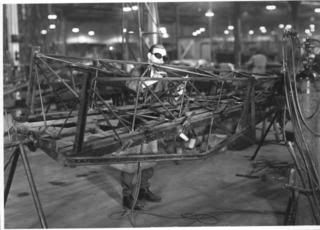
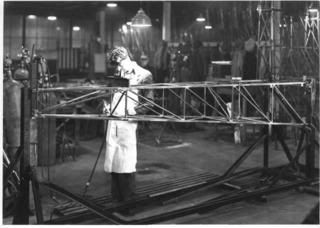
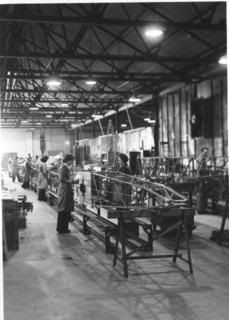
    A few more images attached. The drawing is from a DH82C parts manual. The welding images from deHMC archive, taken at Nuffield factory circa 1940.

    http://i72.photobucket.com/albums/i199/kingpinmedia/cowley06.jpghttp://i72.photobucket.com/albums/i199/kingpinmedia/cowley08.jpghttp://i72.photobucket.com/albums/i199/kingpinmedia/cowley07.jpg

    low’n’slow
    Participant
    in reply to: Tiger Moth DH82c Elevator Flap Question #1155150
    low’n’slow
    Participant

    By the way, nice CAD drawing Hugh. I can’t wait to see the complete portfolio when its finished!

    The aerodynamic trim tab is of course, unique to the Canadian-built DH82C model. As currently I don’t think there are any DH82C models available for inspection in the UK, perhaps a forumite in Canada or the USA might find time to use a tape-measure?

    in reply to: DH Tiger Moth Fuselage Enquiry #1154857
    low’n’slow
    Participant

    Also check out pages 32-33!;)

    in reply to: New Bob sleigh Team In Somerset #1154271
    low’n’slow
    Participant

    My guess is that’s a ‘mirror’ dinghy 😀

    in reply to: DH Tiger Moth Fuselage Enquiry #1153789
    low’n’slow
    Participant

    In which case I pity poor Mr Blackah. He’s got 24 marks of Spitfire and a good half dozen Bf 109 variants to catch up on! :diablo:

    in reply to: Where and when? #1149591
    low’n’slow
    Participant

    The cottage in the background of the Sidestrand accident also doesn’t seem in keeping with the architecture which was/is the norm around Bicester.

    in reply to: Rapide G-AGJG #1135542
    low’n’slow
    Participant

    Might I suggest that you also try to contact Dr. Mark Miller at de Havilland Support Limited at Duxford. He will I am sure, be keen to assist…..

    in reply to: DH Tiger Moth Fuselage Enquiry #1134902
    low’n’slow
    Participant

    Most impressive!

    Certainly looks familiar!

    in reply to: For Fw189 fans #1121558
    low’n’slow
    Participant

    It’s to do with the self governing of the props, air resistance against the fillets works to change the angle of the blades. I’m sure there’s someone who can explain in more detail.

    Not too sure whether you can improve on that explanation!

    The front end of the spinner, with the vanes, can turn independently of the rest of the unit. As speed increases, the vanes cause the mechanism to automatically coarsen the propeller pitch – and likewise as the airspeed reduces, the pitch is automatically fined off.

    The same system can also be seen on more modern Walter-engined aircraft such as the Zlin 326 and 526.

    A masterpiece of elegant engineering. Just don’t ever push on the spinner while pushing an aeroplane around, I am told it can be very expensive!

    in reply to: Dzus Fasteners #1105347
    low’n’slow
    Participant

    Light Aero Spares list a full range of Dzus (and Camlock) fasteners. http://www.lasaero.com/site/products/article?id=A020X29YL

Viewing 15 posts - 1 through 15 (of 1,179 total)