 JangBoGo
More pics from IMDS-2015 can be found here.
http://sdelanounas.ru/blogs/64805/
The new destroyer is one weird looking ship.
Zubr is huge.
what is so weird about it?
It might get toned down in its final from what we see now, but the mast most likely will retain its height which is not much different from what we see on pr.1144 or pr.1164. But unlike these two, the new model will not be having the penalty of radar units weighting in excess tons in weight.

23560E


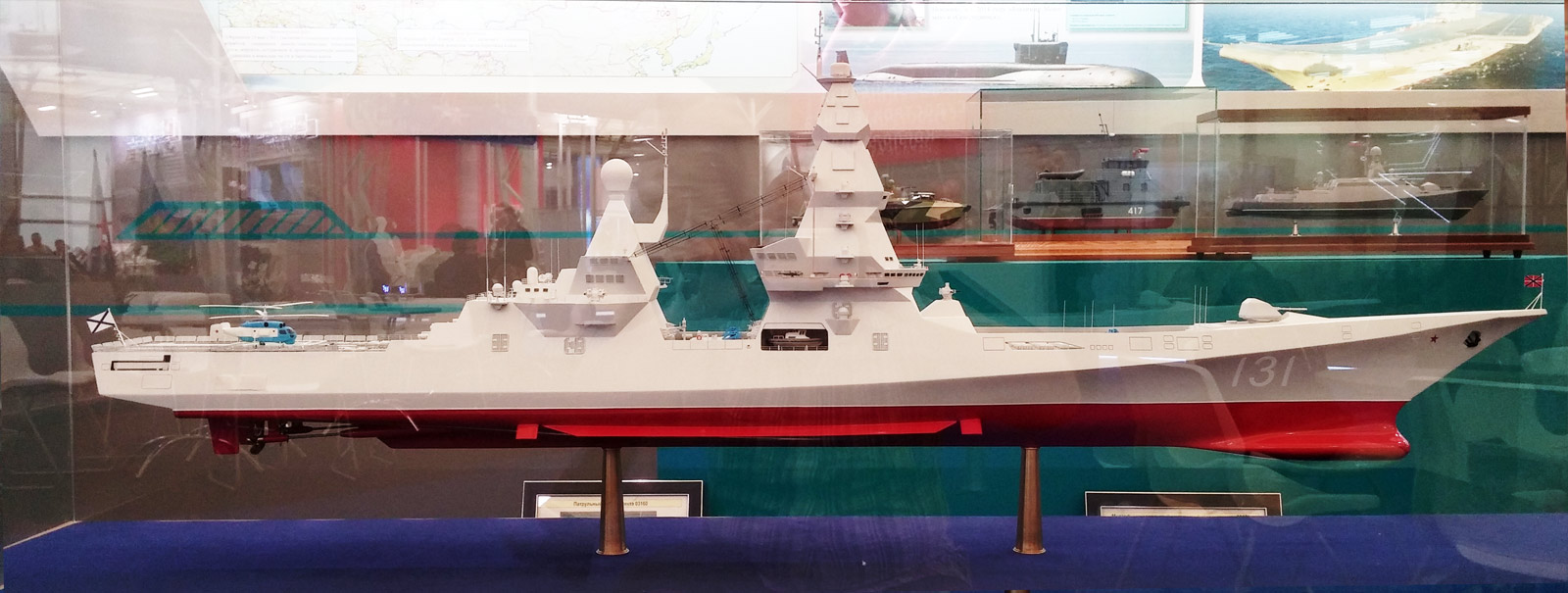

The beam reported is 20m which I think is on the lower side. To me the beam is definitely over 20m and probably around 24m?
JangBoGoClearly mad putting all that superstructure sail-area that high up in the design….any serious wind over the beam will make that an entertaining hull to crew!.

JangBoGoNone of it is likely to find its way to Sri Lankan AF due to completely different reasons.
Tejas LCA as of yet is not a fully operational fighter aircraft where as Pakistan will not be too comfortable to part with its operational aircraft to someone from where its adversary could likely study its combat capabilities first hand.
JangBoGoi am sure when oil prices rising again they will order even more subs. so there is no point in predicting anything in 2015.
Yes. I agree. But the low oil price is offset by a devalued Rouble and I feel the funds for the naval projects are tight which have little bearing on the oil prices. Russian Govt (like any other Govt) cant afford to commit unlimited amount of funds for military and that is a fact.
As an example for the oil prices (ignore the value, just take the numbers), if oil is priced at
$120/barrel, Russia will be getting 3,840RUB/barrel (@ 1USD = 32RUB)
Income will automatically drop when oil prices per barrel go down as shown below.
@ $80/barrel, Russia will only be getting 2,560 RUB/barrel (@ 1USD = 32RUB)
but this can be adjusted by devaluing the Rouble which will help topping up the revenue generation to the old level or higher (but it has got it negative side as well)
@ $80/barrel, Russia will be getting 3,840 RUB/barrel (@ 1USD = 48RUB)
You don’t have to be told all this as I believe you already know this, I wrote that example for others who might still be believing that oil price drop has cut short the revenues from Oil trading.
Though it will help generate an equal or greater amount in Rouble terms, the worst part is it will help the western agencies to spend less or spend the same bucks and get an even greater bang for buck for creating troubles inside Russia.
JangBoGoProject “Priboy”
– 14,000t displacement
– 165m length
– 25m beam
– max speed: 20 knots
– range: 6000 nautical miles (can remain 60 days at sea)
– airwing: 4-6 x helicopters (Ka-27, Ka-52K)
– 4 x landing craft pr.11770 Serna or 2 x pr.12061 Murena hovercraft
– can transport up to 60 vehicles
– Pantsir-M airdefence system

JangBoGosome more pics of Project “Lavina”


The hull is interesting, when all hear about a trimaran hull… something different shape comes to mind as such ships/boats are multihull in such a way that it have a main hull and two smaller outrigger. But this one is really awesome. Good job. The ship as a whole is beautiful. 😎


JangBoGoAfter wasting 6-8 years (incl negotiation phase) on Mistrals we now see a Russian project which could be the true successor to the pr.1174 landing platform with docking facility and pr.1123 helicopter carrier. Current projects should have been the one to start with in the first place . I have been strong supporter of pr.1174 and a modified version of it and it looks like the new project have traces of the 1174. Hope this moves forward and Russian Navy gets it in required numbers.
At the Army-2015 military expo near Moscow, the two projects have come in the open. The initial Project “Priboy” later on turned out to be Project “Lavina” with the actual project “Priboy” being a different model with lighter displacement.
Krylov State Research Centre/Krylov Central Scientific Research Institute
Project “Lavina”

Specification
– displacement: 24,000tons
– max speed: 22 knots
– airwing: 16 helicopters, 6 landing
– 50 armored vehicles
– 6 x Palma air-defence unit


JangBoGo$2 billion sounds like old figures. Like the C-17, it is a costly platform with a price tag of over $333million/unit. Past the initial period smileys, these platforms are going to eat into the IAF and Indian budget for sure with the spares and maintenance.

India is the only ‘3rd world’ country operating the C-17 and with the Indian Rupee having the lowest purchasing power among all the operators of C-17s. it would be interesting to see what percentage of IAF budget these costly aircraft’s will be having in 10-15 years from now.
Kuwait
1 Kuwaiti Dinar = 3.32 USDUK
1 British Pound = 1.57 USDEurope
1 Euro = 1.14 USDCanada
1 Canadian Dollar = 0.83 USDAustralia
1 Australian Dollar = 0.80 USDQatar
1 Qatari Rial = 0.27 USDIndia
1 Indian Rupee = 0.016 USD
JangBoGoThe Ka-226 deal sounds like yet another one of those WTF decisions by India:
Ok, let’s choose a risky platform of which only a couple dozen have been built on a boutique production line that barely produces 1 helo a month with a small supplier base, all of which is located in one country. And let’s use that risky platform as the basis for the fleet that is required to do most of the grunt work where availability is the key issue.
And… let’s double down on the risk by basing the other half of our needs on a platform (LUH) that hasn’t even flown yet and made by a company that has a questionable track record of delivering on schedule and with the required capabilities.
The risky LUH has to be bought due to domestic mil-ind development reasons, that’s a given. I would have thought the Indian decision makers would at least try to mitigate some of the operational risks of the LUH by choosing a well established (not risky) platform that has flown 10s of thousands of hours and has parts suppliers all over. Nope! They chose to double down on the risk. Watch this space 10 yrs from now and see if this lack of risk mitigation will come back to bite Indian operational capabilities in the butt.
This decision screams of political intervention, just like the T-90 deal. At least I hope it’s a political decision because the alternative is that Indian procurement officials have no concept of risk mitigation.
Whats your solution and the platforms you are suggesting?
JangBoGoJust watched the video, looks like he tried to eject with the rotors getting blown of, one question though did he survive the ejection or was the Ka-50 too low?
Yes I too noticed it, probably it was just too low. From the video it also looks like the rotor had a slight brush with helos tail fin and that led to the rotors colliding?
JangBoGoWith respect, utter rubbish.
The PAK-FA is needed to replace the MiG-31 and much of the legacy Su-27 fleet. It is a step above the Su-35 in kinematic performance and that will not be dismissed by the Russian authorities.
Why has it to be rubbish?
Atleast I think there is no urgency for PAK-FA as there is no threat on the horizon that cannot be dealt with the current Russian air-defence units and proper utilization of existing air-assets . I believe we have seen exactly that with the way Russia has been modernizing. I can take two examples.
1) Strengthening the air-defence (due to lack of aircrafts)
2) Strengthening the anti-armour with Mi-28/Ka-52 (due to lack of modernised MBTs)
Btw, PAK-FA is not going to be a replacement for MiG-31. Landmass/airspace of Russia still calls for high speed interceptors and only a dedicated MiG-31 replacement will replace it.
JangBoGo^^ Thanks.
Are they buying the new Ka-226T with French Engine or older RR engine ??
I read Gazprom is buying Ka-226TG variant
They should be ordering none of these. Instead order Ka-226 with Klimov VK-800 engines and offer/manufacture the same in India. Enough of these stupid stuff of cozying up with their western partners and sidelining the development of local alternatives. If other Klimov engines can work fine with Russian helicopters, VK-800 will also work fine with the Ka-226. Success and future of Ka-226 is not tied with it being powered by western engines.
JangBoGoArguably much more serious then the shortage of new aircraft.
Indian parliamentary committee says IAF facing crisis in combat pilot numbers
The Indian Air Force (IAF) is facing a crisis in fighter pilot numbers that is almost as serious as that facing its combat fleet, India’s Parliamentary Committee on Defence declared on 27 April.
In a report tabled in parliament, the 35-member committee revealed that the IAF’s current fighter aircraft to pilot ratio was 1:0.81.
This was far less than the authorised figure of 1:1.25 and was responsible for depreciating the force’s operational capabilities, the report stated. The sanctioned cockpit to pilot ratio for the IAF’s transport aircraft is 1:1.5 and 1:1 for its helicopters.
“Our sanctioned strength for [combat] pilots is less than that of our adversaries,” the report said, adding that the Pakistan Air Force’s fighter to pilot ratio was 1:2.5.
One of the culprits to this shortage is likely the Su-30MKI. I have few times said that a top heavy force structure like what it is now is not good and twin pilots will drain the resources. And still we have people talking about India in need of a twin-seater PAK-FA.
IAF needs to put brakes on further increasing Su-30MKI numbers and fast track on light single-seat fighter for replacing the MiG-21s. And just in case IAF still needs that long range hard-hitter, look towards the single seat Su-35 rather than twin-seat Su-30MKI.
JangBoGoPost-Nepal earthquake evacuation operation success, IAF to buy three more C-17 aircraft
> $460million per aircraft! …or 10-12 LCA Tejas… Some guys have really enjoyed filling their pockets during past years with US contracts starting with C-130Js. And why these additional aircrafts? If I’m not wrong IAF till now have never used more than three C-17 in any rescue operations and, no!, C-17 is not going to ferry any T-72/90 or Arjun on a regular basis. We are yet to see even a single MBT being airlifted on a trial basis till now.
Btw, C-17 is proving itself as a delicate aircraft that is too big to fail. After all its over $450million/aircraft and it would be too costly for IAF to have any of it damaged, or in worst case scenario, loose one. Even in mission after the induction of C-17, what we have seen is the ‘grounded and inoperable’ IL-76 being the ones to spearhead missions that is deemed risky and C-17s following later on after the area/landing strip have been proofed for flight operations by IL-76s.
During Operation Raahat, the big delicate ‘commercial’ aircraft of Indian Airforce was operating at a safe distance from Aden and flying out citizens from Djibouti after Air India’s ‘military’ aircraft’s like A-320 and B-777 plunged into the combat zones to rescue stranded people and flew them out to safety of Djibouti.

But regardless of IAF playing it safe with their costly transport aircraft, citing the Saudi instructions, C-17 was the most suitable aircraft (other than Air India flights) for bringing back citizens from the safety of Djibouti due to its dedicated seating arrangement which IL-76 lacks. And we will likely see C-17s being used more for such transportation (like in Nepal earthquake relief) so that the rescued people at least have something comfortable to sit on.

If this is the way of operating transport aircraft that is too costly to be risked in operations, IL-76 is going to stay on as long as C-17 is in IAF and beyond.
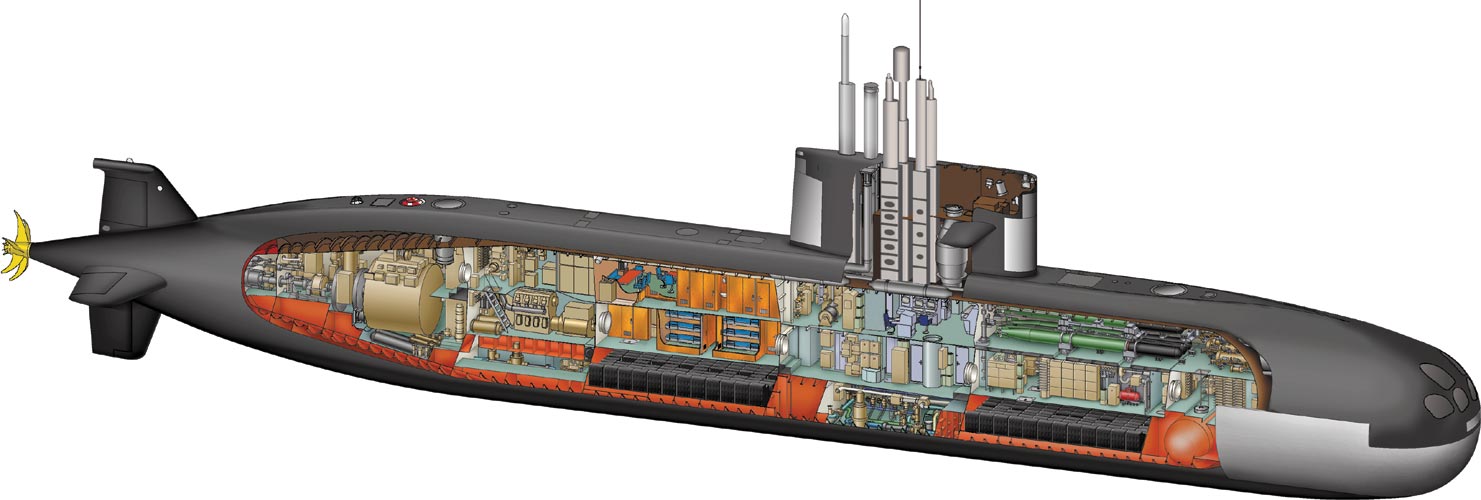
JangBoGoThe front array part is small possibly due to space constraints of the Scorpene, so no wonder that the flank arrays comes as a standard listening feature as part of its sonar suite on the outer hull.


Compare it with that of pr.667 which have a conformal array inside the bow. But that mainly b’coz the 677 is a larger boat and is a ‘3 decker’ with space to spare. Unlike the Scorpene, 677 and 877/636 have their active array on their sail.



 Sign In







