 JangBoGo
This mode of budgeting is what my previous boss used to refer as “firefighting” mode of budgeting. Place a budget request big enough to fulfil your emergency needs, small enough to be approved right away with a possibility of a small reorder barely enough to keep the ball rolling. Too big a request, it gets shot down and someone with a more reasonable request gets the money. This is what happens when you are operating one of the largest forces on the world with a disproportionately small budget.
Good point but hardly surprising because such tactics is the core to business entities and form the backbone to western & private companies.
I’d differ on “firefighting” mode though, because it is different.
“Firefighting” can be best applied to influence decision making process. Like in firefighting, fire is never fought head on, it is broken into three individual components and the rule is to fight the most vulnerable or ‘effective’ component based on the situation at hand to achieve the desired result. In the decision making process, it can either be the politicians or babus who mainly are the weakest link.
JangBoGoUS pips Russia as ‘lowest bidder’ for heavy-lift 15-chopper deal
NEW DELHI: The US is now all set to bag yet another mega Indian defence deal, with the iconic Boeing-manufactured Chinook heavy-lift helicopters emerging as the cheaper option than its strong contender the Russian Mi-26 choppers.
Defence ministry sources said the commercial bid for the twin-rotor Chinook, which has seen recent action in Iraq and Afghanistan, has emerged as the “L-1 (lowest bidder)” in comparison to the Mi-26 after both the huge helicopters passed the extensive technical field trials conducted by Indian Air Force (IAF).
“The present contract is for 15 such multi-mission helicopters. The Chinook bid was lower both in terms of initial direct acquisition cost as well as life cycle cost. The contract negotiation committee will now finalize the deal for the Chinook,” said a source.
..
Just as I had predicted, that the Chinook would win. Life cycle cost is what will be used to tilt the MRTT contract in the A-330’s favour as well.
Shiv Aroor mentioned that
Boeing’s director for rotorcraft business development Mark Ballew is quoted to have said on October 24 that the company expected the Indian contract to be signed next year, which sounds about right.
All these past decades, there has only been one trend in terms of price of a product & cost of production.
So, can you explain how Airbus who offered 6 x A3330 MRTT for around $2billion in 2009-2010 with the same “better life-cycle cost” over IL-78 is able to offer 6 x A330 MRTT in 2012 for $1billion?
Another thing I don’t understand is whether Ilyushin offered IL-78MK converted from used IL-76 or the new IL-476.
As far as I know, there is no production for Il-76 and IL-476 for export market is at least 3 years away. So cant understand how this became a contest.
JangBoGoLast time I posted simple figures for IL-78MK-90 and people still managed to confuse the illustration. So this time adding text to explain how the 75tons of fuel at 1,000Km range is possible and how it looks like. I’m usually lazy to type and the reason why I most of the time dont reply. This time I’ll give it a go with little typing to explain.
I’ve taken data of IL-76TD-90 with 39tons payload with a range of 6,713Km from Volga Denpr site that JSR earlier posted. This is the closed real-payload figure I can get for estimating IL-78MK-90 with 34tons of fuel in fuselage tanks.
Spec taken for IL-76TD-90
Empty weight – 95tons
MTOW – 195tons
Payload – 39tons
Fuel max – 61tons

IL-76TD-90 achieves that range from 61tons of internal fuel, which gives us a fuel consumption figure of 9.09Kg/Km. This value has been taken as the base for computing figures for IL-78MK-90 with additional fuselage fuel tanks carrying 34tons.

Spec taken for IL-78MK-90
Empty weight – 95tons
I’ve not reduced weight, even though aircraft is stripped in tanker configuration.
MTOW – 210tons
Payload – 34 + 5 tons
Extra for the fuel tanks and other related equipments.
Fuel internal (max) – 76tons
Max possible internal fuel is 84.86tons upto 30tons payload, beyond which internal fuel need to be reduced to keep the aircraft within MTOW limits
Fuel max – 110tons (wing tanks + fuselage tanks)
— Newly added data/part start —
I decided to edit earlier data and take payload of 54tons as the base which would be much more closer. So below are the new data. Data for 39tons are valid, but it would be much more closer to a payload of 60tons of transferable fuel. Main change is the fuel consumption figure which I’ve increased to 13.26Kg/Km.

Fuel consumption for 1,000Km trip – 13.26tons.
Fuel remaining after deducting 75tons for refueling – 35tons
Total fuel deducted from 35tons for 2,000Km flight range – 26.52tons
Fuel available for time on-station – 8.48tons
Total range (approx.) from 8.48tons of fuel @ 13.26Kg/Km – 639.52Km
639.52Km translate into following time on station (approx)
– 0.75 hrs @ 850Km/h
– 0.80 hrs @ 800Km/h
– 0.85 hrs @ 750Km/h
– 0.91 hrs @ 700Km/h
Speed specified for IL-78MK-90 during refueling is 440-600Km/h
– 1.07 hrs @ 600Km/h
– 1.16 hrs @ 550Km/h
– 1.28 hrs @ 500Km/h
– 1.45 hrs @ 440Km/h

— Newly added data/part End —
So that is how the time on station looks like based on the values taken. It was also the reason I said in my earlier post that IL-78MK-90 will be able to hang-on for atleast 35 minutes at 1,000Km from the base to transfer 75tons of fuel and its no figure that Ilyushin pulled out from their rear.
For transferring a fuel payload of 60tons, the internal fuel available for flight will increase by 15tons, which means it can be transferred at longer range.
——————–
In comparison, A330 MRTT spec from Airbus states 60tons of fuel transferred at 930Km with 5 hours on-station.
Transferable 60tons of fuel means A330MRTT will be having 48tons of fuel for flight. If we increase this transferable fuel to 75tons like IL-78MK-90, the fuel available with A330MRTT for flight will reduce by 15tons to 33tons. It would be interesting to see how A330MRTT range & endurance figure will look like. Anyone?
In terms of fuel consumption.
IL-76TD have a ferry range of 10,200Km with 84.86tons of internal fuel &
A330 MRTT have a ferry range of 14,800Km with 108tons (or should we take 111tons?) of internal fuel.
The above data tells us that A330 MRTT have 27.27% (or 30.8% if we take 111 tons) higher internal fuel compared to IL-76, where as its ferry range is 45% higher. The advantage of a streamlined commercial airliner & fuel-efficient high bypass engines are the main factors making the difference. But that is to be expected but not bad for an aircraft of IL-78 configuration with high mount wings and tail.
Is it a bad tanker as it is being made out to be? Definitely No.
And that is the reason why we will continue to see it’s newer version serving in Russian military and even in other countries. One addition I want to see on IL-476 is installation of new fuel tanks in the wings. I’m not sure if it is possible. But if they can manage 4 new wings tanks of about 1-1.5tons each, it would increase the internal fuel carried from the present 84.86tons upto 90.86tons. This will translate into increased performance as a tanker and endurance for A-100.
A330 MRTT had its own little advantages and I still consider its main advantage over IL-78 being its easy conversion for transport, large internal fuel capacity and the versatility in transforming roles from a pure tanker to transport-tanker configuration.
————
If anyone have readily available fuel consumption figure for A330MRTT, please do post it so that I can complete the chart for fuel availability for transiting 1,000Km and the fuel required for 5 hours on-station time.
I also want a clear figure for An-70 internal fuel capacity.
JangBoGoThe Middle East is not a continent.
When normal people use the term ‘Middle East’ it denotes the region from Egypt to Iran including both.
Did you really think middle east to be a continent? :rolleyes:
If you really want to include Egypt & Iran, make it as west Asia.
And shall we now stop the crap regarding middle-east?
Post-2016, the MTA’s export prospects are destined to be bleak, regardless of its performance.
Can you explain how MTA’s prospect is bleak? The numbers mentioned during the recent signing of the contract is 205 aircraft.
@ Trident,
I do have sort of disappointment with IL-476 which is mainly due to the fact that I wanted it to have little more wider fuselage than what it has now, but you seems to be having a completely solid dislike for IL-76/476. I’m no missionary and won’t ever bother to change you view…
But, regardless of my disappointment (& dislike for comparatively narrower fuselage) and your rather blind hatred for IL-76/476, there is a fact (whether you like it or not) and that is…. IL-476 are there to remain as strategic-lift in the Russian military (& many others) for the decades to come and will continue to do service in the commercial transport fleet also. It may even replace one-on-one of nearly 500 x IL-76 that is in Russian service and around 300 x IL-76 that operate worldwide in commercial transport fleet.
As earlier said by Soyuz, IL-476 is a winner on hand for UAC (though it could have been made even better) and will continue to have good sales in the coming decades. No An-70 or A400M or C-17 is going to scratch the IL-476 market once it is ready and production starts.
Btw, your views on other two aircraft would be interesting to know.
IL-76/476 —- White-elephant/useless (quoting your opinion/conclusion)
what is your opinion about An-70 & A400M
An-70 —– ???
A400M —– ???
JangBoGoIn this image you can see one of the earlier contenders of LCA design with abandoned HF-73.
http://imageshack.us/a/img31/2412/hf73andearlylca.jpg
That LCA design looks a bit similar to Swedes Draken & Yakovlev’s model…
JangBoGoNot necessary, if they do not insist on TV in the first couple of prototypes they have plenty of options. From what a chaiwallah told me last year, the current Kaveri was supposed to be flown with Tejas in late 2013 (the current schedule cannot be confirmed). AURA is supposed to fly with that same basic engine as well, so they can use the basic Kaveri for first couple of prototypes and switch to the Snecma-Kaveri when it is ready. They can also go in got GE-414IN56 (the deal we signed has an option of far higher numbers of engines than what is currently needed) as the Kaveri has been modified to be a direct fit in GE-414 engine bay.
An ‘incomplete’ engine, that too the first major product developed in-house, to power LCA next year is way too optimistic. Unless the guys are planning any crash test for Tejas LCA next year, I don’t see much chance for such a development.
Snecma-kaveri (it would be better to call a Snecma engine) has to succeed and has to come on time as well, else the huge cost (nearly/over $1billion as reported earlier) on ‘consultation’ will be hard to justify.
… and? AMCA isn’t due to enter service until 2025, who cares what is and isn’t available today? It’s not like you can’t fly prototypes on lesser engines like J-20, PAK FA, Rafale…
…and what would be your engine of choice?
Like it or not…… but, there is only one undisputed master in 3D-TVC for combat aircrafts and that is Klimov JSC. After over a decade of dragging their R&D due to financial problems, they unveiled their operational product with aerial display in 2005 with MiG-29OVT. There is no one even close to challenge the 3D-TVC from Klimov.
Really? The IAF has fighters in service with Snecma engines of 95kn thrust. :diablo:
I don’t remember mentioning Snecma engine with 95KN thrust.
JangBoGoA few caveats that you have not mentioned:
1. The MRTT empty weight is likely to be a conservative figure, as current production aircraft are configured with a heavy airliner-style cabin, including windows and overhead bins that are generally lacking in other tankers. A more stripped out version with a quick-change troopship interior (window-less with forward cargo gate like the KC-10 or KC-767 and envisioned for the KC-45) would probably weigh noticeably less.
Are you disputing the 125tons for MRTT?
What would be your take?
2. No loiter times are mentioned for the Il-78MK-90 off-load specs and going by the Il-476 payload/range diagram indeed none seem to be included (60t to ~4200km vs. 57t off-load + tank & drogues on 4000km round trip + distance during transfer). Fuel off-loads for the A330 under these circumstances would be significantly higher than stated, even with the airliner cabin.
I did expect such questions to come, but never expected it to come from your side. I expected you to understand that those are figures for the max available fuel with the IL-78MK-90 at the specified distance that can be used to refuel aircrafts.
Airbus figures are from their official site and its the maximum quoted. Why do you want to increase the maximum quoted figure of Airbus even more?
The figures for IL-78MK-90 are surely for refueling aircraft at those ranges. The loiter time will vary, I don’t have specific data for those but can work out an estimate from what is known for IL-78 with D-30KP-2 engines. For a 1,000 Km round trip (I’m not sure how much loiter is there), IL-78 needs 32tons of fuel. If we work out on this lead, we are likely to get a loiter time/on-station time with a minimum of 35 minutes.
So transferring 75 tons @ 1,000km will mean supporting a larger fleet of fighters (say 8 x Su-30 @ 9tons each) at comparatively short distance of 1,000Km. The Russian fuel-transfer unit is able to transfer around 1,938Kg/min through the hose, meaning once an aircraft is connected to the hose, 9 tons can be transferred in less than 5 minutes or lets increase it to maximum 6 minutes. With two aircraft’s being refueled simultaneously from the under-wing units, the entire lot of 8 aircraft wont take more than 30 minutes.
Hope what I wrote was useful to clear the doubt.
3. As fuel bunkerage does not intrude on either main deck or baggage compartment space in the A330, it CAN in fact seamlessly trade fuel off-load for dry cargo. The Airbus Military web site gives an example mission of providing fuel support to 4 tactical combat aircraft for a 5200km deployment while simultaneously carrying 20 tons of payload.
Airbus figure will depend on how we interpret that info.
From the description, it is a dead give away that its not in a dedicated air-refueling role. It looks like deployment of 4 fighters from point A to point B and not sustaining the 4 fighters at X ranges from point A, @ point B. An example to describe such a scenario would be to take the case of 4 x Mirage-2000 getting deployment to US for exercise. In that case, A330MRTT would be able to carry the men & material up to a total weight limit of 20tons inside the cabin/cargo hold and can refuel 4 x M2K from its wing tanks en-route to the first halt in Algeria or France.
Now the same can be said/done with IL-78MK after conversion. But unlike, A330MRTT, it will need to be stripped of the fuselage fuel tanks & accessories and re-equip the cargo bay for personnel transport. It will also mean a drop in the total fuel capacity and will only be having around 84.86 tons of fuel compared to 88 tons for A330MRTT. So 4 fighters will need to feed from this 84.86tons fuel load from the two under-wing refueling unit.
In short, this is exactly where the main advantage of MRTT truly lie – quicker conversion w.r.t to IL-78 from a pure tanker to transport aircraft.

I hope the illustration will be self explanatory. The 100% figure for A330MRTT/IL-78/C-17 would be like 233tons/210tons/265.36tons
EDIT: Just to put #2 into perspective a bit better, let’s take the 60 tons @ 930km point, for which the time on station is stated as 5 hours, and roughly convert the loiter into additional range for better comparison with the Il-476. Speed would be some 800km/h, so this buys us an additional 2000km both ways for a radius on a rendezvous mission of almost 3000km with the same off-load of 60 tons. Nearly 20 tons or 1000km more (about 50% better in both cases) than the corresponding Il-78MK-90/Il-476 data points! And to cap it all, it does all that with a 10 ton lower fuel total.
I’ve explained related to it above for the 75tons @ 1,000Km.
If we know the payload that A-50 normally has, it would be another lead to work out an estimate w.r.t to payload-range. We saw the last major deployment of Russia’s strategic bomber fleet around Japan. In that deployment, A-50 was an integral part and got deployed at about/over 1,000Km from its base and coordinated the deployment with on-station time of more than 9 hours.
Food for thought – just how much cheaper is the Il-476 going to be to procure? Already from its greater utility to the customer the A330 is equivalent to 1.5 Il-476s, and that’s without the massive savings from its dramatically better fuel burn and far lower maintenance requirements which will keep accruing.
A330MRTT offered to India was not less than $320million/unit.
I don’t expect Il-476 to be cheaper. The Russian AF is getting it for nearly $115million/unit. So I’m expecting the price on export market to be atleast $120million/unit. But it will be cheaper than the A330MRTT for sure.
But lets keep aside the IL-476 as most of the data are not yet available. I’d wait till the first production units roll out or till MAKS 2013 to see the real specs.
JangBoGoPlenty of money has been made available for Il-76, both to develop Il-476 & move production from Tashkent.
I’m sure you understand the difference between a design bureau and a production facility.
These are/were the four main facilities
TAPO (IL-76)
KAPO (Tu-214)
VASO (IL-96-300, 96-400/T, SSJ)
Aviastar-SP (Tu-204, An-124, IL-476)
In the presentation below, we can see the three products that are going to roll out of Aviastar-SP in the future. So the investment was not specific to the Il-476, though it will enjoy the benefits.

Ever since the Irkut gang (read as Sukhoi gangsters ;)) took control of the Russian aviation business & UAC, all other have had tight budgets and also backstabbing. Only Sukhoi have managed to leech major portion of the Govt funds. Ilyushin did not have unlimited big finances to develop the IL-476 and the IL-476 that we see now, got defined as a result of that tight financial allocation. We can even see it in the case of IL-214/MTA project. If Ilyushin had proper financial backing, they could have carried on the work on IL-214 without wasting 12 years. Since they did not have the finance to go it alone we saw that Ilyushin had to partner with HAL, from whom they expect ZERO-to-minimal technology & expertise, for the aircraft.
Another major problem with Russia is lack of “calculated-rick” in projects like Il-76, IL-112 etc.
But doesn’t change the aerodynamics at all.
I was not mentioning about the new wings in terms of aerodynamics or composites. But was instead stating that what IL-476 got now was started with Tu-204 almost 25 years ago.
Martinez has posted it in RuAF thread. Even this new wings is going to have its positive affect.
From informations revealed and photos available it is clear to see the so called “new” wing of the 476 has an all Al alloy structure, skin and Al alloy honeycomb lifting surfaces. The difference there is that the wing structure has been modified, better optimalized to fit new technologies acquired by the manufacturing plant like long wing panels processing techniques, machining of large piece structural components and automatic riveting and assembling machines.
The “new” wing/skin is not anymore divided in three section spanwise, but it is a single piece Aluminium sheet up to 25m long with stringers riveted using automatic riveting machines (section were previously chemically milled ). Less wing section attachment points as well as Titanium instead of steel 30XGSA structure components, using above mentioned technologies helped to save weight although with the same structural elements, wing box with spars and ribs without using any CFRP materials in the structure. After all, the yellow strontium/zinc-chromate primer justify that the base material is a metal not a CFRP one.
Clear specs are easily found, & I trust them more than those of Il-476. None of the customers, or the USAF, has disputed them. Try looking at the Airbus Military site. E.g. Four hours on station at 1000 miles from base, delivering 50 tons of fuel.
Clear spec like empty weight & max fuel carried with A400M are still not there in official site.
Anyway made a chart based on available data with me and for my own quick reference.

JangBoGoIndia is not most competent to judge and great deal of corruption (they don’t care abouts savings anyway) could be involved as airforce pilots and technicians want to get trained on A-330 so they can easily transition to commercial firms after retirement.
100% agree!
That is already happening and there were earlier articles on the pilots leaving for private airlines which is less stressful than the services. This will happen in the future and with induction of P-8, C-17 etc it will accelerate in the future. We will get to see the full affect of the new platform by 2020 or in next 10 years.
Ex-IAF pilots are much valued in commercial sector and I even have a bet with someone who lurks around in commercial aviation on this same scenario that there is going to be high “attrition rate” from the IAF transport/VIP fleet in the future towards commercial aviation.
JangBoGo😎

JangBoGoThe last credible report had this to say:-
With aerodynamic design optimisation near complete, the AMCA’s broad specifications are final. The aicraft will have a weight of 16-18 tonnes [16-18 tons with 2-tons of internal weapons and four-tonnes of internal fuel with a combat ceiling of 15-km, max speed of 1.8-Mach at 11-km. The AMCA will be powered by 2 x 90KN engines with vectored nozzles—likely to be the new GTRE-Snecma engine under development.
http://spsaviation.net/exclusive/?id=76&h=India-s-own-AMCA-fighter
It will be closer to MiG-29 in size than F-35.
The only engine that would meet that criteria as of now is RD-33MKM with about 93KN thrust and 3D-TVC.
Snecma with 90KN engine is atleast 5 years away if French finds someone to finance it. TVC and Snecma, unlikely…. Eurojet is atleast 5 years away from fielding an operational TVC engine, which is suppose to happen in 2018. In short the first production standard TVC engine from the western side is atleast 13 years behind RD-33.
On the aircraft platform itself we have two options rather than going it alone and making it a mess. Either join/convince Japanese for JV in ATX-D or propose a JV with RAC-MiG for LFi.
JangBoGoBTW JangBoGo, the IAF’s IL-78MKIs are not convertible. They’re pure tankers.
Plus I read years back on bharat rakshak from someone who’d seen their interiors that all the heavy cargo winching equipment was missing from the hold.
I’m not very clear on the IL-78MKI conversion time or its necessisity, but the 78 variant which is probably “not convertible” is the variant with three additional tanks. The normal IL-78 are with two additional tanks in the cargo bay and these are not permanently fixed tanks, but are tanks which are fixed like any other heavy cargo…
You might be able to interpret few things from the below pictures of IL-76 & IL-78 cargo bay.


IL-78 fuel tanks
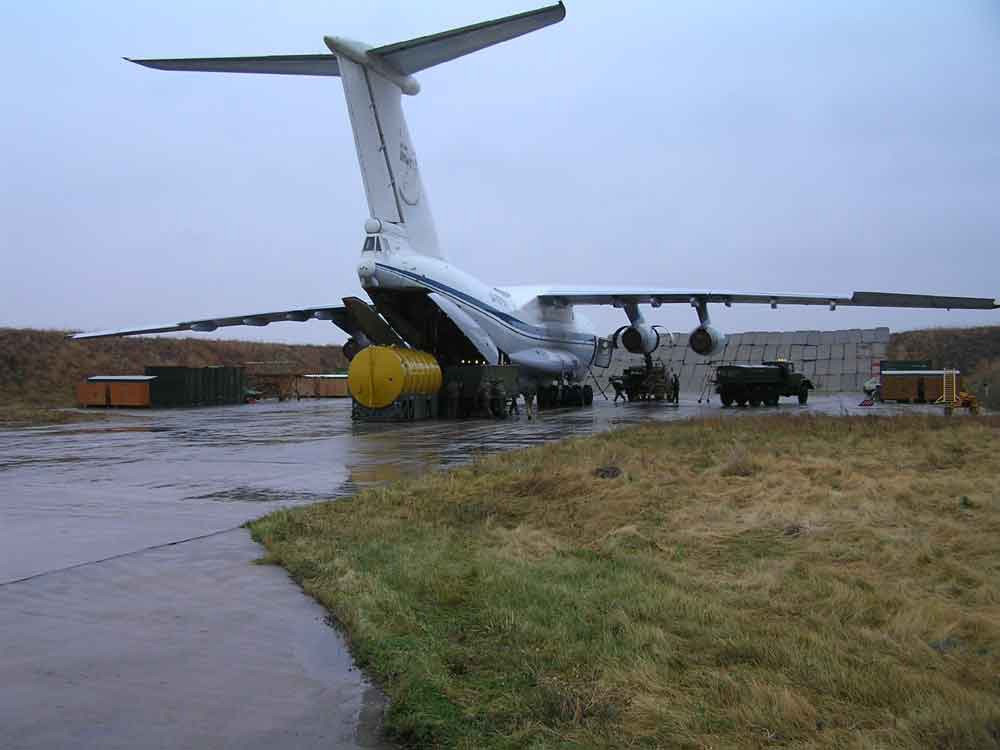
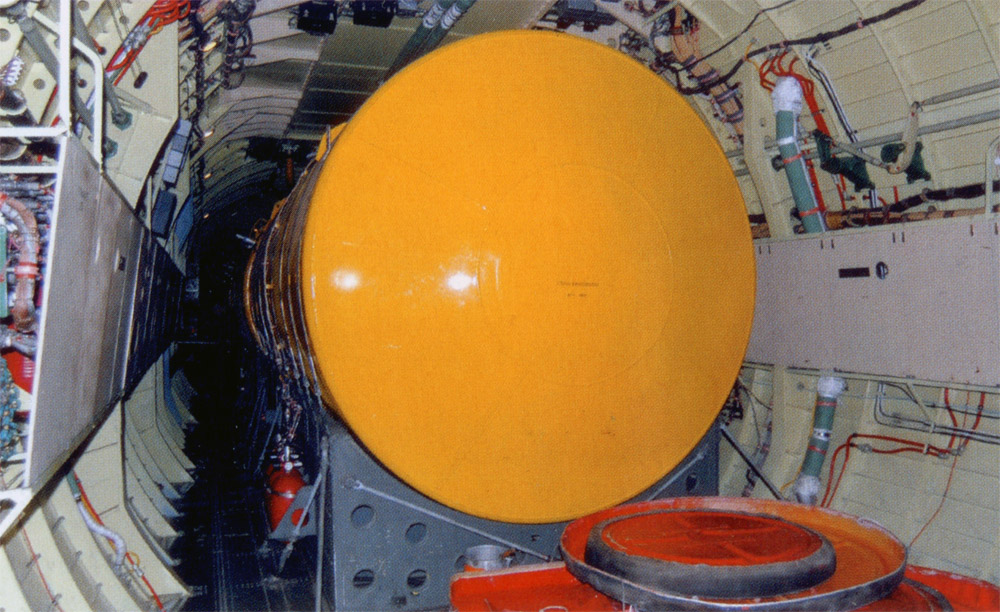
Below we see a cargo which is similar to the fuel tanks. By similar I mean cargo & its base. It looks like a turbine being loaded. In this case also, the base will be fixed properly onto the cargo floor like we see with the fuel tanks.

A330MRTT able to carry out double-role of a transport & tanker is a myth created on the basis of ‘experts’ wrongly interpreting the marketing figures from Airbus. Like IL-78, A330MRTT can either be a tanker or a transport but can’t be both at the same time. But the advantage of A330MRTT is its easy conversion – almost as simple as carrying lower internal fuel, where as IL-78 will require removing the fuel tanks and re-equipping up the cargo bay for transport.
Also, the range provided by IL-78 is more than enough for the IOR, unless we are planning to invade Australia. 😀

JangBoGoThis is surely a lottery for the Czech. Their golden days got over with Soviet Union. If Russia see any possibility, they should try to sell the MiG-AT to the Iraqi’s. After all its business.
JangBoGoThere’s an important caveat for the state funding of the PAK-DA, namely the forecast that Russia’s petrodollar surplus is due to vanish due to oil import costs overtaking those for export revenues sometime 2015/16.* This is due to the prodigious rate of consumption of the domestic market.The IMF concurs that the Russian government is expected to run a small budget deficit and negative trade balance in 2016, for the first time since the late 1990s.
Although Russia’s oil-fuelled surplus accumulated $785bn between 2000 and 2011, the second half of this decade is likely to be a rude awakening for Russian policy makers. Hence, aside for core programmes like PAK-FA, heavy UCAV etc. don’t expect R&D programmes and procurement plans to be awash with cash as is currently being touted in the press.
Bear in mind the PAK-DA is, much like it’s US counterpart, most likely to be based on an enlarged UCAV with a 2-man cockpit (otherwise why bother)- and is therefore going to be an inherently very expensive programme. I’m not saying there won’t be a PAK-DA, it’s just the timelines are a tad optimistic.
*the forecasts are based on the assumption of oil being $104 per barrel in 2015.
I don’t think the oil price is going to affect PAK-DA or any other priority projects.
But I’m relieved and happy on hearing that it is Tupolev that is heading the project and that Shukoi have not succeeded in placing their grand @r$e* on the project. :diablo:
JangBoGoHow Boeing was able to convert an existing 747 to dream lifter in such a short period of time. It has quite an internal volume. Can such a thing be done to il-476
Finance!
Something that neither Ilyushin, Tupolev & Yakovlev had.
I think aside from these factors, engineering prowess also matters. It seems to me Russia is far behind west, not only in engine technology but also in fuselage/wing area. After all, just how complex (relatively speaking) all-metallic wings and fuselage can be? A western manufacturer in the same amount of time that russians spent on il-476, would have a new wing and wider fuselage.
Nothing in technological terms that Russia cant achieve. What makes the difference is the neglected decades of the 90s and early 2000 and completely stupid decisions.
In terms of wings, I read somewhere that one of the new features of IL-476 is its new wings, which have done away with joints in its entire span. It is surely going to reduce a lot of joints compared to the older IL-76 as a whole. This is happening to Il-476 almost/over 24 years after Tu-204, which was the first one in the Russian stable to have such an accomplishment. If I remember correctly an old interview with A.Tupolev, the extra attachment to the whole wingspan of Tu-204 was the wiglets. Except SSJ, which is a new bird, nothing else that flies in Russia with a made in Russia tag had/have such wings. Probably not even the IL-96 (though not sure).
Hardly – the Il-96 demonstrates that Ilyushin themselves are perfectly capable of designing and building an aircraft in the payload/range class of the C-17, even when powered by Russian engines.
To paraphrase TR1 (which I hope he will forgive): Don’t confuse incompetent political interference and industrial mismanagement for lack of engineering skill.
(Money was certainly not the reason in this particular instance – any country which feels it can spare money to throw away on something as redundant as the Il-476 can’t be all that hard up)
IL-96 is above C-17 class in terms of payload-range figures.
Engines still have to cover some distance. PS-90A is still not the best out there in terms of fuel-efficiency. PS-90A3 might make a difference and PD-14 is the definite future.
Reply to other posts some other time. No mood for today.
Btw, some clear specs for A330MRTT would be helpful.
Btw, what happened with the Salyut’s D-30KP-series-3 engines, named Burlak? It was with larger diameter, more fuel efficient and was meant to compete with Aviadvigatel’s PS-90A series. Pictures of it during earlier MAKS was there, but hear nothing about it now. Has it been killed by UEC?


 Sign In







