 Jonesy
Those are not Active Phased Array panels! The size and position indicate PPAR arrays. Simply put only an idiot would make an APAR panel that big so that they have to be installed that low in the superstucture!.
Lack of seperate illuminator systems and a PPAR search/track set does, superficially, indicate an ARH missile if it has any pretensions of handling saturation-fires.
JonesySplitting hairs there Arthur!!. 😀
The SAGE/ Hughes MA-1 network linkup installed in the F-106 was sufficiently advanced that, allegedly, one F-106 was landed, wheels up, by ground controllers after its pilot bailed out during a flat spin!.
It may not have been an active network node in terms of radar data sharing, but, it was definitely a Tx/Rx network participant and, therefore, by definition a network-enabled interceptor!.
Jonesy…or the ‘real’ first NetCentric interceptor – the F-106. 😀

First flight of the Tu-128 is listed as 18 March, 1961?. F-106 was networked-up using its AN/ARR-60 data link when SAGE first went online in 1958!
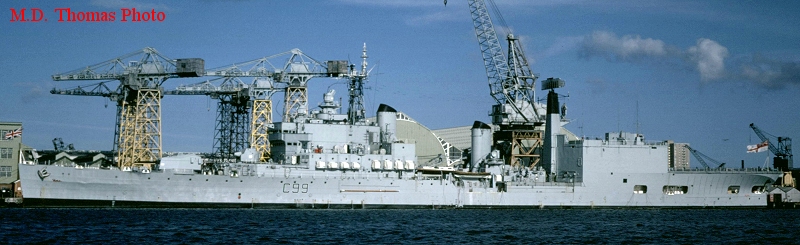
JonesyAlways been attracted to DDH/CGH’s visually and in capability terms. Absolute favourites are the old RN Tiger-Class cruisers.
The Japanese DDH’s of the Shirane Class are also vessels I admire greatly.

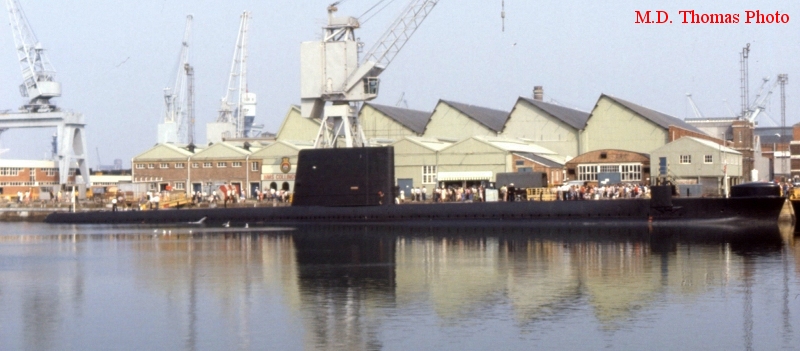
As to subs I’ve always thought the British O-Class patrol subs had very, very beautiful lines on the surface.
Seeings two out of three of the vessels I’ve listed are British in origin I will accept accusations of bias!.
JonesySteve is exactly right on all counts there. The UK republican movement is a very, very quiet one. If anything the future of the monarchy is looking far steadier than it has at any time for the past few generations. A photogenic and unattached future King William is every tabloid toads wet dream. That will ensure very poor coverage of any anti-monarchy sentiment in the UK media and, as we saw over Iraq, the general populace tends to react solely on what its told by the media.
On the more important issue, the Royal Navy, the plans have been put in place, in the 98 SDR, to reorient the fleet towards expeditionary warfare. The CVF’s, the new Astute SSNs, the T45’s, the revitalisation of our Amphibious and Sealift capabilities and the heavy focus on netcentric warfighting are all the key systems to delivering a very comprehensive rapid deployment all-arms force. The problem, and this is highlighted by the issue of the Albion titling the thread, is that the MoD is being forced, by the treasury, to try and get it all on the cheap.
Look at the price for two state-of-the-art 20k ton LPD’s – £790 million for both!. Hell the PLAN paid more than that to finish off a pair of half built Sovremenny’s and as Richard Beedall’s site states ‘The £790 million figure is believed to be the total cost to the MOD of the LPD(R) capability include design and development costs, landing craft, and all command, control and communications systems ordered under separate contracts.‘
I recall the mess that was found when HMS Ocean went into operational service. They found that the osmosis plant couldn’t provide enough potable water for the ships needs and had to add another unit – now that is a serious design screwup. Certainly a lot more significant than a few bent bulkheads and some shabby welding on the pipework, but, it was sorted out and the ship has performed sterling service. Bulwark put into A&P (Cammell Lairds) a few weeks back for pre-delivery painting and I’ve heard nothing bad said about her condition from anyone at the yard. From the outside she looked pretty good when she sailed.

Bulwark in the Mersey (photo credit: Philip Parker, Mersey Shipping)
As to what you were saying about needing to build ships year on year Steve, well, historically that has been quite the case. These are the laid-down dates of major warships over the past 20 years:
1980: 1 Type22-2 (HMS Beaver F93), 2 Type42 (HMS Edinburgh D97, HMS York D98) 1 T-Class SSN (HMS Turbulent S87)
1981: 1 T-Class SSN (HMS Tireless S88)
1982: 1 Type22-2 (HMS Brave F94), 1 T-Class SSN (HMS Torbay S90)
1983: 1 Type22-2 (HMS London F95), 1 Type22-3 (HMS Cornwall F99)
1984: 2 Type22-2 (HMS Sheffield F96, HMS Coventry F98), 1 Type22-3 (HMS Cumberland F85)
1985: 1 Type22-3 (HMS Campbeltown F86), 1 Type23 (HMS Norfolk F230), 1 T-Class SSN (HMS Trenchant S91)
1986: 1 Type22-3 (HMS Chatham F87), 1 1 T-Class SSN (HMS Talent S92), 1 V-Class SSBN (HMS Vanguard S28)
1987: 3 Type23 (HMS Argyll F231, HMS Lancaster F229, HMS Marlborough F233), 1 T-Class SSN (HMS Triumph S93), 1 V-Class SSBN (HMS Victorious S29)
1988: 1 Type23 (HMS Iron Duke F234)
1989: 2 Type23 (HMS Monmouth F235, HMS Montrose F236)
1991: 2 Type23 (HMS Westminster F237, HMS Northhumberland F238), 1 V-Class SSBN (HMS Vigilant S30)
1992: 2 Type23 (HMS Richmond F239, HMS Somerset F82)
1993: 2 Type23 (HMS Grafton F80, HMS Sutherland F81)
1994: 1 O-Class LPH (HMS Ocean L12)
1995:
1996:
1997: 1 Type23 (HMS Kent F78)
1998: 1 Type23 (HMS Portland F79)
1999: 1 Type23 (HMS StAlbans F83)
So apart from the period starting from the mid-90’s the UK shipbuilding industry did quite well out of the MoD. The mid-90’s should have seen the Horizon AAW escort build program coming through which would have seen 12 hulls on order to keep the work up but, obviously, that didnt transpire. Now, you can blame the government for that one if you want, but, to my way of thinking the blame lies just the other side of la manche for that fiasco.
Now we’re in the situation we are because Type45 had to be developed independently and that development time unavoidably meant a delay in work going through to the yards. Even worse with T45, Astute and the carriers all building on or around the same kind of timelines we are going to end up with a yard and funding crunch. Projects that were scheduled to be resourced and paid for seperately will have to, somehow, be built and paid for in one big lump. Time to raid the piggy-bank again?!
JonesyIt looks like the artwork has a certain ‘advisory’ quality to it and the FCS installation pictured is vague to say the least!
It looks like there is at least one FlexFire director detailed aft on a pedestal mount. Presumably there would have to be another mounted forward to service the 5-incher if nothing else. A further, resonable, supposition would be that the FlexFire would have to be upgraded to give it a bit more range to allow for exploitation of the range enhancement of ESSM over NSSMS.
One thing that is certain though is that there is no shortage of X-band directors available, from several companies, off-the-shelf that could mate to a C-FLEX type combat system. Perhaps the vagueness is attributable to the fact that the FCS is yet to be determined at this, early, stage in the design.
JonesyJon,
If you look amidships, just forward of the SSM quads, there looks like 3 of the 6-pot Mk48 Mod 3 VLS modules that the smaller STANFLEX vessels are fitted for. With the new DP-48 dualpack cannisters being developed for the Danish Navy each one of these Mod3 modules can carry 12 ESSM.
What you have detailed on deck there, therefore, is probably 36 ESSM. Not too shabby for a GP design.
I had heard that there was another, larger, STANFLEX design in the works but this is the first I’ve seen of it. It has to be said that the specs are very impressive, but, I would be concerned about the compromises necessary to achieve all thats advertised on a 6k ton hull (a vehicle deck???) . To put in it perspective an LCF displaces 6000ton and I’m fairly sure there’s little room that can be found in that hull for MBT’s that wouldn’t necessitate a reduction, for example, in fuel bunkerage or other such consumable stores.
Hope it does all work out though. Seeing the use HMS Richmond is being put to providing emergency assistance operations in wake of hurricane Ivan in the Carribean a dozen or so of these vessels, obviously equipped to RN commonality standard, could fulfill the low-end side of the anticipated RN FSC project hi-low mix quite handily!.
JonesyNearly. I learned my lesson, on the Gorshkov thread, that if your point hasnt gotten through after you’ve tried to describe it six different ways then it is probably being ignored.
Crobato will not have it that the political dimension in this can be ignored and is unwilling to debate the issue on purely strategic and tactical matters.
PLAwolf is still heavily tied to the mythical invincibility of the SSK in the littoral and will not accept that there are quite a few limitations to be expoited there.
I’ll answer both of the last posts these two gentlemen made when I’ve got the time to do the job properly – hopefully that will be tonight UK time.
JonesyQuestion for Jonesy: I do know the UK SSNs can pass Suez without any trouble, but what I don’t know is whether they can do that while submerged. That is what I meant with being seen when you pass suez. Every sub I’ve seen pictured passing the Suez, was surfaced. (of course, otherwise it’s a lost effort of taking a picture of the Canal with a submerged sub).
So, can they stay submerged and not be detected or do they have to stay surfaced and hence quite visible to people standing on the entrance and sides of the Canal?
On maritime safety grounds subs are obliged to transit Suez on the surface. I am 98% certain that one is a legal requirement, but, I will try and get that confirmed for you. The basic fact is that the canal is only about 60ft deep so only very small subs would be able to submerge in canal anyway!.

688 transitting Suez with CVN
Like for my ship, we only knew our destination about 5 days before arrival. We knew from the Gulf that we had to go to Japan, but we didn’t know where. We made about 5 or 6 passage plans, yet we only had to go to 2 ports, that, together with the winds and currents made us take a very steep Northern course, only bending to the East 20 miles South of Taiwan. On the return on the other hand, we came from much more North and did follow your green course more or less.
Didnt know you merchies worked on that system!. I always got told you set out for a distinct destination port where the cargo would be expected at a certain date for onward distribution!.
For a Non-merchant, you’re good in estimated the routes!!!
I think thats even a compliment isnt it Roel?! A rare thing indeed for a merchant type to fire at navy type! Its appreciated shipmate!. 😀
If you want it, I can send you the chart we used (although it’s one for November only) with the winds and currents to which we very much choose our tracks.
Yeah its been ages since I got chance to brush up on the navigational stuff!. Would be very interested in seeing that. You have it electronically stored or do you need a return-addressed envelope?
JonesyCrobato
That has nothing to do whether the sub is able to discriminate from Taiwan, China, Korea, Russian or Japanese shipping. You have not explained that to me not one single ounce.
Your assumption of cooperation comes with another assumption—that the vessels of the friendly nation will not get hit. Probablility errors and margins will not guarantee that, and you cannot guarantee that a sub is able to distinguish neutral and hostile shipping. This is a job for SURFACE ships, not subs.
OK I’m obviously not getting this through. A blockade is only ever set to enforce a maritime trade embargo or a naval exclusion zone right – I cant think of another reason to initiate a blockade. In this instance we, obviously, are using the trade embargo enforcement as the reason for our blockade. This being the case no neutral merchants should be steaming to Chinese ports for any reason whatsoever or, if they are, then they are blockade running and fair game whoever they are. Simply put Crobato if there are no friendly merchants in the blockade area, or any that are present are escorted by friendly warships, then its very difficult to see how one could get hit accidentally.
Subs patrolling their fishing waters and they don’t care? What kind of dream world are you living in? You’re also talking about an area that’s full of trawlers with big fishing nets.
‘Dream world’?. Do you know how busy UK waters are with trawlers and fishing vessels?. Yes every now and again there is a tragic accident here with a trawler getting dragged down, but, there is a procedure to deal with a trawl net snag. Simply engines get stopped, quickly, and the ships diver is sent out to cut the nets. Result?. A slight delay for the sub and some unhappy fishermen with ruined nets. Whats your point?. Is a Japanese fisherman likely to, immediately, get on the HF to PLAN fleet headquarters and report he’s caught a really big fish and give its position???.
As for talking about agendas, look who is talking here.
My agenda is proving that a limited number of SSNs can blockade the coast of a major power on the other side of the world. If you like substitute an equivalent number of Russian subs for RN ones I just chose the RN ones because the thread questioned the relative lack of merit the RN applies to SSM’s and I wanted to highlight the extreme deployment capabilities an SSN provides.
The red lines are WHAT YOU DREW as routes during a PEACETIME situation
Yes, they show the standard navigational routes to chinese ports. Would Chinese merchant traffic scatter in all directions or would they stick to the routes they know through a blockade line?. I’d imagine they’d stay with the routes they knew rather than have to worry about smacking into a rock or a another merchie going the other way as well as worrying about the subs.
I have already answered the question why a neutral merchantman can be outside those routes BECAUSE THESE THINGS HAPPEN ALL THE TIME. There is always someone who won’t or ain’t going to follow or will be mistaken. You just deviced a plan with ZERO contingency where you mix both hostile and neutral zones in a complex and confusing web WITHOUT considering maritime laws and UN engagement rules.
So in your mind the whole thing could come unglued if some hapless Indonesian passenger ferry decides to take a detour through the middle of a live fire zone…because that sort of thing happens all the time??. UN engagement rules I admit I’m a bit vague on (and I think the UN are a bit as well), but, international maritime law certainly allows for the creation of exclusion zones.
Jane’s is proven to be wet when it comes to Chinese matters. As for sinodefence.com, they only described the Type 035, not the 035G. If you read the text carefully, the 035G is something else—we know it has a new passive sonar, command systems, fire control systems, new antisound coatings…
How many 035G’s are there compared to standard Ming’s?. Plus I am still waiting on a source for the upgrades to the Herkules sets you mentioned.
Oh man, THAT is a narrow blockade area. Never worked with the Germans or with the Japanese during WWII.
What do you mean didnt work?. The Germans work saw strict rationing in the UK that lasted well into the 1950’s!. The USN’s work against Japan made a significant impact on their proseution of the second world war. The blockade of Cuba successfully defused possibly the most tense geopolitical crisis the world has ever seen. Lastly the total exclusion zone we threw around the Falklands seemed fairly effective as did the stationing of SSN’s off Puerto Belgrano.
We’re talking about the southern coast at least. During a war time, China would not be using its northern ports at all. By concentrating on the south, it can also concentrate its ASW assets there. Pretty useless exercise anyway since Chinese ships are not going to be traveling far north. They will pretty much concentrated on the south, and it is likely they might even offload in Vietnamese, Malaysian or Thai ports.
How do you define a northern port?. Shanghai is one of China’s biggest ports isnt it? Also Ningbo has recetly been set up as an oil port very impressively:
http://english.people.com.cn/200112/24/eng20011224_87352.shtml
There is no way the ships can reach the northern ports without passing through Taiwan, so that is already a given those ports won’t be used at all.
Apart from round the south of Taiwan and up through the Ryukyu’s into the ECS.
It’s also completely silly to think that China depends on the tanker trade when it does not. It has its own inland oil reserves and has pipelines to Siberia and Central Asia. It also gets oil from off shore reserves.
Well you had better inform the Centre for Energy, Petroleum and Mineral Law and Policy at the University of Dundee about that. They would appear to hold a slightly differing view. These are some of the pertinent excepts of their report on China’s oil import Strategy. The full text of this report being found at http://www.dundee.ac.uk/cepmlp/journal/html/Vol14/Vol14_6.pdf.
China is the world’s second largest consumer of primary commercial energy, accounting for 12% of the global total. Its demand in 2003 was equivalent to that of Japan, South Korea, India and Indonesia combined, or some 80% of the EU-15 states, and it increased by 14% in that year. In 2002 China overtook Japan to become the second largest consumer of oil. China’s demand for oil rose by a further 11% in 2003, when it accounted for 7.5% of global oil consumption. The same year oil imports rose nearly 30% to 128 million barrels, some 5.5% of globally traded oil. Net oil imports were 108 million barrels, or 40% of China’s total oil consumption.
and
Recent trends in China’s oil supply and demand During the 1980s China was a net exporter of about 20 million tonnes of oil per year. In the mid-1990s this situation changed. Demand for oil exceeded the domestic capacity to produce and China became a net importer of oil. The gap between domestic demand and supply grew to almost 110 million tonnes in 2003 (Fig.1). Despite expensive exploration campaigns onshore and offshore, the domestic output of oil has been increasing at only 1-2% per year. As old, large fields go into decline, new discoveries are barely compensating. It is most unlikely that a sustained growth of supply will be achieved and total national oil production may reach a peak during the coming ten years.
and
The key elements of China’s oil strategy
In 2003 China’s oil supply-demand gap was about 110 million tonnes, this is set to grow to 250 to 350 million tonnes by 2015. China’s current oil strategy builds on the nation’s longstanding preference for self-reliance but has been adapted over the last few years to reflect the challenges the country faces in securing its oil supplies from both domestic and international markets. The approach is ‘strategic’ in nature in that the importance of government is emphasised and markets are relegated to a supporting role. Government
directs the implementation of oil policy directly through control of investment and domestic oil prices as well as indirectly through state-owned oil companies and state banks.The key elements of the domestic aspects of China’s oil strategy are as follows:
• Maximising the production of oil from domestic oilfields. This is a major
challenge as the old large oil fields in north and east China which have supported the sector for the last thirty years are entering their decline. Discoveries continue to be made offshore and in the north-west of the country, but they are barely compensating for production. Production growth in the first few months of 2004 was only 1%. With few exceptions, most investment in oil exploration and development is through the three main state oil companies (PetroChina, Sinopec and CNOOC).
• Maximising the throughput of the domestic refining industry. For the last ten
years the government have sought to maximise the import of crude oil and to
constrain the import of products in order to maximise the opportunity for the oil to be refined in China and by Chinese companies. This strategy has been constrained by the need to upgrade the exiting refineries to accept sour crude oil from the Middle East and by the product mix of the Chinese refineries which requires China to import significant quantities of LPG and heavy fuel oil. Foreign investment in China’s refining industry (rather than petrochemicals) has moved very slowly.
• Domestic pipelines, ports and shipping. China’s ability to import and distribute oil is constrained by a shortage of capacity on many fronts. Considerable steps have been taken to expand the domestic pipeline network for crude oil and for oil products, to construct additional port capacity to handle oil imports and to embark on a concerted drive to build a substantial Chinese oil tanker fleet. In the recent past Chinese tankers have carried less than 10% of the nation’s oil imports. By 2005 this is intended to reach 50%.
• Emergency storage. After several years of debate and inaction, the government has at last announced a firm plan to construct emergency oil storage capability which is intended to exceed 20 million tonnes by 2010 and to reach 50-70 million tonnes by 2015. Construction of the tanks has is due to start in 2004.
Now if your assumption is that Taiwan is not at war, then you can bring the tankers up north and pass through the Ryukus. But why would you do that when you can make them pass through the STRAITS directly, and avoid the Ryukus.
How you get a tanker through the Taiwan Strait from Malacca without going through the southern blockade zone? Also how do you get through the Ryukyus without crossing into the eastern patrol zone?. What does Taiwans status have to do with this?
Oopps. Is the DUUX done by Thompson, a French company?
Ooops I think I already said that!. I said Some units, not note all, have had a French passive ranging and intercept sonar grafted on. Not the same thing.. Tell you what Crobato you go and find out what the difference between a passive sonar and a passive ranging and intercept sonar is then get back to me. I know what it is, but, you dont seem to see the difference.
JonesyBlueshark,
If Jonesy is so eager to demonstrate the ASuW capabilities of British SSNs, then India is a better target. India is an economic midget and the world won’t mind if Britain attacks India. India’s small civilian fleet can be sunk quickly. India’s navy is weak in ASW and has no AAW capability at all. Over the next 10 years India will be getting 2 small aircraft carriers. Sinking these 2 aircraft carriers will be a good demonstration of the ASuW capabilities of Britsh SSNs.
Such an obvious attempt to wreck the thread is a very poor reflection on your intelligence. Subtlety isnt your thing is it really?.
What you’ve actually done is prove that some of the more reactionary Indian elements on this board are actually big enough to rise above such behaviour. They’ve impressed me immensely by their restraint and I have you to thank for showing me that.
JonesyCrobato
Who are you to decide that you should tell them that they should in those areas. Those are their traditional shipping routes, not to mention right in the heart of their own EEZs. You will hurt Korean and Japanese shipping more than Chinese shipping.
It seems I’m the guy doing the detailed planning for the blockade enforcement part of a maritime trade embargo on China. An embargo that, for SSNs to have been deployed in the first place, assumes cooperation from the neighbouring nations. Merchant escort taskings are fairly routine for many navies and both the South Koreans, Japanese and Taiwanese are well provided for in terms of escorts to provide the coverage.
I don’t believe that the Japanese should be forced to escort their own ships FROM THE RN because the RN is patroling their territorial and EEZ waters. That’s an outright violation of sovereignty.
Remember though Crobato, in this scenario, they dont care!. The important thing here though is that we’ve now moved on from your shielding the Chinese coast behind neutral merchants and Greenpeace to your utter refusal to believe something that I said would never happen, in the real world, in the first place?. Are you reading what I am writing or just ignoring it and plowing on with your own agenda regardless?.
Look at your MAP! You are the one who drew the blockade areas. You drew blockade areas right near the Korean, Japanese and Ryukus.
As I thought I’d already mentioned once or twice thats the best water available in the ECS for SSN ops. Politics not being an important factor thats the water the SSNs would use as there is no real need for neutral vessels to be in them. Below should be the two maps I used earlier with safe lanes marked in green for both patrol zones. The red lanes indicate the general courses for merchant vessels to reach Chinese ports. You’ve not answered the question as to quite why a neutral merchantman would be on those courses inside the SSN patrol areas unless they were heading for a Chinese port?. The blue lanes, to South Korea and Taiwan, are the ones where a naval escort would be a necessity for friendly merchies – two lanes across the whole Chinese coast – big deal!.
Wrong. The sub involved in the accident, No. 361, appeared in TV and it was said it was using a new sonar system. Do you honestly think that the Chinese would not improve their own sets after all these years? They put ERA and 120mm cannons on T-55s, slotted arrays on J-7s, and passive seekers on SA-2 Guidelines.
My source for the Ming sonar type is Janes Fighting Ships 1996-7 and is corroborated by the Sinodefence website. I’m assuming you have an equally credible source for the re-equipping of the Ming fleet with newer sonar types? Otherwise I dont really see what tank guns, SAM and fighter upgrades have to do with this. Apart, of course, from the basic supposition that because those other systems got upgraded then the Mings’, surely, MUST have?. Forgive me if I find this rebuttal a bit thin. As to the 361 the Kanwa article on it talks about new accoustic tiles on the hull, a new optronic scope and a new ESM system but I’ve seen nothing stating that a new sonar type was retrofitted?.
A few subs plus a fleet of Mings are more than enough to patrol the exceedingly NARROW zone you drew up as a blockade area off the Hong Kong coast. Not to mention they are all within helo reach.
OK and how do you know that its a narrow blockade area?. You know that because I’ve told you where it is. The PLAN in the real world wouldnt have such convenient information to allow them to focus the modest ASW they have in the way you suggest? They could probably take a guess at that area, as it is the optimal one, but they wont know the defined extents of the zone and, as I’ve said, they dont have that much ASW to spread about.
The operations in the ECS being in the Japanese and SK EEZ’s might also have the benefit of providing defacto air cover to the RN patrol zone there. As the Japanese and S.Koreans may not be too pleased to have patrolling PLAN MPA’s in their airspace. I would not suggest that they may actually shoot at the Chinese aircraft, but, even if they just escort them safely away it reduces the threat to the SSNs quite handily.
Wolf,
so the question then becomes, can the PLAN position its assets effectively enough to have a very high probability of one of its ASW assets being in the right place at the right time to catch an SSN firing a fish, and then whether it (and any backup it can call upon) can engage and sink the SSN using passive and/or active detection means?
I agree with that absolutely. Given the limits of the current PLAN ASW force choppers, escorts, SSK’s and MPA’s I cant see how you can concentrate them in suffcient force to perform a successful contact prosecution and still have them spread out over sufficient area, covering both patrol zones, to pick up a random short-duration launch transient. You can say that you would rely on luck but the odds against you are astronomical!.
as such, i would appreciate it if you can give me a little bit more credit and take a few logical steps by yourself to think what can be done to easily fill in any little details i might have left out.
Fair one. My ex-wife always did tell me I was arrogant 😎 . Sincerest apologies sir!.
well, why dont you make the waters around china a 1000 ft drop as soon as you leave the share while you are at it? there has to be a point where you just need to say, ‘stop, whats the point in this?’ if you want to have an acedanmic exercise with at least some parctical value,
…but what we are trying to do, without the politics, does have practical value in terms of relative ASuW capabilities of varying platforms and weapon systems. Shall we deviate the course of the thread to examine, closely, the force mix that would be required to perform Crobato’s surface vessel blockade of the same Chinese ports?. Then we can add up the cost of the SSNs required to do the job and compare them to the costs of the surface ships, aircraft and screening submarines required for the surface blockade!?.
RN SSN sonar and their operators are indeed top notch, but that doesnt mean they can perform miricals. modern SSKs are extremely quiet as it is, have them just sit in a place doing only the bair minimum to keep their postion will make them even harder to find passively.
The problem with that statement though is that China dont have all that many modern SSK’s and those you have will need to be widely spread out to reinforce the poorer-equipped Mings and Romeo’s. Yes when an SSK is just making steerageway it is quiet, but, it is also stationary and able to control only a very small bubble of sea space – especially when we talk of the fairly basic sonars the vast majority of PLAN SSK’s appear to mount. The other thing is, as we’ve discussed, SSK’s are only silent when on-station. The SSNs could have been in place weeks prior to any PLAN SSK surge and watch them take up station, they would have the strategic initiative as the blockade would be to a UK timetable.
but now that i think of it, it could have been the sub launched harpons they did away with, will have to check and get back to you
Yep, TLAM BlkIII is very definitely an expanding part of the fleet and we’ve made a commitment, IIRC, to TLAM BlkIV/TacTom. Sub-Harpoon is meant to be being withdrawn, at least its withdrawl has been discussed (which usually means its gone!), but is still officially listed as being a current Fleet sub weapon system.
JonesyBlueshark/Crobato
I have said at least 6 distinct times that the point I am making here is nothing whatever to do with the political likelihood or economic reality of an embargo and blockade of the Chinese mainland. Whether it IS feasible or whether the whole rest of the world will come crashing down without the middle kingdoms’ benevolent and majestic presence is utterly, totally and completely irrelevent.
Quite frankly I care very little as to the conduct of South Korean or Japanese merchantmen in the SCS or ECS operational areas. They dont need to be in those waters unless theyre actively heading for Chinese destination ports. If there are small areas around the SK coast where there could be an overlap that Chinese merchants could take advantage of well the SK’s posses a capable Navy and they could easily escort groups of their merchantment safely through the lines to their ports. Likewise if Japanese marine commerce is significantly put out they have plenty of escorts that they could use to look after their own interests. We’ve done it constantly since 1980 with the Armilla patrol in the Gulf.
You’re talking about blocking routes that the Chinese DON’T EVEN USE. You’re blocking routes that only the Japanese and Koreans use. How quiant.
Eh? The Chinese dont use the Taiwan Strait to get traffic round to Shanghai? What destination is there, apart from China, that obliges a vessel to transit the East China Sea on a westerly course? What destination is there, apart from China, that places a vessel on a northerly course in the South China Sea?. Its absolute nonsense man look at a map!.
As for sonar fits, even the Ming ones appear to have sonar arrays of recent French design.
No the Mings search sensor is the PIKE JAW or Herkules active/passive sonar. A system that was, from memory, first deployed operationally in 1957!. Some units, not note all, have had a French passive ranging and intercept sonar grafted on. Not the same thing. The Song-class apparently are fitted with the Thales TSM2233 search and attack set which is a fairly widely exported cylindrical array unit and is decent. The Kilo’s have a newish Russian set thats at least comparable to the early block TSM2233’s.
A handful of newer units? You have up to 8-9 Songs now, and a new one coming out every few months, plus the four Kilos, and 8 new Kilos joining the fleet.
So of your vast fleet of SSK’s, by your statement, you have 12 or 13 that are ready and competetive until the new Kilo’s arrive from Russia. Thats the basis of your impenetrable SSK screen is it?
I don’t know that too. But they have Helixes now, and Z-9s for ASW. They also have new corvettes and frigates. How many does it take you to hunt down five subs over a small limited area?
A lot more than that! Have a close look at the Japanese ASW order of battle. Their operational area was mainly focussed on the Sea of Okhotsk for obvious reasons – not a huge operational area but one they felt they required a LOT of assets for.
JonesyWolf,
i know you dont like to get caught up in politics, but to ignore them altogether as you have, has created a scenario so removed from reality thats its merits are hard to find.
How do you come to that conclusion? To summarise all that we’ve discussed so far leads us to the conclusion that a small SSN team could operate inside of a 200nm coastal zone from a regional superpower with relative impunity. As a part of a discussion on ASuW that is a very significant conclusion to reach. What would be required for a surface force to survive in those waters long enough to perform an equivalent blockade? 2 CVN’s in each patrol area and, probably, the entire Pacific strength of the USN to back them up?. Do I need say anymore to prove the value of SSN’s in ASuW? No? Well thats my point made then!.
the patro zones you marked leaves a small, but critical whole at the southern most tip of china, beyound hainan island and up to vietnam. thats just clear water for all chinese shipping to pass safely through and then move up and down china’s coast as close as possible.
Wolf I hope you know that I hold quite a high opinion of you (in fact I’m in Newcastle on Thursday so if you want to continue this debate over a few beers then – message me!), BUT, this one gave me a real chuckle!. If you are proposing that virtually all China’s merchant traffic be routed along the Vietnam coast and into the Gulf of Tonkin to avoid the RN blockade then, effectively, you’d do a hell of a lot more thorough job of disabling Chinese maritime trade than the SSNs would!.
You’re the one that keeps pointing out the volume of merchant shipping we’re talking about and trying to focus all of it into one small area like Tonkin, get offload and onload cycles sorted AND get the cargoes distributed away from that area to the rest of China would be a logistical nightmare wholly without precedent!. Imagine if Crobato’s ‘chaos factor’ reared its nasty head in amongst that lot and you had a major collision in the assembly area – doesnt bear thinking about!. That is of course if the Vietnamese are happy with you using their merchantmen to shield your ships!.
ah, again avoiding the realities of a real life scenario.
How am I avoiding anything? I am talking about the correct employment of SSNs against an SSK screen. A wolfpack of SSK’s wouldnt be bunched up within a couple of miles of each other as its very hard for submerged subs to coordinate attacks, whilst remaining covert, and the chance of a friendly fire incident is, well, unfortunately high!. The defending subs would be most likely employed on an ASW barrier with boats at least one convergence zone apart. Stalking SSK’s individually is therefore not only entirely possible, but, would have to be the initial focus of the operation.
all you need to do is to work out a shift system for the SSKs. they stay underwater in the target area running slient for as long as possible, when they need to snort, they head on back to base for a nearby port and surface, in the meantime, another SSK that has its batteries full move in (also running on silent) to take over, another comes in to take its place when its batteries start getting low and so on.
One big problem with this is that whichever SSK you task in your cycle will be obliged to snort after its transit-to-station unless of course its either going to try and run a patrol with a depleted battery (not smart if it does manage to get a contact!) or it would have to be on a patrol spot so close to port that it can transit at patrol speeds (just a few knots) and be on statin with most of its charge intact. Then it would have to leave station early so that enough charge remained to get it ‘clear’ of any likely danger before it could snort safely. What you would have to have is something like 16 boats to keep 4 permanently on an ASW barrier just 100nm long. Now I know the PLAN has a good number of SSK’s but how many of them are really competetive?.
its just the classic large number of inferior weapons defeating a small number of superior weapons example. actually, its a little too easy on the SSK’s side to be a textbook example.
So you think that, to use an aviation analogy, 20 MiG-21’s could batter down 4 F-22’s?. That is what we are talking of here as an equivalent. The SSN’s can choose the engagements they like the look of and disengage when they dont.
JonesyThat doesnt mean anything to say that an SSN can stalk an SSK because ofcourse its easy to catch when in transit from port or when running diesels. But when an SSK is trying to be quiet, there is no way an SSN will find it with passive gear.
Do you not see the inherent contradiction there Mixtec?. An SSK is only discrete for a specific portion of its mission profile, but, the rest of the time its anything but discrete!. So, provided the opposing SSN is only around while the SSK is on station with a full charge, the SSK is sitting pretty. Otherwise the SSN has the sonar advantage (much easier to mount a big transducer array and lots of power-hungry DSP banks when you carry your very own nuclear power station onboard) and the patrol endurance advantage to capitalise on it.
I’m not sure how widely known this is but large electric motors, such as those sat on the back of SSK’s, do generate an accoustic signature too. Usually on a fixed, specific, frequency tied to the operating cycle of the motor. This is a high frequency signature that is usually specific to a class or type of submarine. This signature is detectable, to a good passive sonar, and is as good as a reactor plant signature for type ID’ing.
In short SSK’s are effective within a certain set of parameters within a limited time window. They are very dangerous to surface escorts that are tied to a restricted geographical location without the benefit of up-to-date ASW sensors, but, against a decent SSN they are at significant disadvantage.


 Sign In







