 Jonesy
so the idea that the RN could help lift out the troops is almost laughable – what does Spit propose they do, sleep on the deck and tow life rafts behind? Like every other service the navy has been ‘boosted’ with political economies – if we had to retake the Falklands now approximately half the fleet would have to be cannibalised to keep the other half serviceable, the gates to navy establishments would have to be locked because of a lack of personnel to guard them, and the admirals would have to go peaked cap in hand to the Americans for certain munitions which were not replaced after Desert Storm… Throw the army and air force into the equation too – then ask how the troops would be transported down there (nearly every liner in the British merchant fleet is now American); there would be trouble at every turn.
Flood,
Excuse me while I defend the RN’s reputation here but I have to make the point that what you’ve written is inaccurate on so many levels as to defy belief!
The RN has an organic sealift capacity second only to the USN, afaik, that can be further boosted by the STUFT (Ships Taken Up From Trade) protocols that have been proven to be workable and effective many times in the last 25 years. Currently the RN enjoys the use, through a PFI, of the 6 brand-new EDDYSTONE Class Ro-Ro ships which, probably, have the capacity to lift out the entire UK contingent’s ‘heavy equipment’ in one go. People usually go out by air, but, a STUFT call up of three or four Stena Ro-Ro Ferries in addition to our amphib capability would, IMO, have little trouble evacuating all our people within a period of hours if such a need arose.
Short-notice retasking of half a dozen escorts, an SSN, and the duty carrier to provide cover for this sort of convoy is also something RN planning allows for and is something all operational vessels are prepared for as routine. The RN may not be the USN but I’d be interested to learn who you think, in that theatre, could get through a defensive screen of T42’s, T23’s and SK.AEW.7 backed SHAR’s to disrupt the withdrawal!. The Royal Fleet Auxilliary is also well equipped to support such a zero-notice deployment and practises for it regularly.
Perhaps a spot of reading is in order before firing up the whining circuits next time?
Jonesyso the idea that the RN could help lift out the troops is almost laughable – what does Spit propose they do, sleep on the deck and tow life rafts behind? Like every other service the navy has been ‘boosted’ with political economies – if we had to retake the Falklands now approximately half the fleet would have to be cannibalised to keep the other half serviceable, the gates to navy establishments would have to be locked because of a lack of personnel to guard them, and the admirals would have to go peaked cap in hand to the Americans for certain munitions which were not replaced after Desert Storm… Throw the army and air force into the equation too – then ask how the troops would be transported down there (nearly every liner in the British merchant fleet is now American); there would be trouble at every turn.
Flood,
Excuse me while I defend the RN’s reputation here but I have to make the point that what you’ve written is inaccurate on so many levels as to defy belief!
The RN has an organic sealift capacity second only to the USN, afaik, that can be further boosted by the STUFT (Ships Taken Up From Trade) protocols that have been proven to be workable and effective many times in the last 25 years. Currently the RN enjoys the use, through a PFI, of the 6 brand-new EDDYSTONE Class Ro-Ro ships which, probably, have the capacity to lift out the entire UK contingent’s ‘heavy equipment’ in one go. People usually go out by air, but, a STUFT call up of three or four Stena Ro-Ro Ferries in addition to our amphib capability would, IMO, have little trouble evacuating all our people within a period of hours if such a need arose.
Short-notice retasking of half a dozen escorts, an SSN, and the duty carrier to provide cover for this sort of convoy is also something RN planning allows for and is something all operational vessels are prepared for as routine. The RN may not be the USN but I’d be interested to learn who you think, in that theatre, could get through a defensive screen of T42’s, T23’s and SK.AEW.7 backed SHAR’s to disrupt the withdrawal!. The Royal Fleet Auxilliary is also well equipped to support such a zero-notice deployment and practises for it regularly.
Perhaps a spot of reading is in order before firing up the whining circuits next time?
JonesyE-2C was trialled for ramp launches back in the early 80’s, IIRC, as part of the USN Sea Control Ship (SCS) studies. No information I’ve ever been able to uncover exists as to the outcome of those trials though.
For me this leaves two possibilities:
a) The trials were unsuccessful and quietly terminated by US DoD.
or
b) The trials were successful and quietly terminated by the USN for fear of jeopardising future large CVN acquisitions!
I know several authoritative people who believe that the latter is the case and the persistent presence of the E-2D in the UK MoD’s MASC project would seem, anecdotally, to support the viewpoint!. After all why would a CATOBAR aircraft be in consideration for a vessel that is highly unlikely to see a steam catapult and currently isnt looking to have an arresting engine or wires fitted if it isnt adaptable to some degree!.
My own view is that Hawkeye probably can do a skijump launch but, seeings its land-based takeoff run is on the order of 2000ft, would require quite a flightdeck to perform it from – more than that likely to be on offer from a 40k ton carrier at least.
One final point – is the AVMF (Russian Naval Aviation) the only user of a ski-jump/hold-back system for conventional aircraft ??
Yep, there are the sole users of the technique. The USN looked at it a few years after the RN pioneered ski-jump for the original SHAR FRS1 in the late 70’s and then more recently under the CVX project and rejected it. The RN looked at it for CVF and it was the first concept discarded! Other than the interest the Indians are now showing in the technique no-one else has seemingly been persuaded!. So the Russians are indeed the undisputed champs of STOBAR – when they have their carrier working that is of course!:cool:
JonesyBest AShM is, without doubt IMO, the Kongsberg/MBDA NSM. Its entirely passive approach, airframe signature-attenuation measures, intelligence and range make it a very, very scary weapon.

When you consider what makes the generic ‘good’ antiship missile you have to look at it from a target effects point of view. The first question in that point of view is always ‘What can the target do to defeat my missile?’.
Against any active radar homer, sub- or supersonic, jamming, interception, decoying or simply denying the enemy sufficient targetting data to launch on in the first place are all countermeasures, available to the target, that the missile must breach before being able to achieve its objective.
What NSM gives you is the inherent ability to circumvent or at least significantly degrade the effectiveness of most, if not all, of those countermeasures from the kickoff.
As a terminal-phase IIR homer it is immune from any kind of RF jamming.
As a small weapon with a low-RF signature counter-detection ranges will be greatly reduced compared with AGM-84/AM39 type weapons making hardkill interception much more difficult.
Conventional expendable decoys like chaff or flare loads would be ineffective as would the current range of floating decoys. In fact the only thing I can imagine being effective as a countermeasure against NSM would be the same kind of multispectral smokescreen used by modern MBT’s and, rapidly, obscuring a frigate-sized ship, or bigger, at sea is going to be a bloody awkward proposition!.
Lastly, as I’ve said before here once or twice, the greatest challenge to a force wishing to attack deployed warships is the need to fix, track and identify them. With NSM’s IIR seeker and target recognition facility the ability to take a ‘snapshot’ at an intermittent target becomes possible. With ‘conventional’ radar homers RoE’s would, hopefully, preclude long-range shots against unidentified targets on the basis that it dont look so good if you sink a car ferry full of civillians – however inadvertent it may be! With a missile that will ONLY attack targets matching those in its image database this concern is nullified and the detection-to-engagement cycle becomes dramatically shorter. Its a very obvious point to make but a more useable weapon is a much more useful weapon to be in possesion of!.
JonesyVympel,
Well, that presupposes that they are sitting helpless on their airbase, rather than hunting for F-35Bs.
Of course what you say presupposes that all the aircraft that would usually be resident on a specific airbase would be out of their HAS’s when the Storm Shadow’s come in. An equally unrealistic position. The point therefore still holds good that some fighters, regardless of whatever special values they have, will be taken out on the deck where their capabilities count for precisely nothing.
The point could be further pressed that with HAS’s, ordnance bunkers, fuel bunkers et al targetted by CASOM’s fired by allegedly “lame duck” F-35B’s those aircraft that are up “hunting for F-35B’s” may find it takes rather longer than anticipated to regenerate for a second sortie or may have to go and find a new home altogether!.
Flex,
You speak as if your aircraft were in air 24-7. Stand-off weapons are by far not unavailable for the enemy, as well.
Much easier to find an air base than a carrier to attempt a stand-off missile attack in the first place. The point is that a signature-attenuated fighter releasing signature-attenuated missiles from 300km’s plus away is, by no means, an easy target to detect let alone actually engage in time.
Arthur,
I have to agree with Omohat that fitting a radar (why not the Blue Vixen, those are perfect for the job and will be coincidentally available shortly) to the Harrier GR.9 makes a lot of sense, especially since the FAA is going to be robbed of it’s fighter arm – at least for a short time,
Concur for precisely the reason stated – there are no guarantees F35B will arrive to time or even at all. According to MoD it wasnt economical to adapt Blue Vixen to GR9 for the time period between FA.2 retirement and F35B service entry though.
Like I said earlier, however, I would have been much happier to see the effort applied to getting Storm Shadow cleared for GR9, instead of the radar, as I’d rather the CVS group have the ability to attrite the opponents combat power from a very long way off as opposed to it relying on the air defence potential of an aircraft of even lower performance than the FA.2 and being forced to operate inside the opponents effective surveillance and weapons envelope.
but i wouldn’t be surprised if the eventual F-35Bs (assuming the program doesn’t go Aardvark) eventually end up under a so-called joint but in effect RAF hands. After all, the RN did function so well without intrinsic fighters since we retired the SHar F/A-2s in 2006, why give them the capability back????
Already happening. Joint Force Harrier was part of No.3 Group RAF Strike Command from its inception along with the Nimrods and SAR Sea Kings. This meant the MoD helped the Light Blue get its hands on the SHAR force, but, threw a bone to the RN by appointing Flag Officer Naval Aviation (FONA) to head it up. Possibly the first time an RN Rear Admiral had found himself in command of RAF squadrons in peacetime – even if they were of heavy maritime bias anyway!.
What the RAF have adroitly managed now though is to shift the SHARs to No.1 Group rolled in with th rest of JFH and reoriented No.3 Group to a Battle Management role incorporating all AWACS, EW, Recce and SAR assets. Obviously no more maritime bias – so no more Rear Admiral Henderson in charge. Now the dear Crabs are quite able to make the proud boast (its actually on their website) that all UK fastjet military aircraft come under their control now. Polite words fail me at this point. 😡
JonesyOk, we are fairly certain that JSFs won’t be able to fight themselves out of trouble with another aircraft with any certainty because they just arent built for it.
Dont know if I necessarily agree with that statement. F35B with Storm Shadow will definitely bring the RN a reduced-signature long-range precision strike potential capable against the toughest HAS’s. Personally I dont care how super-manoeverable or avionics-advanced the opfor’s Sukhoi’s, MiG’s, Mirages or whatever, are they are very easy targets when sat in shelters on their home field!.
Add to that the fact that RN F35B is, or at least was, slated for integration trials with the Meteor BVRAAM, for commonality with the RAF Typhoon force, and all you’d need would be a friendly US or French Hawkeye nearby LINKing the air picture to the RN fighter and you have a BVR intercept capability in the same ballpark as a Tomcat!. Not so insignifcant IMO!.
So is their any reason why the SHARs are being done away with.
The stated reason is to save a few tens of millions on a platform that is largely irrelevent, today, in a CVS airgroup. Simply put the Govt is declaring that it is not expecting RN carriers to operate against anyone with a modestly capable airforce, alone, until the end of the decade. Now, in all fairness, there are two ways to evaluate that statement.
1, The old saying: The surest way to encourage an aggressor is by a lapse into weakness. The actions of one Leopoldo Galteiri in 1982 prove that is a saying that still has resonance even in todays wonderfully enlightened times. By showing the world we cannot defend our carriers in a forward deployed position contested by a comprehensively equipped hostile airforce, until a sufficient T45 force becomes operational, we increase the risk to those national interests we still have out there. For the saving of merely £x0 million (the amount the Social Security budget doles out to the indolent in a mere couple of days) this is unfathomable.
Or
2, In what situation in the world, over the next 6 years or so, do we face the potential of butting up against a nation possesed of capable BVR, AEW and extensive C3I support?. What further chance would there be of us being involved in an issue, with such a nation, that also precluded US involvement? Should we, when we have significant recruitment and retention problems that a little extra cash could go a long way towards alleviating, continue with the upkeep of an aircraft that is not likely to be utilised to its fullest potential against any opponent we are likely to face and, where we to face a serious opponent, would most likely be rendered largely irrelevent by the presence of large numbers of better CATOBAR fighters flying from allied decks?.
To be honest with you I’m still caught between the two positions.
The idea of leaving the CVS without an outer zone BVR CAP scares me silly, yet, the “Baggies” Searchwater set hardly allows the FA.2’s the kind of efficacy that the F-14/E-2 pairing provides the USN and I REALLY am at a loss, after many hours looking at the Atlas and the CIA Factbook, to see where this advanced threat nation is going to spring on us from and what vital interest its going to threaten in the next few years.
The pursuance of the BRCP 821 study into integrating Storm Shadow with the GR.9A variant would have tipped the scales very much in the favour of the RAF variant for carrier ops, in my estimation, due to the simple quantum-leap in strike radius it would confer on a CVS group, but, this study, as I understand it ran into bringback weight issues when employing the missile in a naval role. Something I’d have significant doubts about personally, but, who can blame the Light Blue for not wanting to let its gucci new toys get too far out of its grasp!. 😉
JonesySkythe,
Articles 5 and 6 of the North Atlantic Treaty read as follows:
Article 5
The Parties agree that an armed attack against one or more of them in Europe or North America shall be considered an attack against them all and consequently they agree that, if such an armed attack occurs, each of them, in exercise of the right of individual or collective self-defence recognised by Article 51 of the Charter of the United Nations, will assist the Party or Parties so attacked by taking forthwith, individually and in concert with the other Parties, such action as it deems necessary, including the use of armed force, to restore and maintain the security of the North Atlantic area.
Any such armed attack and all measures taken as a result thereof shall immediately be reported to the Security Council. Such measures shall be terminated when the Security Council has taken the measures necessary to restore and maintain international peace and security .Article 6 (1)
For the purpose of Article 5, an armed attack on one or more of the Parties is deemed to include an armed attack:
on the territory of any of the Parties in Europe or North America, on the Algerian Departments of France (2), on the territory of or on the Islands under the jurisdiction of any of the Parties in the North Atlantic area north of the Tropic of Cancer;
on the forces, vessels, or aircraft of any of the Parties, when in or over these territories or any other area in Europe in which occupation forces of any of the Parties were stationed on the date when the Treaty entered into force or the Mediterranean Sea or the North Atlantic area north of the Tropic of Cancer.
That pretty much defines the scope of NATO’s operational area. Special provisions can be entered into for deployment out-of-area by mutual consent of the involved members utilising NATO structures, but, I believe they cannot be termed official NATO operations.
As to the current Argentine issue. Back in the 70’s, when rumblings like this were observed, the timely dispatch of an SSN into theatre was sufficient to make sure things didnt boil over. These days its common knowledge that an S or T class SSN sent down south could also be packing TLAM and have significant capability to “disrupt flight ops” at Rio Gallegos or Comodoro Rivadavia with relative impunity.
Add that to the fact that a detachment of GR.4’s with a stock of Storm Shadow’s could, at fairly short notice, deploy to the Falklands and, again with relative impunity, be capable of knocking back Argentina’s ability to deploy air and sea power against the Falklands and you would expect it to be a fairly cavalier Argentinian who would consider a second throw of the dice over the “Malvinas” to be worth the risk.
JonesyLong time we’ve heard that
Only 22 years since we last proved it though!
JonesyDoc,
You guys think the Searchwater is a good platform?
Important distinction to be made here is that the Searchwater itself isnt the platform…its just the radar set itself. The RN use it in conjunction with Thales’ Cerberus (IIRC) combat management system on the “Baggy” Sea Kings.
Dont have any data on the range. But atleast it can do over the horizon AWACS duties and C3 capabilities.
Its a subjective issue really Doc – compared to no AEW whatsoever rotary AEW is an absolute revelation. Its simply the difference between being able to operate in the face of a tacair/AShM threat or not. However, as Victor so rightly observes, I’ve commented extensively on the limits of rotary-AEW (please note that I’m now speaking about the concept in general NOT about Searchwater specifically – all rotary AEW is tarred with the same brush in my book!).
Those limits are, essentially, the performance limits of their respective airframes. Short endurance, painfully slow transit speed, short range and low service ceiling. Simply put a chopper must fly for an extended period of time to get far enough away from the carrier to be able to transmit (so as not to give the carriers posit. away) and when it has done that, and clawed its way up to a patrol altitude that allows a worthwhile OTH coverage you find its already blown half its fuel and the drivers’ starting to work out return margins!.
No country except the RN has operated this type of AWACS system.
Not true, as Victor and Arthur have pointed out, the Russians have their Kamov Ka-31 and the Spanish their SH-3 variant. Also the Italians have an EH101 variant with an enlarged chin radome housing a modestly capable AEW set (pic at http://www.airliners.net/open.file/368489/M/ ) which will be their future capability for the Andrea Doria.
Thales says it can be installed in fixed wing aircrafts too.
Compare it with the E-2 Hawkeye APS-145 and the Ericsson Erieye AEW, how does it fare?
Interesting you brought that up as Thales have offered Searchwater2000 installed in refurbed USN airframes to the UK MoD for the MASC requirement. The RN went as far as enquiring about S-3B airframes held in AMARC storage apparently. How it compares is an interesting question and one, IMO, that comes down basic antenna size and your views on offboard processing.
The track handling capabilities of Searchwater 2000AEW and APS-145 are, from memory, in the same ballpark or close enough as to make little difference the difference is in the antenna and simple power output of the American unit. If Thales where to optimise Searchwater for fixed-wing use and enhance power and antenna size then it would be a close call from what I can tell.
Erieye presents different issues though. Firstly the array itself is fully 9m long and easily has an output in the APS-145 end of the spectrum. What, currently, the platforms its mounted on dont do is process the data received back aboard the aircraft, rather it datalinks its feed to a surface station. For a land-based application that is acceptable, but, for a sea-based platform, IMO, its a less than ideal concept as the Warfare Officer in charge will already be getting swamped with information in a VERY noisy and chaotic environment. To then have to have his AEW data either dumped raw into his tactical picture, or, rely on some system aboard to filter out the misc. gash with a presentation latency inherent seems a bit odd. The smarter solution, for me, is to have that intelligence aboard the AEW platform and selecting the pertinent data, at source, to be downlinked to Fleet AAW.
Of the three you mentioned APS-145 is the finished article though. The others, for various reasons, just arent quite there yet!.
Victor,
How does this compare to the Ka-31 that the IN is getting.
Same old airframe limits, as Sea King, and same old operations limits. Better than nothing, but, needs to be better to support power projection!. Have heard it said that the E-801 radar on Ka-31 relies on offboard processing, much like Erieye. Not “What tiggers like best” IMO!.
Jonesy
Tireless Rebutter!
Ouch!
😀
Jonesy
Tireless Rebutter!
Ouch!
😀
JonesyThats Varyag – the incomplete sister ship to the Russian Admiral Kusnetsov carrier. The Chinese bought it for never-clearly-disclosed reasons a few years back.
Would appear that some busy types are beavering away on her quite discretely. Begs the question as to which way the work is going – disassembly and reverse-engineering or assembly and a move towards some form of completion. Completion as what being the further question.
Very interesting couple of photo’s Haleyone thanks for sharing!.
JonesyPortugal, you sir are an absolute star! 😀
I’ve been looking for Mexican navy pics (particularly the aviation capable patrol ships and choppers) for about 24 months on and off. Those are the best pics I’ve seen to date.
Sincere thanks!.
JonesyAnyone know of any pics of Mexican Navy MD900’s in operational service? A picture of one deployed on one of the Halcyon/Holzinger Class OPV’s would be even more special if theres one around?
JonesyPhantom,
Which Coast Guard boats have guns? Any?
Most of them in some form or another!. Pick of the crop were the Hamilton Class high-endurance cutters that up until recently sported Harpoon missiles in addition to a Mk15 Phalanx and 76mm OTO. The Harpoons are now gone, but, it still leaves a 3000ton patrol ship with a comprehensive sensor fit and aviation capability.
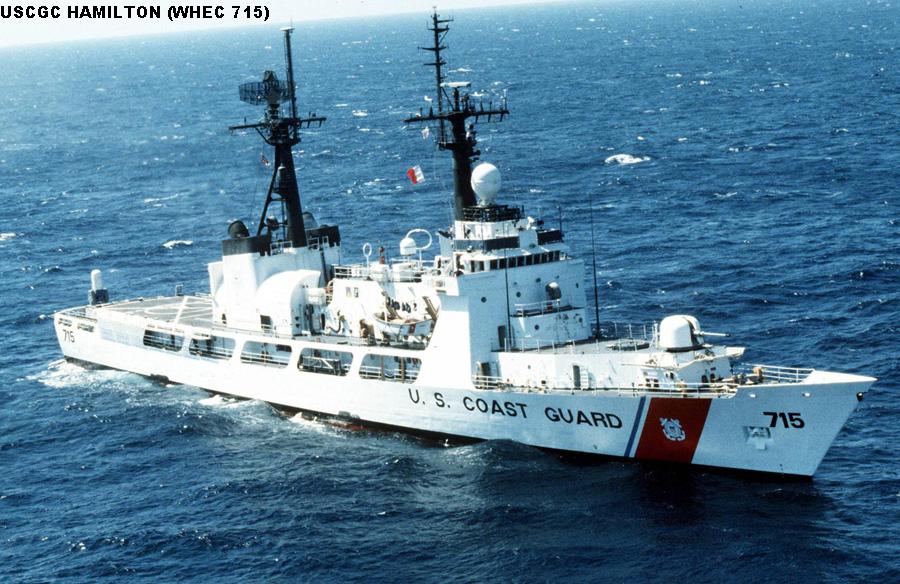
All the details are on Andrew Toppans Hazegray site though.


 Sign In







