Jonesy
i think you may need to post some examples of nice Italian ships to jog my memory.
Only Cavour strikes me as visually impressive.

Impetuoso
[ATTACH=CONFIG]221273[/ATTACH]
Vittorio Veneto
[ATTACH=CONFIG]221274[/ATTACH]
De La Penne
Wan has it right there is a certain similarity in the upperworks arrangement between Russian and Italian designs but, for me, its all about the hull lines. Look at the lines of those three above…the Kirov image that thobbes posted and the truly lovely shot of the Shirane Wan put up. Its a very hackneyed old line but tied alongside the De La Penne looks like she’s doing 20knts!. Definite ship porn….off for one of my pills and a lie down now!.
Jonesy.
in terms of good looking ships:
Russians, British, Dutch, GermansThe French ships tend to be either really sleek or really awkward looking.
Japanese ships, aside from the Izumo, are boring as hell. Koreans too.
You missed the Italians in the aesthetics premier league…right up there in the rankings for my money!. Always thought that there was a lot of Italian influence in Russian naval design funnily enough.
Jonesy“It’s obvious” is a typical cheap phrase of the clueless ones.
I can see now you got no idea… thanks for clarification.
MSphere you do know that the ship in question has an eight boiler HP steam plant right?. This means many hundreds of valves, joints and miles of piping and fixtures that WILL require critical routine maintenance…like every other HP steam plant that has ever gone to sea. That fact alone dictates a larger engineering complement than a diesel or turbine plant and higher associated training and logistics costs throughout the life of the ship. If you do not think this obvious by all means check and see what commercial shipbuilders are doing…steam plants do still turn up for specific requirements, but, large capacity low-medium speed diesels replaced them decades ago as the predominant prime mover for large merchantmen…vessels built with an eye to operational cost.
Even if the refitted steam plant in this hull has a perfect operational life and never once, hopefully, has an ‘event’ of the sorts not uncommon in steam plants the world over…it will still be expensive to operate, compared to the contemporary alternatives, and there a no shortcuts as having hp steam aboard ship is damned dangerous and kills people if not monitored properly!. You do not need to see a precise breakdown of the official cost per mile figures to arrive at that conclusion.
Unless of course the Russians have installed an engineering pipe fit that requires next to no maintenance and is impervious to vibration, heat, friction and mechanical shock loadings?. Perhaps TR1 could advise if they have and just kept it really quiet?.
JonesyPossibly but I’m still not sure a diamond-back wing-set would work under those conditions and even a strategic bomber would struggle to carry a single DF-25 like missile. Even a DF-21 weighs more than a MOP and is almost twice as long.
Of course the important part of what you wrote initially on this was ‘air-launched ballistic missile’. That being the part I missed of course!. Apologies!.
JonesyAlso, there is little to no difference in flight profile of hypothetical subsonic, passive seeker antiship missile and hypothetical supersonic, passive seeker missile.
Except that the subsonic missile described above isnt hypothetical….its operational. Against this no-one, so far, has managed to build a supersonic i.e M2, sea skimming, passive seeker missile.
Jonesy12-14 SBDs would weigh 3,000-3,500lb alone making it not very air-launchable. Not sure how SDBs perform at Mach 10+ either. I was thing more like SLIRBM.
DF-25 has a throw-weight of 2000kgs I read somewhere?. ‘SDB bus’ could be just another warhead fit theoretically as the actual cross-range terminal phase stuff would be handled by the munition itself. Lilkely they’d be down a bit from M10 by the lower atmosphere!.
JonesyOk, that means the basic assumption if you’re gonna attack or not with your proposed weapons vs this full fledged task force
is if they got a radar going or not.
It follows then that if they keep a radar on, ship or airborne, they wont be attacked
No…it just means the number of weapons employed in the strike has to be higher either way. With the supersonic its difficult to conceive of the attacking force maintaining tactical surprise as the weapons are in no way discrete. With the subsonic, with a passive seeker, there is at least a possibility of achieving that. With tactical surprise the chances of attack succeeding go way up.
JonesyVerbatim
Because there is not such a thing as a saturation attack suitable against a full fledged task force.
If it is alterted to the attack in progress!. This is the whole point I’m making.
Even a couple of dozen incoming weapons could be dealed of, starting with multiple engagements up to 50 km away from the outer layer of the task force defence by AAW DDG or CG, following with multple engaments under 20 Km away both from AAW ships and other surface combatants, following with at least multiple engagements by either CIWS on likely targets or even nearby AAW ships. On top of that, chaffs, flares, ECM…
…and all you have done there is to detail, thoroughly, why you do not want to attack a fully alerted naval target set. Again, as you say, all the supersonic does it to shorten the response time for defensive weapons. To counter that all that is needed is for those defensive weapons to be able to react faster…which is exactly what has happened. Supersonic is no longer the advantage it was because, even twice as fast, is no longer fast enough.
Let me try and explain this a different way. You are the PWO(A) of an anti-air escort. You are going to sail through defended waters escorting a group of amphibs…you need to perform a threat reduction exercise to see what you can do to minimise risk of a missile hit on the heavies. What would you rather face:
1, A large supersonic missile threat. One that you know can only be deployed by the larger strikefighters the opposition possess. Which intelligence tells you are only based at two specific airfields. One that needs the opposition to have to develop very solid target data before they can fire…that you can look for them trying to develop. Its a missile that you know will hurt you if it hits, but, you are pretty confident that you will get warning of from your IR and ESM sensors if it comes in…allowing you to keep your MFR/VSR in standby…not broadcasting your position. Also one that you know your hardkill and softkill will be effective against.
2, A small subsonic passive missile threat. One that you know your ship will survive hits from, unless there is a big fire, and one you know your hardkill will be able to cope with, provided its a modest streaming attack. One that the opposition can launch from any fastjet in its inventory and from some of its chopper force. One you know you are going to get no warning of on its approach and, from organic systems, one you are going to have to radiate to pick up…and then chances are you arent going to pick up until it crosses your horizon. Its also a weapon that the softkill in your decoy tubes isnt going to do much for.
Maybe its counter-intuitive to most, but, that latter scenario scares the hell out of me a lot more than the former. If I couldnt get reliable permanent, high quality, airborne radar cover for the second scenario I’d say dont try it and choose a route away from the threat. The first one I’d consider giving it a go…if the risk was warranted.
Air-launched ballistic missile with terminal guidance and manoeuvring RV? Terminal guidance sensors shielded until after re-entry then shield is ejected.
Swap out the manoevering RV for a bus stage holding 12-14 SDB-II clones and fire 2 or 3 at a carrier. 30-40 250lb warheads with 30-40nm cross-range glide for evasion/zone saturation seekers targetted on elevators, island/sensor masts, fueling pits, ordnance hoists, catapult tracks. Good luck defending that one!.
Jonesythere are two distinct different requirements for a lightweight weapon to pur out of service small or medium surface combatants, and for a heavier weapon to engage targets well within a comprehensive, layered and long range EW/AD system.
Why a heavier weapon?. Why not the lighter weapon, given sufficient range, in greater number?. Even a larger AShM like an RBS15 or Kh31 is only delivering an M-kill to anything but the lightest of frigates…slam an NSM into the forward mount/weapons deck, bridge, sensor mast and the chopper hangar and your target is out of the fight…even if its cruiser sized.
I genuinely dont see the advantage of supersonics that makes them worth the size and complexity to deploy. Talk above is of M4.daft ramjet designs…this is case in point…whats the IR signature of that weapon up at the altitude needed for M4 flight. Three decades back the Soviets were putting out a M5 terminal diver in the shape of the Kh-15….in 73 we were testing Sea Dart against Petrel rockets at Aberporth simulating that kind of profile. Fast diver threats have had counters programmed in for a very long time. They, as per my initial comment, do little to mask their approach as well so, uniformly, the missiles will have to defeat a fully alert ship. Not the smart way of doing things…however ‘cool’ they may appear.
JonesyI do not see the proposed advantages of subsonic AShM ad valuable when confronting 1st class navies.
I would take as granted some form of airborn EW, denying most if not all of the aforementioned pros to subsonic missiles. Multiples submunitions design apart, I think speed, LO and some form of autonomous countermeasures would be the only ways to grant some chance to the attacking weapon.
Supersonic speed and LO combined, in the context of a missile, is a good trick on its own. Your point is well made of course…employing any missile is complicated greatly by the presence of seamless high quality airborne radar. A low and slow (and LO) missile will still be detected later than the high supersonic of course…regardless you’d look to saturation fires in that environment and hope you can get a few through. With supersonics you’d possibly need fewer weapons to achieve the saturation, but, you’re firing fewer for an equal number of launch platforms!.
The main point I’d make though is that only two services deploy the E-2 Hawkeye to sea and one of those cant guarantee a deck available at any given moment. Other than that the 1st class navies’ airborne radar discussed amounts to 3 or 4 choppers embarked on a handful of through-decks. Coverage isnt necessarily seamless and without it back come all those advantages dismissed so easily.
For everyone else of course the subsonics advantage holds.
JonesyYou mean this one right? – Link
What about the CM-802AKG (Link) & SLAM-ER?
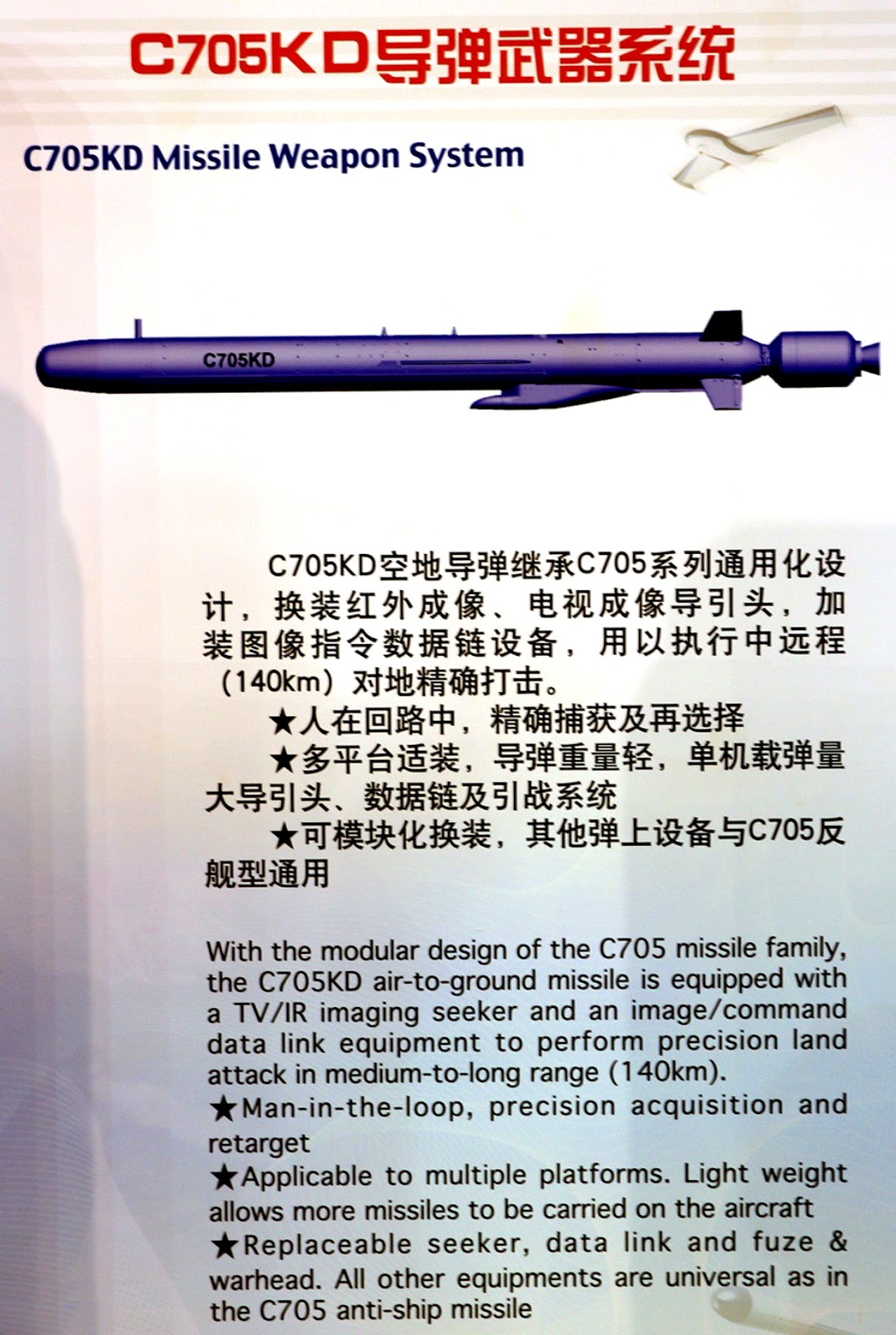
I dont keep current with the Chinese designators I’m afraid Quantum. A couple of years back there was a C-705 antiship variant allegedly offered that matched an IIR seeker with ATR and a datalink for MITL operation. I was suitably impressed and, to be honest, I thought that it was a case that anything Kongsberg could do Chinese industry could…erm…emulate?!. The variant you linked is the one I saw in a quick scan to see what the specifically configured model was…on close look that seems more like a basic IIR scene lock weapon than what was described though.
PD,
so supersonic missiles are larger, need to be flown by larger planes, and thus have other unique type of vulnerabilities compared to subsonic yes?
Generally speaking yes.
is there a smaller, shorter range supersonic missile?
The prime contender here would be the, well exported, Kh-31. In its early form at least this was a direct flight or loft profile ‘diver’ not a vlow ‘skimmer’ profile weapon. All the same issues that impact BrahMos/Oniks type weapons also impact here. There are new designs coming from several nations…Japans ASM-3, several new Chinese types, etc nothing has come to light about any of these that would suggest that a big change has been made that allows the difficulties of the 3 S’s (supersonic, sea-skim and smart) to be overcome and a solution combined into a practically sized weapon.
if large planes are more vulnerable to being detected, what about a long range ground launched anti ship missile that is launched from the coast….also how do stealth airplanes carrying anti shipping missiles (i guess just the f-35 for now) factor in this element of surprise you talked about?
Now you are touching on ground where new technology is promising the potential of some very uncomfortable looking systems for surface ships. Many see the emergence of DEW as the end of manned airpower in frontline warfighting. I think you can look at weapons like SDB-II and, especially, SPEAR cap3 and make a similar prediction for naval surface forces….at least until DEW reliably goes to sea.
My view of where we are are going to end up with antiship is a vehicle acting as a bus-stage for multiple smart, small, multispectral seeker weapons very much in the SPEAR model. That bus vehicle could be a long-range missile (shore, sea or air launch) like a Storm Shadow ejecting 4 ’rounds’, a Taranis-like LO UCAV releasing half a dozen or a manned strikefighter sending 8, 12, 16 in behind a pair of MALD-J’s. In any of those cases its going to be very, very much simpler for the attacker to deploy saturation effect than it will be for the ship designer to put in comprehensive defenses.
Certainly when you look at weapons like MBDA’s Perseus you see that the concept of multiple ‘effectors’ to overload defensive fire channels is well understood and being designed in to future systems. SPEAR, according to MBDA, is already defined as a system with an antiship role. An adaptation of a large VLS capable LO missile body….such as MdeCN or Storm Shadow to contain at least 4 rounds looks feasible and potentially could contain comms relay capability to share a DL with the bussed rounds for retargeting or even, perhaps, an RWR and basic white-noise jammer to help ‘shoot-in’ the SPEARS when the bus-missile detects target CIWS radars coming up. Nothing in that concept is more than an engineering job…after SPEAR is operational.
JonesyThe problem with subsonic is that phalanx and all the close-in missiles like SA-N-9 has all the time in the world to plink them down one after another, you have to deplete all the defense munition before a single subsonic missile can get through, otherwise it cant, and thats not even counting added energy and fragmentation if a supersonic does get hit.
Thing is though supersonics dont change that so much now. Close in missiles arent RIM-7, Crotale/R440 etc now. Its ESSM, VL SeaWolf, VL MICA, FLAADS and Klinok…very fast reacting missiles as capable against supersonics as subsonics…perhaps more so as the supersonics tend to run straighter and, as noted, the target is alerted much farther out, generally, with a supersonic. The way to catch a ship is when its looking the other way…or asleep…a supersonic attack profile doesnt lend itself to that.
AHEAD/DART/3P rounds are deployed to cope with inbounds at several thousand yard ranges…frag impact is going to be huge odds against from that range with unaerodynamic form factors!. Irregular shaped lumps of metal dont tend to fly straight and true, at supersonic velocities, for miles…
Jonesyi think you have a good point. why don’t you make a top five list of your own then post here and include such reasons such as flexibility of carriage, smart sensors, etc?
Again though we can create a list of objective ‘good’ antiship missiles…and provide justification for the definition. Any concept of rank though is entirely spurious…as it will depend on tactical environment and, as Bring It notes above, ISTAR collection and dissemination capability of the employing service/state as to which will be the best option.
I will declare a bias against high supersonic weapons straight out. For antiship supersonics were developed as an attempt to defeat the defensive fires problem. Minimise the window within which the inbound is exposed to defensive systems and you maximise the chances to hit target…or so the theory goes.
Problem is that, largely, the theory is flawed. Minimising time of exposure to defensive systems sounds good on paper…and you’ll see specs everywhere of how a subsonic will take 2 minutes or more to traverse a distance that will take a supersonic 50 seconds. To be a fair comparison though that relies on the fact that the subsonic and supersonic weapon will be detected by the target at the same time and this just does not have to be the case.
Generally, to get supersonic performance at range, the faster missile is larger and requires a larger carrying aircraft. To get the range to keep the larger, more detectable, launch platform back from the targets defensive area missile envelope the larger missile is obliged to fly a high-lo profile. BrahMos, for example, does not sea skim at m2 for its entire 300km flight profile. What that means is that the missile is detectable earlier in its attack profile as, being at altitude with an impressively large IR sig/plume, is a good way to show up on several sensors commonly found on naval escorts these days. Thats even before it broadcasts its presence with the active radar seeker.
The irony with that type of supersonic weapon is that, as big expensive weapons requiring big expensive launch platforms, the primary target set you would wish to use them against, principle anti-air ships, are well equipped to deal with them and becoming increasingly more so. With faster reacting area- and, now, local-area naval SAMs backed by larger calibre ‘smart-fused’ inner-layer gun systems hardkill is well optimsed for the threat….stretching back out that limited engagement window by track-forming and engaging quicker and from farther out. Essentially then, by the weapons nature, it alerts the target to its attack early and its one real trick, its speed, is no longer a guarantee of success. Its possible to resort to a saturation attack, of course, but that becomes difficult to mount because of the higher weapons cost and necessary commitment of resources to deploy.
The other way, apart from supersonic, to minimise exposure to the defensive weapons envelope, and to my thinking the smarter one, is to delay detection of the attack until the last possible moment i.e until its crossing the targets radar/vis horizon!. This of course requires the missile to achieve tactical surprise so any active seeker is right out. It also means low altitude passive approach and descent to absolute wavetop to press back that horizon as close as possible to the target. A 300m/s weapon detected at 12km is on the target in 40 seconds. If thats your first indication you are under attack, and you have a saturation attack of 4 weapons inbound anyone will struggle. Especially if you catch the target in defence watches!. Surprise and smarts beats speed being the soundbyte!.
That being the case, where I asked to specify weapons to equip a naval service, in order to protect an EEZ/SLOCs/coast against a regional superpower level opponent I’d select (no shock to those that know me of old!) the NSM/JSM and back it up with the C-705 in IIR/man-in-the-loop configuration. If I was told that I’d need to make bigger holes in stuff perhaps I’d look at the Kh-59M2 and ask for a lot of heavy strikefighters to saturation deploy them.
If you want a list then….mine would likely be:
NSM/JSM
C-705 IIR (KD?)
Kh-59M2
JonesyIm not good with munition knowledge..
what are the top 5 anti shipping missiles?
maybe its hard to rank them so it can just be top five as a whole (unless you feel there is a rank).and I know there’s different ranges and speeds designed for them so maybe there can be multiple categories of top 5?
The answer to this will depend on who is wanting to use the weapon and in what operational context. A kh22m maybe fast And able to hurt the biggest ship targets, but, if you need a backfire to fire it how practical is it.
The Taiwanese have fielded a couple of good looking designs but I’ve heard little about reliability. As mentioned on an earlier thread many of the longer ranged missiles have shown a propensity to clear off in any direction they fancy under operational testing!.
Possibly then you could say that your list should be for the five smartest antiship missiles. Theory being that list shouldn’t be too different to what you want. It will automatically favour weapons with imaging seekers and target recognition over anything with a traditional active radar head.
JonesyIn fact, even Taranis/Neuron (and their scaled-up EJ200/M88-powered operational successors) are within the 12 ton envelope of EMKIT+.
Given the timeframes/investments involved, NOT navalising the future Anglo-French UCAV would indeed seem rather stupid.
I think this is where the issues with approach speed and deck reconfiguration may creep in though. Reaper has a stall speed of 55knts….even a marinised version with a shorter wing and strengthened fuselage isnt going to change that dramatically. An approach speed of 70-75knts could well be viable for that type then…which puts recovery speed on a deck doing 25knts+ around 45-50knts before we consider any headwind. Even with a wet, slippery, deck stopping a Reaper-sized vehicle from 45knts down to taxi should be simple enough in 300-400ft with braking and reverse pitch on the prop.
Taranis/Neuron dont look likely, aerodynamically, to offer such benign low-speed handling characteristics on cursory glance. You arent launching singletons on 18-20hr patrol racetracks either. Its more likely a formation of strikers that will return for a landing sequence at launch plus 3hrs etc. The deck will clearly have to be configured for the landing evolution and any alert spotted F-35’s will have to be well back from the launch run with the axial layout. I think my view would be, if we were to move to significant fastjet UCAV ops, that would be where we’d want to adapt to an angled deck and an arresting engine install.
Would be a serious ship at that point though….LO, legacy Hornet level, manned tacair…LO deep strike UCAVs plus whole aspect AEW/ISTAR/Force Protection from Mariner/Seaspray. All with the ability to role shift to large LPA duties inbuilt…all delivered without the significant setup and maintenance costs for dedicated naval tacair. I think we’d be quietly pleased if thats where we were at by the mid 2020’s!.


 Sign In