KKM57P
might be within the Rafale’s low level FCS then :confused:
The question is more how usefull is extrem low level since man pad and Strawberry Search Radar ?
How secure is low level without carfree handling? The deadly Rafale crash 2007 shown the lack of carfree handling.
KKM57PProblems
The Rafale is an almost unparallelled achievement for a single nation, as equivalent fighter programmes have been undertaken by much larger companies or collaboratively by several nations. As an aircraft to meet French requirements (combining a robust carrier capability and good air-to-ground potential) Rafale could not be bettered, while the programme’s unilateral nature afforded great focus, and protected it from many of the political factors which have so dogged the rival Eurofighter. Any problems (and those listed here are disputed) should be viewed in this light.
There have, however, been increasingly critical comments about Rafale from members of the National Assembly’s Finance and Defence Commissions, and there have been reports of disagreements between Dassault and DGA about cost increases and obsolescence. According to Defence Analysis (p.17, Vol 8.No.12 December 2005) Dassault have called the RBE2 radar ‘fatally flawed’ alleging that its range was “inadequate” and averring that the Rafale therefore relied on AWACS support to overcome this. The DGA also described Rafale’s OSF (“Optronique Secteur Frontal”) as “obsolescent” and production has been cut back to just 48 units, rather than the planned number, which was to have been sufficient to equip all F1 and F2 versions.
While UK and German newspapers have been energetic in their criticism of Typhoon, Rafale has enjoyed a much gentler ride, and many of Rafale’s problems (which have been similar in nature, scope and extent to those suffered by the rival Eurofighter) have seldom emerged until long after they were solved, or remain unsubstantiated rumour, though there have been exceptions. According to Defense News, Air Force Gen. Eric Rouzaud revealed that early deliveries of the Rafale were prone to a software glitch that cut out part of the flight system, requiring the pilot to hit the reset button. The fault has been fixed, Rouzaud said.
There were reports that problems with the “Central Processor” led to only three of five Rafales being delivered during 2004, and suggestions that the same problem led to a shortfall of deliveries (against the planned schedule) in 2005.
There was a two year delay in signing the production contract for the 59 F2 standard Rafales, and the order due to be placed in 2006 has dropped from 82 aircraft (65 AdlA, 17 Aéronavale) to just 66 (48 AdlA, 18 Aéronavale) (according to the Vincon Senate report). The Pintat report indicated that this reduced order has also been slipped to 2007.
Still subject to delays, the Rafale (once progressing well ahead of the rival Eurofighter) has still not entered full operational service with the Armée de l’Air, and less than a dozen are in use with the French Air Force for trials, evaluation and conversion training with EC330. Though the aircraft entered operational service with the Aéronavale in 2004 Flotille 12 still has only 9 Rafales (less than a full Flotille) and is currently limited to Air-to-Air combat (F1 software/hardware standard). There are concerns that operational loads (especially in the long range air to surface role) will be limited by the present engine’s relatively modest thrust.
A “Post F3” configuration is now being discussed, this will be fitted with an active array radar, which is necessary to fully exploit the MBDA Meteor.
More controversially, some sources (including Francis Tusa’s industry newsletter, Defence Analysis) maintain that the aircraft compares unfavourably with Eurofighter’s Typhoon in the air to air role, though this is vigorously denied in other quarters. Though it uses a modern and extremely efficient canard Delta configuration, Rafale has been accused of being hampered by an old fashioned and ‘cumbersome’ Man Machine Interface, and it has been further suggested that this was the main reason behind the type’s rejection by South Korea and Singapore.
According to Defence Analysis and Flight Daily News, the Singapore evaluation also reportedly revealed problems with Rafale’s reliability and availability, and that the aircraft failed to demonstrate claimed radar performance or its claimed ability to supercruise. Singapore was also reportedly unimpressed by Rafale’s much vaunted “Omni role” capability. “Show us, properly” was said to have been the reaction, according to Defence Analysis. The lack of official comment by Singapore leads many to dismiss such criticism as unreliable hearsay, however.
http://www.electronicaviation.com/aircraft/Dassault_Rafale/819
KKM57PQuite right, although there has been comparisons claiming the Rafale has better low level ride. But it also depends on mission wing loading doesnt it?
Wing loading is at the Rafale slightly higher, aspect ratio 2.55.;)
KKM57PThis is no longer an issue since the event of FCS FBW (See Mirage 2000s).
But the Mirage 2000 has an aspect ratio of ~2.
KKM57PAll good points and all worth replying to:
Large delta wing aircraft do not make good low level strikers due to severe buffet encountered at high speeds and low level. FBW only addresses some but not all of the problem.
Why?
First need we for low level stike a low aspect ratio, this big Typhoon wing have a very low aspect ratio of 2.4.
Lower dCl/d_alpha. I see no buffeting problem.
The aspect ratio is lower as a F-16E (3.20), F-15E (3.5) and lower as a Tornado (2.77).
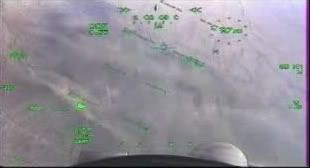
KKM57PI was interested by what the HUD was saying.
READ: 207 kt, Alpha = 77* AoA. (And a D.E.A.D F-16).
You known that this is in a dive.:diablo:
KKM57PEurofighter Typhoon Gains Altitude
Eurofighter Typhoon Gains Altitude
Jan 14, 2009
By Bill Sweetman
The Eurofighter Typhoon is the world’s biggest fighter program, increasing production to as many as 60 aircraft per year (versus just over 40 for the F/A-18E/F Super Hornet). (How many Rafales or Saab Gripen?) The Royal Air Force declared the fighter combat-ready in 2008 for air-to-air and air-to-ground missions. Germany and Austria also declared the aircraft operational, the latter within nine months of receiving its first jets.
Another milestone was the delivery late last year of the first Tranche 2 Typhoons to the sponsor nations: the U.K., Germany, Italy and Spain. Although the U.K. has added an air-to-surface capability to its Tranche 1 Typhoons through the CP193 modification program, Tranche 2 aircraft, with more modern mission computers, will be the basis for a full multirole capability.
This year will see a number of important events for the Typhoon. Its combat debut, however, will probably not be among them: The U.K. Defense Ministry announced last July that the Tornado GR4 force will take over close air support missions in Afghanistan from RAF Harrier GR9s in 2009.
The first Typhoons are due to be delivered to the major export customer, Saudi Arabia, this year. The Saudi government has ordered 72 aircraft and reportedly wants another 40.
……
KKM57P1. (Air to surface configuration, with 600 Gal tanks * 3 + SCALP-EG * 2 + MICA *4)
Upper limit for G-loading: 5.5G; Upper limit for rotating rate: 190 deg/sec; Upper limit of speed: Mach 1.04; Upper limit for AoA: 25 degrees.2. (Air to air configuration)
Upper limit for G-loading: 9.0 ~ 11.0 G+; Upper limit for rotating rate: 290 deg/sec; Upper limit of speed: Mach 2.1; Upper limit for AoA: 32 degrees.3. G-loading: -3.2 to + 9.0 G ~ 11.0 G+
Wow, the French can alter the gravitational constant = G.
For physics losers, the standard gravity is g. 😉
KKM57PNot such “Evidence” as you mean it, only a Dassault flight-test pilot comments…
I also know someone who knows someone. :rolleyes:
Your Dassault test pilot only pink noise.;)
KKM57PAs i said you haven’t seen everything YET; Rafale performed a Cobra and Herbst maneuvres as well…
What ARE 100*+ AoA and 40 kt Negative speed according to you?
No crash there.:cool:
As for the Gripen maneuvre it wasn’t intentional.:D
Any evidence? Photos or videos? Or just pink noise!:diablo:
KKM57PThat’s because my friend, you haven’t seen everything just YET.:D
Sure.
Långholmen the Gripen performed some Pilot induce Cobras and then crashed after the Vaesterbron bridge.:diablo:
KKM57PAs a matter of FACT BOTH X-31 (TVC) and Typhoon are limited in Max AoA to 70* for the SAME reasons of lack of pitch control (one of Long-moment harm arrangement drawback creeping out).
In ther other hand, Gripen demonstrated 90* AoA and Rafale passed 100* AoA and 40 kt negative speed a full COBRA maneuvre without TVC.
The only Cobra who I saw performend with a Gripen ended in a crash.
How should the X-31 fly all this post stall maneuvers?
Rockwell-MBB X-31 flight maneuvers.ogg
http://commons.wikimedia.org/wiki/File:Rockwell-MBB_X-31_flight_maneuvers.ogg
http://www.dfrc.nasa.gov/Gallery/Movie/X-31/index.html
KKM57PAlso, I would think that in a VLO airframe, the FSW wing’s forward edge would reflect EW energy back toward the fuselage to be scattered again in many different directions. This would severely compromise it’s forward RCS which is where you want the best RCS numbers.
A forward swept wing is a RCS nightmare its concentrate the Radar return in the front quarter. Lex and wing generate a internal triangle (a 2D cat eye).
KKM57PI think Jon Beesley knows a thing or two more about 9G aircraft than you….:diablo::diablo::diablo:
When he wrote 9G then has he no clue about physics!;:rolleyes:;):diablo:
KKM57PI don’t think thats correct, from what I understand they, the Eagle pilots had absolutly no idea that anything else was in the airspace around them, as far as they were concerned they were alone up there.
The keyword is TBD and MTD at new Radars! TBD is Track Before Detect (plausibility a bumble-bee can’t fly with Mach 1+) and MTD is Moving Target Indicator (no blind speed, better clutter suppression and detecting radial flying targets). Then is LPI not limited to AESA! Pulscompression, DSSS and FHSS is widely used at miltary Radars.


 Sign In