 Otaku
OtakuAtleast one European fighter has a production AESA then compared to 0-Russian.
I dont say russian radars are bad, but in the digital age they are behind. thats all. Russians are normaly very good in the science of radio/HF but not in the digital area.
Have you guys heard of something called COTS? Are you aware that the commercial civilian electronics & computing sectors are leagues ahead in R&D, than any military-only suppliers (if the latter exist at all anymore).
Today, the radar size or output power and even the type of antenna are often second to the software, when it comes to operational efficency. Data processing is the key.
I’m sure India’s software industry will have invaluable input in the PAK-FA/FGFA 😉
(I can add that SAAB is interested regardless of the outcome of MMRCA)
From last week’s AW&ST:
The Director of the Indian Government’s official air power think tank says the Gripen serves the service’s requirements best. In a recent column, Air Commodore Jasjit Singh writes: “The choice that comes closest to ‘medium’ multi-role aircraft that the [Indian Air Force] has been seeking since a decade ago, is the [Indian version of] the Gripen NG”.
http://www.zinio.com/reader.jsp?issue=416146353&o=int&prev=si (pg.35)
Coincedence? I think not.
Partnering SAAB for the AMCA would be a shrewd move, and their pedigree would definitely attract other investors & partners.
OtakuFGFA progresses. Interesting (if accurate):
“The draft was made during the Russian defence minister’s visit in October. The final details of the deal have already been worked out and the file has gone to the finance ministry for the final approval,” said a highly-placed official at the Ministry of Defence (MoD), on condition of anonymity as he is not authorised to speak on the matter…
…According to IAF officials, the 30-tonne advanced FGFA, priced around $100 million, will have very advanced avionics, stealth to increase survivability and enhanced lethality. Expected to enter service in 2017, the FGFA’s developing cost will be shared between India and Russia. The Indian side so far has put in $250 million.
India will be responsible for developing software for on-board computer systems, aircraft self-defence systems, and a host of other important components.
http://www.tehelka.com/story_main48.asp?filename=Ws011210INDIA_RUSSIA.asp
OtakuWhat exactly is a “Block III+ version”? (Blk II has target discrimination software right?).
The BRAHMOS Block III+ version was successfully test fired this morning at 1055 hours from the Interim Test Range (ITR) in Orissa. This landmark test once again established the mountain warfare capability of the supersonic cruise missile with new guidance scheme incorporating large scale manoeuvre and steep dive with precision strike capability. Naval ship placed with telemetry stations confirmed the accuracy of the mission and marked it as a text book launch. Defence Minister Shri AK Antony congratulated the DRDO and BrahMos team with this highly successful launch of the new version of BrahMos. In this launch campaign the missile was put though extreme conditions and it successfully went through all complicated manoeuvres as envisaged in the battlefield in mountain terrains following the exact flight path given to it, said Dr. A. Sivathanu Pillai, CEO & Managing Director of BrahMos Aerospace. High ranking army officers, who witnessed the launch, congratulated the BrahMos and DRDO team with this achievement which will provide unmatched capabilities to the Indian Armed forces.
PK/MMB
If the DRDO themselves increased the range (circumventing MTCR), stuck a nuclear warhead on it and deployed it aboard decent SSNs, then they wouldn’t have to go through all the phenomenal expense of SSBN/SLBM. Just my thoughts.
Nevertheless, becoming more & more impressed with this missile system, roll-on hypersonic ‘BrahMos 2’.
OtakuEeek!! Guys i just had this horrendous nightmare where ‘Scooter’ (remember? the “the all do respect” guy) was risen from the dead as a Cyber-Zombie n was talking about:
…Typhoon, Gripen NG, and Typhoon.
…not to mention U and NWs & ECEWVs!!!
I think I need a holiday.
OtakuThe 15th test-launch of the “Bulava” SLBM (and the first from ‘Yuri Dolgorukii’) will be conducted on the 17th December from the White Sea.
http://www.prime-tass.ru/news/0/%7BE4F0317F-7413-41F2-A859-4C7B968AD420%7D.uif
Pic c/o Deep Blue Sea:
Otakuminimizing the number of deaths and PoWs is kind of the whole point of modern western military doctrine, yes. was that unclear to you? or are you saying you’d rather see more people die than less?
Erm…WikiLeaks would beg to differ. When UAVs & UCAVs acquire the [artificial] intelligence of a T-1000, then perhaps your vision will become a reality. That day, however, is a long, long way away. Until then the human pilot is safe, let’s not kid ourselves otherwise.
Anyways, back OT. Another A-LOC tragedy like David Cooley’s on March 25th?
RIP.
OtakuIt is believed this MiG-31B was lost near Perm yesterday, crew ejected.

OtakuMADE IN CHINA

…I highly doubt it (no poo-poo intended).
OtakuEdit: Unacceptable personal attack removed by moderator.
Beautiful air combat:

Otaku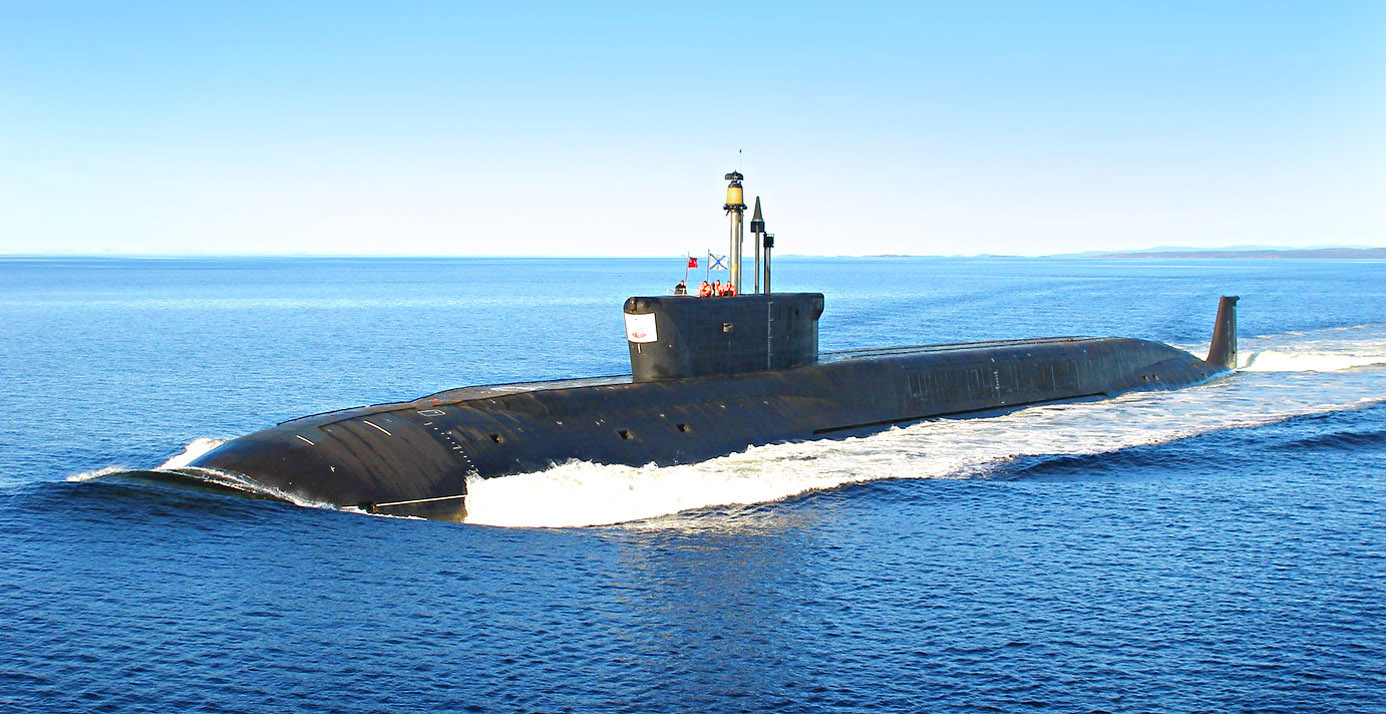
😎
OtakuEverybody say a big thankyou to flateric for discovering the official patent application for the PAK-FA, no less. Legible google trans due to length & time constraints:
12) ABSTRACT OF INVENTION
Status: As of 08.11.2010 – is valid(21), (22) Application: 2009133611/11, 09.09.2009
(24) Date of the origin of the term of the patent:
09.09.2009(46) Published: 09/27/2010
(72) Author (s):
Mikhail Pogosyan Aslanovich (RU),
Davidenko Aleksandr Nikolaevich (RU),
Strelets Mikhail (RU),
Runishev Vladimir Aleksandrovich (RU),
Tarasov Alexey Z. (RU)(73) patent (s):
Open Joint Stock Company “Sukhoi” (RU)(54) MULTIMODE highly-integrated aerodynamic AIRCRAFT LAYOUT
(57) Abstract:
The aircraft has a fuselage, in which the middle part (2) seamlessly paired with swept wing (3), warhead (1) and tail (6), where the all-moving vertical tail (4) and all-moving horizontal tail (5). The head part (1) the fuselage is light (10). The fuselage has increased the width of the cross section and recruited from airfoils whose height allows you to place the main cargo compartment in the fuselage between the air intakes. The invention is directed to a uniform distribution of air loads and increase load-bearing properties of the fuselage. 10 ill.Спойлер: Скрыть
The invention relates to multi-mode aircraft operated in supersonic and subsonic flight speeds in a wide range of altitudes. Preferred scope of the invention are multi-mode super-maneuverable aircraft with a cruising flight at supersonic speeds and low level of visibility in the radar (radar) range.Known in the art aircraft integral aerodynamic layout containing one carrying the fuselage, in which the middle part of the fuselage smoothly paired with swept wing, head of the fuselage and its tail part (RU 2140376 C1).
As a well-known shortcomings of the aircraft should indicate the following. In a plane distribution of goods to the external load does not allow to achieve a low degree of visibility of the radar, and high aerodynamic characteristics at supersonic flight regimes.
Due to the complex technical solutions applied in the layout and, above all, the integrated aerodynamic configuration of the fuselage, the plane is characterized by high value of the aerodynamic qualities at subsonic flight conditions.
The technical result on the aim of the invention is to create an aircraft has a low level of radar visibility, maneuverability at high angles of attack, high aerodynamic efficiency at supersonic speeds and at the same time preserving a high aerodynamic quality at subsonic regimes.
The technical result is achieved by a multi-mode highly maneuverable aircraft integral aerodynamic layout containing the fuselage, the middle part of which is smoothly conjugate with swept wing, head of the fuselage and tail, all-moving vertical and all-moving horizontal tail located in the rear fuselage, the average integrated with the fuselage center-wing and made flattened in the vertical direction, and its outer surface in the longitudinal direction is formed by a set of airfoils with high building heights, providing accommodation within the fuselage, built-in cargo compartments, with the upper surface of the fuselage, paired with the outer surface of the lamp and the expanding at the site from the lantern to the tail section of fuselage with decreasing curvature.
The invention is illustrated by drawings, where Figure 1 shows the plane in plan view, in Figure 2 – section A-A Figure 1; in Figure 3 – section B-B Figure 1; in Figure 4 – section B In Figure 2, in Figure 5 – section F-F Figure 2, Figure 6 – Rotation of least resistance (the body Siirsa-Haack) on Figure 7 – position of transverse sections of fuselage in Figure 8 – transverse section 7 shows, in Figure 9 – Schedule of cross-sections of the aircraft fuselage; Figure 10 – The enlarged part of the graphic cross-sectional areas of the fuselage of a lantern.
The aircraft has a fuselage, in which the average of the two seamlessly paired with swept wing 3, the head part 1 of the fuselage and the tail 6. In the rear part 6 of the fuselage are all-moving vertical 4 and all-moving horizontal tail 5. At the head of a fuselage is light 10.
In terms of aerodynamic layout aircraft has the following features: wide lifting fuselage and smoothed graph cross-sectional areas at the site of an airplane cockpit.
The fuselage has increased the width of the cross section (Fig. 1, 2) and recruited from the airfoils 11, 12, 13 (Figure 3, 4, 5), whose height can accommodate the main cargo compartment 9 in the fuselage of the aircraft (Figure 2, 3) between the air inlets 8 and also provides the necessary building height to accommodate the side cargo compartments 7 (Figure 2, 4).
In addition to space for cargo, resulting in a flattened layout an even distribution of air loads on airframe surface and an increase in load-bearing properties of the fuselage from the perspective of a lifting force that allows you to keep the aerodynamic characteristics of aircraft in general, smaller wing area,
In addition, a flattening of the fuselage reduces the effective area of the radar in the most likely areas of exposure: Side and front projection plane.
Smoothing schedule cross-sectional areas at the site of an airplane cockpit can improve the aerodynamic characteristics of aircraft by reducing drag.
Besides the general theoretical outline, the aerodynamics of the plane and drag affect the arrangement and mutual linkage aircraft parts. To estimate the drag on the mutual influence (interference), the design rule is used areas (Figure 6), which is as follows: in order to reduce the resistance, curve 14 cross-sectional areas of all elements of Sj plane along the length of the aircraft shall comply with the diagrams of the equivalent body of revolution least resistance (cigar-shaped body of high aspect ratio, the so-called body Siirsa-Haack).
According to the state of the art in the design of aircraft used the scheme to link canopy and fuselage, shown in Figure 8 (A – a common scheme), which is characterized by the fact that cross-sectional area decreases in the area of the canopy to the tail. The schedule of areas for this scheme has a marked departure from the body Siirsa-Haack in the canopy (Figure 9 and Figure 10, section A).
To improve the aerodynamic characteristics of a scheme for linking, which consists in the fact that the upper surface 15 of the fuselage expands on the section of the lamp 10 to the rear part 6 of the fuselage, compensating for the decrease in cross sectional area (Figure 8, B – invented by the scheme), resulting in smoother “failure “on the graph area of a lamp driver, which is characteristic for conventional aircraft integral aerodynamic layout. The curve on the chart area close to the optimal shape, which indicates an improvement in aerodynamic performance (Figure 10, section B) by reducing drag.
Claim
Multimode highly maneuverable aircraft integral aerodynamic layout containing the fuselage, the middle part of which is smoothly conjugate with swept wing, head of the fuselage and tail, all-moving vertical and all-moving horizontal tail located in the rear fuselage, wherein the middle part of the fuselage is integrated with center-wing and made flattened in the vertical direction, and its outer surface in the longitudinal direction is formed by a set of airfoils with high building heights, providing accommodation within the fuselage built cargo compartments, with the upper surface of the fuselage, paired with the outer surface of the lamp and extending the area from the lantern to the tail section of fuselage with decreasing curvature.
Otaku© Max Bryansky

OtakuThe only thing new was a official making the comment that India should not be made a full partner, as that will take away from European high tech. jobs, only the software backend to be shipped off to India, you know the outsourcing model to cut down on costs.
Yeah, then the Indians can charge whatever price they want for the ‘outsourced’ source code!! Brilliant!!
Regarding offsets EADS has the most to offer for both civil & military sectors, I highly doubt being offered partnership is some sort of cruel joke- you have to look at the wider picture of India as an emerged economic power this coming decade.
Just because the Tejas gets the F414, a US victory is not a given- far from it.
Barring any ITAR funny-business, my money’s (still) on Eurofighter Typhoon.
OtakuBullish on EF in the FT yesterday:
The Eurofighter consortium – the UK, Germany, Spain and Italy – is considering inviting India as the fifth partner in its defence alliance should it opt for the Typhoon multirole combat aircraft as part of the modernisation of its air force…
“That kind of debate will probably seal the deal,” said an official close to the fighter jet competition who held up the prospect of India as a “major player” within the Eurofighter *consortium.
OtakuZhukovsky 03/11/10. Modified IRST on company Su-30?


 Sign In








