 Kapedani
why would airfields be only allowed attacked with airplanes?
I don’t disagree. But if we’re talking about such a far-fetched scenario as a US-Taiwan-China war, then any Chinese ballistic missile attack would be met with a similar attack on it.
This is why the whole scenario is bogus, and why a project like the B-1R is simply a tool to scare up political support for some additional military spending.
KapedaniI could have predicted that too 🙂
KapedaniI thought the future prototypes of this plane were going to be so totally different?? I think I can see the S-ducts on this one :p
Ok I’ll go away now.
Kapedani“china bases further away than okinawa”.. er, how about taking a quick glance on a map my friend? google maps will do just fine.
Yep. How about that. There’s only 4 airfields closer than 350 miles from Taiwan. The majority of the airfields are nearby Guangzhou and then around Shanghai…in a 400-500 mile radius from Taiwan. (if you don’t trust me, you can go to Sean O’Conner’s blog http://geimint.blogspot.com/ and download his google earth map of the Chinese air force. All the airfields are marked and visible)
Can a J-10 loaded with AAM or with bombs, cover 1,300-1,600km, stay and fight, and then come back?
This means that shorter-ranges aircraft would have to be based on these 4 airfields nearby Taiwan, to have any hope of affecting the fight. These bases aren’t all that big mind you…so realistically how many fighters for “swarming” could China base there? Most of those bases have only 1 runway. I think the Chinese are aware that those bases are going to be out of action pretty soon in any war
This is a fight that is likely to be limited to Su-27/30/J-11s, if it is going to turn into anything more than a 2 day brawl. And China doesn’t have any of those to be “swarming”.
They will not send their fighters in on the first day. or even first 48 hrs.
I don’t dispute that. If they send BM, they are likely to get some in return.
J-7 have the range to contest for mid-straight airspace, if appropriately guided by GCIs. the airbases opposing TW is usually built on the back side of a mountain and heavily tunneled.
J-7s don’t have the range to affect the air battle except from the few closest airfields. And those airfields aren’t big enough to accommodate the hundreds of fighters spoken off in this scenario. Not to mention that if they fly against Taiwan in any fashion, they would be nothing more than blind ducks.
operating from okinawa might pose just a couple of problems: tankers (that’ll have to fly along chinese coast to get to taiwan)
Of course they don’t.
So, basically, all the chinese would have to do is fly an awacs or two along their coast, with a few interceptors armed with very long range missiles to put out of action any fighter support from okinawa, without even having to face the majority of the fighters involved
Yeah. The US is just THAT incompetent 🙂
ditto for china, their game plan too is to wipe out US western pacfic’s air /naval infrastructure.
How would they go about doing this? They have an even bigger problem of range, since no Japanese airfields are even with 600 miles of any Chinese ones. Which means, they can muster up a limited attack by a limited number of planes. But they can’t attack both Japanese airfields and Taiwan at the same time (nor would any Japanese airfields with USAF planes on them, be sitting ducks in any such scenario)
anyway, talking about defending taiwan against a chinese attack, you can forget about the USAF there. they simply have no place to operate from in sufficient numbers and with acceptable distance to target
There’s 3 major Japanese airfields close enough that any USAF fighter can take off and fight without needing even refueling. A few flights of F-22s is all it would take to dramatically shift the balance of power. We don’t need thousands of fighters…because the Chinese can’t commit more than a few hundred anyway
This is why this whole B-1R idea is weird at best. Spend the money on more F-22s, if you’re worried about China. China at the moment can only muster up a decent sized, but not significant, air force against Taiwan for any period of time. The idea of “swarms” and running out of missiles for targets isn’t even on the minds of Chinese planners. Why is it in ours?
I understand what they’re doing here. They need to beat up the drums to exaggerate the threat.
KapedaniThe whole problem is that the US is limited to operating aircraft from a mere handful of carriers and airbases, the latter much further away from the action than the dozens of PLAAF bases
With the exception of a couple, the closest other PLAAF bases are further away from Taiwan than Okinawa is for the USAF. Most Chinese fighters can’t even reach Taiwan, let alone operate over it.
I watched one good 2 hour long program about USAF future engagements against best of todays 4+ and 5th gen. foreign fighters. It spoke about B1R carrying only longest range AIM-120s and i think over 30 of them if i remember correctly. It would also potentially carry laser for destroying Mig-31s and so on. I wish i recorded it.
This?
http://www.youtube.com/watch?v=4OCywRMr-y4
The scenario presented here is a bit far fetched. A group of enemy aircraft is going to be high-tailing out of the area when planes start falling around them, without knowing who is firing, from where, how many of the enemy are there or if there’s a missile headed for you.
In think you are hugely underestimating Chinas current rate of growth.
I think some people are overestimating them. China still has a pretty modest air force, in terms of technologically advanced airframes. It still has thousands of rust buckets it need to replace with J-10s and the like…which today are already nothing special and in 10 years time will be well past their time.
They’re doing good, but are nothing to worry about.
Even now it would be very hard for USAF to fight Chinese airpower.
Only because they would be so spread out. And its that spread that makes the PLAAF unlikely to be able to carry out this “swarm” attack on Taiwan that is presented here.
By what I can tell China only has about 2 major air bases close enough to Taiwan to allow for things like J-7s to operate and have hope of reaching Taiwan. How many planes could these air bases stage? China just physically couldn’t mass that many short-range aircraft close enough to Taiwan.
Even most J-10s would have a hard time reaching Taiwan from further away bases, which are about 500 miles away. You can’t establish air superiority over Taiwan if your fighters can’t even reach the place. Su-27/J-11/Su-30 would bear the brunt of air-air fighting. But they are limited in number to a much smaller force.
This doesn’t leave much room for any “swarms”
By the year USAF has 100 F-35s in available on two aircraft carriers, China will have double the amount of 4th gen and 4+ gen. multirole fighters.
Sure. Make it 1,000 4th gen fighters. Still most of them can’t reach Taiwan. Taiwan itself has about 350 4th gen fighters today. These are not very good looking odds for any attacker.
It’s funny that no one wants a B1R but if the chinese had it everyone would say it was a game changer!
Sure. Everyone overreacts to everything these days. Leave it to journalists…
KapedaniPLAAF prob has around 1200 fast fighter jets. A2A capable around 1000. a good chunk of it J-7 and J-8
Well yeah good point. It only has about 500+ modern fighter aircraft. Just 2 USN carriers could muster about 100 F-35s (when those come around) or Super Hornets with corresponding EW support. I’ll take 100 USN planes and pilots over 500 Chinese ones. But the Chinese aren’t crazy either. They’re not going to sacrifice their entire air force. After the first day and massive losses…they’ll think twice about flying again.
(not to mention the logistics nightmare of concentrating the ENTIRE PLAAF in a handful of bases off the coast, and the attractive targets they present)
The US already has a sufficient deterrent in Taiwan, I think.
KapedaniI could buy that. But what happens when the first 100 PLAAF planes are blown out of the sky in the first day? What will China’s appetite be for wasting its entire air force in a turkey shoot? My opinion is that wasting time on a specialized solution for a threat that isn’t really there, is a bit panicky.
Does a J-7 even have the range to fly to Taiwan, fight, and make it back to base? How many aircraft could China mass in the airbases nearby Taiwan? And how vulnerable would those airbases be to strikes from Taiwan or the USN? What could 5 Aegis cruisers or destroyers off the coast of Taiwan mean for any Chinese aerial assault? Thats about 500 ready to fire Standard missiles. No one would be crazy enough to face that.
KapedaniWould love to read any info you have which suggests otherwise
I have no clue either way. I’m asking you guys 😉
PS: I’ll ask this again, but can anyone point me in the direction of a naval forum to discuss such matters? Thanks
KapedaniI don’t quite see what advantages this offers over a stealthy super-cruising platform like F-22. A fight of 4 F-22s could carry 24 long-range AAM, super-cruise, be much harder to detect by enemy radars and have the element of surprise. What advantage does the B-1R platform offer over this, other than the ability to transit from a Hawaii base to Taiwan directly? (F-22 could probably do that too, but it could be based off Japan or Korea instead)
The likelihood of stealth fighters defeating a swarm of 4th generation aircraft is probably much greater than the chances of a long-range “flying SAM site”.
Second, I don’t see where this “Chinese swarm” is coming from. According to Wikipedia China has about 550 fighter aircraft worth anything (Su-27s, Su-30s, J-10s, J-11s). Can China even afford to “swarm” Taiwan…which has about 330 fighters of comparable performance. Even if by 2020 they manage to get this number up to 1,000 modern fighters, this doesn’t really leave a lot of room for massive number superiority.
J-20 isn’t a game-changer imho. We know nothing about it other than it looks “cool”. But we’ve seen this before from China (J-10, Type-99) and it doesn’t necessarily translate to actual performance. Plus add another 10 years before we can see it in serial production.
Third, the likelihood of a China-Taiwan clash in the next 10 years is zilch. There’s millions of Taiwanese investing in China. The Chinese aren’t exactly stupid. This seems more like an over-reaction, which some American military think tanks tend to enjoy a lot. But this B-1R idea is certainly past its time.
China’s geostrategic advantages in this enterprise are overwhelming and have been balanced in the past only by their overwhelming technological inferiority.
What does this mean? China is still technologically far behind, and there’s no chance it will be catching up in the next 10 years either. The Chinese navy has a fraction of the capabilities of the USN, and how much the Chinese can support even a short-term commitment to full scale war against Taiwan and the USN…is very questionable.
1. Our carriers are invincible!
They are. China doesn’t have the capability of restricting their operations. Those “anti-carrier ballistic missiles” are a funny story, but hardly anything more. 2 carriers with 100 F-35s off Taiwan, plus numerous escorts with several hundred long-range SAMs would pose more than a serious challenge to the PLAAF.
4. Our F-22s and F-35s will score 20:1 kill ratios!
I’d expect much higher.
KapedaniDoes Sea Shadow classify as a swath?
I was thinking linking them while on transit to increase range…and during combat operations they could break off as unmanned or lightly-manned modules (except the control module)…in close proximity to each other (to provide defense)…or dedicated modules could go about their own mission (like amphibious or land attack ones, or special operations). A hit on one module would not disable the rest of the functions, while also making it harder to hit any one of the modules (since they would be smaller than a full ship and stealthier)
but with no financial viablity
Oh I know, I’m just thinking out loud. Navies tend to be very slow at adopting new designs or
KapedaniWhat about a hull design similar to the Sea Shadow:

Platforms can be attached laterally or longitudinally.
Anyway, is there a more appropriate forum for naval matters where I can ask my (perhaps silly) questions?
Thanks
KapedaniI know nothing about naval architecture, but I’ve been intrigued why modularity and a platform approach has not penetrated as much into the naval field…as it probably should. LCS has some elements of modularity, but I was thinking of a a much more radical approach. Primarily…why have sensors, weapons, engines etc all in one hull…increasing the likelihood that battle damage will take out all the ships function.
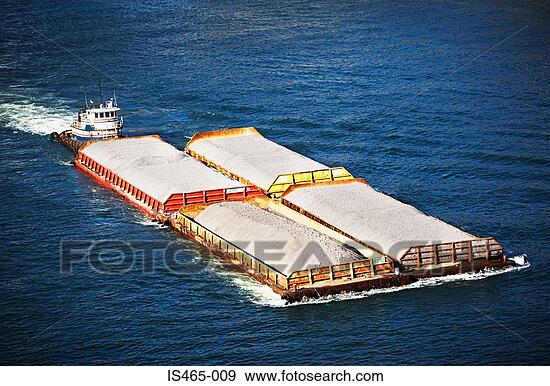
Imagine this…an approach similar to barges. Using advanced designs to reduce drag through water (a catamaran design or something similar…i have no idea)…you can create modules which contain different functions. One independent module can have 100 vls. Another can be an air control “barge”. Another can have ground-attack artillery or amphibious compartment…or helicopter carrying “barge”. Each can have independent propulsion, or can be linked to a propulsion pusher or puller unit. You can switch them around and combine them in any way depending on the mission… Modernizing any part of the system will be much easier than doing it in a single hull. Battle damage can be contained to individual “barges”.
Just thinking out loud…but if anyone here has some knowledge of naval architecture…what would be the draw-backs of such an approach? What sort of hul designs would be needed to maintain sea-worthiness of such a design?
Thanks
KapedaniIt appears it’s not only the Russians who think S-ducts are yesterday’s tech
For months members of this forum (or years by now) have insisted with absolute certainty and numerous circles drawn on pictures…that the T-50 HAD in fact s-ducts.
Then when it came out that it didn’t…every single one of them came out and revealed, to the embarrassment of the American aviation industry, that S-ducts were a primitive thing of the past.
Yep.
I agree about the S-curve, I mean it patently does not seem the most space effficient means to achieve LOS blockage.
If visual line of sight blocking of an compressor face was all it took, the P-80 shooting star and the Mig-15 were the world’s first and foremost stealth aircraft!
Unfortunately, that is clearly not enough, for the reasons that radar energy does not behave the same way as light waves. The reason why the s-duct is there in the F-22 and others, and why it is much superior in RCS reduction, is because it only builds upon the fact that there is no line of sight to the engine face. The way it reduces the RCS, is by bouncing that radar energy multiple times over RAM and RAS…leaving nothing coming out.
No amount of radar blockers or RAM on engine faces is going to produce similar results…
Simply because the Japanese call it “stealth”, or the Russians pretend it is stealth…tells us nothing about how effective it is or how it compares to the F-22 method. There’s lots of things that are called “stealth” out there…Ask the Iranians.
and Sukhoi pursued it with it’s demonstrator
“s-duct” technology was perfected in the P-80 shooting star of 1944. Simply because Sukhoi build an aircraft where the engine face was partially hidden from view…does not equate at all with experimenting with a stealthy intake design…which they obviously didn’t.
though all approaches may very well be successful at their aim (radar blocking)
Most certainly not true. And secondly, there’s “rcs reduction”, and then there’s “rcs reduction”. The French call their plane “stealthy” too.
Simply put…magnitudes are worlds apart. These approaches seem more closely related to the B-1 inlet design, where they also accomplished los elimination through similar way. It technically is “rcs reduction”, but obviously it is not of the same magnitude as for the F-22.
There’s just no physical way they can achieve similar results…
KapedaniAbout the cost AC 130 ~190 mn $$ , MQ -9 ~ 41 mn.Operational costs?Cost of weapons?
Whats the cost of 10 dead guys? The AC-130 is a great asset where the enemy doesn’t fire back. But not all wars are going to be like Afghanistan.
Either way, neither of these platforms has the same role as the A-10. It would certainly be interesting to consider a UCAV specialized for close air support, given that this is the most likely place where pilots are going to be killed.
Kapedanithe compressor face is hidden by geIt is very difficult to believe that compressor face will not add to the RCS (with or without radar blocker)ntle horizontal and vertical cant of the air-intake/trunking.
And yet, I can still see it 🙂 I must be the only one.
So what is the consensus on the forum?
The consensus is that I photoshoped the compressor face in 🙂
It is very difficult to believe that compressor face will not add to the RCS (with or without radar blocker)
Youtube said the radar blocker is the latest best newest technology in the world and there is simply no REASON to doubt that the Russian solution is way better than everyone else’s. That means there is no point in discussing this any further.
Because otherwise why even bother with curve (?) in the intakes etc
There is no curve. There is no bend. That is about as conventional of an intake as they come.


 Sign In







