 John Aeroclub
These numbers refer to the drawing numbers (DRG), specific to that prop’s characteristics and it’s use, so I suppose that Z is a Weybridge code. de Havillands more sensibly start with DH.
With reference to your suggestion of the Anson FR blades these would actually measure less than Four feet per blade making a diameter of approx 8 ft. However the Dagger normally had a ten bolt hub and the Cheetah an eight bolt hub.
John
John AeroclubGreat coverage of lovely aeroplanes. What a refreshing change to have a feast of light civil types.
John
John AeroclubNot all Meteors were jet powered, How about the Blackburn Seagrave Meteor or the Aviamilano (Lombardi) Meteor, I think there was a Davis Meteor as well..
I remember one school holiday sitting on the pit tips at Hucknall watching the Soar experimental FR.9 (now at Newark) hoiking down the runway very low and then suddenly getting a kick skywards as the Soar ‘battery’ in the centre fuselage was brought into play.
John
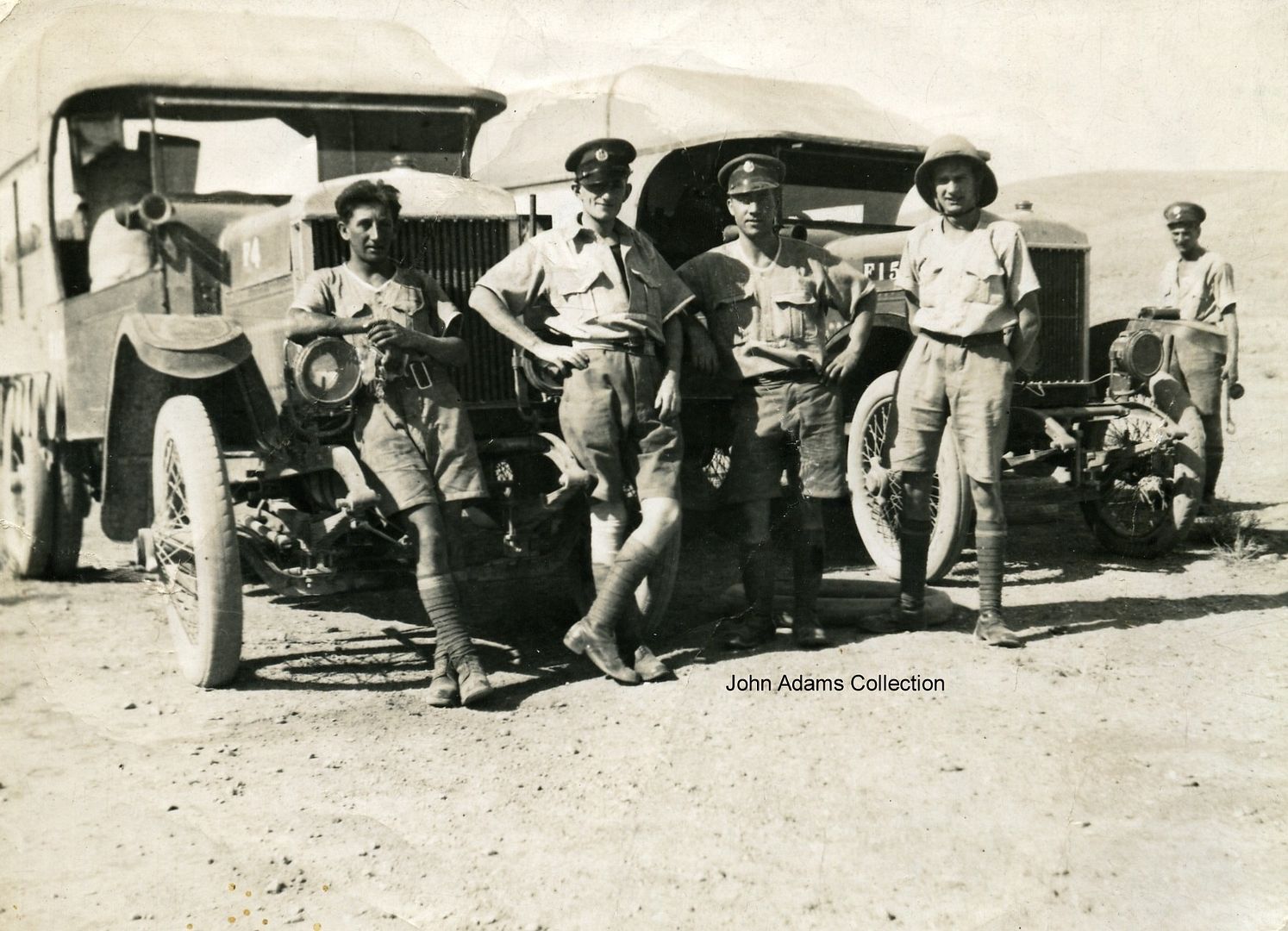
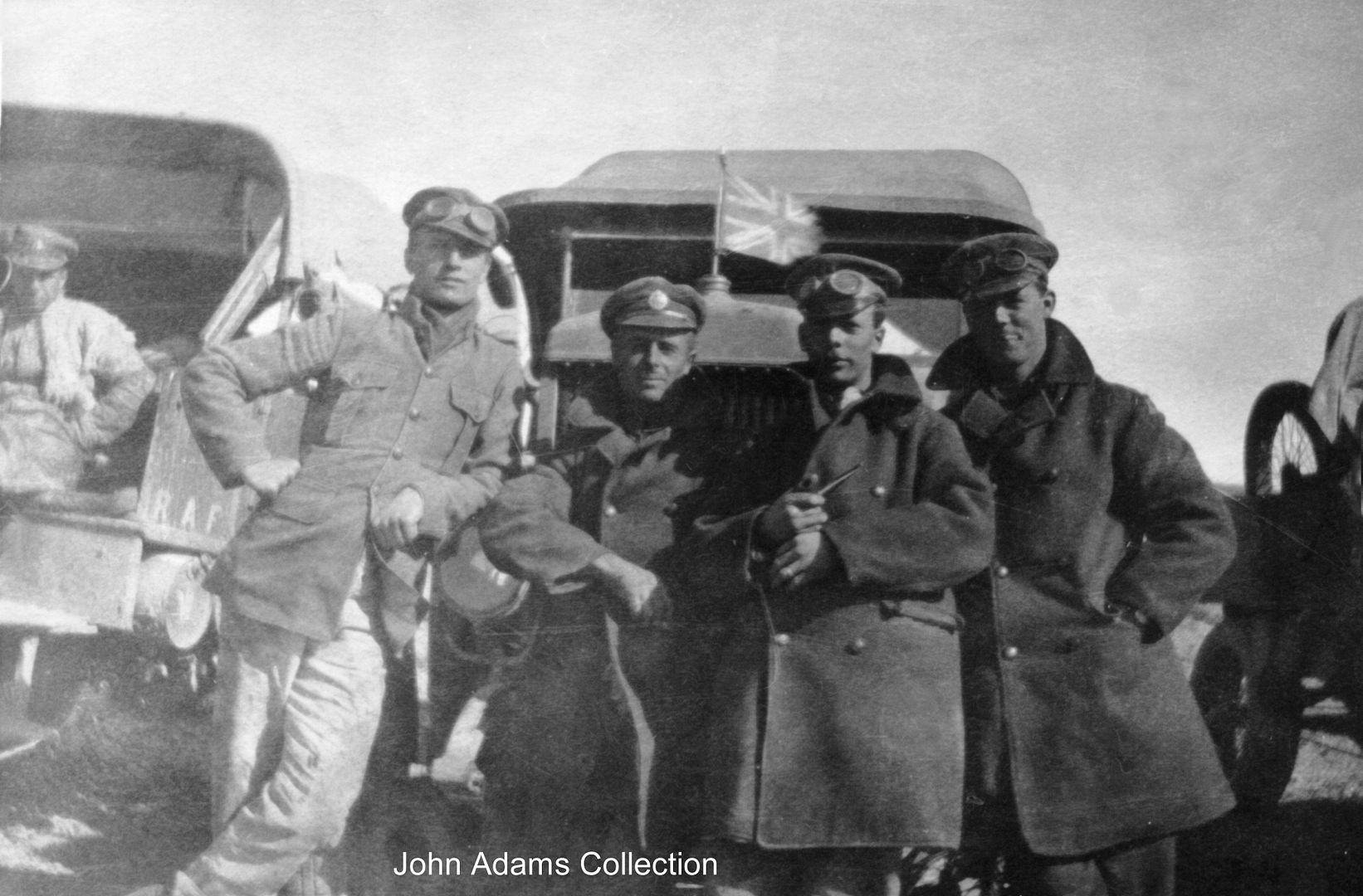
John AeroclubI thought that these photos might be appropriate as they were taken in 1925 during the Syria-Jordan border marking carried out by the RAF under GP Capt Brabazon-Rees VC and the French military. These were all taken by a Corporal Jack Weston and gifted to me many years ago. Brabazon-Rees is on the left of the tea pot.
John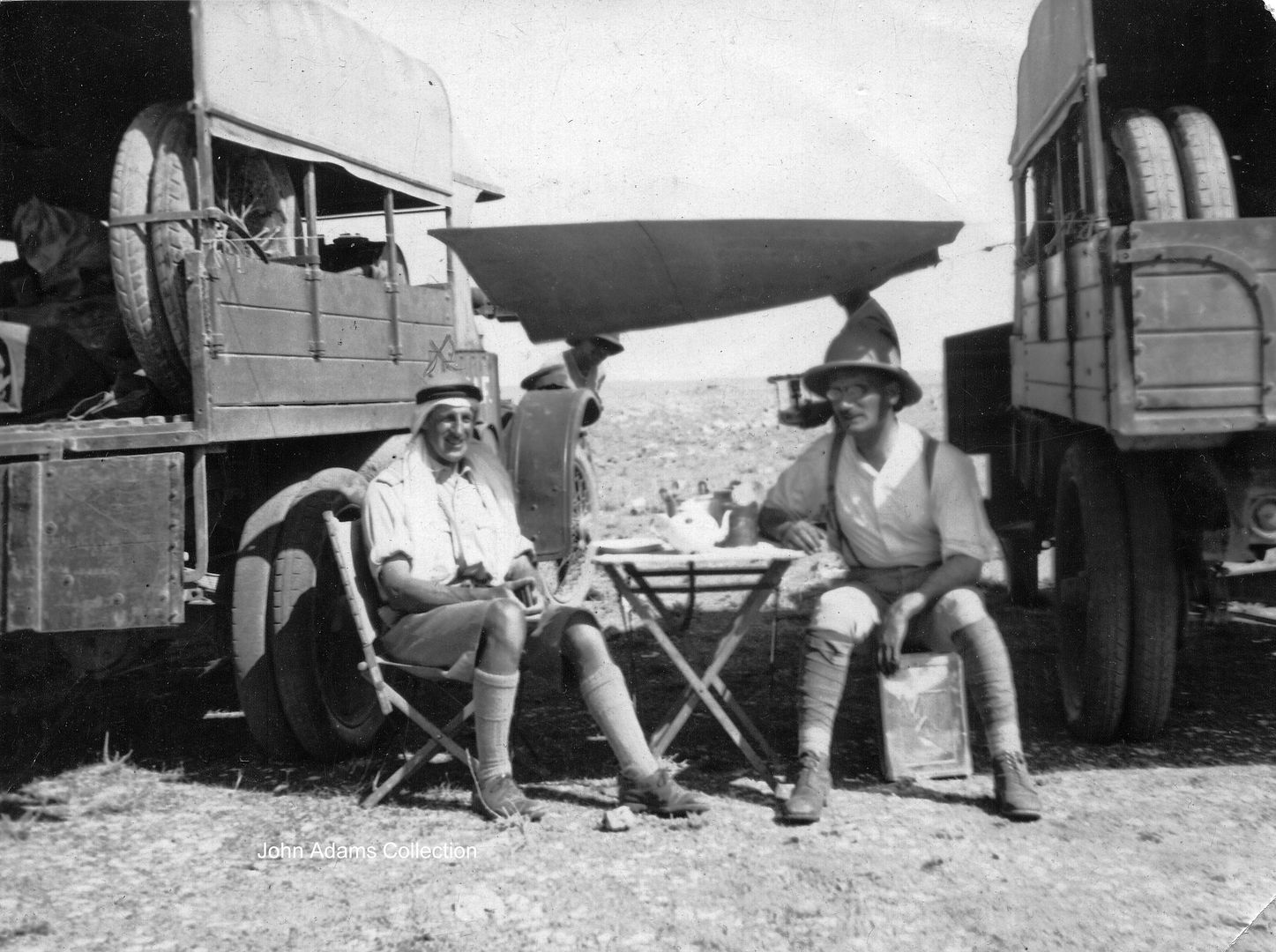
John AeroclubAren’t the Mk.2 tail wheels related closely with Canberra nose legs?
John
John AeroclubThanks Bruce.
John
John AeroclubIIRC did not a similar problem sadly kill one of the guys who were rebuilding a Meteor T.7 at the old Yatesbury site many years ago. Something collapsed when he was working alone and trapped the unfortunate man.
John
John AeroclubIn many publications from Janes via Putnams to the Boys Book of Aircraft the text usually has something like “and the longest of the Meteor night fighters at 51′ 4 “…
The following is the explanation I put in the instructions for my 1/48 kit some years ago.
It was whilst preparing the patterns for the 1:48 range of NF Meteors, that I found a nose panel on the Mk.14 which if scribed to the (published) drawing didn’t look like the photograph. So it was off to nearby Newark Air Museum were I took some measurements and opened up a whole can of worms, even bearing in mind the codicil “museum aeroplanes can sometimes be odd balls”.
The overall length of the Meteor NF.Mk.14 is almost always quoted in both major and minor publications and on most published drawings as being 51’ 4 and the text often includes a statement on the lines of “the NF.14 had an even longer nose”. I found this is not correct and that virtually all published drawings and length data for this aeroplane are wrong.
At some time an error of 17 inches has occurred in dimensions of the NF.Mk.14 in print and this myth has been perpetuated time and time again.
The first Night Fighter Meteor was the NF.11 which used the British radar AI.10 and was 48’ 6” long. This was followed by the Mk.12 and the first Night Fighter to use the new American AI 21 (ARI 5860) radar. To accommodate this new radar, the nose was made 17” longer ( than a NF.11) becoming 49’11” long. Note: the NF.13 is a Tropicalised Mk.11.
NF Mk.14’s were also fitted with AI 21 and were identical in length to a NF.Mk.12 at 49’ 11” not the oft published 51’ 4”, This was confirmed by my borrowing Air Publication AP 2210P vol 1, the only differences, being the new blown canopy and a servo operated rudder. At some point someone has added 17” twice. No NF. Mk14 was 51’ 4” long. 17 inches is nearly 3/8ths of an inch or 9mm in 1:48 scale. The 12 and 14 both had the same increase in fin area to compensate for the nose extension.
The NF.Mk. 14 nose looks longer than the Mk.12 as it has a shorter windscreen and shorter engine nacelles (the bigger bore Derwent 8 intakes are cut back in length). In service the length of some Mk.12’s and all Mk.14’s became shorter at 49’ 8.5” when a passive tail warning radar R3697 was fitted, and the tail cone was removed. Later in service as navigation trainers NF. (T) Mk.14. it sometimes occurred that when the redundant radome’s tatty di-electric was re-painted gloss black the first metal mounting ring was also painted giving the illusion of a longer radome. As a consequence of this new information, as far as I am aware, most Meteor NF.14 (model) drawings and/or data are in error with the exception of an early (1950’s) Aeromodeller drawing those published length is correct.
The Matchbox kit can be easily corrected by using the kit Mk.12 nose instead of the Mk.14 parts.
I have also been able to check the aluminium evidence by measuring Mk’s 11, 12 and three different Mk.14 s thanks to our small volunteer Air museums.
As far as I’m aware the first time (since Aeromodeller) that the correct length was published other than the AP, was when following a letter I had published in Aeroplane Monthly, Phil Butler contacted me and put the details in his and Tony Buttler’s book on the Meteor.
This is not the only wrongly dimensioned aeroplane out there.
John
John AeroclubFor activity around the Isle of Man the best contact is the Manx military Museum and Ivor Ramsden who is a member here. Wellingtons , Hampdens and Blenheim’s all operated out of RAF Jurby. Each type a possible for your propeller.
John
John AeroclubQuote:
I’ve got my eye on an old Matchbox Meatbox model kit for when the 1:1 version is complete.
unquote:
Make sure that you use the Mk.12 nose parts and not the Mk.14 kit parts for your Mk.14, as these are of the mythical 51′ 4″ length which no Meteor Night fighter was. It should be 49′ 11″ the same length as a Mk.12.
John
John AeroclubTony
I cannot claim to be a technical expert on Bristol engines but the first clue to it’s identity are the round centrifugal weights which are on the left side (as seen). If they were on the right side then they would point to a prop off an American (or RR Merlin) engine. British engines tend to rotate anti clockwise from the pilots viewpoint and US and Continental engines rotate clockwise. The gearbox ratios will help as Creaking Door kindly points out. Another clue would be the prop diameter. If someone could measure, with a flexible tape around the bent tip to the hub centre, a guesstimate at best, this would give us an idea of the prop diameter. Another likely Bristol candidate is the Perseus fitted to the Botha and a good few of these dropped into the Irish Sea.
John
John AeroclubHappy to share ,Anne. The K files don’t always have the big picture (excellent though they are). The Wapiti had a tendency to be an ostrich, probably due to the initial design flaw of using the short fuselage and the 6′ track U/c.
John
John AeroclubNot the same time, different markings on K1289.
John
John AeroclubIt’s a De Havilland built Hamilton Standard bracket type three blade prop and probably off a Bristol engined type, Not an American type such as the Hudson. So depending on the diameter and the gearing ratio it can have come from a myriad of types from Blenheim to Sunderland.
John
John AeroclubI thought that the second picture (serial unreadable) might be a Wapiti V as it has all the Army Co-op gear, but the valve gear shows it to be fitted with a Jupiter VIII not a Jupiter IX. Robbo’s post shows the aircraft with 27 Sqn according to Jagan’s excellent book.
John


 Sign In







