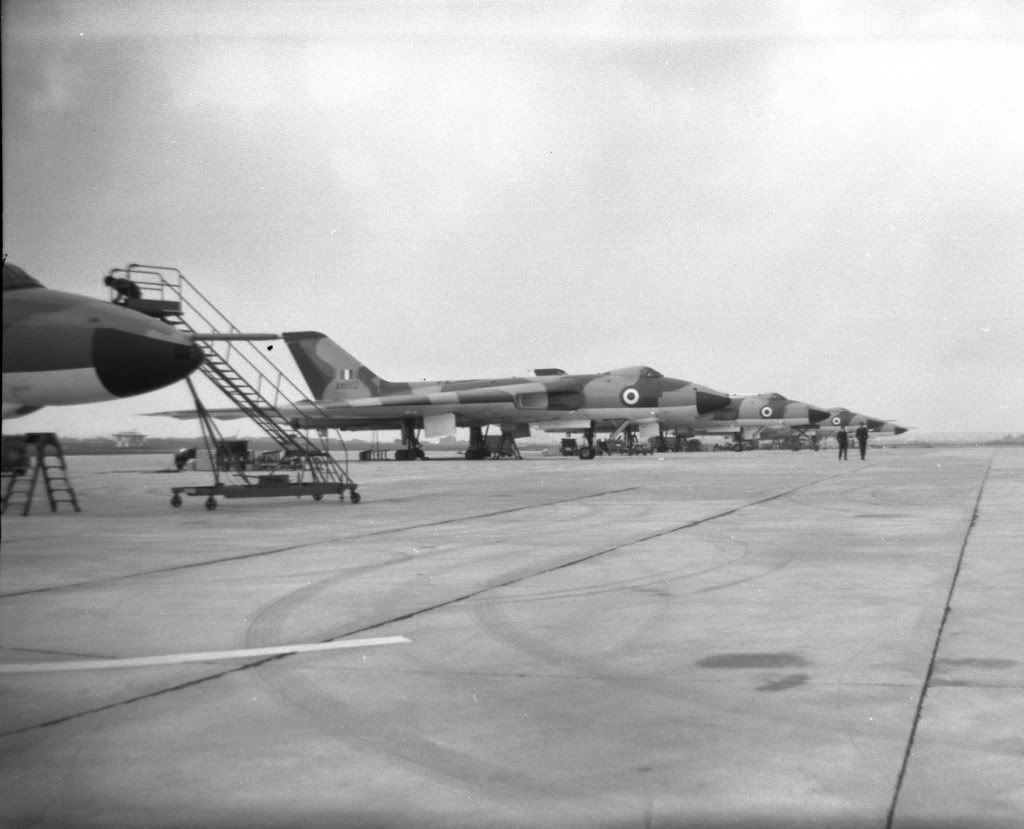
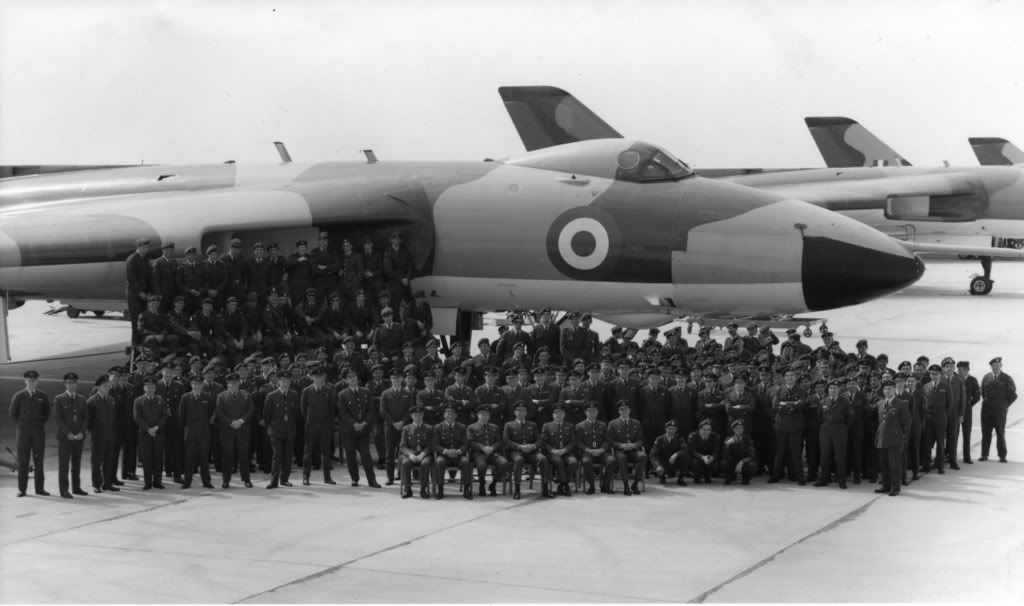
Oh isn’t that Fury beautiful.
John
It looks as though the tail group and wings came off the same biplane (float plane?):)
John taking a quick lunchtime break.
Yes sorry i’m just too busy at present. So please Open House.
John
I have spoken to the ‘tame surveyor’ and he asked the following question:
“Is it likely that the information would be in the relevant Hastings AP?” 😉
Yes, in packing dimensions. You have to be careful of these but they can give a pretty good idea of the size down to a few inches. I would suggest that the Elvington wing is more or less a pure Hastings wing complete with engine spacing and lack of dihedral. The props by the way I think are DC6 as they are opposite hand to a true Hercules Halifax.
Again the original question was “How similar are the Halifax and Hastings wing”. My answer is they are related but quite different. As to the outboard engine mounts, at production (factory) level it would take no great time,difficulty or expense to re-engineer the outboard mountings to another bit of spar and the leading edges are a component in their own right.
I would happily go over to Newark as I’m well known there with my measuring rig but sadly I just don’t have the time at present.
How I measure large aircraft spans, I used to use a light telescopic rod from which I dangle an adjustable plumb line. The padded end of the rod touches the wing tip (or any other point) and where the plumb touches the ground I place a marker
(1p coin,or golf tee on grass). Do the same to the other tip and measure between the markers. I now use a vertical and horizontal (builders) laser and a surveyors tape.
John

Do any parts of ALPK survive?
John
Looks like a drop tank nose cone to me.
John
I think Imperial/BA used some very streamlined Chrysler Airflows at some point prewar so perhaps the Topolino represents those.
John
Jakdfalk.
John
My first flight was in PK in 1958 at Prestwick.
John
Eddie
Yes thank you for the photo. I didn’t comment on it earlier as I was already aware of the differing tapers and mentioned this in an earlier post. As I’ve said all along the two wings are quite different but they have much structure in common. It’s a pity but C.H. Barnes HP book omits totally any specific detail on the revisions to the Hastings wing.
The mid wing units in question probably use the same ribs but have longer spars.
John
Your wish is my command! Well it will be next Sunday when I can take some pictures. Anything I’m looking for in particular?
Thank you. Really any photos which will show any change of shape on the trailing edge.
John
I took the metric conversions straight from text without checking them. The later Halifax did not have the same wing as the Hastings. One reason that the mid wing sections may have been lengthened is to accomodate the larger 13′ dia props on the Hastings as well as achieving extra area. I suspect that there might be two types of curved wing tips on the Halifax as I have found two conlicting spans (only a few inches). All we need to see is a picture of the trailing edge of the Elvington Halifax to see if the Hastings wings were used unmodified or not.
John
Both the Halifax and Lancaster were both derived from twin Vulture engined designs (the Avro one (which flew)being the Manchester) The centre sections being broad enough to cater for the huge (16′) props of the Vulture. In the Avro instance the centre section only differed in detail design throughout it’s long life (Lincoln/ Tudor etc) which is why Avro’s were able to build the York’s broader fuselage onto the Lanc wing. I suspect that this is what Handley Page did as well with the Hastings so that the same spar Jig and tooling could be used with minimum change and cost. Another similar use of components was in the Wellington and Viking 1. IIRC the Hastings and Halifax tips are similar but have a slightly different curveature. The Halifax III was 104′ 2″ (34.2m) span and the Hastings 113′ (36.6m). The difference being in the mid wing panels. Hence the different taper of the mid wing sections. The Hastings has less dihederal as exhibited on the Elvington examples wings.
John
Thanks for posting Anne, superb.
John
Malta again 1968.
John