 garryA
The fuselage is large because of the bays, so that enables to have a larger radome without increasing the cross section much.
Check the J-20 forward fuselage, it is not as pointy as the F-35’s:
The radome would be designed accordingly for stealth of course, no problem with that.
I believe the F-35’s radar is about 0.75m in diameter, it could have been more.
F-35 already has very big radar, much bigger than the one on F-16, F-18, Rafale, Gripen, Typhoon. Changing the outer shape which will affect aerodynamic and VLO characteristics just to get the radar abit bigger doesn’t seem like a wise decision. It is not like stealth aircraft require massively powerful radar anyway
Probably the cockpit would have been a bit higher but rear visibilty would have been improved, so it’s not a bad trade off.
F-35 has DAS so vision is not really a big problem, it has very similar canopy style as the PAK-FA after all

Then what are they waiting for.. the F-35 plan is to NOT be seen visually. A fighter pilot with good eyesight can see visually a fighter at up to 12km or so. The best fighter ace of the modern area ( an Israeli pilot whose callsign was hawkeye ) was able to see other planes at 20-25km.
The problem is that, you only guessed that F-15 colors is harder to see than F-35 in normal condition, we don’t know if it actually the case, nor do we know how much the slight different color tone would change visual detection range, would it be 1%? 6%.?… etc.h
garryAKind of surprising that the F-35 is about the same weight as the F-15C and its radar is 0.8m in diameter vs 0.9-1m.
Wonder if the design couldn’t have been different with the intake more to the sides to have a wider front fuselage with a larger radome.
They could have gained 10cm on each side.
Even without moving the intakes they could have had a larger fuselage at the front by using a different angle along the front fuselage, like on the J-20.
It would have had a longer radome, so what?
F-35 need to have internal weapons bay , RAS and loads of internal fuel. The radome also need to be a certain shape for VLO purpose.
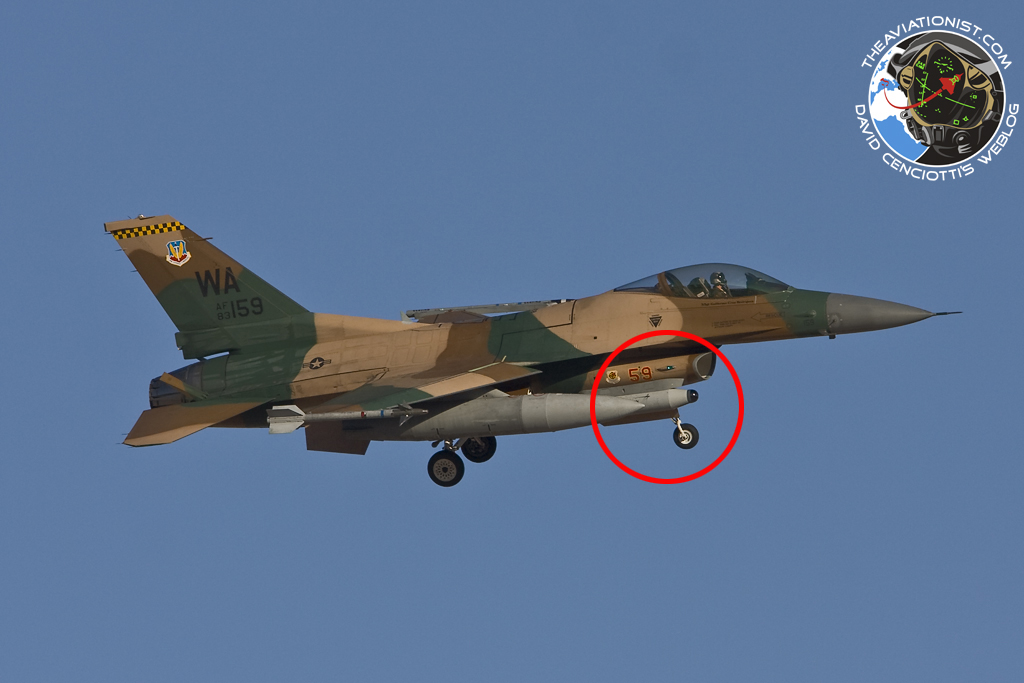
And the pics above show that the F-35 is much darker than the F-15, it’s probably quite easy to spot visually.
Not too optimized for a2a…
F-35 is smaller though, paint color are much easier to customise compared to raw size
garryAF-35 did not particpate to first part of Atlantic Trident (WVR and BVR fights…)
F-35 done alot of air to air exercrise recently, it will be a bit weird if F-35 will not do any BVR , WVR at Atlantic trident
Over the first week, F-35 pilots will start off doing air-to-air exercises with U.S. Air Force F-15Cs and F-15Es permanently located at Lakenheath, as well as engagements against other F-35As acting as adversary airFrom there, activities will ramp up to small and large force exercises with U.K. Eurofighter Typhoons and potentially Dutch F-16s
http://www.defensenews.com/articles/the-f-35a-is-in-england-whats-next
garryAThose are combat coded , upgraded Strike Eagles. Same are being used out at Langley as Red Air for Atlantic Trident 17.
That is even better, i think
garryAThe F-15 aggressor squadron has been disbanded in 2014.
Didn’t they just use it recently?
True, but they fly Block 25/32 models, not the hottest F-16 version. The Alaskan aggressor unit has Block 30 jets though.
clean block 25/32 has better agility than later block 50/52 as far as i know
garryAWe were commenting a specific article saying very specific things, not trying to exhaust the whole argument in one post.
I know, i only point out that they use F-15 as aggressor too
And surely an F-15E with CFT and a bomb load would be an easier adversary to handle than an F-35…or a Su-30SM in A2A configuration.
Aggressor f-15 , F-16 don’t carry bomb as far as i know, they fly very clean most of the time.
garryASucceeding against F-5Es, T-38Cs, F-21As, or F/A-18As… for that, even an Su-30MKI would easily “deliver”
F-35 done exercise against F-15E also, hardly an easy opponent for Su-30 to handle
garryA[ATTACH=CONFIG]252347[/ATTACH] [ATTACH=CONFIG]252348[/ATTACH]
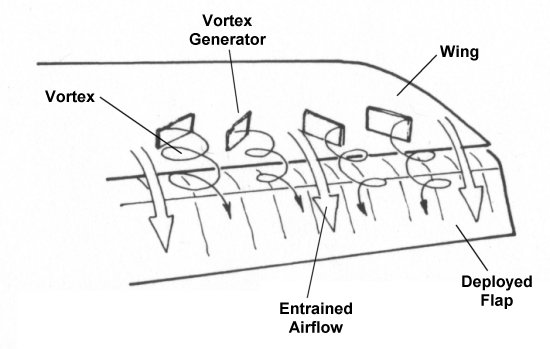
What is the purpose of these antennas on this Argentinean aircraft?
Those are not antenna, they are vortex generating device. To delay flow seperation

garryAYes a mockup during design since fitting the F-35C/A bay is a threshold capability.
Look great but i still wish they didn’t cancel NGM and when with it instead
garryACourtesy James Drew AvWeek
The first picture is a mock up right ?
garryAThose kind of picture looks cool af though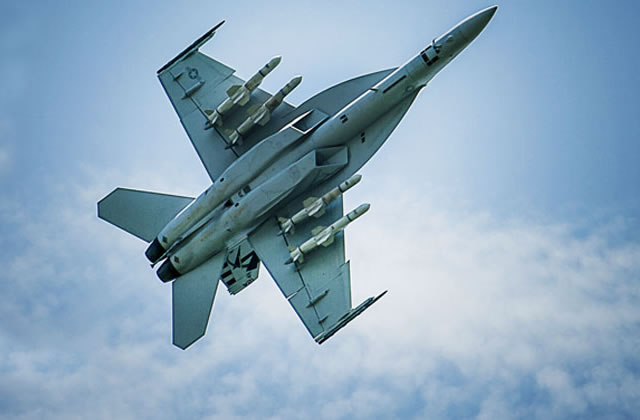

garryATwo things, even the most specialized A2A planes and interceptor used to carry a centreline tank when in AD role because they used this fuel to take off at full afterburner, climb to the operative quote as soon as possible and regain velocity, after it they dropped it and kept on with their full internal fuel.
Same with drop tanks on long range attack mission: once the planes would get near to the combat zone they would have dropped the now empty tanks and would have continued in a way more comfortable configuration.
That assuming 2 things :
1/ you don’t get an attack on the way to target.
2/Your EFTs doesn’t make you a massive target that can be detected from hundreds miles ( because intercepter, missiles will be send after you)
Moreover, the different in combat radius further illustrate the fact that it is a flaw comparision to compare something like F-35 with F-16 when they carry similar fuel load such as 50%. In your example, when they reached the target area , aircraft rely on EFTs will have 100% internal fuel while things like F-35 will sit at around 50-60%
garryAclearly, SAAB’s presentation is done at the worst altitude imaginable to show their product in the worst light possible,
in reality, 800 nm + 30 min on station is the minimum, but in practical terms,
gripen E is probably 1500 nm combat radius with a couple of hours on station, or better yet, i saw a presentation showing 4000 something, which no doubt is combat radius without drop tanks unless otherwise specified.
and no, the drop tanks arent actually needed, in fact it makes no difference at all,
hope that helps
Thanks for proving my point
garryANo one cares what you think, dear friend 🙂
OK, I have been involved in this discussion.. what have I learned? Nothing.. there is no clear number which can be presentable.. the last Pentagon estimate says 625 nm.. in a presentation for Norway LM say 716 nm.. in another presentation for Israel they say 760 nm.. .. how can they miss each other by almost 140 miles, for God’s sake? one is this config, another is that config.. weapons yes/no?
Different mission profile involved flying at different altitude (For example CAS will often require aircraft to fly at lower altitude than Air to air mission), since air density are different between altitude ,obviously fuel flow will be different. Moreover, different mission will require different loiter time and combat time which then will change fuel consumption. Physics aren’t meant to be simple.
For example
no one has faintest idea how they came to this number as, obviously, no one has ever tested it
If they haven’t tested it , you won’t have the number. Same for any other aircraft manufacturer
and most of all, we talk about the F-35 here.. what is it? F-35A? F-35C?
It depend on country, for example we know for a fact that Israrel, Norway buy F-35A
garryAthe binding response from L.M to norway states 760 nm with external tanks, nuff said
This one ?
1/ It is from 2008
2/ Altitude is between 5000-25000 ft
3/ the much newer 2016 presentation shows F-35 range as 760 nm for air to air internal configuration
And don’t try to dodge the question. So does combat radius of Gripen NG includes 20 times mid air refueling ?


 Sign In







