Hotshot
Sweet eff-all has been heard about a 6 x internal AMRAAM capability since 2011 at latest; the Cathers reference was the last in any formal brief (IIRC) and was in late 2007. The disappearance of any such claim preceded the marketing of the Cuda concept. This makes it quite probable that the notion of carrying two AMRAAMs in each outboard bay (not part of the original spec) proved impractical.
A few months ago, a US general said he wanted to increase the “magazine depth” of the stealth planes. Maybe the ability to carry 6 internal missiles inside the F-35 was part of it. Maybe they have studied the possibility more in secret.
HotshotThe original Ares post is down now(or link is broken) but:
Cathers added that the JSF’s air-combat capability “has not been advertised as it could or should have been”, partly because “at the same time as we are developing the F-35, we and the USAF have wanted to expand the F-22 program.” Apparently, the USAF has not wanted to advertise the JSF’s air-to-air capability, concerned that it would weaken the case for acquiring more than the 183 F-22s authorized today.
Well, the F-22 was cancelled in mid 2009. The 6 internal missiles capabilities should have been immediately added to the roadmap for block 3 to compensate. And the 4 internal missiles capability should have been accelerated as much as possible.
6 internal missiles would be a good selling argument also.
HotshotWSO carries a samsung tablet. Aswell as pilots. (entering into service little by little). Decalco communicates with tablets with a ultra confidential system : WI-FI hehe
But the original capability (JTAC sending images with embedded data to the plane) still exist.At a time, SFs were trying a new system (black diamond vests). These vests include a computer “hub” for googles, gps and satcom, but there are troubles due to the lack of computing power (a celeron). Writing a story about serpentex, will let you know when finished.
Very interesting, thank you.
I was wondering if it wouldn’t be possible to use tablets/ipads in the cockpits to have more screens and capabilities, there you go…
Looking forward for your article about serpentex. 🙂
HotshotF-35 is faster, fly further,have better SA ,EW have significant lower RCS ,and more maneuver than F-18E/F it can carry equal amount of weapon , and even in stealth configuration F-35 can still carry 8 SPEAR/SDB II +4 cuda
F-35C faster than the F-18? Not sure. More range than an F-18E with 3 tanks? not sure. More maneuvrable? The super hornet is very maneuvrable, so not sure. Cuda doesn’t exist.
The truth of the matter is that LM has ******** up the CV variant. It’s a pig in terms of speed/transsonic. That’s why now they’re searching left and right for a way to modify the airframe for the F/A-XX.
HotshotReading through the last few posts, it seems to me that where the F-35 cannot be rivalled is on strike missions into defended air space with no external stores carried. However if ordnance is limited to 4000lb, how many aircraft would be need to be available to deliver the weight of ordnance required to achieve set objectives?
2x2000lbs bombs don’t seem much but what proportion of targets require such large bombs? All the ground vehicles targets require only an SDB, and the SDB can even destroy targets like aircraft shelters. I’d guess 95% of targets don’t require the 2000lbs bombs. In most other cases the F-35 can use its 8 internal SDB1 and SDB2s to attack up to 8 targets.
This being said, I think that maybe it would be worth it to make a stealthy weapon pod for the external stations. The F-35 could enter the enemy airspace with them after the first 3 days of operations in full stealth mode. That could triple the payload. Such a pod is not on the roadmap for now but who knows maybe for a later block.
What about EOTS? If the current system is inadequate, how long to develop an adequate system? If it is going to need replacement, is that going to be an extra cost for buyers of the aircraft with the current EOTS?
The EOTS is probably upgradable like the pods. But it still remains that the F-35 won’t have some of the capabilities that current planes have, so it won’t be as good for CAS for a few years.
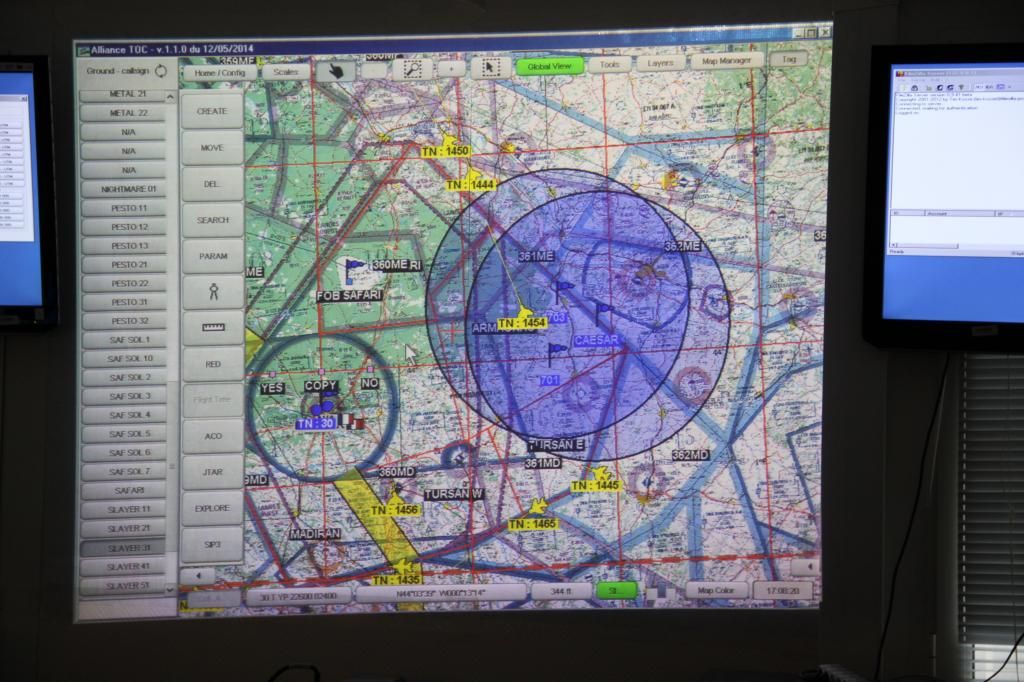
Hotshothello hotshot. You won’t find any. The photo i sent was taken by myself during Serpentex exercise. Originally it was a simple uplink system for vectorial images named scarabée (and classified). This uplink still exist, but the idea is now to network ground and air assets via L-16. Rafale eg. Receive the data on a dedicated computer named decalco (mainly for WSO). Tactical operation Center will fuse data and distribute them to jtac and planes. Hope i can write a paper on it soon, and i’ll tell you if. Alliance is meant to be compliant with future NATO “FMV” standard.
Nice to see the capabilities of the L-16 being exploited. So the data is not displayed on the WSO’s cockpit screen, the WSO carries some sort of laptop.
More info would be interesting, don’t hesitate to keep us updated. :eagerness:
HotshotHalloween,
Concerning the Alliance system, do you have a link with more info? I googled it but couldn’t find anything.
Hotshotyes and yes/no, but maybe better continue on Rafale thread?
Ok, thanks. That sounds like a top notch system. Other countries should have similar systems too. More on that on the rafale thread.
HotshotOmnirole… remind me who invented that term again?
Regardless of what aircraft the Rafale and Eurofighter were slated to replace initially, both were intended to be multirole fighters and both first saw combat… paired with a more mature aircraft with a working targeting pod.
Their airframes were multirole. They wanted the air to air capabilities first, that’s it. Don’t forget that the money allocated to the F-35 is huge compared to those programs. Has the rafale and typhoons received as much money they would have progressed much faster.
No question the F-35’s development has been hugely expensive and troubled, but it is hardly the first aircraft to suffer difficulties in development and a troubled development does not rule out a hugely successful operational life.
Well, very few tactical aircraft have had that much problems. Had it not been of paramount important for many air forces and services maybe it would have been cancelled. The JSF simply could not fail.
This is a military aviation forum and the F-35 is by far the largest and highest profile fighter program in the world today. It is more than a little ridiculous that you would suggest “F-35 proponents” should “keep a low profile.” Why? So the usual suspects can bash the program continually and roll out the same discredited arguments over and over again? Here we are yet again discussing whether or not it will be capable of performing peacetime air policing missions. :very_drunk:
As for bragging, despite its programmatic shortcomings the F-35 once operational will offer some really incredible capabilities. There are very good reasons why its proponents include many of the most capable air forces in the world today.
Let’s hope it will be as good as expected, but Lockheed doesn’t have much to be proud of on this plane.
Hotshotit has better than only Rover, it also has an uplink named Alliance (fromerly Scarabée) (kind of “reverse” rover)
Here is an image of Alliance from ground asset. (data are fused, sent to a specific computer and displayed on pilot/WSO notepad, have no image of in board “air” version of alliance, sorry
Thanks for the info.
ROVER enables to download realtime videos. So the Alliance system can also do the same thing from the ground to the rafale?
Do you happen to know if the link-16 be used for realtime data comms too from ground to air like the Alliance?
HotshotWell, the rafale and typhoon initially replaced air superiority fighters, so the PGM capability was not that important.
The rafale was on time and budget. The F-35 cost more to develop that the rafale, EF, gripen, SH combined, and even much more than the F-22. It will reach IOC 5-6 years late with huge cost overruns and reduced cababilities.
F-35 fanboyism is rather ridiculous with you consider all that. F-35 proponents should rather keep a low profile and be honest that frankly the F-35 program is nothing to brag about…
Hotshot…and the F-35 goes operational next year. People need to be consistent. If they want to go with the whole “the F-35 isn’t even operational” then they can drop the talk about Typhoons with AESAs, Rafales with helmet mounted sights, and the entire Gripen NG.
The F-35 will be limited to 2 AAMs until 2018 so it won’t really be usable for air defense. For strike it will be limited to 2 types of weapons, the 2000lbs JDAM, and GBU-12. It will not have the LJDAM before block 4, no SDB1 until 2018, no SDB2 until block 4, no laser guided rocket before who knows when…
It will be limited for CAS although it can help in that role ( no gun, 2 types of weapons only, no ROVER ).
The rafale also has ROVER:
http://www.dassault-aviation.com/en/defense/rafale/a-wide-range-of-smart-and-discrete-sensors/
As a net-centric capable asset, the RAFALE can exchange images. The Rover (“Remotely Operated Video Enhanced Receiver”) is an element of this capability which allows aircrews and forward air controllers on the ground to share videos or images of the target. It helps prevent blue-on-blue incidents and collateral damage, a decisive advantage in peacekeeping operations.
The rafale and typhoon will have better multirole capabilities initially. The F-35 will be basically a super F-117 for the first 3 years, with extra ISR capabilities due to its advanced sensors.
HotshotF-15SMTD was a dead-end for a reason: the thrust reversers were incredibly heavy. The Swedes’ 800-meter, narrow runway is a pretty good compromise as long as you also have an aircraft that is designed for effective dispersal (not an insanely complex Chitty Chitty Bang Bang with three different major power systems).
Maybe they could have made a lighter version of it, it was just a prototype. Even if the plane is a few percents heavier, that doesn’t matter that much, the most important is the STOVL performance to be able to operate when you don’t have air superiority or you don’t have access to many air bases
500m is almost half as much as 800m, and the gripen is light, so it has less inertia and is probably capable of stopping faster because of that.
I also think that thrust vectoring tends to be under-estimated. If used properly by a good pilot it can be a decisive advantage in WVR.
HotshotThe F-15 STOL/MTD had a take-off distance reduced by 25% and much shorter landing distance. A plane with wings optimized for STOL would do even better. It couldn’t be used for the USMC carriers however.
http://en.wikipedia.org/wiki/McDonnell_Douglas_F-15_STOL/MTD
demonstrated vectored takeoffs with rotation at speeds as low as 42 mph (68 km/h)
a 25-percent reduction in takeoff roll
landing on just 1,650 ft (500 m) of runway compared to 7,500 ft (2,300 m) for the standard F-15
thrust reversal in flight to produce rapid decelerations
controlled flight at angles of attack up to about 85 degrees
HotshotI think you don’t want to detonate it. You want to break it up without detonating, & as far away as possible.
I think that the APS that are used on tanks detonate the warheads of ATGMs and rockets at close range. A shelter is reinforced too, so it can survive a close explosion.


 Sign In