With the closure of USAF operations does anybody know what will happen to the F-5 Replica current on the gate. Whilst I understand it is a replica it appears to have with stood the weather well and should make an interesting addition to any museum. One would hope that it does not come under the NMUSAF rules and a ‘gifting’ arrangement made.
Arrangements have already been made for the future safekeeping of the F-5 replica (and it won’t be moving very far at all 😉 ), however it will remain in place at the base entrance until final closure.
Needs a bit of structural maintenance urgently though, the nose has started to sag slightly in recent months and the strong winds last week had the whole thing bouncing on its supporting girders a fair few inches.
It should also be noted that the ARG Archive at Alconbury has the ever-growing Alconbury Heritage Collection on display and the Stirling Project are also elsewhere on site, plus the base itself has a dedicated heritage room.
I’m not sure if the MOD has released the former fire control centre yet.
However the remainder of Waterbeach is in the hands of the same developers as Alconbury.
Click on the arrow next to where it says “Posters” and select “Stills”.
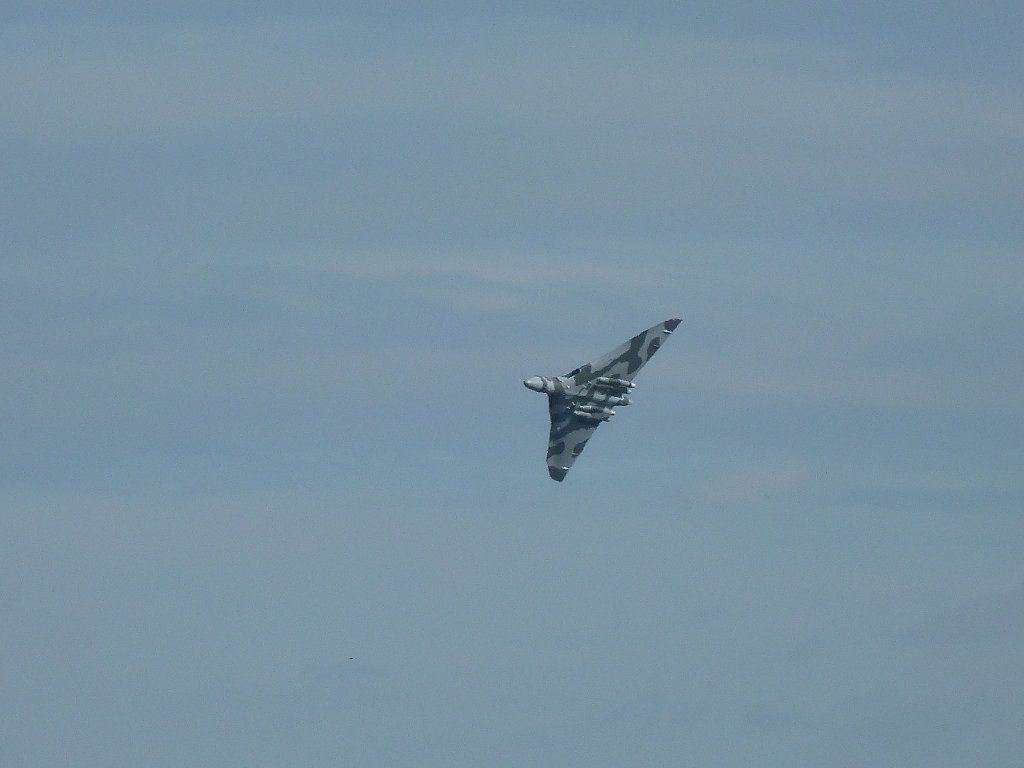
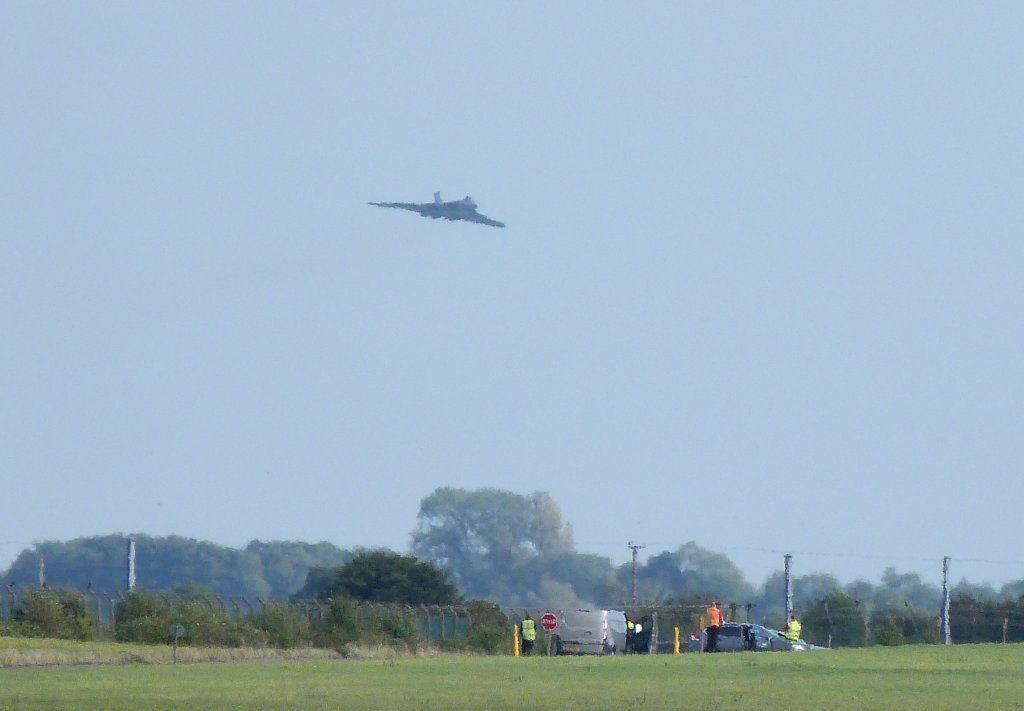
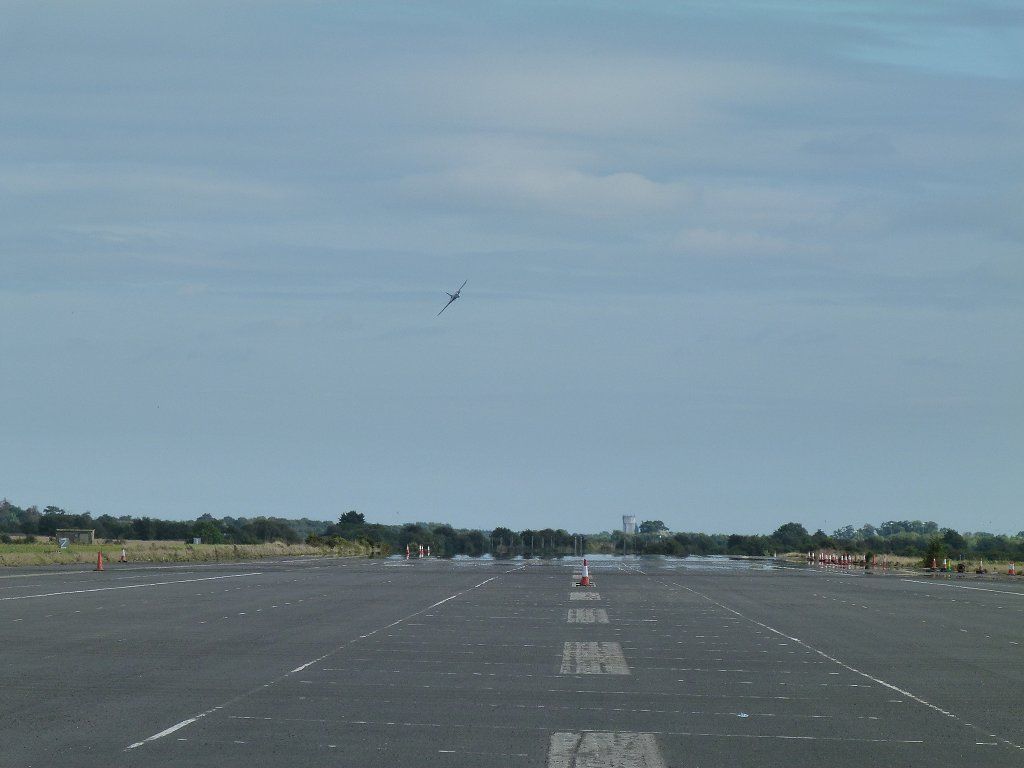
We got the other side of the Wyton display here at Alconbury. 🙂


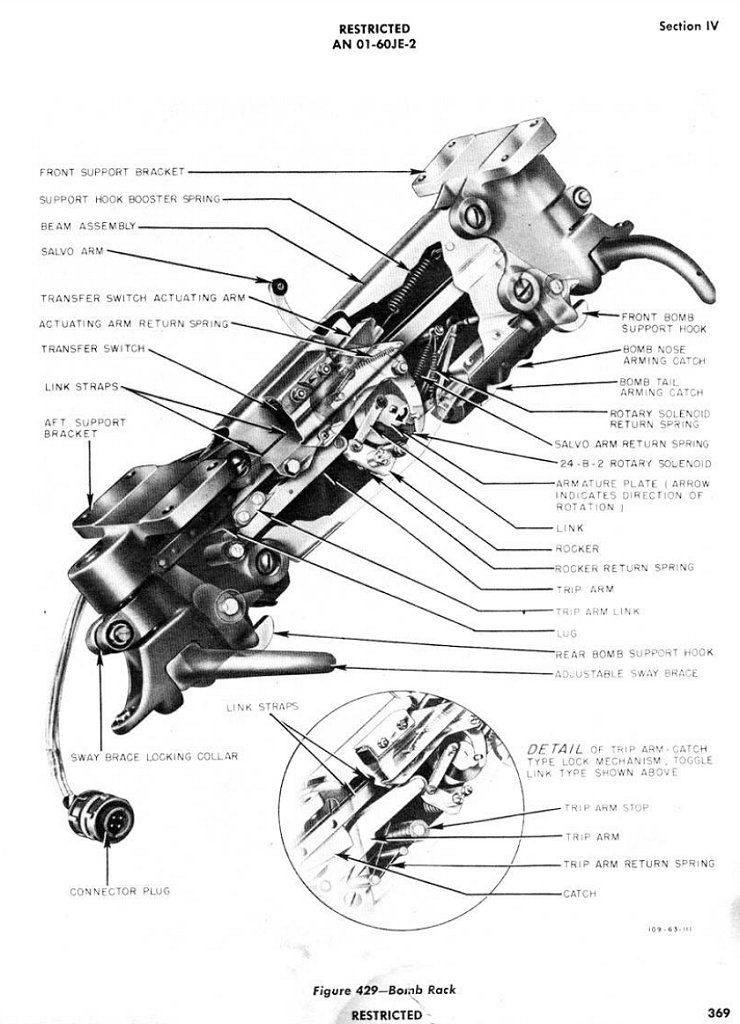
P-51D bomb rack innards for comparison Denis. 🙂

The aforementioned NARA images on Fold3 are as follows:
58130AC
A58130AC
B58130AC
C58130AC
D58130AC
E58130AC
58131AC
A58131AC
B58131AC
C58131AC
62462AC
A62462AC
B62462AC
All the best,
PB
There’s a complete wartime USAAF HILV runway light unit prominent in the opening Hoth hangar sequences of Empire Strikes Back.
The dimensions of the “blocks” were not standard but would vary depending on contractor, whether they were machine or hand poured, time of year, availability of shuttering lengths, etc.
By 1944 there was a huge ongoing repair & replacement program in effect as the concrete simply wasn’t holding up under constant use, so civilian contractors, AM Works Area teams and USAAF Aviation Engineers were constantly ripping up and relaying existing surfaces, once again either by hand or with large mechanised pavers.
As an example, the standard Class A 50′-wide perimeter track at Deenethorpe was completely replaced by USAAF Aviation Engineers in 1944 with Blaw-Knox pavers and finishers, which laid the new concrete in 25′-wide, 60′-long sections.
There were five fatalities. I think I read that three truckers are commemorated from that day on the Wall of the Missing at Madingley. Presumably the USAAF made up two coffins with all the pieces they found and buried those?
I’ve posted this elsewhere before, but it’s worth repeating here:
The 2218th Quartermaster Truck Company (Aviation) unit diary refers to six drivers killed in the explosion at Metfield.
They would have been based at the Earsham ordnance depot at the time.
Checking the ABMC roll for that unit gives only three of the names, all were killed on the 15th July 1944 and have no known grave.
All three are recorded on the Wall of Missing at Madingley Cemetery.
Private Donald P. Adkins, U.S. Army Air Forces
Service # 35350614
2218th Quartermaster Truck Company, Aviation
Entered the Service from Indiana
Private First Class Donald L. Hurley, U.S. Army Air Forces
Service # 35619775
2218th Quartermaster Truck Company, Aviation
Entered the Service from Ohio
Private Steve W. Suchey, U.S. Army Air Forces
Service # 34197931
2218th Quartermaster Truck Company, Aviation
Entered the Service from Alabama
All the best,
PB

I’ve been in a barn built onto the side of a house in the south of France that has Waco and Horsa wing spars as rafters and Horsa unloading ramps as lintels… 🙂
…the exhaust section is stamped FBFW 108
FBFW 108 is an inspector’s stamp (FBFW = Fisher Body, Flint West). There should also be a part number on it somewhere.
Stainless panel 6 inch across marked GK32G1101
GK32 = Ford-built B-24 item, Gxxxx suffix indicates fuel system component.
Exhaust panel 8 inch across marked 1-16607-6
B-17 exhaust ball joint assembly component I believe, 1-16604 through 1-16606 certainly are.
All the best,
PB
Ian White, the UK 305BG contact, posted it as a follow up to one of his online enquiries.
The print appears to have been located by the evening of the 14th.
Very generally speaking, as aircraft numbers increased as time went on etc.:
Twelve bombers to a Bomb Squadron
Four Bomb Squadrons to a Bomb Group
Three Bomb Groups to Combat Bomb Wing
Sixteen fighters to a Fighter Squadron
Three Fighter Squadrons to a Fighter Group
Five or six Fighter Groups to a Fighter Wing
Four or five Combat Bomb Wings plus a Fighter Wing to a Bomb/Air Division
Three Bomb/Air Divisions in the 8AF (five were originally planned)
Much of the relevant info is in the War Diary, but as you say not necessarily in a concise format.
I’ll expand on this better when it’s not quite so silly-o’clock in the morning. 😉
All the best,
PB
It could possibly be the remains of a 4.5″ Target Indicator Flare.