 pesho
peshobring_it_on from your posts i see that you have balanced views and when there is some flame war you try to calm down the sides,but i’m sure that you see from your experience in the forum that there allways will be India/Pak,China/Taiwan and etc. disputes.Leave this to moderators.And if i put myself in the group that just ruin the hole idea,i’m sorry for that.
peshoAbout precision bombing…
peshoSome more: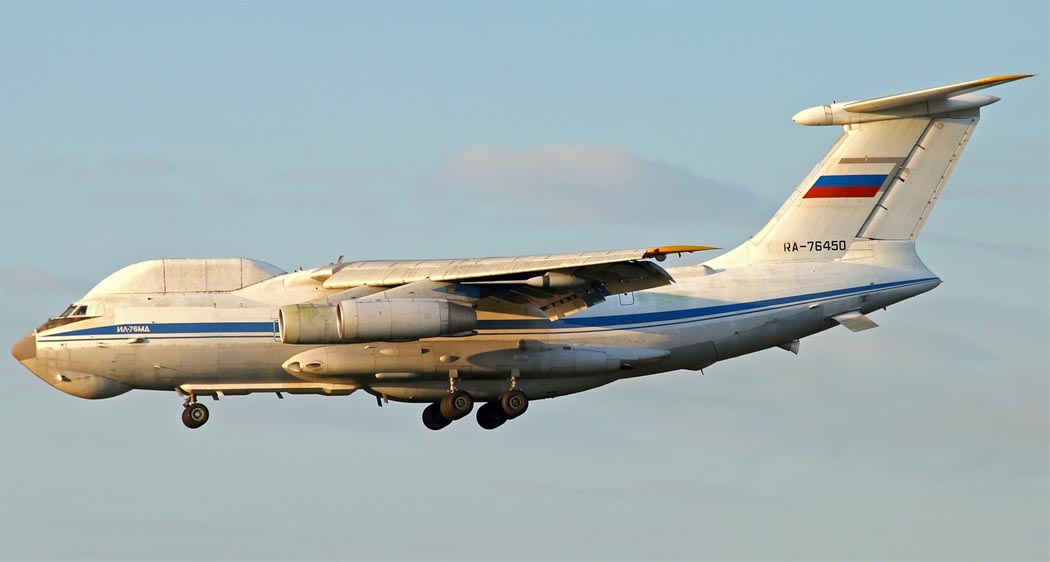
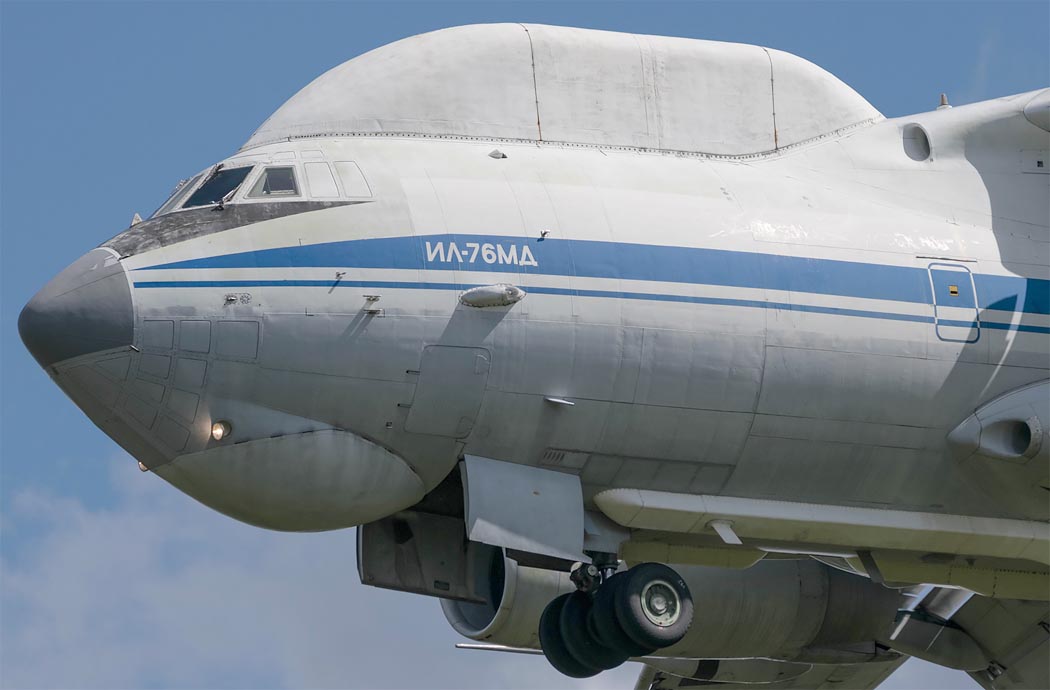
Translated from Russian(using BabelFish):
“According to the special-order the Ministry of Defense OF THE USSR two “false” Il-76MD OF THE USSR -76450 and USSR -76451 were built as strategic airborne command posts (VKP) for the management of the nuclear forces of the country if ground-based control posts will be disabled. The equipment component of these machines is standardized with the aircraft Il-86VKP also constructed according to the special-order, another part – with the aircraft DRLO A -50. Aircraft have design designation Il-76VKP and troop designation Il-76SK (special command). However, was encountered designation Il-82! Appearance Il-76VKP very characteristic – them not with which you will entangle. Entire top of the forward fuselage from the pilot’s cab to the center section occupies very strong box superstructure with the equipment of satellite communication as on Il-86VKP. Glazing navigational cab is sewn by metal, and meteoradar is closed with the reduced fairing about the changed form but to type A -50. Similar to A -50, left entrance door is absent – not to landing aircraft it it is not necessary. The fairings about the landing-gear retracting mechanisms are also borrowed in A -50 – their forward sections are noticeably thickened, extended and have on two round air ducts of different size. In them electronic equipment is placed; therefore VSU is transferred into the tail end of the left landing-gear fairing and is supplied with the appearing air duct as on A -50. To the left of the nose strut of chassis to the left wheel fairing of chassis the box fairing about the installation is pulled. On the fairing of center section after the wing are located by rhomb four petalous antennas, along the sides of the leading edge of keel – two oblong fairings as on Il-86VKP. Two enormous petalous antennas are established on the lateral loading doors, while on the average – drum, from which is unwound the towed wire antenna of ultra-low frequency special-connection with the drogue at the end. This antenna with a length of 5 km (!) serves for the connection with the submerged submarines. Drum is located inside the fuselage, outside is visible only small fairing and poluutoplenyy in it cone. The installation of drum forced to transfer lower flashing light from the average fold of hatchway under the tail cone. After letting out antenna, aircraft begins to describe circles. Cone, after losing speed, falls down, and five-kilometer antenna hangs almost vertically. Only in such a situation of antenna radio signal can open the thickness of water. The receiving antenna of submarine is also wire and with the small float at the end. Finally, under the external outer planes of wing small oval containers with the directional forward bolt VHF antennas connection are fastened to the short pylons. According to some data, both boards enter into the composition of the separate air squadron of control and relaying of 8 air divisions of special designation. Aircraft constantly be based on airfield Chkalovsk. Any other information on these machines is closed. This some of few, until now, not declassified models of aviation equipment”
peshoThanks Bring_it_on,for the second time you are my savior. 😀
peshoELP I give your post to one friend and ask his what is his opinion on NCW..
“Well this NCW thing is quite important isn’t it?Btw what is NCW?”
You,see not everybody is from english speaking country,and for me that is my third language.I know what is IRST,WVR,T/W… because they are used many times.Could you next time just type something like matt and black eagle.I mean:
Advanced Light Helicopter (ALH) and network-centric operations (NCO).This is not the first time i ask for such “help”.
peshoYour post is not even worthy enough to reply.I just wait for Garry to see it,and the thread to be locked.
peshoBMP-T have Kornet,wich comes with alternative termobaric warhead with 5km range.And although TOS-1 is one of my favourite war machines,his task is completely different than that ahead of BMP-T.
peshoSens that is close to my point of view.No need to discover the wheel when….you know the story.
As for dates,they are from 2 russian books and one site(i try to check everything before i post),so i’m not sure who is wrong.In one of the books there is the text of the order for Osa development from 27 Octomber 1960.If i’m not lazy and have the time,i will try to translate the text.Still the goverment tests ended in 1970.
pesho“The SA-8 even has a gas turbine generator on top of the main diesel engine, just to power the electronics.”
You are wrong here.Many russian systems use auxilary electricity generator,in case of shut down main engine,to save fuel.
The electronics in Osa is truly “ancient” but this was take care of in Osa-AK modification.I was in Osa launcer many years ago and i may forget something but i don’t remember any valves.I have a short movie from inside one Osa-AK system and the look is not so “barbarian” as many other russian weapons.
Osa has other advantages as ability to cross water obstacles,search targets on the move,air lift by Il-76 and even ability to move on railroad.
pesho“For the soldiers it is important only, if their weapons did fullfill the related task.
So far all customers seemed to be satisfied with their system bought.”
Same for Osa……
“Osa entered service in 1974”
No.4 Octomber 1971 along with Osa-M.The development begin in 27 Octomber 1960.
“There is nothing to get “sick” about, except wrong pride.”
I’m mean is just stupid when all russian/soviet made weapons are “copies” from western ones,or they have -ski to look more sexy 😉
To be fair the development of Osa was forced by USA MIM-46 Mauler.
peshoThis site is well known to all russian speaking weapon entusiasts.If you want to view more photos just click “ВЫСТАВКИ”(expo).There on the right is list of photo albums from arms-shows and museums.
And SA-8 is the Russian “Osa” SAM system.I’m sick of all this “this is the russian version of……”.At least SA-8 entered service 5 years earlier than Roland and allready with radar,not with manual optical tracking and guidance.
peshoHi Jack.
In the beggining of the thread i posted pictures of BMPT and talked how usefull it will be.This is description of BMPT and its weapons.
“Presented during the Ural Expo Mars 2000 in Nizim Tagile, BMPT (Object 199), was constructed in Ural Transport Machine Construction Bureau (UKBTM). The prototype was developed as the own initial of UKBTM and uses the T-72/90 tank chassis. The purpose of the vehicle differs from the Achzarit and BTR-T transporters. The task of BMPT (in the constructors’ assumption) is not safe transport of infantries in the terrain threatened by direct enemy anti-tank fire or in areas where operations of typical infantry transport mediums are impeded (urban area, mountains). It is meant to provide fire support to the tanks. The experience gained from post War II conflicts showed, that the tank crews are forced to locate and engage too many types of targets – not only other tanks and armored vehicles, but also light field fortification, fire position, even single soldiers armed with light anti-tank weapons. All these have a negative influence to the accomplishment of the major task – engage enemy tanks and fortification. BMPT vehicles, moving along with the tanks, are to combat secondary targets like IFVs, armored transporters, infantries and other weapons that could post threats to the tanks – and therefore it is named: Tank assistance combat vehicle. The common position in combat grouping with tanks forces the BMPT to be protected by equivalent armor. Its front and side armors are comparable with T-90’s, but the most exposed parts – the front of the chassis and the turret is additionally protected by integral ERA panels. The wheels and sides of the chassis are covered by screens with ERA and the rear with grids which causes cumulative warheads to explode. The armor of BMPT is probably heavier that the base tank, as it weight 47 tons (T-90S – 46.5t). The vehicle is as mobile as T-90S, similar to the newest series of tanks it is powered by W-92S2 diesel engine developing 736kW/1000hp. This is an engine from the W-46 family, in which air intake system, fuel installation, pistons are modified and turbo-charge is installed.
The crew is 5 people. In the Turret sits the commander and gunner, in the chassis – the driver and 2 shooters, the last are sited on both sides of the driver. All crew members have their individual hatches.
Instead of standard turret, BMPT obtained a low profiled, welded turret with externally installed weapons which include: stabilized in 2 planes 2A42 30mm automatic cannon with large lifting angle, AGS-30 automatic 30mm grenade launcher. Additionally, on the turret a remotely controlled PKTM 7.62mm automatic machine gun is mounted. The turret is also equipped with 4 9M133 Kornet laser guided anti-tank missiles, which are located in a armored container on the left side of the turret. The commander and gunner (whose duties are fully exchangeable) have the same PNK day-night gunsight integrated in the digital fire control system aided by the DWE-BS meteorological sensor. Laser warners which co-operates with 12 smoke grades are also installed on the turret . On the track covers of the Object 199 prototype, AGS-30 automatic grenade launchers controlled by the shooters are installed in armor containers (they can be replaced by PKTM automatic machineguns). The shooters are equipped with rotatable observation turrets with Agat-MR aiming equipments and periscopes.
Tomasz Wachowski “
AGS-30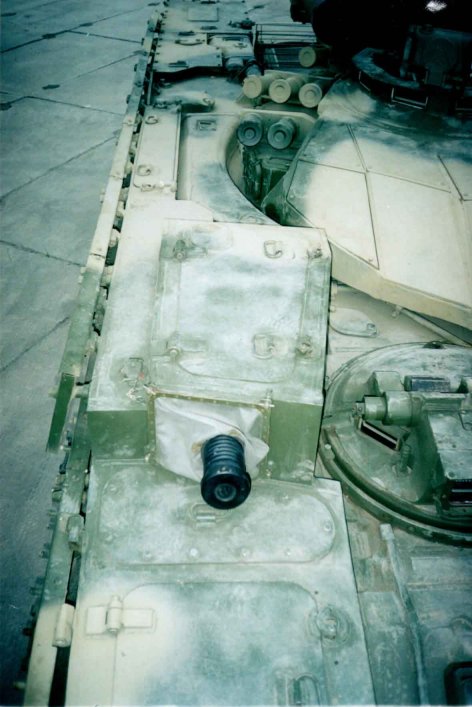
peshoSome more:
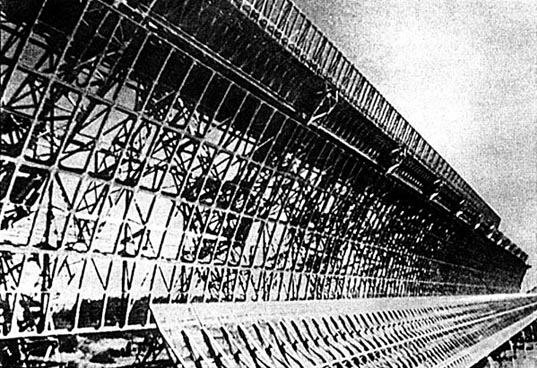
Dunai 2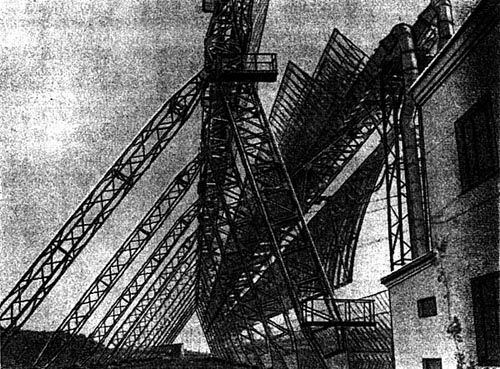
Dunai 3U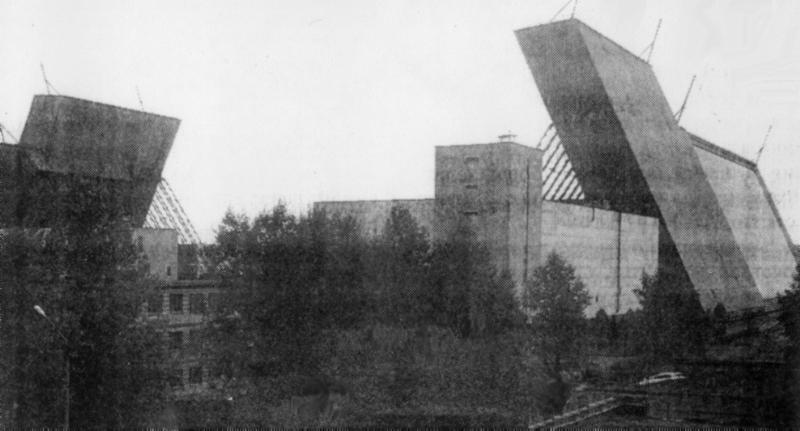
Darjal U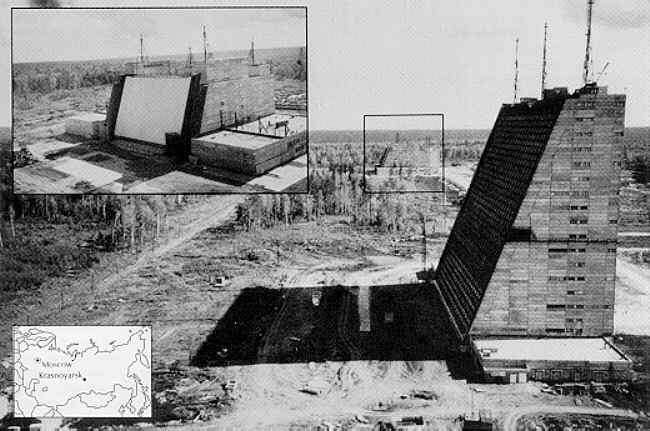
Voronej -DM


pesho“Those tandem RPG-7 are interesting, some are probably Bulgarian, at least one may be a PG-7VR or copy thereof.”
Vympel i don’t think they are Bulgarian.At least not produced recently(after 1995).We supply weapons to Iraq,Lybia,Cuba and several African countries.Here is report by Human Right Watch:http://www.hrw.org/reports/1999/bulgaria/Bulga994-02.htm
Few years ago police discovered that there was dual-purpose equipment contrabanded to Syria.The equipment was gear-boxes that was used in both civil tractors and T-55 tanks.
And i don’t know what is the problem with all Russian and Iranian made weapons?Russia will never admit that they supplied the weapons,but even if they actualy are,then good for them.The weapons proved themselfs and guarantee future sales.The war only worked as good advertisment.
Jack thank you for the explanation,i though you have some kind of “hate” against Russians.
peshoBoeing sign $18 billion dollar deal with Russia’s VSMPO
“With President Vladimir Putin’s blessing, Boeing struck an $18 billion deal Friday with VSMPO-Avisma to supply titanium for its airplanes.
The agreement came exactly a week after the United States announced it had imposed sanctions on state arms trader Rosoboronexport, which is acquiring VSMPO-Avisma, and could help Boeing land a large planes order with Aeroflot.
The development should alleviate fears that the sanctions will harm U.S. companies’ business in Russia.
As part of a 30-year deal, Boeing and VSMPO signed off Friday on a joint venture under which Boeing will purchase $18 billion-worth of VSMPO’s titanium products.
Meeting with a trio of senior Boeing executives at his Novo-Ogaryovo residence outside Moscow, Putin said the venture was “an attempt to enter a new level of cooperation,” according to a version of his comments posted on the Kremlin web site.
Representing Boeing at the meeting were company vice president Thomas Pickering, a former U.S. ambassador to Russia and undersecretary of state for political affairs; Alan Mulally, CEO of Boeing’s commercial airplanes division; and Sergei Kravchenko, head of Boeing in Russia and the CIS.
VSMPO general director Vladislav Tetyukhin and Rosoboronexport chief Sergei Chemezov, a close ally of Putin’s, also attended the meeting.
Chemezov confirmed late Friday that Rosoboronexport had agreed to buy more than 51 percent of VSMPO from current owners Tetyukhin and company chairman Vyacheslav Bresht, and would soon pay for the shares, Bloomberg reported.
Putin’s approval of the Boeing-VSMPO deal appeared to be a defiant reaction to the United States slapping trade sanctions on Rosoboronexport and military jetmaker Sukhoi. Under the sanctions, the two Russian firms’ trade with U.S. firms is restricted, while their trade with U.S. government agencies is banned altogether.
The sanctions come under the Iran Nonproliferation Act of 2000, but their timing — they took effect July 28, the day after Russia sealed a $3 billion arms sale to Venezuela — has been widely seen as a response to Russia aiding Venezuelan President Hugo Chavez, a staunch critic of U.S. policies.
As well as its cooperation with VSMPO-Avisma, Boeing acts as a consultant and minority investor in the Superjet medium-sized passenger jet project, formerly known as Russian Regional Jet.
U.S. firms, and Boeing in particular, would suffer the most from the sanctions, analysts in Washington and Moscow said last week. Putin’s comments, however, appeared to suggest that trade relations would not suffer.
“Since 1992, … your company has proved itself a reliable partner,” Putin said. “We, for our part, will with pleasure support the development of your activity, of your business in Russia.”
National flag-carrier Aeroflot has yet to announce whether Boeing or European rival Airbus will win a $3 billion order for 22 new long-haul airliners.
By appearing to broker the Boeing-VSMPO deal, the Kremlin was sending out a familiar message, said Roland Nash, chief strategist at Renaissance Capital. “Putin wants to signal, ‘Yes, you can have private enterprise, but enterprise under the eyes of the Kremlin,'” Nash said.
“The Kremlin has made it clear that any deals happening in strategic sectors must have its stamp of approval.”
Although VSMPO-Avisma exports 75 percent of its output, it also supplies titanium for submarines, rockets and nuclear power stations in Russia. The company produced about 30,000 tons in 2005, one-third of the world’s titanium, making it the largest producer of the metal.
Boeing’s venture with VSMPO gives it a major, low-cost titanium parts supplier at a time when prices for the light, durable metal are set to soar.
Analysts predict titanium demand will rise by 13 percent over the next three years, with prices for the metal seen as rising by one-third by 2008. High aviation fuel prices and increased insurance costs due to terrorist threats are leading aircraft makers to demand lighter, more fuel-efficient aircraft parts.
Boeing would save 20 percent on costs through the $60 million, 50-50 joint venture, at the titanium maker’s Verkhnyaya Salda plant in the Urals, VSMPO’s Tetyukhin said. The venture will also supply other projects, including Sukhoi’s Superjet.
As VSMPO’s largest client, Boeing already buys 40 percent of its titanium from Verkhnyaya Salda, which also supplies close to 60 percent of Airbus’ titanium needs.
The latest jets from both companies, Boeing’s 787 Dreamliner and Airbus’ A350, each require 36.3 tons of titanium. One-tenth of the Dreamliner’s parts are made from Russian titanium, Tetyukhin said at Friday’s meeting.
“This agreement is an outstanding example of how a joint venture should work, with benefits for both of our companies,” Mike Cave, vice president of airplane programs at Boeing’s commercial airplanes division, said Friday in a statement.
“VSMPO will expand its capabilities in titanium parts production, and Boeing will increase efficiency and reduce the waste associated with titanium machining,” Cave said.
The venture will perform rough machining and stamping of titanium forgings — turning primary metal into polished, semi-finished products. The final machining and processing of the forgings into airplane components will be mostly done at Boeing’s U.S. facility in Portland, Oregon.
In 10 years, VSMPO hopes to progress to making final parts for Boeing, Tetyukhin said Friday, Bloomberg reported. After the Rosoboronexport takeover, VSMPO’s business strategy will not change, Tetyukhin said.
VSMPO recorded a net profit of $128 million and revenue of $506 million in the first half of 2006, according to Russian accounting standards.
After Russia’s sale of arms to Venezuela, it is also in talks to sell arms to Mexico and other Latin American nations, Rosoboronexport’s Chemezov said on the sidelines of a Boeing reception late Friday, Bloomberg reported.
“Venezuela’s example has proved catching,” Chemezov said, Bloomberg reported. “Latin America used to be a blank spot for us, now they all want it — Brazil, Argentina, Chile.”


 Sign In







