 JSR
JSRI never said it was an easy conversion. SAC and CAC both pitched their designs and CAC was based off J-10. Even Richard Fisher talked about naval J-10 proposal in his article. My point all along was that PLA held flankers range/payload in high regard. It valued those as the most important factors in having a multi-role fighter jet. Which is why they’ve put this huge investment into J-15 and J-15S. J-15S will basically be like a navalized Su-30.
It is just talk. It will take huge investment and time to even design a naval J-10. China chose what was easy copy solution from 1980s.
you put the same payload on su-33 and mig-29K, su-33 will have better flighter performance and range.
you constantly ignoring the weight and drag penalty of larger aircraft. Su-33 is simply not certified with new generation engine.
If your goal to match su-33 range is through CFT, that can easily be done through aerial refueling. the standard PLA configuration for flankers is 4 MRAAMs + 2 SRAAM in A2A missions and 2 or 4 AShM + 2 SRAAM in anti-ship missions. They have never shown the desire to go beyond that, because that extra payload will just decrease flight performance and range. Your obsessiveness over the one extra wet point doesn’t change the fact that you get more payload/range with flankers, in addition to a heavy fighter jet that’s better for air superiority. I mean Mig-29 series is so great in multirole that RuAF must be buying them instead of the overweight and overpriced Su-30/34/35s right?
Again no understanding of basic limitations of aircraft carrier. You don’t put heavy fighter on carrier deck that need long runways for takeoffs and decrease the range of carrier itself. Its better to have 30 MIG-29K on carrier than 30 Su-33. these are not 100K tons nuclear. and even than lighter 5G fighter more suitable built entirely from composites.
Every country has problems that they deal with. None of the problems that China has changes the fact that it already has twice the economy of Japan and more than half that of US in nominal GDP.
neither Japan nor US population want to flee or best minds want to work for foreign corporations un related fields.
The fact that you are completely ignorant of this before I mentioned it shows that you started making this point on false assumptions and is just trying to talk your way out of it. China spends less than 2% of its GDP on defense.
It cannot spend more than that any way.
Even if it grows at 2% (let’s say they have lost decades like Japan has had) for the next 3 decades, they will still have the second largest economy in the world. There is no reason that China cannot afford 3 carriers. If they grow at 5%, which is still lower than what most poeople predicts, it will eventually overtake US as the largest economy in the world.
Japan was second largest economy for long time. can it afford Aircraft carriers?. Japan is real wealthy country having factories around the globe with high level productivity due to robotics.
you can go to my blog and read about it.
your blog is pure speculation.
JSRWhy not post the entire paragraph? Because it doesn’t fit your dream world? Or because it doesn’t support your pathetic bullsh*ts?
Entire paragraph even put Turkey more in bad light like hired mercenary.
So much idiocy in single sentence; 1- Paper spacification made by manufacturer also means aircraft is certified to take these loads. 2- 4 wet stations with 800 lt tanks mean ~4×650 kg ornanance, MiG-29 cannot carry armament centerline. Current max of MiG-29K is 4xKh-31s and 4xR-77s, which should be around 3200kg including the pylons/adatpers. THIS IS ALSO WHAT MIG SAYS, period. 3- MTOW has nothing to do with max weapon load or max fuel, as evidenced by F-18E, Su-34 which never reach MTOW even with full fuel and payload, and Su-27/Su-33/Tu-160 and many more, where aircraft cannot take off with full fuel and full payload due to MTOW limitation.
One is clearly paper speficiation and the other is certified export fighter. Su-34/Su-30 can take off with full MTOW..
IOn Paper;
MiG-29 MTOW is 24,5 tons, with 5,5 tons payload capacity, Ferry range is 3000 km, says the MiG company.
Su-33 MTOW is 33 tons, with 6,5 tons payload capacity, armed flight range is 3000 km, indicating 3000+ km ferry range, says the Sukhoi company.
5.5 ton pay load capacity from where this figure come from?.. 18.5 tons is normal take off weight and 24.5 tons is max. normal takeoff weight usually include 2 to 4 missiles. considering the the size and weight of fighter 2000km range on internal fuel means atleast 5.5tons of fuel. MIG-29K range is not that much less than F-18E.
What is observed and proven by images/videos;
MiG-29 took-off (or just landed?) with 2x Kh-35s, and 2xR-73s, unknown fuel amount; that makes 2×520 + 2×105 = 1250 kg, excluding 4 pylon/adapters. Assuming full internal fuel, range is less than 2000km, which is ferry range.
Su-33 took-off with 4 R-27EMs, 2xR-27REs, 2xR-27TEs, 4xR-73s and full fuel fuel; that makes 4x~350 + 2×345 +2×348 + 4×105 = 3206 kg excluding 12 pylon/adapters and fuel for slightly less than 3000 km, which is flight range with 4 missiles.If we are looking for what is seen, such payload is not only overshadows MiG-29, but apperantly many other aircraft as well; lets go with some funny facts, and see what other aircraft are OBSERVED to be capable of;
F-14D took-off with 6xAIM-54s, and 2x AIM-9s, 2990 kg, ferry range is 2960 km with 267gal tanks, though IIRC it never took-off with 6 AIM-54s AND EFTs.
F-18E took-off with 4xMk-83, 2x AIM-120 and 2xAIM-9s; 2314 kg payload.
F-18E seen landing with 2xGBU-24 and 2xAIM-9(IIRC?), 2270 kg payload.
F-18E seen airborne with 10xAIM-120s, 2xAIM-9s, 1690 kg.
F-18C seen airborne with 4xJSOW 1988 kg payload.In fact, I couln’t find (or remember) a video/image of F-14/F-18/Rafale taking-off with heavier armament (not fuel tanks, armament) than posted above. I would really want to see one, I mean there has to be. It appears CATOBAR or not, Su-33 just took-off with one of the heaviest, if not THE heaviest armament from a carrier ever. (Recorded on a camera at least) I may just create a topic about this.
observe proven images? did you see each and every sortie?. Other aircrafts simply don’t have the agility and top speed of MIG-29K and neither is such spacious and enlarge cockpit.
JSRHalloweene,
That’s one interpretation of what the GoI thinks. Cussing HAL will not put Rafale in IAF colours.
The GoI has in principal already agreed on the price increase, the sticking point (by all public accounts) seems to be the interpretation of the said clause. Based on all public statements the GoI is sticking to its interpretation, which apparently is no different from the previous Govt. The present RM’s public statements have not moved away from this.
Price negotiations hasn’t even started. and with Euro daily dropping I don’t think India is in any hurry to sign it.
http://in.reuters.com/article/2015/01/14/india-france-defence-idINKBN0KN1PM20150114
“We are saying that the RFP has to be honoured totally, there can’t be deviations,” said the source.“Once the RFP aspects are done, only then can we sit down for price negotiations,” the source added.
JSRhttp://en.wikipedia.org/wiki/List_of_countries_by_GDP_(nominal)
Appearantly not; Turkey has 10% better GDP then Saudi Arabia. Chinese GDP is 437% of Russia’s.
This another gem. Turkish GDP is composed of garbage. It is never better than Saudi. same case is with China.
http://www.globalsecurity.org/military/world/europe/tu-f-16.htm
For Turkey, the USG promoted the creation of a “Turkish Defense Fund,” funded by the United States, Saudi Arabia, Kuwait, and the United Arab Emirates, to be paid over a five-year period. In return for Egypt’s support, the USG forgave certain Egyptian debt obligations. As a result, Turkey now had a long-term funding source for additional F-16 buys – to be called“Peace Onyx II.” Egypt had additional funds freed-up to be a potential third-country customer for Turkey’s planned new co-production program.
Lack of education, lack of social development, lack of goverment demands? We face similar things in Turkey; we want to design a MBT, we have a million engineers with ability, but no one has the will to do it or make them do it; so they seek Korean partners.
You have no understanding of a lot of things. so better not bring it up.
I didn’t said improvements are due to aerodynamic deficiency. I said MiG-29 needed improvements to its airframe and Su-27 didn’t. Those obviously include fuel capacity, payload capacity, room for avionics etc. I also state Su-33 has better aerodynamics, which would allow greater MTOW than MiG-29K can achieve. Those are two different statements I’ve made.
This what you wrote. completely ignoring that you are comparing paper specification with Aircraft that is already certified to take those loads. 5 wet stations mean 5000kg minimum. 24.5 ton MTOW means 7.5 ton weopon load which already exceed Su-33.
Summary= MiG-29K has clearly less lift performance and heavier mass per wing area than Su-33. So in terms of payload capacity, and take-off/landing aerodynamics, there is no-chance-in-hell current MiG-29K will perform even comperable to Su-33, or its copied brother J-15.
JSRThere were no carrier trials done with Su-27 or MiG-29 until some customer demanded it, but it would be insane to call them “unsuitable” back then. Currently, no one wants J-10 to be a carrier aircraft. If Chinese wanted, it would be pretty much straight forward conversion (way simpler than Su-33, or what PAK-FA will recieve eventually).
Su-33K is with RuaN for two decades. they have very good idea. while J-10 hasn’t landed on carrier and there is no hope of certification with strike loads.
Again, beyond nonsense. Why would Su-33 ever need 5 wet stations? Su-33 has 3000 km flight range with 4 missiles, same as MiG-29K’s FERRY range. Su-33’s central station is wet. Only reason it doesn’t carry an 3000l EFT is no body considered the need of a one. As for ASMs, Su-33 could carry 1x4500kg Kh-41 but not 4x520kg Kh-35s, RIGHT!! Speaking of airframe limitations, Su-33 has 8 pylons capable of holding Kh-35; it doesn’t have wiring, so Su-33 cannot use them, but that doesn’t mean J-15 will not too.
These are old brochure figures. Su-33K is a lot heavier than Su-27SK. MIG-29K already went through weight reduction. its top speed, altitude and payload not much different than Su-33 despite having smaller engines and much enlarge cockpit. enlarge cockpit increase drag. MIG-29K has MTOW of 24.5 tons.
China can afford anything Russia affords 10 times over.
And kingdom of Saudi can afford 100 times anything Turkey can afford. Russia is 100 times richer than Saudi. Just water resource alone make it different.
Do you even know e how to measure real wealth and population.
What they lack is engineering expertise.
Think harder. why they lack engineering expertize. The aim of Chinese population is to go west and get rich. There is no way competent are running aerospace development which has practically no hope of get rich and IPOs.
Designing a M2.0+ capable strategic bomber with 40 tons of payload capacity and 12000+km range from scratch is a very difficult job even for Boeing or Tupolev (two companies actually did it in the past), and next to impossible with current Chinese engine/aircraft design capabilities.
good that you admit its impossible to create Tu-160 in China.
and even better you never drop that silly statement that MIG-29K improvements are due to aerodynamic deficiency.
The whole MIG-29K was created to increase internal fuel capacity by 50%, increase wet stations, increase spine, enlarge cockpit and nose, increase MTOW by 50%. MIG-29 was never deficient in aerodynamics. Just putting digital fbw made big difference. I am not even going into MIG-29OVT from 15 years ago. so advance were the aerodynamics.
JSRzhuk-ME’s diameter is 624 mm, how much larger is Zhuk-AE going to get vs that. I’m not sure why you are turning this into Mig-29 vs J-10B, since the discussion was on why flankers is a better option than Mig-29 for naval aviation. There is a PLAAF thread in this forum. If you want to discuss Mig-29K vs j-10, please start writing your problem with J-10 there and we can talk about it.
Is the 624mm ZHUK-ME associated with MIG-29K? as Zhuk-ME is general upgrade radar for MIG-29s. and we don’t even know from what year that brochure created. You brought up J-10b and try to make it easy naval conversion. J-10B is not even proper strike fighter for land based operations let alone Naval.
If you take off with external fuel tank, you are just going to have less room for other payload and have lower flight performance. More payload also naturally reduces the range of the aircraft. The fact is Su-33/J-15 will always have more range/payload than Mig-29K. No amount of J-10 bashing could change that.
It still have plenty of payload left strike operations. remember it has 5 wet points. current Su-33 and its copies cant match it.
No, China has the second largest economy by nominal GDP. check up on your facts. Here is GDP for you as of 2013 http://en.wikipedia.org/wiki/List_of_countries_by_GDP_%28nominal%29
Notice something, China has almost twice the conomy of Japan and JPY has only gone down further.
China also has 10 times more population with a lot worse health care and most competent want to flee to West to work in social media and
E- commerce firms. China simply don’t have that hard core engg. skills of Japan..
If you want to really talk about financial side of things. Japan has by far the largest public debt in the developed world (over 200% of GDP and growing). It has the oldest population. It has no natural resource to work with. It has a shrinking population. Its economy hasn’t grown in 3 decades, because it’s entire policy of 0% interest rate and printing money has done nothing but add to debt. The retirement funds in Japan is going to have to start liquidating their JGB positions more and more in the next 20 years since all the retired people need to pull their money out. Either the interest rate will climb, which will be disastrous for Japanese national debt or Japanese central bank will have to print money at even higher rate. Abenomics has already caused JPY to fall from 80 yen/dollar to 120 yen/dollar and Japan is still not achieving a trade surplus. Let’s look at the latest affect of Abenomics.
http://finance.yahoo.com/news/japan-third-quarter-gdp-revised-000221219.html?l=1
So yes, I agree Japan can’t afford the navy it has right now, because it’s been wasting its money on public projects that go no where and it can’t afford to service its public debt anymore.Keeping hoping for a Chinese crash because that’s all you got. Even Greece GDP hasn’t dropped 50% from their economic troubles. How much do you think Chinese economy has to collapse by to get to your dream scenario of China not being able to afford 3 carriers.
Japanese private sector very profitable. and they own factories around the world. they are not limited to domestic labor. Don’t worry China is going same path very fast without real profits and engineering skills.
You clearly have no clue what I’m referring to. Your entire argument so far is destructive rather than trying to understand the goal of Chinese naval aviation program.
you have a lot of clues.
JSRThough I didn’t wanted to feed the troll; how you come to such ridicolous conclusion? J-10 has less wing loading and better T/W than any F-18 variant, and less wing loading than MiG-29K. Attach a hook between airbrakes and it will surely perform well enough.
you know weight and airframe life of J-10 to be able to deal with heavy strike loads?. T/W and wing loading is not everything. it is material science behind the structure and quality of construction that more important.
If the Russians had chosen Su-33 over MiG-29K today, I am 100% certain your comments would have favoured Su-33. One has to be beyond idiocy, beyond ignorance to claim for a second, that Su-33’s aerodynamics are inferior to MiG-29K. There is a reason MiG-29 got several changes in designs (MiG-29, relaxed stable MiG-29M, and MiG-35 with enlarged wings and krueger flaps) but Su-35 is still aerodynamically the same aircraft as Su-27. Not because MiG-29 had advancements, because it needed it, and Su-27 family didn’t.
If they had chosen they would have modified for 21st century. starting with 117 engines. MIG-29K needed changes to increase internal fuel capacity, enlarging cockpit and spine, adding 5 wet stations. It has practically nothing to do with aerodynamic improvement. which is not even priority. you can see it does not need those stupid canards.
Baseline Su-27 had maximum lift coefficient (Clmax) of 1.85 in maneuvering configuration (no trailing edge flaps). In simplest calculations, it could take-off from Kuznetsov with full fuel and 12 missiles *without deploying flaps*, should it use the longer station. No other aircraft that I know of has such high Clmax, not even airliners without utilizing flaps. MiG-29 has Clmax=1.5 (which is still impressive relative to other fighters), and higher wingloading than Su-27, it required FAR more modifications than Su-33, which it didn’t got; Su-33 added canards, two stage extending flaps, etc etc. Typically, such flaps alone triple the lift at given AOA, and double the clmax; those are simply ridicilous numbers. I am not counting additional lift from canards and downward deflected elevators which FCS software deploy. Older MiG-29K on the other hand only got larger single stage flaps and relaxed stability which Su-27/33 already had; really no suprise why it failed. Current MiG-29K adds somewhat improved two-stage flaps and krueger flaps; former is what Su-33 had in the first place, and latter is aerodynamically inferior to canards, albeit lighter and easier to implement. Irrelevant of claimed weight reductions (which I find doubtful), published data clearly shows MiG-29K has higher wingloading than Su-33 at standard take off weight. Summary= MiG-29K has clearly less lift performance and heavier mass per wing area than Su-33. So in terms of payload capacity, and take-off/landing aerodynamics, there is no-chance-in-hell current MiG-29K will perform even comperable to Su-33, or its copied brother J-15.
MIG-29K already done with loads. Publish data also show MIG-29K has higher altitude and similar top speed.
JSRIt’s nose is around 700 mm (about same as Mig-29) and is already using AESA radar and CFT can be developed if they want to. As for its payload, it was not picked vs flankers because it couldn’t handle the same payload. But that’s the crux of the argument all along, flanker is more ideal for multi-role operation. Something in Mig-29 or J-10’s weight class can never match the payload/range of flankers.
so you have measured the nose of MIG-29K that proclaiming its 700mm?. only thing official is its radar range is twice of previous version with Zhuk-ME. I don’t think you even understand things like power supply and cooling space. and weight penalty of AESA radar which MIG-29K with superior engines can handle better.
Compare the MIG-29K length and depth of nose cone with J-10B.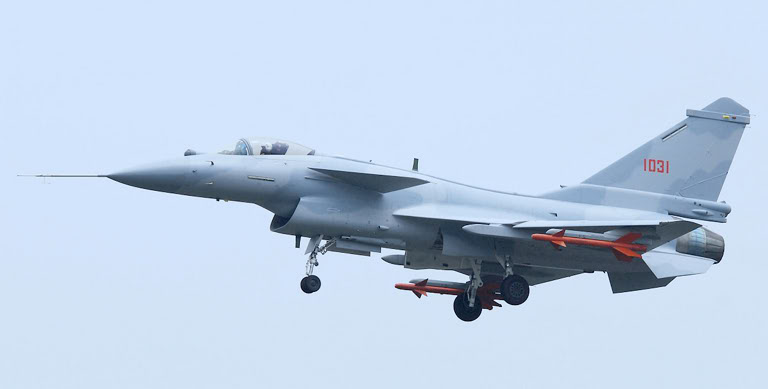

Are there any carrier trials done with J-10?. how you come to conclusion it cannot even handle Su-33K load which is basic airdefense fighter. There is no evidence that Su-33K is certified with 4 antiship missiles or 5 wet stations. CFT and J-10 has zero chance. it always carry small fuel tanks.
They are already making all those “advancement” you are talking about for mig-29K on J-15. What do you think J-15S is? Nothing you mentioned will allow Mig-29K to reach payload/range of flankers. All we got is that Mig-29K is the most economical path for Russia. China doesn’t have the same requirement since J-15 is taking the fruit of the subystem development from other domestic programs.
MIG-29K with 3ET has range of 3200km. which is more than SU-30MK. Su-33 is even heavier than Su-30. J-15S? where are the carrier trials.
so your entire argument is that China will not do well in carrier aviation because it’s going to implode? If you really want to talk about it, we can have an email dialog, but this is clearly off topic and you seem to have very little knowledge of this. And yes, I’m a Chinese Canadian and well aware of Chinese buyers affecting housing market all around Western world. What we do know is that China has the second largest economy in the world and it has one carrier right now. It has serious cost advantages when it comes to naval shipbuilding vs most countries in the world. The only country with comparable naval shipbuilding program right now is US. Even if we assume a 2% growth for China in the next 25 years, it can easily support 3 carriers.
the point is china simply don’t have the money due bad investments and demographic situation to built carriers in reasonable time. for same reason China cant afford Tu-160 equal and neither it can create Mi-26 equal.
Japan also had 2% growth, 2nd largest economy, but still it implode barely affording 2 JSF per year and Japan had much higher savings, better health care, less pollution and people not fleeing country. and Japanese companies overseas investments and factories are much more profitable.
I was not thinking of that kind of aggressive projection, although I have not doubt that’s where they would like to get to eventually (with no timeline in mind, since there is such a long way to go). I was more thinking of how US approaches toward blue water navy vs Russian approaches for example.
US approach is based on allies providing bases to support deployments. China can achieve some but most will be unstable third world.
JSRlol you are such a fruitloop JSR.
In 2030 China will have 24 elderly persons per 100 working-age population; Russia will have 27 and the United States 33. And India will have 12.
Russia’s long-term demographics are worse than just about any nation outside Japan or Germany, so I don’t know why you are trying to play this card.
your data and predictions are always wrong. see Brazil example.
China has the highest rate of emigration.
http://business.financialpost.com/2014/09/11/china-buyers-vancouver-housing/
the other countries are not dealing with long term pollution impact. and dysfunctional investments into third world countries of Africa/Latin America. so the kind of money needed to run 3 CATOBAR carriers simply not there.
JSRCAC obviously thought differently about J-10 becoming naval jet and there were definitely such proposal.
J-10 is half backed Strike fighter let alone suitable for carrier operations. Does it have 5 wet stations or enlarge nose for AESA. certainly no CFT.
As for Su-33 being overweight, that’s really dependent on the mission profile.
I mean Su-33 hasn’t went through same weight diet and advancement that MIG-29K went through. its same old canard design and not enlarge spine or cockpit like MIG.
There is a lot you can do with that. You can go standard A2A configuration which should have good flight performance. You can have the anti-ship variant, which can carry 4 YJ-83Ks + 2 PL-8s. You can have buddy refueling variant and EW variant. There is a lot you can do with it, which PLAN intended right from the start and we’ve seen them test out such configurations off CV-16 already.
it can do this and that without any practical evidence of happening. night take off.
http://foxtrotalpha.jalopnik.com/taking-off-in-a-mig-29k-from-a-carrier-at-night-is-a-fi-1655853601
CATOBAR and China are not far away, since it looks like their 2nd domestic carrier which will probably join service sometimes next decade will have it. Even in the first one, that’s probably going to be similar in looks to CV-16, more powerful engine will be available by then, which allows them to utilize more of its payload/range. These are things Mig-29K could never match.
Next dacade carriers can become obsolete with current planes and missile tech. CATOBAR is more than decade away from operations. MIG-29K is already going towards RD-33MKM. and AESA and TVC is practically cerfitied. more than 90% unification with MIG-35.
As for downplaying China’s demographics, that maybe the case. In the long term, nobody knows what will happen to China’s economy and military budget. Considering that they have already planned for a CATOBAR ship and they have more than enough money to support a carrier fleet, you can believe what you will.
It is not very long term. less than a decade away where retirement and health care burden will overhelm budgets. the point is China will get old without being powerful. I am not even assuming people fleeing to west or most of investments turning bad in Africa/Latin America.
Yet, the living quarters are designed to so much more comfortable and suitable for long trips.
the design it but it does not mean its capable of round the world trips.
Why would they need to move any faster? They have so much to learn right now. The most they can do is to hopefully operate with a larger airwing by then. CV-16 for the next 10 years operates as a training ship. Actually, that goes to their entire fleet that looks great on paper, but requires so much more work in training and tactical development.
The point is comparison was made China can do things faster and cheaper. which is simply not the case when things become complex. and this carrier will take money from a lot other programs.
JSRhttp://forum.keypublishing.com/showthread.php?93377-The-PAK-FA-Saga-Episode-IX&p=1448447#post1448447
And with that I shall leave you to your own reality distortion field 🙂
what is the reliability of this pics? and still it does not have anything to do with TRM modules failing or any thing with do with China semiconductor. if it was Korea than maybe as Russian did transfer a lot of knowledge to Koreans.
see this example.
http://www.plazmafal.hu/gen_broch.pdf
Orion PDP Co., Ltd
Head Office (Seoul, Korea) 4F, ilshin Bldg., 15-15, Yeouido-Dong, Yeongdungpo-Gu, Seoul 150-872, Korea1994 Established Joint Venture “Orion-Plasma Research &Production Company” in Russia
JSRYield rates are about how efficiently you can make the modules, not whether you can make the modules. Poor yield rates won’t bankrupt the manufacturer because the manufacturer is subsidized. The article says just that. It’s not claiming Russian manufacturers will for sure go bankrupt because it’s identifying the state as a critical source of support (read carefully).
MIG-35 AESA radar was private venture as those TRM Modules came from micran.ru. there was never state support associated with it. I bet the writer does not know that T-50 and MIG-35 TRM modules are from separate firms.
http://www.micran.com/business/
We have mastered the technology for the design and mass production of APAA transceiver modules (TRM) based upon our own SHF components and high-performance measurement systems. Based upon this technology, we have developed and put into mass production a range of receiver and transceiver L-band, S-band, C-band, and X-band APAA modules for ground-based, airborne and space-based radar systems.
Good examples are the transceiver module for the Russia’s first APAA radar for the MiG-35 fighter and the receiver modules for the “Nebo-M” (Небо-М) radar station. We are developing several Х-band APAA projects, including a space-based synthetic-aperture radar.
Both Chinese and Russian semiconductor industries have a yield rate problem. It’s a very hard technology to master though, and heavy state subsidization is quite normal and necessary to develop it. China’s gotten ahead of Russia in the last decade or so mostly for market reasons (they have more customers, which brings in more capital and allows for more testing and iteration). Anyways, like I said earlier the writer isn’t Chinese, so it’s a bit of a stretch to say that he’s trying to boost China’s ego. It’s also a weak and meaningless argument. Are we to accuse people of just trying to boost Russia’s ego every time someone on this forum toots on technology from Russia. Don’t be a juvenile..
again don’t compare Chinese own industries that are complete failure with Russian. your confusing a lot of things like assembling foreign with own R&D. Chinese research is very dysfunctional.
JSR…
An initial failure rate simply reflects poor yields in fabrication of the modules. Both the radar could have been tested and flown successfully and the fabrication could have high initial failure rates. The statement reflects weak industrial capacity, not weak technological capability.Both of you should actually try to understand what you’re reading before you go off making arguments.
even if initial failure rate is high it wont bankrupt a manufacturer as is first radars are few hand built. it is not there main business at all. so this statement was just make to boost Chinese ego.
there was never problem even with advanced modules.
http://www.ato.ru/content/radars-india-and-other-customers
Will your proposed solution be based on the Zhuk-AE radar?— The Zhuk-AE AESA radar, which we proposed as part of Russia’s bid in the Indian MMRCA tender in 2010, is a production item. This means there would be no critical issues that could affect series production. We are currently designing an all-new 3D AESA radar but we need another 1.5 to two years before we can launch its series production. The problem is not creating the 3D transmit/receive modules [TRM], which we already have. At the moment we are focusing our efforts on making all components located behind the array, i.e. the power sources, the steering devices, and so on, as thin and compact as the array itself.
JSRWhy is this? The qualities that make a mature, potentially CATOBAR evolution of J-15 compelling are, for the most part, not seriously compromised by the continuing slow introduction of ‘stealth’ aircraft to the scene. Her payload, range, and performance in the AAR, CAP and potentially Growler roles will all continue to be valuable throughout the lifespan of the aircraft, just as with USN’s Super Hornets.
first you don’t know the weight and range of Naval flanker with life span under strike loads. Super hornet use extensive composites and no canards but still very heavy and slow. there is better way of spending money like building 5 generation bomber and hypersonic missiles.
I never used the word ‘superpower’ in relation to Brazil, as you claimed. Brazil’s mid/long-term prospects were and remain bright. Her recent difficulties do not significantly affect long-term projections, anymore than Russia’s do.
Go back your postings about your predictions. Brazil has no prospects. Brazil will be lucky to get 10 Gripen in next 10 years.
Countries prospects are measured by how much raw material it can sell to Asia. Russia is building pipelines, railway and land bridges to Asia.. on top of that enormous amount of money into military power. this will not only translate into exports but direct application of military power.
JSRFound the article on Russia and China I was talking about.
http://www.strategycenter.net/research/pubID.230/pub_detail.asp
look at this statement. does not make sense since in 2010 no PAK-FA was flown with Radar and when it was flown the radar house said it exceed expectation. So don’t believe on any hype that is written about China. it is good for building iCrap.
The initial failure rates on the production of transmit/receive (T/R) modules for the Active Electronically Scanned Array (AESA) radars being designed for the Mikoyan MiG-35 and the Sukhoi T-50/PAK-FA 5th-generation fighter, for example, were so high that it would have bankrupted any western firm involved in a similar programme.
http://www.ainonline.com/aviation-news/defense/2012-08-31/sukhoi-t-50-moves-radar-flight-refueling-tests
Side number 53 is fitted with the AESA designed and built by the Scientific Research Institute of Instruments named after Tikhomirov (NIIP). The maker claims “considerable progress” in early ground and flight tests. The radar “corresponds to the best systems available elsewhere,” it said. NIIP also noted that tests of the PAK FA’s electro-optical sensor system have started.NIIP unveiled a full-scale prototype of the AESA radar for the PAK FA at the Moscow Airshow (MAKS) in 2009. This unit uses locally produced components, including solid-state transceivers, based on “nanohetero structures.” It is built on module principles and with other applications in mind, including aircraft that are already in service and anti-aircraft defense systems. The technologies employed in the new radar permit an increase in target detection ranges, and enable simultaneous operations in both air-to-air and air-to-surface modes, including recognition and classification of detected targets. These technologies also permit engagement of several targets simultaneously, using precision guidance munitions, NIIP says. The radar has integrated capabilities for secure communications and electronic countermeasures.


 Sign In







