Abhimanyu
swerve, as per this article, MTOW of Tejas is 13 tons. Lesser MTOW and greater engine thrust give Tejas Mk.1 a higher T/W ratio than Gripen C/D.
AbhimanyuThe Tejas seems to have similar physical parameters of the Gripen. I do not wish to turn it into another meaningless x VS y aircraft that fills the aviation discussion forums.
I think that both gripen and tejas have a MTOW of ~12.5 ton and the Gripen uses 80.5 kN engine which has a slightly lower output than the of GE engine used in tejas.
The above is accurate and applies to Gripen C/D and Tejas Mk.1. The current MTOW of Tejas Mk.1 is 12.5 tons, but it’s engine i.e. GE-F404-IN has a max. thrust of 82 or 83 kN.
Tejas Mk.2, will feature either the Eurojet-2000 or the GE-F414 (most likely, the former). Like the NG, it will also undergo an undercarriage redesign, and add more weapon-stations.
Then what might have been the IAF requirements that Tejas failed to meet? Why ask for a 90-100 kN engine.
See, originally the Kaveri engine was to be developed for the Tejas. The main point about it was that it was flat-rated, meaning it managed a significant thrust even at low altitude / high temp. conditions. India has such conditions like in it’s western desert range, and it’s vast coastline; the engine must perform here too other than the Himalayan ranges.
Now since the Kaveri is overweight by around 100 kgs, it is not able to develop the requisite 85 kN thrust. And the current GE-F404-IN engine is not flat-rated and has slightly lower thrust than 85 kN — although it must be noted that Tejas Mk.1 has already opened to IoC specified flight-envelop using this engine, 2 months back (news report). There are no other known flat-rated engines too. So that’s why the IAF has asked for engines between 90 kN-100 kN (like EJ-2000 and GE-F414), so that they are able to extract significant thrust even at low altitude / high temp. conditions, by sheer virtue of a much higher max. thrust than 85 kN.
AbhimanyuThe last article I found was this:
http://www.defensenews.com/story.php?i=4302013&c=ASI&s=TOP
That’s why I thought the development will be further delayed.
See, as already mentioned earlier, this is still better than non-existent Sea-Gripen and N-Typhoon. Atleast N-Tejas is under construction.
MK1 is still only in testing and integrating stage, let it be operational and we can compare it with Gripen C/D, or Mirage 2K-5 and of course JF 17.
We can compare it even before it is operational, because ADA has publicly released the current specs of Tejas Mk.1 at Aero-India 2009. 2 months ago in Goa, it’s flight envelop reached IoC standards already. By the end of this month radar-integration will complete.
According to this source Barak-2 LR-SAM for the air force has a range between 120 – 350 km!! I thought it was 70 km. All together Barak-2, LR-SAM, MR-SAM, Barak-NG, Barak-8 are like khichdi! :confused:
http://www.8ak.in/8ak_india_defence_news/2010/02/barak2-lrsam-maiden-flight-later-this-year.html
Rajan, you’re right the LR-SAM is indeed of 70 kms range only. As per a latest video presentation of current DRDO chief Dr VK Saraswat (posted on this forum also), the LR-SAM is of 70 kms range only. He also demonstrated that the 120-150 km range SAM will be based on the PAD, and which will also be able to counter cruise missiles.
The so-called MR-SAM is a navy designation for the very same Barak-8 / NG, and that too is of 70 km range. We sincerely hope that the Bark … er…. I mean Barak saga ends at 70 kms only, for both, navy and air force. The navy can also use the PAD-based SAM for ranges of 120-150 kms.
AbhimanyuNot so.
Rafale and Gripen can fly in “free-float” canard regime, even when FCS is down and this is why analogue control line.
It is in fact more resilient than what F16 and Tejas pack, because apart from identical parallel signal through digital lines, Rafale and Gripen send an additional analogue signal through the 4th control line.
The above is slightly inaccurate. The analog line takes over only when all the 3 digital lines before it have failed. That’s why it is called as the “backup” in the article I quoted from.
It doesn’t operate in parallel or in tandem with the digital lines.
Anyway, Tejas and F16 go down when FCS shuts. Rafale and Gripen don’t.
Well, Tejas and F-16 have one more chance to fly normally, if 3 channels have shut. In case of Gripen and Rafale, the pilots just have to make do with “floating”, if 3 channels have failed.
AbhimanyuWrong – this is for Typhoon:
You are right only about Typhoon. I should’ve mentioned Gripen in it’s place (I knew 2 of the Eurocanards did NOT have full-quad FBW like Tejas).
Here’s about Gripen’s FBW :-
“The aircraft is controlled by a digital fly-by-wire (FBW) system with triple redundancy and an analog backup. The analog backup system provides a simple, reliable capability, and is automatically activated if two of the three digital FBW systems go down. The pilot can also activate the analog system with the push of a button. The Gripen was designed from the outset to use the FBW system, which was evaluated on a modified Viggen. The FBW system compensates automatically for the degree of instability built into the Gripen to increase its maneuverability. The FBW system also allows the aircraft to adapt to combat damage, for example using differential control of the canards to fly the aircraft if the ailerons are disabled.”
And this is for Rafale -also quad but with one backup analog channel:
Arey, you read what it says about Rafale carefully :-
“Longitudinal stability is moderately negative with a full fly-by-wire digital control system. The system is quadruple redundant with three digital channels and one separately designed analog channel.…”
Is this any different than what I’d said earlier : Triplex FBW + 1 analog backup. This site you’re quoting has added the analog to the 3 digital channels, to call it “quadruple” (read the Gripen’s description above for a more “honest” assessment). It’s digital component is Triplex only. This system is a bit more “primitive” than what Tejas and F-16 E/F have.
AbhimanyuOne can add multiple weapon stations on a single wing-pylon. Good examples are JF-17 and Gripen. EADs consultancy is said to do the same on the Tejas Mk.2.
Now, Eurojet claims it can have the EJ-2000 up and running on Tejas Mk.2 in “two years flat”. The only thing that remains now is the redesign of Tejas’ undercarriage. As per informed members on BR forum, the designers wanted to avoid taking risks, which is why they adapted the Jaguar’s proven underfuselage on the Tejas. However, it is not the optimum design and turns out to be heavier. This is expected to be resolved by EADs.
goonerkid, this search result provides a number of photos above 1024 resolution. For N-Tejas, only brochure photos are available so far. I don’t think we have the actual photos of it under production yet.
AbhimanyuBut still no foreign partner was found to make the fighter carrier capable, right? N-LCA and LCA Trainer looks similar, but the airframe structure should be different.
My question wasn’t regarded other carrier fighters, but if IN gets N-LCA in time for our new carriers? Kind of strange, the Migs have to wait for the carrier and the carrier later for N-LCA.
I don’t quite understand the above view, but please note that N-Tejas is under an advanced stage of production at HAL’s plant in Bangalore (source). In stark contrast, the Sea-Gripen and N-Typhoon exist only on powerpoint presentations and fancy art-work only.
Why do you see only little increases? IMO only the Gripen NG and offers a little performance increase, compared to a possible LCA MK2, all other fighters should offer clearly more. The Gripen might be cost-effective if you compare it with the other contenders, but compared to LCA MK2 it won’t be worth nearly twice the cost.
The above is inaccurate. As we’ve seen earlier, the Tejas Mk.1 as it flies today, equates the Gripen C/D in all parameters, like range-payload and avionics. Now since it will undergo the same transformations to become Tejas Mk.2, that Gripen C/D underwent to become Gripen-NG, the Tejas Mk.2 will also equate — if not surpass — the Gripen -NG in performance specifications.
Thus, the IAF may as well choose the Tejas Mk.2 as the MRCA.
AbhimanyuThe only changes that should be made to LCA MK2 are the engine and refuelling probe. If LCA has fewer pylons then compensate that with more number of LCAs. 3 LCAs could provide more pylons than 2 MRCAs and still cost less not to forget greater likelihood of surviving SAMs.
The air-intake modification, wing re-design with additional pylons etc should be pushed to MK3. These changes take a lot of time and by the time they will go through their tests and clearances it would be too late. Anyone asking for these changes in MK2 itself has a stake in its slow death.
The above is inaccurate, as changes to wing design and air-intake design are NOT needed at all in Tejas Mk.2.
As numerously mentioned earlier, wing-redesign had already been done from Jan 2004 and incorporated in PV-2 onwards to all LSP series. What EADs will do is it will add a new weapon-STATION on the middle pylon of both wings. The number of wing-PYLONS will remain the same as in Mk.1.
Intake redesign :- As per this article, intake redesign was already done, (photos are available) with LSPs to incorporate them.
Now, as per a latest article quoting Eurojet officials, integration of EJ-2000 into Tejas will require nil modifications to Tejas’ fuselage as well as air-intakes. Only minor internal changes are needed, and all that can be accomplished in just two years.
AbhimanyuMr Anthony tells us “with confidence” that this and that is going to happen by this and that time. It seems that almost everything I have read about the pitiful management of this project indicates that such confidence is unwarranted.
There should be a Tejas with a Kaveri engine by now – it was promised pre-2010. Has that happened or is that just another example of something associated with Tejas being late? Perhaps the idea has just been quietly buried due to subsequent events (foreign engines for Tejas MkII).
In case of Kaveri, the date for integration with Tejas and first flight was many years ago. But it’s delays have no bearing on the Tejas’ schedule, because foreign engines have been selected in it’s place. So, Kaveri or no Kaveri, the timelines for Tejas’ IoC, FoC and squadron inducton remain.
As per this news report, a Kaveri will be soon be ready for integration on Tejas by this year, after passing high-altitude tests in Russia.
By the way, what weapons are scheduled for integration as part of FOC? For a state such as Great Britain it does not matter too much that the Typhoon has extremely limited A2G capabilities.
So what A2A and A2G capabilities will be integrated on Tejas by entry into service date? Note that I use the phrase “will be integrated” indicating reality rather than “are planned to be integrated” indicating fantasy.
The above would be mostly Russian weapons in IAF’s current inventory like R-73 (already test-fired from Tejas), R-77, and Russian-origin bombs and A2G weapons. Given IAF’s record of integrating French missiles on MiG-29s and Russian missiles on Mirage-2000s, some French missiles in IAF inventory too may be integrated. After the indigenous Astra is completed, it would also be used.
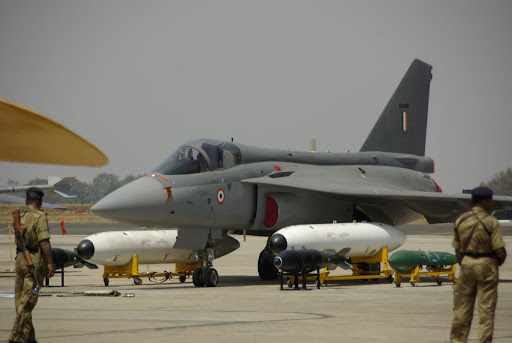
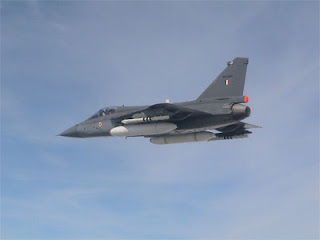
Some photos of weaponized Tejas :-
Photo 1
Photo 2
Photo 3
Photo 4
Photo 5
Photo 6
Thanks for clearing up the dates…but still every MRCA competitor is better than Tejas MK1 and everyone(including the Gripen) will be better than MK2. Don’t you agree on this point?
No I don’t agree. Already the Mk.1 has quadruplex FBW as compared to triplex-analog FBW in Gripen and Rafale. The others we all know by now, like Litening pod, jammers, RWR, advanced HMDS, etc. are comparable. The Mk.2 will have these, and in addition it will feature IRST and sensor fusion. Both Gripen C/D and Tejas Mk.1 have variants of GE-F404, and 8 hardpoints. And Tejas Mk.2 will use a 90-100 kN engine just like Gripen-NG’s GE-F414.
nope. not at all.
if you compare only individual specifications, then yes most MRCA candidates will beat LCA Mk2 by a fair margin with gripen being held to a draw.
I agree with the above. That too except some difference in payload, all other parameters will be same. The Tejas Mk.2 with newer weapon stations under wings and newer pylons under the fuselage will carry upto 12 weapons/pods. This is the same as Gripen-NG and F-16 C late model. Range will be similar.
The only reason why F-16 E has “bloated” to 10 tons, as compared to 7 tons of Gripen-NG is because of CFTs, and strengthened hardpoints to carry nukes & cruise missiles; but more importantly, it hardly has had any composite redesign since the 70s. It’s a metallic “hulk”.
Could be true, but I still wonder when the N-LCA should be ready if IAC1 will be ready in 2015 and the Gorshkov already in 2012. The N-LCA should only be ready after MK2 entered service in IAF right?
Well, the trainer version has already flown a few times. As per a recent news report, this will hasten work on N-Tejas, as it is very similar to trainer version. However, Mk.2 is a top-priority for time-being.
We must note that other than Rafale, Tejas is the only post-1991 fighter jet to have an air-force version, trainer and naval variant under development. All others like Gripen, Typhoon, and J-10 don’t have naval variants at all; some don’t even have twin-seaters.
AbhimanyuIt is presumed that all the 126 MRCAs will get inducted in 2014, when the fact is that only the first few of the lot will begin to get introduced that year. By the time all the 126 are inducted, it will be 2023.
Similarly, the first Tejas units will be introduced in the IAF next year, in 2011. These will be the first few LSP units. The first squadron will complete by 2014. With the Mk.2 also to be introduced by 2013-14 timeframe, there is absolutely NO necessity of the MRCA at all.
AbhimanyuIt is pretty obvious that the MK2 will not arrive before 2018…
Maybe it is worthwhile to buy the Gripen in the MRCA.
Arey bhai, I hope you are aware the IAF mooted the MRCA 10 years ago in 2001. It has “dilly-dallied” for so long, that it is more of a “circus” now , than any urgent requirement.
As discussed earlier, the first of the Mk.1 units will be introduced in the IAF in 2011 — the first squadron will complete by 2014. 2014 is also the timeframe when the Tejas Mk.2 with new engines and modified frame will get introduced, as per ADA director PS Subramanyam.
In the light of the above, there is no need for importing a foreign MRCA in the same timeframe.
Abhimanyu2014? So when is MkII likely to first appear in IAF service: 2016/2017/2018? If it’s likely to be that long, why bother with foreign engines? Better to throw a load of money at foreign consultancy to get Kaveri working in a non-Indian aviation time frame ie reasonably quickly.
No. As per the news report you quoted, the Tejas will get IoC by Dec. 2010, and FoC by 2012. What the ADA official probably meant at the end was that the 1st full squadron of Tejas will complete induction by 2014. Induction per se will obviously start by 2011 itself, else how will the IAF grant IoC by 2012 as mentioned ?
For the uninformed, by the very nature of granting FoC certification, a few Tejas units will have to be inducted into IAF and used extensively for 2 years, before granting it the certificate. So, the first few Tejas units will be inducted starting 2011.
AbhimanyuSee, Tejas’ wings were redesigned in 2004, on the IAF’s request. EADs consultancy NOT will result in the addition of new wing pylons, but new weapon-stations only.
This is excellently visible on the JF-17, where the second wing pylon has 2 missile stations, whereas on Tejas, the middle pylon currently has only 1 station. Since JF-17 has a much higher wing-loading factor than Tejas, this second station can easily be added on the Tejas too. What is needed is only software integration of the new missile on the pylon.
Now, EADs shall also redesign the undercarriage of Tejas (currently uses Jaguar’s undercarriage, as per somebody in BR). This may result in the addition of fuselage pylons too. Considering the short time in which Gripen C/D was transformed into Gripen-NG by just redesigning the undercarriage, and replacing the GE-F04 with a GE-F414, it should also be possible in a short time on Tejas too, with EADs expertise.
AbhimanyuIAF orders another 750 Akash surface-to-air missiles
BANGALORE: The Indian Air Force (IAF) has ordered an additional 750 Akash medium-range surface-to-air missiles (SAMs) from state-run defence behemoth Bharat Electronics Ltd (BEL) at a cost of Rs 42.79 billion ($925 million), it was announced on Tuesday.
“A decision to place this fresh order with BEL was taken after the IAF expressed satisfaction with the performance of the Akash missiles that are deployed in two squadrons,” defence minister AK Antony said on Tuesday.
The IAF will deploy 125 missiles each in six squadrons as and when BEL delivers them.
“The first order for 250 missiles was placed last year on a pilot basis. The IAF has decided to deploy the weapon in more squadrons for optimal use,” Antony said after inaugurating the digital flight control (DFC) computer facility at BEL here.
BEL chairman and managing director Ashwani Kumar Datt said that the first order was worth Rs 12.21 billion.
Designed and developed by the state-run Defence Research and Development Organisation (DRDO), the Akash missile defence system is part of the country’s integrated guided missile development programme.
“The missile can target an enemy aircraft up to 30 km away, at altitudes up to 18,000 meters and can be fired from both tracked and wheeled platforms,” Datt told reporters on the margins of the function.
The missile is capable of carrying conventional as well as nuclear warheads with a payload of 60 kg.
On the occasion, BEL also handed over to the defence minister an advanced gun fire control system for the Indian Navy.
Reference :-
—————
The above is indeed excellent and a long-awaited news. The Akash has been vindicated, and the likes of Times of India etc. have been silenced permanently on this front atleast.
These Akash squadrons will be deployed along the Indo-China border, to check their J-10 and J-11 fighter squadrons. Given the huge number on order, they’ll also definitely be deployed along the western border with Pakistan, as well as around sensitive installations like the Mumbai-based nuclear power plant.
AbhimanyuI rather place my bets with the Russians than put faith in the MCA…first let them bring out the LCA 2.
The Pak FA will probably get developed faster than the LCA 2. The engines are already ready and so is the radar. Both are not for the LCA MK2.
For the past 76 years, the IAF has relied on imports only, and nothing but imports. At best, licence produced hardware. This is because, DRDO has been behind the learning curve than the west.
However, things are changing : Tejas Mk.2 has full-quadruplex FBW, as compared to tripex-analog FBW on Typhoon and Rafale. It’s composite percentage surpasses the Typhoon. With the exception of radar and target pod, nearly all avionics are indigenous.
If each time one plays on the fear of “we want it now”, then no indigenous products will ever be inducted, and IAF will perenially be dependent on imports. Then indigenous R&D will falter further due to lack of demand, and the cycle continues. If the IAF has to break out of this “vicious cycle”, then it must commit harder to indigenous equipment, and not just give lackadaisical support.
We thought that MRCA would be the last import in IAF’s history. But no, they also want a Russian FGFA. By the time MCA is ready, IAF may give a few token orders (a la Arjun), but then they’ll begin importing Israeli UAVs…….when will this import cycle end ?


 Sign In