 talltower
Angolan Air Force Su-27

Mi-24 Hind
talltowerThe only reason light observation airplanes worked well in Vietnam is the Viet Cong learned that shooting at one would cause an immediate retaliatory artillery barrage or air strike on their position. The Iraqi Army doesn’t have that capability, so that retaliatory threat doesn’t exist against anyone willing to take pot shots. I anticipate lots of shot up light observation airplanes.
It would be useful to employ Bird Dogs in a sub-national conflict (like the current insurgency.
talltowerDogfights of the Future was entertaining but the dogfights were unrealistic.
None of the MiG-35 Super Fulcrums could ever down a Raptor or Lightning II (one had its weapons bay door jammed), as if they were flown by inexperienced IRIAF pilots? (the second combat scenario was set somewhere near the Caspian Sea on the night of July 22, 2019) And guess which country bordering the Caspian Sea is in the process of acquiring nukes? (self-explanatory)
Also, why did the Su-30MKI Flankers in the first scenario (set somewhere near Florida on June 20, 2016) all get destroyed by the Raptor’s AMRAAMs if they could detect it far away with their IRSTs? Flown by inexperienced pilots?
The third scenario (set in the Pacific Ocean on the morning of April 8, 2027) where three Raptors engage eight Berkuts is also unrealistic (unless the
Su-47 pilots were flown by inexperienced PLAAF pilots). Had this been for real, none of the F-22s would have survived the engagement.
The final scenario where the two scramjet spaceplanes ‘dogfight’ in low orbit is also sort of unrealistic. The powerful laser consumes so much power, it would require a small plasma reactor, and to date, no plasma reactor has ever been invented, not even a miniaturized variant that can fit inside a scramjet spaceplane (by the late 2020s, that may be viable).
talltowerShe’s flying again …. 😀
(via =GT from CDF)
Cool pictures of the J-10B.
talltower
Chengdu J-10BS.
talltowerNice ….. posted by fightingirish at the Secret-projects forum !
Deino 😀
Cool image!
That looks closest to the real deal for the PAK-FA.
talltower
PL-12 (Sino-Slammer)

PL-8 (Sino-Python-3)

PL-10 dogfight missile (Sino-A-Darter)

DF-21

DF-31

DF-41
talltower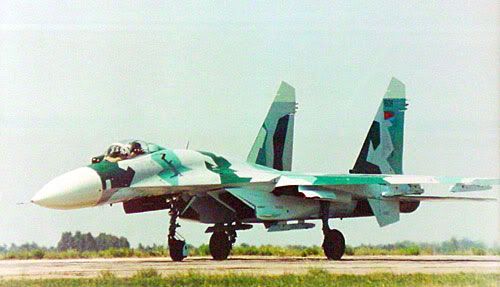
Eritrean Air Force Su-27

1/32 scale model

Sudanese Air Force MiG-29

Hungarian Air Force JAS-39 Gripen
talltowerMissile system S-500 can destroy targets in near space
September 28, 2009
AVIA.RU – Russia will not go towards creating a “multi-functional air defense systems that can withstand both different types of anti-aircraft missile systems,” said Deputy Commander in Chief of the Air Forces of Russia on Defense, Lieutenant General Sergei raffled off.
According to him, “multifunctionality leads to a more expensive system,” reports today, “Gazeta.ru.
There is a gradation of anti-aircraft missile systems: long-range, medium-range, short-range and immediate cover, “he explained.According Razygraeva, systems, long-range opposes S-400 medium-range missiles – S-300, short-range and short range – Pantsir-S “. The general also said that developed anti-aircraft missile system S-500 will be part of a strategic missile defense. “System C-500, which is in development, will be able to eliminate intermediate-range missiles, tactical missiles, and shoot down missiles in the near space and thus will be elements of a strategic missile defense,” – he said.
S-500
Country: Russia
Details
Currently in the blueprint stage, the S-500 is a Russian surface-to-air missile system that, if developed, will be able to track and destroy ballistic missiles with ranges of up to 3,500 kilometers. At present, however, reports indicate that Russia has not yet started building the S-500, apparently due to a lack of funds.(1)
In June 2000, Secretary of Defense William Cohen and Rep. Curt Weldon (R-PA), Chair of the House Armed Services Committee’s Military Research and Development Subcommittee, led a U.S. delegation to Moscow to meet with Russian Deputy Defense Minister Nikolai Mikhailov and several top-ranking Russian generals. In a series of discussions, two new Russian surface-to-air missile systems were mentioned: the S-400 (NATO: SA-20 Triumf), then still under development, and the S-500, which existed solely on paper.(2)
According to Mikhailov, Russia had completed theoretical calculations on the S-500 and, if deployed, the system would outperform the S-400 as well as the U.S. Patriot Advanced Capability-3 system. Mikhailov acknowledged, however, that Moscow lacked the financial resources to complete the project. Seizing the opportunity, Weldon suggested to Mikhailov that the U.S. and Russia create a joint missile defense system, one that would incorporate S-500 technology, U.S. funding, and the strategic expertise of both nations.(3) Mikhailov seemed intrigued by the idea, but refused to offer any more specifics about the S-500.(4)
After the U.S. delegation returned to Washington and Rep. Weldon reported his findings to the House Armed Services Committee, naysayers immediately argued that Moscow would use U.S. taxpayer dollars to fund its military experiments, which were in direct violation of the 1972 ABM Treaty (still in existence at the time).(5) If indeed the S-500 had been developed and it had lived up to Russians expectations, as described, it would have violated the ABM Treaty’s 1997 demarcation agreements, which allowed for only short range or “tactical” anti-ballistic missile systems.(6) At the time, the S-400 and its upgraded version, the Antey-2500, were barely below the demarcation threshold. The Russians claimed that the S-500 would outperform S-400 by a wide margin.(7)
Nevertheless, the Pentagon began examining options for a joint missile defense system, one that would strengthen political, military, and economic ties between the two nations.(8) Jacques Gansler, Under Secretary of Defense for Acquisition, Technology, and Logistics, attempted to quell dissent by stating that such a collaborative system would not replace U.S. efforts to build its own national missile defense system. As Gansler put it, the S-500 would be a “compliment to our systems, rather than a replacement.”(9) Many missile defense proponents in the U.S. understood that such a collaboration would encourage both nations to move away from the archaic 1972 ABM Treaty.
Moscow ended the debate in early 2001 by rejecting the U.S. proposal for cooperation.(10) In April 2001, however, Russian President Vladimir Putin announced the future exportation of the S-500 to Europe and elsewhere in order to counter U.S. efforts to build a NATO-wide missile defense network.(11)
Addressing the House Armed Services Committee in July 2001, Rep. Weldon expressed his dissatisfaction with the Russian Defense Ministry. According to Weldon, the Russians had attempted to cover up the fact that its S-500 plans were in open violation of the ABM Treaty: “Nobody is involved with Russia as much as I am, but I can tell you, there are people in the Russian Defense Ministry I don’t trust. . . . There’s a pattern here of deliberate attempts to mislead America and the allies on what Russia’s ultimate plans are.” Weldon stressed that the U.S. needed to stick to President Ronald Reagan’s theory of “trust, but verify.”(12)
Nevertheless, Weldon and others continued to push for a joint U.S.-Russian system incorporating the S-500 design. In May 2004, two years after the U.S. withdrew from the ABM Treaty, the Congressman traveled to Moscow and reiterated his offer: “You designed . . . the S-500 system but lack money. We can build it together.” Weldon emphasized that such a system would protect both the U.S. and Russia from the growing threat of weapons of mass destruction from Asia, the Middle East, and elsewhere.(13) At present, however, there is no evidence that Russia plans to collaborate with the U.S. on the S-500.
Source: S-500
talltowerF 35 with Canards nice.
This proposed ‘MiG-39’ would be an F-35 equivalent.
Do we really need all this fanboy crap? :confused:
Seriously, what’s wrong with the artworks of fanboys?

Oh, that’s right, it’s just figments of their imagination, planes that would never leave their computerized drawing boards.
talltower
J-13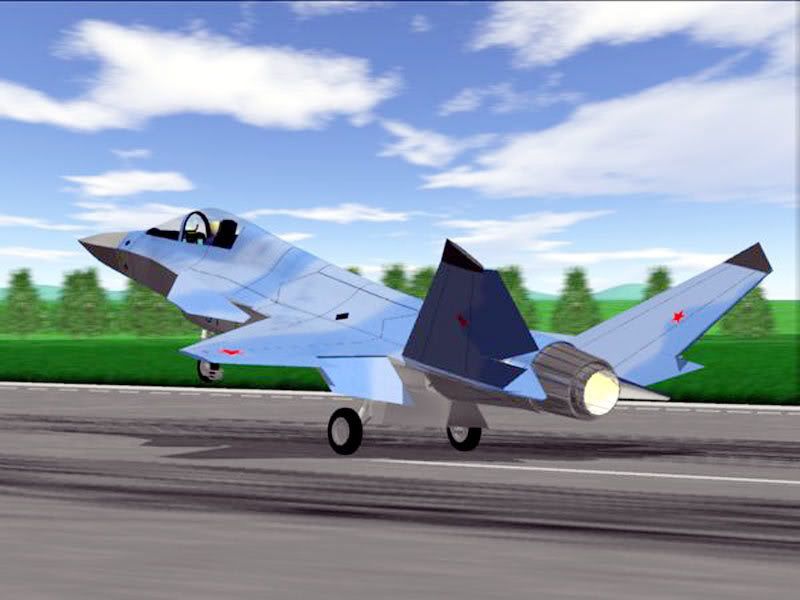


Proposed MiG-39
talltowerThe Argies should be very enraged at the deployment of Eurofighter Typhoons in the Falklands. They call it Las Malvinas.
Seriously, those Typhoons would serve as an ideal deterrent to Falklands War II by keeping the Argentinian Air Force at bay.
It’d be better if they overflew Buenos Aires.

talltowerI see your problem. A is a boom receiver in US-service, when B and C are not. Maybe some customer in the program will change theirs for the A too,
What I mean is the F-35 Lightning II would be equipped with both a traditional refueling probe and USAF-style refueling receptacle.
talltowerSince PGM has spread I don’t believe in hardened shelters any more.
Better go for old fashioned spread-out sand bag emplacements and move the aircraft around a lot.A severe problem for the B-2 and other stealth hangars – somebody could take out these right at the start of a conflict.
Also not to forget about commandos, with ATGM and anti-material rifles.
With all the special ground support kit (rare, expensive) & specialists needed for LO aircraft losing an airbase could have severe long term consequences on a force level, not just in one theatre.
There was this USAFE excercise in the late 1980’s, Spangdahlem I think, where they operated under a simulated damaged and threatened airbase for a week or so. Turned out there was not near enough equipment and personnel to clean up and re-establish operations, also not enough on-site hospital capacity. Wonder if they ever implemented the lessons …
Russian guided bombs
PLA guided bombs
Air Superiority Comes First
Another way to protect your fighter aircraft from surprise attacks is dispersal to road airbases.

JAS 39 Gripen operating from road airbase.
talltowerThat’s why I envisioned the railgun as a CIWS against lethal supersonic AShMs such as Sunburns, BrahMoses and Sizzlers.
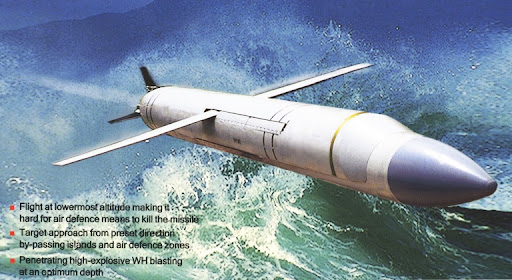
SS-N-27 Sizzler
SS-N-22 Sunburn
PJ-10 BrahMos
Rail gun


 Sign In







