 talltower
Northrop Grumman X-47B Pegasus


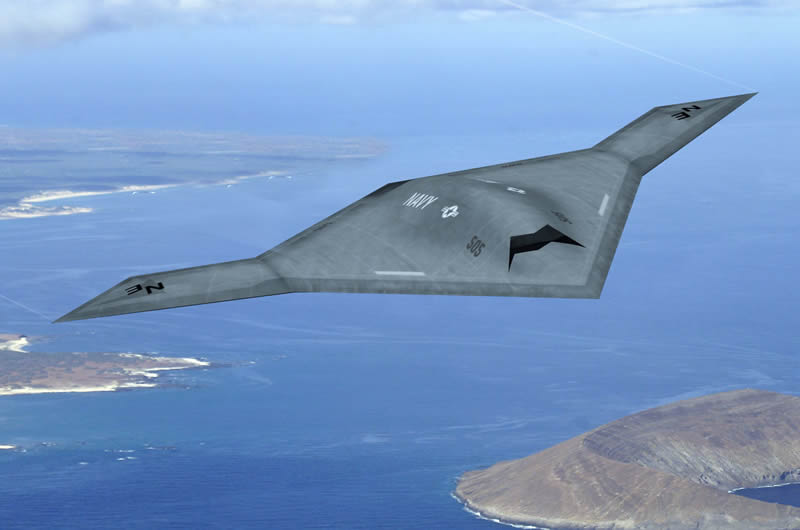
Article from Global Security:
http://www.globalsecurity.org/military/systems/aircraft/x-47.htm
talltoweryour pakfa is great see my MiG-29
There is one inaccuracy I have spotted: The engine bays are too closely spaced together. MiG-29s have a gap in between the engines for providing central lift.
BTW, here’s more news on the FGFA, but you should really question this one, as the source, Rupee News is pro-Pakistan.
Indo Russian bickering & Disputes delay FGFA to 2017 stretch target!
While the company line says that everything is just hunky dory and fine. The fact remains that all is not well on the Western front; the price of the Russian aircraft carriers keep on rising exponentially even after signed contracts define the delivery dates; there are huge disappointments on the transfer of technology and Russia is developing “joint-plane” by itself; there are humongous differences on what the FGFA should look like; should the plane be singe or double seater.
The Soviet Union launched fifth-generation fighter programs in the 1980s. By the mid-1990s, the Mikoyan Design Bureau developed the Project 1.44 warplane, also known as the Mikoyan-Gurevich MiG MFI. The Sukhoi Design Bureau came up with the S-37 Berkut experimental supersonic forward swept-wing jet fighter. The S-37 aircraft was an advanced technology demonstration prototype not intended to be mass-produced as a fighter. However, due to the lack of funding, the Project 1.44 aircraft was not streamlined and never entered production either.
By the late 1990s, it became apparent that existing fifth-generation fighter projects were becoming obsolete, that their production versions would be inferior to the brand new American F-22 Raptor air superiority fighter, and that even if finalized the air force would receive such warplanes a decade too late. (U.S. secret weapon: F-22-A Raptor in action. RIA Novosti video)
The project was eventually entrusted to Sukhoi, which refers to it internally as the T-50.
Various maiden flight and supply deadlines were discussed from the very beginning. The T-50 was eventually scheduled to perform its first flight somewhere between 2008 and 2010. In late 2008, the commander of the Russian air force announced that the plane would first take off in August 2009. RIA Novosti, where this article was first published. Russia begins designs for new fighter jet
Mikhail Pogosyan, head of the Sukhoi Design Bureau, confirmed the information. “The progress that has been made by now suggests that we can begin the flight tests within one year,” Mr Pogosyan said. Several versions of the aircraft are being discussed, including a two-seater model, and a carrier-based aircraft.
In the summer of 2008, officials said the T-50 design had been approved and prototype aircraft blueprints sent to the Komsomolsk-on-Amur aircraft-building plant (KNAAPO) in Russia’s Far East, where jet fighters will be produced. The plant is currently building three prototype T-50 fighters for future tests, due to last five to six years, while mass production will not get underway before 2015.
Although T-50 specifications have not been disclosed, it is known that prototypes and the first production aircraft will be fitted with 117S (upgraded AL-31) turbofan engines from Russian aircraft engine manufacturer Saturn. As a result, the T-50 will be a heavy fighter with a takeoff weight of over 30 metric tons and will have the same dimensions as the well-known Sukhoi Su-27 Flanker. The Tikhomirov Institute of Instrument Design, which had developed the Irbis radar for the Su-35BM Flanker, is now working on the T-50 radar. The new fighter’s radar and fire-control system will be designs on the basis of the Su-35BM’s systems. By Ilya Kramnik, RIA Novosti,
The declining Indo-Russian relationship. Delhi scrambles for new arms sources but they come with strings. India and Russia signed an agreement in October 2007 for the so called joint development of the FGFA. The first flight is scheduled for 2009. The Russians have already decided on the design of the plane and are moving full speed ahead with its development. The tag-along Hindustan Avionics will probably be handed over a kit in 2009 to claim that it has actually participated in the development of the aircraft. Technically the joint development is accurate. HAL has funded part of the $4 billion in development cost. A spokesman derisively joked about it saying “actually the Indian “innovation” is pretty much limited to designing new tri colored Indian flag designs on Russian planes and placing the decals on the right spots.”
BANGALORE: … the defence establishments of both the countries are willing to bury their differences over the fifth generation fighter aircraft (FGFA) and get the project kickstarted by the middle of this year.
The FGFA study programme which was initiated between India and Russia in 2007, has been a slow-starter as the Air Forces of the two countries have had differences over the aircraft project.
While the Indian Air Force wants a two-seat version to meet the requirements of India’s air superiority policy, the Russian Air Force wants a single- seat version.
“There have been differences between the two Air Forces as both have specific requirements.
These issues will be sorted out soon and by the middle of the year we expect to start work so that the aircraft is inducted by 2017,” M Fakruddin, Director-Corporate Planning and Marketing, Hindustan Aeronautics Limited (HAL) told to The New Indian Express. Indo-Russian FGFA project set to take off. Indian Express. Hemanth C S, Last Updated : 03 Feb 2009 11:40:56 AM IST
The project is way behind schedule and the Russians are proposing test flights this year–without any input from HAL or Delhi. When Moscow needed hard currency it bent over backwards to appease Hindustan Aeronautics. Now flush with Petro-Dollars the Russian Aviation industry is treating the Indians like poor cousins.The March 2009 test flights will display a single seater plane which was the Russian preference. By using that excuse that the HAL facilities are not ready, they will ram the Russian design down the throat of Delhi and then try to ship the stripped down export version of the plane by 2017.
The plane is supposedly stealth– as stealth as Russian planes can be.
A general contract had been signed in December last year between HAL and Rosoboron Export for the design and development of the aircraft by the Sukhoi design bureau and the Indian aviation major.
The fifth generation fighter is expected to feature high manoeuvrability and stealth in order to ensure air superiority and precision in destroying ground and sea targets.
Lockheed Martin’s F-22 Raptor and the F-35 Lightning II are among a few of the fifth generation fighter aircraft in the world.
MRO facility on hold
HAL’s plans to set up an aerospace MRO (maintenance, repair and overhauling) facility at the HAL airport has been put on hold due to the economic recession.
“The MRO facility at the HAL airport is on the backburner, as we do not see it feasible at this point of time to have one. The rise in fuel prices, the decrease in passenger traffic and the economic slowdown have all impacted the business. We have decided to wait for some time,” said Fakruddin.
HAL had been mulling over the idea of starting a MRO facility at the HAL airport after the commercial flight operations shifted to Bengaluru International Airport last year.Indo-Russian FGFA project set to take off. Indian Express. Hemanth C S, Last Updated : 03 Feb 2009 11:40:56 AM IST
Why doesn’t Russia transfer Flanker Su-30 development technology to India?
India has history of failed aircraft design and production. the LCA was a colossal failure and the Tejas engine is a fiasco unparalleled in world avionics history. “Then, of course, there is the indigenous ‘Tejas’ Light Combat Aircraft programme, which was launched in 1983 to replace the ageing MiGs. But it’s running years behind schedule, with the first squadron likely to be inducted only by 2011-2012 now” (Hindustan Times). Some are averse to calling it a failure, but 25 years for developing a plane is a development cycle that most analysts consider a bit too long–especially when there is nothing to show for it. Indian missile production was also something that has a huge “F” written on it. Trail of tears and failure: Indian missiles.
India is reportedly more interested in the two-seater version, while Russia, with its developed ground and air fight control system, plans to concentrate on the one-seater fighter. There is a possibility that the Indian version of the Russian fighter will be lighter and smaller, and thus cheaper.
There have been reports in the past few months about the new fighter’s exterior design. Judging by photographs of the prototype available online, the T-50 will resemble the American F-22, a fact easily explained by similar parameters on their technical specifications. However, it is yet undecided whether the model will eventually be used as a prototype.
As of now, one can only make general conclusions on what kind of a machine it will be, based on the known parameters of their technical specifications. The new fighter should be:
– multifunctional – capable of successfully hitting air, ground and water targets alike, including small and moving ones, in any weather or time of the day, against an enemy equipped with high-precision weapons;
– super-maneuverable – capable of performing controlled flight at low velocity and large angle of attack;
– largely undetectable by optical, infrared or radio radars; and
– capable of taking off and landing on short runways.
However, the term “fifth-generation” covers more than just the fighters. It also embodies a whole range of equipment to ensure advanced combat capabilities, including weapons, radio-electronic equipment, ground- and air-based supply and control systems.
These elements are also under development, although not all projects are proceeding with equal speed and success. Nevertheless, they are all crucial to the program as a whole. Without them, the new fighter will remain a very expensive toy incapable of boosting the combat capabilities of the air force. By Ilya Kramnik, RIA Novosti, where this article was first published. Russia begins designs for new fighter jet Judging by photographs of the prototype available online, the T-50 will resemble the American F-22.
Source:http://rupeenews.com/2009/02/11/indo-russian-bickering-disputes-delay-fgfa-to-2017-stretch-target/
talltowerHalting dollars for the Raptor is jeopardizing U.S. servicemen and -women on the ground, sea and air, because air power, air dominance rests with this one plane.

America’s global primacy in the air power is currently teetering on a knife-edge. Soon, the US Senate will vote on whether to continue funding future production of the F-22A Raptor. If the Senate endorses the continuation of F-22 production, as sought by the full House of Representatives, the House Armed Services Committee, the Senate Armed Services Committee, and the Senate Appropriations Committee, the United States Air Force has some prospect of maintaining its strategic position in the longer term. If the Senate votes against the F-22, the United States Air Force will enter a terminal death spiral from which it has few prospects of recovery.
Air Power Australia has been studying the problems the US Air Force faces very carefully, as these problems are mostly common to all Western air forces, differences being primarily in matters of scale. Recently, Dr Carlo Kopp and Peter Goon produced a series of detailed briefings, which encapsulate the core issues and the genuine problems the Americans must confront.
The first challenge the Americans must overcome is the rapid evolution of Russian and Chinese Surface to Air Missile and radar technology, which has made such weapons far more lethal than the weapons of the Cold War era. Widely exported, these digital systems are extremely difficult to jam, very difficult to kill due to high mobility and defensive aids, and more than often actively defended by guns and short range missiles designed to kill US smart munitions in flight. The notion of the US carving corridors through hostile SAM belts is now a historical idea, as future combat aircraft will have to penetrate such defences and survive. Only the F-22 is built to do this, and 187 F-22s is simply not enough to do the job. This is discussed in detail in “High Technology Air Defence Weapons vs Planned US Force Structure”.
This problem is compounded the complete dependency of all US air, land and sea capabilities upon the possession of air superiority. Since the 1940s the US has been able to dominate air space above US forces in combat and their basing, as a result of which “If the US cannot win and maintain air superiority, its whole military machine collapses like a house of cards”. Despite this deep dependency and strategic vulnerability, air superiority is not considered important in most current US strategic thinking, as it is more than often simply assumed to be the state of the world. This is discussed in detail in “Why 187 F-22s are Not Sufficient”.
The 1990s plan to recapitalise the US fighter fleet has failed. Rapidly evolving fighter technology and surface based air defences have rendered existing legacy fighter designs ineffective, and the F-35 Joint Strike Fighter was simply not defined to fight and survive in this kind of threat environment. Even were the F-35 Joint Strike Fighter capable of surviving in combat, its program schedule is so far behind target and its unit costs so high that it is no longer a viable proposition. The only option left to the US is to build many more F-22s and do so as soon as possible. This is discussed in detail in “The Failed Fighter Recapitalisation Plan”.
The global situation will not improve any time soon, as advancing Counter-Stealth technologies erode the US technological advantage. Russian and Chinese radar, passive sensor and sensor fusion technology has advanced enormously over the last decade, especially due to the infusion of Western digital processing technologies. Aircraft with top end stealth capabilities like the F-22 and B-2 can continue to operate in this environment, but second tier low performance stealth designs like the F-35 Joint Strike Fighter cannot. The only techno-strategic choice the US has to deal with proliferating Counter-Stealth technologies is to build more F-22s. This is discussed in detail in “The Proliferation of Counter Stealth Systems”.
People often think of advanced weapons as being used mostly by the nations that build them, but this is no longer true, if it ever was. The reality of today and the future is that nations with money to spend and an agenda can purchase any high technology weapon they desire and can afford from Russian manufacturers, and more recently, Chinese manufacturers. Anti-access weapons built to deny US forces from operating in a theatre are proliferating globally, and problem states are the biggest buyers. Good examples are Iran and Venezuela, energy rich and buying very lethal anti-access weapons. The problems of a globalised anti-access weapon market are discussed in “The Global Impact of Anti-Access Weapons”.
The five APA briefings provide a critical and incisive look into these challenges and underscore the precarious situation the United States, and its many dependent allies, face over the coming two decades.
talltowerSeriously, do the Western lefthand fighter pilots get to choose witch side the control and trottle are placed??:confused:
I believe the throttle stick are always placed on the left side, i doesn’t really matter if a pilot is left or right handed(center-stick vs right-stick).
Thanks
Maybe the PAK FA would have the side control stick like the two Gen 5 fighters in operational service today, the F-22 and F-35, or just retain the center stick as it does with the Su-35BM.
Personally, I’d prefer the side stick, because it’s more comfy and ergonomic for my right arm anyway.
talltowerYou have to take into account that not all 187 aircraft are in every combat squadron. Only ~130 Raptors will be in the combat squadrons, and it won’t always be 100% mission ready at all times, so a larger quantity of Raptors would be needed to fill the void, and the rest are in OT&E and training squadrons.
Also, overusing the Raptor at the proposed numbers will only wear them out much quicker and would necessitate premature retirement, like after 15-20 years, pretty much in the early to mid 2020s, unless more Raptors are being inducted into service, and in 10, maybe 15 years, a significantly improved Generation 5.5 F-22C variant, along with the possibility of a fighter-bomber variant, the FB-22 Strike Raptor and even a navalized variant, the F-22N Sea Raptor.


talltowertalltowerThe Saudis could pick the:
IRIS-T

or the ASRAAM
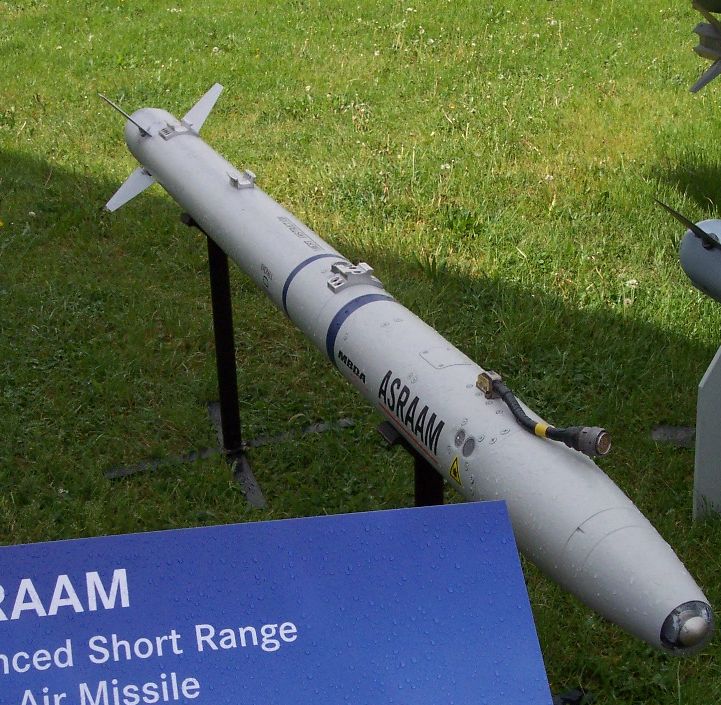
The ASRAAM would be a good pick because of its capability to pull high G forces, against maneuvering Iranian aircraft.
talltowerAnd maybe the A- and R-Darters would equip Brazil’s next generation of fighters, e.g. Rafale, Super Hornet.
talltowerThis matters what when the Patriot can’t even hit the Su-24, but the Su-24 can hit it due to range of the Kh-58U/E.
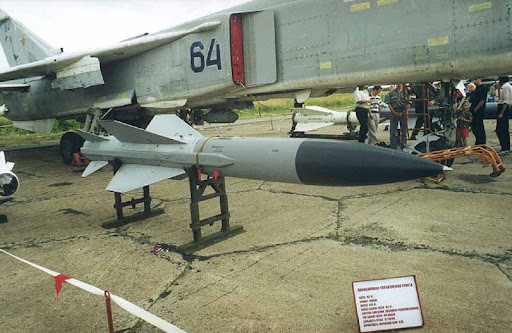
Kh-58 (AS-11 Kilter). Russian AGM-88 HARM equivalent.
talltowerSukhoi/HAL FGFA a Indian Stealth Fighter
The Fifth Generation Fighter Aircraft (FGFA) being jointly developed by India and Russia will look substantially different for the two countries. While the Russian version will be a single-pilot fighter, the Indian variant will have a twin-seat configuration based on its operational doctrine which calls for greater radius of combat operations. The program is initiated to develop a fifth generation fighter aircraft to fill a role similar to that of Lockheed Martin’s F-22 Raptor and the F-35 Lightning II, the world’s first fifth-generation fighter jets.
“The Indian FGFA is significantly different from the Russian aircraft because a second pilot means the addition of another dimension, development of wings and control surfaces,” said Ashok Baweja, chairman of the Hindustan Aeronautics Ltd (HAL), which is developing the aircraft along with Russia’s Sukhoi design bureau.
Speaking to media persons at the eighth Indo-Russian Inter-Governmental Commission on Military-Technical Cooperation (IRIGC), Baweja said that both sides had moved closer towards identifying the key areas of participation in the Fifth Generation Fighter Aircraft Programme (FGFA) for which both countries had signed a joint agreement in 2007. India would bring into play its expertise in composites, lightweight high-strength materials that significantly bring down the weight of an aeronautical platform.
The Russian aircraft is thus called because it is a successor to virtually every fourth and 4.5 generation fighter aircraft like the MiG-29 and Su-30 MKI in the inventories of both countries. It has been dubbed the ‘Raptorski’ for its similarity to the US F-22 Raptor that entered squadron service on December 2005
The first prototype of the Sukhoi Design Bureau’s PAK-FA ‘T-50′ fighter aircraft is set to fly in Russia next year. “We are in the process of defining what part of the contract to give to the Indian production agencies,” said Alexey Fedorov, president of the United Aircraft Corporation, the umbrella organization of Russian fixed-wing aircraft manufacturers. Fedorov said that the process of identifying the participation of Indian partners in the FGFA would be completed by the year-end or in the shortest possible time.
According to Baweja, it features stealth, or a drastic reduction in the aircraft’s radar cross-section or ’signature’, and the ability to ’super cruise’ or jet engines that fly stealthily without engaging noisy afterburners even at supersonic speeds, embedded weapons with the capability to engage multiple ground, sea and air targets and seamless communication between the fighter, other aircraft and ground stations. Baweja said that the first prototype of the FGFA was to fly next year with the AL-37FU engine. He said he would want an engine that had 15 to 20 per cent more growth than this engine in the final aircraft configuration. The FGFA is to enter squadron service by 2015 and will replace at least three classes of aircraft in the IAF
The joint-venture borrows heavily from the success of the Brahmos project but seems fated to repeat its story. By the 1990s, Russia, the world’s only operator of supersonic surface-to-surface missiles, had already perfected the Yakhont missile but lacked the funds to pursue its development. Indian stepped in with the finance in 1998 and the missile was re-launched as the Brahmos.
Designs for the PAK-FA have already been frozen by the Sukhoi design bureau, which means that Indian aircraft engineers have already missed out on the critical knowledge curve of aircraft design. Also, the unequal status of the Indian and Russian aviation industries means India will be the junior partner contributing very little except finance. “So if we have missed out on the design phase, we have to analyze the cost-benefits of acquiring only super cruise and stealth technology for $ 10 billion,” asks Air Vice Marshal Kak.
Decks were cleared for India to jointly develop and produce the fifth generation fighter aircraft with Russia, with New Delhi making the “final choice” on the matter and Moscow saying the work on signing contracts on the deal could begin soon. Observing that Russia had started developing the warplane about three years ago, visiting Deputy Premier and Defence Minister Sergei B Ivanov said “some time back, India showed interest in joining this project. It took them (India) some time to scrutinize the various options. “Now, India has informed us that a final choice has been made. We can (now) open up contractual work for Indian accession to the project,” Ivanov told reporters at a joint press conference with his Indian counterpart A K Antony, after signing four documents. Although interaction has begun on the joint development and production of fifth generation fighter jet, the actual signing of agreements could take some more time.The two sides inked an inter-governmental agreement and a general contract for licensed production of the AL-37FU engines.The fifth generation fighter is based on the Sukhoi fighter and is expected to take its maiden flight in 2012 and inducted by 2015.
Source: http://www.defenceaviation.com/2008/10/sukhoihal-fgfa-a-indian-stealth-fighter.html
talltowerIt would be nice. It seems to have a lot of potentional (which means, of course, that it will move to the top of Gates hit list but we can hope.)
If only they can supplant it with the manned fighters.
Useful for SEAD missions, where it would have to destroy enemy SAM batteries.
talltowerI’m with Scorpion on this one. It isn’t about the system being a copy; its about analogues. And it isn’t really derogatory either.
More like colloquial.
talltower2012 for full PAK-FA production? That’s staggeringly optimistic in my opinion.
An overly optimistic prediction from the defense analyst at the Heritage Foundation.
It’s only if the VVS accepts the PAK FA after testing the PAK FA prototypes.
talltowerThe Hun was at hand in numbers to see action in Southeast Asia in the 60s. The threat from the opposition was limited and so some good use of that fighter from the 50s could be made.
That’s right, USAF Huns operated from VNAF airbases in South Vietnam, like Da Nang, Bien Hoa and Tan Son Nhut.
talltowerJanuary 21, 2009
Swords and Shields: Russia bets on PAK FA
by Ariel Cohen, Ph.D.
Moscow continues to pursue a Sukhoi-based fifth-generation fighter. After five years of effort, Russia finally found an international partner for the development project. In 2007 India entered an agreement to jointly develop a fifth-generation fighter based on the Sukhoi.
The Sukhoi T-50 PAK FA — standing for Advanced Frontline Aviation Aircraft System — is a stealth-enabled fighter jet designed to compete with the American Lockheed Martin F-35 Lightning Joint Strike Aircraft and the Lockheed Martin/Boeing F-22 Raptor. Russian air force watchers already christened it “Raptorsky” after the F-22 Raptor, with which it is supposed to compete.
The developers describe the T-50 PAK FA as having excellent maneuverability, supersonic cruising speed, long range and high protective properties. PAK FA will have a takeoff weight of 20 tons, which falls between the takeoff weight of the two American competitor airplanes, the F-35 JSF (17.2 tons) and the F-22 (24 tons).
The new fighter — a medium version — will have a traditional wing form, though the dramatic-looking reverse-delta wing of the Su-47 Berkut influenced the Russian fighter’s designers.
The Russian fifth-generation fighter is supposed to make its first test flight this year. The testing dates have been postponed from the end of 2008, as had been previously announced by Sergei Ivanov, the Russian deputy prime minister in charge of defense production.
Some Russian spokesmen promised deployment of the T-50 in 2013, but according to the earlier statements by Sukhoi CEO Mikhail Pogosyan, the new Russian-Indian fifth-generation fighter might enter mass production by 2015.
According to Russian sources, the Sukhoi T-50 PAK FA will incorporate technology from the two experimental predecessors: the Su-47 and the MiG Project 1.44.
The flagships of the Russian aerospace technology — Tekhnokompleks Scientific and Production Center, Ramenskoye Instrument Building Design Bureau, the Instrument Building Scientific Research Institute in Zhukovskiy, the Ural’sk Optical and Mechanical Plant in Yekaterinburg, the Polet firm in Nizhniy Novgorod and the Central Scientific Research Radio Engineering Institute in Moscow — were selected to develop the avionics suite for the fifth-generation airplane.
NPO Saturn has been determined to lead the work on the engines. The Novosibirsk Aviation Production Association has begun construction of the fifth-generation fighter at its renowned Komsomol’sk-on-Amure Chkalov plant where most Sukhoi fighters are made.
However, considering the current economic recession and the track record of delayed deadlines, the Russian fifth-generation fighter may stay on paper for a longer time. This would give Washington and its allies sufficient time to launch mass production of F-35s, deploy them on American bases and fulfill orders from international customers such as Britain, the Netherlands and Israel.
The F-35 is expected to enter service no later than 2012, while the Russian Sukhoi T-50 PAK FA is certain to be in mass production by that time.
The future may not be bright for the next generation of the Russian fighter. Many Western defense experts believe Russia’s fourth-generation fighter jets cannot withstand the U.S. stealth-enabled tandem of F-35 and F-22, which offer high maneuverability and near invisibility to surface radars because of advanced radar suppression equipment. Moreover, U.S.-based simulations and tests suggest that the stealth-enabled fifth-generation F-22 and F-35 can defeat any current aircraft, including the Raptorsky.
Ariel Cohen is senior research fellow in Russian and Eurasian studies at the Heritage Foundation.
Source: http://www.heritage.org/Press/Commentary/ed012109c.cfm


 Sign In







