 mark_pilkington
Its a bit strange that a 1/72, 1/48, 1/32 model is often referred to as a replica, however, a 1/1 replica (constructed the same as its smaller cousins) has to be called a FSM:confused:
Anyway, you wouldn’t catch me buying one:rolleyes:Baz
This topic has been debated before and the Robert Mikesh book is probably the best reference existing for museum aircraft and therefore a suitable guide.
I’ve never heard of 1/72, 1/48 or 1/32 scale models being called anything but scale models?
There are flying replica aircraft of fractional size and some of questionable likeness that are called replica’s or scale replica’s ie a 5/8 Spitfire etc, and there are ambiguities over the term in Aviation, the EAA use is largely a fractional scale replica or even full scale built using new materials and design to produce an external look a like, and I tend to apply that term myself, where as the definition by Mikesh describes a replica as per the art world in that it replicates the original near perfectly.
In Warbird Aviation we have modern constructed flying airframes, Spitfires/Mustangs/Me262s’/ FW-190s that are built to exact templates of the originals but clearly not built by the original manufacturers, I prefer to call these reproductions, by the definition by Mikesh is reserved for further examples built by the original manfacturer, and clearly with many types thats unlikely to ever occur, and if using the drawings etc doesnt reproduction result regardless of the sign over the door?
I therefore think that Mikesh seems to cover the same technical outcome – a replica and a reproduction with two terms seperated only by “who” built it? where as I prefer the alternative uses of the terms that cover distinct and different technical outcomes regardless of who built them.
The issue of a Mosquito that was essentially rotted away having all of its wood replaced but much of its metal work retained creates some definitional problems in regards to its provenance.
It is clearly based on the remains of the specific identity, and no other remains can claim the identity, but by weight or other percentage factor clearly little of the finished product actually flew in WW2 or came out of a DH factory.
In my mind its clearly not a replica, and certainly not a restored original, I would tend to describe it as a reproduction but that could easily and better apply to a mosquito with new wood and new metal?
Perhaps then for those airframes that have a significant portion of an original identity still associated with the remains, but also a significant amount of new material constructed into the outcome are a remanufactured original as against a restored original, reproduction (as per the Me 262’s with little or no original parts and no original identities claimed) and certainly not a replica from my and the EAA approach.
Clearly the flying warbird reproduction and remanufactured originals are terms that do not fit with the definitions listed by Mikesh but seem needed to describe the situations that are now occuring.
A replica in aviation has usually been a term applied to a flying “look a like” even if constructed differently under the hood or at a fractional scale, where as FSM or Full Scale Mockup is almost certainly a static outcome by definition and usually only an external “look a like” with no structural capability other than to hold itself up, usually there is no cockpit fit out etc, most FSMs are however full scale.
regards
Mark Pilkington
mark_pilkingtonI have some Anson Mark 1 manuals somewhere, I will try and find them tonight and scan some suitable drawings from them tomorrow when at work.
regards
Mark Pilkington
mark_pilkingtonFrom what I understand, both projects were offered locally prior to my involvement but no buyer could be found. I contracted to buy both aircraft some months ago at which point I made some effort to find a local buyer for LZ844 but without success, I even used a well-known Australian-based specialist broker to try and find a buyer, but his clientele also declined.
Martin
Thankyou for your open response, although I hope no one was seriously suggesting you had “made off” with anything or “stolen” someones exhibit, I think everyone acknowledges the aircraft was on loan, and if you have purchased the aircraft legally, and obtained appropriate export permits as I am sure you have, then you will have done all that should be expected of you.
In regards to any attempts to sell the aircraft locally either by Aviation Australia, or by your Australian based specialist broker, my only comment is that as Secretary of Australia’s largest volunteer / not for profit museum – no such contact or notification was ever received of any such opportunity?, and I suspect no other Australian museum (or at least volunteer museum) other than QAM knew of this sale and export until it occured.
Again that is not an obligation on yourself, just a dis-appointment here in Australia, (particularly as we now learn that you had apparantly sought a local buyer of LZ884 and its static restoration suited ongoing museum display), and certainly this is a failure of Aviation Australia in my opinion, and surprising given I had been communicating to them on other matters.
I would be pleased to know of the brokers efforts to find a local buyer, or those of Aviation Australia prior to that, and I do support those proposing to make representations locally in Australia over that situation, and in particular to the Queensland Government and management of Aviation Australia.
regards
Mark Pilkington
mark_pilkingtonAustralia has lost quite a few local spitfires to the UK, and while some have come the other way the ledger still seems largely one way.
With the Ian Whitney Mark V A58-246 sold to the IWM and then traded to the NMUSAF for the B-24, Ross Campbell’s mark VIII aircraft A58-441, now Barry’s mark V Aircraft A58-213, and of course the complete mark VIII A58-671 from the Syd Marshall collection, so we have lost quite of a few former RAAF Spitfires from our shores, not counting other wrecksite firewalls, dataplates and identities.
Admittedly, the first 3 above were substantial reconstructions with significant reproduction of structure.
While we have Bluey Truscotts mark IIA P7973 in the AWM from RAF service, and Langdon Badgers wonderful RAAF Mark V A58-146 at SAAM, and of course the other Marshall RAAF Mark VIII A58-758 and the RAF Mark XVI TB863 (but with Australian provenance) flying at Temora we are still well endowed with Spitfires in Australia, not counting the long term restorations of an RAF mark IX MH603 by Ross Pay and Randal McFarlanes RAF Mark XIV RM797.
There are some ex-Darwin wrecks supposedly in storage in Victoria and of course the recently recovered wreck in France is to come to Point Cook for display as recovered.
But we still dont have a restored ex-RAAF Spitfire in the RAAF Museum collection at Point Cook, and while I suspect the Coran reconstruction was not the ideal example for them to acquire it is a loss to Australian preservation.
The real pity is that this wasnt offered locally at what ever price was wanted prior to overseas sale, or if it was “offered” it was only to the “warbird” operators.
It is certainly a pity QAM were not offered the opportunity to purchase the aircraft or participate in a tender?
The one silver lining is that it, along with Ross’s aircraft will fly again (both hopefully in RAAF colours) and our booming Aussie $ might have a local buyer bring them back for us all to enjoy.
regards
Mark Pilkington
mark_pilkingtonRichard
Here is a closer photo of the RAAF Museum’s Avro Cadet and its oval exhaust system, note the rolled half’s are seam welded, and also not the centre top join.
regards
Mark Pilkington
mark_pilkingtonHello Paul,
I would be interested in attending – could you PM me please with email and phone contact details as I wanted to discuss an aspect of it?
regards
Mark Pilkington
mark_pilkingtonNo evidence for it, but question number 2, the curved thick handle looks more like the handle of an Aldis signalling lamp, and its possible the body is partly visible as well?
Is it stowed in the cockpit directly above the navigator for signalling to towers etc?
regards
Mark Pilkington
mark_pilkingtonI have always been in “two minds” over the RAFM Halifax, but the recovery of a second original now restored in Canada, and of course the restoration/construction/display in the UK of the Yorkshire composite/reproduction takes the pressure of it to be “restored”, and it is telling its own last operation/crash story very convincingly, not so much the factory fresh story of the type.
I suspect we need to set our expectations of the Do-17 to the same outcome, it is a BoB veteran and its likely to be again better at telling its own story of its last operation and crash rather than the factory fresh story of the type, we need to seperate what we like as aircraft enthusiasts from what is required as historians, there is no need for a museum to be a airfix collection of every type and sub-model ever built in factory fresh as new restored condition, in many ways restoration is destroying! history as much as we might think its preserving it!
I’m hoping the D0-17 will be an amazing survivor like the Italian P40L but I suspect it will be lucky to retain much shape and integrity when its finally uncovered.
To pull whats left apart to “restore” would really relegate the outcome to a unreliable dataplate new metal replica of the type, you might as well simply create a Full Scale Mockup from fibreglass or new metal referenced from photos etc, or even measured off the external dimensions of this wreck in the first place as against destroying this last survivor in what ever state it comes up in?
Best left as is, and conserved, and hope another floats up in a fresh water lake somewhere!
smiles
Mark Pilkington
mark_pilkingtonRichard
I would be examining thin walled copper tube for your exhaust, you could fill it with clean sand, bend it around a former and beat it to an oval, flat section.
http://www.righton.co.uk/product-section.cfm?theCatID=8FE37243-15C5-F4C0-9915B98F75668F54
http://www.australwright.com.au/products/Copper_%26_Brass/FullCatalogueCopperBrass.pdf
http://www.copper.org/publications/pub_list/pdf/copper_tube_handbook.pdf
Once formed with the sand removed, you could solder dummy exhaust and cylinder stubs onto it, join it at the bottom, and finally put it in a chemical bath to tarnish the copper dark and leave it bare metal or then paint it?
You could then also solder on the join clamps or doublers to mimic the sectioned construction.
If so inclined you could even form it in sections as per the original and solder them at the joins to create the imperfect circle or octagonal effect the original had.
The Anson exhausts appear to have a high content of copper in them and have a dark bronze colouring in anycase? so I feel the dark tarnished finish would be fine, and the exhaust heat would add to that effect rather than peel any paint?
I hope you post photos of your finished result smiles
regards
Mark Pilkington
mark_pilkingtonMy exposure to all this is limited to the much later (well not that much later) early mark I Anson and Cheetahs but there is a lot of similarity, however they use a “round” rather than “flat” or “elongated” section.
Richard I note in this picture of yours that the flat exhaust of the Westland appears to be a complete ring with a side mounted exhaust outlet, where as the Avro design used on the Avian Autogyro and still through to the Anson was a horse shoe shape with (at least on the Anson) an exhaust outlet at the bottom of either half, hence the Avro design was effectly two piece with a top dead centre join flange, this allows the two halves to be fitted or removed from the installed engine.
I suspect then that the Westland is made up of multiple segments to create the total ring, and then to fit it on behind the engine in its segments, the join (& therefore slip joint) seems to have a thick doubler sitting over it, looking like a flat section running across the circumference of the ring, I suspect this clamped on to seal the join between each section, and I would expect possibly a section per cylinder? so 7 join straps?
Given Howards advice that the exhaust is an Avo rather than Armstrong Siddley design, I would assume the Westland design was in house as well, but again using the same general method to form the flatted ring section with seam welding?
regards
Mark Pilkington
mark_pilkingtonHeres a close up the “flat” section exhaust ring of another Cierva, it shows it joins at the top of the engine with a flange, this is the same as the “circular” section exhaust ring of the later Cheetah series.

regards
Mark Pilkington
mark_pilkingtonHello Richard
I dont think the photos you have provided are Townend Rings, which are an early form of tight engine cowl that bridged the period of uncowled engines to fully cowled engines.
I think your photos are showing a flat section exhaust system, that may have been attempting to deliver some type of townsend ring forward pressure effect, or alternatively and much more likely simply been of “flat” rather than “circular” cross section in an attempt to minimise drag?
http://en.wikipedia.org/wiki/Townend_ring
A Townend Ring is a narrow-chord cowling ring fitted around the cylinders of an aircraft radial engine to reduce drag and improve cooling.
[edit] The Townend ring was the invention of Dr. Hubert Townend of the British National Physical Laboratory[1] in 1929. Patents were supported by Boulton & Paul Ltd in 1929.[2] In the United States it was often called a “drag ring”. It caused a reduction in the drag of radial engines and was widely used in high-speed designs of 1930-1935 before the long-chord NACA cowling came into general use. It was also said to generate forward thrust from the expansion of the air as it passed over the engine, adding 10 to 15 mph to the aircraft’s top speed.[3]
Examples of aeroplanes with Townend rings were the Douglas O-38, Vickers Wellesley, the Westland Wallace and the Gloster Gauntlet. Early claims portrayed it as a superior design to the NACA cowling, but later comparisons proved aircraft performance worse when using a Townend ring at airspeeds above 250 mph.[4]
I would have thought there were a number of UK museum aircraft with townsend rings (the RAF Museum’s Wallace fuselage? Cierva AutoGyro?)
And in the USA many antique aircraft such as Waco’s are flying with Speed Rings essentially the same thing?
http://www.datwiki.net/page.php?id=8101&find=Townend%20ring%20(aircraft%20component)&searching=yes
A type of ring cowling used over a single-row radial engine. The Townend ring, often called a speed ring, directs the air smoothly over the cylinder heads to increase the cooling and decrease the drag.


If instead you are referring to the “flat” section engine exhaust systems shown in your photos, these seemed to be a UK interwar development and I suspect these were simply formed as two 1/2 “flat” section 1/2 circles and then seam welded together exactly like the more common “round” section radial exhausts.
Like the some variants of the more common “round” section radial exhausts, they may consist of a number of semi circular segments sleeved together around the circle rather than being a single piece exhaust ring, these are likely then to be the segments you can see?
I suspect that most of these rotted out eventually and were simply replaced with more common “round” section radial exhausts built after market rather than the original factory and that may explain why few (if any?) museum aircraft have them.
Edit – Correction, the Cierva C30 AutoGyro at the Imperial War Museum Duxford is sporting a “flat” section exhaust system, rather than a townsend “speed” cowl ring, and so a museum example of such an exhaust does exist!
Note: this is fitted to an Armstrong Siddley 5 cylinder Genet Major as per the Westand you evidenced and as per the Avian.
I’m not sure if the Avian then also had a speed ring cowl as well?
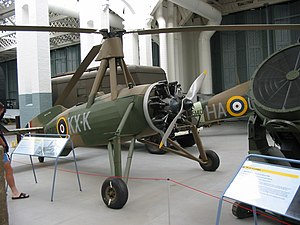
Edit 2: consulting the book of armaments chapter 1″, or more correctly Harlin & Jenks “An Avro Album” the Type 581 Avian is shown with a Genet without townsend ring but very streamlined nose cowl around the engine nose housing? while Avian Mk IVM is shown with a Genet Major and Townsend Ring, as does the Avian monoplane.
As then does the Tutor and Cadets that follow.
regards
Mark Pilkington
mark_pilkingtonKen,
I have a collection of technical books and think I might have something that will cover pre-war American instrumentation, but will take a while to have the time to look, but the DC-2 first flew in 1934 and if you can track down some panel shots of one I am sure it will carry a Pioneer rate of climb, similarly a boeing 247, lockheed 12 etc, or even a shot of a pre-war DC3?
Here is the cockpit of a restored DC-2, the Pioneer rate of climb is sitting in the bottom RHS of the pilots Blind Flying Panel on the LHS of the photo, (just to the right of the LHS wheel and next to the turn and bank indicator.
http://www.flickr.com/photos/alejandroperez/2912435569/sizes/z/in/photostream/
Perhaps the Science museum holds an original lockheed 12 or Boeing 247 Manual in their collection to go with their aircraft, the problem with museum aircraft is that their original factory instrumentation could have been changed out many times over before retirement into a collection with later equivalents of the same instrument, (ie while the size is probably the same, the one in the DC-2 above might have later face dial markings to the original one fitted when built? so in some ways photos and manuals are more reliable than the artifact themselves.
Pioneer have apparantly been making them since 1924!!!
http://www.nasm.si.edu/collections/artifact.cfm?id=A19570490000
And are quoted in Flight in 1937 as having have a catelogue of them 9 years earlier!
http://www.flightglobal.com/FlightPDFArchive/1937/1937%20-%202313.PDF
and of course are available in various models and vintages on ebay etc
http://motors.upillar.com/listings/238914-pioneer–rate-of-climb-indicator
Regards
Mark Pilkington
mark_pilkington.
Interesting links and interesting scans, thanks for those, although the problem of scanning something encased in sand is that we can be looking at a fossilised effect, ie the skins etc have corroded sufficiently to effectively detatch from the structure and become metal particles or remanents forming part of the sand not part of the aircraft, but still sufficiently integral to provide the approximate shape and be detected by the scan.
(of course it could also simply be an Airfix 1/48 scale model photographed and photoshopped by “Dive the World”! )
It will be interesting to see how much actually survives the recovery process let alone makes it through conservation for eventual display – but thats no reason not to try, its an important type from the war, and this example has an important story to tell, its just a pity this wasnt found and recovered 30 years ago?
Here’s hoping its a repeat of the amazing P-40L found in Italy!
If someone knows of a Do-17 lying in Russia it should be recovered regardless – but I think thats wishful thinking.
I found this comment in one of the articles amusing
:”The fact that it was almost entirely made of aluminum and produced in one piece may have contributed to its preservation,” Garside told Reuters.
I didnt know the Germans were machining Dorniers out of a single block of aluminium smiles!
regards
Mark Pilkington
mark_pilkingtonHere’s one for you!!
WW1 makers plate from Graham White – Hendon!
One of only 6 known to exist!

Here we have an acid etched brass serial & data plate for a WW1 AVRO Aircraft. The data plate reads……. built by Grahame-White Aviation Co., Hendon. It measures 4″ X 6 1/4″. It is blank and ready for your restoration or data plate collection. If you are interested, Nostalgic Reflections can stamp the numbers on the plate for $8.75 per pad. This plate has 19 pads.
This rare data plate is “ONE” of only “6” that were custom made by Nostalgic Reflections of Veradale, Washington who makes custom “one off” parts for their customers who own and restore antique vehicles; cars, trucks, airplanes, motorcycles, bicycles, boats & snowmobiles. Click on the “ME” next to our feedback rating and you will see a small sampling of unique parts that have been made by Nostalgic Reflections and sold on ebay down throught the years. Call 509-226-3522 if you see something there that you would like us to relist on ebay for you.
Insured shipping and handling in the USA is $6.00 and International is $12.00
regards
Mark Pilkington


 Sign In







