 mark_pilkington
.
STRANREAR COCKPIT DISCOVERED IN AUSTRALIA?
Not sure if it is the cockpit of the Canadian Stranraer?
relocated by strong ocean currents?
but this item was reported on today’s news as being discovered floating in Sydney Harbour?
Its hull and cockpit appear intact?
but the wings appear badly bent?
photo and link provided below for your information!
Smiles
Mark Pilkington
?? photo isnt showing – here is its URL
http://images.ninemsn.com.au/resizer.aspx?url=http://news.ninemsn.com.au/img/news_feeds/08
Story and photo also at this link
http://news.ninemsn.com.au/national/716094/fastest-greenest-powerboat-visits-nsw
mark_pilkingtonThat is another arguement entirely. Yes, a genuine part (or painting) can tell you a lot of things. But as I said before – if you don´t know which of our hypothetical parts is genuine, then it makes no odds.
It makes a lot of odds, which is exactly the ponit of the thread, and JDK’s post.
“If” transparancy and honesty isnt maintained then future historians/ researchers will be led to believe these new build aircraft are authentic 1940 built examples, and therefore will mislead as to the quality etc of wartime production and materials.
The quality of the reconstructions, and the accuracy to design and fitout are to be applauded.
Despite their best intent to be accurate, many of todays “reconstructions” and ‘restorations” take warbird’s to “better than new” condition, with polished skins, ripple and blemish free gloss paint work, sometimes dual cockpit conversions and updated engines or avionics, and in most cases rivet lines and metal work equal or better than the hurried wartime production.
Theres nothing wrong with that, flying warbirds should be at the highest mechanical condition, and a pride in the quality of presentation is understandable, but they are not preserving history in the fullest sense, they are providing a different and important experience.
All that is asked for is transparancy in what original components exist within the airframe, and their true provenance, simply to distinguish to other more original examples, flying or static.
regards
Mark Pilkington
mark_pilkingtonThanks Mark,
I’m not sure I recall that article and photo, my memory is of a side on shot in primer, perhaps when it was completed, but even the caption of this one is confusing if like me you read nose to mean the entire cockpit section, rather than the bomb aimer nose itself.
More accolades to the restorers to have recovered the forward fuselage to that condition given the damaged and corroded state of what they started with.
Regards
Mark Pilkington
mark_pilkingtonCould I suggest that the shot from ‘The Hampden File’ that I posted shows the RAF Museum nose glazing being mated to the then current state of the Canadian front fuselage restoration. In that shot you can see new top hat longerons and support structure is being incorporated in to the cleaned remains of the the recovered residue…as the captions quotes.
I can see that that level of cockpit work would have been a strong motivator for the President of the Handley Page group/Curator of the RAFMus store at Cardington, Ray Funnell, to ‘steer’ the nose glazing in that direction.
I note what is clearly a later image in the Aeroplane Monthly piece showing the new skins applied to that restored structure.
Mark
I have to say I was under the same misapprehension that a complete cockpit/nose had been sent from the UK to support this project, and wonder if that Aeroplane Monthly piece may have been poorly captioned to create that mis-understanding by many of us, as I recall reading about this many years ago and seeing what appeared to be a complete section within a building, which I now assume was the restored section in Canada after its UK nose was fitted?
Mark12 can you scan that Aeroplane Monthly photo and caption into the thread?
Regards
Mark Pilkington
mark_pilkingtonMaurice is completing his DH89 Rapide which is about 6 months away from completion, I expect he will then move to the Proctor which is stored in the same hangar.
Regards
Mark Pilkington
mark_pilkington,
Ross
Yes VH-BQA is Leigh Giles project, originally carried the registration VH-ACA and was formerly owned by Lord Casey, BQA is a subsequent registration, not a current registration or reservation.
VH-UXS is the current registration of Maurice Rolfes Proctor restoration, formerly VH-DUL.
Regards
Mark Pilkington
mark_pilkingtonI’m told by those in BC that government funding decreases in proportion to the distance from Ottawa; reaching a negative equity in Western BC. Funnily enough, the same noise comes from WA here, regarding to distance to Canberra
The former Howard government was known to be very Sydney “Centric” in a number of heritage funding examples, the Sydney Harbour Trust being one.
The incoming Rudd Government with its original belt tightning due to inflation, and now its focus on the Economic crisis, is yet to demonstrate a preference of cultural funding “anywhere”?
But it seems a world wide phenonomen that volunteer, not for profit aviation museums sit at the bottom of the gravy barrel, well below performing and visual arts.
Here in Australia we have had a National Maritime Museum for over 20 years, fully funded by the Federal Government at over $13M per annum, with availability of $5k annual grants to regional Maritime Museums in addition to that.
The Pigott Report of 1975 also recommended a National Museum of Australia (delivered in 2000) and a National Air Museum – still to be delivered, but even the $5k regional museum grant would be better than nothing?
regards
Mark Pilkington
mark_pilkington.
VH-EPN is a complete example formerly with the Drage Airworld collection at Wangaratta, now privately owned and under restoration by Todd Miller in Victoria.
c/n 28 VH-EPN ex- VH-DAI/SSC/SSV ex-G-APBR under restoration Victoria, Australia
The fuselage of a second is displayed in “quasi” Army scheme in Lincoln Nitschke’s collection in South Australia
c/n 46 ex- VH-SSR ex- VH-DAV fuselage only Lincoln Nitschke Aviation Museum, Greenock, Australia
2 out of the 9 world wide survivors in Australia, 7 complete, 2 fuselages (4 currently airworthy).
It seems a reasonable effort to acknowledge Edgar Percival.
I understand he did the design of the EP-9, it being the first product of his “new” company Edgar Percival Aircraft Limited after he had sold and left the Percival Aircraft Company to Hunting, although Australia holds a few other notable Percival products including:
Flying
Gull IV VH-UTP
Gull VI VH-CCM
Under Restoration
Vega Gull II VH-BQA
Proctor I VH-UXS
Proctor I VH-AHY
Static Display
Gull VI G-AERD
Proctor I VH-FEP
Proctor I VH-AUC
Proctor 2 VH-BQR
Proctor 2 VH-AVG
Proctor 5 VH-BCM
The Gulls & Proctors probably being the better memorial to his sleek pre-war designs, that he was best known for.
Regards
Mark Pilkington
mark_pilkingtonI can’t beleive I’m even reading this! I fully accept that this forum is open to everyone, therefore it’s only natural that some people might have a slightly odd grasp of history, but to even think of equating the Venom (I can hardly keep my face straight while I type the name) with the Vulcan in terms of “significance” is probably the funniest thing I’ve ever read on here.
Smiles,
It is meant to be the season of peace on earth and goodwill to all men!
Perhaps the most relevent part of the comparison is that it wouldnt cost 6 Million pounds to return a Venom to the air, nor 60,000 pounds per month to operate or maintain.
The proof of a negative is always very difficult, the Vulcan obviously formed part of the Nuclear stand-off of the cold war, it therefore obviously played some part in the apparant success of the MAD deterrent?
Is it more significant than other types? well that is an interesting debate for elsewhere isnt it?
Regards
Mark Pilkington
mark_pilkington[QUOTE]It seems the earlier US proposals were based on unique business arrangements that may have never been deliverable.
Really? says who?[/QUOTE]
I’m pretty sure I just said it in the earlier post?, and based it directly on your earlier comment
David Walton had some serious discussions over possibly sending the aircraft to the US where it could have been used as a research support aircraft.
Obviously “despite” serious discussions – it wasnt delivered as an outcome or arrangement, therefore that it may never have been deliverable outcome is a perfectly reasonable conclusion – and WHY would anyone want to use a one off example of a “very expensive to operate and support aging warbird” for research support, what unique flight characteristic does it have? that a more modern and cheaper to operate aircraft would not provide more reliably?
the very mention of the US just gets dismissed as being unrealistic.
I’m sorry, but from my opinion, thats because it is unrealistic.
The funding viability might be poor in the UK, but it will be much poorer in the USA, the ONLY merit in sending it to the USA is dry storage at Pima, in some “forelorn” hope it might fly again sometime in the future, however thats not a realistic hope to justify its relocation. – Despite the apparant “ease” of getting a C-5 to shift the tonnes of spares, – where is the maintenance base, where is the team of trained and experienced engineers – where is the army of willing volunteers – wheres the US company sponsorship proposition? – Wheres the airshow demand?
Your proposal appears to be based on the simple premise that dry storage in the USA is the best outcome at this stage? rather than remaining grounded in the UK due to lack of funds – (I’m sorry if I have missed any other point of your proposal)
There doesnt seem to have been a lot of calls for it to be displayed in the USA, and I assume little or no financial sponsorship offers to do so?
A fundraising airshow tour of the USA might be worthwhile, if it:
1. was profitable beyond the costs of getting there and back, and the operational and support costs.
2. was fully funded or committed upfront to avoid the aircraft becoming stranded in the USA.
Otherwise the simple proposal of flying it to the USA in the hope of buying time or finding some rich american sponsors is rather naive.
XH558 was maintained runnable for a while after sale in the hope it may one day return to flight, it took six million pounds of UK taxpayer funds to do so, and access to spares, and engineering resources – it wont happen again with the aircraft sitting parked in the USA for any length of time!
– the current effort to raise funds to restore WR963 and refly a Shackleton in the UK, months after the grounding of a near airworthy WL790 in the USA and its static display at Pima? shows the obvious outcome of flying the Vulcan to the USA.
The USA does’nt need another static display Vulcan, its got 3 already, with one under cover (and 1 in Canada too) – unless NASM were given it for undercover display at Dulles Washington, it would in reality rot away in the USA just as quickly as in the UK, but without any local volunteer support base to combat and delay the deterioration?
TVOC should have a contigency plan for its early retirement from flight, as they should have had for its eventual retirement from flight?
I cant see any wisdom in the UK public investing in this Vulcan to see it end up in outside static display in the USA, as against static display and eventual undercover preservation in the UK? Its obviously in better condition than many of the other static display examples in the UK and therefore a better candidate for under cover preservation, and ideally kept capable of ground running?
Auctioning off the paint scheme is a minor compromise
Minor? This is the old Sea Vixen argument. Some might think it’s acceptable but most (not least the HLF) would think it was a complete joke. Cold War educational artefacts can’t be tarted-up in Red Bull colours – thank heavens. Besides, what point would there be in covering a Vulcan in silly colours? A sponsor could paint a 737 much more cheaply and get a much better PR return.
– So the HLF and UK taxpayers are unlikely to care if the Vulcan is flown off shore to the USA as you previously comment, but will be greatly offended if it is not displayed as a flying aircraft in the UK in an accurate paint scheme? –“you” must be joking?
There are 4 Vulcans on external display in the UK, and two preserved under cover, – all are in cold war paint schemes, while 1, XL426 remains taxiable, it is clear that the real value of XH558 is its ability to fly – Not its paint scheme!
IF the Vulcan could remain flying in the UK by auctioning off its paint scheme it WOULD be a minor compromise to achieve the project outcome of a flying Vulcan in the UK?, and a worthwhile compromise if the alternative is grounding due to lack of sponsorship.
Cold War educational support of the Vulcan can be achieved through more aspects and methods than just maintaining the period paint work?
My own preference is to see historic aircraft in their original or period paint schemes, but if no other funding is available, and large sponsorships are required to keep an aircraft flying then I think its a compromise well worth considering.
The “Red Bull” SeaVixen is actually the proof of the concept, given its successful operations for a number of seasons – Red Bull continue to justify its PR return from an expanded fleet of 14 historic aircraft ranging from a DC6 and Alpha Jet through to a Corsair, B25 and soon to be P38, it obviously works for them.
Here is a working successful model of large historic aircraft flying under sponsorship and you seemingly reject it out of hand? in preference to some undefined outcome in the USA?
http://www.flyingbulls.com/start_skiped_e.html


But in any case, the idea has already been ruled out.
The comparison with a 737 is irrelevent, the sponsor is being invited to be associated with an historic aircraft, not simply have a flying billboard.
The question is how to maximise or offer the greatest brand exposure to that sponsor, obvously large signage and logo’s over the camouflage scheme or under the wings offers the benefit of both worlds, but if a sponsor would pay for the repaint at beginning and end, and sponsor 3 to 5 years of operation it would seem a very minor compromise, and far better outcome from the HLT funding, than flying it to the USA to sit on the ground over there?
If faced with grounding the aircraft indefinately, or flying it to the USA to be grounded indefinately, I would have thought an option of a sponsorship auction of the colourscheme would be quickly and willingly reviewed despite it earlier “ruling out”?, surely its a simple TVOC management decision not a regulation or law?, and even if its a requirement of the HLT Grant surely its a negotiable element in the face of outright failure or closure of the project?
and is that what we really want, – for it to fail?
It already has failed – or at least it’s on the point of failing – but nobody has any suggestions as to what to do about it. Despite this, the very mention of the US just gets dismissed as being unrealistic. Personally I don’t see how shoving 558 into a field next to the Victor at Elvington would be any sort of solution.
And so if it already has failed in the UK where the aircraft is most relevent and likely to gain sponsorship, and the fund raising in the US would be worse than in the UK and next to zero? what justifies the expense and effort to pursue an obviously irrelevent static display outcome in the USA over an undercover and taxiable outcome in the UK that results in long term preservation and lasting UK public access?
I personally think compromising on the paint scheme to achieve ongoing flying of a Vulcan in the UK is a far more realistic and preferable option to flying it off to the USA for a very unlikely flying future, and also think seeking an undercover preservation in the UK as a last resort, is a far better solution to what seems to be an obvious open air static display ultimate outcome in the USA, from flying it to the states.
Again I hope TVOC are exploring ALL options including auctioning paintschemes or even an airshow tour of the USA – if that is financially attractive and viable, to keep the aircraft in the air?
Regards
Mark Pilkington
mark_pilkingtonIt’s all too easy to pick holes in the US option, especially when nobody seems to have any alternative solution.
Yes it is, isnt it!
It seems the earlier US proposals were based on unique business arrangements that may have never been deliverable.
The US warbird sponsorship market is already over subscribed with US heritage operators such as the Collings Foundation and CAF seeking funding for much more relevent and deserving US heritage aircraft such as the B29, B24 and B17, I dont think the Vulcan would have any more attraction than the Shackleton, but with much much higher operating costs, particularly so far away from its volunteer and skilled engineering support.
The viability of fundraising for the Vulcan in the USA would be next to zero, it would simply and quickly become a static display on the other side of the Atlantic, of little public interest.
A good test would be to note the level of concern for the future of the Vulcan project on the WIX forum – it hardly rates a mention! – its not a type that is of any great interest – its not THEIR heritage! -without public interest there would be no sponsorship interest.
This project was always ambitious, to expect to constantly raise 50k UKP per month or 600k per annum to cover operating costs, and to do so would obviously need a professional staff with strong business and marketing skills, over and above the enginering and technical staff and skills to keep it physically flying.
Heritage objects, and museums have always struggled against “disaster, poverty and illness” in the corporate charity stakes, and usually funding for one off capital works or acquisition projects fare far better than calls to support operating costs.
Corporate sponsorship looks for a return on investment, either building “naming rights”, or indefinate signage associated with an acquisition or restoration where the exposure can last for many years, and attract prestige through association.
Annual sponsorship has to fully recover its return in that same year before another major sponsor takes over and obliterates the previous sponsor’s investment.
Its hard to see how a major sponsor can recover their monthly or annual sponsorship investment from the Vulcan simply from website acknowledgements and airshow commentary during an airshow season, and others have in anycase commented on the likely attractiveness of a cold war nuclear bomber to the corporate branding of most UK companies.
I think the only real way for the Vulcan to achieve its funding will be to start carrying large logo’s and signage, or even contemplate a multi-year corporate overall colourscheme deal.
A flying “Red Bull” or “Coke” Vulcan might give the ‘advertising’ exposure and return to a Corporate sponsor on 600k per annum, justifiable even in an economic downturn.
Auctioning off the paint scheme is a minor compromise to acquire ongoing funding for flying, and the aircraft can always be returned to prinstine RAF markings if the sponsorship funding environment ever delivers against the original business plan.
A Flying billboard in the UK, where the type has some public appeal for airshow attendances, and in close proximity to its spares, engineering and enthusiast support base, is a far more logical and viable option than flying off to the USA.
I consider if it cant be done in the UK, it cant be done anywhere, and a well preserved ground running Vulcan at Elvington with appropriate museum/hangarage with the Victor might be the best long term outcome.
Its obvious that TVOC needs all the friends it can get and should improve its performance in the charity reporting and transparency of its operations if it wants to have the weight of enthusiasts support behind it, and reduce the negativity it seems to generate from its own behaviour?
Echoing the comments of many others here, I was concerned about this project from the outset, not withstanding the congratulations to the team for achieving its return to air, I have always felt the HLF funding could have achieved a lot more for aircraft preservation in the UK in a lasting way, whereas the Vulcan return to air is always going to have a limited life, and therefore of questionable lasting value.
However that is seen through my eyes and not the taxpayers and UK enthusiasts eyes, and in any case it was a decision for the HLF to make, and to judge the viability of the business case at that time.
I havent seen the TVOC business case, but imagine like many business cases of startups in the commercial world seeking “investor” funds, it was very optomistic in its projections etc, and it wont be the first business case to bear no resemblence to the business performance.
But regardless of the robustness or otherwise of the busines case, its a mute point now as a very significant amount of public money has been spent, and the only real way to get a full return on the investment is to support the ongoing operation of the aircraft, albiet on an efficient and cost effective basis.
Worse however is the damage the project will do if it fails to deliver, in terms of both public, government and corporate donation to future aviation heritage projects, flying or otherwise.
For that reason alone, we should all stop the conjecture and slurring of the project and its management in this forum, and either support them, or write to them privately airing your personal concerns and reservations in supporting them, rather than airing them here any further, surely everything that can be said, has been said?
Any google of the Vulcan project will lead you here to a 5 year old, 1300 entry “sceptical” debate on its viability and sponsor attractiveness, as seen largely through the eyes of UK aviation enthusiasts, supposedly its greatest target audience?
I would expect any serious prospective corporate sponsor would quickly be aware of this community “debate” and wonder the value of being associated with a project that does not have “grass roots “support, and is considered to be unviable financially?
Raising constructive critism might be helpful but casting public aspirtions on the operators and management can only scare of more sponsors from being involved, and therefore making it a self fulfilling prophecy?
and is that what we really want, – for it to fail?
I wish TVOC and the team luck in finding a way to keep the Vulcan in the air.
regards
Mark Pilkington
mark_pilkingtonWell there doesnt seem to have been much debate etc, so perhaps I will list my own view?
1. DH – DH60, DH82, Comet racer, Mosquito, Vampire, Comet, Seavixen
2. Avro – 504K, Avian, Avro Ten, Tutor/Cadet, Anson, Lancaster, Vulcan
3. Hawker – Fury/Hart etc, Hurricane, Seafury, Hunter, Seahawk, Harrier
4. Bristol – Boxkite, Fighter, Bulldog, Blenheim, Beaufort, Beaufighter, freighter
5. Handley Page -0/400, HP 42, Hamden, Halifax, Hastings, Victor
The DH company delivered some iconic aircraft to world aviation, the DH60, the DH82 and Comet Airliner and some in great numbers, and there were many other pre-war types that I chose not to list but which were as important as some of the other makers types listed below them. (DH50, Fox Moth, Dragon, Express, Dove).
Avro came a close second in my mind, and for its time the 504K was to the military what the DH60 was to civilian aviation, the Avro Ten is not an in house design, but the Avro Ten played a major role in pre-war airlines within commonwealth countries, the Anson was perhaps England’s equivalent to the DC3, a prewar design performing so many varied roles, and for such a long period of production and service, and of course the Lancaster and Vulcan speak for themselves.
Hawker edges Bristol out in my mind due to the span of existance from pre-WW1 into the jet age with again iconic types such as the boxkite and Beaufighter, while Handley Page brings up the rear.
I felt Fairey sat just outside the top 5 behind HP perhaps followed by Vickers, and drew the line at amalgamating the productions of Vickers and Supermarine,. hawker – siddley etc under combined banners, but obviously sticking to the top 5 should yield enough debate and opinions.
regards
Mark Pilkington
mark_pilkingtonperhaps just to clarify, my intention was to compare the historically most significant UK aviation companies, regardless if they are still existing or no longer commercially operating.
regards
Mark Pilkington
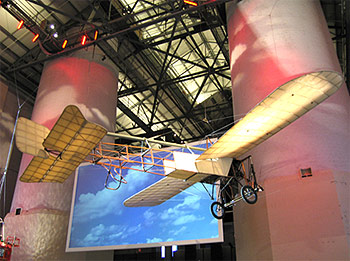
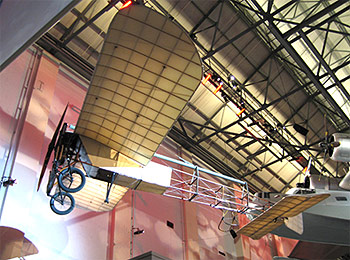
mark_pilkingtonThe following Bleriots are recorded as being imported to Australia.
1. Bleriot monoplane (s/n unk) Imported by L Adamson in Nov 1909 – attempted flight by Defries 18 December 1909, dumped at sea to recover import duty – no serial number known
2. Bleriot XI s/n #37 Imported by F Jones in Feb 1910 – flown by Custance in March 1910 in SA, destroyed by fire @ May 1910
3. Bleriot XI s/n unk, imported by Gaston Cugnet as Bleriot company demonstrator in September 1910, named “Australia” by Australian Prime Minister, flown at Altona Victoria, crashed at MCG, shipped to Queensland for static display in March 1911.
4. Metz Bleriot XI s/n unk, imported by AB “Wizard” Stone, April 1913, offered to Defence Dept in Sept 1914 but not accepted.
5. Bleriot XI s/n unk imported by Maurice Guillaux April 1914, made first loop the loop in Australia 20 April, first Melbourne to Sydney Airmail flown 16 July 1914.
NOTE:aircraft survives today in the Powerhouse museum collection – Sydney
6. Bleriot XI s/n unk imported by Lt R E B Hunt, Aug 1914, offered to Dept of Defence, rejected, apparantly not removed from ship?
7. Bleriot monoplane s/n unk, imported by T Reynolds Sept 1914, donated to Defence Dept, became CFS-6, mostly used for ground instruction.
8. Bleriot XI s/n unk imported by A J Carter Oct 1914, (French Consul in Qld) sold to F Hammond, offered to Dept Defence in Oct 1914, rejected.
A number of monoplanes of local construction, and based on the Bleriot also existed in Australia between 1911 and 1914.
In addition to the original “Guillaux” Bleriot XI surviving in the Powerhouse Museum in Sydney, two replica’s were built by the Burnie TAFE in Tasmania in the late 1990’s with one placed on display in the Queen Victoria Museum in Launceston Tasmania and the other stored in a private collection in Victoria.
Google at the National Library of Australia, AWM and Mitchell State Library of NSW will yield many photos of Australian Bleriots.
http://www.migrationheritage.nsw.gov.au/exhibition/objectsthroughtime/bleriot/
– Gaston Cugnet at the MCG
http://cas.awm.gov.au/photograph/P00589.001
POINT COOK, VIC. C.1914. BRISTOL BOX KITE IN FLIGHT WITH BLERIOT XI AIRCRAFT FOLLOWING. (ORIGINAL GLASS NEGATIVE HELD IN AWM ARCHIVE STORE) (DONOR: R.H. LECKIE).
This photo held by the AWM is quite interesting, the aircraft at the front is definately NOT a military Bristol Boxkite as used at the CFS in 1914 in the form of CFS 3 or CFS 8, it does not have the top wing extensions, and in addition its tail is not a “box” with upper and lower horizontal surfaces, Neither is it either of the Hammond Boxkites which had arrived in 1910 but both had ceased operation by 1912. it bears no resemblance to other biplanes in the country prior to 1914, including the Caudron, Farman or Duigan. If taken at Point Cook it would therefore be one of the two Graham White Boxkites CFS 11 or CFS 12, and the Bleriot in the distant background could be CFS 6 referred above although these Boxkites were not at Point Cook until 1916?, and CFS 6 is reported as only being used for ground training?
It could be Maurice Guillaux’s Bleriot visiting in 1914 prior to the airmail flight, or the same aircraft when later owned by R G Carey and used by him at Point Cook in November 1916 to gain his Civilian pilots licence.
Given the apparant Graham White Boxkite dating it as 1916, it is most likely this second option of the Carey aircraft at the time of his civilian licence test and the photo is actually from 1916 not 1914.
regards
Mark Pilkington
mark_pilkingtonIsn’t it fair to say just about all flying spitfires are reproductions? After all the first off the production line of each type is the original, all the rest are copies. Now to say its a genuine 1940’s Spitfire is a bit like the proverbial 10 year old sweeping brush that has had 3 new handles and 4 new heads is still a sweeping brush but is it a 10 year old one?
I do not think its correct or fair to say just about all flying spitfires are reproductions, neither do I agree that its correct or fair to say that it doesnt matter if they are new build or original.
I dont think there are many “original” survivor airframes that have lost 80% or 90% of their airframes authentic material through “maintenance” or “refurbishment” restorations, while a number of static museum examples in the AWM or IWM are rather 100% intact as near time capsules including period paint schemes, although there are BBMF flying examples that have had operational compromises such as engine models upgraded etc, they tend to hold their own original airframe assemblies or carry period and factory made items from other authentic airframes.
As Mark12 points out in the first post, the issue arises as the stock of available airframes diminish, resulting in major restorations with significant structure and skin replacements, and later as the barrell is scraped dry the construction of airframes with a majority of new build structure. It is defining this cross over into “reproduction” from restoration that creates this debate, and the question of authenticity and provenance being transferred to those “reproduction”s through fitting of some strategic parts and plates.
The new handle and head argument can lead to some very questionable logic.
Why cant I simply create a reproduction data plate as well and fit it to a new airframe, and rebirth an airframe who’s eventual fate and location is unknown?
I understand some Dick Melton built airframes were originally fitted with his own data plates and later fitted with “provenance” data plates after construction of the assemblies was largely complete?
Speaking personally it matters not if its a new build or one built from parts that have been restored from a 70 year old original Airframe, it still fills me with the same awe and admiration of those who flew them in the 1940’s
So how far down that slippery slope can you go?
If an obvious “reproduction” can acquire provenance through the retention of some critical data plates, without a critical volume or specific content of original parts, then why cant a “replica” similarly acquire the same provenance through fitting of the same data plate?
Here’s a “new build” spitfire,
Its been built by the Supermarine Aircraft company,
[
http://www.supermarineaircraft.com/
Its parts have been all built by the Supermarine aircraft company, so they are obviously authentic and original.
Its @93% of the original size, but then as you step away size is only relative to distance to most viewers? does it really matter when you see it in the air?
(and perhaps thats equivalent to shrinkage of over 70 years of replacing the new handles and heads, and then again they do say “size doesnt matter!” )
Its engine isnt original to the design, but then again most flying spitfires arnt flying with their original engine or model are they! so it doesnt really matter?
(new broom/new handle theory applies again? and cant you simply apply design and construction method into the variables able to be replaced under that theory, along with the % content of original material, and when it was constructed, and by whom? or how much of it actually flew in 1940?)
Why not bolt an authentic data plate into one of these and transfer all of that original provenance and history into this structure of new metal and airframe? at a far lower cost to construct and to operate?
For the cost of 1 full size “original” or “reproduction” example at $2M our airshows might have nearly a squadron of these slightly “shrunk” examples at $100k each.
Given a portion of original metal and data plate rivetted into the appropriate location, an accurate paint scheme and appropriate period cockpit furnishings, cant these replica’s be a genuine Spitfire?
cant they instill the same “awe”?
cant they have the same “provenance”?
cant they have the same “authenticity”?
– surely under the new broom and new handle theory they fully equate to an original that did fly in the Battles of the 1940’s? even if it has had some parts replaced due to maintenance or periodic restoration?
If not? why fundamentally would it be any different with a full size accurate reproduction with near 100% new metal with the same 1940’s data plate?
(does size really matter?)
smiles
Mark Pilkington
Nothing above is meant to belittle the kit aircraft and its manufacturer, I am just using it to draw a straight line from the Original to Reproduction to Replica to debate the transfer of provenance, authenticity and “history”.


 Sign In








