Yes, that sounds about right…
Choosing Typhoon would compensate, too, wouldn’t it?
Not that I disagree, but I was not referring to supersonic speeds, at all.. because if I was, I would have to take into account that the F-35 cannot supercruise while the Typhoon can.. that would mean not 30%, but likely 60% difference in fuel consumption at speeds up to M1.3..
But as said, drag was not something I was interested in discussing..
Eurofighter Typhoon will often fly with drop tanks and external weaponry so that will raise its drag profile a lot. The F-35 will usually be flying clean. I doubt if there will be much difference in fuel consumption between both aircraft over their operational lifetimes.
I doubt a clean F-35 has less drag than a Typhoon with two bags.. But for the calculation I have disregarded the potential differences..
Any chance you guys could post your sources?
Nope.. Sorry..
The nonsense getting spread around about the F-35 is just stunning. The F-35 drinks less fuel than the EF. That’s probably the only fact that the statement is going by.
Does it drink less fuel? I don’t think so..
A twinpack of EJ200s does 120 kN dry thrust at sfc 0.74-0.81 and 180 kN wet thrust at sfc 1.66-1.73.
A single F135-PW-100 does 125 kN dry thrust at alleged sfc ~0.89 and 190 kN wet thrust at alleged sfc ~1.92.
That would mean, by using identical engine settings, the F-35 would spend 15-25% more fuel at dry setting and 17-22% more in afterburner.
I am also assuming higher drag which would require the F-35 to use more afterburner and generally higher engine settings in operation. To say that an F-35 requires more fuel than a Typhoon by (give or take) a third is hardly an exaggeration.

In fact, I believe Algeria was the only MiG-29 nation to acquire those..
Depending on which Block they are.. I wouldn’t expect F-16I Sufa or F-16D Barak rather than tired and worn A/Bs from mid 80s, some of them having taken part on the attack on Osirak.
0:19
First operational APG-79s were hardly tiled.. cannot say about the current status..

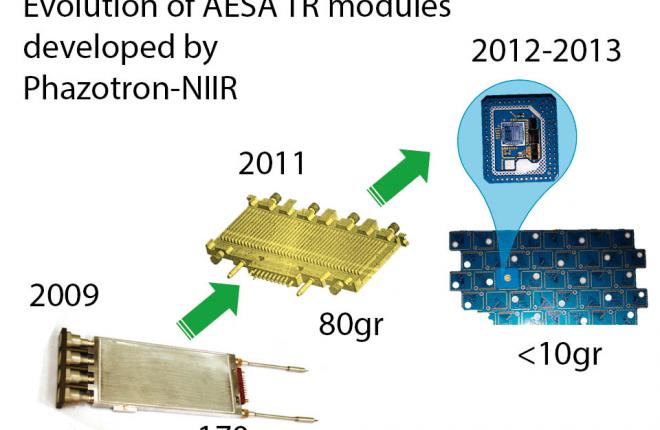
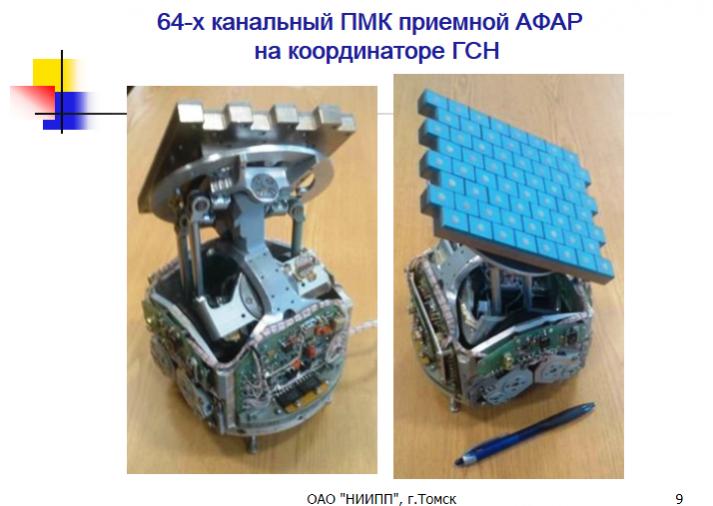
One interesting thing I’ve discovered lately is the use of tiled AESA antenna arrays. This is a novel AESA technology, one that the Chinese demonstrate, the Americans have on hearsay, and the Russians have given no indication.
Russian tiled X-band TR module made by OAO NIIPP


![]()

I agree with you BIO and swerve.. you probably know about this much more than I do, but the primary idea here is that the Belgian and Bahraini deals are not directly comparable, as FBW tried to imply.. not by far..
Those rules obviously leave a LOT of room for interpretation… There is no logic in this world which would justify paying $175 mil for a bloody Viper.. unless it comes with enough spares to assemble another one..
Bahrain is a very bad example.. the recent gulf deals have been a daylight robbery.. a completely different price league.. originally one could expect the F-16V standard being the reason for such price tag, but since Greece is getting 123 upgrade kits for $2.4 billion (budgeted $1.3 billion with the rest being related to subsidy packages and offsets), the price can’t really be that high.. Most likely the whole west is milking the gulf sheiks on support, spares and training.. Belgium would get 16 F-16Vs for around $1.6 billion, methinks.. not that they’re interested, anyway..
Don’t be ridiculous.. Not for a second did LM ever consider needs of partner nations.. All those shared R&D cost were only meant to get as many customers onboard, as possible, before the thing blew up to 29k lbs empty weight and $200mil price tag..
This comes in line with my previous claims that the F-35 would sell for $200mil ea. (incl. spares, support, etc.)
What I do not quite understand is why the Super Hornet deal was gonna be that expensive.. :confused: