 Mick
MickYes, just checked it. It says “Directory Listing Denied. This Virtual Directory does not allow contents to be listed.” meaning that the site may have been removed from its server or not uploaded properly.
It also says “The page cannot be found” on the links via google. Looks like it’s been removed from the server it was on.
MickCompared to the C-17 or C-130J when they started out it looks pretty normal.
Maybe from a development point of view, but there wasn’t the same kind of political influences for either of those aircraft that the A400M has suffered from. Most of the problems continue to be associated to the TP400, an engine that was chosen largely as a result of political pressures rather than an absolute industrial need. It looks like it was a mistake to develop both the aircraft and a new engine, something that even the Airbus Military CEO has reportedly admitted. Had the alternative engine option been chosen, then maybe the A400M may have been already flying. Many of the countries that have ordered the A400M need it now or at least from the original in-service date, not x amount of years down the line. Don’t forget 2011 is when it is supposed to begin entering service and when it will have initial operating capability. The UK and other nations that have ordered it will not have received their full deliveries until later on. Given that there has always been a tight schedule between development and delivery, further problems do little to suggest that this is anyway a smooth or normal development programme.
Incidentally, Defensenews also reports this story and says that the RAF will purchase two further MQ-9 Reapers next year, to add to the two (plus third to be delivered in January 2009) and that it is still assessing options for the Nimrod R1 replacement (thus again acknowledging that it will be scrapped). Air Marshall Thorton claims that the Rivet Joint is being considered along with the [expensive] option of fitting systems to the Nimrod MRA4 or the smaller Sentinel.
MickI’m not surprised that the RAF is concerned. The A400M programme is starting to look a bit of a mess after all the fanfare of the roll-out of the first aircraft in the summer.
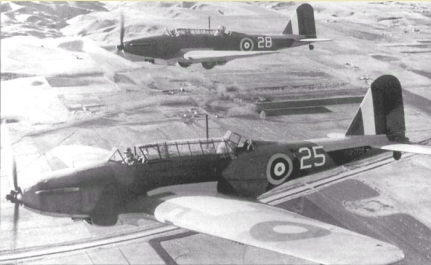
MickI have to also go with the Fairey Battle. Obsolete by the time WW2 started and horrendous losses during the Battle of France. I remember about 20 years ago I visited a farmer who used to store WW2 aircraft pending delivery to museums for restoration. Among the collection included one of the few Fairey Battles in existence and it looked as bad in real life. Awful plane.
MickLossiemouth will eventually become home to the “Dave”, the F-35B Lightning II, not the Eurofighter Typhoon. Current planning is that Coningsby and Leuchars will be the Typhoon bases.
MickN-UCAS
MickTo a certain extent, there is also an economic factor that could overturn Norway’s purchase of the F-35, albeit by strengthening any political arguments against buying the F-35. You have to admit that Saab’s offset package that it is now offering could be more lucrative in certain aspects to what Lockheed Martin is offering. A recently revised agreement that identifies that 200 Norwegian companies could be involved in some 150 co-operation projects that Saab claims will exceed the value of ordering the 48 Gripens. That compares to LM’s offer for possibly 45 Norwegian companies – including the ten already involved in some way (engine components, composite parts, testing software, etc) that would not loose their business with LM if Norway went for the Gripen instead. The major F-35-associated project, the Joint Strike Missile, would arm the Gripen if it was chosen anyway. Smaller details though like exactly how much money Norway will get from the worldwide sales of the F-35 as a partner in the programme don’t appear to assessed recently (or made public knowledge) and that could also play an equally decisive factor as part of the decision.
MickThat bit about splitting tranche three has jogged my memory now, it was a recent Reuters article, in which the writer (Sabine Siebold) managed to get confirmation from the German Ministry of Defence that the letter from Wolf did exist.
MickSpitfire9 I’m not 100% per cent sure on that one (Austria’s aircraft for example were diverted from tranche one orders and have been accounted for in revised tranche two numbers). I do have to correct myself though that it is only 24 of the 72 Typhoons that Saudi Arabia has ordered will be from the RAF’s tranche two. The remaining 48 that will be built in Saudi Arabia won’t count. You’d have to also assume that if Saudi Arabia was to order further aircraft it might want to also build those domestically given that it had established an assembly line. So maybe Saudi Arabia is not a good example as a possible customer to offload some of the tranche three order.
MickIt amazed me when I read this article that it took three people to write! One thing that was not looked at, however, was a recent report (I believe from a German newspaper) that mentioned that it was being considered to split tranche three orders into two batches with the first batch being ordered by early 2009 with a second batch a later date largely as a result of UK and Italian wishes to reduce their orders. It is also worth mentioning that tranche three deliveries are due to take place in 2012-2017, so the UK ordering the complete batch and then later offloading some of the aircraft to other countries like Saudi Arabia in a similar way to what will be done with the UK’s tranche two order is possible. Given that the Saudis’ original Typhoon order is part of the RAF’s tranche two (including those to be built in the UK and Saudi Arabia), the UK can already consider that it has offloaded 72 aircraft as it may not be obliged to order extra aircraft to make up the numbers.
MickOn the Italian theme. Given that it is currently proposed that Alenia will assemble orders for both Italy and the Netherlands, there won’t be the finishing facility that Lockheed Martin possesses for the F-35 that is responsible for applying the coatings, if this is indeed covered by the JSF Delta SDD. Unless Alenia gets the nod to set up a similar facility using all the same materials, perhaps a “Europeanised” F-35 may eventually emerge with alternative parts of the aircraft dropped from the original non-US model sourced locally instead. There are certainly enough companies to do that to bring it close to the US version. I suppose it will depend on end cost and what those countries will want from their F-35s operationally.
MickLockheed Martin (with Northrop Grumman and BAE Systems) is carrying out a programme supposedly in full consultation with other nations involved in the F-35 known as “JSF Delta SDD” that aims to possibly eliminate certain classified materials on export versions as required by the US National Disclosure Policy and International Traffic in Arms Regulations (ITAR). It is possible that this would concentrate on some of the radar absorbent coatings and other fuselage materials, given that Lockheed Martin aims to have some commonality with the standard F-35 that will be operated by the US. Other bits and pieces that are specifically required by the nations that may not be available on all aircraft also come under JSF Delta SDD. There have been concerns raised among some partners over the JSF Delta SDD because it could, in theory, provide them with a less capable F-35. As I said before, most of the countries involved in the programme may get the bog-standard F-35 with any changes made due to JSF Delta SDD eventually being incorporated into an export version.
The way round the F-22 problem was to have a similar programme where there would be a different version for the export market, eliminating the classified stuff.
Bill Sweetman did a good piece on JSF Delta SDD for Aviation Week last year.
MickF-35 provided to allies are stripped down versions?. I read it somewhere… is it true?. if yes, what is the difference..
Possibly. Lockheed Martin is supposed to be looking at a stripped-down version that will satisfy US legislation about supplying certain classified technology on the export market with a decision due by 2013. If anything, it might have limited changes or evolve into an export version that will be available to anyone who is not involved in the project.
MickHmmm.. I think Wikipedia can be a bit dodgy with its info and is secondary or third sourced (eg. the equipment holdings come from the BBC quoting Jane’s Security Sentinel) and anything it can find on the Internet, including the CIA world factbook. It does not even detail where the Georgian AF info came from. Really, I’d completely ignore Wikipedia for such information, although if they do show links as to where they got the info from, it might be worth checking the original source.
I usually refer to the UN Register of Conventional Arms for equipment totals as these have to be submitted by the governments of each state. Unfortunately, while it provides fascinating info on recent imports and exports of equipment (eg. who supplied what up to 2007) for the Caucasus states, it lacks any info on equipment holdings. That leaves the IISS’s Military Balance. While widely held as authoritative, personally I find that the information provided is not that reliable and is often is dated. I suppose there is also the AFM Air Force Intelligence… if you have a few pennies going spare. I can’t think of anything else.
MickThe Su-25 overhaul facility would be Tbilisi Aircraft Manufacturing (TAM). Also produced spare parts. Had links with Elbit Systems (who also provided the Hermes 450 UAS operated by the Georgians) for electrical and avionic upgrades for the Su-25KM Scorpion. Quick search on the Internet reveals that the TAM website is still up (I know there were some problems with Georgian government websites over the past week or so — maybe a bit cyber warfare, possibly). Loads of info and pics on the Su-25.


 Sign In







