 Dave Homewood
I am blown away by this series, it is utterly excellent. It is way better than the filmin that it goes beyond the dams raid and through the various CO’s and other raids and bombing developments. I have listened on my iPod up to episode 13 and it is great all the way.
What amazes me for 1954 is it openly displays the drunkeness of the squadron, but in a positive way. It makes the film version that came out the following year seem tame and sanitised.
I wish I could find a full cast list. The acting is excellent. I want to know who played Barnes Wallis, Sir Arthur Harris (sounds like Graham Crowden but cannot be) and Sir Ralph Cochrane. I am so pleased that Sir Raplh Cochrane get s a far more prominant role in this than he did in the film. He’s very special to us kiwis.
Dave HomewoodYes Bud Tingwell plays Guy Gibson. In my opinion it’s as good as, if not better than the film, much more detail and Gibson is played as the grumpy, short tempered type he’s saidf to have been.
The archive.org site is a favourite of mine, there are thousands of great shows there. From news broadcasts to true dramas to adaptations of film scripts there is a lot of WWII content.
Dave HomewoodThe Kain footage was basically while he was at home (I can’t recall if it was in NZ before he went to England, or later at his UK home) – he’s out of uniform and kind of goofing around in the garden. I got the feeling the family probably had more footage thjan they used but it was surplus to requirements i guess as they were trying to cover all of NZ’s war effort, it wasn’t specifically about him. I assume it’s probably in the National Film Archive now, hopefully.
As for Sir Ed, his grandparents were from Yorkshire so I guess the Yorkies can claim him. My grandparents knew him personally, before Everest, as he and his brother kept bees on their farm. When I was a kid something came on TV about his many amazing feats, and my Nana scoffed and said “Ah, he was only a bloody old bee keeper” like nothing subsequent to that ever happened in his life, or almost as if she ould have done better if she’d put her mind to it. It was funny at the time though Nana never saw the joke, and I still think of her off-hand remark whenever I think of Sir Ed, only a bloody old bee keeper. 🙂
Dave HomewoodThanks Clint but I cannot get BBC iPlayer to work here in NZ.
Thanks Beermat. I guess Willie Rhodes-Moorhouse must therefore be a quarter New Zealander. Can we claim him? What was the connection with the programme, were they digging up his aircraft/one he’d shot down?
The coloured film definately adds a whole breath of new life doesn’t it. I really enjoyed the series The Colour Of War, narrated first by John Thaw, then John Hurt after Thaw’s death, and the last one we saw was The Colour of War: The Anzacs narrated by Russell Crowe which had coloured NZ and Australian 1930’s and 40’s footage, really remarkable to see.
A couple of other coloured films that come to mind as remarkable include some coloured footage of Cobber Kain that his sister had; the excellent film The Fighting Lady about an American carrier in the Pacific, and I picked up some home movie converted to DVD that showed wartime parades in Christchurch, NZ, in colour showing Army, Navy, RNZAF, home front services and even the famous Semple Tank parading through the city. There’s a load of 1950’s bike racing and car racing, etc on the same discs, plus some actual footage in colour of John Smith running the engines on his Mosquito at Mapua.
Dave HomewoodI have been reading this thread just now for the first time, with a lot of curiosity. I have a few questions:
– Is this Willie Rhodes-Moorhouse that is being written about some sort of relation to William Rhodes-Moorhouse VC, a part-New Zealander who was the first airman to win the Victoria Cross?
– What do these colour films everyone is talking about actually depict?
– Someone mentioned this series features a Dornier shot down by New Zealand Eddie “Cobber” Kain, is that right?
I would love to see this series but being in NZ there’s pretty much no way I’ll get to see it I guess. It sounds fantastic from what people have written here.
One last question for Andy, I was rewatching your excellent documentary Who Downed Douglas Bader the other night (someone kindly sent me a copy on DVD), and I have been wondering after that went to air, have you been given or unearthed any further evidence of where Bader’s aircrfat actually is? Or are there any plans to investicate that pond further? Or is it now a closed case? I really enjoyed that doco, great viewing and very interesting research.
Dave HomewoodThis Lancaster and other bombers recovered at the same time have been discussed before here
http://forum.keypublishing.co.uk/showthread.php?t=37452&highlight=lancaster+swiss+lake
And here
http://forum.keypublishing.co.uk/showthread.php?t=40899&highlight=lancaster+swiss+lake
Dave Homewood111 has always been NZ’s emergency number, because out rotary phone dials were always the opposite of what Britain had, with numbers and direction the other way. Not sure why that happened. So here, 1 was the furthest number to travel around the circumference of the dial.
Dave Homewood111 has always been NZ’s emergency number, because out rotary phone dials were always the opposite of what Britain had, with numbers and direction the other way. Not sure why that happened. So here, 1 was the furthest number to travel around the circumference of the dial.
Dave HomewoodThis is from the New Zealand National Archives Timeframes website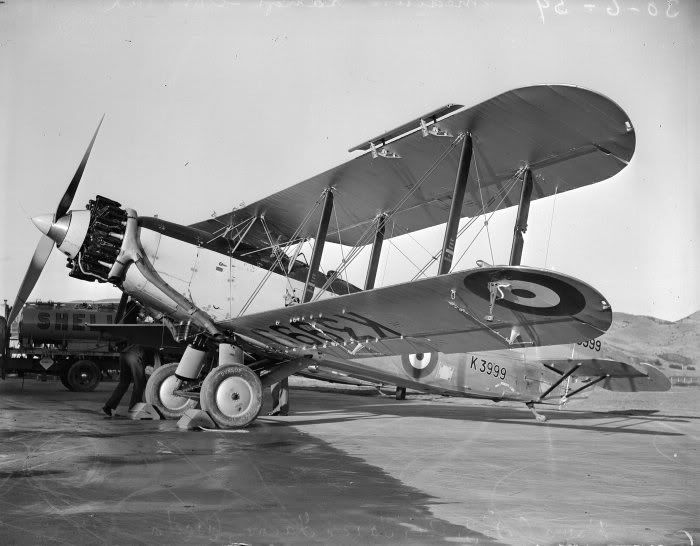
Dave HomewoodOne good thing is you can keep on playing around with them later. For example I agree that this one does look a bit flat, despite that being a genuine Wigram sky behind it.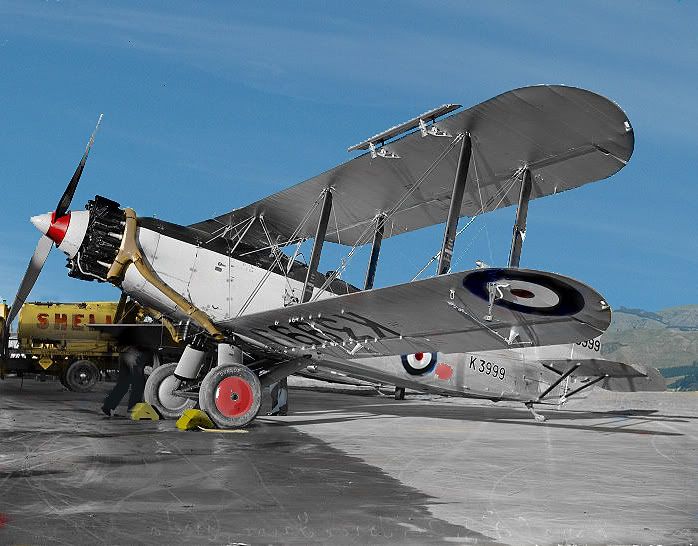
So I just had a fiddle and now the good old Canterbury southerly is blowing in over the Port Hills. A couple of areas have had their contrast and brightness tweeked as well, and now I think it looks a bit more realistic, hopefully.
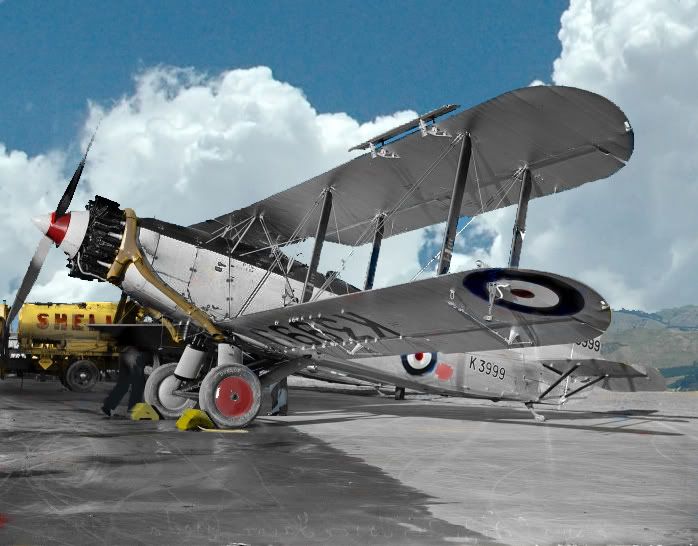
Dave HomewoodYes I agree the earlier ones look a bit flat, I think this is down more to the quality of the photos I started with. The one of the Vildebeests was a quite poor photo to begin with in terms of sharpness and was also very “busy” in terms of the background and finding source material to put into it was difficult. It was a photo I was challenged to colour by another member of my forum, but the results are not too impressive. The one of those earlier four I am most happy with was the Avenger nose art as that came from a tiny photo, and came up better than I expected.
Not all photos take the colour well either, it’s a combination of skill, technique and shear luck to find one that works. So I’m amazed that so many of these flying boat ones turned out ok.
If you have a nice sharp b&w photo you want to challenge me with, particularly flying boats, I can give it a go.
Dave HomewoodIf anyone is wondering, by the way, Auckland Harbour does go various shades of emerald green like the above when it is cloudy, and blue when the sun is out and no clouds around.
Dave HomewoodYou, sir, are an artist.
Thanks, people usually add the word Bullsh*t in there somewhere. 🙂
Here are a few older ones I have done in the past, not quite so good. A colourised wartime black and white photo of nose art on a No. 30 Squadron RNZAF Avenger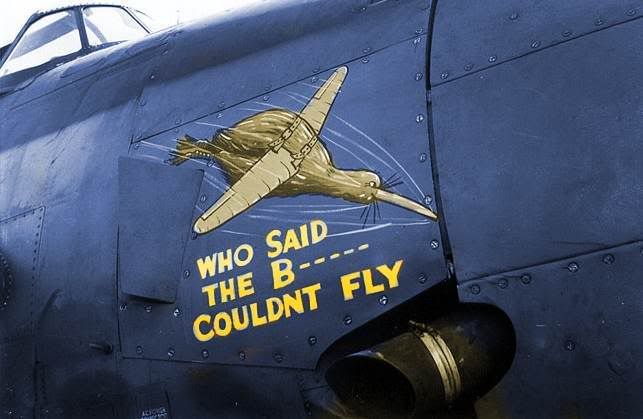
A Fairey Gordon advanced trainer of No. 2 Service Flying Training School, RNZAF Station Wigram, Christchurch, NZ
A visitor to RNZAF Station Whenuapai, Auckland, in 1945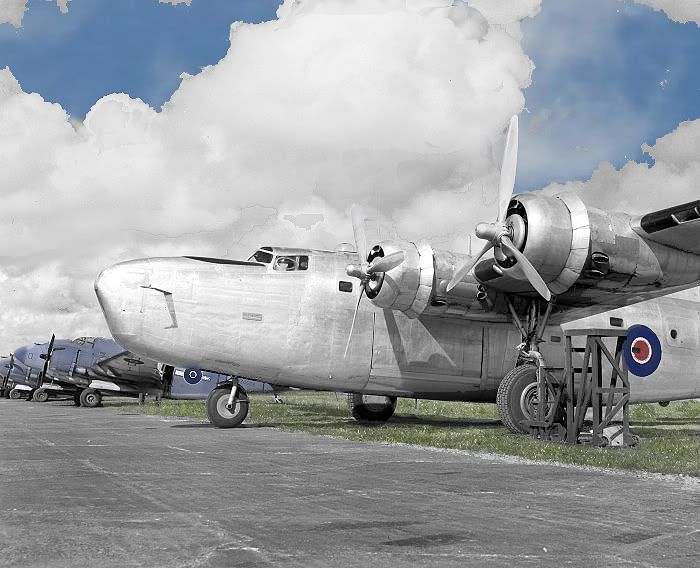
Vildebeests over Auckland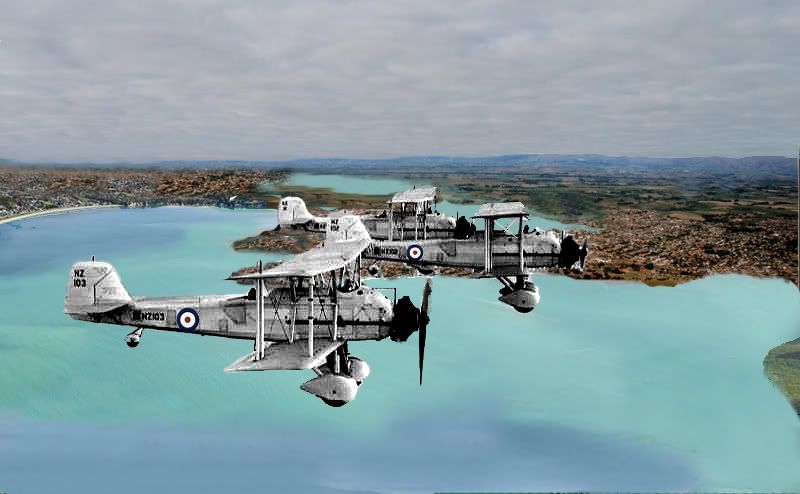
Dave HomewoodLongshot, here is the original Sikorsky thread.
http://rnzaf.proboards.com/index.cgi?board=civil&action=display&thread=8301&page=1
Thanks for the comments. A variety of techniques are used, and it takes a lot of practise and often a bit of fluffing about to get looking right. The key when starting out is the original scan must be really sharp and crisp, soft photos are pretty much impossible to get right. These ones took around 45 minutes to an hour to do each, apart from the last one (the dusk one with all the harbour lights) as I had lots of playing around, hunting for source photos and getting the look I wanted, as it was not based on any actual photo but just from an idea I had, and I think in total it took about 3 hours or so. I was pleased how it turned out, it looks just like I had hoped, though in reality the Clipper would be almost black in sillouette so it looks a little unnatural. One thing that pleased me the most on that was when I added the layer with the hills behind with the Auckland Museum prominent on the hill line (taken from a real photo on one of the threads) and darkened it down, the old b&w photo looked perfect as the sillouetted hills. I then added a few house lights to the hills and it came alive.
Dave HomewoodTwo possibiities here:
A New Zealand POW is listed in this newspaper report (and others) as:
Private James Christopher George Harvey (Prisoner of War)
Evening Post, Volume CXXXII, Issue 150, 22 December 1941, Page 7
http://paperspast.natlib.govt.nz/cgi-bin/paperspast?a=d&cl=search&d=EP19411222.2.100&srpos=3&e=-01-1939–12-1945–10–1—-0%22harvey%2c+james%22+prisoner–
There are no listings with the spelling of Harwey, as you have spelled it. So if it was Harwey, he may not be a kiwi.
Also there was the following NZ POW listed:
Gunner Harold L. Davis (Prisoner of War, previously listed as Missing)
Evening Post, Volume CXXXVII, Issue 141, 16 June 1944, Page 6
http://paperspast.natlib.govt.nz/cgi-bin/paperspast?a=d&cl=search&d=EP19440616.2.57&srpos=1&e=-01-1939–12-1945–10–1—-0%22davis%2c+harold%22+prisoner–


 Sign In







