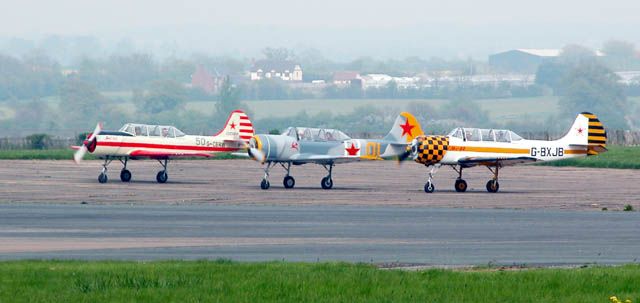
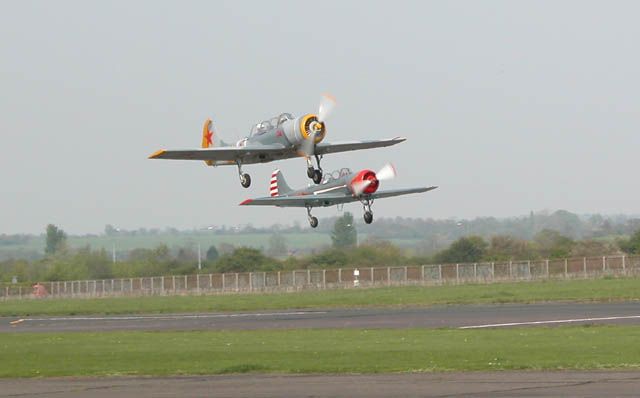
Re; The Yaks. If it was last week (Monday-Wednesday), you saw the Aerostars working up for the new season. The week before it was the formation flying school at North Weald.
Here are a few pics of the Aerostars on Wednesday, just before a thunderstorm came through!
YR 😀


One of those days
We did try, honest! After waiting around at North Weald this morning with various other pilots for the weather to improve, we left Ok and flew into improving conditions all the way.
Coming up past Didcot from the South we were trying to establish contact – we could hear Abingdon radio (very distorted), but they didn’t appear to be receiving our transmissions. So we circled in the overhead then departed South again. That’s when we had a total radio failure – LEDs flashing and a horrible noise over the intercom – had to switch everything off quick.
Later we realised that the alternator had packed up (it was supposed to have been fixed), so no flaps to land either, as by this time the battery had run flat.
So, it was just as well we didn’t land at Abingdon, because we wouldn’t have been able to restart the engine without an external power source or some brave soul swinging the prop.
At least you had a couple of extra Mustangs.
When we got back to NW, we did a low level pass to alert the tower to our radio failure, but their Aldis lamp blew a bulb when they tried to give us a green light. It was one of those days!
Maybe third time lucky next year.
YR 😮 🙁 😡
What’s that giant one behind?!
YR

The Berlin Airlift film is still supposed to happen, but who knows when!
Re Monday afternoon: we should all have Flypast Forum badges or a funny handshake to recognise one another.
Another lost formation day today. A few Yaks departed despite a low cloudbase and poor viz. I managed to do the air test of the Bulldog in preparation for Sunday at Abingdon.
The Cat’s departure is now delayed for “political” reasons, can’t say more.
The only high point was Janie and BBD meeting up over the field late afternoon to fly to Kemble. So the sound of two Merlins relieved the gloom today.
YR
The North Weald Cat has Avalon Aviation logos overpainted in orange, so you are most probably right.
YR
Affirm. And Charlie Bravo.
YR
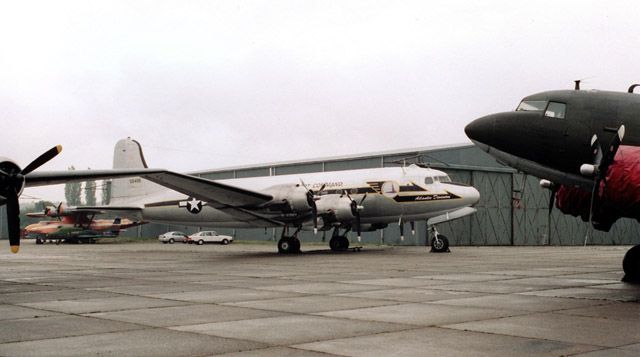
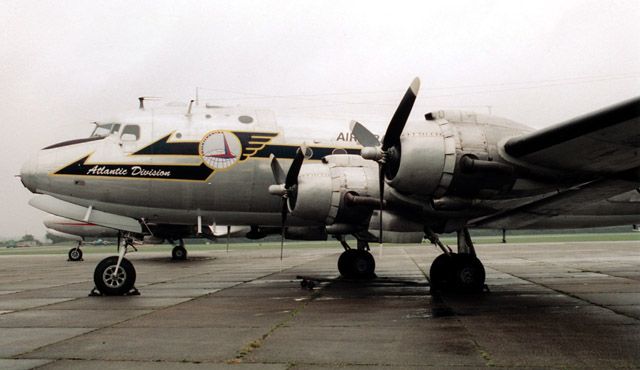
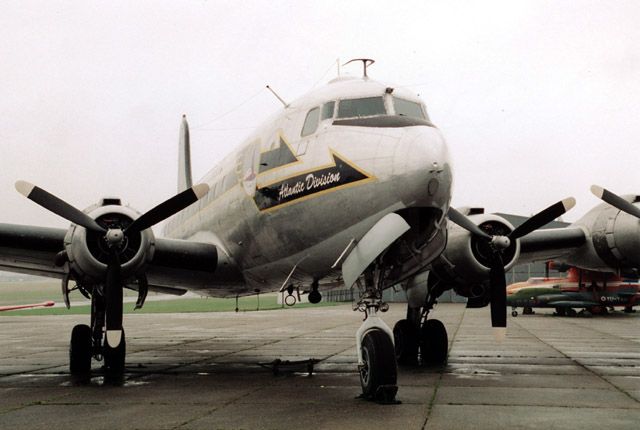
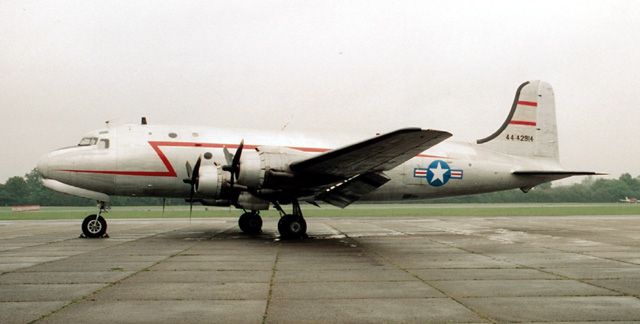
Some pics of the C54s just after they arrived. They haven’t moved since. The only difference today is that they have baffles in front of the engines.
The formation school is flying today – albeit only formation take offs and landings.
Here are a few pics from earlier in the week when they were flying three sorties a day.
YR
The C54s and a Dak that was on maintenance at the time.

A couple of the MATS C54…


And the silver C54

Part of the formation school line up. Now a total of 14 Yak 52s and 2 Extra 300s

At the ORP on Tuesday

A formation take off

We were talking about this yesterday and the guys reckoned you could get one for $170,000 – $200,000.
That’s the cheap bit. It’s keeping it in the air that costs so much. Currently fuel is about £1 a litre for 100LL, for instance. So, you probably burn £300-400 an hour. When I see them next, I’ll get some more information.
YR
Another way that enormous strees can be put on an airframe is by using large deflections of the controls. The speed at whch significant damage can be done is well within the normal speed range for most non-aerobatic light aircraft. Remember the Airbus that crashed in New York because the fin detached after extreme rudder deflections caused by wake turbulence.
This link is to the accident bulletin of a PA28 Arrow, which suffered a catastrophic structural failure because of this.
http://www.dft.gov.uk/stellent/groups/dft_avsafety/documents/page/dft_avsafety_025533.hcsp
The scenario that the AAIB believe was the most likely is that the front seat passenger inadvertantly moved the controls and the pilot then reversed them.
I fly an Arrow, and was surprised by how much below the normal cruise speed of 130 knots one had to be to avoid structural damage – 118 knots, in fact. Should have known, of course.
There was another case of structural failure of a Commander 114, which flew into a snow storm and ended up diving into the ground after the wings came off as the pilot tried to recover from the dive. The manufacturers estimated the g load at the time of failure to be 8.8g. The link is at:
http://www.dft.gov.uk/stellent/groups/dft_avsafety/documents/page/dft_avsafety_500069.hcsp
I also fly a Bulldog, which has 8 g meters for monitoring the Fatigue Index, as well as a resettable one on the instrument panel. These have to be logged after each flight, along with the number of crew, number of take offs and landings and the total time. These are analysed annually and the remaining FI is calculated. Once that is used up, the aircraft stops flying and will have to be resparred.
At least with the meters, you know if you’ve pulled too much. And you cannot hide the fact from other people, because the FI meters cannot be reset. This has the advantage over the average club plane, where you can never be too sure what the last person to fly it had done.
YR

Spoke to the engineers yesterday, and it looks like the Bulldog’s alternator has been fixed. Will try and get a short flight in tomorrow to test it out. So it looks like all systems go – fingers crossed for better weather.
YR
North Weald, EGSX
YR
View from the top of the revetment

Moving under her own power for the first time in years

Taxi run on runway 20

Being put to bed

The Edwards Brothers and their team have done a magnificent job to get her airworthy in about three weeks of very long days.
The old girl got to do some high power taxi runs today, after the oil pressure problem was sorted. Even got her nose wheel off the ground briefly. Very misty, so not ideal for photography.
They had some water contamination, which caused a shut down of the starboard engine until it could be drained. This was expected, which is why they did some vigorous manoeuvring to shake things up.
Back in the hangar now to have various panels refitted, then, once the paperwork is completed, on to flight testing.
YR
Both engines running now

Engines running – just possible to see the vortices coming off the props on this damp day

Inside the cockpit – the anchor is visible down in the nose section

Interior view showing the water tank for fire bombing. Very basic interior indeed, as befits a working aeroplane

Starting the port engine the first time

Putting in the oil

…and more oil!

Starting the second time

…and taxying back