 lukos
lukosfor all those who told me the F-35 would be on par with the F-16 in a dogfight
turns out it can’t even win from an F-16D with drop tanks
https://medium.com/war-is-boring/test-pilot-admits-the-f-35-can-t-dogfight-cdb9d11a875
http://foxtrotalpha.jalopnik.com/the-f-35-cant-beat-the-plane-its-replacing-in-a-dogfigh-1714712248respect to the pilot, his career is over
it raises the question why the hell we only hear about this now. it means all those test pilots who swore it moved great before were lyingI’ve long predicted the F-35 wouldn’t have the energy for a dogfight, it’s a big and heavy aircraft with just one engine
in a way this doesn’t matter, as the F-35 is designed for long range, stealth combat
and even in a dogfight it’ll use its 360 degree angle of fire to attack and just run off
but if for some reason that tactic fails… it reminds of the F-4 being introduced without a gun “because it’s not needed anymore”also, on the defensive this inability to move sharp is going to make it very hard to dodge missiles

lukosCan it carry the Kh-35?
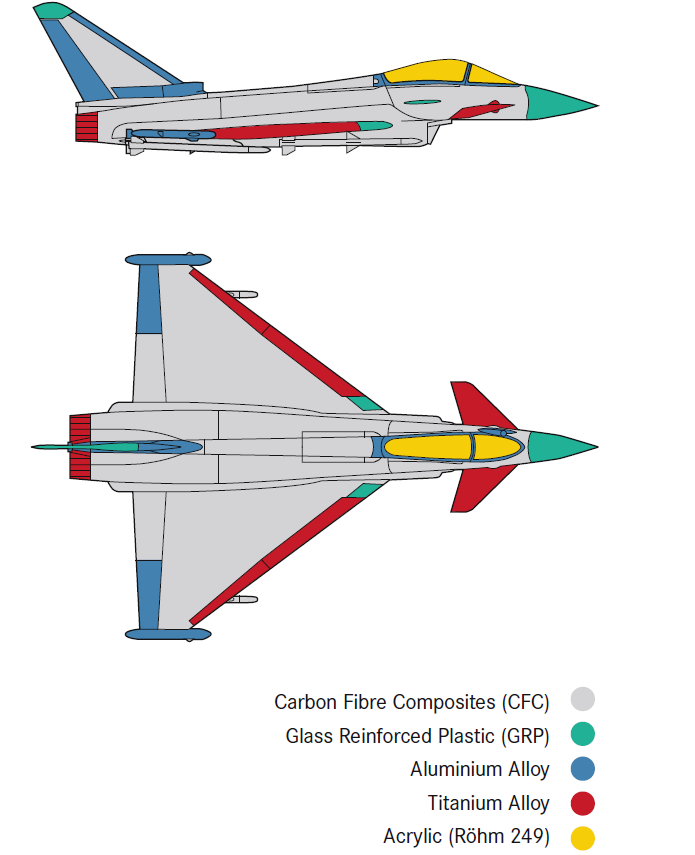
lukosYes but those people are unlikely to just make stuff up, the only place they’ll get their information is direct from the horse’s mouth so to speak. So unless the horse’s mouth gave them false data deliberately I don’t see how a mistake could occur. And they’ve given the same information on two different diagram layouts over a course of 10 years now. I contest that colour indicates material too. If you look at this photo (http://www.vaq34.com/junk/Naked_Typhoon-ZK329-EGNO-24Apr2012-2.jpg), the Ti slats and canards are the same colour as the CF composite body, and the alleged Al intake is the same colour as the GRP wing root LEs and the same colour is splashed around elsewhere. See the problem with the colour=material methodology? And the only diagrams indicating Al on the intakes also indicate it on the slats. It may well be that the intake has Al internally but it would seem that the surface is CF composite.
That’s true on weapons but at the time of publication that wasn’t known and loadouts were assumed based on maximum permissible loads. Nobody had really done the maths on weight distribution and load balancing and figured the weapons could simply be mounted further forward. The EPWIIs are mounted extremely far forward on the pylon for instance.
Whilst official sources can be wrong occasionally, tittle-tattle of internet forums is nearly always wrong and often positively ridiculous, so I know where the smart money is.
lukosIt makes no sense to have warmer fuel anyway, as it will lower performance and efficiency in any aircraft.
lukosI’m not convinced, so many sources have it as CF Comp:
http://www.eurofighter.com/downloads/TecGuide.pdf
lukosGreece have a dynamic aircraft industry. Recently it’s know-how was showcased dramatically with its participation in the Neuron demonstrator.
But how would Greek aircraft industry face an exit from the Euro zone. What could be the specific consequences and how would it impact the European industry?
We have on this foru stray of thread that had derailed on economics matter. Let’s debate today freely around an applied case of economics in the aircraft industry.
An introduction from the New York Times to illustrate the problem :
Greek companies that borrowed in euros might find it hard to pay them back if they are mainly earning a new drachma. The companies’ creditors and suppliers might refuse to be paid in the new currency, and take the issue to courts in London and New York.
Making matters worse, fear of the new drachma could prompt foreign companies to step back from entering into new contracts with Greek companies.
That’s a very interesting quote, I wondered the exact same thing on debt repayment. The problem is that currency devaluation is the only way Greece can possibly get out from under this and they can’t do that with the Euro because it’s tied to other countries, but if the lenders force payment in Euros, then Grexit doesn’t really help. My personal opinion is that the lenders should suck it up, they lent to Greece, not the EU. They shouldn’t have expected the benefits of the higher interest rates relative to other EU nations, without the associated risks specific to that country.
As regards the aircraft industry, I think the Drachma could help because it will make exports and their workshare more competitively priced.
lukosIt looks like the missile would interfere with the stabilators if it were on a wing pylon.
And it weighs 2.5 metric tons. Is there actually an in-service, air-launched version of the Brahmos or P-800 yet?
@TR1: Was the picture from take-off or landing? I ask because -in theory- original Su-27S cannot land with that payload, but deployed flaps, and lack of afterburner in the image made me wonder.
PS: 2500 kg on each wing and 2500 kg on fuselage made me remember some discussion about whether Su-30/35 could carry 2 (or 3) BrahMos -or similar- missiles. Granted its distributed between pylons, but IMHO it wouldn’t be too hard to make a special adapter that uses both wing pylons. Surely Brahmos is longer by 72% compared to FAB-1500, but its way more aerdynamic than 3 bombs. With strict speed and G limitations, its truly a feasible option.
As far as I know, only the Su-34 could potentially carry 3.
lukos
AARGM-ER
Press Release Number: ECL200809021 02-Sep-08
WD leads HSAD demo
On Aug. 15, the High Speed Anti-radiation Demonstration (HSAD) Project successfully demonstrated the maturity of an integral rocket ramjet (IRR) propulsion system.
The system incorporated nozzleless booster and variable flow ducted rocket ramjet technologies in a controlled test vehicle (CTV) air-launched flight from a QF-4 drone at the White Sands Missile Range in New Mexico. The telemetry and optical reports confirmed that the CTV boosted and safely separated from the aircraft, accelerated to supersonic ramjet transition speed, completed all IRR transition events, ignited and maintained controlled ramjet gas generator operations, and maintained supersonic sustain phase flight before being commanded to roll-down toward the ground to be flight terminated to facilitate vehicle recovery. The vehicle maintained stable controlled flight throughout its planned flight profile until its planned termination. All flight test objectives were demonstrated. Initial data analysis and post-test visual inspection of the hardware indicates that the vehicle’s systems performed as designed.
The HSAD Project is sponsored by the Office of Naval Research, Air Warfare and Naval Weapons Applications, and has Congressional interest in maturation of propulsion and control technologies. The project’s objective is to flight-test demonstrate a near tactical configured vehicle with an advanced propulsion (i.e., IRR propulsion) and control system focused on increased range, time of flight reductions at critical ranges and compatibility with developing guidance/navigation/control components. The project’s products are an “as-built” design data package and performance simulation models that are validated from component level through vehicle level free flight tests.
The Naval Air Warfare Center Weapons Division at China Lake served as the project lead and system integrator for this government-industry team. Jacobs Engineering Group, Inc. in Ridgecrest provided system engineering support; Aerojet in Gainesville, Va. provided the propulsion section, with Goodrich Corporation in Cedar Knolls, N.J. providing the fuel control and actuator systems. Alliant TechSystems, Inc. in Woodland Hills provided the GNC section and simulation modeling support; Kuchera Defense Systems provided electronic/wiring components, U.S. Air Force’s 82nd Aerial Targets Squadron, Detachment 1 provided the launch platform, and Naval Surface Warfare Center Port Hueneme Detachment, White Sands, N.M. provided flight test coordination.
Contributed photo
NAWCWD led a successful demonstration of an integral rocket ramjet propulsion system for the High Speed Anti-radiation Demonstration Project on Aug. 15.
lukosB-52 vs Vulcan drag race.
lukosI am old enough to remember the debate over the existance of “Bigfoot”, eventually video evidence emerged but it turned out to be a man in a monkey suite.
In this case there’s a Gorilla.
lukosThe J-7 was basically a MiG-21, there was this that I found:
This is an excerption from the book “Life-Long Runway” written by the Soviet Air Force test pilot Vladimir Kondaurov. The story is that in 1976 the Soviets got an F-5E to test. Here is what the test pilot made out of it.
In the summer of 1976 a disassembled American F-5 fighter jet was delivered to our base at Aktubinsk. To be correct, it was F-5E – the latest variant with increased engines thrust. By the size it was smaller than MiG-21, had two engines installed side-by-side in the fuselage, a sharp swept-down nose and short tapered wings. The war in Vietnam had finished, and the United States Air Forces were leaving this long-suffering country, hastily abandoning several aircraft of this type on one of the airfields. One of them was handed over to the USSR together with its pilot manual. There were no technical descriptions, but our engineers figured everything out, assembled it to the last bolt and made it flyable, bringing not only the foreign hard pieces together, but also tons of electric wiring. A test brigade was formed to conduct special flight tests, and a program was written, which assumed 35-40 test flights. I was one of the test pilots, our lead was Nikolay Stogov.
After a proper training I was trusted to perform the first speed run on the runway and then a run with a 3-6 feet jump. These precautions had their reasons in our uncertainty, that all the systems had been assembled and connected correctly.
And finally, we were alone. The “Foreigner” hid within. From the manual I knew, that it had had no problems in operation whatsoever. But I also knew that every manufacturer had their own zest in the product. Unlike our fighters in production, the “Foreigner” had brakes on pedals, which we had on heavy aircraft only. The cockpit was not cluttered by various switches and circuit breakers unneeded in flight. They were all concentrated in a single horizontal “stock” away from the working area. I understood that F-5 was a way not the most modern plane and that it was inferior even to MiG-21, but, nonetheless, I liked the cockpit layout. I decided to make the run on the second runway, which was the longest one. “There is never too much runway ahead,” I thought, taxiing to the runway. It was the winter of 1976-77. Of course, there was no reason to hide I was proud that the only aircraft of this type available in the USSR was trusted to me.
I turned on the extension of the nose strut – the electrohydraulic retractor engaged, and the nose of the aircraft started to “crawl” up. “How about that?” I shook my head surprised. “Couldn’t you do without it on this little one?” As for me, not a common way to reduce your takeoff roll. In the USSR, only Myasischev used this on M-3 and M-4 – the heavy long-range bombers with a tandem gear layout, thus with very short nose struts.
“Alright,” I thought, “we kneeled, so let’s run. It is awkward to fool around this way.” I increased thrust and released the brakes. The aircraft started to roll. It rolled evenly, reluctantly gaining speed. Aha! That’s why they raise the nose strut! The engines are feeble, and the wing is too small. I lifted the nosewheel off the ground and held the airplane from the premature liftoff. Enough for this time. I powered back and lowered the nose. And then… what the heck? The entire nose started to shake and vibrate, then it started to wander left and right so violently, I thought it would just fall the hell off in a moment. Something was screeching and rumbling below. My first thought was about the nosewheel shimmy, but then I realized the nosewheel had been destroyed. I pulled the drag chute handle. “Not the brakes… Main wheels damage is the last thing we need: we don’t have spares,” the thoughts were rushing in my mind. Gradually reducing the speed, I stopped. I switched everything off, opened the canopy and impatiently jumped down onto the tarmac. I looked and I was puzzled: the wheel was intact. “That’s strange! So what were you so unhappy with?” I looked at the “Foreigner” suspiciously. It turned out that he was unhappy with our runway condition: rough grooves and seams were so deep, and the surface of the concrete was decayed, so he just didn’t stand it. One bolt was cut off, and the strut together with the wheel was turning around.
– “Nice! Ours don’t do things like that,” I gave his nose a pat and whispered: “Don’t worry, we’ll find a new bolt for you and you’ll gallop around again!”
As I got to know the “Foreigner” I grew up in my respect to him both as to the flying machine and as to the fighter jet. Unapt to aggressive maneuvering when in “cruise” configuration (flaps and slats up), he would have changed when the pilot put it into the “maneuvering” configuration (flaps and slats down). Then from a heavy clodhopper he turned into a swallow. Checking out the capabilities of the optical sight, I enjoyed keeping the reticle on the target while attacking with a 6g pull, whereas on MiG-21 it would disappear from the view at 3g.
After determining the basic specification we decided to set up for a mock air-to-air combat with MiG-21bis. I would fight on my “native” MiG-21, and Nikolay Stogov – on F-5. The close air combat started head-on in equal positions. Every flight ended with the same result: MiG-21 lost, although he had much higher thrust-to-weight ratio. I laid myself out just to keep the initial position. I took the most out of the aircraft, took all he could give, but the targeting angle grew steadily and in a few minutes the “bandit” was on my tail. Only tactics could save me. What I was stricken by the most is that the result of the mock fights took not only the generals by surprise (one could explain this somehow), but also the military research departments of the Air Force and even the aviation engineers. They would review the data records for thousand times, ask the pilots, especially me. Frankly, I was somewhat confused as well, but when I tried the F-5, I realized that it was not an ordinary one.
So, what was happening in flight? At the speeds of 800 km/h (430 kts) and above the fight was on equal terms, nobody had explicit advantages, but the fighting was not literally maneuvering because of the large radii of the maneuvers. We would both stay at the equal maximum allowable g-loads. Whilst at the speeds below 750 km/h (400 kts) one couldn’t sustain these g-loads even with the afterburner. And the lower the speed was the faster it decayed, thus lowering the maximum available g-load. It turned out that the aerodynamics was what won the day, not the thrust/weight ratio. But how was I to explain all this to the people above? They wouldn’t have patted our backs for this. Then the MiG company representatives suggested:
– “Let’s set MiG-23M against him.”
– “But they cannot be compared to one another; they are from different generations.” The chief of our research institute objected.
The chief of our institute, colonel general I. Gaidayenko had been a fighter-pilot during World War II and a wingman of the very P. Kutakov, who was the supreme commander of the Air Force at the time of our struggle with the F-5. The result of the test flights was supposed to be reported to Kutakov.
– “So what? We will kick his ass anyway!” 2nd lead engineer of MiG-23M spoke out, rubbing his hands in expectance of the revenge.
Well, the ass was kicked, for sure… but one of our own. The result was the same with the only exception that the agony lasted for 4-5 minutes. You have also to keep in mind that I had been considered a pilot capable of any stall and spin recovery and I had been permitted to break any angle of attack limitations. In the dogfight, I set the optimal wing sweep manually, but all in vain. The foreigner would slowly, but steadily, approach my tail. After these flights all calmed down for some time, all discussions ceased. The chief of the RI ordered to promptly compile a statement on the tests and directed me and Stogov to Moscow, to the Central Research Institution No. 30, which was involved in elaboration of the long-term problems of aviation advancement.
Paying a visit to one of its departments we asked, what they could tell us about the MiG-21 advantages over the F-5E.
– “Oh!” The military scientists immediately exclaimed. “With pleasure! There is a fray right now between Ethiopia and Somalia, and these very aircraft fight each other there. And we are busy preparing recommendations for the pilots on how to successfully fight the F-5 in aerial combat.”
– “And what you’ve got?” I asked with an interest.
– “Take a look at the graph of the attack success probability. See? We beat him everywhere.”
– “Indeed,” I droned, looking at the so familiar graph in front of me and feeling somewhat hurt for the “Foreigner”.
– “And what’re the odds?” My friend asked, making a face of a village gull.
– “We’ve got much better thrust-to-weight ratio,” the scientist replied in a voice of a mentor, who knew his worth.
– “Alright, then could you read this Statement and give us your final conclusion, please? And…”
– “And we’ll go have a lunch,” Nikolay suggested, “You know, on an errand it’s like in defense: the meal is the ultimate thing.”
This was the end of our work on the comparative evaluation of the “Foreigner” and our Soviet fighters. I don’t know what kind of discussions were held “up there”, but I know for sure, that the recommendations for the Ethiopian pilots were changed. Our “experts” suggested not to engage in a close dogfight, but to use the “hit-and-run” tactics instead. What about MiG-23, everyone preferred to forget about it. You bet! It had been supposed to fight even more advanced aircraft! Our Statement was classified as top secret and removed somewhere away from the eyes. The “Foreigner” was given to the aviation industry specialists with a strict clause: no flying, but to disassemble and study the structural features to use the knowledge in further projects. Some time passed, and the Su-25 close air support aircraft emerged. It had the wheel brakes on the rudder pedals, “maneuvering” wing configuration and a different approach to the cockpit layout. In the terms of the pilot workstation our engineers went even further, and nowadays the cockpit of MiG-29 can serve as an exemplar for similar foreign combat aircraft. The same can be said about the aerodynamics. The aerodynamic capabilities of Su-27 fighter are considered unexcelled so far. It appears that what is clear for one is a revelation for the other. I believe that similar situations arose in the USA as well, as they got our aircraft at times from MiG-21 to MiG-29. We had luck only once.
lukosI kind of agree with him, we should be spending more on defence. And if we spent more, we’d sell more, so we don’t really even save money by not spending in the long run.
lukosIt is supporting evidence that it probably is in service but not the hard evidence that it actually made it into service that can only come into existance when or after it has come into service.
Well okay then, it’s fair to say that the evidence supports a strong probability that it’s in service and there is zero evidence of any kind to the contrary.
Just like footprints in the snow, there’s zero hard evidence that anyone walked on it but there’s a damn strong probability.
lukosOk so to recap:
The company newly formed to deal with the question of how to power the heavyweight UCAV currently known as FCAS, is comprised of Rolls Royce and Snecma. FCAS as currently planned will not have any Eurojet product powering it, and these two heavyweights of the jet engine world are working on a new engine (or a derivative of an existing one).
How the M88 performs in the Rafale is not relavent here in my view, because they are not proposing the M88, just using it as a reference to give viewers an idea of the class of engine they are working on.
This is a new engine with all the requirements of a brand new high end UCAV driving its design.
Is it to be adaptive or just efficient in a 10% improvement on fuel efficiency type of way do we think and can there be broader applications beyond this UCAV ?
They seem to be staying around 5t (11,000lb) of dry thrust though. That may work for a UAV but I think your original post said fighter engine post 2030. I see fighter engines having more than that post 2030.
lukosErrrm….. In the U.S. context “joint” does not mean international. So please supply evidence of the Turkish presence.
And you know it’s in the US sense how? More assumptions.
Didn’t you originally say there was no evidence of it being joint force?
http://forum.keypublishing.com/newreply.php?do=newreply&p=2235689
Lukos- there is nothing about a joint force either
http://aviationweek.com/defense/f-35-unscathed-hostile-fire-green-flag
Not a single F-35 was “shot down” during the joint-force Green Flag
LOL.


 Sign In








