 lukos
lukosThe last of the 160 Typhoon´s ordered by the RAF will be delivered in 2017, the RAF had 117 airframes in 31 March this year.
Okay that was March.
lukosThe RAF does not have 160 in service. That is the total number on order for the RAF, including T3A. They haven’t all been delivered yet, let alone accepted into service, & I think there have been some losses. 232 have not been built in the UK. That is the total ordered for the RAF plus the Saudi order, & neither the RAF nor the Saudi order has been completed yet. None have been given to Saudi Arabia. They’ve been sold.
Not to my knowledge. The source stated 160 built. Tranche 3’s have been coming on line since last year.
…
There are sources that many dislike but there are two other sources placing RCS in this ballpark.
http://www.koreatimes.co.kr/www/news/nation/2011/10/205_97236.html
Frontal cross-section only bettered by F-22 (written pre-F-35):
http://typhoon.starstreak.net/Eurofighter/structure.html
That puts it at least better than 0.1m^2 by any measure.
lukosRequirements are never based on needs
Dumbest statement ever.
even if need arise you simply cant afford EJ230 in reasonable time.
I’m sorry, you have knowledge of this how? Last I heard our military budget was actually underspending following wind-down in Iraq and Afghanistan.
Su-27SK is early 1980s avionics. Su-27SM is late 90s avionics. so its weight has decreased that’s why it can produce 4000km range with 4AAMs.
AL-31FM-1 engines are cleared for export to China. it means FM2 practical ready.Typhoon 3800km range from where it is quoted? Again it is heavier, draggier and thristier plane than Rafale.
The Su-27’s ferry range is just that. Ferry range with 2 tanks (3 ton total) only. The Typhoon manages “>2000nmi” ferry range with 3 1000L tanks. If you divide both by total fuel and times by internal fuel, the Su-27 ends up needing 83% internal fuel to match a Typhoon on full internal fuel but that doesn’t take into account the greater difference in weight and drag when you take the 3 tanks off the Typhoon relative to removing 2 from the Su-27, or the “>”. So in all likelihood, the Su-27 will need about 90% internal fuel for it to be equal.
typhoon RCS 1/100 of Su-27SM with all those external loads?. another BS claim. just look all the external proturberance and afterburner. I am not even posting those J-10 and EF video take off comparision. EF is simply overweight.
No one said anything about external loads. Typhoon overweight? J-10?:highly_amused::stupid: Funny how the Typhoon is the only aircraft that can get from brakes off to Mach 1 in <30s clean with a full fuel load.
Show me another aircraft that can.
lukos@Lukos, one of the reasons Andraxxus is coming up with different numbers than you is because your trying to extrapolate data from Wikipedia listings and he IS READING THE FREAKIN FLIGHT MANUALS. They are readily available, crap I’ve got links to the F-15 A/C/E and F-16 block 50, F-4E, F-18 C/E, etc. Also, both the F-16 and Mig-29 have nominally high wing loading but excellent turn performance because both were amongst the first blended wing and body designs. Simple wing area does not give wing loading. By some estimates, nearly 30% of the F-16’s lift was provided by the fuselage.
Nevertheless the points I’ve made are accurate. The F-16 and MiG-29’s turn performance at low altitude is due to the high AoA capability provided by the strakes overcoming the low wing-loading to some extent, plus the high TWR overcoming the drag that induces. At higher altitudes this is no longer possible because the even higher AoAs required are more limiting wrt drag and energy loss. You can’t simply throw in ‘blended body’ as an excuse for everything as if no other planes generated fuselage lift.
rear shooting MICA has no practical significance against peer competitor that has all the situational awareness, jamming, and fighters with greater energy, altitude and fuel capacity to dictate fight. not mention money to train pilots to much higher standards.
I’m going to agree with halloweene here, you’re talking rubbish.
Getting back to Typhoon; It has the wing area of the F-15, and the thrust of an F-18, this is not a good combination;
Now you’re talking totally irrelevant rubbish… It has the wing area of a much larger plane and the thrust of a significantly bigger plane? Surely that’s a good thing.
lukosLast you heard, really?… You really need to catch up, Princess. 250 was planned for the RAF in the mid ’80s. That figure dropped to 232 units in the mid ’90s. That figure dropped to 160 units not so long ago.
I’m already up to speed, Queen. 160 is the number already built.
lukossource please, i’m very interested in it and it contradicts every pilots testimony i could hear.
http://www.ipcs.org/pdf_file/issue/SR126-NSP-IndiaandtheRafale.pdf
According to some estimates
the Rafale may appear 4 times bigger on the
radar compared to the Eurofighter.
http://www.koreatimes.co.kr/www/news/nation/2011/10/205_97236.html
According to a calculation by a senior EADS radar expert, the Captor-E, which will use 1,426 T/R modules and is scheduled to be integrated onto the Eurofighter Typhoon in 2015, is capable of recognizing the F-35 at around 59 kilometers away.
He acknowledged that the chance is high for the F-35 to detect and fire missiles first against fourth-generation jets, such as the Eurofighter or Boeing’s F-15, but claimed that the latter are capable of dodging missiles and successfully counterattacking at such a long range.
His calculation shows that the F-35’s APG-81, which allegedly has 1,400 T/R modules, will be able to recognize the Eurofighter or semi-stealth fighter at 120 kilometers or farther based on the assumption both radars have the same capability.
We have also statements by Eurofighter GmbH stating that RCS is less than that of any fighter bar the F-22 and F-35.
You can find a translation on the net about what the pilot says bout Typhoon. Not very elogious.
Here we go with conjecture and hearsay again. I must say, Dassault have ran a fantastic marketing campaign relying on little more than the aforementioned.
lukosFor example comparing 4th gen F-16 MiG-29 F-15 and Su-27 with T/W Wing loading etc assumptions and known data;
F-16 had highest wingloading of 4th gen fighters, but it also had the highest low altitude sustained turn performance (blk30 has 23 deg/s);
F-15 has the highest T/W of 4th gen fighters, but doesn’t have the best acceleration at all speeds.
F-15 has the lowest wing loading, it also has the sh*ttiest instantenious and sustained turn performance.
Su-27 is truly best at nothing with respect to T/W or Wingloading but it has highest instantenious turn performance (@30,2 deg/s) and highest high alt. sustained turn performance.
MiG-29 has the lowest T/W of those 4, but has the best acceleration at S/L, highest inst. climb rate (@345m/s), and best supersonic acceleration at ~11km alt. and around M1.7 speed.Now Arm them with only 4 missiles, All those statements will change. Those aircraft designed to counter each other have SO close performance parameters.
With the strict assumptions of lukos making F-15 should have been kinematically most agile 4th gen fighter, and F-16 with inferior T/W and Wingloading should have been a flying brick virtually good at nothing. His statements don’t even verify known examples and as such, they are clearly insufficent to estimate an unknown example like Typhoon. He has nothing further to add and neither do I.
Most of the issues you mention above are explainable.
Turning at sea level is lift-limited, not drag-limited. F-16s can make up for high wing-loading with better high AoA capability.
F-15 is a funny one because a lot of fundamentally incorrect empty weights have circulated. Wiki are using F-15C empty weight for F-15E.
http://www.af.mil/AboutUs/FactSheets/Display/tabid/224/Article/104501/f-15-eagle.aspx
http://www.af.mil/AboutUs/FactSheets/Display/tabid/224/Article/104499/f-15e-strike-eagle.aspx
VS
https://en.wikipedia.org/wiki/F-15_Eagle
https://en.wikipedia.org/wiki/McDonnell_Douglas_F-15E_Strike_Eagle
If you use the correct figures it makes sense. There’s also the issue of the semi-permanent centre pylon. Take that off and figures change remarkably, it makes a pretty big difference.
A clean MiG-29 actually has one of the best TWRs at 1.09 and has variable ramps explaining why it beats the F-16 supersonic.
The MiG-29’s climb figure seems to be based on a misinterpretation:
https://en.wikipedia.org/wiki/Mig-29#Specifications_.28MiG-29.29
https://en.wikipedia.org/wiki/Mikoyan_MiG-29#cite_note-176
http://web.archive.org/web/20080620004748/http://www.flug-revue.rotor.com/frtypen/FRMiG-29.htm
The only source states 55s to 6000m. Now realistically I take that to mean from brakes-off, since it’s too slow to just include the climb. Looking at the F-16 graphs, 55s would be realistic for acceleration to Mach 1 follow by a climb to 20,000ft.
However some tardsman on wiki has mistook 6000m for 60,000ft and divided it by 55 and times’d it by 60 to get the 65,000ft/min referenced in wikipedia, after which the link is stated as a source.:stupid: Now everyone copies that figure from wikipedia, like the dumb unthinking rats they are.
http://www.airforce-technology.com/projects/mig29/
http://www.airforce-technology.com/projects/mig35/
lukosThis statement makes no sense. Once the RAF get 160 Typhoons how will they not all be operational? Granted, they won’t all have AESA, but the entire MiG-31 fleet won’t be upgraded to the BM standard either.
The total planned is 260, last I heard. So far they’re at 55 Tr1, 65 Tr2 and 40 Tr3.
lukoshttp://www.youtube.com/watch?v=RAedQ7FMiKo
I guess this wasn’t “legitimate dogfight”.
Does it look like one? Does the Typhoon even give you any kind of impression that it’s trying, floating around at low altitude. Maybe what you’re not seeing in this gun practice is the Typhoon killing him from behind in between sightings.
What some people fail to understand is that, in some training engagements, one party is pretending to be a foreign low-grade threat and behaving accordingly.
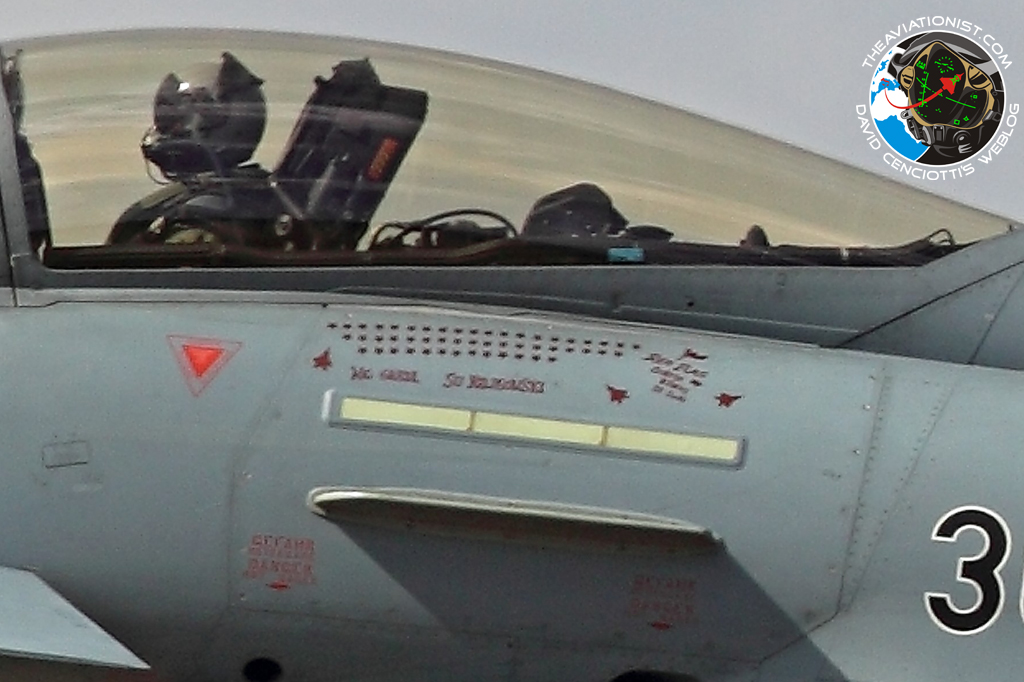
What about here:
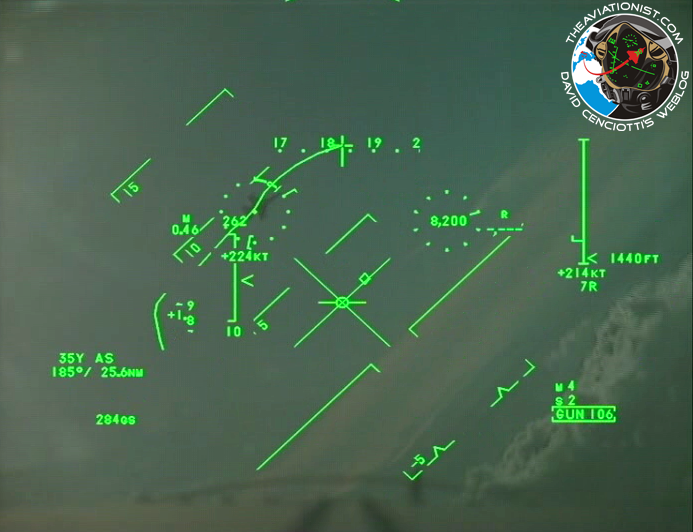
http://theaviationist.com/2012/06/30/typhoon-kill-markings/
http://theaviationist.com/2012/07/23/f-22-raptor-kill-markings/
lukosAnswer: America does not want to become Iran’s air force.
Maybe the aim was always to split Iraq up, or maybe it became the aim after the puppet strings malfunctioned.
lukosMi35 strike ISIL near Baiji refinery
Wonder what missiles they’re using?
lukosEJ230 has zero possibility. there is more possibility of AL-31FM3 for Flanker upgrades as the engines are continuously ordered in vast numbers by Chinese so upgrades funding is not even a problem. infact Salut have make so much money out of it they are entering helicopter engines business in big way.
Rubbish. Requirements are based on needs. If the need arises or there’s an order, it’ll happen. There is still interest in Tranche 3b although no confirmed orders. But, as it stands, the EJ200s offer the Typhoon (with fuel internal fuel) a superior TWR to even a theoretical Su-27SK with FM2 engines (still in test) with only 75% fuel. So the theoretical Su-27SK still doesn’t get to where the Typhoon is now.
You don’t have slightest idea of Ruaf Su-27SM weights (read the 4000km range on placard from 2005 now it will be even more) due to lighter avionics and upgraded engines, new FBW. Bottom line is Flankers are continuously upgraded while EF will remain static for performance.
Su-35 specification are from 2008. There is vast difference between export and Ruaf specification. This is not even a close comparision.
Right so now you’re relying on conjecture again. I don’t doubt that the range might have improved slightly but the Typhoon’s ferry range is quoted as >2000nmi (3800km), so the difference is small. The Su-27 carries a lot more fuel, but it’s also a lot heavier, making the range difference a whole lot smaller than you are suggesting.
this 360 degree envelope for WVR missiles is useless as any such turns will severly degrade missile range. if you need such turns for missile that you are already is trouble.
Is degrading the range of a missile capable of maybe 80km going to affect how a sub-5km shot plays out?
I could also go on to mention other little details like RCS. The Typhoon’s RCS is less than a hundredth of an Su-27SKs[1] (some reports even suggest a figure nearer a thousandth)[2]. A Typhoon could probably fire a salvo of Meteors at Su-27SKs from >100km and leave without ever being detected, then a second wave could do the same. Even assuming terrible Pk, it’ll work eventually.
[1]http://www.janes.com/article/32190/pak-fa-stealth-features-patent-publi…
[2]http://www.koreatimes.co.kr/www/news/nation/2011/10/205_97236.html
While I assume Jane’s is wrong about the PAK-FAs RCS and it’s nearer a tenth of that. Russian media suggests a tennis ball – 0.01m^2. It does seem odd that they’re building a fighter with approximately the same frontal RCS as a Typhoon* and calling it a stealth fighter.
*Typhoon frontal RCS has been stated by various sources as:
<0.1m^2 (“less than any non-stealth fighter”)
0.05m^2
0.025m^2 (“quarter a Rafale”)
0.017m^2 (the Korean Times link above works out as that).
lukosThey wouldn’t get so close if it would be ugly. Right?
How do they know if it’s going to get ugly or not. Real world ROE greatly complicates the use of stealth.
Or are you suggesting that anyone of those two pilots could go nuts any second?
I’m saying that you don’t know what to expect in the case of an air intercept. If you could perfectly assume that all intentions were pure, we wouldn’t bother with them in the first place. BVR capability is great but you might not always be BVR when things go south, which is where a bit of performance comes in, just as it does for actually making the intercept.
lukosI am again asking everybody why are you comparing Su-27 (or even Su-35) with EF Typhoon.
Both aircrafts are almost legacy and obsolete in wake of stealth aircrafts.
And in the photo you see here, what advantage would stealth provide if it turned hostile? In the photo below, would you rather the Typhoon was an F-35 if you were in it and that turned ugly?
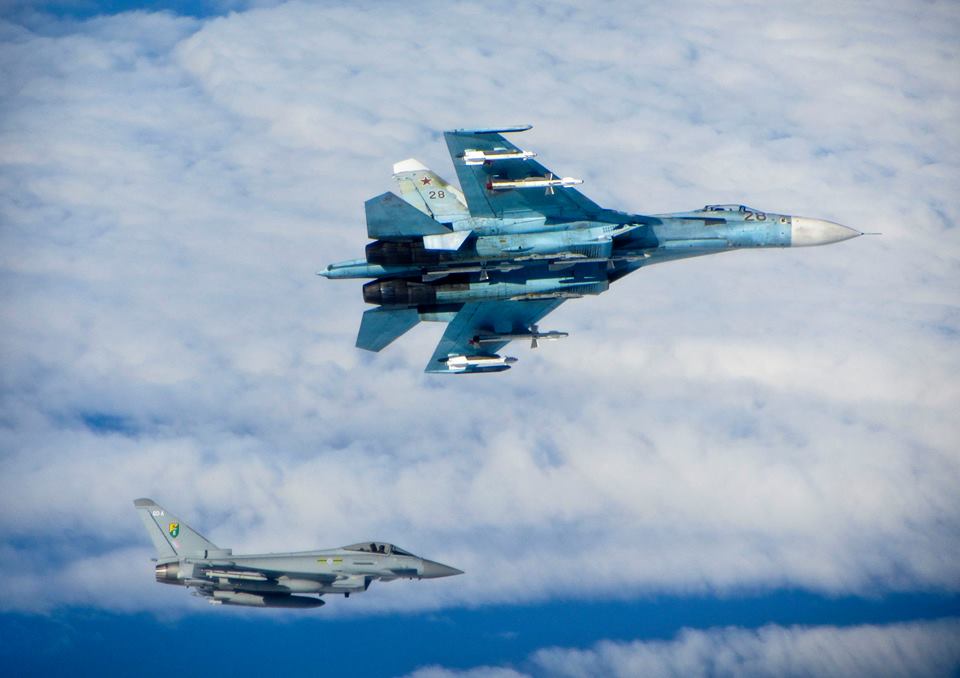
lukosI did not know one could stack BS this high.. the flanker design have one of the best allaround pros of all fighter design if we keep it to Aerodynamic and kenetic performance. And history has proven it has the best roadmap upgrade too.
Also The sheer versatile missions beats the EF shamelessly. The Flanker design was far ahead of its time. One can’t really say the same about the EF, which only now got some rudamentry A2G mission capability.
Its typical for diehard boys like you to only paint your Fav jet in its best situation and only tell half of the story.. i could with ease paint the very same with Flanker, its just the matter of change some load and weight figures. The EF has a very good climb and accel figures, but the Flanker has it too. If you goes in vertical and starts loosing energy, The Flanker suddenly have a far better position due to better lift an lower energy handeling.
It would really be interesting to compair the EF with the Su-27SM3.
The figures of upgraded Flanker are not that transparent. The AL-31FM1 and perhaps FM2 engine should have improved fuel consumption due to new FADEC and other improvements, perhaps even lighter weight as well as improved thrust and TBO hours. Not that The AL-31F bad in any way. It surpassed all its requirements by far at its time.
Btw, remind me how close the EJ- 230 is right now..
A lot of subjective comments with no hard figures again. I think it’s the people claiming an upgrade of a fighter built in the early ’80s is better than a modern day air superiority fighter (built 20 years later) that are guilty of fanboyism. How, how in the name of hell, do you work out that a Flanker has more lift relative to its weight?
Is an empty Su-35 lighter than an empty Su-27 or heavier? The SM2 has the upgraded radar and avionics suite. Given the Su-35 weight, it’s likely to be heavier. They don’t even quote TWR and wing loading for Flankers with full internal fuel because it’s so damn shameful.
The EJ230 is as close as anyone can be arsed to fund. If an export customer ordered some Typhoons with them, they’d be there in a year but when you have a clean TWR of 1.2 with fuel internal fuel and 1.11 with 6 AMRAAMs and 2 ASRAAMs, thrust increase is not that paramount, especially when there’s a +15% WEP setting anyway.
Versatility? Air superiority is first and foremost. Versatility is useless until you achieve it. It’s true that there’s a lot remaining to qualify on Typhoon but again, it’s just funding and range time. Unfortunately it’s difficult to find appropriate test ranges in Europe, meaning that more often than not, a trip across the Atlantic is required. That’s what slows things down. In the meantime EPW II and Paveway IV followed by Storm Shadow (soon to get 2-way datalink) later this year is a good basis to cover off most things.


 Sign In







