 EELightning
Much appreciated, Glendora. What dates were these first flights?
Since little is reported about DASS when exercises are mentioned, one thought it’d be a change to post some snippets from a Typhoon Supplement, November ’13, AIR International.
Located close to RAF Spadeadam, in Cumbria, RAF Leeming is one of the world’s leading electronic warfare training facilities (EWTFs).
Following the success of Exercise Trial Mace XIV in October 2012, attended by personnel and aircraft from Poland and Turkey, Leeming hosted the latest edition in this EW series, Trial Mace XV, for two weeks ending in July. First staged in 1978 to develop chaff (a technique originally developed during the Second World War to decoy radar systems by ‘masking’ aircraft) and held on an ad-hoc basis subsequently, Trial Mace XV aimed to extend the development of Radio Frequency Countermeasures (RFCM) and tactics to enhance the survivability of NATO aircraft in RF threat environments. Aircrew from Belgium, Poland, Spain and the UK took part. Based at Leeming, they made the short flight to Spadeadam’s EWTF where they could test themselves and their aircraft against a variety of simulated threats and targets.
Techniques to mask aircraft have progressed significantly to counter the increasingly complex and challenging threats encountered during recent global conflicts. Trial Mace XV’s main objective was to further the development of self-protection systems for the exercise’s participants and ensure defensive systems are advancing in step with the threats they encounter. Flight Lieutenant Peter Nankivell is a Trials Scientific Officer from the RAF’s Air Platform Protection Test and Evaluation Squadron (APP TES), part of the Air Warfare Centre (AWC) based at RAF Waddington in Lincolnshire. During Trial Mace XV it was his responsibility to liaise with the detachments and personnel at Leeming, the Trial Manager plus other APP TES personnel detached to Spadeadam for the exercise, to ensure the aims and objectives were met. This role involved passing aircraft data post mission to the analytical team at Spadeadam as well as providing feedback and information to the detachment commanders and their engineering personnel. “Our mission is to provide expert air platform protection and survivability advice to the war fighters of all three services through continuous operational test and evaluation,” explained Flt Lt Nankivell as the exercise was ongoing. “To achieve this, the squadron performs two main functions, developing self-protection EW tactics and countermeasures (CM) and providing up-to-date advice on the use of tactics and ECM in an operational context. Trials like Trial Mace XV very much support this because they allow us, in collaboration with other NATO countries, to further enhance aircraft capability to operate in hostile environments against legacy and emerging threats. “The aircraft trials themselves this week have all taken place over Spadeadam’s EWTF.”
–
DASS –
Eurofighter’s defensive aids sub-system (DASS) was created specifically for the Typhoon. DASS is an integrated internal electronic warfare suite which provides comprehensive protection against infrared missile and threat radars using a set of self-defence sensors and countermeasures systems positioned at different locations around the aircraft (see below). DASS is integrated with all of the other avionics subsystems and the cockpit display which has a dedicated format giving a plan view of the battle space showing the pilot any threats around the aircraft. The system is data driven and automated. It reduces the pilot’s work load by displaying what threats are in the battle space, how much of a risk each one poses to his or her aircraft and provides automated cues for countermeasures. Mission data uploaded into DASS adapts the system’s behaviour in response to particular threat systems predicted to be in the battle space and also adapts to any modifications made to those threat systems. It is logical to assume that DASS also records threat data but no confirmation of this was forthcoming from BAE Systems.
Capabilities –
The system provides spherical 360° coverage, detecting and evaluating single or multiple threats at maximum range. Threat location is gained using a high accuracy direction-finding system which calculates and displays the zones of lethality and then automatically activates appropriate countermeasures. DASS thereby makes a vital contribution to the pilot’s situational awareness. The overall system is controlled by a dedicated defensive aids computer (DAC) and interfaces with other avionic sub-systems providing a fully-automated capability to detect, analyse and respond to any threat, even in environments with the highest threat density. The DAC is housed in the avionics bay. DASS is fully user programmable. At national level this ensures complete control of the electronic warfare (EW) software library content, and the best exploitation of mission data. This will facilitate future growth and promises to keep Typhoon viable throughout its service life. Differences in mission data make a massive difference to the capability of Typhoons operated by different nations.
Sensors and Countermeasures –
DASS has electronic surveillance measures (ESM) antennas rated for high pulse-density environments and electronic countermeasure (ECM) jammers housed in the wing tip pods together with forward and aft-staring compact high-sensitivity laser warning and an active missile approach warning (MAW) system. The MAW uses pulse-Doppler technology and is based around three MAW sensors, one in each wing root to give forward coverage and one in the rear fuselage.
Because these are active systems they can detect passive weapons such as infrared-guided short-range missiles as well as radar-guided missiles. Proven clutter rejection techniques are used by the MAW system to ensure an exceptionally low false-alarm rate. The laser warning system is a national fit item and one that has been selected by the RAF. DASS incorporates an RWR (radar warning receiver) system with Super Heterodyne (SuperHet)-based wideband receivers. These are located in the port wingtip pod (front and rear) and within the fuselage, giving full 360° coverage in azimuth and elevation. The electronic countermeasures (ECM) system displays threat information on the cockpit displays and controls a range of coherent and non-coherent RF jamming and expendable options. The system can automatically actuate the most suitable on or off board response to the given threat, and can be manually overridden by the pilot. The ECM system includes onboard phased array active jammers, and an innovative active off board countermeasures sub-system including two expendable towed radar decoys (TRD) which sit in the right hand wing tip pod. The ECM jammer works in conjunction with the ESM to jam a large spectrum of different airborne and set radars but has no electronic attack capability. TRDs have been successfully deployed at both subsonic and supersonic speeds and can be operated throughout the Typhoon’s flight envelope. The TRD in use with RAF Typhoon FGR4s deploys from the wingtip pod on a Kevlar cable containing a fibre optic link and a separate power distribution line. The amount of cable deployed is performance related and is understood to be up to 100m (300ft) long. The DASS’s techniques generator sends commands to the decoy’s RF emitter down the fibre-optic cable. Passive countermeasures include SAAB Technologies’ BOL-500 integrated chaff dispensers housed in the weapon pylons, and integrated flare dispensers housed in the actuator fairings underneath the wing. These can be activated manually by the pilot, automatically by the DAC or by the MAW sensors.
Operating Modes –
DASS operates in three different modes: fully automated, pilot selectable pre-programmes and fully manual. The level of autonomy will depend on what kinds of responses are programmed in for particular threat systems which are based on the information provided by the intelligence community. The pilot has the ability to configure how automated responses work, for example he or she can force a particular type of response, conserve resources or invoke a different one to what is programmed. If, for example, the pilot wants to combine expendable chaff and flares with an electronic countermeasure, the system will automatically assess the resources available on board and select accordingly. Alternatively the pilot can also cancel any automated response.
Computers for the Future –
Typhoon has eight main computers (most of which are housed in the aircraft’s avionics bay), six main boxes and 30 other LRIs associated with DASS, making it the biggest of all the aircraft’s avionics subsystems. All of the computers and the processors were recently upgraded and currently provide a lot of spare computing power for future upgrades. One such Typhoon upgrade already under way is integration of the e-scan (active electronically scanned antenna or AESA) radar. The interoperability between DASS and the e-scan radar will function in a very similar way to how the system works with the current radar. Therefore the DASS will not require any modification to keep it working or to allow the radar to function properly when DASS is jamming. However, the introduction of the AESA radar will enable some DASS functions to use the radar’s antenna, opening up new missions to Typhoon, particularly jamming, and based on the amount of power generated by the aircraft, perhaps limited electronic attack.
– Report by Ian Harding.
EELightning1. Please sources…
Are you really requesting a source for Claim No: 1? Everyone knows this, it’s been widely reported since January ’12. Very easy to find via a Google search.
You’ve started something now, Hopsalot. A certain Troll Princess will be fuming to have been banned right now.
:dev2:
EELightningJust what the Forum needs… *Sigh!*
EELightningSelex ES and BAE Systems have announced they are teaming to provide electronic warfare operational support for operators of the Eurofighter Typhoon.
Electronic warfare operational support, or EWOS, is a combination of mission support tools, processes, personnel and specialized training fundamental to transforming mission data into mission advantage for EW operators.
Under the agreement, Selex ES and BAE Systems will work closely together to design, develop, deliver, integrate and support a potential export customer’s EWOS requirements.
–
“This agreement recognizes Selex ES as BAE Systems’ strategic partner for electronic warfare and EW mission support,” said Ramie Smith, vice president — EWOS, at Selex ES. “We’re looking forward to working even more closely with BAE Systems on EWOS and have agreed to also look at non-Typhoon EW support solutions where there is mutual benefit to doing so.”
EELightningEurope: F-35, Taranis.
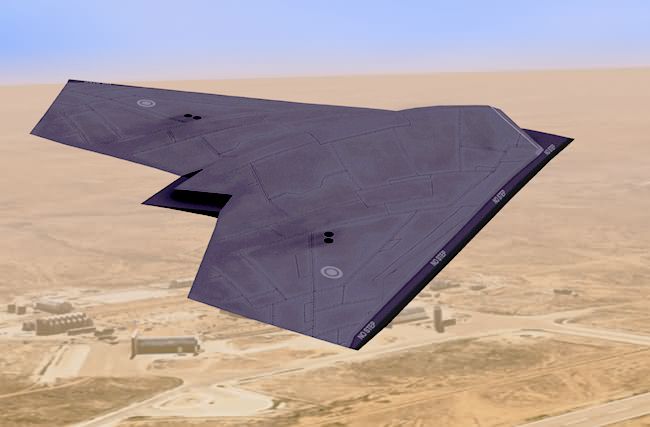
EELightningRegardless if it’s real or not, that is the best scheme I’ve seen in a long time!
EELightningThere have been a couple of posts about that recently. I wondered where the quote was from because it seemed to be written oddly.
I see, I just copied it from Tom Robinson’s Twitter page and pasted it as is. With it being from Twitter and it’s limited characters for each post it’s not unusual that Tweets are pretty blunt and straight to the point.
It’s not just LERX, but new strakes and slightly enlarged flaperons to counter the pitch up moment cause by the additional lift of the strakes and LERX. A positive by product is an enlarged wing area and that the same control authority can be achieved with lesser deflection, reducing trim drag.
Yes, one remembers when you were explaining to me privately some time ago. It was in mind when I was typing out the post but didn’t want to mention those details, without permission so to speak.
EELightningwhats that last quote about?
Adding LERX (Leading Edge Root Extensions) to the aircraft’s wings, they improve AoA and Roll rates. Cassidian (Spain?) started to re-look into these over a year ago, and seems as though to have been ongoing and looked into further.
EELightningA few Tweets from Tim Robinson, Editor in Chief of AEROSPACE:
“Flying at Mach 1.4 @ 55,000ft the sky is not the limit for Eurofighter” says ex-RAF pilot, now EF exec “its the edge of space”
(Note to Scorpion82: Don’t mention this to the Troll Princess over on IDF, she’s having a tough time as it is by Re-Copying and Pasting & posting the same old PDFs that don’t have anything to do with what you reply with in a pathetic, sad attempt to prove you wrong. Be nice!)
“Already v agile Eurofighter could be even more agile- a aerodynamic mod kit would boost AoA limit to 40degs & roll rates pilots ‘never seen’.”
EELightningBuy french Reco NG pod? (kidding)
Why not?…
The RAPTOR pod isn’t much wider in diameter than the 1,000ltr Drop Tank the Typhoon currently operates with, it probably wouldn’t take much effort to narrow the RAPTOR pod somewhat or possibly find ways to make the equipment fit into a Drop Tank shell. It’s thinking out loud a little I admit, but it’s possible.
With regards to Typhoon and the UAE. No officials, all from BAE Systems, Eurofighter GmbH and Parliament, have stated that they’re expecting a deal during the Dubai Air Show or anytime soon for a number of Typhoons during the past few days, quite on the contrary actually. What has been discussed is industrial benefits and partnerships between the UAE and the United Kingdom which involves the Typhoon, PM David Cameron had made that quite clear during his visit as have the likes of BAE Systems & Co, which is the right way to go about making deals in my view. Gaining trust, respecting and taking a steady pace doesn’t hurt anyone.
Some information from Eurofighter GmbH:
Ground tests with the Storm Shadow and Taurus missiles have already been completed, and intensive flight test campaigns will begin imminently. Both missiles will further increase the air-to-ground capabilities of the Eurofighter Typhoon. The first Tranche 3 aircraft will perform its first flight by year-end and Phase 1 Enhancements will be completed within this timeframe. This was announced on Wednesday during a Media Briefing at the Dubai Air Show 2013. The event takes place from 17 to 21 November in the United Arab Emirates (UAE).
–
A major goal of the flight tests is to assess the Storm Shadow in flight and to achieve clearance for the full integration on the Eurofighter Typhoon by 2015. First tests will be undertaken on the Instrumented Production Aircraft 2 (IPA2) by Alenia Aermacchi at the Decimomannu Air Base in Sardinia/Italy. The Storm Shadow, manufactured by MBDA, is already in service with the Tornados of the Italian Air Force, Royal Air Force and Royal Saudi Air Force. It is a conventionally armed, stealthy, long-range stand-off precision weapon designed to neutralise high value targets. The weapon system will add the capability to strike by day or night in all-weather conditions, well-defended infrastructure targets such as port facilities, control centres, bunkers and bridges that would otherwise require several missions.
As part of the Storm Shadow integration programme, Cassidian, the Defence and Security Division of EADS, will start flight testing with the Taurus missile on the Instrumented Production Aircraft 7 (IPA7) in December 2013. Concurrent testing of these two similar missiles optimises the Storm Shadow integration and facilitates the future airframe integration of Taurus. Taurus KEPD 350 is a German/Swedish missile which is manufactured by Taurus Systems GmbH, a partnership between MBDA Germany and Saab Bofors Dynamics. The missile incorporates stealth characteristics and is designed to strike targets such as bunkers and command and control facilities.
EELightningThe first flight of Storm Shadow on Typhoon (IPA2) is tomorrow, 18/11/13, Sardinia, Italy. SR&J trials throughout ’14, full operational service in ’15.
EELightningTaurus will be tested on german IPA7
Your updates are much appreciated, Halloweene!
EELightningTaurus tests to start in a few weeks
Back-to-back/Side-by-Trials with Storm Shadow and Taurus? With the number of IPA available it’s a wonder how they can perform sufficiently without conflicting schedules.
EELightningIt was the first thing that sprung to mind as a product in 2013 that evinces a British design lineage or cultural sensibility. That Minis are actually German now is an ironic side-note that only goes to reinforce my argument. But perhaps you could provide more compelling examples of modern Britishness?
Bear in mind that simply making stuff doesn’t mean anything in the absence of a cultural stamp — else contemporary China would be a great nation, which it isn’t. The iPhone is an American product, regardless of where it is put together. The Swedish game developer DICE is probably the most important in Electronic Arts’ portfolio, and possibly the largest in Europe, but the fact that they’re Swedish is irrelevant — they’re American-owned and make America-hoo-rah games for American audiences. It’s an example of Borg-like assimilation, not a source of national pride or identity. It’s the difference between British television — which is a unique cultural thing — and British film, which isn’t. The former enjoyed (and enjoys) the protections of the state and has flourished as a venue for uniquely British voices, whereas the latter, lacking the protection of the state, was annihilated by Hollywood post-WW2 and today lives a zombified existence as a production venue for largely American productions.
Why don’t you just take a look, do some research, rather than just choke up the thread? Besides, I can’t be ar$ed with typing out a very large list of things and provide details that’d take up an entire page of a thread.
In any case, like I was saying, the Mini is a poor example. In the UK, everyone knows it’s not a British product. It’s simple marketing gimmick by BMW so they can sell their own actual brands to British drivers. We’ve known that the past decade.
EELightningThe new AESA radar for the Eurofighter TYPHOON is entering the system integration phase. During a four-national programme review at Cassidian’s Ulm site the test and integration results of the CAPTOR-E Antenna subsystem were successfully presented to the representatives of the four Eurofighter core nations UK, Italy, Spain, and Germany.
http://www.miltechmag.com/2013/11/eurofighter-typhoons-new-aesa-radar.html?spref=tw
In other news:
https://twitter.com/AleniaAermacchi/status/401021277273456640/photo/1


 Sign In







