 Mondariz
Actually “inline linking” (or hot linking, leeching etc ) is a form of theft if the image is hosted on a server where the site owner is paying for bandwidth used and you do not have permission to hot link.
Linking for a site such as imageshack, photobucket or other image hosting sites is OK, but even these sites prefer you to use thumbnails to reduce the bandwidth used.Preference and law are two different things. An image hoster should expect people to download their images and provide suitable bandwith. You can’t have the cake and eat it. If you make a living hosting images (photobucket, flickr ect.) for people, then host and let people use the service.
That implies that because something is available to the public stealing it is OK –
You are not stealing it, you are linking to the source.
so I have a garden gnome in my front garden. It still is my property but on full view to people passing by. If someone decides they like my gnome and walk of with it that is theft.
Notice how the gnome would be gone from your garden, whereas the image remains on the original server. Thats the difference. It would be more like; I like that gnome, i will show it to my sister.
If someone is bothered by the prospect of their images being stolen from any site they post them to then they either don’t release them or they release them in in a low resolution size and ‘print’ size which is OK when viewed at 72dpi (the average monitor resolution) but would look highly pixelated and crappy if downloaded and blown up for other uses.
Of course watermarking the whole image is another solution – but unless you cover the whole image most single line watermarks can be edited out.Both valid solutions for protecting your images.
I work for a commercial website which has had review images stolen by other sites and posted with no credit or link to our site. We have pursued sites which have done this and have successfully had the images removed.
Were they inline linked, and did you need a court order to get them removed?
I suggested for a long time that watermarking was a good idea and recently these have been added to the images. Now if a site uses our images the source is known.
Best way to prove the ownership and few prof sites would display images containing the watermark of another site.
…
MondarizSorry Mondariz, several of your assertions are simply not correct.
Bandwidth theft isn’t a good idea.
Presenting an image even when hotlinked in a website without acknowledgement, credit or permission can be a breech of copyright.
English law, and Crown Copyright are completely different to US Law and state copyright, and the same differences occur in, for instance, Australia and Denmark.
I’m not interested in debating (yet again) copyright law here – suffice it to say I can and will prosecute under the appropriate law anyone who breeches my copyright; on occasion, I’m happy to help, as far as I can, a specific person such as in a case like this – with specific data.
Again, I would be interested to hear from cotteswold (not someone else who wasn’t there, surmising from one statement) what was presented for whose profit at a signing, or if it was an ‘extra item’ and any other relevant info. By PM if not on a public forum.
People are prosecuted for copyright infringement at signings, on the internet and so forth, and ‘everyone does it’ and ‘I didn’t know’ aren’t good defences. Likewise while the internet is an open area, that won’t help you if you break the law, are caught and prosecuted.
If you aren’t thouroghly familiar with the applicable law/s, or a professional in the field, it’s foolish to pontificate on the matter in absolutes. (BTW, that includes me. :rolleyes: )
Regards,
I would be delighted if you could point out my incorrect assumptions, rather than just informain me that you think its so.
There is no such thing as “Bandwidth theft”, its a made up concept without any legal implications. There have been cases, where this behaviour has been ruled against, but that was concerning actual website “hotlinking”, like when various pages import wikipedia data and display it as their own (although its legal with wikipedia data). Single linking of an image has never been an issue.
It is not a breech of copyright to inline link an image. Although its considered appropriate to acknowledge the source.
I also did say, that British law differed from US law, but crown copyright runs 50 years from the publishing date. Litterally any US wartime picture is now public domain, no matter who owns the original picture. Assuming it was taken by a serviceman on duty.
MondarizFinally I would like to advice forum users to use Inline linking, whenever they are in doubt about the copyright status of an image.
This means that the image in the post, is actually downloaded from the site where it has originally been placed.
An example:
Here I link to my own photobucket account, where I store a picture.
[IMG]http://i183.photobucket.com/albums/x217/MONDARIZDK/Western_Lysander_ExC…]
I have omitted to close the [IMG] tag so you can read it.
This next picture is copyright protected, so Im unable to use my own photobucket account for storage. Luckily the owner has stored the image for me.
Here is the image on that users account page:
http://www.flickr.com/photos/matthewphx/287322950/
And here is a Inline link to that particular image file:
http://farm1.static.flickr.com/113/287322950_608f9a8e88.jpg?v=0
Inclosing that URL with [IMG] tags I can simply link directly to that location:
[IMG]http://farm1.static.flickr.com/113/287322950_608f9a8e88.jpg?v=0%5B/MG]
(I have now changed the inline link, so it serves as an example only eg. no picture actually displayed)
This is a fully legal way of displaying images, even if they are under copyright protection, as they at no time are copied from the original location (besides when they are viewed). Linking is fundamental to the workings of the WWW, so if people want full control of their images, they should not be online.
MondarizRe-selling wartime images is quite common. Here are a few high quality Public Domain images, that are fully legal to copy and sell on Ebay. I guess you would be paying for the paper and ink.
And lovely pictures they are too.


MondarizAlthough any picture by default is protected by copyright, there are plenty of pictures, where the creator releases the picture under another licence.
The pictures below is released under GNU Free Documentation License, which allows anyone to use it, even commercially (limited to 100 copies in print, unless the original image data is provided, so practically unlimited when sold as the Ebay pictures linked above – one by one prints).
There are a number of variations of the GNU licence and even licences with unrestricted use, such as public domain.
I feel its a good idea for forum users to familiarise themselves with these licences, as it could save Key Publishing some trouble.
Most wartime pictures taken by US servicemen are now in public domain, due to the government legislation in place:
“An image or file if a work of a U.S. Air Force Airman or employee, taken or made during the course of the person’s official duties. As a work of the U.S. federal government, the image or file is in the public domain.”
I think Britain have a slightly different legislation, but basically they have a 50 year copyright span.


MondarizTalking about violating copyright laws: we frequently see people taking pictures from books or postcards; beefing them up a bit and then listing them on Ebay. This is one of the breed who is really getting on my nerves:
Are these pictures copyright protected?
Otherwise he is legally able to sell them as he does. He can take any public domain item and sell it for profit, there is nothing illegal about that.
There are also a small “industry” producing DVD movies from films, that no longer have copyright protection (for various reasons). This is perfectly legal.
I just wonder who pays for something free?
Mondariz“Although if you change the image, even slightly, you are entitled to copyright for the new image”
Not true, for obvious reasons.
People (generally those not creating copyrighted material) have a lax attitude to copyright. If you breach someones copyright, it’s theft, that simple.
The problem is that digital copying is part of WWW technology. Every time you view a picture online, you have downloaded a copy of the data wich produces the image. Protecting the copyright on digital material is litterally impossible (this does not mean its right to copy other peoples work).
There is a sharp line between copying and theft. When something is stolen, if does no longer reside in its original place, but when its copied, it is actually cloned and reside in two places. What you can say is, thats it can inflict a loss of earning.
Please to not take the following as my opinion, but as a general online conception about copyright and common access computer networks.
The current concept of copyright does not adapt well to the structure of digital networks. Since its impossible to change the network to suit current copyright issues, the implementation of copyrights will have to change.
Copyright holders should be looking for an enhanced “first publish” fee, so as to compensate for the release to a digital media.
There is no “lock”, or other protection that will prevent digital copying. If its digital it can be copied without loss of quality.
Just as copyright was initially invented to prevent others using an original work to suit the situation then, the copyright retaining and issuing body, will have to come up with something that suits the new situation. Claming moral issues is all very well, but it will not prevent copying of the material.
It will not be the copying community that looses this “fight”, but unless new types of regulation and compensations can be implemanted to ensure proper financial compensation to the creator, the basic idea of copyright will die a slow death.
Clinging to a archaic legal protection is not the way forward, but adapting to the new conditions might prove valuable.
Again, this is not my opinion, but the general ideas floating out there on the WWW. I do however belive they are right about the need for changing to suit the new situation, but I do not have a solution.
Mondariz“Although if you change the image, even slightly, you are entitled to copyright for the new image”
Not true, for obvious reasons.
People (generally those not creating copyrighted material) have a lax attitude to copyright. If you breach someones copyright, it’s theft, that simple.
I was ofcause talking about material not otherwise copyrighted, like a wartime photo.
I can change a public domain pattern and obtain copyright protection on the resulting item.
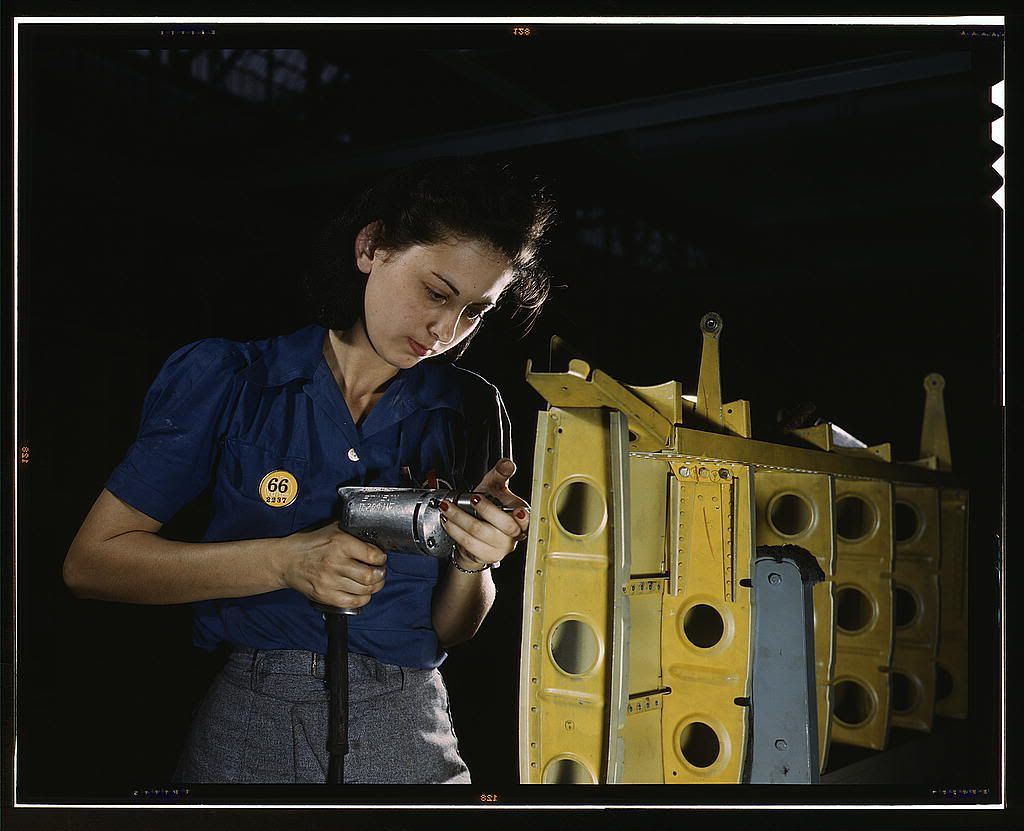
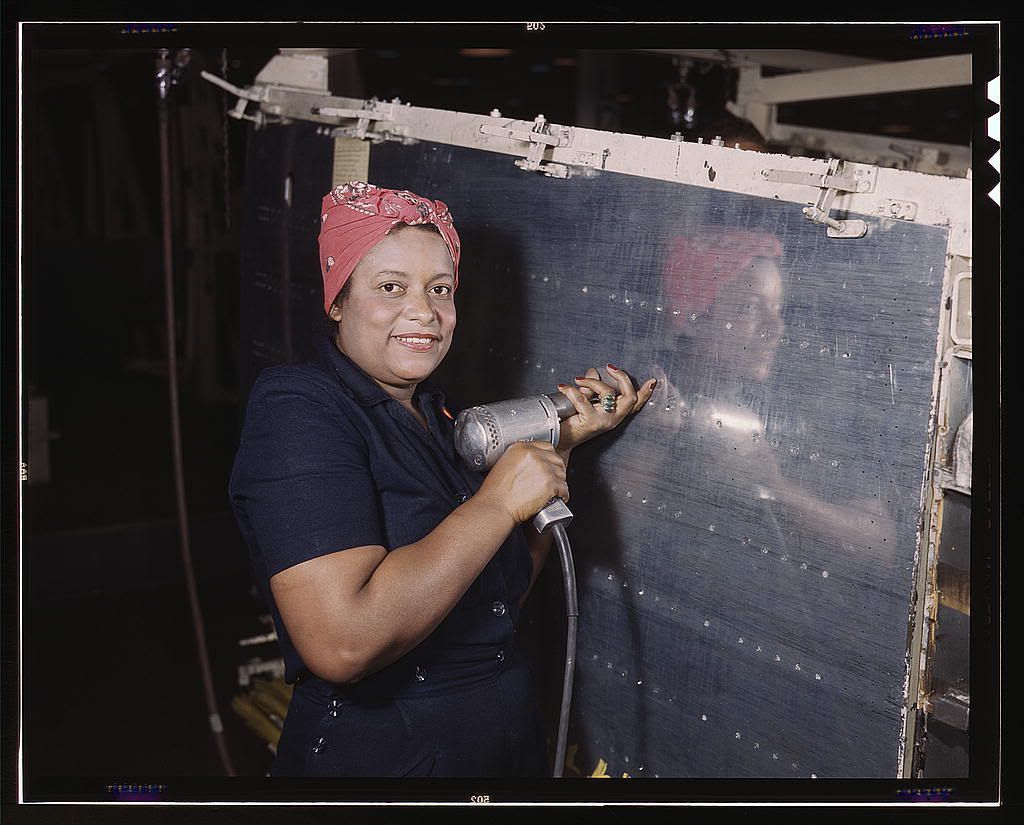
MondarizAcording to the following text for each picture, these girls are not models, but actual workers. Although they might have been informed about the shoot and had time to sort their hair ect.
The first post have a link to the Congress library, where you can find the images and the text for each image, most women are named.
I don’t know if they are in a book, but you are right in saying that they should be. Maybe one of the forum writers should look into it, or I might actually try my hand on a short article (maybe for a website).
You are right about the assemblies remaining identical 8almost), I had a spell as a riveter at Bombardier in Belfast, and thats what we did 12 hours a day. At that stage i had been 10 years in aviation, but I was still surprised to see how much work was done manually – guess thats why they gall it fitting.
MondarizGreat photos and slightly scray too…..imagine if!
MondarizThe image in question is a drawing AFAIK. It looks like a professionel job too, so here we are dealing with the actual issue of copyright. Namely that the artist could have made, or even should have made, a profit from the use of the drawing. There is a loss involved, or at least a percieved loss.
Naturally everyone is protected by those copyright laws, but if I upload an image taken at Duxford, I would not actually loose anything if someone made a copy. Actually I would be delighted if someone could use my picture. Thats why I upload my aircraft images to Wikicommens under a “fair use” licence, which means “go ahead and use it, but don’t use it commercially”.
Just because you hold the copyright, you don’t need to exercise it. Please also consider, that the actual “profiting” from illegally copying aircraft images is almost nonexistent.
Also you do not automatically recieve copyrights to images taken by others. Anyone who collects wartime photos (car boot sales, Ebay ect.) have no legal copyright to those images, which in most cases are taken by unknown persons. they can prevent their distribution by uploading low resolution copies, or by watermarking the images with their name (but not copyright). Although if you change the image, even slightly, you are entitled to copyright for the new image.
The bottom line is, that people who have no economical income from their images, should maybe consider their gain from copyright protection. I have often been on websites, where the images are nearly unviewable by copyright notices and watermarks in order to establish ownership. Thats a shame.
I think you should ask your artist friend about what he thinks, before deciding about refusing to sign them. Its also possible that the person asking for your autograph, was unaware of any copyright infringement. Lets say that he owns the book with the drawing (or in other ways own a legal copy), which he do not want to use for the autograph, how would you classify this infringement?
MondarizJust as well Xmas is approaching….
The JU 52 is most likely restorable (they all are), but I guess you mean if its economically viable, which I wouldn’t think it is.
The again, she might just get a buyer who don’t give a hoot and simply spend what it takes.
MondarizCopyright law is equally valid online. However, it is sometimes difficult for people to know what level of protection a picture, or drawing, has, as some work is released under “fair use”, or other copyfree licences.
Many people retain copies of pictures found online, for their own personal use (although this is technically pirate copying, it the work is protected). Basically thats what you do when viewing a picture (it needs to be downloaded, otherwise you cant see it). So its a fine line between actually copying and simply viewing the picture, in both instances the picture is residing on your PC.
Besides that, you are right in saying, that credit should be given to the original creator.
MondarizWelcome to the forum, Im sure someone here can help you (unfortunatly I can’t).
Maybe you could post a picture of the tags, that way it would be easier for people to help you.
MondarizAnd another batch.
Thats the spirit, bring your own air-line (always in short supply).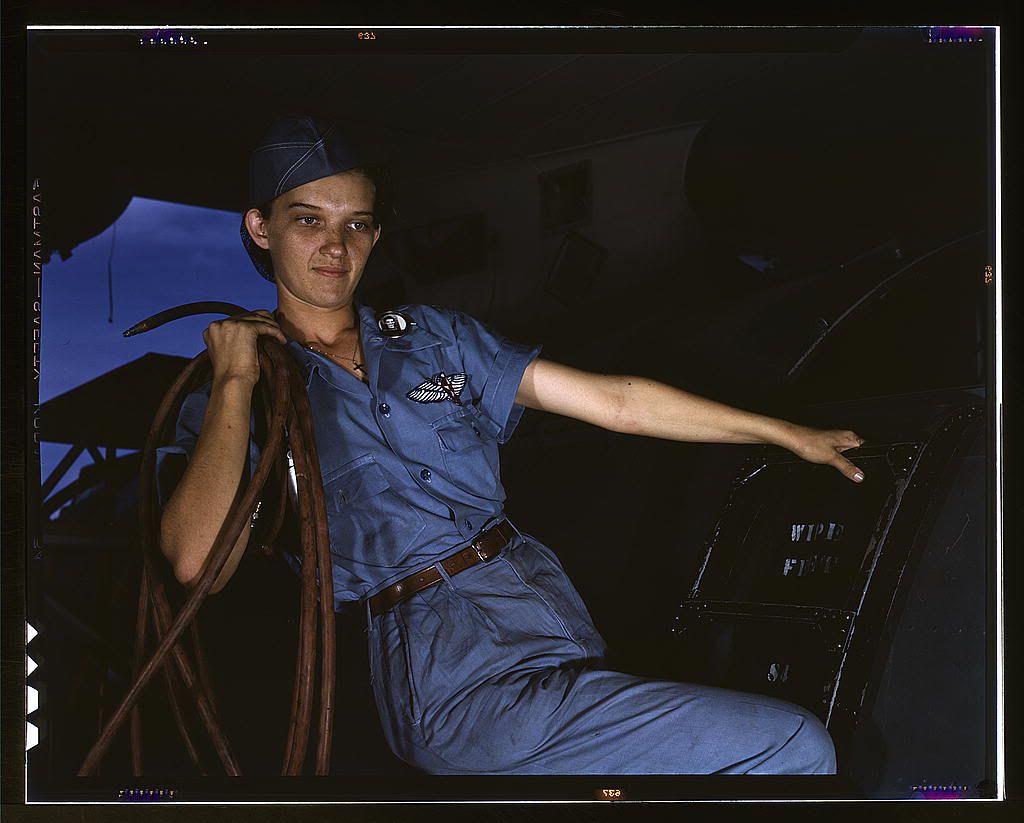
This one is a heartbreaker for aviation buffs!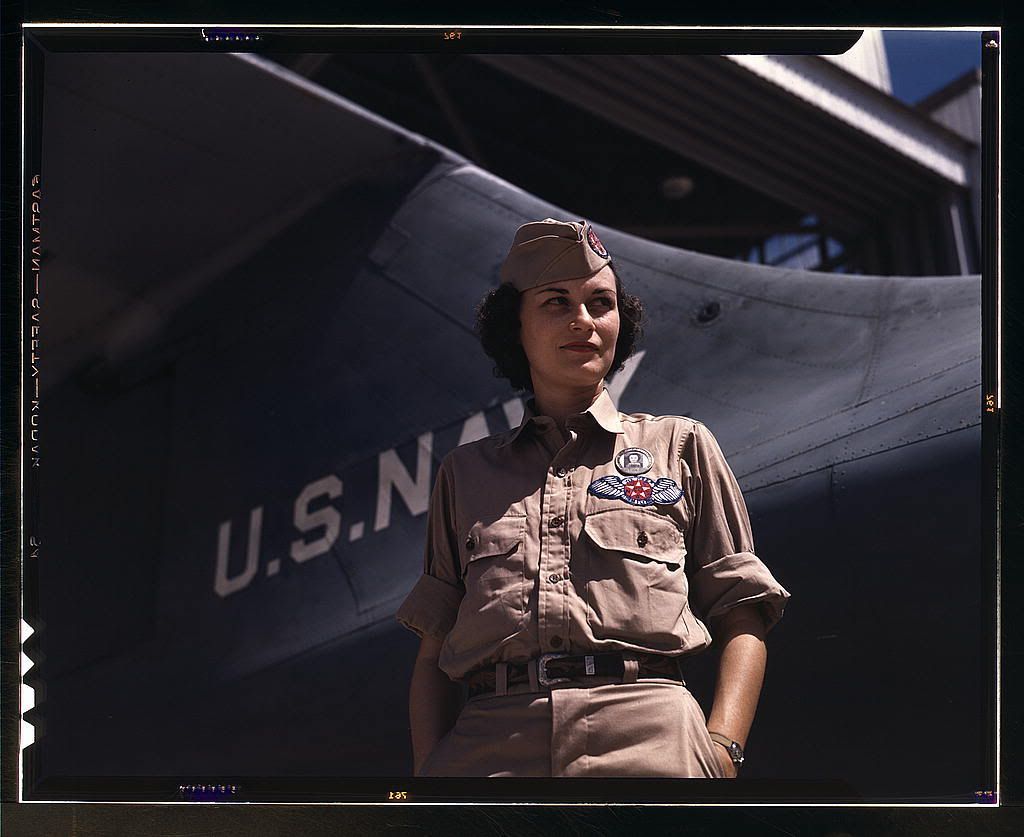
The only girl who actually seem to be working, rather than just holding some tools.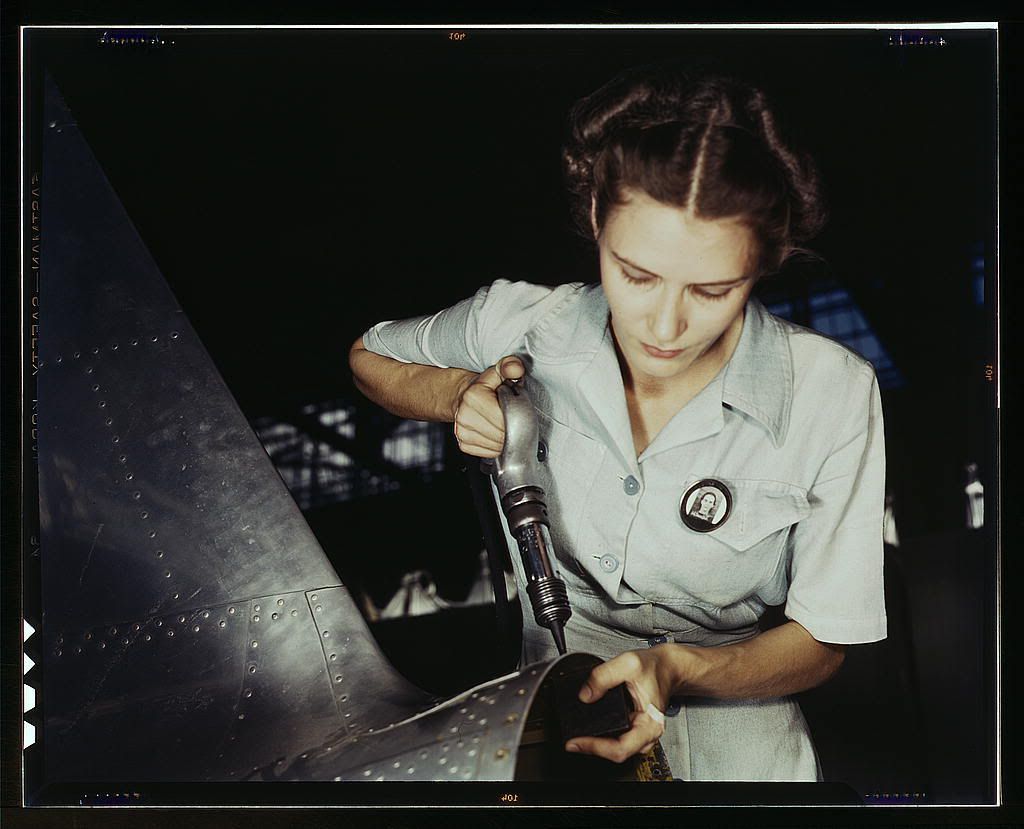
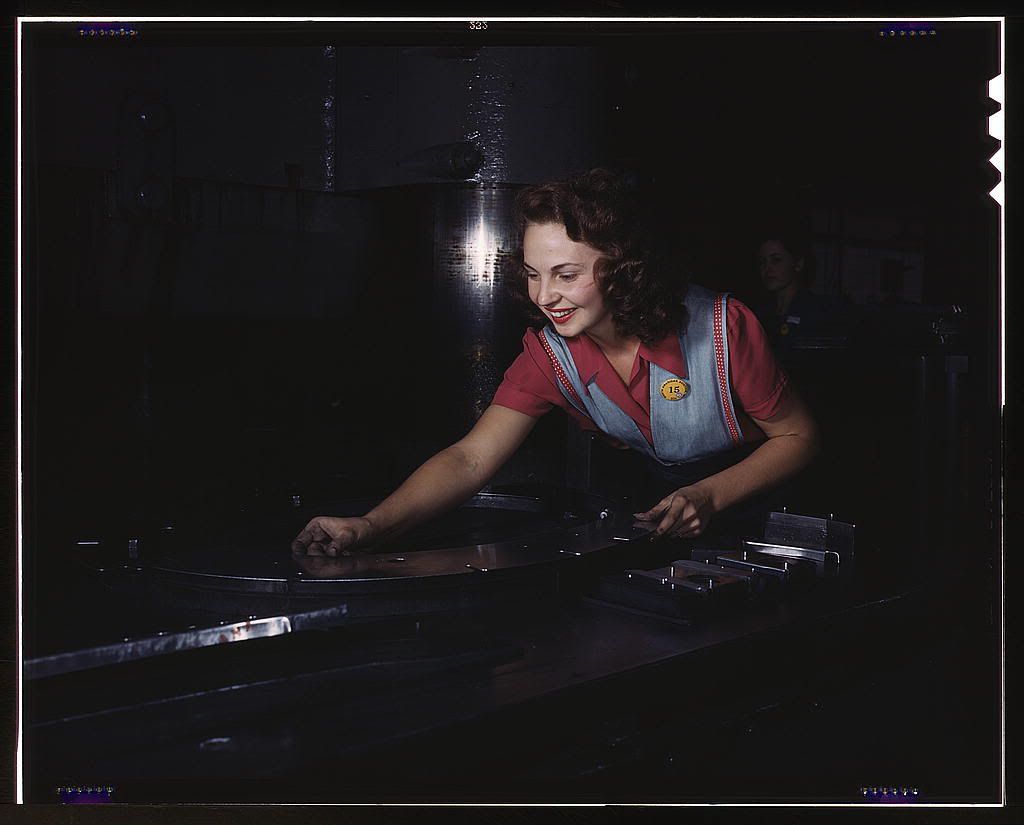
Well, this one seem to be working too.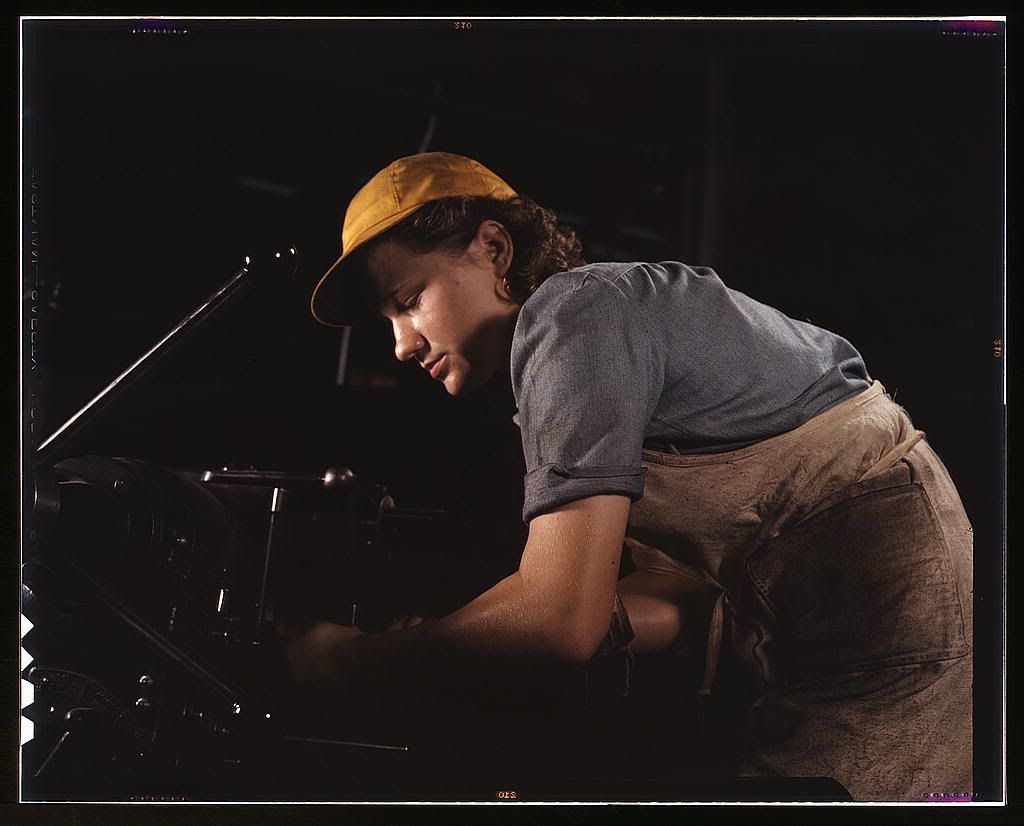


 Sign In








