 Mondariz
What are “dual-use Merlins” ???
A Merlin as an engine need not be used in aviation. Its just an engine.
That was all i meant.
I could imagine 1000’s of things a powerful engine could be used for in post-war europe.
MondarizWithout wishing to pour cold water….I have been on more than a few searches for wrecks buried on airfield dumps, engines chucked down cellars, thrown into ponds etc etc etc than I could shake a stick at. I am afraid that these tales seem to be 99% myth, 0.5% fact and 0.5% disappointment. The last buried aircraft site I was invited to attend a “dig” on produced tons of coke waste from the airfield domestic boilers, broken crockery and tins cans…..despite assurances that all manner of aircraft and engines had been dumped there! The only buried aircraft (Spitfire) that turned up, as far as I know, was at Kenley although this was, in any event, pretty well documented. True, a magnificent find but a one-off in the UK I fear. However, claims that Lancaster fuselages had been located buried nearby went strangely quiet….as did the “buried Lancaster wrapped in Hessian” story from somewhere in the Midlands I think.? That must have been a heck of a lot of hessian, and why wrap it in sacking anyhow??? Tales about old railway tunnels filled with aeroplanes in Hampshire and Luftwaffe aircraft parts from Farnborough dumped in Fleet Pond….nope…I don’t buy it. I remain an aircraft buried/chucked in a lake/thrown in a quarry/whatever sceptic. Would love to be proved wrong, though!
I think i pretty much support your view (and thats without ever taking a shovel to the clay aircraft-wise).
However I do love those stories, and maybe some day, something wonderfull will be found. I’m pretty sure it won’t be a military dump-site, as they were mostly burnt before burial. My hopes are that some “semi-gangster” managed to cut a deal with someone in the disposal office and those items are still in a German basement 😎
Deals were cut in this way. Mostly for fuel, tires and other items generally in great demand with the civilian population.
Following the above idea, I have no prolem imagining a businessman purchasing a number of Merlins, or other dual-use items. Perhaps even a few aircrafts.These are the “missing” items I hope will be found.
As late as 1951, a Danish scrap merchant got permission to salvage a ditched HE-111, which for some reason had not been reclaimed by the Germans after the ditching. Not sure what became of it (likely it was scrapped), but other similar situations could result in an aircraft ending “in the back of the shed”, or at least substantial parts kept for “business reasons”.
I also remember a British bomber, which was turned into a shed in Holland (not much left, but still it proves that people can have other designs on surplus aircraft).
MondarizCertainly not true after W.W.II, while after the Great War the intent was to prevent a German military resurgence, however much of an overkill there was.
In both cases the postwar ‘market’ was over-saturated and the Allied Powers did not act in concord. The factors for the disposal of Lend Lease materiel (for instance) is worth further study.
Regards,
You seem to be very quick at correcting other peoples posts. Are you in the possession on the big book of facts?
I have seen documents the effect mentioned in my post. I do not make up parts of history to suit my postings here.
The allied had no interest in leaving Denmark (those are the documents i have seen, but i assume that goes for other smaller nations) in possession of a fully functional air force containing the ex-luftwaffe inventory.
There were talks about using luftwaffe material to re-start the danish air force, but the new owners of said materials (the British victors), had no interest in this solution.
Trade intereste were at stake. Maybe not the direct sale of surplus war materials, but the future dependence on British and American materials.
Sure there might have been other considerations, but those i mentioned are certainly not INCORRECT.
MondarizI found another bit of information regarding aircraft disposal in the UK.
“Radioactive material is extensively used by MOD as a luminising agent to provide a
lightweight light source that operates independently of any external power source.
Radium, promethium and tritium have been the main radioactive materials used for
this purpose but other isotopes may have been used. Radioactive material is also
used in electronic equipment, particularly in valves. After the Second World War, a
lot of military equipment was taken out of service. This involved the dismantling of
the equipment, generally for scrap value before burying the remaining wastes.
These wastes were often burnt prior to burial, to reduce the volume. Burning was
commonplace at MOD sites as this was the accepted method of disposal of surplus
items in the UK, and was industry standard practice. Redundant military aircraft have
been burned on aerodromes, particularly in the south of England.
Defence Estates, who manage the land for the MOD, are currently undertaking a
programme of Land Quality Assessments on all current defence sites. This
programme actively identifies and manages MOD land which is both radioactively
and chemically contaminated. It is unlikely that there are any unknown sites. “
This means that there are lists of sites and most likely an estimate of the materials.
MondarizIts in no way impossible, to uncover war materials.
Guess we will have to wait for the photos.
MondarizHere is a bit more about the recycle plant:
“On the subject of recycling, I found out after the war that a large, storage depot-type building nearby had been used for that purpose. It was not, however, the usual sort of recycling. It was sited where the Ministry of Defence Spare Parts Depot stood for many years afterwards. It was guarded night and day by soldiers and had a gun battery, so I knew it was — to use wartime jargon – a very ‘hush hush’ establishment. I believe that Lord Nuffield had something to do with it. I used to see wagonloads of scrap going by on the railway en route there.
Its official title was Metal Reclamation Unit No 2. Irrespective of nationality, all aircraft, which had crashed in the North of England, were taken there. The metals were separated and melted down ready for re-use.”
MondarizSome interesting comments here:
http://picture.stockton.gov.uk/photos/S868.aspx
Anyone know anything more about this location?
Yes, that is a very interesting collection of comments, and it was actually something like this i was looking for.
The reason for scrapping surpuls war materials (in particular german aircraft), was that the allied had plenty they wanted to sell. The aircraft was for a large part, scrapped on site and then removed to the recycle plant.I can easily see situations, where this procedure could not be followed, and that a landfill was used instead.
Did they dispose of new Merlins?
Maybe not. Those engines were used long after the war (not just in aviation) and would have represented a certain value.
Did they dispose of low hour Merlins?
Almost certainly. With the number of surplus new engines, it would have been cheaper to replace the used engine with a new one.
If someone in the area (Urlay Nook) raised questions about soil contamination, there would have to be an inquiery. These landfills are no longer military secrets (if ever they were), and pose a real environmental danger. Unless its on a defined military area, like a proving ground, or firing range, there is no way an environmental investigation can be denied.
MondarizA friend’s Boeing 40 transport.
Manufactured in March 1928, it crashed in dense fog onto the summit of Canyon Mountain in Southern Oregon on October 2, 1928.
The pilot was badly burned, the passenger, a diamond merchant from California, was killed. Most, but not all, of the diamonds were recovered.
The pilot recovered from his injuries, but never flew again. He remained with United Airlines, the successor to Pacific Air Transport, until retiring in 1968.
As you might expect of the time, locals visited the crash site taking souvenirs. The rear of the steel tube fuselage was taken away and served as a piece of ad hoc playground equipment in a nearby town.
Eventually, it was forgotten.
The wreck lay abandoned until the mid 90s when an Oregon historic aviation group recovered it.
After storing the wreckage in a number of places, including a horse trailer, they heard that antique aircraft restorer Addison Pemberton was looking for a Boeing 40. Hoping to place the remains in a good home, the wreckage was sold to him. Pemberton, the owner of an aerospace manufacturing firm, had been looking for a Boeing 40 for years. He had begun restoring aircraft while still in university; in the years since he had restored everything from a T-6, to several wartime Stearman trainers and a rare 1931 airmail Stearman, to an award-winning Beech Staggerwing.
Eight years and 18,000 hours later, last month, the Boeing flew for the first time in almost 80 years.
A couple of years ago, a woman from Oregon appeared at Pemberton’s workshop. She showed him her a diamond ring. The stone was found by her father at the crash site. He searched for months hoping to find one so he could give it to his fiancé. It was the only way he could afford a diamond during the depression.
It’s the only flying Model 40, out of three survivors, and the oldest operational Boeing aircraft.
Great story complete with a tale of an actual diamond treasure 😎
Sometimes I tend to forget, that historic aviation is more than WWII.
I’m happy to hear that a Boeing 40 is flying again, it would be an aircraft I would like to see.
MondarizNB: I’m not commenting on the specific project.
The difference in money needing to be spent getting from X to Y is Z. Z is often, depending on factors, significantly greater than the gap between X and Y.
A perfect restoration of a Spitfire to static will (if there’s no paperwork and the work was not signed off as airworthy, or not done by qualified staff, or not with airworthy quality materials and paper saying so) need to be torn down and redone. The cost of this we’ll call ‘A’, which is, indeed, going back to the start, and is in addition to Z.
A completed flying aircraft is worth more (even allowing for the cost to complete difference) than the same aircraft complete but as a not-flying project.
Warbirdnomics is undertaken for real by the buyers and sellers. Insurance has a limited insight to aspect of it, but certainly not the full story. Reporters (such as myself) and experts (such as Bruce & Mk.12) have a certain amount of understanding, some of which is for publication, and some of which isn’t. Close observation and seeing what people do with cash and projects and not what they tell you is eddicational, over time.
Regards,
I fully understand that a restoration project can exceed Z, but I was not speculating about restoration cost, just the price of an avarage Spit (not BoB veteran and not associated with anything/anyone famous).
I completely fail to understand, why that should be considered a secret :confused:
I guess I’ll have to wait, untill one is for sale on courtesy aircraft, or some place like that.
MondarizI’d say for certain it was the recovery of Piper L4H 44-79580 from a barn in the back end of Ireland with its subsequent mighty return to england….
….but thats only because I did it, and I own it! It was nothing special to most, but it was special to me.
FB
Thats a cool recovery too. maybe not a great adventure (although Ireland can be quite an adventure).
How about a few pictures (before and after maybe).
MondarizAnd for me that was working on AD4 Skyraiders in Chad in 1988 with didier chable, we’ve been staying there for weeks working in harsh conditions in order to get these birds back into order…the first pre-oil then startup happened at night, all the air force people stationned there were looking at that event…i have such wonderful videos about that adventure…
Hi Yakman,
Any links or pictures from that recovery?
Able Dogs are on my top 10 list (strangely there are almost 100 aircraft on my top 10 list :p )
MondarizHalifax W1048 from Lake Hoklingen, if only there was some footage available. That would be fantastic. The recovery of Wellington N2980 R for Robert from Loch Ness. Two years ago when on holiday there, all aboard a boat where scanning the lake to see the monster. In the meanwhile I was talking to the captain in the cabin as he had been a diver during the recovery of the wreck. He was very amused about my interest in the “other monster” 🙂
Recoveries from underwater are magical and may more discoveries be made.No apologies for bringing up these topics matey;)
CheersCees
yes, lets hope for lots more magic in the future.
Here is a good site (with pics) about W1048
http://mysite.wanadoo-members.co.uk/archie_bombercommand/1048tls_continued.html
I#m seriously considering taking up diving :p
Unfortunatly most wrecks around my part of the world (Denmark) are saltwater wrecks. Not a great combination, but there are a few hundred in the waters around Denmark. Most broken up or corroded heavily.
MondarizI would say the Brewster Buffalo BW-372 recovery deserves a shout. It was certainly amazingly well preserved, and in remarkable condition. A very historic airframe too.
Cheers,
Richard
Without doubt a very special story:
Here is the Wiki entry:
“Surviving Brewster Buffalo are extremely rare, as their construction quality was generally poor, and most were quickly dispatched to foreign military service. It was long thought no intact Buffalo remained, but during Summer 1998, a Finnish B-239 (serial no. BW-372) was discovered in a Russian lake, Big Kolejärvi, about 50 kilometers from Segezha, Russia. This aircraft was identified as one of the 44 Model 239s sold to Finland during the Winter War.
On 25 June 1942, BW-372 piloted by Lieutenant Lauri Pekuri was in a formation of eight Brewsters that encountered a mixed squadron of Soviet Hurricanes and MiG-3s. In the clash, seven Soviet aircraft were damaged. Lieutenant Pekuri shot down two Hurricane fighters (he had to his credit 18 kills, including seven Hurricanes) but his fighter was hit by heavy cannon fire from a MiG-3 and he was forced to ditch the burning Brewster in Big Kolejärvi lake. Pekuri survived with minor injuries and managed to walk 20 km to the Finnish lines.
The aircraft was recovered from the lake in 1998, and after extensive negotiations with Russian officials, it was finally transported to the United States. The Brewster fighter finally reached the Naval Aviation Museum in Pensacola, Florida, on 18 August 2004. After discovering the historic nature of the aircraft, original plans to restore and display it as an F2A from the Battle of Midway were quickly dispensed with. The museum plans to reassemble the Brewster and display it exactly as it came from the lake in Russia. Damage caused by enemy fire and subsequent crash landing will not be disturbed. As near as possible, it will be fully authentic and original and instantly recognizable as a Finnish Air Force B-239 at a point in time when it made its last flight in hostile skies and settled to the bottom of the lake.”
I wonder how they tracked her down?
Or maybe she was found by chance.
MondarizAnother of the big ones, is the “Swamp Ghost” recovery. AFAIK they are still trying to get in out of PNG, but in essence they have recovered the airframe.
Pictured here as she lay for decades.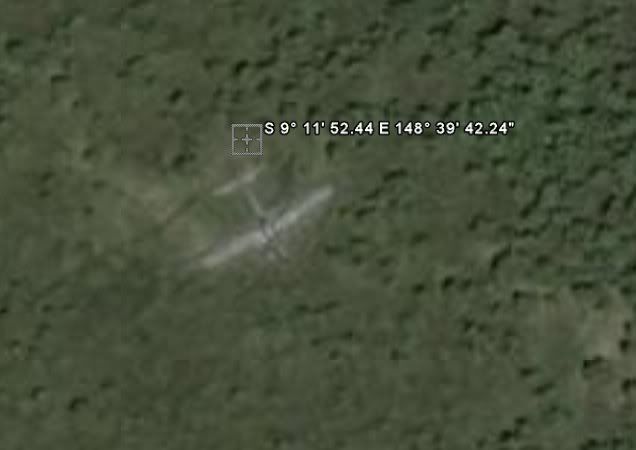
Link to her home on the web:
MondarizHow about recovery of Halifax NA337 from what was it something like 2 miles down in a norwegian lake ?
224 meters according to this article:
Still its another amazing recovery.


 Sign In







