 MiG-23MLD
Both were/are interceptors with little agility compared to the standard of the 70s.
Big enough to carry a usefull radar for that task and the bigger AAMs related to that. The Su-15 was unable to cope with the growing weight demands of that and the performance specifications were lowered accordingly. The missions of the Su-15 could have been fullfilled by the later MiG-23s with ease as the MiG-23P did show. 😉
I would not say the J-8II can not beat an F-4E or even MiG-23ML, in my opinion if the J-8II would had been deployed in 1968 would had been an equal of the F-4 and MiG-23, but definitively when it was deployed the Japanese F-15 and Taiwanese F-16s were more than a match for it.
I think the J-8II in 1990 was as capable as the MiG-23M and F-4E of the early 1970s
MiG-23MLDThe more nice-looking the more agility……
I like both designs, the J-8II is a nice looking aircraft in fact i have to say the chinese also have nice looking aircraft, but the Su-15 is not ugly.
It might be less agile true, but not because the Russians could not make it more agile it is simply the J-8II was obsolete for 1984 and by 1984 the Russians did not see any need for any advanced versions of the Su-15 having the Su-27 and MiG-29 while the Chinese needed to make it the most agile they could.

MiG-23MLDThe aft body design of the MiG-23 looks solid and state-of-the-art, while that of the J-8 looks like a big piece of disaster. If the copied, they obviously missed the mark.
Aft body design has very noticeable effect on transonic and supersonic drag.
Well the original Ye-150 and also the T-5 had empennages similar to the J-8I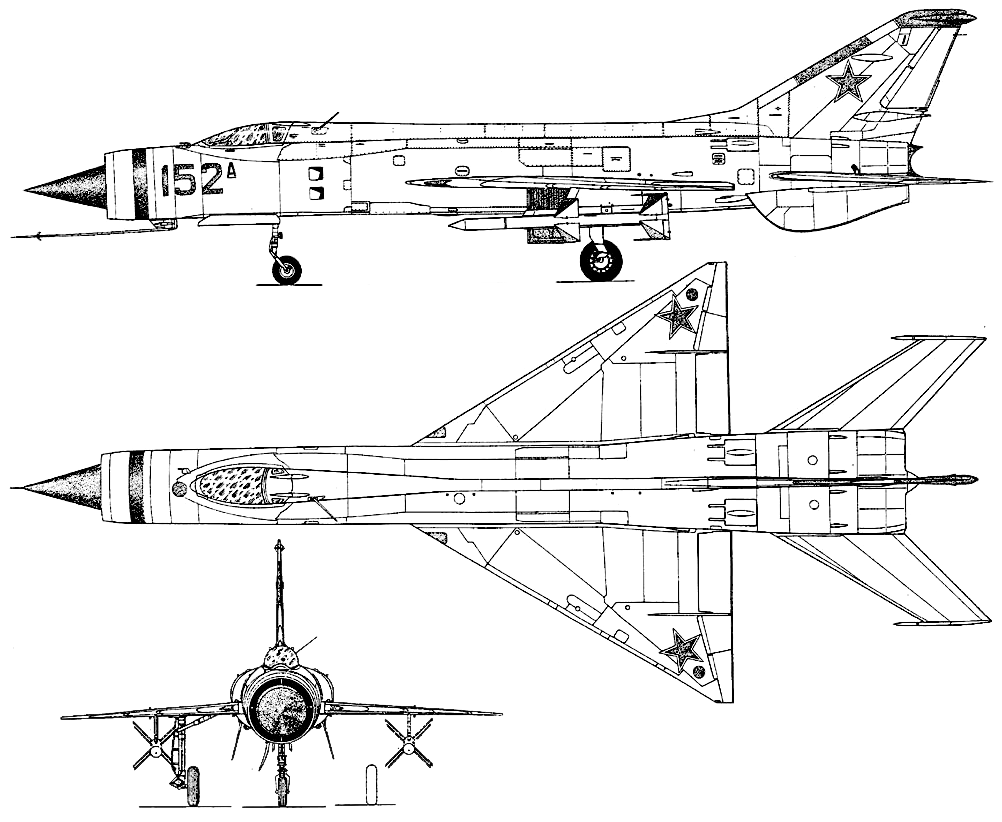
and this was a 1960s early design trend copied by the chinese

The Su-15 was also similar in that sense
MiG-23MLDSaying the J-8II resembles a MiG-23 is like saying a sparrow resembles an owl. The J-8II and Su-15 have identical lines whereas the MiG-23 only resembles the J-8II in that it is a jet fighter. The MiG-23 is a distinctive Mikoyan design. The Su-15 is a trademark Sukhoi design. The J-8II definitely resembles the Sukhoi style, well, because its a clone of an Su-15.
Long winded replies with lots of unrelated pictures do not prove a point MiG-23MLD. People have been trying to get that point across to you for ages. At least the picture buffs get something out of your posts.
Madrat
There is not hot historical evidence the Chinese got a Su-15 niether they got advice by Sukhoi at any moment.
The reason i posted the pictures is because chronologically, the Su-15 was based upon studies made by Sukhoi on the T-5 and T-49.
later on Sukhoi took that experience into the T-6 and this was followed by the Su-24.
MiG did something similar, the Ye-152A was followed by the MiG-23PD and then the MiG-23-11.
Shenyang based the J-8I upon the MiG-21 and some say the Ye-152A, later on they used the MiG-23MS to reverse engineer the inlets and ventral fins on the J-8II.
It is a fact the MiG-23MS was studied in China, some russian articles claim the J-8II was influenced by the MiG-23.
The Su-15 has different inlets but the J-8II and MiG-23 almost have the same inlet design.
The J-8II and MiG-23 have also the same ventral fin.


It is not a coincidence it is simply a fact they copied and blended the MiG-23 with the J-8I
MiG-23MLDWhich is quite a lot.
MiG-23 and Suchoi 15 were not designed on two different worlds. Both MiG and Sukhoi benefited from research done at TsAGI and other. MiG-23 and Sukhoi 15 are very comparable in used technology and overall performance criteria, apart from the swing wing for better take-off performance for the MiG. The differences grew when the MiG-23 became more like a fighter. The PVO finally operated MiG-23P and Su-15M alongside.
They have some relation but it is not direct.
You have to see the following designs to understand it, first let us see MiG
The Russians started doing what China did with the MiG-21, a twin engined MiG-21 AkA Ye-152A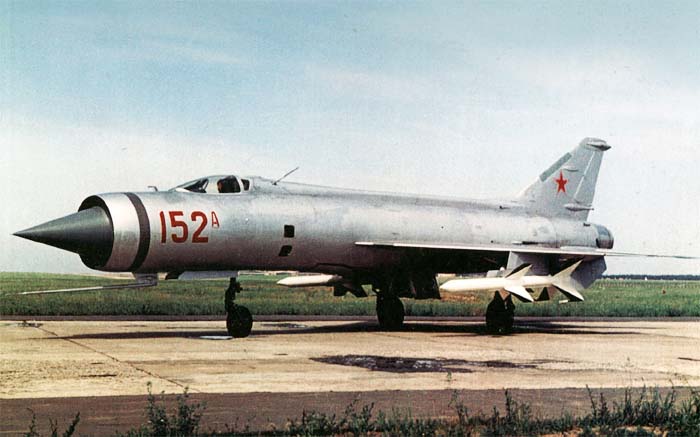
later they thought a MiG-21 with nose radome and side inlets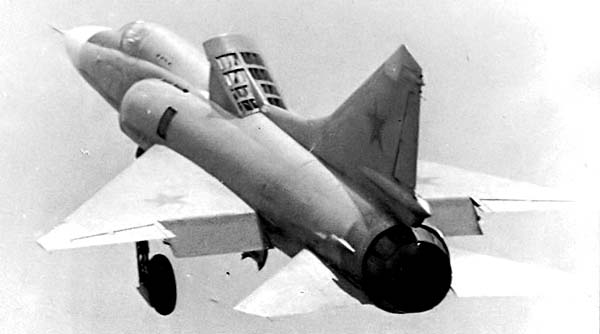
Sukhoi was different
they started with the T-3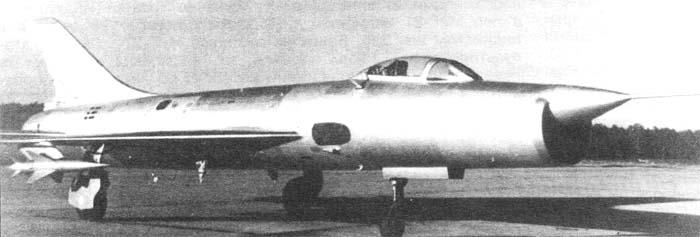
this was a solution for a bigger radar station
however they needed another design to house a bigger radar
so enters the T-49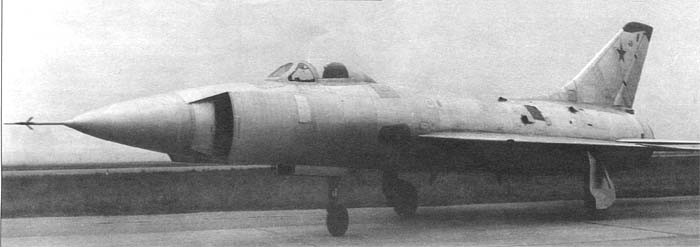
at the same time like MiG they were studing a twin engined version of the Su-9 which became the T-5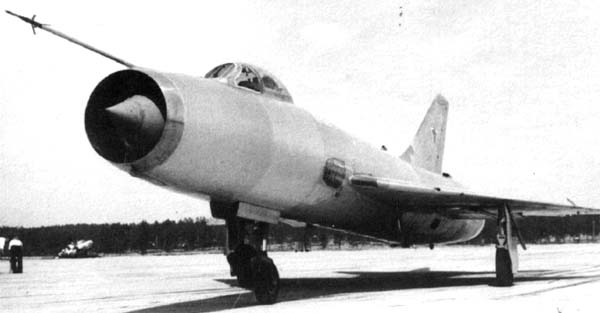
the sukhoi T-58 married and refined both designs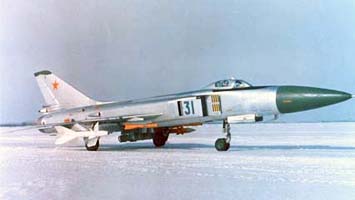
See that both the T-5 and Ye-152 had R-11s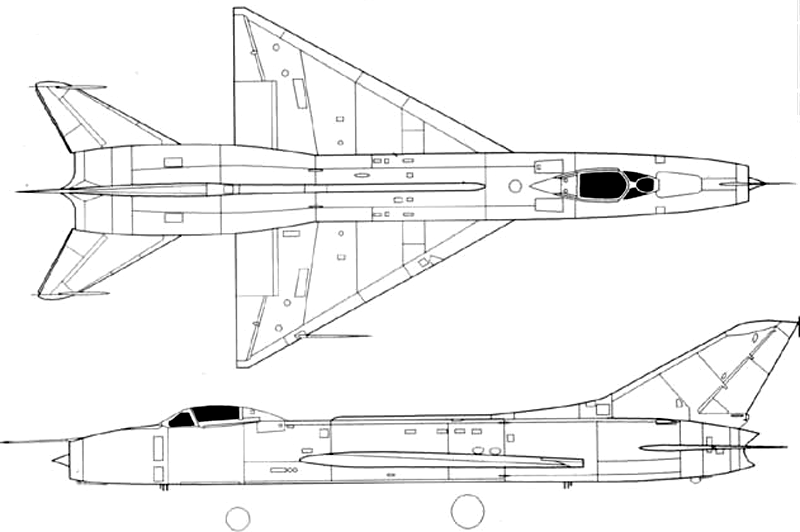
China did the same but blended the J-8I with the MiG-23MS and used the R-13s obtained from Egypt
source of the pictureshttp://www.airwar.ru/enc/xplane/t3.html
basicly the J-8II is a MiG-23PD with the side inlets and ventral fin of an operational and series MiG-23, using basicly a Ye-152A concept as base for it and without lift engines of course.
see
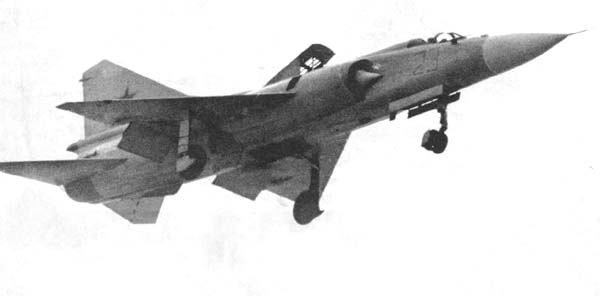

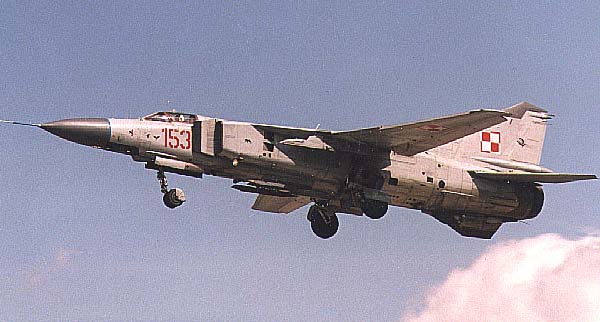
MiG-23MLDLooking at closeups of both Su-15 and J-8II versus closeups of the J-8I reveals the J-8II to be clearly built directly from the Su-15 design. There are too many common denominators for the Chinese to come up with something similar, these two designs are nearly identical except for the air intakes and nose. The changes are reminiscent of how the Chinese progressed the MiG-21 design into the F-7 offshoots.
Perhaps an Su-15 crashed into their territory. Maybe Sukhoi engineers worked directly with them. Whatever the case, anyone that does a detailed analysis of the two will come to the conclusion that the J-8II is clearly not an indigenous offshoot of the F-7 program.
Madrat
The J-8II never has had direct relation with the Su-15 beyond having the same engines.
Inspecting the J-8II you find the inlets, radome and ventral fin are a direct copy of the MiG-23 and that is a fact since the Chinese adquired some MiG-23MS from Egypt.
The only relation they have passes through the T-5 and Ye-150A, which basicly are the inspiration and some say the base for the J-8I.


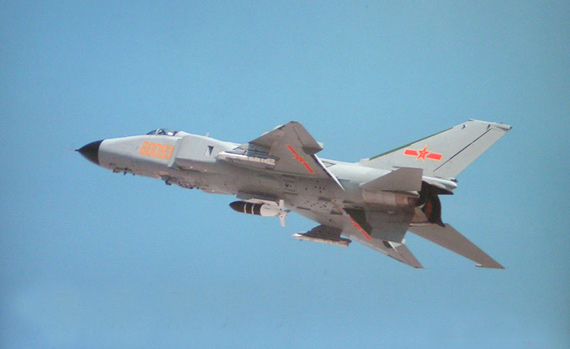

however the end result is the same
MiG-23MLDWP-13 is reverse engineered from the R-13. Not licensed. There is a difference. The WP-7 is licensed from the R-11. The Russians actually provided plans and a sample of the R-11 before the Sino-Soviet split. The WP-13 was developed a decade after the split, when the Chinese obtained MiG-21MF examples from Egypt after 1973. The planes had the R-13 engines.
The original J-8I flew with WP-7 engines, not WP-13.
the R-13 is basicly an upgraded R-11, so basicly the engines have common parts, the engines are not so much different from each other, so what the chinese copied was an upgraded R-11.
Главной его работой стал двигатель Р-13, являвшийся дальнейшим развитием турбореактивного двигателя Р-11.
The R-13-300 compared to the R-11 has a completely new afterburner chamber, five new high-pressure compressors and a new combustion chamber with a modified system start up launches at high altitudes without the use of additional fuel tank
В Р-13-300 по сравнению с Р-11 был установлена полностью новая форсажная камера, новый пятиступенчатый компрессор высокого давления и новая камера сгорания с модифицированной системой запуска обеспечивающей запуск на больших высотах без применения дополнительного топливного бака
http://www.airwar.ru/enc/engines/r13-300.html
The Original J-8I has R-11s
So as the Su-15 both aircraft have R-13s
MiG-23MLDThis is why I asked for the G talk to stop in this thread. It’s a topic all to its own and you guys can meander all over the place. This thread was supposed to be Flagon vs Finback; not G ratings concerning Kfir, MiG-23’s, F-4’s, etc.
Man chill out, i will explain why we are arguing these data.
You want to compare the data of the Su-15 with the J-8II, however you are not seeing several aspects.
China as the soviet Union was shocked by the F-4 Phantom, the early chinese design attempts were a failure, the J-8I was a contemporary of the Su-15, MiG-23 and F-4E.
The J-8I was very limited as a fighter, it had a limited radar, no real BVR capability and in reality was not even better than the MiG-21.
The original Ye-150 was by far more agile even than the J-8I even had better BVR air to air missile and radar technology.
The Chinese realized they needed something like the F-4 or MiG-23.
They could had tried to get their hands on a F-4 but there was a problem, all their technology was Soviet based, the engines they could copy were more in common with the R-11 than with the J-79.
So what the Chinese did is get MiG-23s from Egypt.
So the real based for the chinese J-8II are the Ye-150, MiG-21 and MiG-23 all soviet designs.
Therefore its flight performance has more in common with the MiG-23 and F-4E than with the Su-15, so its flight parameters are similar to the MiG-23ML and F-4E, if you read the magical numbers 6.9Gs at 1000 meters and if you know the MiG-23 and F-4E flight characteristics you automatically can guess its turning capability
The MiG-23 was somethig china could not design why? they lacked a a reliable and more powerful engine in the class of the R-27 or R-29, so they were left behind with R-13 copies, further more they lacked VG wing technology capable to fix weight increase problems and use swing wings properly. so what the Chinese did is tried to design a Su-15 look alike but with MiG-23 flight characteristics, since their engine technology was uncapable of design a single engined fighter with a 12000kgf engine; so as Sukhoi in the early 1960s the twin engined fighter with a nose radome and side inlets derived from a twin engined nose inlet/radome delta wing fighter was a logical designing step.
Were they successful? yes they were
Now the chinese were left behind with a 1960s design in the 1990s, so they upgraded their J-8II as the Russian did with MiG-23-98 with AA-10s but they added Israeli Python 3s, further more they used the AIM-7 and AA-12 adder to achieve similar air to air technology to the F-15 and Su-27.
But by the time the J-8II achieved parity with the F-4E and MiG-23ML the Su-37 was flying in Russia and by the time they got something like the F-4G well the F-35 was already doing its flight tests
MiG-23MLDclimb rate:
(H=1KM,M=0.9): 224m/s
(H=5KM,M=0.9): 160m/s
sustained turn:
(H=1KM,M=0.9): 6.9g
(H=5KM,M=0.9): 4.7g
accelleration
(H=1KM,M=0.7~1.00): 21s
(H=5KM,M=0.6~1.25): 55sWho will post F-4 and Su-15?
According to what i know, the F-4E has a turn rate of around 13.7 deg/s at 1000 meters, but at sea level is 14.6 deg /s and at around 3000 meters or 10000 feet is 11 deg/s
It is said its rate of climb is 200 m/s and it will take it 22 sec to reach 1000 km/h from 600 km/h
The MiG-23ML will do a sustained turn of 14.1 deg/s at 1km of altitude, a max rate of climb of around 218 m/s and it will take to the MiG-23MLD 19.8 seconds to reach 1000km/h from 600km/h, for the MiG-23ML it will take 22 seconds to reach from 600km/h the speed of 1100km/h.
In fact the MiG-23ML has an excellent acceleration the MiG-23ML will only take 12 seconds to reach 900km/h from the starting speed of 600km/h and close to 15 seconds to 1000km/h more or less what an F-16 can do
MiG-23MLDLooking into the sustained turn at 5 km and starting with 900 km/h,
what is Mach 0,78 at that height. :rolleyes:
It does take 36 second or 10°/sec, but doing so the Flogger is running out of steam very fast and is down to 490 km/h and has to go into minimum sweep to stay airborne at that height and speed. 😮
However the F-4E won`t do better niether the J-8II and much less the Kfir.
these fighters are not fourth generation fighters
MiG-23MLDMust admit when I made the original topic my thought was that the J-8II was largely old technology using semi-active missiles and an indigenous radar set. Looks like I should have done a little more research than none at all.
If you lighten up the load in your 7G turn then you still are exerting the same number of G’s on the airframe in a 7G turn. The overall force on the plane may change with its weight change, but a 7G turn is a 7G turn.
The Su-15 was the one that downed the Korean 747, flight 007. I think it may the one that downed another 747 years before that incident, but the plane was able to land on a frozen lake and the Soviets released the people involved when it was clear that flight was not a hostile intruder. Technically the latter plane was not shot down because the crew picked the landing location. Another incident involved a CL-44 in which the Su-15 clipped the wing and ended up taking himself out.
The J-8II was the plane involved with clipping an American EP-3 spyplane.
mad rat
G is a measure of acceleration and inertia and acceleration is related to force and mass, a lighter mass can be accelerated to higher speeds, a heavier aircraft with the same thrust can not achieve the same G loads.
heavier aircrat tension more the structural strength of the materials in an airframe.
Size and mass matter are important to achieve higher Gs
Example the MiG-23UB since it is heavier is also less capable than the MiG-23ML
MiG-23MLDWell if they designed and built it in 1980 and it could take 7Gs then, I don’t see why they can’t make the thing do 8,9 or more Gs now, especially with the planes being new built and the design having gone through structural re-designs along the way. The only issue is whether the PLA bothered to strengthen it as that would have cost implications. And its not like it needs to turn fast for the job its supposed to do now.
The J-8II is a 8G capable aircraft like the MiG-23M but certianly turning is like the F-4E and MiG-23ML.
Being an 8Gs capable fighter does not mean it will turn better than the F-4E.
what is important is how many Gs it can sustain in a turn armed.
The MiG-23ML with R-23s won`t go beyond 7Gs, the F-4E too, see the MiG-23ML is a 8.5 G rated fighter.
A fighter has the following problems to turn.
First is lift, second is stability and control, third is weight and thrust.
As speed and altitude increase all these factors come to play their part in a turn, that is the reason even the MiG-23ML rated as a 8.5Gs fighter is not outstandingly more agile than the F-4E and basicly both fighters turn at the same G load
MiG-23MLDJust how much can you strengthen something that is so long and so narrow? I have a feeling the long slender shape isn’t real conducive to high-G maneuvers by default.
Has anyone taken a long hard look at the J-8II and compared it structurally with the Su-15? I’ve just been skimming over pictures and find their resemblance from the intakes on back to the rudders too close to be by chance. Could Sukhoi have sold their flight data on the Flagon design to the Chinese to fast track the J-8II program? I’ve found plenty of examples on airliners.net and its just too coincidental. The tail caps are the same lines. The wing fences are identical placement. The wings themselves are exactly in the same places. The rivet lines look strikingly similar from about mid-wing back to the tail pipes. The tail is damn near identical. Even the access ports are too much alike. The cockpit, except for the extended spine that reaches tail to pit on the J-8II, is also identical. Surely Shenyang copied the later Su-15 design.
Well that is hard to tell, you have to go back to the 1960s when Russia was building the Ye-150A and the T-5, both aircraft are basicly very similar to the original J-8I, independently if you want or not link the Ye-150A to the J-8I, Shenyang followed a very similar design process to the T-5, T-58 and other Russian Su-15 ancestors.
Structurally, both aircraft are very similar, however the main difference may lie in new materials and new construction technics.
Why well the only thing they modified was the frontal part of the J-8I and the ventral fins, same did mikoyan with the MiG-23PD that basicly is a MiG-21.
However the J-8II has been an excellent design experiment by the Chinese, certainly the aircraft is obsolete and was even obsolete by the time it became operational, it was a late 1950s, early 1960s concept operational in 1990.
The reason is more capable than the Su-15 is simply the Russian did not upgrade the Su-15 with new missiles such as the AA-10 and AA-11 or with new electronics and radars.
In reality the Su-15 is not as lumbering as it seems, but definetively it was not designed as a dogfighter.
The J-8II is not so agile, if you consider the MiG-23 was considered inferior to the F-15 even by the Russians and the F-4 was an easy pray of F-15s too, you can not consider the J-8II even in its current forms will be outstanding in 2008 specially since its numbers are slightly less impressive that those in the MiG-23 and F-4E.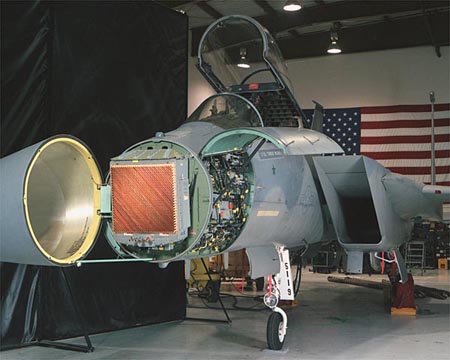
http://www.masdf.com/eagle/f15/anapg63v301.jpg
I guess it has a sustained turn rate in the range of 14 deg/s or less and an instantaneous turn rate in the range of 16 deg/s
In 2008 an F-18E will shot down the J-8II easily and a fighter like the Gripen will certainly play with it before killing it.
The F-22 will simply shoot it down as if it was a fly
MiG-23MLDThe allowed max G for every fighter is set by the weakest part and not by weight. 😉
From OKB MiG
MiG-23-11
TOW clean 12,860 kg
TOW +4*K-23 13,300 kg
max operating limit load factor, 3.1.MiG-23-11 M
TOW 15,750 kg
max operating limit load factor (45° sweep) < Mach 0,85 = 8
> Mach 0,85 = 7
MiG-23-12 ML
TOW 14,700 kg
load factor 8,5 to 7,5The ML had a reduced internal fuel load by ~400 kg.
G force is a measure of acceleration and thus inertia.
Structures have also tension, besides other aerodynamic forces acting on the airplane as buffeting and flutter, this can worn out the airframe and simply cause troubles and accidents.
Since acceleration and inertia are measurable also are equated as G force.
MiG-23MLDhttp://en.wikipedia.org/wiki/G-force
Start learning first. 😉
I think the one who should learn is you since the following is based upon relativity
Inertial mass and gravitational mass are one and the same phenomenon.
Inertial force and gravitational force are one and the same phenomenon
Each mass has different weight depending in the gravity force it exerts , a person weighs less in the moon than in the earth, in orbit his or her bones become bridle due to the lack of gravity ( in reality weightlessness is an incorrect term in orbit a person still weighs but since the gravity he or she exert is so small it is called close to 0, but in reality is not 0), if you go to a planet with higher mass you need stronger bones to remain standing but in the moon you are able to jump longer distances .
now since inertia equals gravity, higher g forces otherwise known as inertial force that a MiG-23 or any aircraft experiment makes them need also stronger materials as you need stronger bones in a planet with higher mass than the earth.
😉
In jupiter a person of 90kg on earth will weight 240kg but in mercury 34kg
Now remember that


 Sign In








