 MiG-23MLD
I think the highest credible number I’ve seen is 3.29.
The main reason why i think even at its fastest attainable speed the SR-71 wont surpass the 3710km/h or Mach 3.5 at 24km of altitude because in order to get a higher speed for Mach 3.5 it has to climb higher but around 90000 feet its speed will decay to Mach 3.2 according to NASA records, because the wing surface is smaller than needed to keep that altitude and it will settle at around Mach 3.2 at around 24-25 km of altitude so in terms of killing the SR-71 even flying at its max possible speeds in tests won`t go beyond 3700km/h and that is the reason that even if it is flying higher than 24 km it means flying slower at around 3400km/h and flying at 24 km its Mach 3.5 speed is equal to 3700 km/h, the R-33 was designed thinking in the SR-71 performance
MiG-23MLDUh, you are right, but I wasn’t disagreeing with you in the first place. I was just pointing out that it has gone faster than 2193 mph. The speed on one of the legs was over 2200 mph, and take in mind that this was the AVERAGE speed over one of the legs, as it did possibly have to decellerate and descend to refuel. Now whether or not that was faster than Mach 3.31 depends on the altitude, and I don’t think I have the entire flight plan. I’ll look around and see what I can find though (particularly because it may not have refuelled on that leg, in which case the average speed would effectively correspond to the maximum speed to a point). At any rate I’m not saying it’s a Mach 3.5+ platform at all here, or that it’ll avoid an R-33. I was just commenting on the speed record. In the interest of completeness though, the engine is limited not necessarily by speed, but by temperature. You can figure out the max speed attainable to a degree by looking through the flight manual and getting into some math. Might be an interesting project later this weekend…
The point was that I was simply correcting an error in your post, I wasn’t trying to use it to disprove your argument. Don’t read that much into things, if I want to say something specific I will by all means come out and say it, you should have realized this by now!
And I do have to say for the benefit of the others here that it is a really interesting book. Well illustrated, too.
I have to correct my self what i have read is the SR-71 can not fly at speeds of beyond Mach 3.5 for beyond ten or 15 minutes due to the engine capture area and the engine compressor heat resistance inability to cope with those speeds; speeds of Mach 3.4 and Mach 3.5 are attainable, however see that that those speeds are around 3600 km/h or perhaps 3700km/h at the most at very high altitude of around 24km or more, acconding to the book i am using now that is the Warbird tech series about the SR-71 however sustained speeds of Mach 3.4 and Mach 3.5 requiered some degree of modifications upon the airframe specially protecting the aircraft from the extra heat generated but beyond Mach 3.5 requiere major modifications such a new inlet design, so even if the SR-71 achieves speed beyond 3550km which i think has to be around Mach 3.3 since at 80000 feet mach 3.2 is slightly less than 3400km/h , see that the MiG-31 has a max speed of 3000km/h or Mach 2.8 at 57400 feet so the MiG-31 can get very close the AA-9 Amos and the AA-9 Amos still can kill targets flying at 3700km/h .
Same will be the MiG-25 which also achives its 3000km/h at even a lower altitude of 42650 feet or 13000 meters
That is the reason i do not think the SR-71 is as fast as it is claimed because the MiG-31 achieves its Mach 2.83 speed at the lower altitude of 17km but since the speed of sound changes with altitude the SR-71 achieves Mach 3.2 at 24km of altitude but this is slightly less than 3400km/h in reality the lower flying MiG-31 is almost as fast as the SR-71 flying at Mach 3.2, and Mach 3.5+ at high altitude can mean speeds of around 3600km/h or perhaps more still below or around the Max speed set for an R-33 kill.
See that according to this book those speeds of Mach 3.4 and Mach 3.5 were not typical operational speeds but very rare events and mostly tests by NASA and Lockheed
calculating an speed of sound at 28 km of altitude or 300m/s or 1082km per hour we come to the result that mach 3.4 is 3678 km/h almost 3700km/h this means a SR-71 can be shot down by a MiG-31 if it fires an R-33 even flying at Mach 3.4 if we also remember that the SR-71 takes more than 2 minutes to turn 180 deg and has a turn diameter of 100 miles we can see that a MiG-31 and some MiG-25s can easily out maneuvre and chase it and stay not far behind the SR-71
See that at 24km of altitude the speed of sound is 294 m/s of 1060 km/h so Mach 3.5 is barely 3710 km/h still in the range of the R-33 kill speed but Mach 3.4 will be 3604 km/h
MiG-23MLD1. If you can’t differentiate between a dummy or captive carry round and a live weapon, that’s your problem.
2. Gordon, page 174: to operationally employ the R-40, the FOXHOUND has to replace an R-33 with a APP-46TD guidance system pod. You can hang whatever you want from the jet in a display, on a test flight, or at an airshow, but operational, effective employment is a different matter.
You are correct my apollogies, yes effectively it will carry three R-33s and two R-40s but any way the whole point was even carying five missiles it won`t make a big diferenct three MiG-31s and three MiG-25s can fire a total of 27 missiles a total of nine AA-9 Amos and eighteen R-40s at an SR-71
I have the same book and others it says effectively what you are saying my appologies
MiG-23MLDThe Blackbird did unofficially obliterate that 2193 mph speed record on it’s last flight into Washington DC for delivery to the Smithsonian. It was a good deal over 2200 mph on one of the legs, but it didn’t satisfy the parameters to qualify for the official speed record.
SOC
I will give you some data and the rest is only simple logic
The SR-71 can not fly beyond Mach 3.5 because its inlet capture area and compressor won`t tolerate it the speed of sound is around at 30000 meters or 30 km of altitue of 1080 km/h, it means your 2200 miles/h correspond to Mach 3.4 or around 3550km/h at high altitude.
Second the SR-71 won`t fly at Mach 3.4 for more than 10 or 15 minutes and after that time ellapses it has to return to 3200 km/hr or Mach 3.2 at 80000 feet.
The R-33 can kill targets flying at 28km of altitude or more than 90000 feet and flying at speeds of 3700km/h it means the R-33 can kill the SR-71.
MiG-23MLD”The R-33 can be fired at targets flying at a max speed of 3700km/h at targets ranging from 50 meters to 28 km of altitude and maneouvring at max load factor of 4Gs that gives you the 65% killl rate very easy.” Dude do you understand Brochure stats? ? ? ? ? ? Especially for missiles, they display the maximum capability of the missile being launched during optimum conditions(High and Fast Launch). The 65% ??, under what conditions, vs what type of target? Head on engagement, tail chase? Eg You claim lol the R-33 can be fired at targets flying at 3700km/h from 50 m to 28 km; I seriously doubt it would have 65% kill rate vs targets at an altitude of 50 m. Are you aware first of all lol that mach 3.2 is 3920.140 8 km/h and 3.5 is 4287.654 km/h. If thats the case then your argument as usual is fundamentally flawed.
”The 40 kills are US admitted losses, not what Iraq or Russian sources claimed.” Can you read english? Was that sferrins’ question? Did he need to be told about sources, or are you once again digressing from the real question to satisfy your insecure ‘Mig/Su fanboy/pro-Russia’ views. In future why not stick to the topic, the question asked and consider the noteworthy opinions of people and sources that clearly have a much greater understanding of military affairs. Instead of ignoring facts and ruining threads with your exceedingly long posts.
An example of you not considering the facts is the opinion you still hold over the downing of the F-117 over Serbia. I wont bother trying to explain it again, if you still cannot comprehend the issue, your either a lost cause or your fanboy views wont allow you to be persuaded.
The speed of sound changes with the altitude, it is much slower at high altitude, at high altitude it is not 340m/s but 300m/s at high altitude the speed of sound is only 1080km/h
I might be a fan boy but you need to read physics 😀 😉 come on buddy if the missile can hit targets flying at 3700km/h is because the missile is very fast in fact the R-33 has an speed of Mach 4.5
see this fact The Mach number (M) refers to the method of measuring airspeed that was developed by the Austrian physicist Ernst Mach. It is used to indicate flight velocities in high-speed flight and is related to the speed of sound. The actual speed of sound varies depending on the altitude above sea level because sound travels at slightly different speeds at different temperatures, and the temperature varies according to altitude. At sea level, the speed of sound is about 761 miles per hour (1,225 kilometers per hour). At 20,000 feet (6,096 meters), the speed of sound is 660 miles per hour (1,062 kilometers per hour).
source http://www.centennialofflight.gov/essay/Dictionary/sound_barrier/DI94.htm
The SR-71 won`t achieve Mach 3.2 an sea level but at very high altitude where its speed will be in the region of 3200km/h at the most or around 2000 miles/h at 80000 feet, that is not sea level
see the data directly from NASA
SR-71 Specifications and Performance
The SR-71 was designed and built by the Lockheed Skunk Works, now the Lockheed Martin Skunk Works. SR-71s are powered by two Pratt and Whitney J-58 axial-flow turbojets with afterburners, each producing 32,500 pounds of thrust. Studies have shown that less than 20 percent of the total thrust used to fly at Mach 3 is produced by the basic engine itself. The balance of the total thrust is produced by the unique design of the engine inlet and “moveable spike” system at the front of the engine nacelles and by the ejector nozzles at the exhaust which burn air compressed in the engine bypass system.
Speed of the aircraft is announced as Mach 3.2 — more than 2000 miles per hour (3218.68 kilometers per hour). They have an unrefueled range of more than 2000 miles (3218.68 kilometers) and fly at altitudes of over 85,000 feet (25908 meters).
source http://www.nasa.gov/centers/dryden/news/FactSheets/FS-030-DFRC.html
Throughout its nearly 24-year career, the SR-71 remained the world’s fastest and highest-flying operational aircraft. From 80,000 feet, it could survey 100,000 square miles of Earth’s surface per hour. On July 28, 1976, an SR-71 set two world records for its class: an absolute speed record of 2,193.167 miles per hour and an absolute altitude record of 85,068.997 feet source http://www.nationalmuseum.af.mil/factsheets/factsheet.asp?id=2699
So as you can see the R-33 can intercept the SR-71 still it is in the speed range it can kill targets
MiG-23MLDAnd what makes you think that? Find me a photo of a FOXHOUND carrying live R-40s for starters.
i already showed you those pictures but there is not blindness but a desire to deny facts by your part
MiG-23MLDSo you can give us the number of R-33s fired in combat and the number of kills for that very AAM?!
The Iraq did not loose the same number of aircraft. It loosed the war and with it his whole AF!!!!!!!!!
The similar thing with Serbia, which was unable to prevent air-dominance!!!
AD assets, which were unable to fullfill its intended tasks are pretty useless and a waste of money and personal.
No man they are not as you are saying, Iraq lost the war it is true but not because their weapons and pilots were not good, they lost the war because from the begining they were out matched in what respects their arsenal.
Russia is not Iraq or Serbia and if Russia feels threated will launch their ICBMs and SLBMs and there is not going to be winners, Iraq or Serbia could not do any thing really beyond fighting back because already the war was won for NATO simply because these two nations are small nations, Iraq had then less than 30 million people and Serbia less than 11 million people, the combined populations of NATO were close to 600 million people, so please do not say things that are frankly without sense.
Russia has a larger population and many nukes, China has a large population and some ICBMs and believe me is not that the MiG-29 or the Russian Missiles do not work is simply under certain conditions even good weapons can not win a war and an example is the Me-262 it was a wonderful machine but it did not win WWII for germany and the same was the V-2 rocket.
MiG-23MLDThe data you gave have nothing to do with reality. That were test data achived under test conditions. The producer has to verify, that his product has to achive specifications set by the customer. We all know, that an AAM will not achive service entry with a demonstrated kill-rate below 50%. We all know, that even the best AAMs of to today, will get high praises, when reaching such a ratio in reality. The first examples of AIM-9/Atolls reached ratios well below 10% at best. In reality numerous fighters went into a mission without a single firing opportunity, when the hostile fighters were not gentle enough to stay within the launchning parameters, set by the producers. The examples of michelf showed it.
The way you presented the data of the R-33 showed, that you have no idea, what you speak about. The R-33 is part of a weapon-system, where all parts have be at the optimum to achive a ratio of 65% and the intended target shows a cooperative manner and do nothing to hamper that optimum conditions. What may work with a friendly drone over the own firing-range and preplanned conditions has nothing to do with real combat-performance.
Sens
Let`s go by parts, the 65% is considering all the possible events that can make the missile miss the target, they are calculating several threats and problems that can make the AA-9 Amos miss the target, however under normal conditions a missile has a kill rate of 100%, if you do things right you will have a high rate of success, of course many things can happen and can go wrong and a missile has to be upgraded in order to live up its expected kill rate nevertheless in war both sides will lose weaponry and suffer casualties and in general kills will be achieved by missiles.
The only thing you are trying to say if you have three MiG-31s and three MiG-25s even if they deplete their 30 missiles they won`t kill the SR-71, that is a unrealistic statement, the USAF is not stupid, they know what kind of aircraft is the MiG-31 and what kind of air defences had the USSR and what kind of defences has Russia.
Another thing affecting a combat record is propaganda and counter propaganda, you heard different records and different accounts and even when you have a picture with a kill you have people saying different statements i can show you pictures of an F-18 wreckage shot down over Iraq in 1983, Russian and iraqi sources they said it was shot down by Iraqi SAMs; US and Western sources will tell you it was shot down by a Patriot that tried to intercept some missiles but instead killed the F-18.
Spinning a combat record is not unusual, i can show you that the Russian have different account for their weapons, i can show you the Russians usually report different combat records in fact many western sources sometimes are totally unaware of what records the Russians claim.
So if you try to say the R-33 will have a very low kill rate that is something only comes from your mind, because in war both sides achieve kills, both sides destroy weapons, perfect records do not exist, it is simply pure propaganda spining and telling what they want the people to hear when you hear records claiming no losses and that is a fact in any country in the world. The lossing side is not the one that always has more casualties in fact the Soviet Union beat Germany and loss more people than the US or Germany, but still managed to beat Germany.
MiG-23MLDGiven that those are captive carry rounds and not live R-40s, yes, they are merely adornments in those images. Except for the one where there are no R-40s in the photo, of course.
Nobody is claiming the SR-71 was maneuverable or that it was immune to intercept. That has nothing to do with the fact that they did not avoid FOXHOUND ops areas.
Soc you even do not believe that what you are saying about the R-40
MiG-23MLD65% against what kind of target? Cessna? F-16? Tomahawk? Qualify the 65% number.
How many to enemy air? Oh yeah, one. Maybe.
*YAWN* If that were the case why didn’t we just outfit the F-117 for recon and do overflights?
man why you do not think a little bit more your arguments?
Let us clarify your answers.
The R-33 can be fired at targets flying at a max speed of 3700km/h at targets ranging from 50 meters to 28 km of altitude and maneouvring at max load factor of 4Gs that gives you the 65% killl rate very easy.
The 40 kills are US admitted losses, not what Iraq or Russian sources claimed.
If you want to know why the F-117 is not used as an recon aircraft answer is an SA-3 shot it down and the nation that shot it down is a small nation not Russia, the SA-3 is an old missile in fact a 1960s missiles. Russia can fire ICBMs and SLBMs if the Russians feel threated, try to cross the line and you won`t see a small Serbia but a Russia armed with thousends of nukes.
Any provocation can be see it as a threat, and Russia has mobile ICBMs and the TOPOL M is one of the most advanced ICBM in the world.
See the Topol M on a video
MiG-23MLDNo it can’t. In order to actually use the R-40 one R-33 has to be replaced with a datalink pod.
:rolleyes: Keep telling yourself that. Whatever.
So soc what does it mean this picture the AA-6 Acrid is just an adorn?


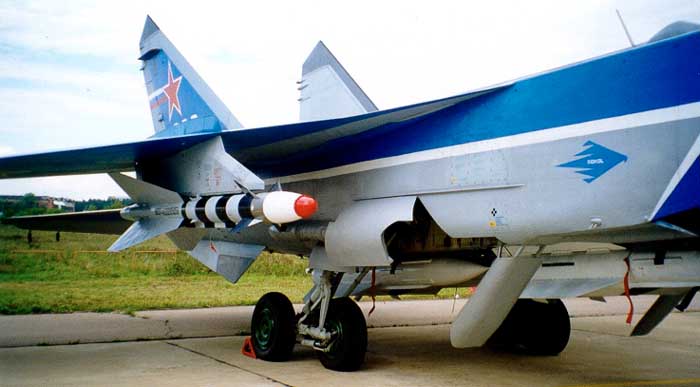


You have to see this detail, if the SR-71 has a turn of 100 miles of diameter flying a Mach 3.2 it flies at around 1km/s, this means a turn of 180 deg will take it around a little bit more than 2 minutes see that is not exactly a very agile aircraft
MiG-23MLDOf cause there is a small chance, that such AAM can kill a SR-71, when fired under optimum conditions. As your example with the Cheetah showed. The intended target have to be unaware to the looming threat and it has to pass in a small distance. Two demands, which are difficult to achive at the same time. The Cheetahs are looking for unaware victims, which are not in best physical conditions at first.
The Russians are aware, where a recce flight of a SR-71 will go most of the time in “Cold War” conditions. The number of intresting or worthwilhle recce targets is limited in a given area. The open preperations of SR-71 flights gave an ample pre-warning time to prepare the interceptors. The flying-route choosen at Mach 3+ reveals the area of intrest for the SR-71. But even under optimum conditions it was a tough task for the MiGs to reach a firing position most of the time. It was some kind of ‘cat-mouse-play’ most of the time, when both sides used such missions to hon their skills. The Russians were aware, that the Amercians had/have many other recce assets to get the desired information. (Keyhole f.e.)
We keep in mind that the Syrians operated/operate MiG-25 interceptors, which were unable to bring-down Israeli RF-4E and F-4E(S) over Syria in “wartime conditions”.
Raw technical data and calculated optimum conditions from “amateur-warriors” are not helpfull.
The MiGs pose a constant threat for such recce-flights, but were/are unable to deny that under wartime conditions. The same is true the other way around, when it comes to recce MiGs! The ones, which “suffered” from that, stayed tight-lipped most of the time to avoid further outlays related to that. None country has the money to seal its whole airspace 24 hours every day against determined and well prepared intruders.
The military are well aware about that, when the public is not.I remember about the Israeli Mosquito recce-flights over Egypt in the 50s, when the Egypts operated MiG-15Bis and MiG-17F. Those ended, when the Egyptians received MiG-17PF and better radars!!!! But the Mosquitos were replaced by Vautours and nothing changed for Egypt really. The Egypts did manage to come close to such recce flights sometimes like the Russians. But to come close and to bring-down someone is a further step. For the Egyptians and the Russians it may be a mission-kill or to pose mission limitations for further recce flights at least?! The name of the game is reaction time versus speed most of the time, like your Cheetah example showed. Even under favourable conditions, that rate of escape for the victims is still high. (something of ~ 1:10 ratio in average to experienced Cheetahs)
Sens i guess you are over stating facts. first any missile has a kill probability, the R-33 has a 65% chance of killing a target, second you have to see that in the case of the Israeli-Arab wars both sides lost aircraft and indepedently of what statistics you use killing an aircraft is not as hard as it seems, specially in times of war.
If you see data from the gulf war I in 1991, the US lost almost the same number of aircraft Iraq did, around 40 american aircraft were lost, we are talking about a super power versus a third world nation.
Israel has lost aircraft and in fact was uncapable of hitting the MiG-25 in the 1970s, the MiG-25s that Syria lost according to Russian sources are two and the MiG-25s shot down an Israeli F-15.
Israeli sources claim three MiG-25 were shot down, but see this were fighters and not the MiG-23R which can fly faster if needed.
The SR-71 is beatable, it is not inmune to missile attacks, its turning agility is quit horrible it takes 100 miles to turn at Mach 3.2 only 180 deg, the AA-9 flies at Mach 4.5 and can kill targets handling a max load factor of 4Gs, see that a lone MiG-31 can fire four AA-9 Amos and two AA-6 acrid, if it is guiding two or three MiG-25s and it is flying along side another three MiG-31s these group of russian interceptor can cover 600km of radar space and launch at least 30 missiles to the Sr-71.
The Sr-71 is also a heavy and large aircraft flying high and fast it`s max load factor will be quit low so we can expect it won`t be able to avoid and out turn the AA-9
The latest AA-9 Amos C has a range of 150km around the same distance a Sr-71 can turn 180 degrees the AA-9 Amos A has a range of 120km, so the Sr-71 is not theoretical but realistically in great danger of being shot down, also it can not fly at around 3700km/h for a period longer than 10-15 minutes so once the SR-71 is hot enough has to return to Mach 3.2 and it only has an advantege of 500km/h over the MiG-25 and MiG-31 so the AA-9 is not as handicap as you might think, the posibility of killing the SR-71 is quit high that is the real reason the US halte any intrusion over Soviet territory.

MiG-23MLDCan someone provide some info about how many croccodiles have been built and how many have been downed (afganistan, chechnya, olso outside russia’s conflicts) and how many still are in service.
I think the number is quit high, the Mi-24 has been vastly produced helicopter i read that less than 5200 Mi-24 were produced
In terms of losses i guess Russia has lost at least fifty Mi-24s.
This a Mi-24 shot down on 6th October 1995 over former Yugoslavia
http://www.yuairwar.com/gubici4.asp
MiG-23MLD
I’m not sure an SR-71 would fly inside Soviet airspace anyway. It’s not just the threat from Mig 25’s and 31’s, but also SAMS.
Not to mention the fact that if a Blackbird suffered any sort of technical malfunction, say 100 miles inside the USSR, causing the A/C to slow down to say Mach 2 or worse, subsonic, thats where it would be in trouble.
Imagine the crew of an SR-71, forced to bail out deep behind “enemy lines”. The Soviets would have a field day!!!! They’d have wreackage of one of America’s most top secret A/C, its sensors and perhaps 2 surviving pilots in their hands.
I totally agree with you, in terms of speed the SR-71 is a great aircraft, i have read that in terms of speed the SRS-71 only can fly at mach 3.5 for 10 to 15 minutes and no more, speeds beyond Mach 3.5 are only attainable with a different inlet design because the Sr-71 inlet has a max operational speed at Mach 3.5 beyond that the inlet would had problems dealing with the engine compressor temperature and the the inlet capture area is not capable of dealing with speeds beyond mach 3.5.
In reality the SR-71 has a operational speed of Mach 3.2, a sustained speed of Mach 3.5 would meant modifications to insulate the aircraft from additional heat generated by the air friction.
Missiles like the AA-9 Amos can kill targest flying at 3700 km/h, this in fact assured to the AA-9 Amos a kill.
The F-12 in fact is not very different to the MiG-31 in concept, it used the AIM-47 a similar missile like the AA-9 Amos, even it had an IRST system.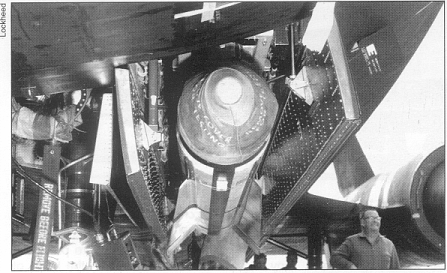

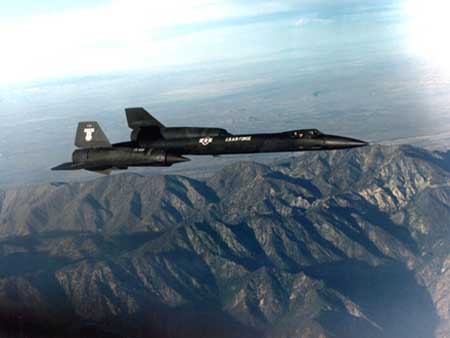


The MiG-25 in the other hand was much simplier and less sophisticate but it won the battle because it got into production and 1200 were built
Later in the late 1970s the more powerful MiG-31 a real F-12 equivalent was flown proving simplicity always get you the shortest way into an aircraft production and upgrade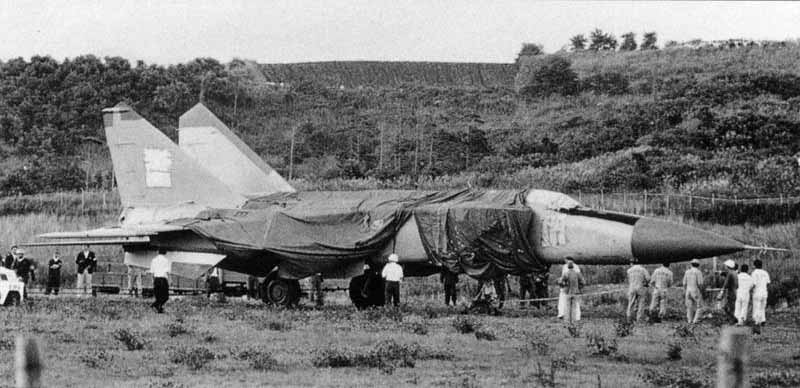
MiG-23MLDI disagree. If this were the case, we’d just keep using the U2, which was enormously cheaper to keep in service than the mach 3.2+ SR-71; the U2 could stay in the area much longer, as well. The SR-71 stayed in service for many years after it came in, thus showing we wanted it for a reason. The SR-71 was specifically designed to fly fast to avoid threats when flying in enemy territory; it just wasn’t used this way over the USSR because, as said before, we made it a rule not to overfly them because of the U2 fiasco.
Many make it seem as if the U.S. was saying “It’s a fact the Mig-25 can intercept the SR-71, therefore, this is the reason why we’re not flying it over the USSR.”
lol This is not true. Even Belenko (a Mig-25 pilot himself!) admitted, saying the SR-71 was just too fast, and at the same time as being so fast, it flew so high. The SR-71 could cruise at mach 3.2 at 75,000 to 80,000+ feet. And just think, mach 3.2 wasn’t its top speed, but most efficient CRUISING speed; of which it could sustain for over an hour. I believe the SR-71 would’ve hit mach 3.6 to 3.8 if it really had to. I read an SR-71 pilot said he remembers pushing the SR-71 past mach 3.5 during a mission, and it made no sounds of strain or unusual noises that’d occur when an aircraft is at its speed limit.
So that’s not only SR-71 pilots saying they never felt threatened by any Mig-25s, but a Russian Mig-25 pilot himself saying it had no chance in intercepting the SR-71.
The U.S. was not in a ‘hot war’ with the USSR, therefore, flying over their territory in peacetime would be a risk only someone stupid would take. Not only the risk of it being shot down, but the political ripples it’d cause would not be very good for keeping the Cold War cold.
Funny logic if the Blackbird was unvulnerable to interception by the MiG-25 why then being afraid of overflying the USSR? if the MiG-25 can not catch you why not violate the Soviet airspace?
There are several reasons and these are not political but technical, if you get the right aircraft and you can fly with impunity of course you will use it, the SR-71 is not agile, it can not turn on a dime in fact it will have a turn radius of several miles in fact at Mach 3.2 it has a turn radius of 50 miles and just to do a 180 deg turn it will make a turn with a diameter of 100 miles so any missile can kill it if it is fired close to it.
It is a lie that the SR-71 can avoid missiles at subsonic speed even a MiG-23 can make a turn of 1.4km of diameter but the SR-71 will do a turn of 100 miles at Mach 3.2 around one hundred times bigger.
Get an AA-9 Amos close to the SR-71 and you will see why the SR-71 was not intruding the Soviet airspace.
Now the MiG-25 had a max load factor of 4Gs too but it is amed with missiles, the main problem with the MiG-25 is limited radar range and limited combat radius.
It is like a cheetah and a gazelle, the Cheetah needs to kill the Thompson gazelle before getting tired, but here we have not one cheetah but several cheetahs hunting a lone gazelle, lions are usually slower than zebras an still can kill a zebra due to tactics, the same a MiG-25 and MiG-31 team they can shoot a SR-71 for sure
Do not even understimate the R-40 it is also a good missile less impressive than the R-33 but definitively a capable one


 Sign In







