 MiG-23MLD
Funny, that didn’t stop the SR-71 from flying over Libya, which had the SA-5 and the MiG-25P.
Funny the US lost the Vietnam war and the US is a super power! 😉
Funny Germany had V-2s and Me-262 and even with that lost WWII.
Funny the USSR had Tu-22M and lost the Soviet-Afghan war
Consider that having a weapon does not guarantee you victory or success, first no MiG-25 was shot down over Libya even they had the much vaunted AIM-54 and the F-14, second it does not mean the Libyans operated well their MiG-25s or the MiG-25s were in the range to intercept the SR-71s.
are you trying to imply that in 1986 Libya equalled the Former Soviet Union air defences? and you know perfectly the answer is not, you can not compare the better trained Russian personal to the Libyans simply because Russia has educated more the Russian population and the Russians know better the Russian equipment than their customers.
besides Russia has more equipment and more technology available than a developing nation like Libya, a single weapon won`t give you superiority you have to have a whole weapons system integrated by several radar stations, AWACS, SAMs, aircraft and Satellite survaillance besides excellent training
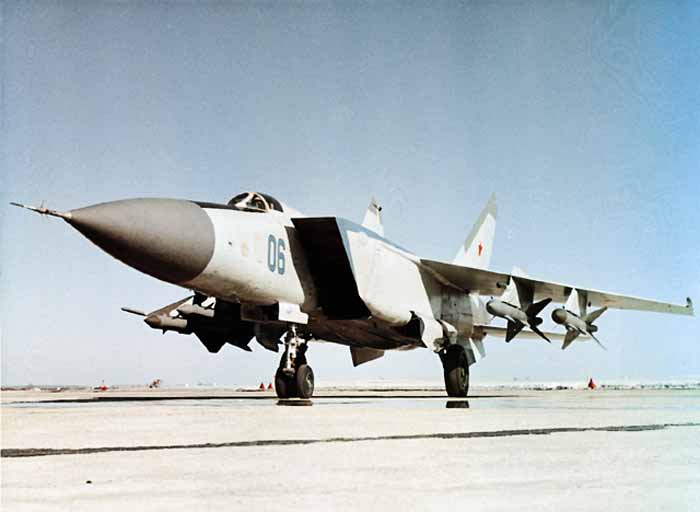

MiG-23MLDRussian planes is okay between 1945-1970.. but the west start improving alot in avionic and computers and distance between technology was bigger and bigger, and Russian plane is no longer impressive. When it was the day of MiG-15 and F-86, it was impressive, and they do not use much on avionic because it was relied on guns and eyesight than radar and missile. But by the time of MiG-31, they have to use very large radar to match performance of smaller western Radar and have many ieffnenciency. Engine also lagging behind. Same with China. before there was big gap between China and Russia, but now the gap is very small. Russia only lead in fat airplanes for cargo, engine for fat airplane, and some kind of missle but not all kind of missile.
Russia has over China still a lot of advantage, it is not true that the gap is a small one, almost all the Chinese Jet have Russian tech in one way or other and many are basicly Russian aircraft build in China. Russia has almost thousends of Satellites launched and many many more cosmonauts launched.
The Russians are not lagging behind as you are saying with respect the west, modern russian aviation has avionics made in Russia that do not yield to western equipment, in fighter technology the Su-34, MiG-31 and Kamov Ka-50 have little competition.
By exception of the Russia, Ukraine, the EU, the US, canada and Brazil no other nations operate civil jet airliners in the range of 90 to 440 passengers built domestically.
And in nukes no other nation has more Nukes than Russia, the Russian economy is growing fast, it is an illusion of many that think Russia is a weak nation, it is not, it is still a power with enough strength
Here is the reason why Russia is leading over China


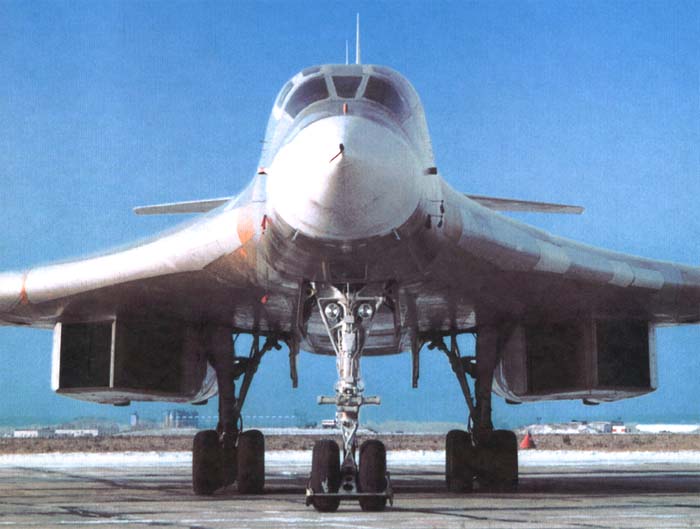

MiG-23MLDGary Powers was shot down conducting the last US U-2 overflight of the USSR in 1960. That’d be the last US overflight of Russia. Next.
See the A-12 flew missions over North Korea and North Vietnam why? because like i said you before when ever the risk of being shot down are low they would send the Sr-71.
In the first three months of 1968, the Oxcart operation was alerted fifteen times and flew six missions. Four of these were over North Vietnam and two over North Korea. The first mission over North Korea on January 26, 1968, occurred during a tense period, only three days after the Communist seizure of the US Navy ship Pueblo. Black Shield aimed to discover whether the North Koreans were preparing any large-scale hostile move on the heels of this incident. Chinese tracking of the flight was apparent, but no missiles were fired at the plane.
http://www.afa.org/magazine/Jan1995/0195shield.asp
It is not politics but the military capabilities the enemy has, can they shot down the Sr-71? can the the counter attack? those are the real reasons, the Russians had enough technology to shot down US aircraft and by the 1980s that capability was totally assure.
MiG-23MLDFlogger,
It is very, very clear that you never served in the military. You simply haven’t a clue. Again, explain to me why there was no overflights of the Soviet Union by Blackbirds from the late 1960s onwards. Explain to me why there was no overflights of recce MiG-25s deep into NATO airspace? Answer: both sides played the political game and restrained their military in order to stop miscalculations. No side could have entered a dialogue of arms negotiation and political goodwill if each side was violating each others airspace.Yes, other nations were fair game to overflights, but with the Soviet Union/Warsaw Pact the potential to turn cold into hot was far too risky. Your naivety clearly prevents you from understanding this simple fact.
So then explain me why Gary powers was shot down over the former Soviet Union and why the Russians shot down a Boeing 747 in 1983? and why two U-2 were shot down over the Soviet Union and Cuba in 1960 and 1962 during the Kennedy and Eisenhower administration? and see that the nearest humanity, NATO and The Warsaw pact were to the brink of war was in the Year 1961.
If you want a clear answer is fear, because the USAF and CIA knew how capable were the Soviet defences and the lost of reputation an aircraft shot down could cause and this means they fear one of their thirty two SR-71 could be shot down
MiG-23MLDThe Sukhoi T-4 only flew 9 times. The first five times they didn’t even retract the undercarriage.The fastest it flew was Mach=1.3. It was designed to fly for 6,000km nonstop But considering the previous record of Soviet supersonic aircraft such as the MiG-25 and Tu-144 ‘Concordskii’ I’d say it would have ran out of gas long before that. And don’t mention in-flight refueling, considering the Soviets were always short of tankers, even for long range aviation. I’m surprised that this aircraft reached prototype, considering that the Americans cancelled their own B-70 ten years earlier – when they realized that the idea of a mach 3 strategic bomber was completely untenable in the face of modern air defences.
Mind you it’s one of the most impressive aircraft ever to fly and a true Russian descendent to Igor Sikorskii’s 4 engined bomber of 1913, the ‘Ilya Muromets’
I do not think the T-4 was doomed technically, the aircraft like other US supersonic projects were excellent in paper and excelent once they were built, however fast aircraft are not agile, if you check the only fourth generation aircrft that is a fast jet is the MiG-31, the F-15 is more an agile aircraft with good climb rate and acceleration, in fact the MiG-31M had not even a gun they deleted becasue they knew a fast MiG-31 is not a good dogfighter but only and excellent long range interceptor.
Other fighters like the F-16 or Su-27 are not as fast as even the F-15 but these are more agile and the Eurofighter and Rafale are not as fast even as the Su-27 or MiG-29.
Speed is good but agility is better and good missiles even best both and that tendency has been followed since the MiG-29 and F-16 agility and smart missiles, not fast jets that can hardly manoeuvre.


source of the pictures http://www.ldomino.ru/russia/mikoyan/mig/25/rbs/mig25rbs.htm
MiG-23MLDA joke. The MiG-31 was on show in Paris with radar and weaponary presented for future exports. Even a SR-71 is unable to verify, if a tube contains a Topol M!!!
It seems you have no high opinion about the knowledge of the readers here or it is the other way around.http://www.google.de/search?hl=de&q=Topol+M&btnG=Google-Suche&meta=
Man when you give me childish explanations why China did not buy the MiG-31 or this or that aircraft i won`t believe you , it is not because the MiG-31 is not a capable interceptor as you try to claim, but because simply China as Japan considered the F-15, China considered the Su-27 was better suited to the Chinese needs because the MiG-31 is not a dogfighter, but a high speed killer it can not dogfight, in fact a F-14 and a MiG-31 dog fight will end up in the destruction of the MiG-31 even obsolete fighters in close combat are better than the MiG-31 is in close combat in example the F-4.
China needed a doghfighter not a high speed interceptor.
Here is an excellent video so you can see the MiG-25 at high altitude from the MiG-25 cockpit
Here is the MiG-31 from the cockpit super cool video
MiG-23MLDEisenhower did recognise the implications of the missions over the Soviet Union. He himself banned certain overflights in an effort to keep relations with the Soviets. It was Eisenhower that proposed in 1955 that the United States and Soviet Union conduct surveillance overflights of each other’s territory to reassure each country that the other was not preparing to attack.
Archived material indicating that Gary Powers mission was to be the last overflight of the Soviet Union:
“CIA, Situation Estimate for Project CHALICE – Fiscal Years 1961 and 1962, March 14, 1960. Top Secret, 15 pp.
Source: National Archives, CIA 2000 Release”Despite Eisenhower’s concerns about the consequences of a loss of a U-2 over the Soviet Union, he did approve further missions after his initial, July 1956, order to stop the overflights. During a 23-day period in August 1957, U-2s conducted Operation SOFT TOUCH – seven overflights of the Soviet Union and two of the People’s Republic of China. This activity, particularly with regard to the Soviet Union was atypical. Thus, Francis Gary Powers May 1, 1960 overflight would be 24th and last of Soviet territory. This situation estimate, prepared a little less than two months before the shootdown, was intended to provide “guidance for the planning and conduct of project operations during the FY1961-62 time period.” In addition, it provides a concise history of the program and an assessment of the intelligence desired from future U-2 flights.”
I do not believe that explanation niether your what is important for the supporters of the invulnerable Super Sr-71 is it can not be shot, that is a total lie, what the americans learnt when Gary Powers was shot down is the USSR was capable technologically speaking to shot down US aircraft and the risks involved into these over flights were nuclear war, would have they over flown the USSR would they have known the SR-71 was invulnerable to interception? the answer is yes
Did they tease the Soviet defences the answer is yes, did they intrude a few kilometers into soviet air space? the answer is yes, what are you try to cover is the fact over flights are not forbidden, they will do over flights when ever the enemy or hostile nation is uncapable of shooting down the SR-71 and the risks involved are certainly low such as a UN complaign.
MiG-23MLDFlogger wrote,
“the posibility of killing the SR-71 is quit high that is the real reason the US halte any intrusion over Soviet territory.”
Flogger,
Flogger, Your naivety is simply stunning. You do realise that ANY over flights would have been a clear provocation? Here we have two super powers with a huge nuclear arsenal pointing at each other and you think the only reason why there were no Blackbird over flights was because of them being shot down? It is this simple, simple naivety that makes you a laughing stock on these forums.
Any direct over flights could have rapidly turned the cold war into a potential hot war. Even Eisenhower worried that the Soviets would misinterpret direct over flights as a precursor to a nuclear attack. Direct deep penetration of Soviet airspace would also have the follow on effect of similar over flights of NATO countries by Soviet reconnaissance aircraft. Imagine the consequences of misinterpretation if that status existed during the Cold War? It was simply a no-no based purely and simply on the misinterpretation that could have resulted.
Imagine the impact that direct over flights would have had on any disarmament treaties/talks that were going on? No side wanted to make that mistake. The SR-71s ran standard collection flight profiles on numerous peripheral areas of Russia. It’s sensors were excellent and in no way did any Russian interceptor stop those missions being carried out or deterred them. Flogger, you live in a complete dream world!
If your belief in the MiG-31 stopped all SR-71 over flights is to be believed, then why didn’t any SR-71s make deep flights into Soviet airspace from the late 1960s onwards?
Some declassified docs on SR-71 missions:
http://www.gwu.edu/~nsarchiv/NSAEBB/NSAEBB74/U2-45.pdf
Flogger, you are aware of the ‘hotline’ that was set-up between the U.S. and the Soviet Union? Imagine that hotline, designed to stop any escalation, if both sides were making deep reconnaissance incursions into Warsaw Pact or NATO airspace?
http://dosfan.lib.uic.edu/acda/treaties/hotline1.htm
Flogger, you live in a very simple fantasy world and it shows repeatedly!
I will give a simple answer Topol M and MiG-31
MiG-23MLDYou never learn it, when you mix max G of target, max speed of a target and max height of a target at the same time.
The Russian claimed that the R-33 could kill a target flying at supersonic speeds up to 4 Gs. Excactly that was demonstrated against a MiG-25, what can pull 4,5 Gs at supersonic speed and heights above 38000 feet.
Nothing more and nothing less.
At >70000 feet lift is an issue when it comes to bank angle (related to G) and not structural strength. By the way the same problem for the R-33 and any other AAM. But too much physics again?!
1,3 Gs gives a bank angle of 40°
2 Gs of 60°
3 Gs of 71°
4 Gs of 76°
Yeah sens
so can you explain me why air to air missiles experience up to 40Gs? that is not related to bank angle but to acceleration and inertia, if they give you a basic way to calculate G load is to a related speed not to all speeds, G is a measure of inertia and centrifugal force, speed will be related to inertia and Gravity is related to inertia.
Inertia is a very powerful force, modern aircraft and engines can not pull so many Gs and do excesively tight turns because inertia keeps you always in the same path direction, inertia has basicly two forces interacting two vectors and as quantum mechanics explains energy cannot disappear has to be emitted and transmitted but also has to have mass so you have inertia as a result because as a black hole can compress a star in a tea spoon and bent light; G forces do the same to your vascular system in relatively insignificant 10Gs, to fight inertia you need a balance in the centrifugal force and centripetal force and excess of inertia or G forces are a product of speed and change of direction the bank angle gives you different G forces at different speeds .
The MiG-25 has a limited power supply to fight inertia and doing a tight turn at such high speeds will increase inertia to a level the structural integrity will be put to a test and can result in damage, centrifugal force can black you out because the human as an aircraft has his or her structural integrity changed when inertia is applied to the vascular system.
DEFENSE AGAINST ICBMS.
A typical intercontinental ballistic missile (ICBM) will have a range of 8000-10,000 km and a speed of around 7 km/s. Minimum propulsion for a given range is achieved with a reentry angle closer to 22 deg than to 45 deg because the range is not small compared with the radius of the Earth. Of course, the atmosphere of depth 10 tons per square meter exerts a substantial drag on the ballistic missile as it rises, so that a practical design does not achieve intercontinental speed within the dense atmosphere; this is accomplished by limiting the thrust and hence the acceleration of the missile. This also limits the “dynamic pressure” and the skin heating on ascent. But too low an acceleration implies excessive “gravity loss”, since it is only the excess of vertical component of thrust over the force of gravity that actually results in acceleration of the missile. Even so, a typical large liquid-fueled missile may have a thrust of 1.3 times its gross weight, so that initially only 0.3/1.3 of the thrust accelerates the missile just after liftoff.
The kinetic energy of the RV, which is a good fraction of the total energy of the propellant of the entire ICBM, must be dissipated on reentry. ICBM warheads must be protected by a reentry vehicle (RV) against the heat and deceleration of the atmosphere. A typical peak deceleration is on the order of 60 g. However, only a small fraction of this energy need be absorbed by the material of the RV– the rest being carried off by the wake of the reentry. Although initial ICBM RVs used a heat-sink approach, this was soon superseded by a much lighter protection system that uses ablative material that gradually sacrifices its heated surface layer and erodes in a controlled fashion on reentry. The RV shape approximates a sharp cone with a small nose radius.
http://www.fas.org/rlg/garwin-aps.htm
A typical peak deceleration is on the order of 60 g.
An object traveling in a circle behaves as if it is experiencing an outward force. This force, known as the centrifugal force, depends on the mass of the object, the speed of rotation, and the distance from the center. The more massive the object, the greater the force; the greater the speed of the object, the greater the force; and the greater the distance from the center, the greater the force.
http://phun.physics.virginia.edu/topics/centrifugal.html
Despite the success of General Relativity in depicting gravity, inertia–an equivalent force–continues to defy explanation.
http://philsci-archive.pitt.edu/archive/00001287/
Jupiter IRBM Specifications
Length: 60 ft (18.3 m)
Diameter: 8 ft 9 in (2.67 m)
Total Fueled Weight: 108,804 lb (49,353 kg)
Empty Weight: 13,715 lb (6,221 kg)
Oxygen (LOX) Weight: 68,760 lb (31,189 kg)
RP-1 (kerosene) Weight: 30,415 lb (13,796 kg)
Thrust: 150,000 lbf (667 kN)
Engine: Rocketdyne LR70-NA (Model S-3D)
ISP: 247.5 s (2.43 kN·s/kg)
Burning time: 157.8 s
Propellant consumption rate: 627.7 lb/s (284.7 kg/s)
Range: 1,500 mi (2,410 km)
Flight time: 1,016.9 s
Cutoff velocity: 8,984 mph (14,458 km/h) – Mach 13.04
Reentry velocity: 10,645 mph (17,131 km/h) – Mach 15.45
Acceleration: 13.69 g (134 m/s²)
Peak deceleration: 44.0 g (431 m/s²)
Peak altitude: 390 mi (628 km)
CEP 4,925 ft (1,500 m)
Warhead: 1.45 Mt Thermonuclear W-49 – 1,650 lb (750 kg)
Fusing: Proximity and Impact
source http://www.reference.com/browse/wiki/Jupiter_(missile)
MiG-23MLDThe intresting part is with the Siren set. It seems that Flogger ignored something similar, when it comes to SR-71.
That recce flights from the 70s were published widely in those days. But as always, some important details from that were left aside. Some of that details I gave in a similar topic before. The very brief top-speed Mach 3-3,2 was recorded by an Israeli radar, when the very MiG-25R did a short recce-dash alongside the Suez from North to South from Cairo West. It was not done to evade any Israeli interception attempts, but to demonstrate the capabilities of the MiG-25R to Israel under optimum conditions and show the related impotence against that for Israeli AD at hand. All that was done to restore the lost confidence in Russian weaponary for the Arabs.
Despite that the Israeli had to be gratefull, because it rushed the F-15 into IDF-AF service.
The longer route over the Sinai was flown slower and you showed the reasons, why it was still enough for the AD of Israel. The few recce-flights over the Israeli coast up to Haifa brought the MiG-25R to its range limits and it was clocked there with Mach 2,4-2,6 on the radar. During one of the last missions Israel tried to trap such a recce-flight and the F-4 managed a kill nearly. If damaged really by that is questionable, because that MiG-25R did not slow down. Another close encounter was, when F-4s of 107. sqn met a returning MiG-25R over Egypt south of Cairo.The data of recorded recce flights and distances covered by that is stored in magazines from the 70s. The speed capability of the MiG-25R is related to fuel and range. OKB MiG gives the data for that.
The MiG-25/31 never managed to fly above Mach 3 for over one hour like the SR-71.
So still a different class of capability, when it comes to recce flights. But I agree with you, that the performance of the MiG-25R was enough to evade most AD of the West from that days.
The Israelies are credited by the Russians with the destruction of a MiG-25, Israel was the first nation to shot down two MiG-25s, that is accepted by Russian writers and sources.
But the killer was not a F-4, but F-15s and was the result of an ambush similarly as when two lions chase a zebra and and a third corners the pray to kill it by surprise.
An F-16 also shot down a MiG-25 with an AIM-120 but this was in Iraq and in the 1990s.
It is not impossible to kill the MiG-25, it is not easy though and has not been very common in air to air.
The Russians claimed an F-15 killed by a MiG-25 in the same way the first MiG-25 was shot down.
MiG-23MLDMach 3.5? The fastest I’ve seen is Mach 3.3x teritory for the SR-71, and about 3.29 for the A-12. That particular flight of the A-12 was almost fatal for the plane and the pilot, since the instruments were showing M3.16, but they later discovered that instruments were faulty. Almost all of the hydraulic fluid evaporated, circuits were fried and wires had to be replaced.
Usually the SR-71 cruises at M3.2, and M3.3 is possible if the outside air temperature is low enough.
I have read those were tests not operational flights, the average speed for the SR-71 indeed seems to be mach 3.2 but we can not discard it can fly faster at least for few minutes, up to what i have read it only can fly a sustained Mach 3.4 Mach 3.5 with minor modifications but those were results said by Lockheed and NASA during tests.
Operationally the SR-71 has a max speed of Mach 3.2 at 80000 feet and it rarely flew faster than Mach 3.5
MiG-23MLDIt angers me, when it comes to your limited knowledge over basics.
a) Double the speed gives four-times the G-load for the same turn radius.
b) Every change in direction does eat into a performance of an AAM.
c) A MiG-25/31 operating in the red-zone of its performance envelope is limited to a few minutes in that, when the SR-71 can do so for over one hour.
d) To achive a single firing position, all your interceptors have to stay in the line of flight of the SR-71 and had to be alerted about that before.
e) Not very realistic, when the intended recce-target is not known in advance.
f) Even then the SR-71 could outsmart the defences, when choosing a fake target at first. It can delay, the flight and alter route to target f.e.
It can stay outside and refuel by air, when the interceptors had to return to base.To learn something, you better try to imagine at first, what the SR-71 crew and mission planers will do to avoid a successfull interception from MiG-25/31.
After that you can think about the chances of the other side not to be outsmarted by that. There is no way to outrun a SR-71, but the Russians are famous to set traps. The problem with that is, that it does work most times once only.The pics show the SR-71 at subsonic-speeds below 30000 feet.
Please Sens read correctly what i wrote and what the russians are saying
You have written something pretending to claim the R-33 will be easily out maneouvre
you wrote this
-“a) Double the speed gives four-times the G-load for the same turn radius.
b) Every change in direction does eat into a performance of an AAM.”-
Now see the Russians are claiming that the R-33 flying at Mach 4.5 can kill a target with a Max load factor of 4Gs
they are not telling you what is the max G load factor for the R-33 but only for the target, now manned aircraft are not like missiles that can pull more than 9Gs, manned aircraft can pull 9Gs at low speeds but pull lower Gs than their max G load factor at their corner velocity when they fly at Mach 2.
The Big and heavy SR-71 is not the exception it will pull like an airliner 2 or 3Gs when it fllies at Mach 3.5 like the MiG-25 simply because inertia won`t let it turn tighter, see that only the SR-71 is flying at around 1050 m/s or 1.05 Km/s, this mean the inertia won`t allow it pull tight turns because a tight turn will requiere too much thrust something the SR-71 has not and a super structure stressed for 20Gs or 40Gs like a Missile in example AMRAAM or AA-12 that can kill targets with load factors of 12Gs.
the MiG-25 and MiG-31 are good examples these aircraft can not pull 6Gs something that is very easy to do for an aircraft like a F-4 or MiG-21 simply because fighters like the F-15 and F-16 are agile but at low speed not at high speeds and even pulling 9Gs at Mach 2 they won`t make a tight turn as they can do at 900 km/h.
The MiG-25 and Sr-71 are aircraft that basicly fly straight and tire their enemies that can not super cruse but remember that MiG-31 can fly at mach 2.35 for half an hour and can be refuelled in the air so as a fighter the MiG-31 can keep up the chase with the Sr-71.
now you have to see the real assets that give the advantage to the MiG-31 and MiG-25s are numbers, while the US had a handful of SR-71s, the Russians had 1700 MiG-31s and MiG-25s and that is the real reason the US knew the Sr-71 should not intrude russian airspace, the risk of being shot down was great.
Sure the Russians could had in the Sukhoi T-4 an equivalent to the SR-71, but for what? you can have 20 MiG-25R with almost the same capabilities and for less money 😉

Also if this webpage is correct the R-40 is not slower than the R-33 but only has less range http://www.testpilot.ru/russia/bisnovat/r/40/r40.htm
In fact it says as a missile the R-40 is faster than the R-33
and that it flies between Mach 4.5 and Mach 5
MiG-23MLDPlease read slowly and carefully!. A SR-71 will never go into an turning fight. Just a small shift in direction is enough to foil the computed hit-point for the R-33.
A MiG-25/MiG-31 has no chance to chase a SR-71. Those are unable to reach a similar speed and height at the same time.
The best they can hope for is to reach a single fire-opportunity. But the SR-71 crew and its EW-suit may have done all to foil that.
When it was an idiotic strait line race (like a dragster race) and the SR-71 will line-up close by and do nothing to foil the firing sequenz, the R-33 will win always, but reality is much different.
At speeds above Mach 3 nothing will turn really, so none will try that at all.
The MiG-25R over Israel (Haifa) did a climb-turn at Mach 2,35 of over 50 km diameter, when accellerating back to Mach 2,5. That was not to avoid interceptors, but to reverse direction for flight home.
Sens
You forget very easily the R-33 parameters, first all missiles will do turns, they are designed to maneouvre, the R-33 can kill targets pulling up to 4Gs, if you consider that a Blackbird is a big aircraft and quit heavy you will know it won`t pull many Gs, the MiG-25 for example can not pull more than 4Gs; the MiG-31 only pulls 5Gs, you can not expect the blackbird to pull higher Gs than the Mig-25 or MiG-31 first because the aircraft can not fight inertia at Mach 3.5 and second because it is rated very likely at very low Gs like the MiG-25 or even less.
In that sense the R-33 can hit the Blackbird because the SR-71 won`t pull real expectacular turns, in reality the black bird has a very slow angular velocity.
You are thinking the Sr-71 EW measures will be effective all the time, the reason the SR-71 flies at Mach 3.5 was becasue in very brief periods of time it can dash at high speed but later it has to return to Mach 3.2 and that is the real operational speed it has and at high altitude.
Mach 3.5 was an speed used in tests by NASA and Lockheed but if the aircraft has not been modified it has to do only brief incursions into Mach 3.5
The real operational speed for the SR-71 is Mach 3.2 or 3400km/h at 24km of altitude the MiG-31 or MiG-25 also operationally have a speed of mach 2.83 or 3000 km/h at 18km of altitude
Of course both aircraft can fly faster already has been proven the MiG-25 flew at Mach 3.2 but like the SR-71 can not keep that speed for long unless they want to damage the aircraft.
The R-40 has also IR versions and despite the missile flies much more slower and has a shorter range than the R-33 still if fired at relatively short distance can kill the Blackbird.
For an SR-71 intruding into Russian airspace is a big gambling it is not a safe enterprise, there are very high risks involved trying to intrude the Russian airspace.
I am not saying the MiG-25 is an agile machine but what i am saying is since the MiG-25 was highly produced (close to 1200 MiG-25 were built) and the MiG-31 was mass produced (the MiG-31 was less produced than the MiG-25s only 500 were built) still you can position some MiG-25s at different points of air space and that is the reason four MiG-31 can sweep 600km of air space and direct MiG-25s and other fighters because you will have several fighters and interceptors along the very predictable scape route the SR-71 will take and since the SR-71 can not turn in a dime several russian interceptor can predict where to be positioned and where to direct the fighters to fire the R-33 and R-40 at the best distance to ensure a kill
MiG-23MLDPlease do not try to wist physic. In the Stratosphere above 36090 feet the speed of sound is a constant 573 KTS or 1061,2 km/h.
In the thin air above 70000 feet neither the SR-71 nor the MiG-25/31 can turn really. Both are capable to alter the course for a few degrees only. A MiG-25/31 can not chase or outmanouvre a SR-71 in that heights and at that speeds.
The question is the SR-71 can not out turn the MiG-31 either in fact at Mach 3.5 it will be only able to turn very slowly and won`t be able to turn quickly it won`t be able to avoid being intercepted by the more numerous MiG-31
The AA-9 can out accelerate the SR-71 simply because it is faster it flies faster more than 1060 km/h faster, the only limit the AA-9 has and the real disadvantage is it can not fly for a long time so the MiG-31 needs to get the AA-9 the closest to the SR-71. the Sr-71 for sure can fly faster than the MiG-25 and MiG-31 but it won`t turn quickly, in fact it has an atrocious turn rate and a huge turn diameter and that is where the SR-71 has its true weakness.
Like a lion pride chasing a fast zebra the MiG-31 have to ambush and corner the SR-71 so the SR-71 with is terrible turn rate will not be able to avoid the MiG-31s interception and the MiG-31s can fire the closest possible to the SR-71, the AA-9s,
Cornering the SR-71 and ganging togather several MiG-31s and MiG-25s will be able to shot down the SR-71.
By the way the figures i gave you for the sound speed are given in that webpage and the speed of sound is not as homogeneousa as you claim because tha atmospheric density and composition vary with the altitude and the heat they absorb also will vary at different altitudes
MiG-23MLDAbove 38000 feet the speed of sound stick to ~1070 km/h.
3,2*1070= 3424 km/h. The R-33 is fired at 2,8*1070=2996 km/h
The difference speed between SR-71 and MiG-25/31 is around 430 km/h in a position behind and below. The R-33 has a very small performance window to close that gaps under optimum conditions.
The Russian claim do not even show, that both corner values of 91000 feet and 3700 km/h could be reached at the same time!!!
None is surprised to learn, that you claim the data which suit your opinion, but ignore or question those, what will not.
The Chinese rejected the offer for MiG-31 for over a decade. One of very few countries, where interceptors like MiG-31 would have made any operational sense.
Sens
The R-33 has a max speed of Mach 4.5, you might think the R-33 has values fixed the missile has been designed to kill in the best conditions targets between the envelope of 60m to 28km and from low speeds to 3700km and it has a max range of 120km, see that these are max values that easily will represent the max capabilities in range and speed, what you are thinking is probably there is something wrong, it can not kill it but see that the R-33 is 1000km/h faster than the SR-71 and a Mach faster than the SR-71, the reason why they say a max speed of 3700km/h is because they are calculating the target will have a difference in distance and speed with respect the R-33 carring aircraft and in order to have a max range of 120km and kill the target they calculated that 3700km is the max speed the target can have at the average firing distance for the R-33, now you are not calculating another fact today`s MiG-31 carry R-37s and these are even more lethal, but of course we are talking about the cold war years.
Now the most important factor is not speed but acceleration see that if you fire the R-33 from a relatively short distance you will kill the SR-71 for sure for example if the Sr-71 is 300 meters ahead of the of the MiG-31, the MiG-31 will kill in matters of seconds the SR-71 with an R-33 even if the SR-71 s flying at Mach 3.5 because the R-33 is 300 m/s faster than the SR-71, the main question is how many seconds the R-33 will take to reach the SR-71 and in how many secons it will accelerate from the launching speed to Mach 4.5, so that will give you the minimal firing distance, however see that the R-33 flies at around 1350 m/s at 24km of altitude while the SR-71 flies at around 1050 m/s so in very few seconds it will reach the SR-71 if it is just 300 meters ahead of the MiG-31 specailly when the MiG-31 flies very high and fast, however the main problem here is the missile has a flying time less than 88 seconds so it must kill the SR-71 is less than 88 seconds


 Sign In







