 MiG-23MLD
After Belenko defected the Mig-25 was completely upgraded, with a lot of upgrades that had been developed but there was no funding for before the defection.
The computers were upgraded from 50s technology and the missiles were upgraded too.Personally I think they were both right… the plane Belenko flew probably didn’t have a better than average chance of defeating an SR-71, but after his defection all those aircraft were upgraded to a new standard which I think would make it quite capable of dealing with the SR-71 threat.
I do agree with you i think later versions were more capable with newer missiles and the Saphir derivative radar.
That is the most likely explanation because the MiG-25 continued evolving and earlier AA-6 Acrid variats had less range than the later ones.
Also the earlier AA-6 Acrid could only hit targets holding 2.5Gs, later version after 1979 had better range and could hit targets maneouvring at 4Gs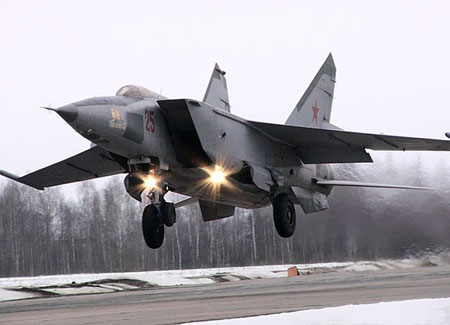

source http://tomcat.mysteria.cz/doc/mig.html
MiG-23MLDBelenko
Matt
See that the Russians could have scrambled several MiG-25s at any moment and the MiG-25 is more agile than the SR-71 and still it won`t pull more than 4.5Gs it means very probably the AA-6 is agile and fast enough to kill the SR-71 and if corner by several MiG-25s it can shoot it down that kept the SR-71 far from the Russian air space


MiG-23MLDTrue, but I’ll trust an individual far before I’ll trust any government. 😉
Matt
It is not true Belenko represents the US Government, specially when he was a defector who needed political assylum.
Any way technically speaking i think the MiG-25 can shoot down the SR-71 but it is not easy for it to do it


http://www.suchoj.com/galerie/index.htm?http://www.suchoj.com/andere/MiG-25/galerie.shtml
MiG-23MLDSo; every time the Soviets attempted to intercept the SR-71, they sent up 20 MiG-25s to try to catch it?? 😮 😮
Still wasn’t enough though, or was it?? :confused: :confused:
You’re saying that 1000 MiG-25s were produced to intercept a few dozen SR-71s (and likely fail in the attempt)? I wonder how much that must have cost the Soviets?
They say that one of the main reasons for the collapse of the Soviet Union was the economic burden of its military-industrial complex, a lot of this burden of course been taken up by the Soviet air defence system the ‘PVO’. Producing aircraft like the MiG-25, MiG-31, theABM-1 GOLOSH system for protecting Moscow from ballistic missile attack, the thousands of other SAM sites, the several hundred thousand personnel manning the whole shooting match.
All of it seems; to prevent the USSR been burnt to crisp six times over, instead of five, in the event of a nuclear war.
Whatever the questions about the reconnaissance value the SR-71, in its own way, it put a massive burden on the Soviet economy…
Man i do not understand why you ask me foolish questions, no aircraft is built only with one purpose in mind, aircraft need to be capable of doing the most of things at the least price, of course the MiG-25 can intercept aircraft other than the SR-71 and its sole purpose was not only shooting down the SR-71 and you can see that in the many roles and weapons the MiG-25 have.
The whole point is missiles have ranges and speeds, and before killing an aircraft in air to air, they need to be fired from a minimun distance and can not be fire beyond a maximun distance.
The difference in speed and distance the target has with respect what the missile has in range and speed will determine when to launch the missile.
The SR-71 is slower than the R-40 and R-33, both missiles can kill targets at the altitude of 27km-28km this means the SR-71 is not out in the range of speed and altitude of those missiles.
However the MiG-25 and MiG-31 wont`t fire the R-40 or R-33 to a not moving target and that target is faster than the MiG-31 and MiG-25 so they must have to have a max separation distance limit from the SR-71 in order to fire their AAMs within the envelop of speed and range the R-40 has.
This is what is the main difficulty hunting the SR-71 since the SR-71 is quit fast it can out range the missile if it is launch beyond that max separation distance.
The best way to kill the SR-71 is in a head on attack where the SR-71 is getting closer to the MiG-25, that is very easy because the SR-71 is not agile and we can say it flies straight becasue it takes it around 100 miles just to turn 180 deg in fact in 1973, Kelly Johnson, designer of the SR-71 Blackbird, stated that the Mig-25 Foxbat has the inherent capability to outperform the SR only in maneuverability. However, he stated, it would be the missile and not the aircraft that would require the maneuverability to intercept a Blackbird.
According to many Victor Belenko said the MiG-25 can not shoot down the SR-71 but according to other sources the MiG-25 got its missiles ready for launch at the SR-71 and that only happens if the missile is on the range to achieve a kill and the MiG-25s could have fire the R-40s and shoot it down but the order was never given, Who shall we trust, Belenko or the Russian air force PVO? the answer is easy you can trust both because depending in the firing distance the MiG-25 fires the R-40 at the SR-71 and the speed the SR-71 is flying at that moment you can either believe Belenko or the PVO
The window of oportunity in reality is very narrow specially if the SR-71 planed its mission in order to penetrate the USSR and over fly the USSR far from the range of the MiG-25s and for a brief period of time in that case even if the MiG-25 got a radar and missile lock on the SR-71 indicating the missiles were in range to achieve a kill on the SR-71 probably it was when it was not flying any more in the USSR air space and that is the reason they never shot it down and the order never came to fire the missiles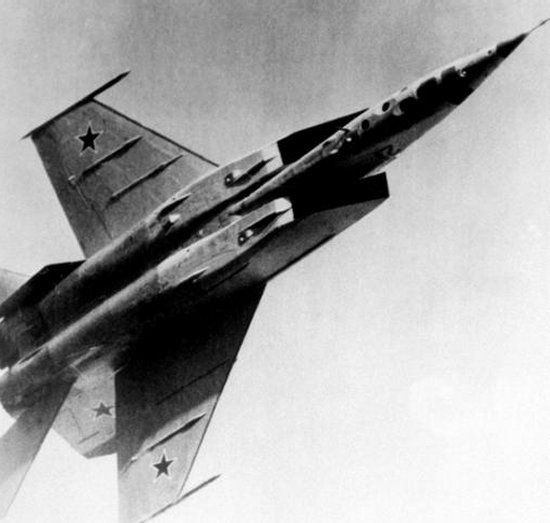
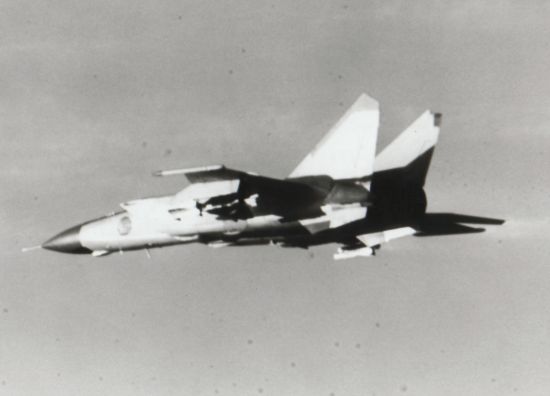
MiG-23MLDThat is the reason, why I dod not believe the claim of OKB MiG, that the MiG-25 was built to counter the SR-71, when in reality it was the B-58, B-70, B-1A or Mirage IV to come. The MiG-25/31 are good interceptors against the atomic bomber threats, but a waste against a few recce-birds only.
The SR-71 is the last attempt to build an excellent aircraft in large numbers originally the F-12 or A-12 were designed as today`s MiG-31, but the first mission the MiG-25 had was to intercept fast aircraft not only the F-12 or the SR-71 but any possible threat.
I think to tell you the truth probably the MiG-25 had a small window of oportunity and all the data i have points to the fact it can shot down the SR-71 albeit it is not an easy task.
The SR-71 was an excellent aircraft too fast to be an easy pray and probably the first generation MiG-23P Foxbat A were not as capable as the late MiG-25PD Foxbat E.

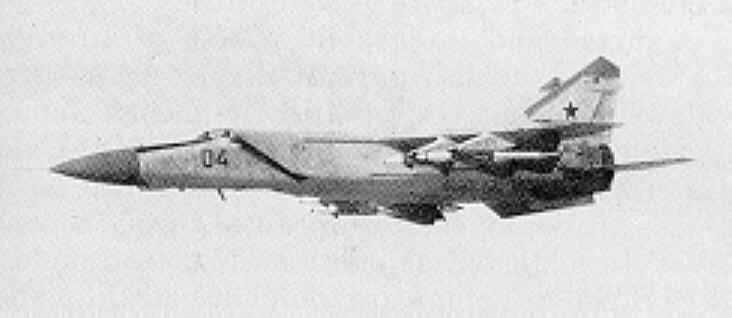
The MiG-31 i feel it can shot down the SR-71 for sure
MiG-23MLDbut this examples all started from USSR times.
MiG.144 is rooted in 80s
Su-30 is base on design from 70s, just upgrade
Tu-334 start in late 80
etcand guess what
Tu-334 – only 5 order
Yak-130 – not even in production
Su-47- 1 airplane no interest
MiG-144 – 1 airplane no interest
Tu-160 – new airplane base on old Soviet era incomplete one.only Su-30MKI is doing good and u have to thank you to India for that one
you is right that China do not have same variety, but half they do not need.
China do not need Tu-160 because we have no plan to bomb USA, only Muslim people do. China is not aggressive like USSR, we just want old land back.
I think you should updaet your news more regularly in fact you should read chinese news more often 😀
3 Nov 2006] /VZGLYAD- (vision)/The Tupolev company will start serial production of short-range airplane Tu-334 next year., said Igor Shevchuk, the director general/chief designer of the Tupolev company, at a press-conference in the framework of Airshow China-2006.According to him, two such airliners are those of the most expected by domestic firms to be built in 2007. To date there have been made 50 orders from 5 Russian air carriers. The Tu-334 that is supposed to replace Tu-134 have already been certificated, noted Shevchuk.He expressed an opinion that the new airplane out of the Tupolev family will be quite able to share the market with the Super Jet-100 (formerly named RRJ). This Sukhoi-developed civil project is targeted at the international market, while the Tu -334 is, first of all, directed at Russia’s and CIS countries’ market. The Tu-334 is designed to seat 100 passengers and perform operations on 3000 km routes. There is latest airborne equipment installed on the plane, which is perfect in terms of aerodynamics and airframe qualities, said Shevchuk.Airshow China-2006.Beside the Tu-334 prototype, Tupolev is also demonstrating at the Airshow China-2006 another long-haul twin-engine passenger air liner Tu-204-300 with high fuel economy, ITAR-TASS reported. Four aircraft of the type have successfully being operated by Vladivostok -Avia flying to Moscow and St-Petersburg with no re-fuelling, explained Alexander Zatuchny, the Tupolev director for general matters, in an interview to ITAR-TASS.
source http://www.avia.ru/cgi/news/news.cgi?action=geten&id=1162542973
Algeria buys Yak-130 for multiple use
By Brian Walters / Farnborough International Air Show July 2006
Celebrating its first export order–to Algeria–the Yak-130 is displayed here at Farnborough International as a multirole advanced trainer that can also be employed to destroy ground and some aerial targets when frontline fighter bombers and strike aircraft are not available. A subsidiary of Irkut Corp., Yakovlev (Hall 1 Stand E8) is to supply the Algerian air force with 16 of its advanced jet trainers as part of a $7.5 billion package that includes 36 MiG-29MT fighters, 20 Sukhoi Su-30MKI fighter bombers and affordable defense systems. Deliveries to Algeria begin in 2008 and as it is a member of NATO’s Mediterranean Dialogue program for joint exercises, their Yak-130s will presumably be equipped accordingly.
Skill Multiplier
Designed for basic and advanced training, the Yak-130 can be used for delivering up to 80 percent of the skills required by the military pilot training program. This reduces the number of aircraft types required and therefore the time needed for learning to fly other trainers, while considerably simplifying pilot combat training. Nine hard points can carry up to three metric tons of ordnance, enabling top-class pilots to receive training at a minimal cost. The Yak-130 aircraft is a key component of a training system, which includes integrated independent monitoring, computer-furnished classrooms, navigational and special-purpose simulators.
First flown 10 years ago, the Yak-130 was designed to replace Russian air force’s L-29 and L-39 jet trainers and for some time became a joint venture with Aermacchi. However, collaboration ended as the Italian company continued development of the M-346 (also here at Farnborough) as a separate venture.
The Yak-130 is fitted with a digital fly-by-wire system with four-fold redundancy, which simulates control algorithms in all modern fighters. This, along with the aerodynamic design of the aircraft and the powerplant’s performance, enables pilots to quickly learn how to control all modes of modern combat aircraft such as Su-30 and MiG-29 as well as their foreign counterparts.
The cockpit instrumentation for each crewmember includes three multifunction full-color liquid crystal displays (LCDs) measuring six-by-eight inches. The front cockpit features head-up display and can be equipped with a helmet-mounted target designation system. Avionics open type architecture allows integration of new equipment.
In April 2002, the Yak-130 was chosen as the main aircraft type for basic and advanced training of the Russian air force pilots and 12 of these aircraft are in series production at the Nizhniy Novgorod Sokol plant. The first Yak-130s are scheduled to go into service on completion of state flight trials involving three aircraft.
Intensive flight tests have confirmed the main tactical characteristics of the aircraft and weapon release trials have started. The delivery of this batch of aircraft will be completed in 2008.
It is estimated that the Russian air force has a requirement for around 250 Yak-130s and with production now underway, Irkut is aiming to secure more export sales, particularly from countries equipped with Su-27 and MiG-29 fighters.
http://www.ainonline.com/Publications/farn/farn_06/algeria_36_d2.htm
09-09-2004
RUSSIA AND UKRAINE RESUME PRODUCTION OF THE AN-124-100
A meeting between Russian and Ukrainian officials in the Russian Federal Agency of Industry conducted by Boris Alyoshin, Head of the Agency, has agreed on steps towards launching the project to resume production of the AN-124-100 aircraft and the stage-by-stage modernisation of this unique freighter in Russia and Ukraine.
The meeting decided to produce the business-plan for the project by the end of November 2004 for consideration at the next interstate meeting in the Federal Agency of Industry in December.
According to experts, the size of the world market for the AN-124-100 is increasing by 15-20 % per year. By the year 2017, multiples of 10 new AN-124-100s may be required. Taking into account the obvious demand for this unique aircraft and its future potential in the world market, Volga-Dnepr Group, the world’s largest operator of the AN-124-100, together with ANTK Antonov and other interested parties in Russia and Ukraine plan to relaunch series production of the AN-124-100 at Aviastar – SP, the Ulyanovsk-based aviation plant.
The first step towards starting the project was the acceptance and signing by representatives of Russia and Ukraine of a document: “Decision on prime measures on resuming the series production of AN-124-100 and the stage-by-stage modernisation of the unique aircraft at the enterprises of Russia and Ukraine.” This was the basis for the meeting in the Federal Agency of Industry.
The meeting brought together from the Russian side, the commander-in-chief of the Russian Air Forces, Vladimir Mihajlov, representatives of the Russian Ministry of Industry and Power, the Russian Ministry of Transport, the general director of the Joint-Stock Company Aviastar – SP Victor Mihajlov, the president of Volga-Dnepr Group Alexey Isaikin and the general director of Polet airline, Anatoly Karpov. Ukraine was represented by the state secretary of the Ministry of Industrial politics, Valery Kazakov, General Designer of ANTK Antonov, Peter Balabuev, General Director of Motor-Sich, Vyacheslav Boguslaev, representatives of ZKMB Progress and KiGAZ Aviant.
At the meeting, the Head of Federal Agency of Industry, Boris Alyoshin, emphasised: “I am satisfied with the level of co-operation and the mutual understanding achieved between all parties involved in the realisation of this national project. I am confident, that the meeting creates the new base to significant amplification of this work on all the directions. It is pleasant that Russian and Ukrainian parties at the highest interstate level understand the importance of resuming the series production of the AN-124-100 for the economy of our countries, the revival of the aviation industry and increased competitiveness in the world aviation market.
Speaking at the meeting, Alexey Isaikin, President of Volga-Dnepr Group noted the importance of concentrating on the financial and intellectual efforts at governmental level in order to attract the necessary resources and orders for the new AN-124-100. General Designer of ANTK Antonov, Peter Balabuev, added that “the design bureau supports the necessity of joint efforts on resuming the series production of aircraft of the AN-124 family.”
Participants at the meeting agreed that the successful realisation of this project will require a number of stages, key to which is the creation of a branch of ANTK Antonov in Russia, formation of a separate business structure for managing the project and the prompt development of the business-plan, involving financial institutions.
An interdepartmental advice meeting at the base of ANTK Antonov in Kiev in September plans to establish a working group on the project to define conditions of its activity and the order of financing the business-plan. Volga-Dnepr Group will provide all organisational support and prepare the necessary documentation.
Additional information:
The AN-124-100 Ruslan is the largest serial transport aircraft ever built. It was designed by Antonov Design Bureau in the late 1970s and performed its first flight in 1982.
The aircraft production involved more than 500 Soviet companies. Aviastar (Ulyanovsk) and Aviant (Kiev) manufacturing plants performed the aircraft assembly then. To the present day, fifty-six AN-124-100 Ruslans have been manufactured and half of them are used in commercial operations.
The project of resuming the series production and modernisation of the AN-124 was launched at the Moscow Aerospace Show in 2003. Then, Volga-Dnepr and Antonov Design Bureau came to an agreement to move forward with the AN-124-100 production revival program as well as to design and build a new upgraded version of the aircraft for the global market. Russian and Ukrainian parties including Rosaviakosmos, Interstate Aviation Committee, Russia’s Civil Aviation Authority, Volga-Dnepr Group, Antonov Design Bureau, the Ukrainian Aviation Authority, Russia’s Ministry of Industry and Science signed all the corresponding papers.
The modernised version will be equipped with the latest, sophisticated avionics and upgraded engines. The jet will offer an improved payload of up to 150 tons and an increased flight range. The aircraft is also expected to require a smaller crew. Currently several modifications of the aircraft are under development.
According to some project participants, the revival will lead to increased activity in the Russian aircraft manufacturing sector, contribute to Russia and Ukraine’s leadership in the global outsize and heavyweight air cargo market, strengthen co-operation between Russia and Ukraine and create a foundation for further technological breakthroughs in the civil aviation field.
The resumption of AN-124-XXX production, along with the IL-76 modernisation program that is already being implemented, may become one of the most ambitious and promising tasks for the Russian industry within the next few years.
Previous news
Top of list
Next news
Jump to…Volga-Dnepr AirlinesAirBridge CargoPassenger airlineNIC insurance companyVolga-TrucksInternational Educational Center
http://www.volga-dnepr.com/eng/presscentre/releases/?&id=397
Russian and Ukrainian Aircraft Industry Able to Produce An-124 “Ruslan” Airplanes
The Russian and Ukrainian aircraft industry is able to produce the An-124 “Ruslan,” the president of the Volga-Dniepr group of companies, Aleksey Ivanovich Isaykin, declare at a press conference that took place on 26 October.
“There will be an upgrade of the flight deck and a reduction of crew members to four people. The payload of the new series-built airplane will be 150 tonnes. The quantity of forms of service has to be reduced and, correspondingly, the expenses. Right now the time for loading/unloading the An-124 is 4 – 6 hours. The procedure for these operations has to be changed which will allow increasing the number of hours spent by the airplane in the air,” Aleksey Isaykin said.
According to the business plan, the first aircraft of the new batch is supposed to be delivered in 2011. Right now it all depends on a possible decision of the defense ministry on the withdrawal from its stock of “Ruslan” airplanes and their transfer to civilian aviation enterprises. Then all the production facilities will be aimed at the upgrade of these airplanes and the period for building the new may be put off by 2 – 3 years.
The An-124-100 “Ruslan” is the largest series-built transport airplane in the world, which has no counterparts in worldwide aviation, was developed at ANTK Antonov at the end of the ’70s. The first test flight was made in 1982. In the process of the creation of the aircraft, more than 500 enterprises were activated from the whole Soviet Union. The airplane was produced in series at the Ul’yanovsk ZAO Aviastar-SP aviation plant and at the Kiev Aviant state aviation plant. In all as of today, 56 An-124 “Ruslan” airplanes have been built, half of which are in commercial service at the present time.
The start of the project for renewing production and a staged upgrade of the An-124 airplane was set in 2003 at the MAKS-2003 air salon. During the air salon’s operation, the management of the Volga-Dniepr group of companies and ANTK O.K. Antonov, with the support of the aviation authorities of both countries, agreed on the development of a program for resumption of production, development and manufacturing of a new version of the An-124 airplane for the worldwide marketplace. The Russian and Ukrainian sides in the personage of Rosaviakosmos, the Interstate Aviation Committee, the State Civil Aviation Service, the Volga-Dniepr group of companies, ANTK O.K. Antonov, Ukraviatsia, and the Ministry of Industry and Science signed the corresponding documents.
At a joint meeting of the interdepartmental council, which took place in March 2005 at the Federal Agency for Industry, the business plan for the project of resumption of series production and the stage upgrade of the An-124 airplane at enterprises of Russia and Ukraine was examined and approved.
The growth rate for the transportation market with ramped airplanes for the period 2006 – 2030 is 8 – 9 percent a year, which allows a doubling of the markets every 7 years. According to the forecasts of experts, not fewer than 50 new “Ruslan” airplanes are needed before 2030 alone for the commercial transportation market; however, this most like will not offset the expenses for the resumption of their production and upgrade. It is possible to output more airplanes, but the marketplace won’t “swallow” them. According to the forecasts of experts, the market volume for special trips with ramped airplanes by 2030 will be only 8 billion dollars, whereas the market for regular cargo trips is 200 billion dollars. In such a situation it is not suitable to speed about building a business model which is intended for the project’s payback. But there are no alternatives to this type of airplanes. And that means, resumption of An-124 production is a strategic state mission which demands budgetary financing.
MiG-23MLDAnother great MiG thread. :rolleyes:
Uhmm.. what do you mean by that? Ah i get it you like the MiG-25! 😀


MiG-23MLDplease do not do member bashing. you only have problem because you only pick out my words that is critical of Russian industry. I even say that Russian produce good airplanes until 1970s. You need to realize the reality.
also point about living standard of China is not related to this. you must not have been to shanghai, hong kong, beijing, chongqing, etc. new building everywhere. i will show pictures but maybe in general’s discussion thread.
also the Tu-160 that is new one is just continuition of two incomplete one in Tuplev Kazan. You can pick out some project that is new and okay, but vast majority of Russian military stuff is not okay and base on used model.
Also China use to import alot from Russia, but now China can do its own, notice that it do not order as much anymore. no new soveremeeney or T-80 in a logn time. this will go to everything else too.
The important question is China has been working alone or working with Russian help?
Russia has flown new aircraft since the Break up of the USSR, new aircraft are the Tu-334, Yak-130, Su-47 Berkut. Su-30MKI. MiG-1.44 and has the fastest bomber and largest combat aircraft the Tu-160.
Russia still is a power it is not a superpower any more that is true but still manages to surpass France and England in many areas and help China in many Chinese projects.
Russia in aviation is a superpower because no other nation by it self by the exception of the US is capable of developing from large aircraft to helicopters and combat aircraft.
MiG-23MLDIn order to fire 40 R-40s at a Blackbird, you need 20 MiG-25s. you can only fire one SARH missile at a time, and they’re fired in SARH/IR pairs.
Who said you will shoot at the same time all the missiles, 20 MiG-25s will fire 80 missiles, however these missiles will be launched as it is requiered so the SR-71 will be very busy trying to avoid them


MiG-23MLDi do not see how it lead over China.
You show many Airliner but who is buying them? the world want Airbus and Boning, not Tuploev. Even Russian buying Boning. China alraedy start producing airliners and had built one a few decade ago. Chna hve better marketing power in civilian sector than Russia.
The bombers you post..when is last time they make it? they are all old left over and all the engineer who make it, no longer work for Russia because Russia have no funding. its technology will stagnate now while China rise fast.
The economy you have no understanding in. Russia only grow because it export oil and raw resource, all other industry is dead or uncompetitive. China has much more diversify economy and can afford to feed engineers.
Already China surpass Russia in MBT and IFV, when new Chiense and other engine go into production, J-10 and FC-1 no longer have any Russian in them. WZ-10 show omre promise for attck helicopter than Ka-50
China is not at the level of Russia yet, China can not build engines to power a PAKFA well even its own J-10 is a Russia product with Israeli help the JF-17 has Russia tech, there are not Tu-160 kind aircraft in China, China is only taking Russian designs and people like you in this forum claim these are domestic designs, Russia is way ahead of China in aircraft like the Su-34, Tu-160, MiG-31, An-124.
Aircraft like the Su-27 and MiG-29 are already old designs but a MiG-29OVT is a more advacned design than the J-10.
Well man even the Chinese lack so much expertise they neede Su-33s for the aircraft carrier.
And more important Russians have better living standards than Chinese, in few words in all real aspects
MiG-23MLDYou know it better, but tweak the numbers for obvious reasons. Mach 2,35 at 72 000 feet is 2500 km/h.
30 minutes total at that speed is correct in both directions, because that fighter has to return. But your are in need of over 15 minutes, from alert to take-off and reach that height and speed at all.
The intercepts of the SR-71 were not head-on during Cold-War, but to reach a firing-position in the aft-cone of the SR-71 at a given moment, when it passes by. Every second delay reduced the chance to reach such point and get the desired firing solution.
I remember, it is all about mathematical chances without any disturbances in EW and avoidance manouvres. As your Libyan example showed, your are in need of well trained personal to overcome all counter measures really. –Similar thing with Mossie recce-flights and German fighters up to Me-262, which had neglible success to intercept and bring down Mossies, despite some flight performance advantages. –
The name of the game is, you have to be at the right spot of the sky in the right time and that at speeds of 50 km/min or up to 100 km/min head-on.
There is a small detail, you are considering that the information is not considering take off landing and climb to achieve that speed, i do not think they are not considering that, the time flight might be longer than 30 minutes because obviously those 1250km of range is considering the time it takes to achieve that speed and the time it climbs to achieve that speed plus the landing and take off.
The flight time at Mach 2.35 perhaps is around 25 minutes; it will depend not on time but in how it spends fuel.
In few words the MiG-25 base should not be at distance farther away than 600km from the SR-71 flight path if the MiG-25 was going to fly at a speed of Mach 2.35
The other points is you are exagerating and saying head on attacks were not possible, they are possible, also consider the MiG-25 can carry fuel tanks
this means a MiG-25P can fly 2400km at subsonic speed and a relatively smaller range flying at Mach 2.35 and if you consider that with fuel tanks it flies 2400km at subsonic speeds then you can easily consider that it will fly more than 30 minutes with fuel tanks and a relatively short dash at Mach 2.83 to intercept the SR-71 but of course the range will be much shorter .
Consider that the US in total built only 50 blackbirds including operational and prototype aircraft of the SR-71, A-12 and YF-12; Russia in the other hand built 1200 MiG-25s and 500 MiG-31 this gives you a total of 1700 aircraft.
it means for each and every Blackbird the US built Russia could field more than 30 MiG-25s/MiG-31s and probably around 15 MiG-25Ps for each and every Black bird
multiply that for four AA-6 Acrid and you will see that a rain of more than 40 missiles could be launched at any SR-71 potentatially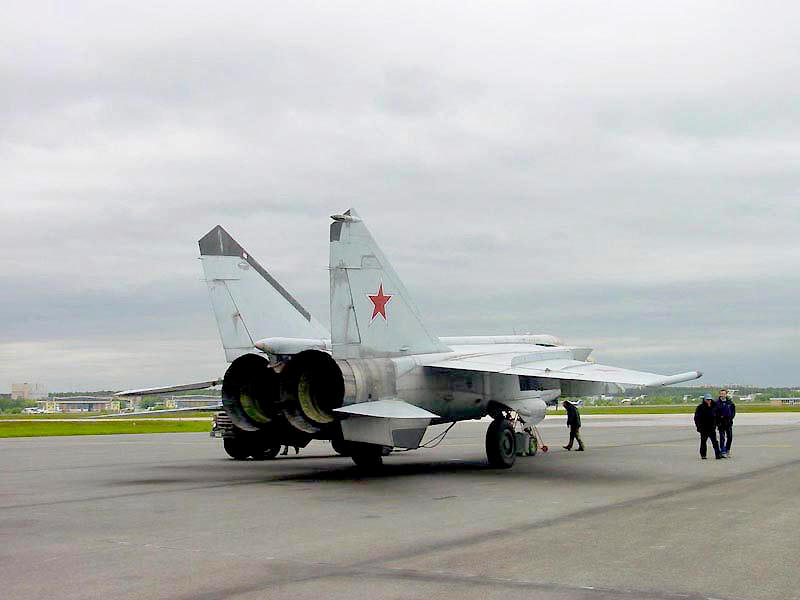
MiG-25 destroyed in Iraq in its shelter
http://www.au.af.mil/au/awc/awcgate/barnett/b5ch3.htm
MiG-23MLDOn the MiG-25 it’s said that the fire control computer cannot compute a solution for firing the missiles in the case of a head on attack – I should think especially so in head on attack were both aircraft have a combined speed of M=6. This is the alleged case for the MiG-25P, whatever about the MiG-25PD.
Regardless of the performance of the FCS computer I should think the launch window for firing the R-40 can only be measured in seconds, especially if consider the missile has to immediately ‘snap up’ to reach the SR-71’s altitude.
Have you any idea off the overall combat record of all types of SARH missiles? It’s not very good…
The question is what radar? becasue the MiG-25 can use several among them one based upon the Saphir-23
see Here is the Saphir radar used on the MiG-25 
Here is the Smerch radar
source http://www.missiles.ru/foto_MuzeyFAZOTRON-2005.htm
I mean i have my doubts about that because the russians upgraded the MiG-25 radar over the years and that measn the MiG-25 radars were not as handiccaped as you are saying
MiG-23MLDAh, well they’re just the estimated performance statistics for the R-40.
The question which has occupied most of this thread and 2 or 3 others is whether it’s good enough to shoot down an SR-71…And how long can a MiG-25 cruise at M=2.83 or even M=2.6 for?
If you read what Nazar wrote
Sr-71 it was planned to force down in a forward hemisphere and in such situation it did not have chances against Миг-25П let alone Миг-31. Belenko in general much that spoke, you ask it about ‘ indicative race ‘ which have arranged Sr-71 pair Миг-31 above Barents sea.
in it he is explaining something that is the most likely way the MiG-25 can shoot down the SR-71 and is in a Head on attack this won`t reduce the range as an aft hemisphere attack will do to the AA-6 Acrid.

I do not know the cruise speed of how long it can keep it, but probably can supercruise a while at perhaps Mach 2.3 like the MiG-31
See that for example it can fly 1250km at the speed of Mach 2.35 calculating Mach Mach 2.35 at 22Km of altitude it will give you a speed of around 2600km/h so it won`t fly many minutes, around 25-30 minutes to be exact
Практическая дальность, км:
на скорости М=2,35 1250
http://www.airwar.ru/enc/fighter/mig25pd.html
however it will fly little bit more with fuel tanks and at subsonic speed
с ПТБ (5300 л) с дозвуковой скоростью 2400
MiG-23MLDWhere did you read that?
Who wrote it?
what was the source, background or the basis of the information, which allowed the writer to make such a statement?
:confused: :confused: :confused:
There are several articles giving the following data the MiG-25 has four AA-6 Acrids, there are reports in books and the internet that the AA-6 ACrid has a Max range of 70km and a speed of Mach 4.5 or Mach 5, that speed is enough for shooting down an SR-71 but the missiles need to be fired from short distances if the SR-71 is flying at it`s max possible speed of Mach 3.5, however the SR-71 only can cruise at the speed of 3400km/h
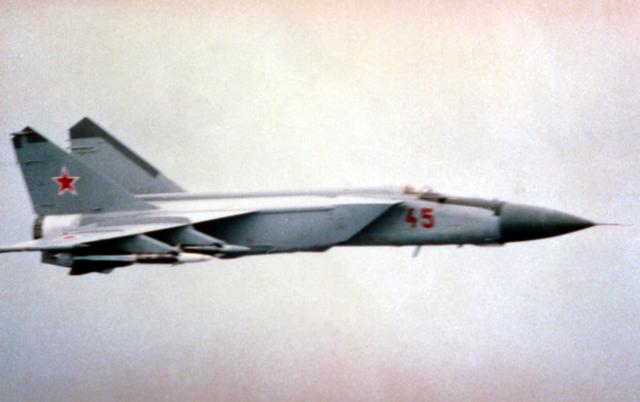

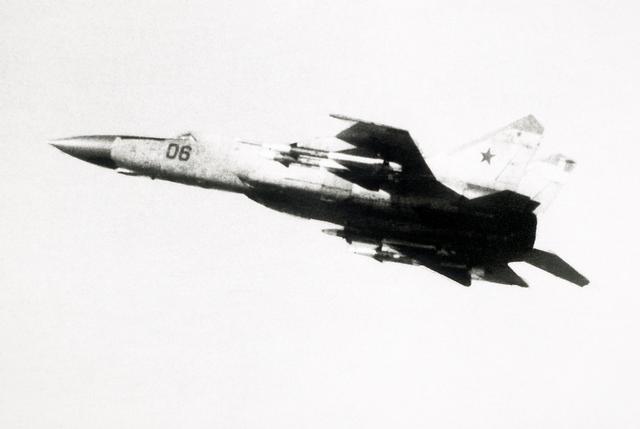
sourcehttp://www.fas.org/man/dod-101/sys/missile/row/aa-6.htm
MiG-23MLDAh, so having the ability to shoot down a Blackbird ISN’T a deterrent to overflight then…
SOC up to what i have read technically speaking both the MiG-25 and MiG-31 can shoot down the SR-71, both are armed with very fast missiles, the R-40 with a range of 70km and the R-33 with a range of 160km in their best versions, the R-40 missiles is faster than Mach 4.5 and gets close to Mach 5; the R-33 is slower its max speed is Mach 4.5.
however due to limited range a practical max speed for the target in the case of the R-40 is 3500km/h
The MiG-25 has less chances of shooting down the SR-71 because it needs to get closer to the SR-71 than the MiG-31, this means it needs an excellent work of the radar stations and enough time to shoot it down.
Since Libya had a less comprehensive air defence structure than Russia or the former Soviet Union , it was easier for the SR-71 avoid the MiG-25s i guess because i do not know the details of the SR-71 missions over Libya.




 Sign In







