 MiG-23MLD
Crobato you do not have any picture of the 1995 J-10s do you? all of the nine prototypes, the aircraft built in 1993 do you?
you are just following a childish reasoning you can modify the J-10 is not like you are saying, any aircraft can be modified so all your brilliant reason is so false because how in that case they plan to make a naval twin engine J-10 if they can not modiy the aircraft? any airframe can be modified to make room for a new engine , you are just going in a false reasoning path
See i said childish is it an insult? childish is an expresion of being naive, a brat or capricious but it is not an insult it means do not be stubborn and proud as a kid who is capricious and unreasonable
MiG-23MLDhehehehe insulting me proves how desperate you are and unable to prove your points chill out brother hehehehe :diablo:
read the thread and you will find i have answered all your questions, there is no worst listener than the one who hears but does not listen
Dear deino you changed the context, by the way where it says hehehehe breaks the forum rules? or saying Childish is an insult that only provves your hypocresy
MiG-23MLDExactly what I said: You don’t listed !!!
I said You did not call anyone an idiot by name ….Which question did You answer ???? NONE !!!!!
Maybe You didn’t read it at all ??? … but here again !
1. Wouldn’t it be more practical, technically more feasible, less time consuming and economically cheaper to build a full-scale mock-up with the dimensions of the anticipated engine, which we all assume to be the WS-10. An engine that surely had it’s very troublesome development but that was based on a modern Western core engine technology (CFM-56 and maybe even the F100 itself and not the AL-31) before the Tiananmen incident to be in the thrust class and of similar dimensions of the AL-31F which powers the Su-27/J-11. ????
2. Additional it seems more logical that the WS-10 was build originally in mind with similar dimensions (and so on) as it would have been – if successful – an ideal replacement for the AL-31F’s in a future indigenous J-11 version (we now call J-11B). Yes or No ??
3. As such and only then – after the initial setbacks of the WS-10 – it would have been more practical, technically more feasible, less time consuming and economically cheaper to reconstruct the J-10’s fuselage as both engines were of similar dimensions ! Yes or No ??
4. Are two airframe re-designs not easier than three ???
5. If there are several possibilities or hypotheses which can not be proven unless Chengdu or AVIC opens its archives; would be the more logical and more practical version the more probable one ???
6. So let’s ask one last question !
Why do You still think that a Russian article – quoting as the only source there were a WP-13 powered mock-up/prototype and already proven as a simple cut and paste translation of a Chinese article written by an aviation enthusiast – is more reliable than another report – esp. at Huitong’s page – that the J-10 was originally intended to be powered by the WS-10 ???Deino 😡
quote me the post number i said that because you have changed it, i said something different
MiG-23MLDOnce again ! You never answer to a question, Your are just babbeling around until You find anything You like and then once again the same !
And can You prove anything You tell us here ??? NO !!!! I think therefore we can say both sides here in this tread formulate only hypotheses … but if there are two which are contradicting themselves, which one is the more probable ???
The one that is baked with argument or the one based on a very obscure Russian site ?
Besides, You were the one, who started flaming and telling others here an idiot – maybe not by name – but the way You are discussing ! … that childish “hehehehehe” I found something, hehehehehe” !
I will report this tread to a moderator with the request to close that tread !
Have a nice weekend, Deino 😡
Deino
I never used the word “Idiot” prove it and quote me
I answered your questions and i said we are all of us speculating
You have ears but you do not listen you have eyes but you can not see, why? becuase you love lies, lies nurtured by your frenetic jingoism
in fact the only gentleman here was SOC he knows how to disagree with me
great hypocresy you call me idiot but you blame me oooh i can see you have coherence in your speech learn this who has no sin throw the first stone
You are a hypocrite saying i am flaming the thread because i do not agree with you
MiG-23MLDI think nothing changed !! I had the hope if You ask him a simple question, often only to be answered with YES or NO would make it easier for him !
It could led the discussion on track again ….
Nothing !!! All his usual behavior, no concrete answers, just some bubbeling around composed with opening a new playground on a very different corner o the debate added with the childish hehehehes … 😡
As we all know, its senseless, useless to discuss with him. The moderators should close this tread as the only thing once again proven is not the question “Is China sacrificing quality for quantity???” but the fact “never to argue with an idiot !!!”
Deino
Deino
you can suggest what ever but before you call people idiot learn to win arguments, you can gang against me, none of you prove anything mister crobato and his myths, Deino with hypocritical statements who prove nothing and the rest simply unable to prove anything only thing you prove you only can ask for people to be banned however niether you or crobato could prove anything beyond your ultranationalistic views the only thing you can say is ban the guy who has embarrased us and close the topic because we even ganging against him we could not say a coherent theory specially about your Mock ups poor of you no metal mock ups eh?
I am glad alone i can beat a bunch of seudo-experts who distort chinese aviation history with their jingoism 😀
Winners do not ask for banning people winners prove people wrong with evidence and are gentlemen
MiG-23MLDWRONG. Your MiG-23 example does not hold.
First your first generation MiG-23 are not prototypes, but are actual service planes. Thus the planes were originally made to that specification. These planes cannot be fitted with the AL-31F.
Second, MiG-23s with the R-29 had extensive rear end changes and belong to the second generation. These engines are much more closer to the AL-31F in dimension, thrust and airflow intake.
You quoting technical texts are completely hypocritical. Inlets only account for the wide variety of engine operating conditions as exactly said. It is not a device used, and never was it mentioned in the text, that it can be used to compensate for engine changes. As a matter of fact, the variable ramp behavior has to be changed again for a new engine, which means an additional level of testing and design added to the engine change.
You want to refer to technical texts when you are unable to answer the question what is the difference between MOCKUP, PROTOTYPE and DEMONSTRATOR? Why don’t you research on that, hypocrite.
heheheh so the MiG-23 23-11 was not a prototype?
MiG-23MLDYou never answered the question directly do you? You never think that changing an engine with a different diameter would result in changing the dimensions and design of the air tunnel itself. When the F-14 changed to the GE F110, there where modifications throughout the entire duct. Simiply said, what works for the TF30 does not work for the F110. You failed to account that the ramps and inlets are also designed for one particular engine and these too have to change when you have a different engine. A variable inlet and ramp is designed to account for that particular engine which has to operate in a variety of speeds, altitudes, and RPM states. They are very highly tuned devices, and you have to change their design and behavior when you have a different engine because the operating range and conditions becomes a different set of bananas.
And these are still engines within the same class. Not like 6600kg vs. 12,500kg.
You keep bringing up the MiG-23 as an example when it’s already shown its a fallacy. The first generation and the second generation of MiG-23s feature a newly designed rear end. Can you explain to me why the AL-31F will not fit on the first generation of MiG-23s with 9700kg thrust engines? Huh?
You seem to think that you can take the same tunnel, put a different engine on it, and use the variable ramp to compensate for the airflow differences? You really are a fool.
And where is your empirical proof that the WP-13 J-10 prototype exists? Huh? After all these years, can’t find one?
Crobato
Inlets, engines have some degree of adaptability and tolerance; modifications can be done that is what you can not understand
The first MiG-23 with Variable geometry had a turbojet of 7800kg of thrust and the latest MiG-23BN or MiG-27 can accept a Al-31 turbofan of 12,500kg, the MiG-23 proves you you are wrong becasue if the MiG-23 can be fitted with turbojets and Turbofans and these are from 7800kg of thrust to 13000kg of thrust, this proves you your theory is simply a fallacy.
remember the Russians say they modified the engine bay and the J-10 airframe in few words you live in a world where things can not be done but the real world proves it, it can be done
SUPERSONIC INLETS
An inlet for a supersonic aircraft, on the other hand, has a relatively sharp lip. The inlet lip is sharpened to minimize the performance losses from shock waves that occur during supersonic flight. For a supersonic aircraft, the inlet must slow the flow down to subsonic speeds before the air reaches the compressor. Some supersonic inlets, like the one at the upper right, use a central cone to shock the flow down to subsonic speeds. Other inlets, like the one shown at the lower left, use flat hinged plates to generate the compression shocks, with the resulting inlet geometry having a rectangular cross section. This variable geometry inlet is used on the F-14 and F-15 fighter aircraft. More exotic inlet shapes are used on some aircraft for a variety of reasons. The inlets of the Mach 3+ SR-71 aircraft are specially designed to allow cruising flight at high speed. The inlets of the SR-71 actually produce thrust during flight.
INLET EFFICIENCY
An inlet must operate efficiently over the entire flight envelope of the aircraft. At very low aircraft speeds, or when just sitting on the runway, free stream air is pulled into the engine by the compressor. In England, inlets are called intakes, which is a more accurate description of their function at low aircraft speeds. At high speeds, a good inlet will allow the aircraft to maneuver to high angles of attack and sideslip without disrupting flow to the compressor. Because the inlet is so important to overall aircraft operation, it is usually designed and tested by the airframe company, not the engine manufacturer. But because inlet operation is so important to engine performance, all engine manufacturers also employ inlet aerodynamicists. The amount of disruption of the flow is characterized by a numerical inlet distortion index. Different airframers use different indices, but all of the indices are based on ratios of the local variation of pressure to the average pressure at the compressor face.
The ratio of the average total pressure at the compressor face to the free stream total pressure is called the total pressure recovery. Pressure recovery is another inlet performance index; the higher the value, the better the inlet. For hypersonic inlets the value of pressure recovery is very low and nearly constant because of shock losses, so hypersonic inlets are normally characterized by their kinetic energy efficiency. If the airflow demanded by the engine is much less than the airflow that can be captured by the inlet, then the difference in airflow is spilled around the inlet. The airflow mis-match can produce spillage drag on the aircraft.
MiG-23MLDDo you know there is something called the Bernoulli Principle that applies to all air tunnel design?” Eh? Do you know why in a car, the intake manifolds are specifically designed for each and every engine, and that even if the engine design remains the same, but the displacement is changed, the design of the intake manifold is changed as well? Do you know why intake manifolds are not interchangeable for some reason and why changing the inlet does not do anything?
I’m creating myths? You already are in fantasy land. There is no myths about mockups. They’re just full sized models. They don’t fly, they don’t operate, there is nothing mechanical about them. That’s what they simply are. Just models.
So where do you put an engine on them?
You don’t know the difference between a mock up, a prototype and a demonstrator.
You don’t know the difference between a 6600kg thrust engine and a 12,500kg thrust engine.
You failed to answer the historical precedents of other Chinese aircraft projects.
You failed to explain what is the point of demonstrating a prototype with 50% less thrust than the envisioned.
You failed to account that you sourced from a site that copied from an amateur Chinese website.
Seriously I don’t know why the moderators don’t ban you for trolling, spamming, for failing to meet the minimum intelligence and sanity requirements. You were banned in the CDF by the way, because the moderators consider you seriously insane.
Heheheh Crobato the myth maker in a raging speech hehehehehe 😀
man please intakes accept different engines and also are designed to keep an specific amount of flow to the engine, they also divert surplus airflow out of the engine see the F-14, MiG-23, MiG-21 divert air out of the inlet, same does the boundary layer gap, engines work with specific air flows that is the reason many aircraft have variable geometry inlets
This graphics shows the air intake design of the F-14 Tomcat. The idea behind this layout is, that the airflow into the engine has to be undisturbed and at subsonic speed even if the aircraft is flying at supersonic speeds! Early demonstrations with the TF30 showed that this engine was extremely sensitive to inlet imperfections. Therefore a number of ramps are placed inside the air intake and are moved by actuators to divert the airflow as desired. Also, shockwaves (snake lines) do not occur inside the airinlet due to the design.
http://www.anft.net/f-14/f14-detail-airintake.htm
The difference between the WP-13 and the Al-31 is more less the same as the R-27-300 and the R-35-300 difference
R-27 thrust=7800kg, R-35=13000kg
MiG-23MLDEven if you do an aluminium mockup, why don’t you elaborate for us O Great One, where you put a real engine huh?
The more you post, the more you make the entire forum laugh.
hehehehehe look who is talking Crobato the myth maker, no metal mock ups hehehehehehe bravado bravado no metal mock ups 😀 what other myth are you going to create?
MiG-23MLDYou are a complete idiot. Who do you think you’re impressing with the text and the link above?
Huh?
Do you know that what you shown there is made out of PLYWOOD?
How can that be fit with a real engine, huh?
The WS-10A has a thrust capacity of 13,200kg. The WP-13 only has 6600kg. The WS-10A is much much closer to the class of engine to the AL-31F than it is to the WP-13. You don’t even know the airflow requirements and behavior of a _turbofan_ like the AL-31F and a _turbojet_ like the WP-13 differs. Fitting a turbojet into an air tunnel meant for a turbofan risks things like compressor stalls and flameouts.
But then what can we expect from someone who don’t know what the difference between a mockup, demonstrator and a true prototype.
You mentioned about the Spey. China had already received 50 engines at that time with only 4 prototypes of the JH-7 built. That’s what? 42 engines to spare? You don’t even know your freaking math.
I like the fact that you keep twisting your words, changing the date for your WP-13 J-10 prototype from 1995 to 1993.
Do you know why there are Variable geometry inlets that regulate the airflow?
and there is always a gap between the inlet ramp or inlet lip with the fuselage?
How is possible the R-29-300, R-35-300 are turbojets and the Al-31 is a turbofan and all can be fitted into MiG-27/23s?
Remember in its early years the MiG-23 was fitted with a R-27 turbojet of only 7800kg of thrust 😀
MiG-23MLD[QUOTE=Deino]Hi; after about four pages without any comment but with a lot of fun reading the still ongoing discussion I think I have to give up my promise and step in once again ! :diablo:
But let me follow Your own statements … I hope I can sum them up together correctly !
Your hypothesis is (following that Russian article and the many sources You always quote) that:
1. There was a WP-13 equipped mock-up or prototype !
2. It was more practical, technically more feasible, less time consuming and economically cheaper to built a full-scale mock up with an dated engine, that has – to be careful to say – very different dimensions at least in centre of gravity for the final aircraft, weight, thrust even if the originally foreseen powerplant was under development (= WS-10) and two similar dimensioned engines (= AL-31F and WS-9) already available !
3. After that interim engine proved unsatisfying the fuselage was redesigned and fitted with a second engine, which was rejected too and needed a third redesign to the now current engine; the AL-31FN, which needed a lengthy redesign, construction and certification for the only single-engined fighter to be equipped with.
4. … which means that it is “more likely that they modified the airframe rather than the engine, it is more logic there was a third engine …” as the WS-10 is still planned to be the final engine.
5. All the necessary redesign, wind-tunnel testing, manufacturing, testing and certification before flight test were accomplished in just three years (unsatisfying mock-up in 1993, prototype in 1996 with the second engine You mention and then the final AL-31FN) !
I hope I didn’t miss anything ! 🙁
But let me just – as You say correctly – try to “develop” a second hypothesis and tell some them as questions:
1. Wouldn’t it be more practical, technically more feasible, less time consuming and economically cheaper to build a full-scale mock-up with the dimensions of the anticipated engine, which we all assume to be the WS-10. An engine that surely had it’s very troublesome development but that was based on a modern Western core engine technology (CFM-56 and maybe even the F100 itself and not the AL-31) before the Tiananmen incident to be in the thrust class and of similar dimensions of the AL-31F which powers the Su-27/J-11.
2. Additional it seems more logical that the WS-10 was build originally in mind with similar dimensions (and so on) as it would have been – if successful – an ideal replacement for the AL-31F’s in a future indigenous J-11 version (we now call J-11B).
3. As such and only then – after the initial setbacks of the WS-10 – it would have been more practical, technically more feasible, less time consuming and economically cheaper to reconstruct the J-10’s fuselage as both engines were of similar dimensions !
4. Are two airframe re-designs not easier than three ???
5. If there are several possibilities or hypotheses which can not be proven unless Chengdu or AVIC opens its archives; would be the more logical and more practical version the more probable one ???
By the way how does a wooden Harrier-mock up proves that a mock-up doesn’t necessarily has to be made of wood ?
But finally to Your questions !
YES; as the WS-10 was under development with much more similar characteristics than the WP-13.
Why ????? If it is that easy as You describes with several examples to change an entire airframe, why should it be harder to change an engine under development ??
Why … I suggest this is pure nonsense ! 😀
…. and I do not think they would modify the WS-10 design just to fit it into the J-10, the airframe is the aircraft element that will suffer the most of modifications rather than the engine, that is the reason they say they modified the J-10 airframe and not the WS-10.
I think that is a contradiction: Why then changing the one element that suffers the most of modifications ????
Exactly; I can only agree with what SOC said as it just proves my theory: “simply because the WS-10 has been designed with specifications similar to the Al-31” … but if we follow Your argumentation we don’t use the easier way, we take the long and hard way and redesign everything only to fit an unsuited and dated engine !???!
So let’s ask one last question !
Why do You still think that a Russian article – quoting as the only source there were a WP-13 powered mock-up/prototype and already proven as a simple cut and paste translation of a Chinese article written by an aviation enthusiast – is more reliable than another report – esp. at Huitong’s page – that the J-10 was originally intended to be powered by the WS-10 ???Only because it’s written in that Russian article is surely not an argument; the Bible says that earth was created in seven days (to be correct: in six! :diablo: ) and that’s not necessarily a prove in terms of nature science !
And please don’t start now another side-discussion because I made a mistake in grammar, writing or punctuation !
Cheers, Deino :confused:
Deino you got several part wrong
First the Russian account claims there this
A-prototype built at the end of 1993 with a R-13/WP-13 single seat aircraft and resembled the IA Lavi a great deal
China asked Russia to hel in the program the AL-31 was fitted to the J-10 and it was redesigned
There is going to be a WS-10 equipped version in the near future.
Now China military aviation in the J-10 article claims
Mock up built in 1993, no WS-10 available, no western engine available, China asks Russia to help, J-10 modified to accept the Al-31, in the future WS-10 will fit the J-10 as initially envisioned
Now let`s go the WS-9 is an Spey, England at no moment accepted the Chinese conditions for licensed production in China, China always faced the possibility of running out of engines, the WS-10 also was complex for the Chiense at the time.
The AL-31 was the engine that was took but this also requiered Russian help, in fact China asked for license production in China to Russia, the Russians denied the license only agreed in supply the engines.
There are several aspects you are not considering, first the CG problem as you claimed, it is not as difficult as you are claimimg, the Rafale was redesigned and reduced in size, the EAP is quit different to the Eurofighter 2000, aircraft have twin seat versions, they are built with not too much trouble
Also you are thinking the J-10A has the same dimensions than the J-10 powered by the WP-13 even the same weight, you are thinking it will have the same specifications, look simple the YF-22 and the F22 both aircraft are different a great deal.
Building an engine is the most difficult part of an aircraft and usually the airframe will have the most of the chances because engines are qit complex, it is not economical, practical and easy modified the WS-10 to fit the Al-31 dimensions, it is more likely the WS-10 and the AL-31 are similar in specifications and the Al-31 was chosen because it is the closest thing to an WS-10
If the WP-13 was chosen is becuase was the best engine available and they know it well, i do not know the J-10 prototype of 1993 real dimensions and general specification so any thing relating thrust to weight ratio is highly speculative
Ah by the way you think there are not metal mock ups read this
Among the Indian exhibitors, HAL’s sheer size earned it pride of place. Defence organisations such as the DRDO were not far behind. HAL, which has embarked on the development of an Intermediate Jet Trainer, the HJT-36, had a full-scale, all-metal, mock-up of the HJT-36 on display. HAL hopes the aircraft will replace the Kiran (HJT-16) trainers that have been in use with the IAF for nearly 30 years. The IAF plans to phase out the 200-odd Kirans by 2004. HAL has pegged the overall project cost at Rs.200 crores and expects the prototype to roll out 39 months after it gets the go-ahead. The plane should enter service two years thereafter.
http://www.hinduonnet.com/fline/fl1601/16010670.htm
HAL Light Combat Aircraft Mockup
The Light Combat aircraft program has been the pride of India’s Aviation industry ever since the LCA had its first flight in January 2001. The Light Combat Aircraft is the product of the Aeronautical Development Authority , also known as the ADA. The aircraft had been in development ever since the mid eighties, and in the early nineties, the wooden and metal mockup of the LCA was rolled out for an airshow. Subsequently two Technology-Demonstrators were built with one of them doing its flight last year and finishing about twelve test flights in all.
MiG-23MLDYou really are a class act in stupidity you know? You don’t even bother to research what the meaning of the word “mock up” means.
It’s a goddamn full size model made of all things WOOD. TELL ME HTF YOU FIT AN ENGINE INTO THAT?
Crobat
The bravado has made you even to fantasize and say things i never said .
A mock up by the way has real dimensions, a realistic mock up does not need necesarly being of wood another fantazy of yours, the Russian text never says mock up it uses the word a single seat prototype built resembling the IAI Lavi fitted with a WP-13 engine.
The other account says mock up, in your swaggerring did you think there are many kind of mock ups? some are structural mock ups, built to represent full size structural aspects of an aircraft and these are more important for engineers that the ones you are talking just to show a big real hollow model to the public a mock up reflex a real aircraft and therefore reflex a real arrangement and structure you do not need necesarily fit an engine it is true but you need to fit real data, about a real engine.

Now i will ask you something more important, do you think it was easy for the Chinese change the WS-10 to fit the AL-31 dimensions? since the WS-10 was built for a different engine bay and it forced the modification of the J-10 engine bay do you think it is cheap, easy and practical modify the WS-10 to fit the AL-31 specifications?
It would mean change entirely the engine design, something that is not easy in fact even inpractical because an engine is far more difficult to design and manufacture than an airframe
It is more likely that they modified the airframe rather than the engine, it is more logic there was a third engine and not the WS-10 because the J-10 airframe can be modified easier than the WS-10 design and i do not think they would modify the WS-10 design just to fit it into the J-10, the airframe is the aircraft element that will suffer the most of modifications rather than the engine, that is the reason they say they modified the J-10 airframe and not the WS-10.
As SOC has said it will depend what kind of modification they made, but i rather think the J-10 design of 1993 had a third type of engine niether the WS-10 or Al-31 simply because the WS-10 has been designed with specifications similar to the Al-31 and that is the reason they chose the AL-31 because it probably is the engine that fills the same niche and has similar characteristics to the WS-10
MiG-23MLDI am only a fighter enthusiast with no backgorund in aeronautics/engineering etc. Yet even i could tell u that a J-10 class fighter meant for air superiority is going to suck (and suck bad) with WP-13. If so, i just dont know whey those chinese experts did such a stupid thing.
It would not be such as stupid thing if they just meant an interim engine, while the WS-10 was ready and if the engine allowed them to fly the aircraft to test other systems, like the EAP, Berkut and many other programs that did not fit the first prototypes with series engines but off the shelf.
MiG-23MLDDifferent accessory connections, for one. And the fact that these ARE two different engines. Engines are not just simple “plug-and-play” devices. The main point of confusion here is that the article in question does not state what modifications were done. Besides, you can bet they had to adjust the nacelle of the FLANKER to install the WS10 for testing.
SOC
Let`s make two differences, first the Russian account is clear a prototype was built at the end of 1993, this was powered by a WP-13, this aircraft resembled a agreat deal the IAI Lavi, the chinese found it was not satisfactory and they decided to fit the Al-31.
The modifications ended up in the first prototype flown in 1996, however this aircraft had a troubled history, the first succesful first flight was in 1998.
Now the other account claims it was a mock up, that the chinese could not got a western engine and the WS-10 was in a very initial stage of development so the Chinese only had the option of asking Russia for the AL-31 and the J-10 mock up was modified.
Now you are as many here speculating the WS-10 was probably modified because you can not accept the third engine hypothesis or the Russian account.
this account fails to answer what engine was powering the Mock up, either was a WS-10 mock up or a Western engine perhaps the original Lavi P&W 1120, however you end up having the question why you will return to the prototype of 1993 if the WS-10 was the original engine.
What we are doing here is just speculating since no one has posted the original 1993 J-10 prototype picture niether the supposed mock up mentioned in one of the accounts.
many speculate that the WS-10 was modified to resemble the AL-31 and it is a totally
different engine from 1993 claiming at the end it will have a smooth transition and the J-10 won`t be remodified as it was in 1993 due to the WS-10.
I would rather say at the moment i see no other solution than say we have two accounts and none has a definitive edge in veracity beyond our own speculation and desire to think one is right and the other is wrong unless we have good and solid evidence.
MiG-23MLDWell, if this is only a beauty contest, here my favourites:
sortet this way:
fighter 1 engine/fighter 2 engines/bomer 1/bomber 2/bomber 3+biplanes: i don’t like them…
WW II:
british:
Seafire/Beaufighter/Fairey Barracuda/-/-
french:
-/-/-/LeO 451/-
german:
Me 109f&k/He-219/Fw-190F/HS 129/-
japanese:
J-7W/J1N/D4Y/-/G8N
us:
F-4 U/P-61/-/A-26/B-24
russian:
MiG-3/-/Il-2/Pe-2/-
best of the rest:
IAR-80/Fokker G1/-/-/-50’s
F-8660’s
F-100, F-108, XB-70, A-5, T-3870’s
MiG-25, MiG-27, F-1480’s
MiG-29, Su-25, Tu-26 (or before someone kills me, Tu-22M), Tu-160, Mirage 400090’s
Eurofighter, MiG 1.42/1.44, YF-2300’s
J-10
Aurel
I like many aircraft you do
however i sort aircraft by the time of their first flight while you do it by the time they entered service.
If i continue with my clasification for the most beautiful aircraft that first flew in the 1970s i would say i almost like them all.
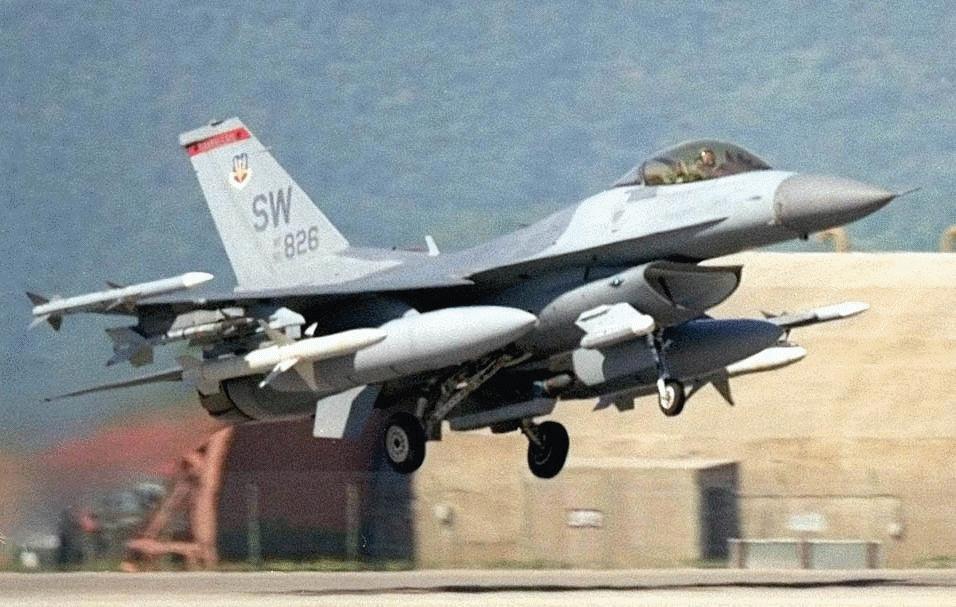
However the F-16 is the most beautiful to my eyes
Number one is the F-16 first flown in 1974
Number 2 is the MiG-29 first flown in 1977

number 3 is the great F-14 first flown in 1970
number 4 is the Su-27 first flown in 1977

number 5 is the great F-15 one of my favorites of all times first flown in 1972
number six is the Mirage 4000 first flown in 1979
number seven is the Su-24 first flown in 1970
number eight is the IAI Kfir first flown in 1971

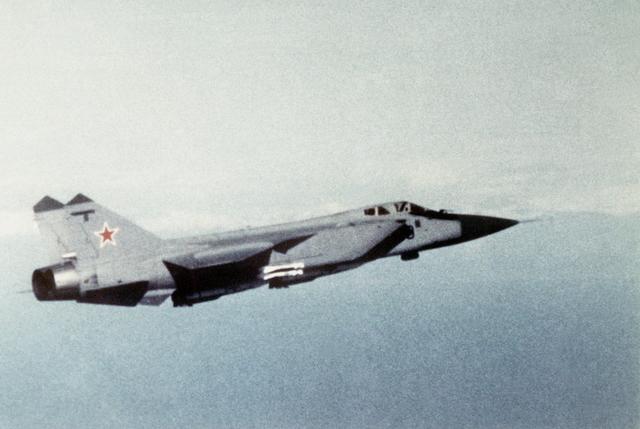
Number nine is the MiG-31 first flown in 1976
number 10 is the Mitsubushi F1 first fown in 1977



 Sign In







