 MiG-23MLD
32pax or 6000kg
The Mi-38 can carry 32 passengers or 5000kg in the cabin or up to 6000kg of external load
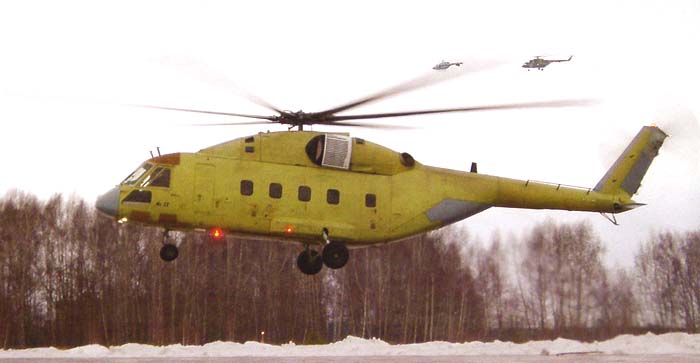
Source: 32 пассажира или 5000 кг груза в кабине или до 6000 кг груза на подвеске from http://www.airwar.ru/image/idop/uh/mi38/mi38-7.jpg
MiG-23MLDThe GDR showed a similar pic of a L-39 armed with an AA-8. After unification it showed, that it was for propaganda purposes only. Its use was never trained in that L-39 unit.
Nice pics, but that show only, that an AA-11 could be fitted to a MiG-27.
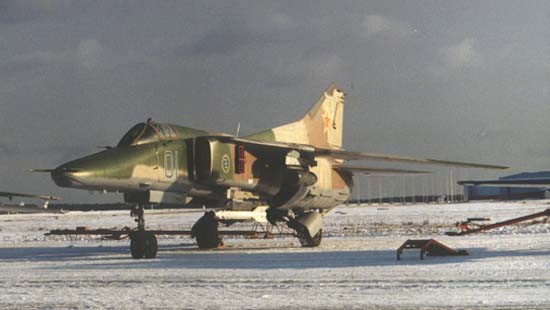
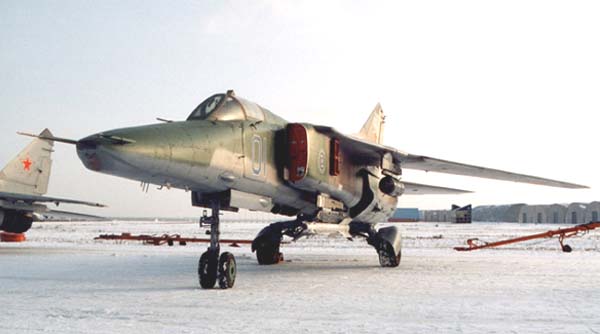
Yes that is a demostrator, however that demostrator is the base for the upgrade offered to India
you can see some close up to the MiG-27 demostrator load of AA-11s
MiG-23MLDA MiG-27 demostrator armed with AA-11
MiG-23MLDTu-22
MiG-23MLDI included the word ‘proposal’ deliberately – I know they were never built :confused:
The drawings are taken from Andrei Fomin’s Russian-language Su-33 book.
The first drawing is captioned “Scheme (of) ship-borne fighter MiG-23A (aviaproject 1972)
The second is captioned “Scheme (of) ship-borne fighter MiG-23K (outline project 1977).
I’m not making this stuff up……………. :diablo:
Ken
Flanker_man I see however see that i was only saying the only MiG-23 that really was built as a naval fighter was a sole MiG-27.
MiG-23MLDFirst MiG-23 carrier-capable proposal was this….MiG-23A
…..developed into this……MiG-23K…..
Ken
Flankerman
The only naval MiG-23/27 ever built, was a MiG-27 bort 603 with arresting hook that was operated over Nitka as a flying laboratory
here are some excerpts to understand better the MiG-23K history
Проектировалось три вари- анта машины – истребитель МиГ-23АИ, ударный самолет МиГ-23АБ и корабельный раз- ведчик МиГ-23АР. По мере раз- вития программы самолет все более отличался от своего про- тотипа – МиГ-23МЛ. На заклю- чительном этапе разработки его предполагалось снабдить крылом увеличенного размаха и площади, новым, более мощ- ным двигателем Р-100 или двумя Р-33, а также убираю- щимся топливоприемником си- стемы дозаправки в воздухе here it tlaks about the different variants and engines
and here they talk about the only naval MiG-27,ОКБ были пере- оборудованы два самолета: МиГ-27 (преимущество – хоро- ший обзор вперед-вниз; б/н 603) и МиГ-29 (опытный са- молет №603), here they talk about the MiG-27 bort 603
sourcehttp://www.aeroreview.ru/?/pages/ako/ako_200301_012015/ako_200301_012.htm
MiG-23MLDooh mig-23k!!!
http://www.aircraftresourcecenter.com/Gal3/2201-2300/Gal2236_MiG-23K_Biggs/gal2236.htm 😀 😀
– i should appoligise for the shoddy model, i was 17 and n00b the time, ok! LOL
(to redeem myself, in 1/144: http://img230.imageshack.us/img230/2426/a1ur2.jpg)
realyl wish teh 23 had seen even prototype stage as a carrier fighter, would have been ausome 😀
Well there was a MiG-27 built with arresting hook and modified ventral fin
MiG-23MLDWho can show me a MiG-25(E-155) equiped four lift engine in a model picture?
Then are there a big picture of МиГ-31И
http://www.testpilot.ru/russia/mikoyan/mig/25/rpd/img/e155r_pd2.jpg
http://www.testpilot.ru/russia/mikoyan/mig/25/rpd/img/e155r_pd1.jpg
Source
http://www.testpilot.ru/russia/mikoyan/mig/25/rpd/mig25rpd.htm
MiG-23MLDbest trained pilots in the world are Afghan pilots 😀
perhaps for flying flying carpets the best pilots are in Afghanistan but for MiG-29s are in Russia 😀 and for JAS-39s in Sweden 😉
MiG-23MLDFor obvious reasons and I will not go into your mix you gave about that. To cut it short, as long as the related fighters were operated in the performance envelopes of each other and that includes the weapon-systems, none has an advantage by that in general. None claims that the Kfir was a super maschine, just a fighter-bomber, which was able to hold his own against opponents like MiG-23 and AJ-37 at best. Of the three given the MiG-23s have the highest wing-loads by the way. Your last section about the Kfir shows, how important it is to have best trained pilots. Those ones are capable to overcome shortcomings of own mounts at first and get the best from that most of the time.
I do agree in some terms in what you said, but what i meant is in general the Kfir in the 1970s and 1980s was generally speaking a good fighter aircraft, however it is not a BVR fighter, it`s main armament was still short ranged missiles, contrary to the JA-37, F-4E or MiG-23.
The Kfir is fast but as an interceptor lacks BVR weapons, the Kfir represents more a MiG-21 threat.
If you do math you will see the MiG-23 has just slightly higher wing loading while has higher thrust to weight ratio but this includes BVR weaponry.
The JA-37 will be the same, the Kfir in 1982 was used as a fighter bomber because they were unarmed in what respects BVR weaponry.
The Israelies knew that, that is the reasons it ended up as a fighter bomber and not an interceptor.
Sens remember that in reality no air force sets the standards of training but the aircraft manufactures, Companies like Sukhoi, Boeing, Panavia, BAe, Tupolev, Northrop Grumman, Eurofighter consortium, Dassault, Shengyang etc, etc…..the best air forces have the best technicians, the closest links to the manufacturers and the largest budgets.
A good pilot is the one that knows best it`s aircraft and the opposition`s aircraft, who is also guided by tactical sense and strategic reasoning.
Also tactics determine what is called good flying, hordes of aircraft just need good squadron communication rather than excellent aviators. hordes of aircraft need average technology but superior numbers enought to overwhelm the enemy.
Is like asking who will fly better the J-8II than the Chinese or the Su-27 than the Russians? who can fly better the Mirage 2000 than the French? who can fly better the IAI Kfir than the Israelies?, the best pilots of Kfirs are in Israel, the best pilots of MiG-29s have to be in Russia, even the Japanese know that assemenbly gives you many advantages at the moment of flying an F-15.
The best F-14 pilots are in the US but surely the best MiG-25 were not in Iraqi, maybe there are some good pilots but not as many as in Russia or Ukraine.
MiG-23MLDDo you never learn something from postings?!
The given G number is the allowed one for an aircraft to achive the designed life-time and the related safety margin is 1,5 in general.
A fighter with a given G number of 8 can go up to 12 with out breaking.
Maybe the aircraft can do so, but the pilot or crew will become unconsious and may be killed after a few seconds, when doing. Nearly all pilots do face a grey-out close to 9 Gs, what is the ‘red-light’ to relax or black-out in short notice. The USAF lost several F-16s, just to that cause, so the allowed limits were lowered further. The F-16s were built for a lifetime of 4000 hours, but in the meanwhile that is doubled. Those F-16s have still there >9G capability, but were flown in peace-time operations below that. To conserve lifetime of the Kfir in IDF-AF service those were limited to 7,5 Gs at first and were reduced further to 6,7 Gs. Just to bring down the Israeli pilots, which had to explain their superiors, why they ‘locked’ the G-meter at that set limit and may have passed it their. Much to the relieve of the maintenance people, which had less work and related costs by that.
Despite that I posted it several times before.
The bank angle and related rate of turn hits a limit at around 6 Gs.
6 G it is 81.4°
7 G it is 81.8°
8 G it is 82.4°
To that you can add, that most fighters run out of ‘steam’ and lift under that forces very quickly.
When looking into the performances charts of every modern fighter, you will see that the 9 G performance envelope/corner is very small.
In the 70s it was a advertisement highlight, because the performance envelope of AAMs of that days was limited. That situation changed in the 80s and the AFs scaled back the allowed Gs to more reasonable 7 Gs.
Loaden fighters were limited to ~5 Gs in general. (78.5°)For the attacker the Gs are less important than for the attacked one, because he is in need of less Gs in a limited period to keep his target in aiming-sight and there are many more reasons, why the thoughts about modern air-combat had changed again.
Your examples given just show, that you are unable to differ between nominal and practical values. Of cause the fighter with the higher performance envelope in all important arenas has some advantages. To that you have to add the performance of your pilot, the sensors, EW-suit and the weaponary.
Even when that package seems superior it is still not asshurance for success.
When your adversaries do manage to stay outside your threat-envelope or manage to gain themselves a tactical advantage situation.
See our SH/Dagger example about that. To reach their naval targets at all, the Argentine pilots had to place themselves in disadvantage and were unable by that to exploit the superior height and speed performance of their Daggers.
Reading data from books can do even a child, but to put it into a perspective to the related missions is something different. Even facts are misleading sometimes. Reaching peak values under test conditions, does not saying much about real flight behavior of that very aircraft. Little control and no smooth flight may not allow aiming at all. When such vices may be overcome by exceptional pilots, that is no help for ordinary ones. No problem for FBW-fighters any longer by the way. Flying a MiG-23 successfull you have to be a very good pilot at least and may it just be not to loose controlled flight only, when the F-16 is much less demanding in that.
Sens
Any aircraft can overrule it`s G overloads limits and this won`t mean it becomes super agile or an F-22.
Agility is a result of thrust and lift versus drag, inertia and weight, in both areas of agility and lift the Kfir C7 for example is not exactly a super fighter, it`s thrust to weight ratio is barely 0.81:1 way below the unity and little bit less than the MiG-23 and AJ-37 Viggen to cite an example and it`s wing area is also small even including the canard less than that of the MiG-23 or SAAB AJ-37.
Of course over ruling the overload G limits will meant some kind of structural damage.
The F-16 is better in agility than any third generation fighter because it has better thrust to weight ratio and has a better structural design allowing it to absorb 9Gs without structural damage.
The MiG-23, JA-37 and Kfir also are stable designs unlike fighters like the Su-27, F-16 or JAS-39 which have some degree of aerodynamic instability.
In few words even despite of good pilots, they won`t be a decisive factor when an inferior aircraft is flown against an advanced design.
The Kfir C2 can be flown by good pilots but it won`t make it a super machine, it`s true a good pilot will avoid all the Kfir weakness and exploit any advantage if any against a more advanced design, a good pilot knows how to take advantage of the unability of taking advantage of any good characteristic of an aircraft and the unawareness of an unexperienced pilot of the better weapons and flight characteristics his/hers aircraft has.
MiG-23MLDSo be carefull, before you draw conclusions from charts. It starts with fuel-consumption of you car f.e.
The Nesher was used as radarless daylight fighter from the Israelis similar to the MiG-21s, but with a better payload capability. The Argentine used theirs as Daggers in the fighter-bomber-role mainly.
The Nesher has a corner-speed of ~ 400 kt and an inst. turnrate of ~ 14,5° below 15000 feet and Mach 0,8. The modified radarless Mirage IIIC were slightly better, because flown without nose-ballast later for higher agility.
There were 4 Kfir variants. The first one with no canards did not better the Nesher, when the later modifications had a corner-speed of ~ 300 kt and an inst. turnrate of ~ 19° below 15000 feet and Mach 0,8. All at combat weight, what means ~50% internal fuel and an AAM load.
From 1980 the Kfirs in IDF-AF service were outclassed by new F-16s as from the F-15s in 1976 and were used as fighter-bombers mainly.
Just to remember, the USN and USMC leased early Kfirs as F-21A to simulate MiG-23 Floggers in adversary training. Radar-engagements were simulated via links. The later MiG-23 variants had advantages over the Kfirs high up and at high speed and the more and more important BVR capability. Which were added to the last Kfir-modification exports only. If the related pilots were capable to make good use of the advantages or avoid unfavourable corners of their related mounts is another question.
Sens i do not need to take care as you say because the information i am giving you comes from books and clarifies MAX INSTANTANEOUS turn rate and MAX SUSTAINED turn rate we know that is achieved at low speeds and heights, a Chart might tell you at what speeds and height each fighter is better and corner speed clarifies that more however the Kfir can not have a high agility because it barely gets 7.5Gs of Max overload and the fighter that has the lower G over load has the higher corner speed.
Probably the Kfir C2 might be comparable to early MiG-21 and MiG-23s but i do not think it is highly manoeuvrable.
MiG-23MLDFlogger, while I’ve seen tons of figures, theres really no way to be sure of their accuracy, especially when you don’t have the corresponding figures for speed and weight. What I know from SHAR pilots who went up against MiG-29s in DACT, is that under an optimal speed for both aircraft, the MiG-29’s STR is slightly higher. It is standard to get two aircraft together at the same speed, and get them to start turning, on command from GCI, so as to compare them. I don’t know whether vectoring was used or not but I do know that it helps doing certain manuevers hoped to overcome the MiG-29’s close in advantage. Of course, the SHAR is not capable of sustained 9 G turns like the MiG-29. 6.5-7 G is more common. Yet it is capable of trashing the MiG-21bis and giving the Mirage-2000H a run for its money.
The MiG-23MF was only obtained as an interim solution and eventually used exclusively for BVR training. Only 2 sqns worth were obtained and the single remaining squadron has been doing little more than chucking flares or target towing. The MiG-23MF would have made a nice testbed though.
Harry
I just have those numbers and are from a relatively good book, we need more official information to confirm it but i feel this book is more less reliable
MiG-23MLDI am still waiting for related sust. turn-rates and speeds. By the way, the MiG-29 and the one with OVT can subsitute lift by directed force similar to Harrier. I am shure that the Indians pitted their ones against each-other regular in mock-ups.
The Indians phased out their MiG-23MF long before and deemed that not worth to be upgraded to MiG-23MLD/98.
Sens
Sorry i have not a chart for the turn rate and corner speed for the Harrier i do have it for the MiG-29 though, i just said what i have read is the Harrier Max turn rates either instantaneous or sustained are quit modest, it`s numbers are around the MiG-23 numbers, nothing special, it`s max sustained turn rate is the same as the MiG-23 in the region of 15 deg/sec and 14 deg/sec depending in the variant, the instantaneous is 20 deg/sec what suggest a better corner speed because the MiG-23 has a max instantaneous turn rate is 16 deg/sec.
Any way the Kfir and Nesher are not the best third generation fighters, i guess the AJ-37 and MiG-23 are better fighters than the IAI Nesher and Kfir.
The Harrier also was an excellent fighter better than the opposition too even flown by good Argentinian pilots.
Any way the Harrier BIFFing is almost like the MiG-29 cobra manoeuvre and the MiG-29OVT has thrust vectoring in 2 axis or in few word in yaw and pitch while the Harrier only can angle down the nozzles 90 deg from the horizontal (from 0 deg to 270 deg clockwise) making it only useful for V/STOL
You can see the video it shows the V/STOL characterstics and flight performance well http://www.youtube.com/watch?v=cBKmciXGy1Q&search=harrier%20av-8b
MiG-23MLDWhat is the harrier’s sustain turn rate while “Viffing”?
The Thrust vectoring nozzles in the Harrier are far far away from those in the MiG-29OVT system, first it is only a 2D system and it only swivels at pitch all the four nozzles and it only angles down the nozzles from 0 deg to close 270 deg, VIFFing mostly disaccelerates the Harrier quit similar to the Cobra, however the Harrier is quit limited in combat use of it`s thrust vectoring because these were designed for V/STOL and not for maneouvrability as in the MiG-29OVT case or even the ones seen on the F-22..
VIFFing is good to follow a sloped angular up ward trajectory with respect the horizon, but this bleeds speed and lift. The Harrier has small wings and limited thrust in each nozzle, this makes the aircraft not as agile as the MiG-29OVT or F-22, the later have nozzles that can swivel up and down contrary to the Harrier that it`s nozzles only swivel downward.
If the Harrier swivels it`s nozzles on a -45 deg ( 315 deg ) from the horizon simply will bleed so much speed that will simply almost hover see the videohttp://www.youtube.com/watch?v=bDCHKp9bInE&search=Sea%20harrier in a turn bleeding energy means bleading lift and stalling the wings
Up to what i have read the AV-8B only can a Max sustained a 15 deg/sec turn rate and the Sea Harrier even less only 14 deg/sec, their max instantaneous turn rate is 20 deg/sec.
This is more less in the class of the MiG-23MLD, a Harrier armed with AIM-9L will be therefore more likely to beat a Shafrir armed IAI Nesher even despite good pilots fly them


 Sign In








