 MiG-23MLD
I know for example that the F-16, F-18, Su-27 have wingtip antiflutter weights that double as missile wing tip rail launchers, however the F-15 has cropped raked wingtips doing the same fuction the antiflutter weights do
MiG-23MLDIt were no mistakes of the Swedish, just the lack of the FBW technology in the late 50s to early 60s, when the program 37 did start. Starting in the 70s with the F-16, the first “electric jet”. 😉
By the way, the Swedish did use a civilian Tf-engine and the Russian did similar with the MiG-31.
The AJ-37 was a revolutionary aircraft for several reasons, let us analize
In the 1950s swept wings were gradually becoming deltas such as in the Su-15. Mirage III, MiG-21, Su-9, T-5, Mirage IV, Ye-152A and other aircraft, deltas have many advantages but also disadvantages, as a wing is swept its lift decreases and its AoA handling worsens ( that is the reason the F-14 or any VG wing aircraft has low sweep wing angles at landing and take off), some designers opted for the direct lift solution without any real gain except in the Harrier.
Other designers saw in the variable geometry wing the solution for those problems, in the F-14 and MiG-23 the several sweeps allow high lift at low sweeps and low drag at high sweeps, also wing spoilers in the MiG-23 and F-14 work as elevons to increase trailing edge flap area.
The F-106 designers saw in wing fences a solution to the migration of the boundary layer to the wing tip in a spanwise flow that also thickens, and in the MiG-23 and F-14 leading edge slats reduce the separation angle of the wing vortex to the upper wing surface increasing lift.
The AJ-37 tried to solve these problems by a canard vortex interacting with the wing vortex increasing lift at high AoA, further more its wing had an apex wing leading edge notch to delay vortex formation and a leading edge dogtooth to stop span wise flow of the boundary layer.
The AJ-37 had a very promising configuration due to the positive lift ahead the center of gravity reducing trim drag, this configuration has been selected mostly in Europe and China for one reason the canard delta contrary to the VG wing, does not increment weight and solve in a simplier way stability issues besides its solve some of the drawbacks seen in the delta wing performance
However everything has been progressively done and SAAB learnt with the AJ-37 and some needed breakthroughs were made after the AJ-37 that allowed an easier and quicker solution to the AJ-37 drawbacks
MiG-23MLDHere abhimayu
You will see why Tailess delta wings have more limitations
The Mirage III family grew out of French government studies begun in 1952 that led in early 1953 to a specification for a lightweight, all-weather interceptor capable of climbing to 18,000 m (59,040 ft) in six minutes and able to reach Mach 1.3 in level flight.
Dassault’s response to the specification was the Mystère-Delta 550, a sporty-looking little jet that was to be powered by twin Armstrong Siddeley MD30R Viper afterburning turbojets, each with thrust of 9.61 kN (2,160 lbf). A SEPR liquid-fuel rocket motor was to provide additional burst thrust of 14.7 kN (3,300 lbf). The aircraft had a tailless delta configuration, with a 5% chord (ratio of airfoil thickness to length) and 60 degree sweep.
The tailless delta configuration has a number of limitations. The lack of a horizontal stabilizer means flaps cannot be used, resulting in a long take-off run and a high landing speed. The delta wing itself limits maneuverability; and suffers from buffeting at low altitude, due to the large wing area and resulting low wing loading. However, the delta is a simple and pleasing design, easily built and robust, capable of high speed in a straight line, and with plenty of space in the wing for fuel storage.
MiG-23MLDYour Saab 37 Viggen example was the single technology solution, except a VTOL design to full the landing requirements of the Swedish doctrine. The French did use that technology not for landing purposes, but to ease restrictions in AoA at lower speeds.
Sens
Uhmm….. well the AJ-37 Viggen evolved into something more advanced, well into the JAS-39 why do you think that?
the canard is to increase the lift suction at high AoA of the delta wing, this can be used either at landings or during combat, however to make the fighter more agile you need leading edge flaps, relaxed stability and moveable canards , the Swedes rectifed those mistakes in the Gripen, the same did the Israelies with the Lavi and the French with their Rafale.
The main idea was increase the Viggen`s delta wing AoA handling and the canard did it, however some technological limits kept it a third generation fighter.
technologically speaking the Viggen were limited and only could use the canards in a more limited way, but as far as breakthrough the Viggen was the most auspicious of all the 1960s fighters, and perhaps one of the most important and influencial aircraft of the cold war
MiG-23MLDBecause of SAMs. It was the design envelope not the wing that was at issue.
I agree with that i never meant something different
MiG-23MLDIt “proves” nothing of the sort. Most often it was a case of no $$$ rather than any inherent design flaw. The LFI (the competition the two NA designs were for ) was never built in any form nor was the program the canard-equipped F-106 was proposed for.
You are right, money is the first factor behind any cancellation, but my point never was a critic of the B-70 as an aerodynamic configuration, but rather as a solution to a given requirement.
The same is with the F-106. if they never built a canard equipped F-106 simply was because the aircraft never justified the need.
aircraft are a compromise of needs and capabilities versus costs.
The F-106X never justified the costs with respect its capabilities.
The Viggen did, the swedes did not use VG wings as the MiG-23 or lift engines like other failed projects.
the swedes had better vision in terms of the advantages of the canard delta wing configuration and this was copied by IAI in the Kfir and Lavi and by Dassault with its Mirage IIING and subsequent Rafale and Mirage 4000 projects.
Convair never progressed beyond a model while SAAB saw the real advantages and opted for the AJ-37 Viggen
as such the Viggen was the first ever operational delta wing fighter with a canard, other were simply paper aircraft or prototypes such as the B-70 which by the way was not a fighter but a bomber with a canard optimised for high speed and STOL
MiG-23MLDhttp://www.labiker.org/xb70.html
It seems, that you still have to learn something about aerodynamics. See compression lift f.e. and your claim about VG wings. The B-1B was in need of very low level legs. Enjoy the related pics and footages, at least an amazing part of technology. 😉
That has nothing to do with the fact the B-1B was accepted and the B-70 faded into oblivion, why? becasue the VG wing bomber was considered a better compromise for the role the B-70 could not do, low altitude strike bomber.
Any way the Viggen was designed as a STOL fighter and its canards were designed and optimized for low altitude high lift while landing.
The B-70 is similar in the sense it was designed as a delta canard high speed aircraft but its canards have a different shape and the wing its a bit different.
MiG-23MLDAnd I’m not disagreeing with that. My point was that most often when you see something for the first time in service it’s been looked at before somewhere else. Very little is completely new. Even the Lockheed L-133 (design of which began in 1940) had a canard and it would have been powered by an axial-flow turbojet (the L-1000).
You are right and in that sense i agree with you, my point was the first aircraft to truely use a delta wing and a canard operationally was the Viggen; the Viggen also used its the canard in a different way, the Viggen`s canard has a distinct feature, the delta wing generates stronger vortices than what a straight wing does, and as such the canard of the viggen is used to interact with the vortex generated by the wing.
As early as 1940, the Japanese and americans did have canarded aircraft, however the AJ-37 is the first of a kind in the sense it was a pure tail first delta wing aircraft.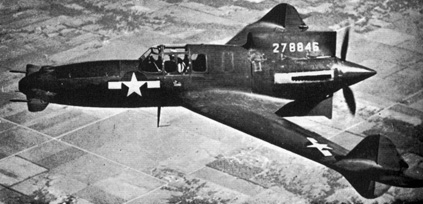
The rest of the fighters you are mentioning are paper aircraft, as such they prove the designers rejected them, the Ye-8 was also not tailless
http://www.f-106deltadart.com/misc/F106x.jpg
http://uplink.space.com/printthread.php?Cat=&Board=businesstech&main=411355&type=post
The First truelly aircraft to have a canard and a delta wing operatioanally was the Viggen, also i can not recall any other fighter before the Viggen to be a real and even have been built with a canard and a delta wing any where in the world.
Also the F-106X was an aircraft less complex than a Viggen, the Viggen has further aerodynamic refinements that have been applied to the Gripen and LCA and prove the wisdon of the swedes when they made the Viggen
the B-70 was revolutionary as such but it was a bomber and never reached operational status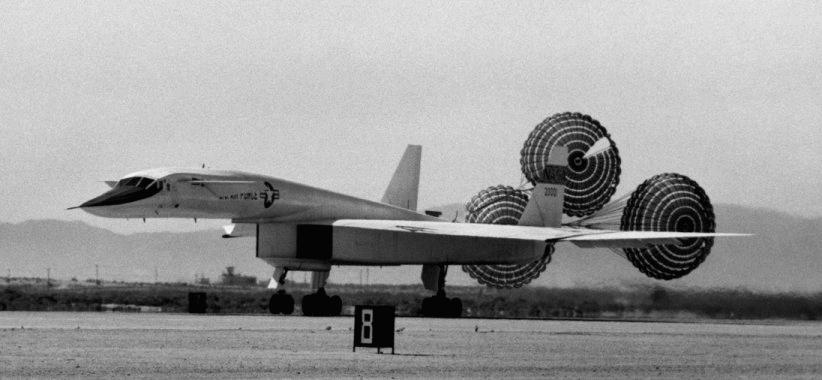
why the Viggen succeeded where others fail? the answer is simple, the Viggen requirements were the correct ones, in the early 1960s STOL was tried with VG wings and lift engines, the Viggen was deemed to offer the best STOL compromise with supersonic performance; in the case of the B-70 it was proven VG wings are better suited for such type of aircraft and the B-1B was designed to succeed where the B-70 failed, the F-106 was an interceptor and an interceptor without the real needs of the Viggen, STOL was deemed imperative by the swedes because they have a tiny country and needed STOL to make practical any deployment of the Viggen, the F-106 had not such a trouble and therefore it was seen more practical to build it as it already was, a simple tailess delta wing
MiG-23MLD😀 At least you do not run out of claims based on vapor. There is nothing like such a tail. All are purpose built. 😉
yeah yeah sensy more of your famous claims see and i can prove it to you very easily.


PEEKABOO Sens where is the engine?
most fighters from 1914 to 1945 had the engine (the piston engine in this case) in front of the fuselage, jet engines changed that, early jet fighters located the engines either flanking the fuselage in the middle of it like the Cougar or under the wings like the Me-262 or Su-9 and left untouched the tail that still remained a WWII style tail like in the MiG-9 and Yak-15, however modern fighters have the engine at the rear end of the fuselage, some fighters show the transitional form such as the cougar or panther
the reason is the modern airframe arrangement has the following order
Radar+cockpit+ inlet (canards)+wings +engine +tailpane and vertical tail
a WWII fighter was different, it was propeller+engine+cockpit wing and tail.
The MiG-15 has its engine nozzle at the rear end and its tail on top of it, the MiG-21 and F-100 broke the upper tailplane position and made it lower under the down wash of the wing.
MiG-23MLDYou seem to have forgotten the Heinkel 178. 😀
no look at its wing still behind the MiG-15:D
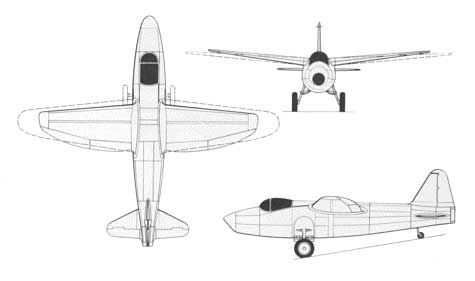 still a WWII fighter
MiG-23MLDLots of designs had canards before the Viggen, they just didn’t make it to production. Ye-8, North American’s NA-236 & WS-202A, and a varient of Convair’s F-106 come to mind. If one does research into the older stuff and designs that didn’t make it into production, you most often find that “revolutionary” ideas have their roots in prior designs that didn’t get built for one reason or another. For instance the ASG-18 radar and AIM-47 missile was considered for or flown on no less than five types of aircraft: XF-108 (original intended carrier), XF-103 (they wanted to use it for a testbed and actually mocked-up the forward fuselage with the bigger system), F-106C (flown with a modified nose for the ASG-18), B-58 (radar/IRST/missile test bed), and didn’t actually fly on an interceptor until the YF-12A.
The Viggen was the first truelly operational aircraft with delta wings and canards none of those aircraft you say ever made it as real operational fighetrs with canards and delta wings, the Viggen was truely the most influencial fighter of the 1960s.
If you use the F-16, F-15 or Viggen you get most of all the 1980s and 1990s aircraft.
MiG-29=F-15 and F-16 hybrid
Su-27=F-15 and F-16 hybrid
F-14=F-15 and F-111 hybrid
J-10=F-16 + viggen
Eurofighter =F-15+F-16 +Viggen
Gripen=modern viggen
Kfir=Mirage-Viggen hybrid
Rafale=modern Viggen
MiG-1.44=Viggen+ F-16+ F-15
LCA=Viggen without canards
Lavi=Viggen + F-16
F-22=stealthy F-15
Ching kuo=F-16+F-18
F-2=F-16`s son
JF-17=F-16+F-35
MiG-23MLDAmazingly enough, that particular layout (twin tails, twin engines, ramp intakes) can probably trace it’s lineage back to this North American (designers of A-5 Vigilante, F-108, and XB-70) design from the 50’s.
i know and what you are saying its true, but few aircraft in the early 1950s broke with the WWII aerodyanamic mentality and in the early 1950s the F-100 and was a truelly remarkable aircraft as well as the MiG-19.
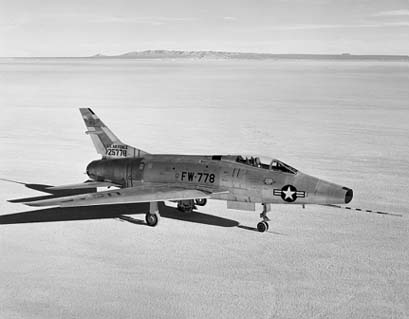
The F-100 has several features of modern aircraft, first its engine nozzle is at the end of the rear fuselage and the vertical tail is on top, a feature of modern fighters, another one is its horizontal stabilizator (tailplane) also is not higher than the wing but almost at the same level giving better controlability at high AoA since the wing upwash does not interfere with the tailplane
Currently no aircraft has its tailplane above the wing but only below to be benefited by the wing`s down wash or minimun at the same level like in the F-16, exceptions are the canarded aircraft which have the canard above the wing to benefit the wing with their down wash.
The A-5 was an attack aircraft and was not designed as the F-15 as a pure fighter and the rest never entered operational service.
MiG-23MLDGet out of town. The MiG-15 was an outstanding fighter jet, but it was NOT groundbreaking. It wasn’t the first jet fighter, it wasn’t the first swept-wing jet, it had no radar…how in the world was it groundbreaking?
It was one of the truely first aircraft with an engined buried in the fuselage without a tail reminicent of a WWII fighter see
the Yak-15 had still a WWII fuselage, same was with many other aircraft see 
this was still a WWII fuselage
the F9 another WWII design still is a propeller based jet fighter
the cougar did better but was not more revolutionary than the Me-262

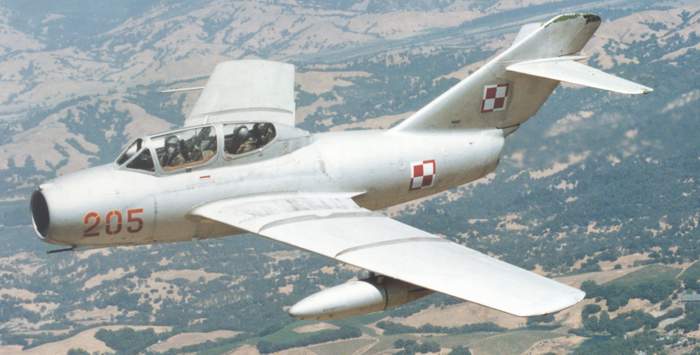
the MiG-15 represented basically a modern concept swept wing with a fuselage without a vestigial WWII fuselage
even in the Demon the vestigial WWII propeller aircraft tail is still visible
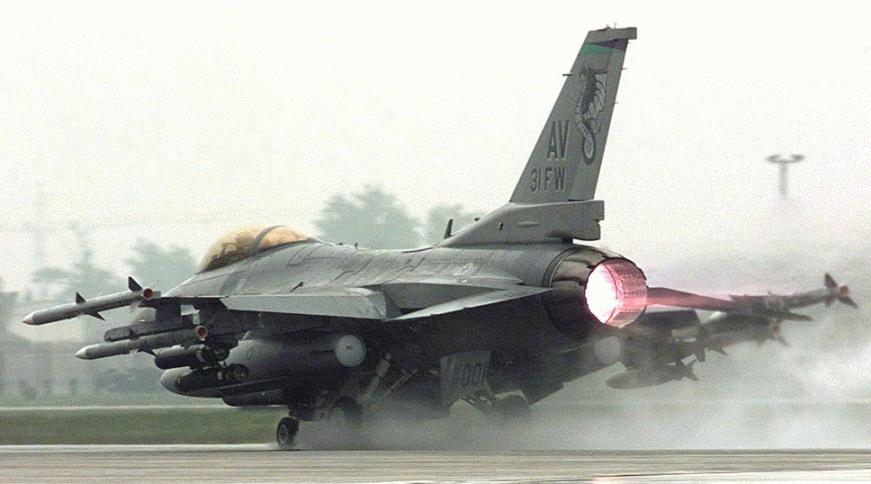
a modern aircraft like the F-16 has not such features, the nozzle has eliminated what in the Yak-15 was the vestigial WWII propeller aircraft fighter tail
MiG-23MLDThe MiG-15 did appear after the F-86. 😉
No transonic capability through lower wing sweep and thickness to chord ratio. Radial engine was a dead-ends technology, when it comes to supersonic flight. The similarity between both were, they did share a similar appearance and did outclass the former strait-wing designs.
The MiG-15 was the best of the two as a fighter, more agile and outclassed the F-86 in performance, flown by qualified Russian pilots in Korea proved its value, since those pilots also were WWII veterans, these MiG-15`s pilots were aces, a fact usually hiden in western reports.
The video i recomended to you has a well documented argument to prove it
MiG-23MLDYou missed the point again. The topic is: Ground Breaking Fighter
The MiG-15 did not offer something new, but it was a milestone for the Russian aviation industry. 😉
Nothing new? the MiG-15 in 1949 was top technology, not old one as such represented the best technology available, it was one revolutionary aircraft in the world.
In fact the only aircraft close to it was the Sabre, later designs were more or less similar to the MiG-15, however it could not keep pace and by 1957 was totally and utterly obsolete


 Sign In







