 MiG-23MLD
Just guessing. The two Russian links are magazines, Lenta.ru from Rambler Media Group and aviaport.ru, both fed by the same journalist Pavel Sergeev.
:diablo:At least here an interested reader may notice, that the normal take-off weight of 25,5 tons is not with max internal of 11,5 tons. :p
Here a max TOW of 38,8 tons is given.
2600 km/h at height is Mach 2,45 when Sukhoi gives Mach 2,25 or 2388 km/h.
Maybe our journalist has not figured out the correct Speed of Sound at 11 km height?! 😮
Now the most interesting or boring part will come, which way the quoted one will choose to distract from that. :rolleyes:
true but some of those are guesses as you he guesses, you do not know the real empty weight of the Sukhoi Su-35BM you simply guess it, even having Knaapo or Sukhoi data you will change the Su-30MK to fit a heavier load and even having the Su-27SK data and dimensions you will claim the Sukhoi Su-35 must be heavier you are not very different from Lenta
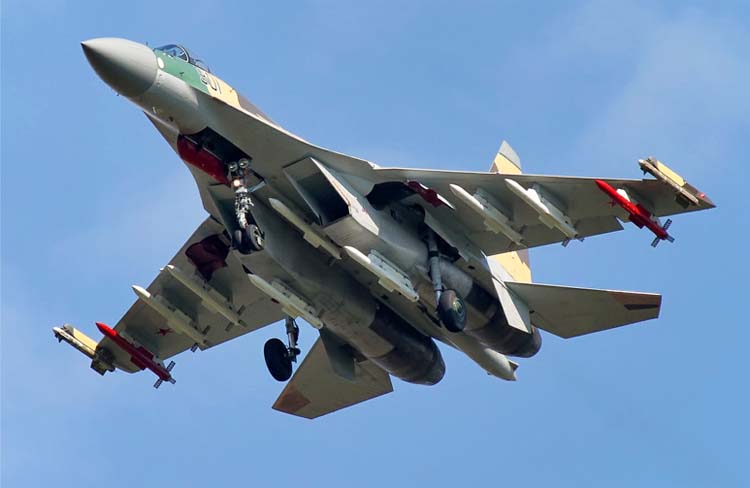
MiG-23MLDWhat I find strange is the cumbersome attachment of missiles. If the Suchoi 35 carries 8 missiles (4 MR-AAM and 4 IR-AAM) and the ECM pods, it needs 8 separate pylons, of which 7 are adding frontal area. Obviously nobody tried put some missiles on the airframe semi-recessed, which was done on Eurofighter, Rafale, Tornado ADV, Tomcat, Hornet, F-15 and even MiG-31 (not to talk about the F-22 and F-35, which have no pylons at all in a2a config).
How this “forest” of pylons harmonizes with supercruise and low RCS is a mistery to me. Or Suchoi will say to its customers: “Our aircraft can either do all the 4.66th(++)² generation tricks, or it can be used as a weapon.”
Why it needs to have low RCS if it can detect its eurofighter at longer distances and has better missiles than the ones currently operated by the Eurofighter, at BVR it has better radar and will fire all its missiles at once with enough time to runaway
MiG-23MLD25,300 kg* normal for the Su-35BM
34,500 kg maximumFor the others, booklet from Sukhoi does show where the extra fuel is housed.
Tail-section, single-cockpit, podded ECM now f.e.. 😉
however both aircraft differ in some aspects, max internal fuel means it has miniaturization of some items and lightening however the difference in fuel capacity is 1.5 tones internally and having basically the same dimensions and similar volume means they have modified it to pack more fuel in the same volume and added more hardpoints or heaveir weapons into the repertoir of the Su-35BM, however the MTOW justifies not a much heavier empty take off weight necesarilly but a slightly difference of 500kg from 16000kg of the Su-27 to 16.5 t of the Su-35BM.
Dimensions Su-35BM
Length, m 21.9
Height, m 5.9
Wing span, m 15.3
http://www.knaapo.ru/eng/products/military/SU-35.wbp dimensions SU-27SK
Aircraft dimensions:
– length, m
– wingspan, m
– height, m
21.9
14.7
5.9
MiG-23MLDJump ahead and show me one aircraft where weight was saved without a sacrifice in some kind of capability (fuel, avionics). Even the B787 only saves a single digit percentage through “advanced” materials.
Empty weight does not equal operating empty weight, the pilot, gun ammo and fluids alone add half a ton at least.Interesting that everybody takes this “300km+” missile thing for granted. In order to achieve a kill the missile needs to know where the target is in x minutes (x = flight time). That is easy if the target is running straight ahead without noticing the attacker. That is the least probable case. Normally such a missile can be tricked by just turning direction and fly opposite course for a minute.
Second thing: the 450kg heavy Phoenix achieved a 150km distance for a cooperative target (means: at launch the F-14 and target were 150km apart, closing in with a speed of 1000km/h; when the Phoenix hit the distance F-14 to target was 60km, so basically the Phoenix traveled about ~100km). Linear extrapolation would assume a weight of 3x 450kg = 1350kg. OK, let’s assume we save a few kilos by advanced material, electronics and smaller war head. But still, we have to add considerable for extra fuel due to extra fuel (knowledgeable people call this growth factor).
So, who would really get tricked by such a missile, and who would actually buy such a missile, put it in inventory and maintain it when the chance of a kill are so small?
The Su-35BM is heavier at MTOW than the Su-27SK in the same proportion it carries more weapons and fuel and you do not consider the use of composites and the fact the Su-35BM deletes the canards to save weight, lighter electronics save weight and new materials should make it as light as the Su-27SK as several sources have sugested see
Летно-технические характеристики Су-35БМ performance and specifications Su-35BM
вес пустого самолета – 16,5 т empty weight
нормальный взлетный вес – 25,5 т normal take off weight
максимальный взлетный вес – 38,8 т max take off weight
http://www.lenta.ru/articles/2008/07/04/su35/
Летно-технические характеристики Су-35БМ
размах крыла – 14,7 м
длина – 21,9 м
высота – 5,9 м
площадь крыла – 62,00 м2
вес пустого самолета – 16,5 т empty weight 16.5T
нормальный взлетный вес – 25,5 т
максимальный взлетный вес – 38,8 т
http://www.aviaport.ru/digest/2008/07/07/152512.html
MiG-23MLDDo not blame others for your personal shortcomings. 😀
You are guessing around for all to see or did Sukhoi claim an empty weight for the Su-35BM? 😮In more detailed performance data Sukhoi does give both, the normal and the max value. When both max have to be reached, Sukhoi does claim max overweight take-off weight. It does not make any sense to have an higher overweight take-off weight with max payload (= max fuel-load+ max weapon-load) 😉
http://www.sukhoi.org/eng/planes/military/su30mk/lth/Here it can be figured out by the similar Su-30MK.
See you are biasly changing fact you compare the heavier twin seater from Sukhoi it self The Su-30MK is a two-seat highly-manoeuvrable fighter designed for air-superiority and strikes at ground and naval surface targets using a variety of guided and unguided ADO, with an option of supporting group actions.
http://www.sukhoi.org/eng/planes/military/su30mk/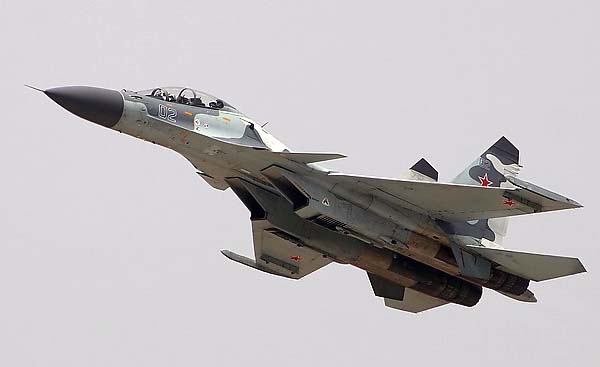
So mr for the benefits of others and to stay polite you compare a heavier fighter bomber but you forget about the lighter aircraft Su-27SK which is basicly the same variant of a Su-27B and which the Su-35BM returned Aircraft performance
Takeoff weight:
– normal (including rockets 2xR-27R1 + 2xR-73E, 5270 kg fuel), kg
– maximum, kg
23,430*
30,450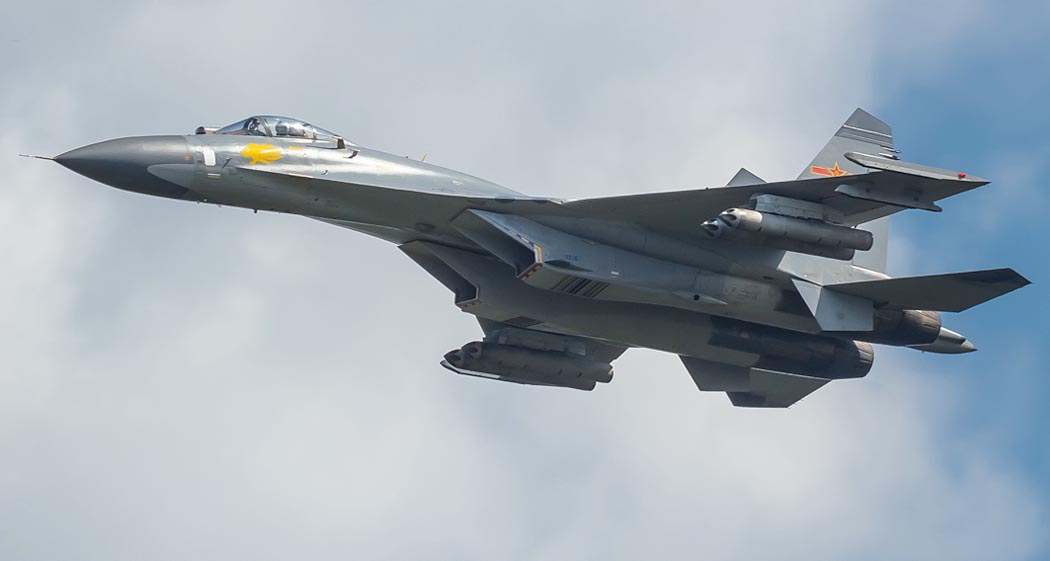
http://www.sukhoi.org/eng/planes/military/su27sk/lth/
MiG-23MLDMate what Schorsch is saying is not wishful thinking – I don’t see why he would wish it anyway. Now I dont know what you do as a job or what your technical knowledge is but Schorsch is an Aero Engineer. He has studied the design of aircraft and as such realises that when an aircraft has these considerations: “Considering the advertised rougher landing gear, the increased internal fuel, the 9g load factor and the increased life time, the aircraft must in fact be much heavier than before. A think an OEW of 18-20t is realistic.” – the mass of the jet jumps considerably – materials offer only incremental benefits and any RCS work they may have done to the jet will have increased the weight even more. It is a reality that all fighters have – The F-22 – The Eurofighter – Gripen and any upgrades tend to add weight.
Man schorsch can be an engineer but he is not an engineer at Sukhoi, neither he has all the data from the Su-35BM most of what he writes is also guesses why? because without data he is as lost as we are, no data then he also speculates.
The Su-35BM returned to the Su-27 configuration to keep it light and less draggy than the canarded Su-35 and Su-37s, this version with new improvements in materials very likely will be as light as the Su-27B and since the Su-27 is lighter at MTOW the Su-35 justifies a heavier MTOW.
Also both aircraft are almost identical so miniaturization and lightening is a must to pack more fuel.
MiG-23MLDCorrect in that case. :diablo: The quote from Janes is related to the propulsion-system. Do use your time for correct reading at first. 😉
To read something and to understand the technical background has to suffer from strong believes too often. :rolleyes:
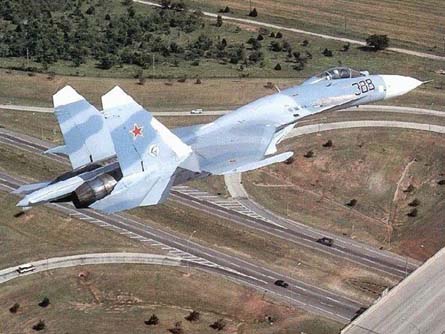
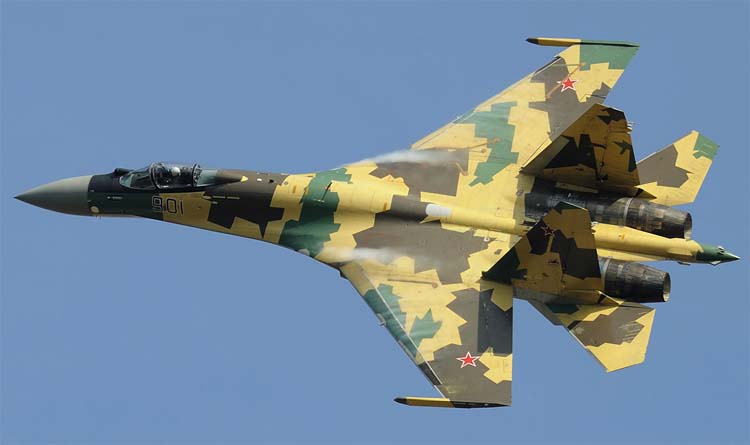
Both aircraft have different max take offs, the Su-27 around 30000kg and the Su-35BM 34500kg, see there is a difference in 4000kg a difference in fuel of 1.5 tones and 2 tones of payload so Sukhoi returned to the Su-27B aerodynamics because it was the lightest of the Su-27 Flanker variants and therefore supercruise was easier to obtain with this airframe than with the Su-30MKI`s
MiG-23MLDConsidering the advertised rougher landing gear, the increased internal fuel, the 9g load factor and the increased life time, the aircraft must in fact be much heavier than before. A think an OEW of 18-20t is realistic. How fictive OEW claims can be becomes obvious when we look at the F-22.
I would like to know why they used canards for a while but now more or less returned to the original Suchoi 27 looking.
That an opinion respectable but just an opinion, a 34500kg weight easily can mean 11500kg and a minimun of 7000kg of payload, of course with this you get a weight of a conventional Su-27, a slightly lighter aircraft is not an impossiblity.
You are trying to imply if it weighs 18000kg only will carry 11500kg in internal fuel and a payload of 5000kg yeah this means the Russians made a heavier aircraft.
That is just wishful thinking new materials at least make the Su-35BM in the same league of a Su-27 in order to slander Sukhoi you need a heavy fighter with less range or less weapons but that is just speculation to fit an theory of a less capable fighter.
MiG-23MLDNot ashamed to claim that. The one mixing data from different websites from questionable sources to stay polite. 😮
Maybe you missed the important detail of “max” at the website from Sukhoi, which was used two times related to the payload. :diablo:
Mr to stay polite and for the benefits of others.
You are claiming something that Sukhoi does not claim, KNAAPO gives MTOW and max internal fuel, all you can say is your speculation and claim it has being proven, fact none of your speculations are based upon Sukhoi`s data or KNAAPO`s, you are simply speculating and claiming the Sukhoi Su-35BM can not have its max internal fuel and Max payload at the same time, the Sukhoi Su-27 weighs at empty weight operational 16000kg, mr stay polite a lighter Sukhoi Su-35BM is not an impossibility, even if it still weights 16000kgs it is not heavier than the average Su-27B
MiG-23MLDYou are right: I was just pointing out a possibility. I don’t know the true empty weight of the Su-35BM, but I consider it possible that they can’t take full fuel load and full ordnance load at the same time.
You know, I can carry a maximum of 100kg additional load on my legs and a maximum of 70 kg additional load on my arms, but that doesn’t mean I can do it at the same time.
Don’t you find it curious that they don’t just state the empty weight then. Why the smoke and mirrors?
As for the AA loadout debate, going by AA encounters since the 80s, one has to wonder whether any more AA ordnance than 2 missiles isn’t overkill. Perhaps be on the safe side and take 4 then, but any more than that is likely only going to introduce drag without ever being used during a sortie.
speculations can not be considerd facts, like myths are not science
MiG-23MLDWrong as always. The Su-27s from the 90s were top of the art. Russia out of money even for a limited upgrade. The exports were crucial for survival and did keep Sukhoi going in critical times. The few prototypes from the late 80s were not in front-line service. The main difference between Chinese and Russian Su-27 were the different IFF and the later upgrades through software.
Similar thing with Su-30MK, something not even to find in regular Russian service. After 2000 the circumstances did change again. China was not able to close all gaps in know-how in that window of “golden opportunity”.The other guessing about supercruise is **** to stay polite. All eurocanards have reached that quoted claim about Su-35BM over a decade before. The Russians do just try to catch up with that over a decade late.
Russians are proud people about their military and do not have any interests to discuss such nasty details. 😀
To stay polite and for the benefits of others and the details yeah yeah the average Sukhoi Su-27P weights around 16000kg empty operating weight, why 15000kg will be too much to believe still it is a single engine fighter not a twin seater and with new materials you forget the Su-35BM carries more fuel so it must have had different structure and materials so a reduction in weight is possible and increased fuel capacity is a fact therefore a new internal lighter structure has been made.
The Su-35 weighst the same other single seat fighter Su-27 variants, yeah but carries more fuel use logic then it must haev a weight reduction and that is possible by changing materials
MiG-23MLDI was reffering to the Pilot quote posted in the PAKFA section where the pilot said —->
I will express the opinion of the specialists of the firm “of dry”: Su-35 exceeds all “mirages”, “[Gripen]”, “Hornet”, “typhoon” and “[Rafal]”. From the recently modified aircraft the closest competitor – F/A-18E/F “super- Hornet”.
mean the closest is not an equal of the Su-35BM it simply means is close but not as good
see
8 Jul 2008] /AVIA.RU/
July 8, AVIA.RU – ‘Sukhoi’ Company held on July 7, at the Flight Research Institute airport named after Gromov in Zhukovsky city near Moscow, the presentation of a new multipurpose Su-35 fighter aircraft.
The demonstration flight was watched by the Chief of Air Force Alexander Zelin, deputy -General director of ‘Rosoboronexport’ Alexander Mikheyev and Viktor Komardin, the general director of AHK ‘Sukhoi’ Mikhail Pogosyan, representatives of the Ministry of Defense of Russia, a group of foreign diplomats.
At the special presentations guests got acquainted with tactical and technical characteristics of the aircraft, its flight and combat capabilities.
Su-35 is a profoundly modernized new generation multifunctional fighter’4 + + ‘.
Fifth-generation fighter aircraft will be used by the troops not earlier than 2015-2017.
The first deliveries of Su-35 are planned for the years 2010-2011. This will ensure a smooth transition to the new generation of aviation complexes without weakening the country’s defense.
In the global market of combat aircrafts, Su-35 will help ‘Sukhoi’ ‘to retain the position, won at the expense of export deliveries of aircraft of Su-27/30 family, as well as to increase earnings to the state budget from sales of high-tech products.
The development and organization of serial production of Su-35 is one of the priorities of the United Aircraft Manufacturing Corporation (OAK). The first flight of the fighter aircraft took place on February 19 at the Flight Research Institute aerodrome named after Gromov in Zhukovsky.
http://www.avia.ru/cgi/news/news.cgi?action=geten&id=1215514719
MiG-23MLDEF has supecriuse capability for sure , i think around mach 1.3 with a decent weapons load . EF also doesnt have any AESA installed and in service .
He said that we are better then the euro canards and comparable to F-18E/f and when pressed about F-22 he said we are competitive specially if you look at the cost aspect of our fighter . A fare enough statement in my opinion . The F-22 has supercruise in the range of mach 1.7+ which the SU-35 would be hard pressed to beat with 8 missiles , the F-22 has AESA + LO , so SU-35BM would be a tough competitor for sure (Given its aswsome range) but for F-22 a better comparison for a head to head aircraft would be the PAKFA which will be equal in almost all respects if not better in key performance parameters.
МОСКВА, 2 июля. (АРМС-ТАСС). Су-35 превосходит по своим характеристикам истребители ведущих мировых производителей – “Мираж”, “Грипен”, “Хорнет” и др., а также состоящие на вооружении ВВС России Су- 27 и Су-30. Такое мнение высказал в интервью еженедельнику “Военно-промышленный курьер” летчик-испытатель Сергей Богдан после проведения серии полетов на этом новейшем боевом самолете компании “Сухой”, первый из которых состоялся 19 февраля этого года. Машина показала высокую устойчивость, управляемость и маневренность. Хорошо работает силовая установка. Перечисляя достоинства истребителя, пилот отметил увеличенный почти на 20% запас топлива во внутренних емкостях, что позволяет, по предварительным оценкам, увеличить дальность полетов до 4,5 тыс. км, а также работу бортового компьютера. Самолет воспринимается как очень комфортный: “мягкий”, в тоже время очень послушный, с прекрасными переходными характеристиками, энергичный при маневре, отмечает Сергей Богдан и называет создание Су-35 серьезным прорывом в области военного авиастроения.
MOSCOW, July 2. (ARMS-TASS). Su-35 surpasses its characteristics fighter world’s leading manufacturers – “Mirage”, “Gripen”, “Hornet” and others, as well as those arming the russian Force, the Su-27 and Su-30. The opinion was expressed in an interview with the weekly Military-Industrial Courier “pilot-test Sergei Bogdan after a series of flights on this new combat aircraft company Sukhoi, the first of which took place on 19 February this year. The machine showed high stability, manageability and agility. Good engine work. Listing the dignity of fighter aircraft, the pilot noted the increase of almost 20% in domestic fuel tanks, which allows, according to preliminary estimates, increase range up to 4.5 thousand flights km, as well as onboard computer. The aircraft is seen as very comfortable: “soft” at the same time very obedient, with excellent transient response, energetic, with manoeuvres, Sergei Bogdan notes and calls the creation of Su-35 major breakthrough in the field of military aircraft.
http://arms-tass.su/?page=article&aid=56749&cid=24
The F-18 is not comparabel to the Su-35BM, the Eurofighter is the closest in flight performace
Произвела приятные впечатления на летчика-испытателя и работа новых двигателей 117С с уникальной системой дистанционного управления СДУ-Д. Разработанная НПО “Сатурн” силовая установка имеет форсажную тягу в 14,5 тонны, что на 16 процентов больше по сравнению со стандартным двигателем АЛ-31Ф (первый летный экземпляр Су-35БМ с таким двигателем был продемонстрирован в 2007 году). Управляемый вектор тяги и экономичность 117С обеспечивают более высокую маневренность и дальность полета.
Двигатели 117С. Фото НПО “Сатурн”
При первом полете новый Су-35БМ сопровождал Су-30МК. Это позволило сравнить тяговые характеристики двигателей двух самолетов. Во время полета Су-35БМ выполнял разгон на максимальном бесфорсажном режиме, при этом пилоту самолета сопровождения приходилось использовать форсаж, периодически отставая от новой машины. В ходе последнего на данный момент полета (13 по счету!) летчиком-испытателем Сергеем Богданом были отмечены интересные особенности Су-35БМ – на бесфорсажном режиме самолет, находясь на небольшом сверхзвуке, продолжал разгоняться. Это означает, что машина при определенном весе и высотно-скоростном диапазоне способна переходить в так называемый “суперкрейсерский” режим полета (лететь на сверхзвуке без форсажа). Из всех серийных истребителей такой способностью обладают только МиГ-31 и F-22A Raptor
The Su-35BM made pleasant impression on the test pilot with its new engines at work 117 C with a unique system of remote control SDU-D. Designed by Saturn engine it has a max thrust of 14.5 tons at after burner, a 16 percent increase compared with the standard engine AL-31F (the first copy of flying Su-35BM this engine was demonstrated in 2007). Managed traction vector and cost 117 S provide greater maneuverability and range.
In the first flight of the new Su-35BM it was accompanied by Su-30MK. This allowed to compare the characteristics of traction of both engines of these two aircraft. During the flight of Su-35BM used its military power mode without afterburner, the pilot had to escort the Su-35 at afterburner periodically to keep pace with the new machine. During the last flight at this time (13 of the account!) Pilot-test Sergei Bogdan was particularly impressed – at military power without afterburner mode the aircraft, while on a small supersonic speed , continued accelerating. This means that the machine with a certain weight and height-speed range is able to move into the so-called “supercruise ” flight mode (fly at supersonic without afterburner). Of all the modern fighters only MiG-31 and F-22A Raptor have that capability
MiG-23MLDMiG:
If as they claimed the EF has some sort of suprcruise capability, then its flight envelop must contain the Su-35’s. Otherwise, Su-35 has no AESA which EF equiped. So we have to say EF must be superior than Su-35.
Some sources quoting Sergei Bogdan claim the Su-35 can compete with the F-22, and the Eurofighter has a Mach 1.2 supercruise ability, the Su-35 is quoted to being able to supercruise at higher speeds and that is logic the 117s is an engine for the PAK FA. so it is specifications are set higher than those of the euroengine
MiG-23MLDIs ECM jamming a uniform signal you can home in on? What’s the use of standoff jamming platforms then? Aren’t they sitting ducks?
From what I understand, I thought that you need the proper radar return to know what part of the overall return qualifies as signal and what as noise. And once you know the noise, you can aim for its origin, which with the active, purposely strong jamming signal is easier than having the missile’s small radar do its usual work. Which is why you don’t have to wait for it to go active: The tiny AIM-120 radar doesn’t have to paint the target itself, but can take the noise print as “return” and steer towards it. (Which, again, requires you to know exactly what that noise is shaped like.)
You mean, when at 1000ft out the Hornet already had put its pipper firmly on the Raptor? And as for midair collision: Please, they were perpendicular to each other and the Hornet wasn’t pulling lead. How could that have turned into a midair at 1000 ft or 900 ft out? We don’t know what the Hornet did after the 900 ft shot.
Oh, and I’m still waiting for your answer on how the F-22 is going to cue an AIM-120 on a target 50 nm away with its ALR-94 “without ever switching the radar on”, when a 1° deviation means a displacement of 1 nautical mile.
Unless you can’t get both at the same time. EW might be higher, which means you’d possibly have to trade off between ordnance loadout and amount of fuel.
You are using expecualtion to justified the fact the internal fuel and max weapons load gives only a total of 34500kg, yeah yeah so the aircraft won`t fly at its max just you can say it won`t


 Sign In







