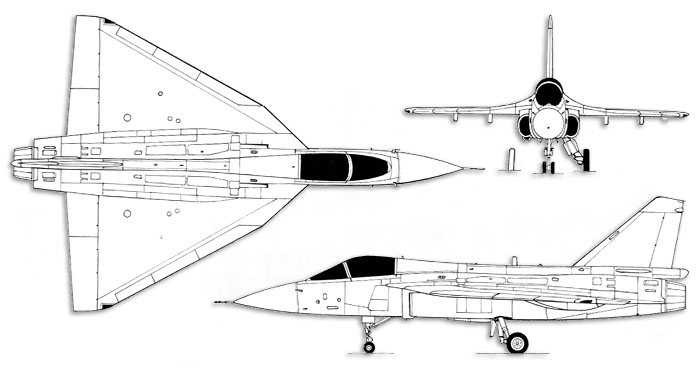
MiG-23MLD
hmm, there was no indication anywhere that RMAF was offered the latest super hornet with APG-79 and such.
su-35 has its advantages, but the missiles that it uses are just far behind what’s available in the Western planes. PLAAF will tell you that, lol.normally you want to get past the transonic period before stating that it has supercruise capability. wait until it reaches mach 1.3
The PLAAF can not say anything about the Russian air force since thay do not have the same weapons the russians always sold to the chinese old weapons, they kept their best for them, they will induct the Su-35 in the RuAF but what got China? old Su-27s.
The Su-35BM is the best fourth generation fighter and will beat the Eurofighter because it supercruises very close or perhaps as fast as the F-22 and has better agility, the TVN system it has is 3D, its weapon systrem has achieved the ability of fire 8 missiels at once and detect them at very long distances
MiG-23MLDNo, that is the kind of ‘Super Flanker’ the eurocanards were designed for. Just over a decade late by the fate of the SU and Russia.
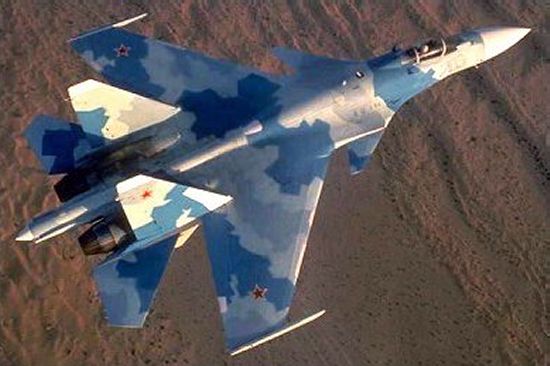
This was the Su-35 the Eurofighter was designed to kill but not this one, the Su-35BM has supercruise like the F-22
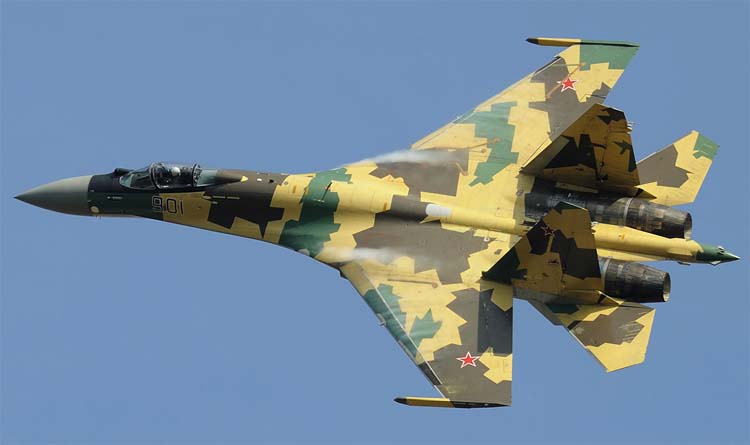
Это означает, что машина при определенном весе и высотно-скоростном диапазоне способна переходить в так называемый “суперкрейсерский” режим полета (лететь на сверхзвуке без форсажа). Из всех серийных истребителей такой способностью обладают только МиГ-31 и F-22A Raptor
MiG-23MLDFrom Sukhoi: buklet Su35 ENG.pdf (16,55 MB):diablo:
For the benefit of the others:
http://www.knaapo.ru/eng/products/military/SU-35.wbp
The Knaapo booklet says 34500 MTOW, max internal fuel 11500kg, max combat load 8000kg
Maximal fuel load in internal fuel tanks, kg 11,500
Maximal combat load, kg 8,000
http://www.knaapo.ru/eng/products/military/SU-35.wbp
so the EW is not more than 15000kg
MiG-23MLDBut nonetheless, the Europeans did and the Israelis also went with it. The Japanese also had canard-delta concepts of their own. As for the Russians, MIG did seriously propose its MiG 1.44 and Sukhoi did implement canards on its Flankers. The US also implemented canards on its B-1B. Are you familiar with the X-31 super maneuverability study?
Nonetheless it showed DRDO pretty much alone in this one, against an opinion that is made up of Dassault, SAAB, IAE, Eurofighter consortium (BAE, Messerschmitt, etc,.) and MiG.
The difference between an elevon, and an aileron only surface is not physical. Do you know what is an elevon? What is the difference been an aileron and an elevator? It has nothing to do with shape but the way it moves.
Aileron = two surfaces that move opposite of each other.
Elevator = two surfaces that move in the same direction at each other.An elevon part times as an aileron and as an elevator. But unlike canard-deltas and tailed planes, an elevon cannot function in one moment of a time, as both aileron and elevator, because aileron and elevator is functionally an “or” proposition.
That does not constitute a droop. No plane can change any wing position from anhedral to dihedral or vice versa, unless you can flap wings like a bird. Note the elevons are down while the canards are pointed up just as I described.
If you ever registered in the CDF, you can see this picture at the end of this thread
http://www.china-defense.com/forum/index.php?showtopic=23&st=1975
at the far left corner of the picture you can see a J-10 on take off, and even with the blur, the canards are point up and not drooped, and the trailing wing surfaces are acting as elevators in the take off position.
You are mightily wrong, considering that MIG did venture into canard-delta designs and this is their last every fully unique design, the MiG 1.44. As for the US, it did have the X-31 demonstrator which proved to be extremely successful.
Above shows the US did seriously experiment on canard-deltas and so did MiG.
No, they discarded the pure delta; the tailed delta is a very different animal, not just in its control configuration, but in the aspect as well. The sweep of the F-22 is not as acute as pure deltas, and in fact, the F-22 should best be described as a “diamond”. The F-22 is neither low or high aspect, it is what you can call as a “square”. Pure delta designs are low aspect in the extreme sense. The YF-23, the X-32 and the F-35 all have diamond wings.
Wrong. Canards don’t need to because they have a fresh air stream in front of them, unlike control surfaces tied to the main wing that have to deal with the wake from the wings’ front edge as well as the boundary layer that forms around the wing. You simply cannot ignore even the late fifties studies about why all moving control surfaces are better. In fact one of the reasons why canards are generally smaller than tail planes is that they can generate the same amount of control authority for less size and deflection.
And even if they are turned to pitch, canards generate lift even for the drag they produce. Control surfaces on the trailing edge of the wings however, have to push the aircraft down on its tail to move the nose up, and hence they create negative lift while exerting drag at the same time.
The art of aircraft design does not make any configuration the best. Each configuration has drawbacks, and that is the point, each configuration has been made to exploit some aspects trying to avoid others.
The LCA is a very economical design, being tailess, it generates the least drag, flutter and weight, this configuration is good if you want small and ligt aircraft with high speed and long range, the F-16XL was for that reason considered as a fighter bomber competing with the F-15E
The combination of high speed and high aspect ratio increases the tendency to flutter. Flutter is fatal and cannot be tolerated. The maximum aspect ratio of the canard of a fast airplane is limited by flutter considerations, not loading considerations
http://www.wipo.int/pctdb/en/wo.jsp?…3&DISPLAY=DESC
Other fighters have other design parameters, the J-10 for example followed a delta wing with low aspect ratio and high aspect ratio canards to generate the least drag and the highest speed, however the design generates flutter and inertia coupling is common in aircraft with long fuselages and short spans (low aspect ratio) wings, so dihedral in the canards allowed the least flutter, avoided vortex impinging on the leading edges and allowed better roll stability. however canard`s sizes are also limited by the flutter they generate but since they are ahead of the Center of gravity well a small size is affordable .
Aircraft with short span and a long fuselage are capable of high roll rates but also prone to inertia coupling like the F-5
All airplanes turn by tilting the lift vector (banking), then increasing the lift to cause a change in the direction of flight. Highly maneuverable fighter airplanes must have an ability to generate a small turn radius, but must also have an ability to quickly change the direction of the turn. This means that the pilot must be able to change bank angle (roll) very quickly to re-orient the lift to the direction of the desired turn.
Fighter aircraft with high roll rate capability often experience another coupling phenomenon known as “inertial coupling”. Inertial coupling may occur if there is a large difference between the roll moment of inertia and the yaw or pitch moments of inertia for the airplane. This is often the case for fighters which have short stubby wings (low roll inertia) and long fuselages with heavy engines, electronics, fuel, etc. (high pitch and yaw inertia). When such an airplane is exposed to high roll rates along the fuselage axis, the high mass concentration along the fuselage may cause it to behave like a “dumbbell”. The centrifugal force due to the roll will cause the nose and tail to try to swing out perpendicular to the rotation axis
http://www.dfrc.nasa.gov/Education/OnlineEd/Intro2Flight/nasroll.html
Flutter, drag and relatively low sustained turn rates are the drawbacks of delta canard designs.
The results are aircraft with good agility and high speed such as the J-10.
Tailplanes need relatively low deflections since they also are under the downwash of the wing and this generates a down force, tailpanes also are pitch and roll devices, so canards are not better in that sense the only real advantage a canard has is at high AoA allowing the wing to have extra low presure and attaching the flow to the wing effectively reducing the AoA.
The advantage of the tailplane is in flutter and drag and with LERXes well more or less get the best of the canard, nevertheless the LERXs also generates flutter and the F-18 suffered vortices flutter
Flutter Excitation
One of the most dangerous events that can occur in flight is a phenomena called “flutter”. Flutter is an aerodynamically induced vibration of a wing, tail, or control surface that can result in total structural failure in a matter of seconds. The prediction of flutter is not a precise science and requires flight verification that flutter will not occur within the normal flight envelope.
http://www.dfrc.nasa.gov/Education/OnlineEd/Intro2Flight/nasflut.html
See the J-10 has short wings and a relatively long fuselage

MiG-23MLDMiG-23 MLD, thanks for posting the above article, as it is informative.
The canard is detrimental to both lift and static longitudinal stability. …. it is observed that for small vertical separations between the surfaces the forward portion of the wing is ineffective in producing lift.
From the above, I think it is referring to ‘wash’ over the wing, that leaves a low-pressure over the wing. So the wing gets “starved” of air to actually deflect it and create lift.Note that this happens when the canards are deflected slightly, i.e. “for small vertical separations”, as described in the article.
It is demonstrated that the canard can directly affect the pressure distribution on the wing and application of this configuration to direct lift control and control configured aircraft are noted.
This above is the main function of the canard i.e. creating a low-pressure above the main wing to generate lift. However, the same property is detrimental to flaps and elevons of the wing which have to trim extra efforts at higher AoA to generate lift. I think this is ‘upwash’ (as downwash is high-pressure airflow).
Canard designs suffer large penalties in drag with low aspect ratio canard surfaces.
The above is the primary disadvantage of canards. The canards in J-10, Gripen, etc. are high-aspect ratio but which still provide 2-3% more drag than tailed designs, and further still than tail-less desings.The canard also is the configuration with the highest drag, however since canards are usually smaller than tailplanes are still prefered by some companies than tailplanes, however the US and Russians used LERXes as canards substitutes on aft tailed designs.
To the above I may opine that like US and Russia, India also did not adopt canards for the Tejas. However, instead of LERXs, it added an andedral crank over the lower-swept portion of the wing, and which slopes upwards as it proceeds aft.
Once you know that canards are draggier than tailplanes you can understand some design solutions applied to the Lavi that was a modified F-16
see
The straight leading edge was swept at 54 degrees, with maneuver flaps on the ourboard sections. The tips were cropped and fitted with missile rails to carry the Rafael Python 3 air-to-air missile. Two piece flaperons occupied most of the trailing edge, which was blended into the fuselage with long fillets. The wing area was 38.50 square meters, 38 per cent greater than the wing area of the F-16, giving an almost exactly proportionally lower wing loading, while the aspect ratio at 2.10, was barely two-thirds that of the F-16. Pitch control was provided by single piece, all-moving canard surfaces, located slightly astern of and below the pilot where they would cause minimal obstruction in vision.
this is the aspect ratio and why the Lavi has so close its canards to its wings, for visibility and AoA handling
see other factors
Predictably, relaxed static stability and quadruplex fly-by-wire (FBW), with no mechanical backup was used, linked to nine different control surfaces to give a true control configured vehicle (CCV). In comparison with the F-16, the Lavi is very unstable, with an instability of 10 to 12 per cent. The surfaces were programmed to give minimum drag in all flight regimes, while providing optimum handling and agility.
canards are draggier but by using relaxed stability and positioning the center of lift farther ahead from the Center of gravity than the F-16`s the Lavi fixed the draggier configuration.
The powerplant intake was a plain chin type scoop, similar to that of the F-16, which was known to be satisfactory at high alpha and sideslip angles. The landing gear was lightweight, the nose wheel was located aft of the intake and retracting rearwards, and the main gear was fuselage mounted, giving a rather narrow track. The sharply swept vertical tail, effective at high alpha due to interaction with the vortices shed by the canards, was mounted on a spine on top of the rear fuselage
Since canards also create flutter upon the vertical tail then the Lavi`s vertical tail has a very swept vertical tail.
http://www.jewishvirtuallibrary.org/jsource/Society_&_Culture/lavi.html
The J-10 in that sense follows more the Eurofighter`s canard wing design
The aspect ratio of course was one of the main advantages applied to the LAvi from the LERXed F-16s
Performances at Supersonic Speeds
Wing sweep and aspect ratio at supersonic speeds have a rather precise correlation, showing the stability limits of the wing. In this correlation the aspect-ratio decreases as the sweep increases.
For sweeps of 40 to 60 degrees the aspect-ratios range is 2 to 4, although this limit can be occasionally exceeded by accurate design of the tails and other control surfaces. Since high sweep is required to fly with agility at supersonic speeds, the aspect-ratio is set as a consequence.
The Table below shows a summary of fighter aircraft wing aspect-ratio and maximum speeds
Table 1: Aspect-Ratios of Fighter Wings Aircraft AR M
US F-15 (McDonnell-Douglas) 3.0 2.5
US F-18 (McDonnel-Douglas) 3.5 1.8
Dassault Mirage 2000 2.0 2.2
Dassault Rafale MO2 2.6 2.0
Sukhoi Su-27 3.5 2.3
Mapo Mig-29 3.4 2.3
MiG-23MLDMiG-23 MLD, thanks for posting the above article, as it is informative.
The canard is detrimental to both lift and static longitudinal stability. …. it is observed that for small vertical separations between the surfaces the forward portion of the wing is ineffective in producing lift.
From the above, I think it is referring to ‘wash’ over the wing, that leaves a low-pressure over the wing. So the wing gets “starved” of air to actually deflect it and create lift.Note that this happens when the canards are deflected slightly, i.e. “for small vertical separations”, as described in the article.
It is demonstrated that the canard can directly affect the pressure distribution on the wing and application of this configuration to direct lift control and control configured aircraft are noted.
This above is the main function of the canard i.e. creating a low-pressure above the main wing to generate lift. However, the same property is detrimental to flaps and elevons of the wing which have to trim extra efforts at higher AoA to generate lift. I think this is ‘upwash’ (as downwash is high-pressure airflow).
Canard designs suffer large penalties in drag with low aspect ratio canard surfaces.
The above is the primary disadvantage of canards. The canards in J-10, Gripen, etc. are high-aspect ratio but which still provide 2-3% more drag than tailed designs, and further still than tail-less desings.The canard also is the configuration with the highest drag, however since canards are usually smaller than tailplanes are still prefered by some companies than tailplanes, however the US and Russians used LERXes as canards substitutes on aft tailed designs.
To the above I may opine that like US and Russia, India also did not adopt canards for the Tejas. However, instead of LERXs, it added an andedral crank over the lower-swept portion of the wing, and which slopes upwards as it proceeds aft.
Abhimanyu
for an aircraft like the LCA no canards are needed but do not misunderstand aircraft design is part science part art and designers use different compromises to achieve the performance they need read this article and you will see that canards have advantages and disadvantages
http://ntrs.nasa.gov/archive/nasa/casi.ntrs.nasa.gov/19960047050_1996071178.pdf
MiG-23MLDThe same mechanism is also used for take-off also, as seen in this video of Gripen, in which it is shown taking off and landing over a civilian highway. Note that just at the instant before take-off, the canards deflect significantly and the same occurs at the point of touch-down. At touch-down, they further incline to be fully vertical to act as air-brakes.
The disadvantages of canards are well known see
The canard is detrimental to both lift and static longitudinal stability. The extent of canard wake roll-up is important in the interaction, and the flatter the wake the more adverse is the interaction. Downward canard deflection may lead to increases in lift of the entire configuration, and it is observed that for small vertical separations between the surfaces the forward portion of the wing is ineffective in producing lift. It is demonstrated that the canard can directly affect the pressure distribution on the wing and application of this configuration to direct lift control and control configured aircraft are noted. (
http://stinet.dtic.mil/oai/oai?verb=getRecord&metadataPrefix=html&identifier=AD0719742
As with total drag, the aft-tail configurations retain a small advantage over canard designs. Again, the maximum attainable lift coefficient is insensitive to tail aspect ratio while canard designs’ CLmax varies strongly with aspect ratio
Now see why the LCA has no tail
In fact, the configuration with least drag is a neutrally stable tailless design. for an small aircraft then the Tailess design offers the least drag and most range, it will be economical, the Mirage 2000 was chosen for that reason and the LCA follows the same idea
Because of the unfavorable interference of the canard on the wing, asymmetries appear in these curves. The best aft-tail designs achieve 2% to 3% lower drag than canard designs, and although in each case relatively high aspect ratio tail or canard surfaces are preferred, the drag is insensitive to the aspect ratio of aft-tail. Canard designs suffer large penalties in drag with low aspect ratio canard surfaces
The canard also is the configuration with the highest drag, however since canards are usually smaller than tailplanes are still prefered by some companies than tailplanes, however the US and Russians used LERXes as canards substitutes on aft tailed designs
http://aero.stanford.edu/Reports/MultOp/multop.html
MiG-23MLDAnd yet Saab and Dassault had the opposite conclusion.
No. The elevons would have acted as ailerons in the initial phase as the plane banks. But once the plane has fully banked, they could act in concert with the canards to increase pitch angle.
Elevons means the surfaces can act both as ailerons or elevators in different times.
The Eurofighter had a different system; by moving the canards as far away from the wing as possible, it reduces canard wash. By putting them in the front it also increases the control authority leverage. The Eurofighter has anhedral canards; the J-10/Lavi/Rafale/Gripen has dihedral canards.
I never seen the J-10 droop its canards like you claim. It would not have been mechanically possible.
The Russians have long concluded—back in the late fifties, starting with the MiG-19 in fact—that all moving control surfaces are the best way to maintain control at supersonic speeds, not control surfaces attached to a wing and which is subject to the trailing wave drag produced by the wing’s front edge and the boundary layer flowing across the wing’s surface. The US also came to the same conclusion in the sixties (although pioneers like Northrop knew that well ahead) though not after the Delta Dart, Starfighter, Phantom, etc,. had been designed and made.
In fact, the Soviet Union, Western Europe, and the US have all abandoned the pure delta form for one reason or another. Are you saying that the DRDO is smarter than all these countries collectively?
Large control surfaces do have increased drag.
How does that explain the short take off of the Gripen from highways then?
You are over exagerating the Eurofighter`s position any canard has advantages and disadvantages see
The Rafale has its canards quit close too its wings, this has to do with the influence they have upon the wing, too far from the wing also means less benefitial effects upon the wing.

The Canards in the Lavi have also dihedral but also they are far too close to the wings in fact over them see

The Eurofighter`s are not as close to the wings as those on the Lavi, the position has to do with drag/lift ratio, the best combination is high aspect canards low aspect wings check the Eurofighter has also strakes
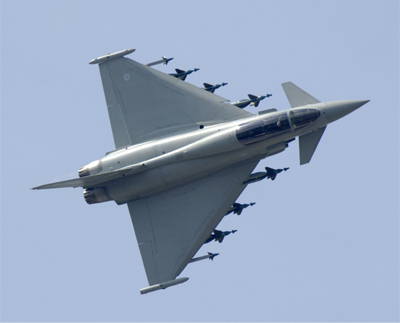
in the chinese J-10 also the canards are not too far from the wing, however are not so close as those in the Lavi and Rafale, the J-10 follows the lines of the interceptor while the Lavi of a fighter attack aircraft, both the Eurofighter and J-10 have the least drag canard delta wing configuration specially good for a fast aircraft

the Viggen has low aspect wings and canards, these low aspect canards and wing are best configured for high lift, while the eurofighter`s are for low drag

LINK BETWEEN THE WING AND CANARD FOR FLUTTER REDUCTION
BACKGROUND
In the design of a canard airplane, it is desirable for the canard to have a large aspect ratio. For aerodynamic reasons, the plane will be faster and more efficient if the aspect ratio of the canard is larger.
however this configuration increases flutter
see
The combination of high speed and high aspect ratio increases the tendency to flutter. Flutter is fatal and cannot be tolerated. The maximum aspect ratio of the canard of a fast airplane is limited by flutter considerations, not loading considerations
http://www.wipo.int/pctdb/en/wo.jsp?wo=2007050073&IA=WO2007050073&DISPLAY=DESC
see this too
Canard designs suffer large penalties in drag with low aspect ratio canard surfaces
The situation is less favorable for canard designs. Although small canards of high aspect ratio produce least drag, large canards of small aspect ratio achieve the highest CLmax. Moreover, the sensitivity of CLmax and drag to canard aspect ratio leads to greater compromises in each of these areas than would be required for an aft-tail design.
http://aero.stanford.edu/Reports/MultOp/multop.html
MiG-23MLDGripens landing distance is not 500 meters cause of flaps or parachutes (simply because it does not have it). It´s the design it self and the canards that tilts vertical and acts as air brakes as soon as the forward landing gear touches ground.
To MIG-23MLD
Thanks i always have loved the Viggen
MiG-23MLDEarlier I mentioned that landing distance of Gripen on civilian highways is short as it may use parachutes and flaps. However, flaps themselves are subject to “wash”. To offset it, canards are used in a near vertical position as shown in this photo of Gripen while it is taxiing.
MiG-23 MLD, in this “era” avionics may not matter much, as even JF-17 is scheduled to be installed with an AESA radar and state-of-the-art European avionics suite. Thus avionics are like “plug-ins”, and the platform in which they are installed — whether JF-17 or Typhoon — may be immaterial.
However, it can be safely mentioned that structurally and aerodynamically, Tejas is at par with the Typhoon as it is an unstable design, it is controlled by a flight-control system (that also controls the slats on each wing’s leading edge), and a high percentage of composites. As shown in the video posted by 21Ankush, Tejas can perform the entire range of manouevers with agility and speed.
Now regarding the Su-30 MKI, it has small canards that are fixed, and which are not in the pilot’s control. They trim automatically according to the receipt of airflow. The pitch authority remains on the rear tails. I think Su-30 MKI is the only plane to have canards as well as tails.
Abhimanyu
The LCA won`t be able to out maneuvre more modern fighters in my opinion, the Eurofighter is probably the fourth best fighter in the world, i rate it on par to the Su-35BM simply because both have the following technologies, supercruise and supermaneouvrability.
The SU-30MKI has moveable canards see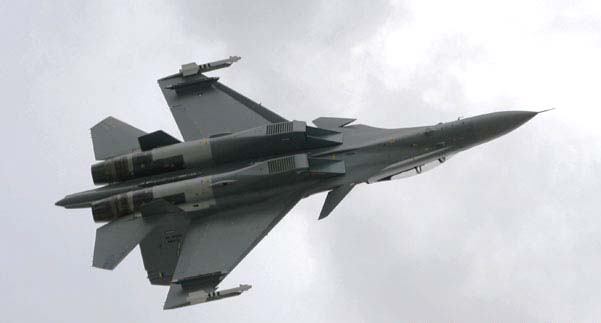
see they are used as yaw and pitch devices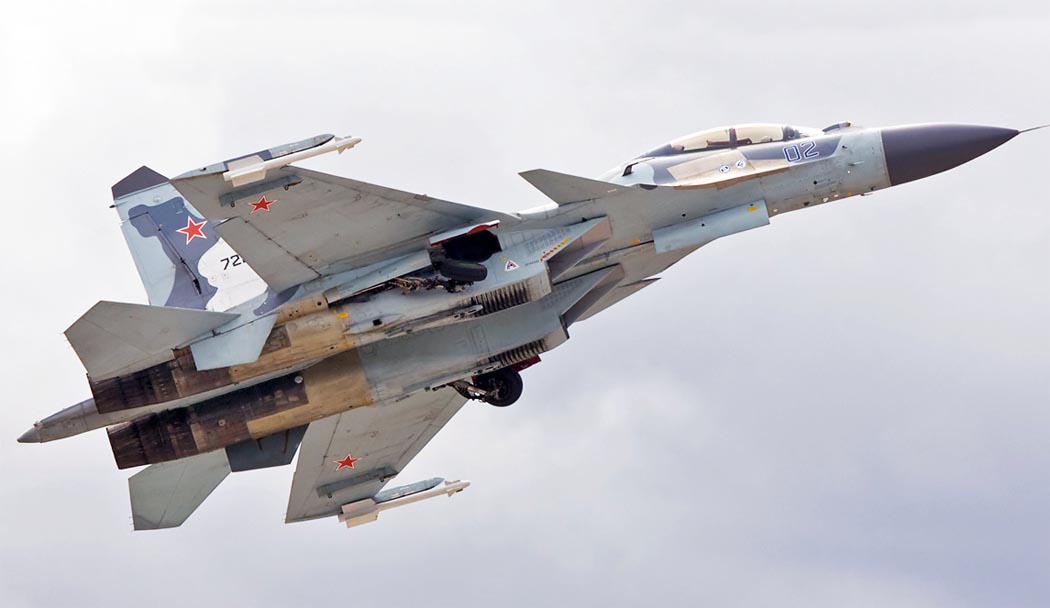
http://www.airwar.ru/fighternow.html
However the Su-30 is a heavy fighter weighing more than twice a LCA at fully load, so the canards are not a big burden to the Su-27 which already weighs almots three times more than a LCA at MTOW and EW.
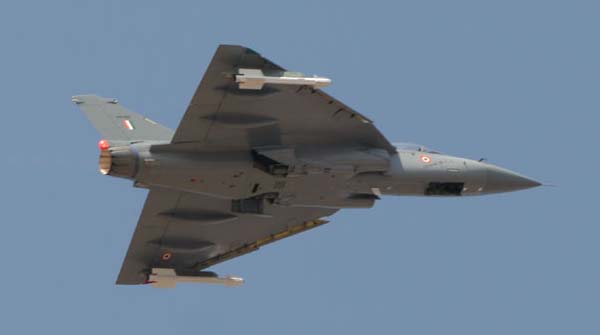
The LCA with so little control devices will of course be able to pitch, yaw and roll like any fighter, its Viggen`s style wing will retard vortex burst by delaying its formation and therefore flow separation. however its wings can not use flaps as freely as a fighter like the J-10 which already has canards trimming and adding extra lift when the flaps are deployed.
The LCA sensitivity to supersonic center of lift shift also is greater, its wing also lacks the extra lift a canard has nevertheless the LCA is not very fast, the J-10 is faster as fast a MiG-29.
The Canard and a delta wing are draggier than a tailess wing however the J-10 also has enough thrust to overcome their unconvinience see that the J-10 is at least 3000kg heavier and has a much more powerful engine.
Its true that the combined lift of a canard wing configuration is lower at cruise flight than the sum of individual lifts, however at high AoA the main wing has greater lift than it would have without it
MiG-23MLDFirstly, it may be reiterated that as per the links posted by 21Ankush and myself earlier, it has been reported that canards were added, but later cancelled on the Naval Tejas as CFD flight-tests did not indicate enhancement in lift, stability or manoueverability.
crobato, every delta plane has such a bifurcation of the elevon of each wing including the Tejas (Tejas schematic. However, they are not 4 independent surfaces, but only 2 as the 2 parts on each wing act together in tandem. Now, in case of Rafale, the bottom view shows the actuator assembly for only the outward divisions of each wing.
Another explanation may be that suppose Rafale or J-10 needs to bank while executing a pitch. Thus, the canards will be deployed for pitch and the airelons for thr bank; had they been elevons acting in concert with canards, this manouever may not be possible.
See, the above may be a measure to reduce the effect, however it may not have eliminated completely.
In this photo of Eurofighter, the canards are “drooped” as in ‘A’ and not in ‘V’ (the ‘V’ orientation is usually seen when J-10 is taxiing). In the photos off J-10 while in flight, the canards are not necessarily seen to be “upright”. To generate lift, they have to “droop”, which in turn may increase ‘wash’ over the wing.
I agree with you that elevons are subjected to turbulence of the main wing and canards are subjected to ‘unhindered’ air first. However it must be noted that tails too are also subject to the “wash” of the main wing. But elevons are not subject to wash as they are part of the wing itself.
It must be noted that elevons are also significantly “bigger” than canards as they span a larger width as seen in this video posted by 21Ankush. Thus, their effect on lift cannot be much lower than canards.
As regards the landing distance of Gripen, it is true that it is configured to land on civilian highways also, which indicates a short-takeoff and landing capability. However, it may also be assisted due to parachutes, large flaps, etc.
Abhimanyu
If you rate the Asian fighters by capabilities you will get something like this
The best all around fighters are F-22 and F-35
The second best are Su-35BM and Eurofighter Typhoon
in third place you get the Su-30MKI, Rafale, F-18E.
fourth place are the Gripen, MiG-35, J-10, F-16I/F.
fifth place are the LCA, MiG-29A, Su-27B, F-15E/F-15C, Mirage 2000, F-16C/F-2 and F-18C.
Sixth place are the FC-1, Ching Kuo and Probablythe Iranian fighter Saeqeh-fighter
The rest do not count any more since are basicaly absolete among them is the J-8II totally outclassed or the MiG-23 and MiG-25
The LCA is not in the class of the J-10 for sure, still the aircraft is not as good, the LCA deleted the canards simply because of weight considerations but the J-10 still is a very advanced proposition on par with the best fourth generation fighters, the LCA is only competitive in terms of avionics and weaponry but not in aerodynamics.
It is true, the LCA can defeat the J-10 for sure with good avionics and missiles coupled with good tactics, however as far as to say canards are not giving control to the J-10 in AoA and turn rate is something is not true, the Eurofighter and Su-30MKI have canards for something and only the Su-35 has deleted them because the 117S is the best engine in the world in terms of thrust vectoring and supercruise
Even a F-16s with Python V can beat the J-10 but in agility very likely is not as good, only the Gripen probably beats it without missiles
while the F-18E is not as agile as the MiG-35 or J-10 still carries a puch in AIM-120 and AIM-9Xs able to deal with the enemy.
The MiG-35 still needs to be purchased with Thrust vectoring to be on par with the Eurofighter.
The Rafale and Su-30MKI since are big versions of the Gripen and MiG-29OVT still carry more weaponry than their smaller cousins
MiG-23MLD*Gripen has an AOA of 50 deg. as a practice limit. That seems high compared to LCAs goal of 21. In the 1996 flight tests however the Gripen could do 110 deg. alpha. and still retain controllability. How is that possible, should´nt the aircraft be leaning backwards then?
Do you know the AOA numbers of other fighter aircrafts?*http://www.canit.se/~griffon/aviation/gripen/
BTW, a couple of sweet Viggen pics that clearly shows the cranked delta. The first one is from 1967 testflights and the 2nd one is wallpaper material 🙂
Many aircraft can overpass the 30 Deg AoA mark, however in operational use aircraft are more limited
I do not know in detail the numbers but for example the Viggen can over pass more than 30 degrees for sure but only in experimental tests the Viggen can be flown confortably up to 25 deg of AoA and only beyond 38 deg of AoA it will experiment departure tendencies.
http://ntrs.nasa.gov/archive/nasa/casi.ntrs.nasa.gov/19870013196_1987013196.pdf
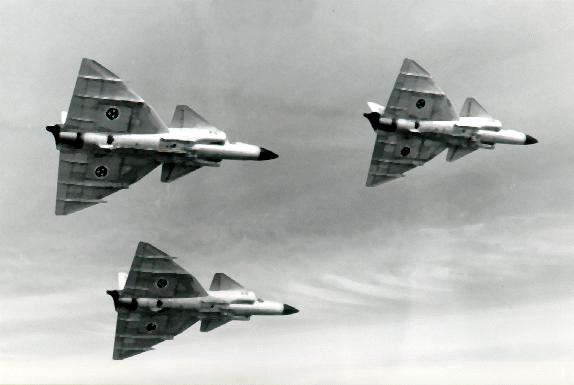
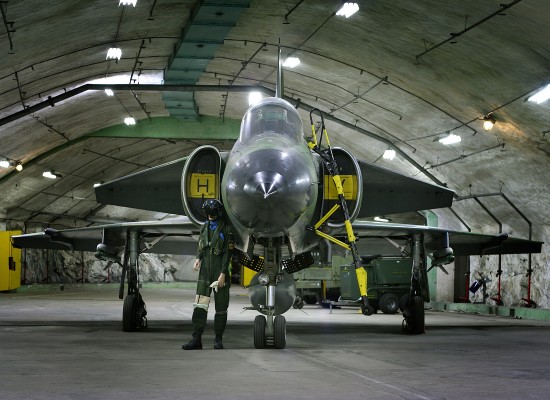
MiG-23MLDVery ugly airplane.
Man you have said a sacrilage, the Viggen is one of the most beautiful aircraft ever built in history, it might look pudgy and chubby but it is a true beauty
MiG-23MLDthen,The EC version of Su-24 will be heavier than others, my stand is consistant always.
I do agree some of Sukhoi`s data seem to be wrong, speed for example is quoted to only Mach 1.35 that is basicly the max speed at sea level, also internal fuel weight and MTOW seem to be higher than what is reported by the Ukrainian and Belarussian air forces and Yefim gordon.
However they are the manufacturer and therefore they have a lot of authority when it comes to the specifications.
However both aircraft the Su-24 and EF-111 must have similar fuel capacities, this means their ranges are good examples of the SFC of both aircraft and since their ranges are not very different they reflect the real SFC in operational practice
MiG-23MLDIn the J-10, there are actually four control surfaces, two on each wing, on the trailing edge. How would you know the difference between an elevon and an aileron? From a visual standpoint they look the same.
This is compensated, and why its not an issue, with the Gripen, J-10, Lavi and Rafale, because the canards are dihedral meaning the wing tips point upward so the wings appear like a V, while the main wings are anhedral, meaning the wing tips point downward or at a lower height compared to the wing root. This makes the planes look like a rough flattened “X” if viewed head on. Thus the canard wash is thrown over the plane and not on the wings.
You know this happens when the J-10 and the Eurocanards exhibit large rudder surfaces to compensate, because the canard wash is affecting these, not the wing.
Videos of takeoff of the J-10 and the Eurocanards never demonstrated anything like a long take off distance, in fact, they tend to be rather surprisingly short, with short landing distances at high angles of attack and slow speed.
Elevons are not efficient control surfaces because they can only deflect the air stream that is already flowing downstream from the past the main wing. They are also subject to the turbulence and bursts from the vortices produced in the leading edge of the delta. An elevator whether its in the tail or in the canard, is a completely independent and separate form on its own, which means it takes on a fresh air stream, and best yet on the canard because it does not have the after effects of the main wing.
Effectively canards do have for several reasons dihedral
see
The dihedral of the canards is configured so that the wing-tip vortex created by each canard passes through the inverted V-tail channel and does not impinge on any wing or tail lifting surfaces at either subsonic or supersonic cruise conditions.
Accordingly, the variables are selected to set canard position on the fuselage such that the wing tip vortex produced by the canard avoids striking either the wing leading edge or the leading edge of the aircraft tail at cruise. A canard design that forms a wing tip vortex which avoids the tail leading edge facilitates a laminar flow on the inverted V tail
Increasing canard dihedral causes multiple effects including aircraft lifting length enhancement to attain a target equivalent area for low sonic boom. Increased canard dihedral also enables a pilot to exploit asymmetry in control of canards on opposing sides of the aircraft for directional control.
The canard dihedral can also be structured and the canards may be differentially controlled to enable yaw control and roll control, thereby facilitating lateral and/or directional control of the aircraft.
some embodiments, the canards have an all-moving surface whereby the entire canard moves and/or rotates with respect to the fuselage. An all-moving configuration, in combination with a strong dihedral, couples longitudinal motion with lateral and directional stability so that the canards are not only useful for aircraft trim but also assist in aircraft directional control and lateral control. For example, asymmetric deflection of the left and right canards, for example one canard deflected upward while the canard on the opposing fuselage side deflected downward, generates a yawing motion, enhancing directional control authority in combination with operations of the rudder and deflections of other control surfaces.
The canard augments rudder operation by supplying yaw control power when left and right canard surfaces are deflected differentially.
In the illustrative embodiment, the canards can be controlled with differential deflections to enable directional control. Referring to FIG. 2, a frontal view of the aircraft shows an aircraft with two canards coupled to opposing sides of the fuselage at the elevated position on the body . The high dihedral of the canards and differential deflection to exploit asymmetric lift on the canards for directional control. The canards 102 can be differentially controlled to deploy at different angles, or the same angle, illustrative shown as angles α and Δ.


 Sign In