 MiG-23MLD
And who is going to be the judge eh? Name me a court. Russia is not part of the WTO by the way, and the WTO don’t cover arms trade disputes.
Tell me some real facts about Russia doing something now. As far it goes, the new Russian President is actually calling for closer ties with China and is planning a visit there soon.
As typical your posts are full of fartgas. Why don’t the moderators get rid of this racist?
Yeah Crobato and basicly the Russian reports are a fantasy i wrote, and the sue is something i spammed all over the net, you are like a kid, who can not win a argument and simply make a tantrum, your posts are full of emotion but lack any logic.
Politicians won`t call for a war for the Sukhoi license or do you think they will? no simply they always can say good relations but stop investments send delegates to talk to China and start talks with their Chinese counterparts.
Man be an adult if you can not win an argument do not make tantrums just to destroy a thread claiming foul play only because Russia has all the right to sue China 😉 your tactic of i am a racist is only to derail a thread you can not win with logic and evidence
MiG-23MLDJoint ventures are created to transfer technology for access to the local market.
If you want access to the Chinese market you are required to partner and transfer skills. If you are not willing then forgo the market. Any company that forgo the Chinese market is at a distinct disadvantage to the company who is in there. If GM or Boeing lost the Chinese market then their competitors who are in there would be in a dominant position in the global market.
If you are afraid of the Chinese violating your IP right then stay away from the market. It’s that simple.
man please do not be so simplistic, Joint Ventures are not desigend so China break the licenses.
India builds the AL-31 and the RD-33 why? simply the Indians are far more reliable than the Chinese for the Russians, the Americans installed in Mexico a factory that makes the MD-500 helicopters why? simple Mexicans won`t break the licenses. in Fact already China is paying the prices Beechcraft also went to Mexico to build fuselages, Cessna the same, Goodrich went to Mexico to build the nacelles for Boeing and Airbus aircraft why? simple in mexico there is little chance of piracy, Honeywell went to Chihuahua Mexico to build engine blades and Tijuana Mexico to design parts of the A-350 and Boeing 787 why Mexicans won`t break licenses
India, Brazil, Mexico, and Russia outnumber the Chinese market easilly and already China is paying the price and China needs markets and jobs who is benefiting simple other nations other than China;)
see
MESA, Ariz., Feb. 23, 2007 – MD Helicopters’ new production facility in Monterrey, Mexico, (MDM) delivered its first single-engine fuselage in January and is rapidly ramping up to full production of 23 fuselages in 2007
Working with fuselages from Monterrey, and other components from various providers, MD 500s and MD 600s are assembled in Mesa and completed at MDHI subsidiary Hertiage Aviation in Texas, or in Mesa, depending on the requirements.
http://www.mdhelicopters.com/popup.php?sid=02.23.07
When the 350,000-square-foot plant opens late next year, Mexican workers will start fabricating Goodrich nacelles and thrust reversers for Boeing’s new 787 Dreamliners. The company also has its sights on the upcoming Airbus A350 XWB.
http://www.signonsandiego.com/news/mexico/20071228-9999-1b28bcair.html
In fact in mexico components for the F-22 and F-16 are build even for missiles like the TOW
MiG-23MLDWhen was the AL-21 available? I thought it powered the Tu-28 since the early 60s.
The AL-7 was a 1953 engine designed to power the Su-7 and later the Su-11 and the twin engined T-5, it was much heavier than the J-79 it weighed 2010kg however it had a thrust of almost 10KN or 9600kg of thrust
прототип. Отличался коническим нерегулируемым соплом. Изготовлен в марте 1953 года
http://aviaros.narod.ru/al-7f.htm
It says the first prototype was built in 1953.
It was a very early design but undoutedly had a TWR of almost 1:4.8
the AL-21 was a 1966 design and was partially designed using the J-79, one example was adquired from Vietnam
Большое влияние на конструкцию оказало изучение трофейного двигателя J79, доставленного из Вьетнама
MiG-23MLDYou are missing the mark.
The Russians only had limited engines for choice at that time. The MiG-21 was minimum airframe around maximum engine, like the F-104 was. Both had different design philosophies, while the F-104 was in some areas “better” than the MiG-21, in some worse. The MiG-21 suited its customer more than the Starfighter did its intended customer, who actually didn’t want it. If you compare F-104A/C versus an MiG-21F-13 (both 1960), there is a clear gap in technology, which doesn’t mean, that a Starfighter could have performed the mission of the MiG better.Anyways, engine technology was always a limiting factor for the aircraft designer. Funny you mention the R-15. That is a designated supersonic engine. If you really take a look at engine technology, you see that designing such engines is actually easier than making engines that work well subsonic and supersonic.
Schorsch
The Soviet Union had plenty of engine design however like any nation it can not have all the superiority at one time, in the 1960s Russia had several engines available for fighters, not one or two, it had the R-29, R-11, R-13, R-15, AL-21, AL-7 and other engines
The closest engine in 1960 to the J-79 was the AL-7, however it was far more powerful and slightly heavier and already offered a slightly better TWR but also had a slightly worst SFC, by the time the F-4E was flying in 1968 the Russians already had the R-29 and the AL-21 which were far more powerful and had better TWR and SFC than the J-79
http://aviaros.narod.ru/al-21f.htm
For example the Ye-152A had two R-11 but the T-5 had two AL-7s
here we have one of the few LA-250 Anaconda it also was powered by the AL-7
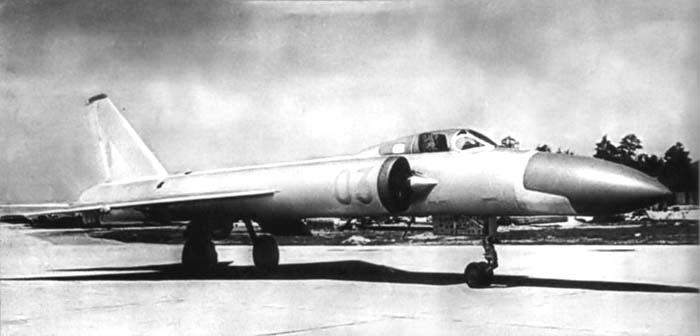
as did the Tu-128, whcih was also powered by the AL-7
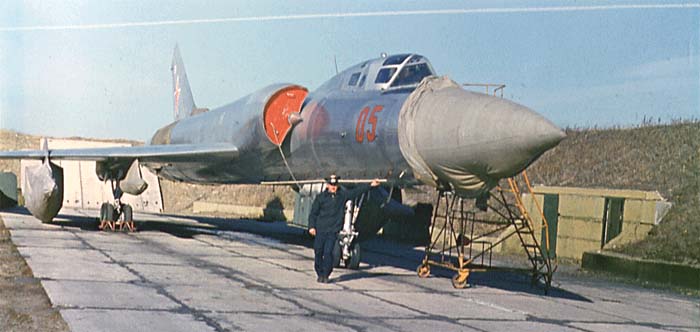 .
.
The MiG-21 was better in terms of dogfighting ability simply because it was designed as a dogfighter and not like a missile carrier as the F-104 was
MiG-23MLDAnd that’s where you’re wrong because American companies are setting up joint ventures with Chinese car companies. So no auto company is going to be complaining since they’ll be profiting from it. Ford’s last quarter 300 million dollar profit came from overseas sales especially from China. So all it says is the US market alone isn’t the only thing that counts.
No one says joint ventures are bad simply if you do not respect the license and agreements when you are in a joint venture and you are building licensed aircraft is when it is bad, a joint Venture is okay in fact is not something condemned in the West is simply when you break the contract when it becomes a trouble.
In fact the West uses the Joint ventures to enter in China but sooner or later the western finacial power will favour the western investment
MiG-23MLDTrue but I doubt they care. all they’re interested in right now primarily is gathering the technology by stealing when possible or paying when it’s the only choice. Once they’ve brought themselves up to the standards of those they pilfer from they won’t need to worry about it because they’ll be making their own- and selling their products back to those the stole from in the first place because they can make it cheaper.
The Chinese can continue defrauding companies forever? no they can not, the example i gave you about Mexico is a good example where the Chinese have lost and they will continue to loose simple because as other nations reap the benefits of getting the investment China needs the competition will become fiercer.
True they can continue doing the same practices, however it does not mean always the firms and companies will accept those measures, as the west did with Russia, the west will do with China, the standards of Clones will be considered lower than the original product, if you need sell things in the west you need western standards and that is a good way of stablising barriers, the west is not crying too much when the products coming from china are cheap and built by Chinese labour but undoutedly a jet or a car will find sooner or later barriers as the Toys already have found
MiG-23MLDThe J79 was designed and first deployed in the mid 50ies. It was widely used in the 60ies. The R-35 was first used on the MiG-23ML, which made its debut nearly 20 years after the F-104/J79.
Anyways, believe what you want. Any self-respecting analysts of the Russian aviation in the time period 1945 up to the late 1970ies will find that engines were one of the major weak spots in many projects, such as the M-4 Bison, the An124 or the fighters. The reasons for this (production issues, lack of R&D, different requirements) are beyond my knowledge.
Schorsch i think you are misundestanding my opinions, i do not say the Russians had always excellent designs, they had the best in some terms for their needs, many western analysis rarely see the good qualities of the Russian designs, they always belittled the soviet aircraft industry and compared old Soviet aircraft with newer western aircraft.
In engine technology the Russians got good designs by 1961 they already got the R-15-300 engines, however reliability is not only a Soviet/Russian issue, if you compare a R-11 with an and F-100 or a RD-33 of course the modern engines will always beat the older ones.
The issue of the M-4 is another typical example of western claimed supremacy, it is true the M-4 was not as capable as the B-52, but the Tu-95 was more than a match for it and it was a turboprop (still has a turbine) so if the M-4 was a failure, the Tu-22 or Tu-22M were not niether the Tu-160.
Comparable desigsn always existed.
The Russians built the MiG-21 the americans the F-104, it is obvious the MiG-21 was better, the Americans designed fighters like the F-106 the Russians the Su-15, the F-4 with its J-79 was not a supermachine, was a fighter with good and bad points.
It was not more agile at low speeds than the MiG-21 and was mostly a match at medium speeds and only at high speeds beyond Mach 1 and high altitudes had some degree of superiority, but in general was not better as a dogfighter and was armed with the same weapons.
conclusions was it better with the J-79? no it was not, its performance was not better and the MiG-21 was only a light aircraft without the BVR armament the F-4 had, the Russians rectified their mistakes with the Mig-21 making the Bis family but in general the R-11 and R-13 delivered what it was needed.
MiG-23MLDGood luck. We’ve seen how much luck the US has had over the software piracy issue and Microsoft’s a hell of a lot bigger than Sukhoi. If China wants to copy it it will.
It is impossible now to stop science and technology being transfered to different countries, China for sure will develop newer aircraft with or without foreign help, however China will pay the price of not respecting the licenses.
Already has paid one, Bombardier before stablishing in Mexico pondered the possibility of making that Queretaro Plant in China, why they did not transfer it to China? simple, they saw there were more risks in China and less advantages in terms of transport, many companies trust more Mexico than China when it is respecting the Intelectual rights
If China does not change its policies nations like India or Mexico will reap more benefits same was the Su-30MKI for Russia, they knew china could not comply with the contract.
MD helicopters also stablished the plant in Mexico a few hundred kilometers away from their main plant in Meza Arizona Why? simple if you do not respect licenses you will loose investments at the end.
MiG-23MLDdude, the Brazilian awacs is just Erieye, it’s not brazilian design.
No one denies that but in Latin american we do not change names to call them “domestic” and later claim we can build the aircraft without complying with the license agreement, the J-11 is a SU-27 and Russia has all the rights to sue China if they break the license;)
MiG-23MLDFirst, you need the infrastructure to actually clone such an aircraft. Most countries outside of Europe, North America and the Far East (Japan, Korea and China) simply can’t build a fighter, cloned or not.
A tribe of bushmen or pygmies can’t make a refrigerator even if you gave them all the drafts and instructions. They just don’t have the infrastructure in place.
That is a total lie, in Argentina and Brazil there is enough technology to build a fighter in fact see these two example of argentina`s helos and Brazil`s aircraft
Argentina can make its own indigenous helos
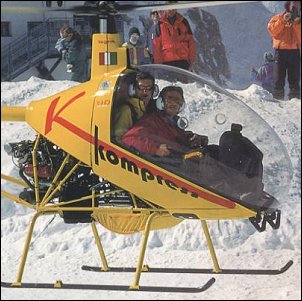
http://www.helis.com/timeline/cicare.php
http://www.aviastar.org/helicopters_eng/cicare.html
See not clones niether copies but domestic designs
and Brazil has the technology to make awacs

making aircraft is not as difficult as you think mexico is already assembling fuselages of Helos and aircraft here is a challenger 850 being built in mexico

Workers build a plane in a Bombardier Aerospace plant in Queretaro, March 2, 2008
http://working.canada.com/regina/resources/story.html?id=03e08cd6-36f4-450a-8c9e-2d0a7a492f24
In fact Mexico, Argentina and Brazil were pioneers in fighter designs, the only difference between Brazil and China or Mexico and Argentina and China is we haven`t focused our energies in fighters but in civil aircraft and by 2020 we will have enogh technology in Latin America to be leaders in civil airliners
in fact China has always licensed built aircraft see this curtiss modified in China
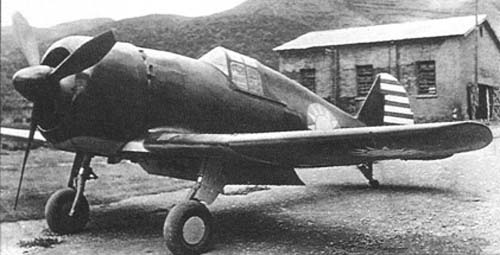 http://www.airwar.ru/enc/fww2/xpo.html
and compared to these argentine original designs


See in Latin america we built first than China a jet fighter

and here is more facts about designing in Latin america
Brain work
It’s not just aerospace manufacturing moving south of the border. Foreign firms are snapping up Mexican engineers and mechanics, as well. Honeywell Aerospace, a Phoenix-based electronics maker, opened a $40 million testing center in Mexicali in 2006. General Electric plans to add 600 engineers to the 1,000 employed at its Querétaro design center. The center designs jet engines and turbines for electrical generators.
http://www.usatoday.com/money/indust…erospace_N.htm
May 3, 2006
Honeywell’s Aerospace division has broken ground in Mexicali on a $40 million systems integration lab where Mexican engineers will develop technologies for future commercial aircraft.
The lab represents a significant jump up the technological ladder for foreign investment in Baja California. Instead of manufacturing, like that performed by more than 1,000 maquiladora factories in the state, the Honeywell lab will develop and test a wide range of airplane flight systems.
MiG-23MLDThe fissionable materials is mentioned behind in addition. You fail to notice that the first two sentences are loud and clear.
The Agreement provides a general exception for matters which are deemed to be essential to national security interests. In particular, a Member is not required to furnish any information if it considers disclosure to be contrary to its essential security interests. In addition…
Bingo.
In order to have a lawsuit, you have to have a trial, and you can’t have a trial if matters of national security cannot be disclosed. No one will ever disclose an arms trade contract in court and any plaintiff who does that will lose his reputation, because the core aspect in armstrade is credibility in secrecy.
more fantasy crobato Russia can sue China simply becasue they have the contract they signed and it was an interguvernamental agreement,the question is can Russia force China too pay without any souring of their relation, politically speaking that is the great mystery, if China complies is simply becasue the economic and political consequences are not worthed, but if China does not comply, the Russians are forced to think a new political strategy with China in order to force the Chinese to comply or simply to avoid further swindles
MiG-23MLDso you’re suggesting that its perfectly alright for one nation to reverse engineer another nation’s weapons, and that too none less than a fighter jet, just because the contract did not specifically say so?
so henceforth, anyone selling any weapons to China needs to add “DO NOT COPY AND BUILD ON YOUR OWN” clauses to contracts?! do you have any shame at all trying to say that such a ridiculous argument even works in a civilized world where IP is respected?! oh I forgot, we’re referring to China here..IP is for losers as far as China is concerned I guess..national security indeed ! there’s another core aspect to arms trade and that is related to respect of IP- you cannot just copy someone else’s stuff, not pay royalties for that, compete in the same markets that the other nation that sold you the equipment competes in and name it something Chinese for it to become Chinese..
this is blatant cheating, nothing less. and the fact is that in most people’s eyes, actions like this make China a nation to never ever trust.
The Russian specified the number of fighters China can build only 200, China later did not want to continue with the 200 number and they stoped at 105 aircraft, Russia has warned China about suing the Chinese government and shenyang simply becasue if the J-11B is produced it will break the contract they stablished
The Russians also do not want copies of the Su-27 in the international market without any royalty.
MiG-23MLDI’m trying to see which combat aircraft produced by the Soviet Union (these days) that are much more capable of autonomous operations than some of its GCI dependent ancestors.
from my understanding, it would seem that the MiG-31 was the first serious attempt to make a fighter (interceptor in this case) less dependent on GCI and capable of attacking targets on its own. I would assume newer Flanker and MiG-29 variants are leaning towards this direction as well?
All of that is western propaganda.
First of all, any fighter needs guidance why because all the fighters have radar with ranges of +200km or -200km none can see a real view of the theater of operations all the aircraft need guidance either by GCI units or AWACS
Of course a MiG-21 and or a Su-15 without a CGI unit can not scan too much airspace, and with missiles of 20-30km of range is obvious limitations are real.
Same will be for a Mirage III or a F-4.
what in the west is usually portraited as the proof capitalism was better of communism was simple the idea of robotic soviet pilots against free western pilots.
they usually compare the MiG-21 and MiG-23 against the F-14, however never see the MiG-31 had data link and basicly was more independent sweeping and scaning more pieces of air real state than any other western machine in the 1970s.
The F-14 always flew with E-2s and the Israeli F-15s and F-16s flew with E-2s so far the autonomous interception was a blatant lie. if you have a E-2 guiding you you are dependant upon information given by the AWACS.
Now even satellite communications and data link make GCI units more inportant for western fighters proving simply it was politics more than real technology the myth of Russian over reliance upon GCI units
MiG-23MLDTaking test bench and static sea level data still doesn’t serve your point, only if you want to assess the taxi performance. Publically available data indicates that Russian turbojets weren’t first class in the early 60ies. Google “Have Doughnut” for an opinion about the MiG-21F13’s engine.
The overall pressure ratio tells you the story much better, but again: Engine performance in supersonic jets is not really accessible from single point, static data.
All those reports are bias if they do not see the other side of the coin, Russian engines had good qualities, many reports will exagerate the pros of western engines and cons of Russian ones and overlook the cons of western engines and the pros of russian ones.
This is simple a propaganda war that is accepted in the west as a sign of patriotic fidelity.
You can not demostrate the TWR of the J-79 is better than the R-11, as you claimed in the first place, you affirmed that the J-79 had a better TWR, but it does not.
I have shown you the R-35 has better TWR and same SFC in an engine with the same weight.
Of course the Western reports usually compare the F-16 with the MiG-21 or MiG-23 and usually overlook that the Russian engines were designed as easy to make products.
However if you look the real facts, the J-79 was a late 1950s design, same the R-11 so both engines were more or less comparable, while the R-29 is a 1960s design and the R-35 is a 1970s design, so if you are fair all those engines reflect their time period, and as a conclusion are comparable none is superior or inferior all have cons and pros and none is really the best
MiG-23MLDIt was not the power of the engines, but the specific thrust (thrust divided by engine weight) and the specific fuel consumption that made early MiGs to true gas guzzlers. Also reliability and response were not that great.
Note that both MiG-21 and MiG-23 got new or strongly modified engines later in their careers, while the last Phantom was still delivered with the same engine it had when it first flew.“Multirole” is something I wouldn’t integrate into a 1960s fighter, at least nothing that goes beyond dropping dumb bombs and firing simple rockets. Anything else requires dedicated avionics, which are heavy and expensive. We must not forget the limited technology of that days. When today any business jet has a triple inertial reference unit and GPS, an inertial navigation unit was pure luxury in those days (the French had no ending pain to get one for their nuclear bombers).
A 1960s fighter would be a daylight & acceptable weather fighter.The simplest defensive electronics like radar warning receiver items already add considerable weight (and cost).
All of that is subjetive, all those aircraft were very similar and the engines used in the F-106 and MiG-21, the R-11 and the J-57-P-23 to put an example had similar SFC http://www.airwar.ru/enc/engines/r11f.html and http://www.aircraftenginedesign.com/TableB1.html, the R-35 and the J-79 had similar SFC and consider that both engines weighed the same but the R-35 has a higher TWR of 1:7 contrary to the J-79 with a mediocre 1:4 TWR
Specifications (J79-GE-17)
General characteristics
Type: Afterburning turbojet engine
Length: 17.4 ft (5.3 m)
Diameter: 3.2 ft (1.0 m)
Dry weight: 3,850 lb (1,750 kg)
Components
Compressor: 17-stage axial compressor with variable stator vanes
Performance
Thrust: 11,905 lbf (52.9 kN) dry; 17,835 lbf (79.3 kN) with afterburner
Overall pressure ratio: 13.5:1
Turbine inlet temperature: 1,210 °F (655 °C)
Specific fuel consumption: 1.965 lb/(h·lbf) (200 kg/(h·kN)) with afterburner, 0.85 lb/(h·lbf) (87 kg/(h·kN)) at military thrust
Thrust-to-weight ratio: 4.6:1 (45.4 N/kg)
now see the R-13
Specifications (R-13-300)
General characteristics
Type: Afterburning turbojet
Length: 4,605 mm (181.3 in)
Diameter: 1,095 mm (43.1 in)
Dry weight: 1,205 kg (2,656 lb)
Components
Compressor: Two-spool axial compressor
Performance
Thrust:
39.9 kN (8,970 lbf) military thrust
63.7 kN (14,320 lbf) with afterburner
Overall pressure ratio: 8.9:1
Turbine inlet temperature: 1,005 °C (1,840 °F)
Specific fuel consumption:
95 kg/(h·kN) (0.93 lb/(h·lbf)) at idle
213 kg/(h·kN) (2.09 lb/(h·lbf)) with afterburner
Thrust-to-weight ratio: 52.8 N/kg (5.4:1)
conclusion the J-79 had a mediocre TWR and only offered a better SFC because it had an inferior TWR, even the R-11 offers a higher TWR and only a slightly higher SFC
In fact having similar specifications to the J-79 of weight, SFC, overall preasure ratio and turbine inlet temperature the R-35 offers a TWR of 1:7 and the same is with the R-29 however the later is less impressive than the R-35, facts the MiG-21 was more agile than the F-4 and the MiG-23 only used a single turbojet to achieve the same or better performance a F-4 had


 Sign In







