 MiG-23MLD
You have no idea, what you are talking about.
Personal preferences and wishes aside may allow you a balanced view.
You do claim capabilities for the JH-7, which were not forseen in the 80s and not demaned by customers for given missions in mind.
5 tons of weaponsload is enough for the intended role, at least in times, when no more than 3 tons (2 AAMs) are of practical use at all. The heavy weight does give you a high wingload for a smooth ride at low level. The speed envelope of the JH-7 is sufficiant and comparable with that of the MiG-27*. but it does offer two-engine safety and still better range.
When you do claim stealth as a feature all Flankers are obsolete alltogether.
Neither the Tornado nor the Su-24 are built for over a decade and the F-111 was a class of its own. As the Tu-22 is a class of its own and can be seen as a replacement for the Tu-16.
To compare something to the JH-7, we have to stick to the 30 tons supersonic class. When you buy Russian equipment you was limited to that at hand as you was with western ones. Every country has to decide itself, what does suit its demands at best. For most missions the present “multi-role” designs are an overkill and a waste of money by that. China like the former SU were/are big enough to built “single” task aircraft in usefull numbers. As long as the Chinese do operate JH-7s they see a good chance that it is capable to fullfill the given mission. State of the art avionics, weaponary and a supporting network are much more important than dubious claims about a lack of agility or stealth. The USA do stick to higher flight levels and the related technology, when the others without that do stick to low level to overcome that shortcomings. As long as none will engage the whole US-forces that kind of warfare does still work.
The Tornado did not suffer greatly in 1991. How many missions were flown and how many Tornados lost? Some were even attributed to the lack of coordination. In reality wars were fought with weapon-systems at hand on both sides. To claim some wet wishes to alter the reality afterwards does change nothing about the outcome. All parties can look into the results and draw the lessons from that. A “Russian chess-player” had never triggered the war from 1991, the own lessons from the 80s in mind. It is stupid behavior to claim a higher loss-rate for the other side, when there was no real chance to win that war. But I am aware that it is a taboo in several countries, to question the human losses. The looser becomes a matyrer or a hero.
Sens
Normal take off is a feature seen in the JH-7, Panavia Tornado, F-111 or Su-24 as it is Max take off, having a normal take off does not imply the Su-24 has not a max take off
You are just trying to hide facts about the Su-24 to fit your really biased opinion about russian equipment.
The Su-24 flew in 1970 and started operational service in the mid 1970s, it belongs to the F-111 and B-1B strategy of flying low and fast because the vast majority of fighters in the 1970s did not have good look down shoot down capability, Russia was flying at the time mostly MiG-23s and MiG-21s and the US F-4s, with exception of the F-14 that started real operational capability in large numbers at the begining of the 1980s only the F-15 was a relatively good weapon to deal with the Su-24 in the late 1970s but it was not very numerous.
Now by the time of GWI the Panavia Tornado, Su-24, F-111 faced each other at war with relatively new air defences that were wrecking havoc among the Panavia Tornado since it was not like the F-117, SAM and AAA bateries plus fighters were a real threat, the americans did realize that the F-111 was old in terms of self defence and strategy, the Europeans did it too and developed the Eurofighter and Rafale with omnirole capability, since the USAf knew replacing on the one to on basis the F-111 with F-117 or F-22s was impossible they opted for a less capable strike fighter the F-15E.
The JH-7 started life in the late 1980s but was put into service in this decade, in fact the JH-7 is not more than an over grown AMX concept.
Now let us go to real facts.
The Tornado is much more expensive than a Su-24 and it was built in less numbers, the ratio is almost 2:1, two Su-24s for each Tornado built so any savings in fuel is over paid by several millions dollars in price, the SU-24 flew a few years before the Panavia Tornado did and contrary to your very long held idea that the Su-24 is a very fuel thirsty machine, it is not it simply has less fuel than the F-111 in fact several tonns less and only has a fractionally less fuel efficient engine but it is not as you have always claim as a big difference.
the Problem with the JH-7 is only time frame and the fact it is not as good as the swing wing aircraft developed by the Soviet Union and USA were.
MiG-23MLDMy fault to hope for your understanding in basics. The price has nothing to do with fuel cost. Fuel cost is even the least important part of flying-hour costs, even in today prices. What are the real prices of western or eastern aircraft are is guessing. Non did exspect a true market-price for a Su-24. In the formers SU the prices were set/planned, if they did cover the related costs did not matter really. Today Russia is selling their Sukhois for higher prices, just above the production costs and the new development costs for upgrade work. To keep the own aviation industry alive, present Russia do not claim their share about the development cost made by the former SU-taxpayer.
Fuel consumption is critical for a naval-flyer or low level strikers. That has to go out for some distances with an usefull weaponsload to allow tactical flexibility and engage advanced adversaries. Such a mission consisted of several legs flown with different speeds, heights f.e. The outbond leg f.e. is at medium height between Mach 0,7-0,8 with an external load. Close to ground even below Mach 0,7. Reaching the last leg before attack and to be spotted by the defences, the attackers will accellerate close to 600 kt before weapons-realease and disengagage clean even supersonic for two minutes, before trottling-back to cruise-speed related to height. The Tornado and Su-24 may have advantages in length of take-off run and landing, but during the mission the gains are limited without mission tailored engines. Here the Su-24 does suffer most.
Maybe that did not matter over the shorter distances in Central-Europe during Cold War conditions, compared to a Su-7 the Su-24 presented ample range. Compared to the Su-17 it was the higher weapons-load or pylon-capability at first. But I do fear too many details for you.
Sens
My whole point is the Su-24 has a really good price in terms of cost capabilities, for Europe the Panavia Tornado is a good aircraft but can they compare the Panavia Tornado with the Tu-22M no, they can not, the Su-24 has a good ride, a good payload and good price that is something also justified in the Panavia Tornado in terms of capabilities.
Now the Su-24 is a cheaper aircraft it will be less expensive than a comparable Western aircraft and in the Soviet Union always had Tu-22Ms, MiG-27s and Su-22s partners.
the whole point is the JH-7 is an old concept not justified in modern warfare, in the 1970s enviroment the Su-24 was a great aircraft, now it is not, in fact the Su-24 and F-111 are becoming obsolete aircraft when in China just the JH-7 has started its operational carreer.
In 2008 even the Su-34 is not that great, the modern warfare demands something like the F-22 or F-35 or even UCAVs or even at least the Rafale or F-18E.
When the Su-24 was introduced the americans had few F-15s, F-14s and mostly F-4s.
Iran has Su-24s and value them greatly even it has also obsolete western fighters.
Now the JH-7 has no stealth, no speed, a very small payload for its weight and no agility, in few words the aircraft is a fighter-bomber even less atractive than the Su-24 or F-111 in 2008.
the Su-24 already is a worn out aircraft, it won`t survive in an enviroment full of modern defences and F-22s, the JH-7 is the same, yeah it is true is a threat to nations still operating XX century air defences and fighters like the F-5 or even early versions of F-15s and F-16s.
The Panavia Tornado suffered greatly in 1991 and we are not talking even about S-400s and an air force like Germany or even Israel, but a second tier air force like Iraq was.
So you can not expect that built in low numbers, unstealthy and without agility or speed the JH-7 will survive as a Naval bomber or much less an attack aircraft in 2008
MiG-23MLDThe opinions of idiots like you and those you use as reference cannot be considered worth considering.
Up to now, you cannot reconcile the fundamental logical, historical, political, and technical problems of your argument which you up to now, refuses to answer.
Like you claim that the blueprints of the YE-152A was bought by China after the project was considered a failure.
Except that.
1.) The Soviet Union never sold blueprints. When they provided assistance, it was whole heartedly free for the glory of the Proletarian.
2.) The YE-152A continued to fly testing all the way up to 1965. China and the Soviet Union were already feuding years before that.
3.) The YE-152 program was not considered a failure. It was only superceded by something better. The program had a number of speed records to boot.
4.) The Soviet Union would not sell or give away plans of a strategic interceptor to any country, especially not one it has a major feud over with, and especially with someone it has a border conflict with. If the Soviet Union would give away blueprints to anyone, why not India or Warsaw Pact? China would be at the bottom of the list.
5.) The Soviet Union would not give away such plans to a country it knows is developing nuclear weapons because such a plane can be a nuclear delivery platform. Especially when such a plane is breaking speed records. In fact, China successfully tested its A-bomb well before the Ye-152 project was terminated.
6.) It you have given away the blueprints to a project that was finished and terminated, you would expect that the blueprints would include the latest and final versions of the aircraft. Sorry but no deal when you post pictures of the earlier YE-152. If the SU gave away the blueprints after the project was done, it would have included the final design of the aircraft. Unfortunately to your argument, the J-8I lacks features of the final Ye-152.
7. ) The twin engined Ye-152A is nothing but the single engined aircraft hacked for twin engines. Internally that would be fundamentally different in design from an aircraft that was built from the start and end to have twin engines like the J-8I.
So for all the idiots trying to prove the J-8I was from the Ye-152, you must also prove that Soviet Union must be EXTREMELY STUPID, not to mention virtually accusing the powers at be and Mikoyan Guvenich OKB of an outstandingly TREASONOUS action.
Man all your excuses are the typical excuses found in people who do not want any influence in Chinese early programs but in fact all your reasons are flawed
A) the twin engine Ye-152A first flew in 1959 and was in the design boards in 1957-1958 so that is several years before beyond any Soviet Chinese rift, in fact just a few months after the MiG-21 had its first flight, of course you are going to get excuses like the Ye-166 or Ye-150 or Ye-152-1 in order to confuse your self more
Now you have to ask your self what Mikoyan wanted with the Ye-152 and Ye-150? well they were looking for the MiG-23, like in the case of China, the Soviet Union wanted to replace the MiG-21 with a scaled up MiG-21 they designed even the K-9 air to air missiles for the program and the Orugan 5 radar system , however contrary to China, the Soviet Union had a very advanced chemestry and jet engine industry, when the Soviet Union copied the Nene jet engine the problem they had at that time was of metalurgical nature, however the Chinese were not able to copy the R-29, the Russians in fact got some metal samples from the Rolls-Royce company and a few Nenes to copy thanks to that they could analyse the alloys needed for better engines than the had before the Nene.
however the Ye-152 was not really a very advanced aircraft as you want to portrait, the K-9 was not a very advanced missile, it was years behind the R-23 and R-40 and basicly the Ye-152A was a large twin engine MiG-21.
The Russians were also experimenting with more powerful engines, the R-15, this engine was an economical option to the less powerful R-11s fitted to the Ye-152A, however the Ye-152-1/Ye-166 and Ye-152M had small crampted nose radome inlet cones, this did not allow them to house large radars like the Smerch or guide missiles like the AA-6/R-40 and achieving Mach 3 as later the specifications demanded for the MiG-25, China suffered the same troubles with the J-8I, they need to fit a larger nose radome and side inlets to cure the same troubles the Ye-152-1, MiG-21, Ye-150 and ye-152A had.
So by 1964 the Soviet Union Started the development of MiG-25 and MiG-23.
Now why the Ye-152 was important well simply, engines, the R-15 jet engine to be specific, for the Russians the R-15 was the most important aspect of the design since the K-9 missile never entered service.
Did the Russians deliver the engine of the Ye-152M to China, the R-15 that also powers the MiG-25? no they did not, in fact the Ye-152A was not as important as you claim it was basicly an interim design to study the Ye-152-1 configuration before the R-15 was ready.
So basicly China got the interim design and not the main aircraft and the Russians knew the Ye-152-1/Ye-166/Ye-152M were far ahead of what China could built because the Chinese were at least 30 years behind in engine design in 1959.
The single engined Ye-152M with K-80 Nato name ASH or AA-5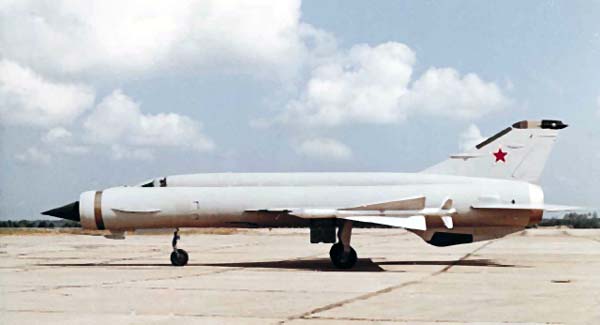
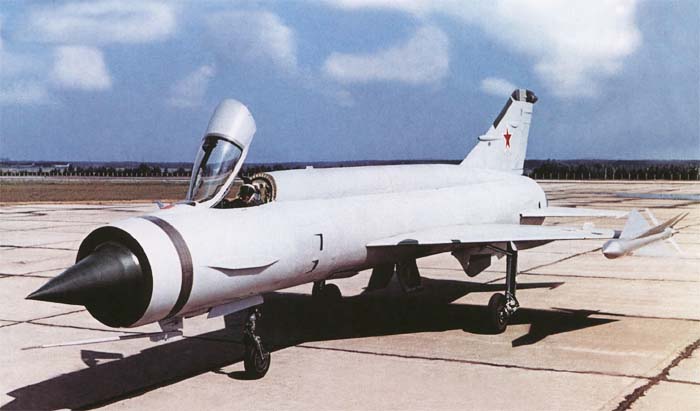
MiG-23MLDDid you ever work for the Chinese industry at the time? You speak as if you live and work there but have no clue of the infighting between different institutions. i can say for a fact Shenyang did not contribute any substantial help to Harbin or Xian as you so claim. The trouble isn’t in holding intellectual rights but maintaining the superiority of the plant so as to receive preferential treatment in distribution of funding and gov’t consessions.
You would never see a Sheng Yang engineer ever working on a Harbin project simply because he’s paid for by Sheng Yang not Harbin. His hukou is in Shengyang not harbin. He would only give pointers on how to run a hanger and provide technical expertise if needed due to the fact Harbin is new at the game.
Similarly Shengyang would not be producing Yak-18. period.
There are two type of readers those who want to read what they want those who read what it has been written, in my personal opinion i have found that there is no reason to claim the J-8I was not based upon the Ye-152, however here many confuse the Ye-150 and even late variants of the Ye-150 with the twin engine Ye-152A, if you want to believe that believe it however in Russia there are many people who support that historical account that the Ye-152 was the aerodynamic model of the J-8I
The YE-152 with two engines is the Ye-152A but the Ye-152-1 is the one with a single engine
this is the single engine with bort numbers 152-1 otherwise Ye-166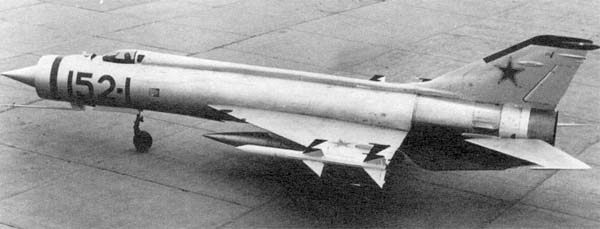
and this is the Ye-152A with numbers 152A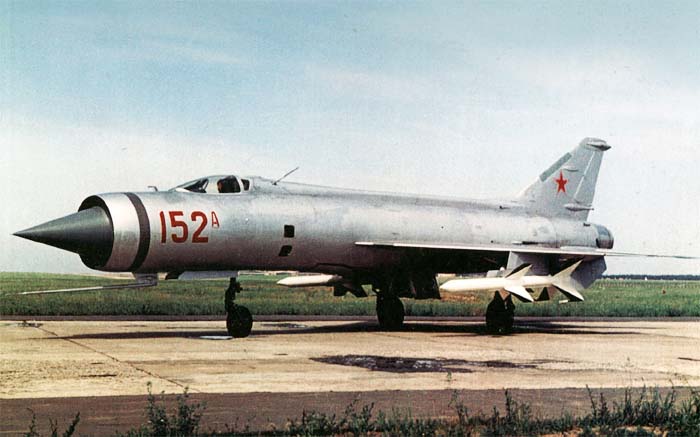
of course people confuse what they do not know
this is the earlier Ye-150
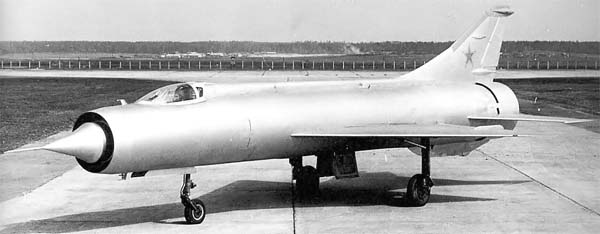
MiG-23MLDThrow a counter question. F-15 Vs. F-16…. The 2 have their roles. J-10 and J-11B have their roles. Now before some of you jump on me saying how on earth can crappy J-10/J-11 be compared to F16/F15 (or vice versa), it is just an example. You can look at it sorta something like a PRC version of F-15/F-16 combo.
It will depend in weaponry and in performance, if the J-11 is more agile and has better weapons well it will beat it, however the J-10 maybe is in the class of the Su-27in agility and weaponry i guess both are equally matched.
MiG-23MLDDo you realise, that you are wrong in most claims?!
The JH-7 has to fullfill a given mission. For that reason it is ordered. The real question is, does JH-7 do fullfill that mission right now and in the future?
The answer is yes. It does not matter if that design is in general from the 60s. The much more important avionic and the materials used are present standard. By that the JH-7 is even more advanced as Tornados or Fencers without at present upgrade. The heavy weight of the JH-7 is an advantage, when it comes to low level ride-quality. It does not matter if you do use a swing-wing design, when the wing-load is high enough. Operating over the flat ocean is much less demanding and the flight level can be adjusted to the line-of-sight to stay below the radar-horizon. The ASMs do some stand-off capability at all. What does matter most in that enviroment is fuel economy. Here the much more expensive Tornado do beat the JH-7, when the Su-24 do loose.
When the JH-7 program was started in the 80s, there was nothing China could have choose from to fullfill the given mission in mind.
Today we can claim it is worth the outlay, when China has much more option to choose from? The “little” number in need and the gains in expertise do shift my answer still to yes!
What you are saying will depend in the price tag difference between a Su-24 and a Panavia Tornado, If the Panavia Tornado is more expensive than the Su-24 and the Panavia Tornado has a difference of a few millions dollars for a given time then the economy of fuel is worthless since each aircraft will cost more than the fuel they burn in all their operational life;) we know the Panavia Tornado is more expensive.
Model / Year / Price in millions of U.S. dollars
B-1B Lancer on the average 178
B-2 Spirit 1993 872.25
B-52 Stratofortress 1961 5.4
Dassault Mirage 2000 1997 about 35
Dassault Mirage 50 about 7.75
Dassault Rafale B 1996 64.4
Dassault Rafale C 1996 60.6
Dassault Rafale M 1996 65
Dassault Super Etendard 1980 about 10.5
EF-111A Raven 21
F/A-18 C/D Hornet 1996 44.27
F/A-18 E/F Super Hornet 1996 48.5
F-111 1973 14.6
F-117A Nighthawk 111 (prototype) 42.6 (production) 6.56 billion dollars (entire program cost)
F-14D Tomcat 1991 71.9
F-15 Eagle 1991 42.875
F-16 Fighting Falcon 1996 25.67
F-22 Raptor 1996 approx. 71.2 (for the expected production run of 438 aircraft)
F-5E/F Tiger 1983 11.1
MiG-23/MiG-27 Flogger 1996 approx. 15
MiG-29 Fulcrum 1997 15.5 (fully equipped; quantity purchase of 25-100 aircraft)
MiG-29 Fulcrum 1997 24-31 (fully equipped; quantity purchase of 10-25 aircraft)
MiG-31 Foxhound 1997 approx. 57-60
P-3 Orion 1987 50.4
Panavia Tornado ECR 1997 38
Panavia Tornado IDS 1997 32-33
SEPECAT Jaguar 1997 approx. 15.5-16.5
Su-24 Fencer 1997 approx. 24-25
Su-27 Flanker 1997 approx. 30
Su-30 Flanker 1999 approx. 30
Su-32FN 1997 about 36
source
http://www.aeronautics.ru/nws002/military_aircraft_prices.htm
The JH-7 has several flaws in terms of design it has shoulder mounted wings, yes but also the F-15, Panavia Tornado and Su-24 have shoulder mounted wings, all these designs are heavy, the Su-24 is very heavy aircraft fully loaded , when you look at thrust to weight ratio you will find that fully loaded the Su-24 and F-111 are not different from the JH-7, however VG wings, shoulder mounted wings and heavy weight make a smoother flight for the swing wing machines.
This also translates in higher speed and longer range for the swing wing aircraft
The JH-7 is roughly equivalent in technology to the Sepecat Jaguar in aerodynamics and it has the features avoided in the Panavia Tornado, and to that add insult to enjury, the British reticence also delayed the engines. So in few words the JH-7 is an anachonic design, powerful yes, domestic yes, but anachornic yes.
MiG-23MLDAnother document that is full of holes. Shenyang never made the Yak-18. It was a company in the south called Nanchang. And neither did Shenyang ever made any helicopters.
Yeah yeah Crobato in the comunist world you do not see that several factories built parts or equipment for others, since they are not capitalist enterprises but state owned the name does not matter, they will build equipement even if it is not made originally by them, this can happen when the original maker has over demand and under capacity to manufacture.
In fact see this
.
Founded on 29, June 1951, SAC is one of the backbone enterprises in the AVIC (Aviation Industries of China), CorporationⅠ. In the past half century, ever since its foundation, SAC is in the forefront of the manufacture, design and development of aerospace vehicles, including the first China-made jet fighter aircraft F-5, the first China-made jet trainer aircraft FT-1, the first China-made supersonic jet fighter aircraft F-6, the first China-made ground-to-air guided missile Red Flag No.1, the first China-made double Mach number jet fighter aircraft F-7, and the first hi-altitude and hi-speed fighter aircraft F-8.Wholly independently developed by the Chinese, the last 50 years have seen SAC building more than a dozen types of aircraft numbering several thousand , thus making a contribution of great importance to the build-up of China’s national defense, for which, SAC is known as the “Cradle of China’s fighter aircraft”.
http://sactrade.en.alibaba.com/aboutus.html
They say they have built several dozen types of aircraft in the last 50 years not only J-8, MiG-15s, MiG-19s even the F-7 a product by Chengdu;)
Shenyang Aircraft provided assitance to the Harbin Aircraft Manufacturing Corporation (HAMC) and Xian Aircraft Company (XAC) for the production of the H-6 (Badger) under a licensing agreement from the Soviet Union. Shenyang Aircraft provided assitance to Nanchang Aircraft for the production of the Q-5.
MiG-23MLDLOL. China got the H-6/Tu-16 design from Russia in 1952 That was the height of the Korean War and they were still close allies.
And you have no context of the MiG-21 whatsover that it was nothing more than a short range tactical fighter, not a STRATEGIC INTERCEPTOR. As a matter of fact what the SU gave, they already knowingly know there were serious deficiencies in range and endurance of the MiG-21F design; they were already planning the second generation MiG-21PF etc,. which they DID NOT SHARE WITH THE CHINESE, while they gave a lot of those to Vietnam, the WP, the Arabs and to India.
In fact in page 19 of this article they say that the Shengyang aircraft factory did build several aircraft among them several licensed Russian models such as the Yak-18, MiG-15, MiG-17, Mi-4 and some engines and later in page 20 they say с конца 70-х гг. выпускает J-8 (на основе Е-152А) or in few words they started building in the late 1970s the J-8I aircraft based upon the Ye-152A
http://orel3.rsl.ru/enciklop/avia/sh-ya.pdf
So as you can see Crobato there is a common perception in Russia that the Ye-152A was the base of the J-8I
MiG-23MLDMore BS from you. East Wind wasn’t even a Delta. The J-8I does not look the same as the Ye-152. Why man, you are jumping for more revisionism by claiming that the J-8 started from East Wind. They have very different requirements to start with. Read the fact that China needed something to go after the F-105 Thunderchief.
WTF would the Russians give the Chinese the blueprints, when they know it may be used against their own aircraft?
You cannot admit you are totally defeated on this subject.
Crobato
what did build China in 1969 was behind what Russian built in 1969, the Soviet Unoin built MIG-25s and Su-24s, China built scarsely 100 J-8I and Russia built 1200 MiG-25s for the SU the Ye-152 was already obsolete, your theory is foolish because for the Chinese the J-8I was high tech however for the Soviets the Ye-152 was only an experimental aircraft, passing documentaion of an old design without even future in the Soviet air force was deemed really not a top secret as you claim they had knowledge to build better things than the Ye-152A
MiG-23MLDSo you admit now that China only started to develop the J-8 program in 1965—years after they split with the SU?
Right from the beginning they were working for a twin engined design so they started right from the bottom with a twin engined design. That’s altogether a very different context from the Ye-152.
What historical facts are you alluding to? I have already refuted your so called historical facts, and you cannot refute mine. You still cannot refute motivation and the fact that the historical events do not match.
Logic? When did you ever use your logic? You have no understanding whatsover that look alike and actual connection are two very different things.
I don’t give a rats ass with your Russian souces, given that you would lie and present questionable sources and claims of alleged kills in the Middle East context.
ANSWER ME THIS QUESTION. Why would the Soviet Union give the BLUEPRINTS FOR A PVO Interceptor to a potential adversary?
why China has MiGs and Tupolevs? your question is a silly one Russia gave all the technology even the MiG-21 so why then the Soviets would had not share more information specially if they were training their buddies to defeat the western powers in 1958 when the Ye-152A was in the design boards, why not if they already gave their best fighters and engine technology to be produced by China ?
See that the West wind fighter started at the same time the YE-152A and Ye-150, the reason is simple the Soviets knew Russia was going to build better weapons than those given to the Chinese
MiG-23MLDIs that all you can answer now?
You cannot reconcile the HISTORICAL references and the TIMELINE.
The Ye-152 program was only starting when China and the SU were already having tensions. It was far from over when they actually split. So where is your argument that the Chinese were given plans for a failed project when the decision for it to be a failure was MADE LONG AFTER THE SPLIT.
You cannot reconcile the STRATEGIC MOTIVATION.
The fighter is a strategic interceptor for the PVO. The SU does not share that with its allies MUCH LESS GIVE THE BLUEPRINTS FOR FREE.
And to a POTENTIAL ADVERSARY to boot.
You cannot reconcile the DESIGN.
There are fundamental internal differences between a fighter that was designed to be single engined and one that is double engined to begin with. The Ye-152A was a hack job for a twin engined platform, the fact that it was really designed as a single engined fighter explains the many crucial differences.
You are the one who can not admit facts, the Ye-152 was the only type of aircraft china could had built that is the reason the J-8I looks like the Ye-152A they did not have better engines than the R-11, no better technology than copies of the MiG-21 in fact the only option and real Historical fact is they built an scaled up MiG-21 but they could not build a Ye-150 because they did not have R-15 equivalents yeah so information on the Ye-152 was a must and the Russians say they got it, the J-8 was not started in 1964 as many think but as early as 1958 with the East Wind project
MiG-23MLDIt does not change the fact that the primary fighter design was a single engined one, and the twin engined version was nothing but an adaptation. That means this fighter was not designed to have twin engines in the first place, which is fundamentally different from the J-8I.
http://wp.scn.ru/mig_okb/planes-exp-e152a
The second E-152A prototype was under construction till October 1959; later it was used to build the second E-152 prototype powered by R-15-300 engine.Look, they converted the second plane back into single engined configuration. Can you do that on a J-8I?
Saddly for You China in 1965 did not have engines in the class of the R-15 so as in the case of the early Ye-152A when the Russians needed an interim engine and China did the same, the chinese already had R-11s so they used it to power the J-8I same happened when they developed the J-8II they could not copy the R-29 of the MiG-23 so they stuck with the R-13 that is Basicly an evolution of the R-11, that is the reason the J-8II looks MiG-23ish but still retains the J-8I looks.
So their only option was to build a derivative of the MiG-21 that looks like the Ye-152A using according to some Russian sources documents obtained from the ye-152A program you can not use logic because you can not see historical facts China in the 1960s only could make a Ye-152 look alike because of the level of its technology, so they needed documentation of the Ye-152A
MiG-23MLDWhat you’re saying is pure BS if you ask me, since you don’t have the proof even from OKB MiG’s own history.
The fact remains the Ye-152 was primarily designed as a single engined fighter, the twin engined one was a test platform alternative. as a matter of fact the second Ye-152A was converted back into single engine.
The J-8 on the other hand, was built as a twin engined fighter from the start. The whole physical design of the Ye-152 was for a single engined, and the twin engined one was only meant to test the plane while it was awaiting its real engine. That means your structural airframe and intake-engine duct design would have been very different.
Here is a googled translation of the J-8 history. Note how much more information. You get dates, you get names of people, even results of test flights and specific details of their problems for example. That’s quality information, not innuendo.
***
May 1964 in the air by the Institute developed on the basis of MiG-21 high-altitude high-speed fighter. In October the same year programme to combat demonstration for the Air Force’s B-58 bombers twice the speed of sound at high altitudes and F-105 fighter-bombers. Prior to 1000, such as Huang of the Shenyang Aircraft Research Institute, in the MiG-21, F-7 aircraft systems theory, finished annex and test methods such as in-depth research, and the aircraft wreckage to the United States in the annex were analyzed. This imitation of the F-7, F-8 to design a technology reserves. July 1963, Huang Xu Shunshou 1000 together with a “62-(Mig – 21 type) aircraft design work of the key technical issues and research projects,” Technical Report summarizes the “thoroughly” in the work results and experience. In this way, China’s aviation industry has steadily to a self-designed Mach 2 times the speed of sound fighters – F-8 new stage.
To meet requirements of high-altitude operations, the Shenyang Aircraft Design by F-8 design idea: Focus on high-altitude, high-speed performance, increased range, improved climb rate and the strengthening of firepower. Identify design options, the adoption of “single” (Ap-style layout, but we are now into the development of the F-known -9, with the development of a new turbofan engine), or a “double” (with two improvements are a turbojet engine -7); “nose inlet” or “both sides Inlet” key technical issues, there is a heated debate.
Tang Yan-president of the Institute for Aviation, 1000 by Huang, Nan TING consistent with the views of experts such as “feeling river stones, to win the first battle,” and step-by-step strategy. Decided to adopt a “double” option. The programme literally behind the single programme, but in fact the plan was too ahead alone, can not be realized. Thus, “double” increase the feasibility of developing the plane. Based on the above views, and the MiG-21 decided to adopt a similar “nose intake” program, the reference to MiG-shape – 21, did not make major changes, a big sweep, small aspect ratio, thin delta wing, the next Hirao, double layout Fuqi aerodynamic form. The MiG design bureau in the MiG-21 developed on the basis of E-152 series of large-scale single fighter, the West has been speculation F-8 derived from the design of E-152, but there is no big two points in common, and also the starting point different.
Selection of the programme two turbojet -7 A (WP-7B) engine, the largest single thrust 43.15 KN, a single thrust Afterburner 58.8 KN. Here must also be discussed turbofan -6. December 1960 the Central Military Commission decided to set up the Institute of Aviation, in August 1961 in the form of Shenyang Aero Engine Design Institute. Miss Wonderland engine renowned experts was appointed deputy director of technology, technical awarded the rank of Colonel. The Institute for the MiG-21 “thoroughly imitation to design their own” played an important role, the MiG-21 engine thoroughly formed a relatively mature turbojet -7 series. At that time the country’s industrial foundation is weak, the development of the aviation industry by big powers to contain and blockade, and take the road of the introduction of digestion, is a wise move. Specific “to digest the introduction of” is, in fact, the first step is carried out first F-8, the decision-making process as mentioned above; engage in the second step annihilation -9, that is, high-altitude high-speed, all-weather fighter, supporting the Afterburner-turbofan engine project No. turbofan -6. F-8 successful service, but the F–9 later detained. With the support of the identification, on May 17, 1965, Luo Ruiqing chief ratification of the new F-combat mission to develop indicators and skills, and officially named the F-8. Shenyang Aircraft Design (601) to specific tasks.
Former general secretary of Hua Guofeng’s inspection tour of F-8. Air Force World:: China’s super Mig – 21: F-8
F-8-after the success of the programme, further implementation of the programme on both sides of intake (F-8 is more than history, the simple fact that the MiG-21 is the magnification, and “further proposals” is the Jian-8 II) . May 17, 65, chief of the General Staff approved the F-8 Luo Ruiqing the tactical and technical indicators and research task. September 65 design work in full swing. Huang, chief designer of the year 1000 in a helicopter crash in the unfortunate victims abroad, the new machine for the technical work of the leadership of Ye Zhengda, Nan TING as the chief architect of the Office for specific organizations. In December, wooden prototype through a review of the following year in March-site design. Early 67 issued corresponding documents, factories began Preparation. July 1968, the first batch of two F-8 assembly completed. July 5, 1969, by Yin-huan driving the prototype made a successful maiden flight. December 1979 F-8 design stereotypes. December delivery of the air force the following year trial, in 1981 the Air Force began equipment.
F-8 highlights high-altitude, high-speed, increased range, increased the rate to climb to enhance performance such as firepower. Compared to the F-7, the performance indicators have improved. Maximum speed of M2.2 maximum Its 20,000 meters above the maximum climb rate of 200 meters per second; basic 1,500 km range and a maximum range of 2000 kilometers; set out in the height of 19,000 meters air combat; installation of improved design The Gun and air-to-air missiles, from the installation of the larger search radar. F-8 Inlet to the nose, big sweep, small aspect ratio, delta wing thin, under-tail, double layout Fuqi aerodynamic form. Aircraft Thrust-Weight Ratio of 0.89, better than the F-7 aircraft. These indicators, in addition to a radar, the F-8 design requirements are successfully met. Such as the United States, “firebee” Its practical largest UAV 18,300 m, B-58 supersonic bombers practical Its 19,248 m, and F-8 are fully capable of shooting down. F-105 and the comprehensive combat capability although far more than F-8, F-8 However, if the high-speed pursuits encountered so, it can hardly escape easily. However, the level of the electronics industry led to the backwardness of the most critical Fire Control System radar did not successfully developed, resulting in greatly reduced the combat effectiveness of F-8.
High-speed F-8 is an important indicator. Thus F-8 Gu Songfen deputy chief designer of the Mach number of the F-7, the direction of the Stability and flying qualities to annihilate – 8 provided the basis for design. 601, the Shenyang Aircraft plant, aerodynamic department of experimental research on the technical staff with Beijing Aviation Academy Professor Lu Scarborough, Xu Fang, and so do a lot of wind tunnel tests and research analysis, the F-8’s vertical tail design and Fuqi . End up as a single vertical tail area with double Fuqi.
F-8 encountered in the development of the wing flutter is the most dangerous aeroelastic phenomenon, but also restricting aircraft maximum speed an important factor. Pilot Luming East despite repeated flight risk, Gu Songfen to participate in the high-speed wind tunnel tests oil flow model aircraft, and ground resonance test case, the vibration is derived from spoiler, the preliminary settlement of the problem. Unexpectedly, after eight years later occurred when Transonic vibration phenomenon. Gu Songfen three by driving from the East F-Luming -6 supersonic trainer of the sky, followed by F-8 flight, observed filming the back of the flight line spectrum, and further determine the airflow triage area. The final adoption of partial repair to eliminate air-separation method, and thoroughly solve the problem. Its supersonic vibration in the Mach number is 1.24, by the power of the system vibrations. 601 (Shenyang Aircraft Research Institute) by reference to foreign prototype design, the design of the new damping extinguishers, in the installation of rudder on the Elimination of the supersonic vibration. (Site station Note: do not know how to, but not the LAB This is the great thing done, or negligence in the design.)
Also in 1970, F-8 found in the Mach number, altitude after emerging in the problem of excessively high body temperature. Improved forced cooling method to solve the problem initially. In 1976, the F-8 pilot flight Mach number of large long after the discovery of body temperature is too high, the resistance umbrella and burned umbrella module. 601 Solutions thinking fitness, and 606 of Wang Xu, Shenyang engine plant Heshu love, and others increased cooling common trap door opened, cooling air flow path adjustment, and aim to reduce the engine wall temperature, Annex local products such as cooling and insulation measures can solve the problem of overheating.
Gu Songfen test and inspection, etc. at the scene after the F-8 prototype fuselage overheating.
Air Force World:: China’s super Mig – 21: F-8
Improvement in engine design, hollow leaves Technical problems also made a major breakthrough. To increase the thrust of the engine, turbo-ago about the need to improve the temperature was 100 degrees, but the turbine blades can not afford such a high temperature. 1964, 621 deputy director, casting experts to the use of hollow-cooled by leaves. At that time the technology from abroad just engage, in a highly confidential. – Branch and the Shenyang Institute of Metal, 606, engine plant in Shenyang co-operation and work together key. Shenyang Shi Changxu metal Institute, under the auspices of the Organization Technical problems and overcome the technical difficulties blade casting. First choice for the core in the nearly 100-millimetre-long blade on the uniform thickness ranging from the hole, and the youngest only 0.8 mm aperture. After developing the corresponding mold, have been resolved from batteries, ultrasonic measurement of wall thickness, and other technical issues. 66 developed China’s first gas-cooled porous film cast nickel-base superalloy blades, the engine installed in the test successful, become the world’s second aviation engine used in the foundry air leaves the country. F-8 engine prototype also repeated air parking incident, the initial move to limit the installation of the accelerator card solution, after several incidents of this kind. 601 Liuchunxi, 606 Chiang Yi-he, Shenyang engine plant Ji-Cheng Liu and other restrictions to the installation of the accelerator card and the angle of attack dynamic compensation equipment, the installation of the engine in reverse expenditure laminates, adjusting ring pressure points and other measures, the ultimate solution to the air parking problem. The aviation industry to improve access to scientific and technological achievements second prize.
Air Force World:: China’s super Mig – 21: F-8
F– 8 in the development process due to the special historical era, the guiding ideology and technical capabilities, and other factors, is a mess. Only the first prototype in a test flight, engine and finished the regular failure grounded more time than the duration of the flight. The test should be adjusted in the factory to complete the flight, but in fact did not do so, the longer flight time, increase the difficulty of resolving the issue. Technical and administrative command system several changes, personnel changes too, had also affected the development process. Practical until F-8, has been lagging behind the needs of the situation, U.S. warplanes to a comprehensive low-altitude high-speed Penetration, F-8 immediately become tasteless. At that time, the development of institutional constraints too numerous serious impact on the debate F-8 progress. 20 years later, some people LAB chief personal capacity also made a doubt, of course, GU chief of the division has always been good, the details of the problems that we should not be exaggerated.
From the test process, the July 5, 1969, the F-8 aircraft from Yin-huan driving the success of the maiden flight. “Great Cultural Revolution” greatly hindered the development of the F-8, the first test flight after the leading group, the joint headquarters have been disbanded, regulations, has been damaged, and Nan longevity, Gu Songfen, such as Feng has been the bell stop working. F-8 was at a standstill position. So until 10 years later, in December 31, 1979 F-8方才design stereotypes, and power installations as turbojet -7 B (WP-7B) engine. One year later, the aircraft started to equip our troops. , In the June 25, 80, Shenyang F-8 aircraft factory destroyed in the accident, resulting in the aviation sector to effectively control the quality of aviation products from the production process confined to advance scientific research, design, Preparation, production and after-sales service the whole process. 30-1 weapons by two 30-mm cannon, can be linked to four air-to-air missile. The chart shows that, the F-8-day use of MiG-21 F is the first open-hatch design.
I do not neeed a single book i can visit russian sites like airforce Ru or Strizhi which have different opinions as i have shown you in Russia there is not a single monolithic opinion and some people say the YE-15A documentation was given of course you won`t admit that for you those are fan boys and your sites a muture boys yeah my milkshake is better than yours argumentation
Документация по Е-152А (без двигателей, ракет и РЛС) была передана Китаю, который использовал ее при создании истребителя-перехватчика J-8. this says they sold the documentaion of the Ye-152A to China to build the J-8I
MiG-23MLDDo note that the plane you were showing is the original Ye-152 that happens to be a SINGLE ENGINED design.
It is this, the later Ye-152M, which was made after the Sino-Soviet split, that had the twin engine design.
And you need Glasses the pictures i showed are Ye-152As what happens is you can not admit mistakes you mistook the Ye-150 for the Ye-152 in your initial description and now you want an easy exit falsifying the truth check the page it says YE-152A
MiG-23MLDHere take a note on this one.
http://wp.scn.ru/mig_okb/planes-exp-e152m
LOL, for all the time, right up to the Sino-Soviet split, the Ye-152 was in fact a SINGLE ENGINED FIGHTER fitted with a very different engine, the R-15.
It was only long after this, in 1965 at least, that the Ye-152M had the two R-11 engine configuration.
The evidence of the time line and MiG’s own direct history is totally against you.
The Ye-152A first flew in 1959 before the Soviet Chinese split
Первый полет: 1959 means first flight and the date is 1959
Самолет Е-152А, продемонстрированный в полете на авиационном празднике 1961 года в Тушино
see that already in 1961 was displayed in Tushino air show
http://www.airwar.ru/enc/xplane/e152a.html
Первый полет 10 июля 1959 first flight July 10 1959
http://www.testpilot.ru/russia/mikoyan/e/152/a/e152a.htm
Описание Description
Разработчик ОКБ А.И.Микояна Built by Mikoyan Gurevich
Обозначение Е-152А designation Ye-152A
Кодовое наименование НАТО Flipper NATO designation Flipper
Первый полет 10 июля 1959 first flight 10 July 1959
Тип Всепогодний истребитель-перехватчик type fighter interceptor
Экипаж, чел. 1 Crew one pilot


 Sign In







