 MiG-23MLD
Look at Lavi Figures,
7,031 KG empty weight. 22% weight by composites. 2700KG fuel capacity, 1227KG engine weight. Gripen is 26% weight by composites.
http://www.jewishvirtuallibrary.org/jsource/Society_&_Culture/lavi.htmlJ-10 looks much larger with heavier engine and will need higher fuel capacity.
And the funnny thing is Lavi cant reach Mach 2 with 50% internal fuel and two python 3s. Engine is proportionally weaker to its size.
and here People are claiming J-10 can reach Mach 2 with 3 external fuel tanks.
STAR 49
Very likely the J-10 is bigger than the Gripen, however the Gripen is much slower its max speed is Mach 1.8.
the J-10 having a variable geometry inlet will have a faster speed than the Lavi and F-16, so a figure in the region of Mach 2.2 is very likely.
Its inlet might or might not have an inlet radar difusor like the F-18E and up to a level the Engine might face the radar radiation directly.
It is unlikely the fighter will go beyond what an F-16 goes in acceleration and rate of climb fully armed and with fuel tanks. The J-10 certainly must have better performance than the IAI Lavi in terms of speed.
Compared to a Flanker probably is close in speed in my opinion it is slower but it must be faster than a F-16.
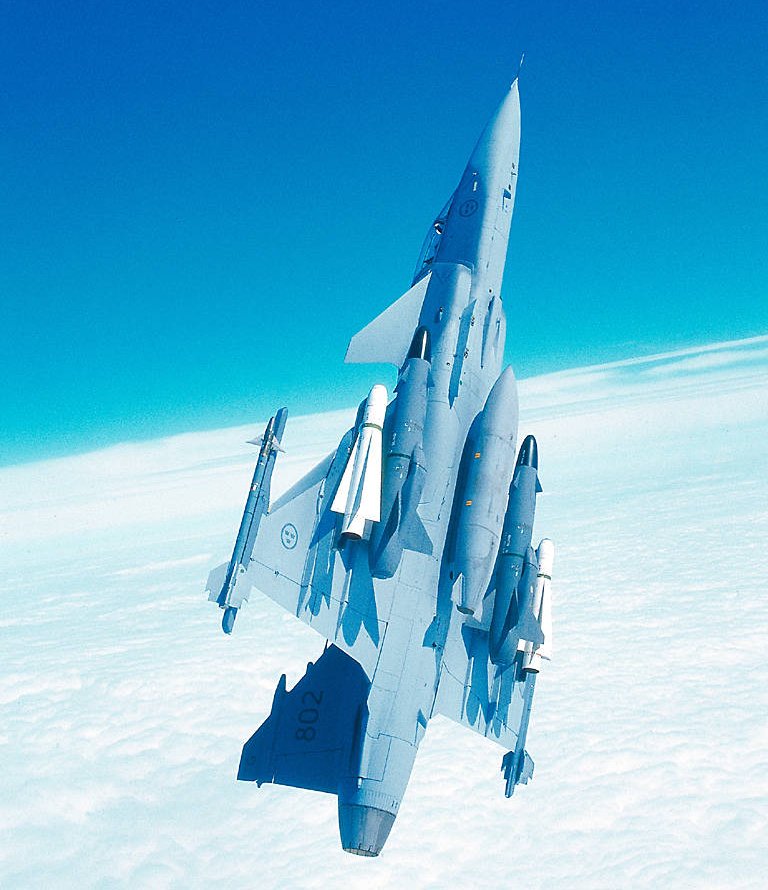
The J-10 also might have good AoA handling thanks to its ventral inlet, the Swedish chose the side inlet arrangement to make smaller the JAS-39 and they indeed also saw the posibility of twin fins.
However the JAS-39 has not ventral fins, this means the aircraft has good high AoA behavior able to control inertia coupling and sideslip yaw movements, also it has vortex generators in the pitot tube that must help it to control assymetric yaw movements.
In what it looks much much slimmer than the J-10 is the aft part of the fuselage which in the J-10 seems quit draggy with the ventral fins.
The JAS-39 lacks any ventral fin and has very good fuselage blending from the inlet nacelles to the aft fuselage reducing greatly drag.
So is possible in my opinion the JAS-39 is only slower due to the inlet design and not to a draggier fuselage.
having a large boxy inlet makes it more draggy than the F-16 or Lavi`s rounded ventral inlets besides heavier so up to what degree it is or is not draggier than the JAS-39`s inlet configuration is hard to know but is probable it is draggy however the Al-31 has a bigger diameter thus the J-10 has a fatter fuselage too
http://www.machtres.com/j10-002.jpg

MiG-23MLDYou, claim to act like an adult?
You blatantly lie to make your case. You don’t have real sources at all to prove that claim. Even the moderators are stating you need to back up your claims, which you are not doing at all.
You have not answered the historical, technical and political contradictions that fill up your claim.
Back up that claim because it literally means MiG OKB would have done an act that would be HIGH TREASON.
Crobato
I have given you enough sources from Russia to back up my position, however you have only given your opinions and you have not backed up your sources beyond a personal held belief, Russian sources are more reliable than your personal opinion since basicly they are saying they sold the Ye-152A documentation.;) you won`t change the fact they have been written such accounts where they say the Ye-152A was the aerodynamic base for the J-8I niether it makes your opinion an authority in the J-8I History because you deny the Russian sources in fact you have not proven your version and hardly you can deny the Russians who in fact are the designers of the Ye-152A and who have many authors who were cold war pilots and engineers
In fact i give you yet another Russian source that claims the same:
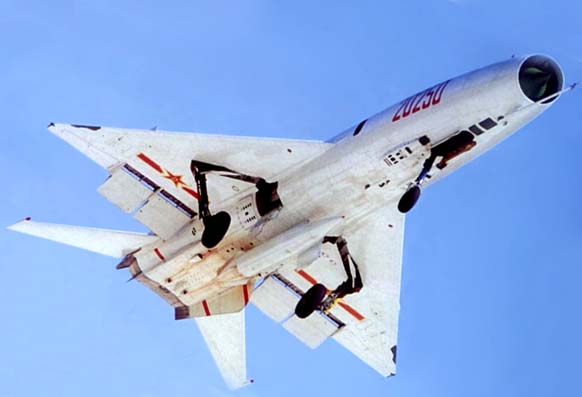
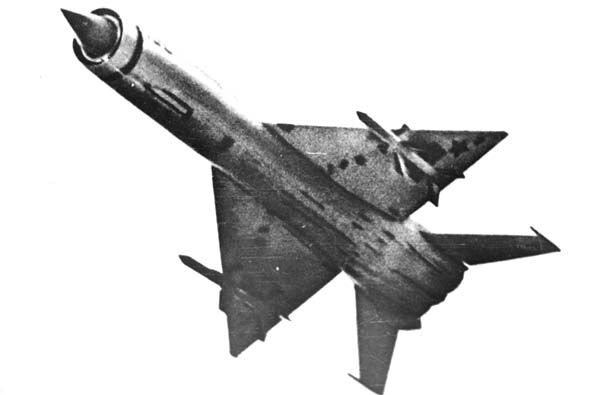
the Ye-152A was first flown in 1959 by the Test pilot Molosov and that the Ye-152A has two R-11F-300 which also powered the Yak-28 and MiG-21, later on the technical documentation without engines, radar and missiles was sent to China to allow them to build and develop the J-8I fighter interceptor
в 1959 году лётчик-испытатель Г.К. Мосолов осуществил первый полёт истребителя-перехватчика Е-152А, с двумя двигателями Р11Ф-300 (устанавливались на МиГ-21 и Як-28). Позже документация по Е-152А (без двигателей, ракет и РЛС) была передана Китаю, который использовал её при создании истребителя-перехватчика J-8.
http://www.liveinternet.ru/users/kakula/post44317331/
here in fact they have another source saying the same
Документация по Е-152А (без двигателей, ракет и РЛС) была передана Китаю, который использовал ее при создании истребителя-перехватчика J-8.
It simply says the documentation for the Ye-152A was transfered to China which in turn the chinese used it to build their own J-8I fighter interceptor
http://airbase.ru/hangar/russia/mikoyan/e/152/a/index.htm


MiG-23MLDDude, if a 4+ gen fighter departs from controlled flight, then you need to rewrite your FBW software.
Nic
Post stall maneuvring is basicly aerodynamically speaking non controlled flight for conventional fighters, some fighters won`t do AoA of more than 30 degrees, in fact if the Su-27 stays longer at an AOA of 60 degrees than a what the Cobra lasts, it will flat spin and crash, thrust vectoring aids any fighter to recover from uncontrolled flight, nevertheless accidents do happen and some unexpected aerodynamics factors can put an aircraft on a path of destruction and FWR software only limits a fighter to some flight envelop but it does not mean the aircraft can fly and bring the aircraft home if it departures from controlled flight.
TC nozzles are a safety devices and combat enhancer and for that reason the F-22 has it
MiG-23MLDI give you an example. Over Lebanon 1982 there was no difference in combat performance between the F-16 and F-15 related to circumstances.
In 1981 near Bagdad, there was a difference. If Iraqi fighters had shown up, the F-15s could have made use of their multishot-capability and higher fuel ratio, because all that had to be hostile and no IFF problem about that really, when the F-15s had still enough full to do so and come home. All the simulations are related to a given scenario, when you do change it, the results will change too. Some designs have a broader spectrum to deal with different scenarios, when others have less. By that you can create a ranking.
Of cause all intrested sides do claim that ones for their preferred design, which does show it at best. But in the real world the opponent will not play to that rules most of the time, when he his aware about that. Every side will plan the missions and use tactics that way, that the own design comes out best. The higher performance fighter offers some flexibility there, but that is not for free. See higher costs about that including the higher demand in training to make use of that. In several parts it will be the best tactic choosen and pilot, who will make the difference.
We keep in mind, that the designs in question are from the 70s and optimised for the warfare of the 80s or 90s at best. In the meanwhile a lot has changed and some former important parameters or no longer so in a similar way. It is nice to have some advanced agility, but you are not in need of that any longer by cold logic. Calculations from the 80s or 90s are outdated in several ways.
When the Typhoon 2 had to get TVC in the 90s, that idea has been given up for a while through the changes in threat perception and kind of warfare.
The stunts shown at air-shows and open-days is just for pleasing the uninformed crowds and transform fuel into noise. I learned that lesson with the F-20.
Sens
Any air force including the PLAAF will plan the best tactics and will demand aircraft with the best technlogies to carry them into practice.
We can argue if the enemy will let you fly your way or not but definitively the Americans have created a machine that has been designed to be able to consider the most of scenarios and have the technologies needed to win in all those situations.
Theoretically the Yard stick of modern fighters is the F-22, with stealth, supercruise, TVC nozzles, advanced weaponry and avionics
The rest of the pack are the fighters with less chances of survival, in the case of the Chinese, they have developed a fighter that is pretty much well at the Level of the JAS-39, probably it can deal with a Su-27 Flanker threat with good odds of victory, since the Su-27 derivatives are still consider the main threat for Western fighters in the 2010s decade, still we can see that the Su-35BM will be the loved and hated enemy fighter in the Western air forces.
Technologically speaking the J-10 and Su-27 in Chinese service do not have supercruise niether Stealth and TVC nozzles, so basicly the combat ranking of these fighters is pretty well matched however the J-10 might have more modern avionics, although the Su-27 is not a slouch and probably still can dogfight on equal terms with the J-10 and have a performance as good as the J-10 it is very likely the Su-27 in the PLAAF service is not a very advanced machine for a 2008 scenario.
However disregarding agility is not an aspect that is considered thing of the past, the americans gave to the F-22 excellent agility even despite it might be a winner in BVR combat all the time.
MiG-23MLDYou have no idea, what you are speaking about. One get the idea, you have WW2 or gun-fighters in mind, when flights of fighters do meet at a given airspace and given time to fight it out. Neither the Su-27 nor the J-10 are stealth fighters. The RCS return is limited to the frontal area most of the time. The main purpose is to delay the radar-lock to open a BVR engagement. The one with the first firing opportunity has the initiative and the advantage to dominate the situation at first. Such fighters did not relay on its on radar about that. With that they do have an limited “eyesight” like a rhino. The CGI or AWACs does vector the fighters and give the first informations about positioning. With that info at hand the fighters do search a given sector and try to track the advancing opponent. If one goes active or do stay passive as long as possible to achive a tactical surprise is related to the situation. After firing your BVR-AAMs you have to repositioning yourself to avoid some counter-fire. In practise, that does mean you disengage and will not return in that fight really. By that the neither the number of AAMs nor the fuel remained is of practical use related to mission time. When in gun-fighter times you had to stay close-by to gun your opponent down, it is no longer so in AAMs time. A modest subsonic of 900 km/h from both in head-on gives a closing-speed of 1800 km/h or 30 km per minute. After the first firing opportunity, the engagement is over in most cases, because your opponent is gone. Going after that is no good idea, because you leave the area or flight you have to protect, when you have no numbers to spare to do so really. If you still have some AAMs and fuel, you may stay for some more minutes, if another attacker may show up in that time left. Some people like to forget, that the first task of modern fighters is not to bring down hostile ones, but to spoil their missions and do prevent harm by that. To extract a toll from you opponent by that will rise your spirit and may dumpen that of your opponent, but the bill will come in the end and air-combat is just a small part of that. Even in WW2, Korea, Middle East a.s.o. ~90% of all combat missions were flown without any fighter combat. More important is, that a looming fighter threat does influence the planning of missions and do reduce the capacity and capability of the opponent. The SAM-systems or AAA have a similar effect for a given area.
Pilots do train for worst case scenarios too. For a civil-airliner pilot it is the technical failure during the flight and how to overcome that. For the military pilot it is being surprised by the opponent and how to overcome that. That training situation were created constantly to hone your skills, but that does not mean you will face it in a daily basis if at all during your pilots-live.
But that is mistook as typical combat flight. To make most use of expensive training flights/time a lot of combat elements were crammped into manouvres. To achive that, an “artificial” situation is created and all participants had to stick to rules to achive that. Here the performance difference in fighters may bear at first, like in some tactical situations. If not forced to do so, you will have the opportunity to look for tactical solutions to overcome technical gaps, whenever possible. But even that does not work always. The MiG-17F and the F-4C comparison as a good example. The F-4C crew can deny combat and disengage at will most of the time, when the MiG-17F pilot can not. Technology and performance gap.
Sens
My whole point is not if the mission will be flown in such a way, but in basic aerodynamics of both designs, now you have to consider if the designs can fire at several targets simultaneously, i do not see much difference in both designs in combat parameters and i do not think the J-10 surpasses if it really does the Su-27 by a big margin in performance and speed, in fact up to what i have read british BVR simulations between upgrade Flankers and western fighters put the JAS-39 as slightly less capable than an upgraded Flanker and only the Eurofighter and F-22 as better than the 1990s Su-35.
in fact my whole point was that the Su-27 aerodynamics are still compared to the J-10 quit useful and are not inferior, but probable still the Su-27 has some advantages in terms of aerodynamics, being twin engined with tailplanes, LERXes, fuselage lift, twin dorsal fins and twin ventral fins.
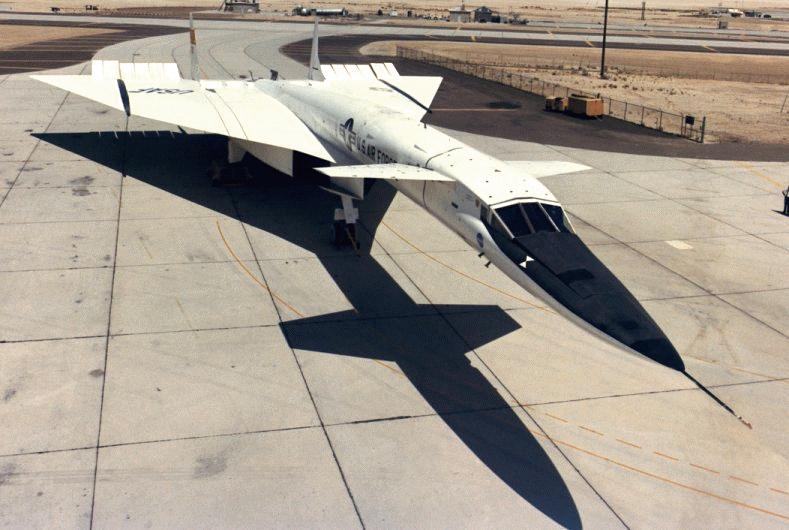
Twin dorsal vertical fins are useful at high speed that is the reason the SR-71 has two instead of one likewise the MiG-25 and B-70 have twin fins and also twin fins are useful at high AoA that is the reason the F-18 and MiG-29 have them and do not need ventral fins like the J-10 or F-16
MiG-23MLDAnd is there a good enough reason to be able to manouver in the post stall regime or should we have missiles with TVC instead that can pull 100 G’s and turn 180 degress in 2 seconds? I fail to see why TVC is needed on a fighter unless you build it tailless, or if you just want to impress at airshows.
TVC does help that is the reason is operational in two fighters: the F-22 and Su-30MKI, it is not air shows what matters but controlability as safety is concerned and controlability as a fighting tool.
MiG-23MLDA modern fighter is not an MD-80. FBW allows for carefree handling, so ending up in non-controllable flight is a ridiculously rare occurrence. Although, should it happen, the pilot only needs to let go of the stick and let the computers sort it all out.
What you are saying it is true however you won`t be able to fly post stall flight, your computers won`t let you but your airframe won`t bring you home, having thrust vectoring thus does help you by increasing the maneuvrability and allowing you to fly where your airframe can not keep you flying if you are fired upon a SAM or an AAM missiles a non thrust vectoring aircraft has less options in what respect agility to avoid the missile
MiG-23MLDTVC would have made the difference in the age of Gun fights, absense of Off-bore Missile /HMS combo.
Yes TVC can enhance takeoff/landings, but is it wortth the effort??
Again for super manuvaerability limitation may be man in the loop.
A factor that has not been mention is once an aircraft departures from controlled flight, thrust vectoring will get it back, a fighter without it will end up crashing, a fighter with thrust vectoring will save the machine and returned home that is the reason the flight is called post stall flight.
Thrust vectoring is a life saver
MiG-23MLDit’s more than that, it’s engine intake completely hides the blades, the intakes are not simple square boxes, the upper part curves and generally speaking, it seems less 90 degree angles + it also makes use of slightly composite. The stuff I mentioned were supposedly reported in Chinese media when J-10 was unveiled, but I have no video to corroborate it. But we do have articles stating that it broke PLAAF records in speed and such. And I remember looking through some of the supersonic performance requirements of J-9, the J-10 numbers look reasonable.
well, J-10 and EF both have advanced variable intakes, so that certainly helps. EF’s TWR is probably greater, but J-10’s TWR should be greater than 1. (as I mentioned in another thread, even J-8F is > 1).
not sure about low speed flight performance. This has been debated to death on Chinese bbs. Generally, the SAC people will say J-11 does better here, but others would say J-10 is better.
J-10 is suppose to be around 7000 to 8000 kg (closer to 7000) and according to an article, actually ended up 27 kg under the required weight. In a typical configuration, it carries 2 PL-8 + 2 PL-12 + 3 EFT or 2 PL-8 + 4 PL-12 + 1 EFT, so no where near the outrageous weight that you claim. It’s often believed to be around 11 to 12 tonne in A2A configuration.
based upon simple visual inspection, the J-10 might have an S shaped inlet duct thus it is reducing RCS returns, however its very rounded nose radome produces less stable nose radome vortices, having a single fin makes it less controllable at high speed and high AoA than a twin finned aircraft like the Su-27.
Empty weight is unimportant if the basic take off weight makes it a short ranged and lightly armed aircraft, carrying fuel tanks reduces any advantage it might have in reduccion of RCS returns since the Flanker does not carry any fuel tank.
The other factor is weaponry, while the Flanker always will carry more long range air to air missiles and the J-10 will require fuel tanks with less BVR air to air missiles, the Su-27 is in advantage.
In agility it is difficult to know which aircraft is the most agile since the Su-27 has LERXes, that at high speed also work as canards keeping the supersonic aerodynamic center of lift shift in a more moderate level and at high AOA do increase the wing lift, also the Su-27 has fuselage lift that in the case of the MiG-29 for example accounts for up to 40% of the total lift, a similar figure is for the Su-27, something that in the J-10 does not happen with is circular fuselage cross section specially considering that the total lift drag ratio in a canard delta wing configuration is higher due to the drag imposed by the canard upon the wing reducing the total lift.
While the wing tail configuration in the Su-27 allows higher sustained turn rates, the J-10 delta canard configuration allows higher instantaneous turn rates this suggests if there is any advantage in the turn radius most be very marginal and quit small between any of these two fighers, something that a good missile and HMS might fix quit easily.
MiG-23MLDMiG-23MLD
If the cost of producing aircraft in the Soviet Union was so much cheaper than anywhere else in the world, how come nobody in the SU ever owned their own private aeroplane?:rolleyes:
Come to think of it, if the cost of production is so much less in the Soviet Union than anywhere else, why did Soviet citizens have to wait 8-9 years to buy their first car (and a fairly modest car at that)??
Levsha
Think in this how can you explain me that in the developing economies many people do not even have access to running water or Potable water? why people in the developing world do not even have access to learn how to read and write or a hospital bed?
The answer is not one, in fact Capitalism and Socialism or Communism are not very different, imperialistic Communism needed economic satellites to finance the arms race and only fell because it was simply more corrupt and inefficient.
capitalism is not as innefficient however it is not also a paradise, in the Soviet Union there were not private companies and therefore not economic crises as in the western capitalism world, however private airplane means a concept that was not used as personal business so there is your answer
Weapons in the communist world were financed directly by the planned economy and as in the western world the arms race took social resources from the system, however financing weapons were not dictated by financial speculation therefore there was not accumulation of capital and the common economic crisis.
to build aircraft and specailly a Su-24 the company recieved resources already planned by the Government taking labour as a granted resource independentof economic currency fluctuations.
MiG-23MLDYou live in a different world and there is no way to argue with you about that. Not a single word about the ups and downs (both sides of the same coin) when it comes to some aircraft mentioned.
yeah Sens i do respect you position, up to you but your position is not more veridic, i had lived capitalism in both forms the emperialistic form and the Colonial form, i have family from Eastern Europe mostly Russia to be specific and Poland, good friends who know what is capitalism and Socialism and all of them know no human economic system is without flaws, when you can see the realities of shanty towns and city slums you will understand more things about how the arms race is finance.
The Su-24 affected the Russian economy but its price was always cheaper because it came from a system where economic speculation did not empoverish the general population but simply because the Socialist system made people mediocre and corrupt, planned economies failed because corruption and nepotism lowered the quality of living in a very close and paranoid society as the Soviet Union was, however the Soviet Union with a planned economy could built always large numbers of weapons simply because economic speculation did not control the economy as in the capitalist countries, but planned Socialist economies followed economic plans where only corruption, ineptitude, nepotism, lack of resources and technical problems made military programs fail.
MiG-23MLDOm come on … I – and many others here too – don’t deny anything !!
YES; there was and there is still a huge fereign input in China`s aviation !! … but not in that stupid, simple manner You try to tell. Whenever an aircraft looks similar to another one it’s right an exact copy … how stupid !
Deino
Another denial position man be first an adult, i have posted what is written in some Russian sources, what some people think in Russia and what is thought or consider as veridic, now insults won`t change the opinions of the Russians or the reports written in Russia as You and Crobato have done, the only reason why you and Crobato insult is simply because both of you know your case is lost, not because i have proven my position 100%, but simply because i am supporting an account with the same level of veracity and more likeliness than yours.
Why i do believe the Russian sources simple? because many Russian websites do have historical accounts which come from the people that flew or was involved in some events during the Cold war.
The Chinese also were uncapable for almost 25 years either of creating a domestic engine or a truely 100% domestic design, in fact until now China is uncapable of creating a 100% domestic aircraft, perhaps the only aircraft i know is close to that is the J-8II with Kunlun engines but still this aircraft has weaponry based upon foreigh technology and some traits based upon the MiG-23.
china has progresed but is not looks what the russians say is what makes them similar but the fact the russians claim they sold the technical documentation of their Ye-152A to China
MiG-23MLDI think I’ve somewhere seen a similar discussion:
“… for you the so called time is the only way to disguise realities that the Lavi and J-10 look identical … besides having not the same engine”
So, once again the same story with another theme ?? … no-one here denies that China received help, technical documentation from Russia, that China was a truely undeveloped country in technological terms … but not from everything You post only because once again an obscure Russian site allows to interpret that (at least no site says so) !
Deino 😡
man why do not you google search J-10 (F-10) многоцелевой истребитель and you tell me how many russian sources do not mention the IAI Lavi in the J-10, saddly Deino for you the word is a bigger place and many reports abound with such details you dislike.
В дальнейшем стало известно, что в формировании облика нового самолета J-10 принимали участие специалисты израильской фирмы IAI, передавшие Китаю технологию своего истребителя «Лави in a later phase was known that Israeli IAI specialists did participate in the J-10 program transfering Lavi technology to China
http://www.testpilot.ru/china/chengdu/j/10/j10.htm
При этом планер J-10 разработан с учетом конструкции израильского истребителя Lavi. The J-10 airframe was based upon the IAI lavi
http://www.avia.ru/press/6270/
Как добавляет сайт Lenta.ru, истребитель J-10 разработан в Китае на основе израильского экспериментального самолета Lavi, документация по которому была передана Китаю в 90-х годах прошлого века.
The J-10 was based upon the IAI Lavi technical documentation that was sold to China in the last part of the XX century in the decade of the 1990s
http://cursorinfo.co.il/news/novosti/2007/10/24/iran/3/
In fact you deny a lot of the foreign input in China`s aviation
MiG-23MLDIrrelevant BS. The project was just starting and far from being considered a failure.
Even in 1958, the tensions have already sprung up.
Everything given to the Chinese have to go through the General Staff first, which is very conservative what is given out and what is not.
MIG gave China blueprints to the first MiG-21 version, when it is already clear that this version had serious inadequecies and already a second version is at the works.
The same cannot be said of the Ye-152, because the project is far from over, and it does not share the same inadequecies.
Irrelevant.
LOL
At 1958-59 it certanily was quite an advanced aircraft, and in fact a few years later, it would break some speed records. AAM Missile technology at that time was overall still in an infancy stage.
ALL COMPLETELY IRRELEVANT. WHERE IS YOUR PROOF?
Even if the MiG-25 project started in 1965 it does not mean it will be in service in 1965.
No matter how much irrelevant WALL OF TEXT tactics you put out to obscure the issue, NONE OF IT represents any proof that MIG OKB did which literally amounts to HIGH TREASON.
Crobato
Why do not you see real facts? the J-8I was the most important program from 1964 to 1982, for a almost two decades the aircraft was the main aircraft China wanted to build, this aircraft was obsolete even in 1975, it flew even almost exactly 10 years after the Ye-152A.
In 1961 Russia was flying the Ye-152-1 but with an engine that was never in the reach of China, they by 1964 already were designing engines like the R-29, and already flying fighters like the Su-15, the Soviets knew China was too backward to catch up even having MiG-21s and the Ye-152 even if the Chinese got the Ye-152 documentation their capability was very limited to build it rapidly, the Soviet Union and China according to some Russian sources struck a deal and China got the Ye-152A technical documentation, at least some technical data was given and later we find China followed the Ye-152A aerodynamic concept to the letter in a fighter that is bascily a Ye-152A, however detractors like you see an original design because in your concept the J-8I just by serendipity has the same engines R-11F and the same aerodynamics.
See by 1963 the Soviet Union was flying Su-15 prototypes way ahead of any thing China had and they were a year before the MiG-25 first flight
And your excuses are based upon a so called rift to hide the fact that China recieved enogh technology to build the J-7 and J-8I even if later they did become rivals and a cold war existed between these two nations. for you the so called time is the only way to disguise realities that the Ye-152 and J-8I look identical and have the same engine
MiG-23MLDYou are wrong as always. I have no problem with Russian aircraft and their performances. Those are tailored to a given mission and do fullfill that in most cases. Neither in the West nor in the East all mission requirements were fullfilled always. None is surprised to learn. The demands were set with the future development in technology in mind. That hopes were not fullfilled always or in time. Sometimes a fighter did run into unexspected trouble through some design shortcomings learned late in the development. The F-102 or first T-10 were classical example, when none did blame the later F-106 or Su-27. The Tornado does not reach its range requirements, because the engine was not adapted to the rising weight. All gains were sacrified for a longer TBO in peace-time. The war-time settings may have restored some lost performances, but not all. The Russian do believe in “Lancasters-Rule”, where a higher number of firings will bring the desired result, when the West do believe in single-hit capability at first. Hence the higher number cheap weaponary and the smaller number expensive weaponary on the other side.
Both systems did work in their doctrine, when operated in their special created enviroment. That in mind it does become obvious, that even similar systems could or can not be comperable. To stick to some selected technical data without a related mission can be very misleading. Whatever you choose, you can create a virtual reality, which gives a system an advantage in certain areas. If that are practial or usefull is of limited intrest by most writers. “I have to push my favourite design or bolster the claims from my favourite side.” With that selected view, you will run in trouble always and even undermine the credibility claimed for that in a rightfull manner. The A-4 Sherman tank was no outstanding design or did win by technical data, but it did fullfill most tasks in a faithfull way. I choose that example to avoid the rise in temper, when I had choosen a fighter.
If the Tornado is much more expensive to buy than a Su-24 is questionable. Converting rouble into $, not looking into different living standards and procurement systems are just some of several reasons. At least the Su-24 was too expensive for the economy of the formers SU, when it did collapse to the military burden. In the meanwhile a lot has changed. The Flanker became multirole like the F-15E and the MiG-29M2 became a multirole F-18.
For economic reasons all sides are looking into smaller but smarter forces now.
Even China with no shortage of money from the economic boom does show a shrink in overall numbers, but a rise of quality forces.
Did you notice my claim about the usefullness of the JH-7. The Su-24 will not be replaced by a similar number of Su-34, just a fraction of that. The Su-24 with an avionic upgrade can soldier on for some years to bridge that mission gap, when not replaced by Su-34 in time. Even, when the Su-34 is the replacement for the Su-24, it is still far from perfect, but sufficiant for most missions in mind. To be critical about some details or shortcomings has nothing to do about quality of Russian aircraft in general. The main question is always, will that fullfill the related task in general and to reasonable cost.
By the way, I am not surprised about the limited number of F-22 procured or the purchase of B-2s cut short. The F-35 will supersed the F-22, despite some advantages of flying performances between both. For the missions in mind that does not matter really. Maybe you get an idea, why I do stick to some details and do not care about official claims about outstanding capabilities. At least, when the time of Glasnost is over, which did allow the Russian a selfcritical view and not the official thruth of Pravda. In the meanwhile the new nationalismen and the wish to regain some former greatness if usefull or not has cut down Glasnost. Like in old times all is in time and to specification, something that even the nationalistic Americans do not dare to claim. The Chinese do show the trend of new Russia. Both systems are in need of the military to face an “unknown” enemy to keep the own political system alive.
Sens
You assesment of the price of the Su-24 and Tornado is Soviet times is wrong, why? simply because in the Soviet Union contrary to the Western capitalist economies, to build a Su-24 was only needed an order and the producibility of a product was mostly limited by natural resources, in few words, in the communist economies to build something they just needed to work and make it happen, in capitalist economies there is capital accumulation, where capital becomes the financial burocracy of capitalist societies and the root of poverty in theirs midsts where financial speculation enpoverishes the masses and increases cost of life.
the Soviet Union did collapse not because the Su-24 was expensive since the capital accumulation was not the main creator of finacial crisis in the Soviet Society, but the fact the low quality of services, products and the constant corruption that inflicted the Soviet economy and that affected soviet citizens, in fact after becoming capitalist the Russian population became poorer than in Soviet Times thanks to capital accumulation.
After the collapse of the Soviet Union, the Su-24`s price skyrocketed because as in any capitalist enterprise profit and capital accumulation meant the Su-24 needed an equivalent to western prices however since the Russian skilled labour was cheaper still the Su-24 was cheaper, capital accumulation means that the European Tornado is becoming more and more expensive due to exchange rate currency fluctuation.


 Sign In







