 MiG-23MLD
Everything the west had was better than the MiG-25. The MiG-25 could avoid combat by staying high and fast, (until the F-14 came along) but it had no look down / shoot down capability. WVR, anything would fly circles around it. The MiG-25 was a good intercepter, but a poor fighter.
The MiG-23M was fast, but it had very poor agility. The second crew member in the F-4 was another advantage.
The Gripen is like an F-16. Excellent WVR, but the F-15 has a much more powerful radar, and will get the first shot.
i meant more the time frame and not the qualities of each fighter.
from 1971 to 1975 the West had nothing to intercept a MiG-25 in air to air and certainly the MiG-25 can kill F-4s.
If by 1975 or 1976 the West did put in operational service a better fighter in this case the F-15 it is another thing.
The MiG-23M is more or less as good as the F-4E slightly more agile at some transonic speeds and cheaper, but its reign was very brief by 1977 the F-15 took command of the situation.
The Gripen definitively is better than the F-15 it has data links that will allow it to beat the F-15 even if it has a shorter range radar in my humble opinoin the Gripen was better
MiG-23MLDSince WWII, what aircraft could claim to be the world’s best air superiority fighters? Give no consideration for cost effectiveness, just what aircraft prevails against its opposition. Here is my opinion:
Meteor 1945 – 1947
MiG-15 1948
F-86 1949 – 1952
MiG-17 1953 – 1954
MiG-19S 1955 – 1956
F-8A 1957 – 1958
MiG-21F 1959 – 1960
F-4B 1961 – 1966
F-4E 1967 – 1973
F-14A 1974
F-15A 1975 – 1978
F-15C 1979 – 1986
Su-27 1987 – 1991
F-15C 1992 – 2006 (armed with AIM-120)
F-22A 2007 – todayPerhaps the Draken held the title in 1958. The F-104 was a great fighter, but when it came out, its cannon didn’t work yet.
What is your opinion?
I differ with you from the 1971 to 1975 the best fighter was the MiG-25 Foxbat. It was better than any thing the west had.
And for a brief period from 1972 to 1975 the MiG-23M was an oustanding aircraft much better than the F-4E as a tactical fighter, the F-4 was the best perhaps only from 1967 to 1971
From 1992 to 2006 it was not the F-15C, since 1997 the Gripen entered service and we can say the Gripen is far more agile than the F-15 and has more modern avionics.
So perhaps the F-15 was the best from 1992-to 1997.
MiG-23MLDThose are not answers to the IFF question, Flogger. Once again, you display your sheer ignorance on the real issues.
All you post is a bunch of marketing ad work, not withstanding its range is exceeded by the rather common R-73 and matched by the PL-9C. LOAL abilities are also there with the AIM-9X and IRIS-T. LOAL for an IR AAM is not hard to do, as IR LOAL is also seen in some AshMs with IR seekers. Anyone can put an inertial guidance unit into the missile, what’s so hard about that?
As for your other questions, there is no such thing as “beat” if you cannot stop one fighter before it can launch its missiles. So the Python V maybe more agile than the PL-8B, but its not really missile vs. missile that happens but missile vs. plane. So the PL-8B is less agile as a missile, but the late model F-16C it’s chasing is less agile than the J-10. The F-18E ain’t exactly a fighter you want to use to run away from missiles either. The result of most engagements, there is simply going to be a high chance of mutual destruction simply because you can’t stop the other guy from shooting his, and destroying his plane isn’t going to stop his missiles doing revenge on you.
If there is one thing I don’t really like about the PYthon 4/5 series, is the airframe are high drag (meant more for control authority), so the performance penalties it will impose on the plane maybe greater than let’s say, AIM-9L.
The Python V has a range of 20 miles basicly that is the same range the R-73 has. LOAL is only at the moment seen in fifth generation missiles like the ASRAAM AIM-132 or AIM-9X that need the 360 deg engagement capability.
The J-10 thanks to its really good instantaneous turn rate might start a turn quicker than the F-16 but very likely it won`t have a sustained turn better than the F-16`s, those are the realities of the delta wing, the delta wing bleeds energy fast, the F-16 has a sustained turn rate of 21 deg/s and the MiG-29 has a sustained turn rate of 22.5 deg/s it is possible the J-10 might not even surpass those numbers.
Instantaneous turn rate means the quickness an aircraft has when it starts a turn or in few words the ability to start a turn and point the nose quickly however sustained turn rate means the ability to sustain that turn, the delta still is not good to sustain a turn rate, that is the reason the Gripen has a 20 deg/s sustained turn rate and a 30 deg/s instantaneous turn rate
what you are not seeing is while the difference in instantaneous turn rate between the J-10 and F-16 is in order of 3 deg/s or 4 deg/s, the difference in the head seeker of the Python IV`s versus PL-9 is 60 deg and the difference between Python V and PL-9 is 110 deg so who do you think has better odds then? the F-16 is just marginally less agile than the J-10 but the Python V is far much better than the PL-9, the J-10 is just slightly more agile than the F-16 the difference between them is not as great as the difference between the head seekers that the Python V and PL-9 have 😉
The J-10`s delta wing design stalls the wing faster than the wing let us say the F-18E has.
If it is true the J-10 can have some victories since the PL-9 can achieve some victories and the SD-10 too, nevertheless the F-18E will have more odds to have a better kill rate against the J-10.
If you do not believe that see that the MiG-29 is more aglie than the F-15 and Su-27 and despite that it has been beaten by the F-15 and Su-27
Watch the video and tell me if it is only advertizing Python IV can kill targets at very high off bored axis
this is the AIM-9X
this is the IRIS-T
This is the ASRAAM
MiG-23MLDYou’ve changed your tune Flogger. Wasn’t it in early 2006 that you were informing us that Libya didn’t operate any ML variants? Only
MiG-23MS and MiG-23MFs you said.The Libyan MLs were very well known to Allied assets up over the Gulf of Sidra well before the 1989 Gulf of Sidra incident.
At that time what i read said they did not have them, the pictures i have seen from the 1980s show MiG-23MS and none shows a MiG-23ML i do not know when they did recieve the MiG-23MLs it might be much later than the gulf of Sidra incident and in that case i was not wrong, but i do not know when they did recieve them. and probably you can not get me a 1988 dated picture of a MiG-23ML with Libyan Markings

From that time there is no Libyan MiG-23ML on NATO pictures and more important Syria did not recieve each MiG-23 variant they operated at the same time, and the same case can be for Libya

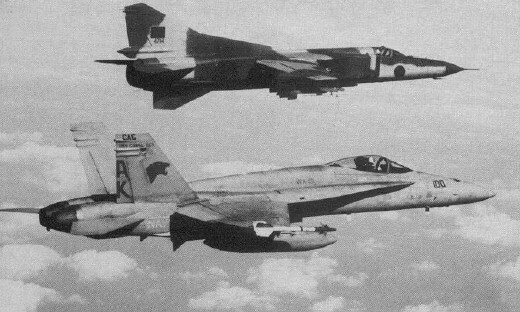
MiG-23MLDAah Rocky, I’ve been prowling this forum for going on 18 months or so, and I must have seen this topic for a thread crop up at least twice, and it’s usually Flogger who starts it… and you don’t want to end up imitating Flogger now do yeah?? :dev2: :dev2:
And I’m going to have to repeat the same question that’s always repeated when this topic is repeated – how do you define the parameters which would single out an aircraft as the “best” air superiority fighter?:confused:
If the main subjetc of the Topic breaks forum rules, well you should tell him do not do it, but if it does not i just find you remark quit funny, why people can not have and ask the same question? if he likes this kind of topic it only shows ranking aircraft and sharing his opinion shows he likes some aircraft more than others and he thinks some aircraft were better than others nothing bad or illegal with forum rules
MiG-23MLDMore shots of MiG-23 and MiG-21 in flight, plus ground shots of various types.
http://forums.airshows.co.uk/cgi-bin/ukarboard/ikonboard.cgi?;act=ST;f=9;t=40231;st=20
nice pictures i really like them
MiG-23MLDBigger fighter does not mean more energy to BVR missile. Faster fighter does. And I mean faster fighter at the moment. Heavily fuel loaded Su-27 is not a fast fighter. You need to deplete some of the fuel first.
The J-10 is not a stealth fighter but it does have some RCS reduction measures in the intake and use of radar absorbent paint. Furthermore, it does not expose the engine intakes. The Flanker is not a stealth fighter either, but it is a large RCS fighter, meaning it is that visible to radar, thanks to its engine inlets and exposed engine fan blades from the front.
Sukhoi has focused a lot in improving the RCS of the inlet design of the Su-35 and Shenyang likewise on the J-11B. Measures also include adding radar absorbent coating on the front engine intake face. Its not very sure how much is done on the Su-30 however.
You are referring to the R-27RE and R-27TE. That is extended version, not the base version, which does not have the speed and range of the PL-12. The PLAAF has both missiles and I am pretty sure that was also factored into exercises.
all depends the combat weight and mission weight, the Su-27 is agile for its size, the more modern Su-35 is an outstanding aircraft and that latest Su-35BM basicly will rule in terms of agility no other fighter on the market offers 3D thrust vectoring beyond Russia and perhaps in the future the Eurofighter.
With 2D nozzles the Su-30MKI is very agile in the class of the Eurofighter this aircraft lightly weight still can hold its own against the J-10 or Gripen.
However The F-18E with AIM-9X and AIM-120C will beat the J-10 without any need of going beyond an instantaneous turn rate of 30 deg/s
Also it is possible the J-10`s sustained turn rate is lower than the F-16`s and MiG-29`s since the Gripen`s sustained turn rate is barely 20 deg/s a degree lower than the F-16`s and three degrees lower than the best MiG-29s variants, the MiG-29 has at combat weight excess thrust and LERXes, while the delta wing of the J-10 will bleed energy so fast even when it has very quick responses, remember deltas have good instantaneous turn rates but LERXed aircraft have better sustained turn rates thanks to tailplanes
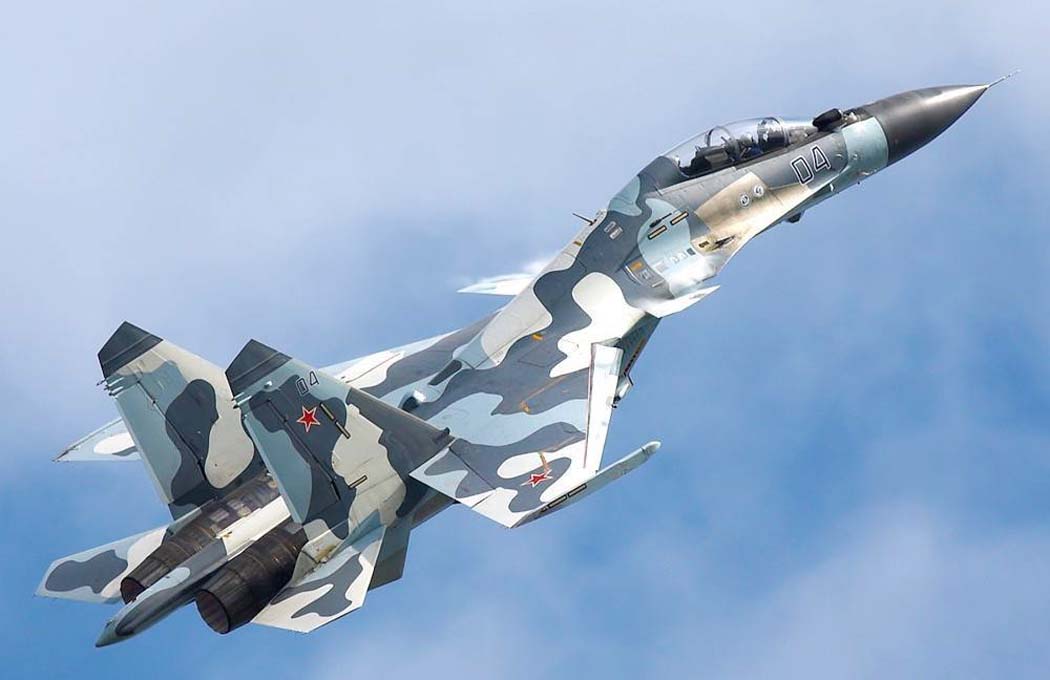
MiG-23MLDMan all you do is post a bunch of copyright material and think you’re smarter somehow.
And you have no idea that 70Gs are redundant, and you know what redundant means in the English language huh? Around 35 to 40G is enough to deal with a 9G turn.
And once again, something that Sens is not addressing, because the IFF capability is not in the missile but in the plane. You are not able to exploit the full off boresight of your missile if your IFF does not match that FOV.
Whether or not it is easy or not that is not the issue. The issue that it has been DONE.
If another plane is in the position to IFF a target, it would also be in a position to shoot it down, making the rear aspect shot redundant.
The J-10’s shape is not much different from an F-16 on the side.
And how far can you turn the head? Want to demonstrate to us your alien ability to turn it completely around?
And once again, you don’t address the issue. You certainly have a pathetic foolish notion of geometry and don’t know what degrees are. An HMS is still limited by the limitation of the human neck, which cannot pivot backward.
And you have no idea that the PL-8/9 are also helmet cued.
Lol. In NATO exercises with F-16s vs. MiG-29 aggressors using the R-73 missile, the ratio wasn’t certainly overwhelming, despite the AIM-9L only having 25 degrees off bore while the R-73 has 60 degs and an HMS. Once the initial surprise was worn out, experience gained, and tactics adjusted, the favor went further to the F-16.
In PLAAF exercises, pilot that are not using HMS, limiting the boresight of their missiles and yet they still frequently gain victories over pilots that do use HMS. And this phenomenon is not local to the PLAAF as I gave you the NATO examples.
Excuse me? “Generation” does not really give a flying f*ck. When you are 60 degrees or 90 degrees, it matters much less.
To explain what is happening above, is that you seemed to have no idea that by far the most common encounter between two aircraft is the “merge”, when both are coming in at each other head on. The vast share of “kills” will happen here and having WOBS at 60 deg or 90 deg or 180 deg matters little here. Maybe you like to find out why AAMs and SAMs don’t bother with high WOBS? At these circumstances, an F-15 with Sparrows has as good a chance as hitting an F-15 with AMRAAMs. Following that, the next most common encounter is having one plane behind the other for a tail shot.
The rest is typical Flogger tactic of bringing in irrelevant material to obscure the issue. You never address the true problems of targeting sideways to the rear autonomously. Tell me where the hell can an HMS allow you to target backward of the aircraft?
here are some answers for you
By definition, the Python 5 is considered to be a short range air-to-air missile, yet its range exceeds regular air-to-air missiles, and is more close to what is technically called BVR (beyond visual range) missiles. Those missiles can be shot upon targets which are not visually seen at the moment of launch, and are acquired by the missile itself during its flight path. New technologies implemented in the Python 5 give it maneuvering and launching skills unimaginable just few years ago. Instead of talking about certain “killing hemisphere” we are talking about an ability to shoot any target at any angle, including backwards launch (!). This ability is possible by applying LOAL (lock on after launch) technology. In oppose to LOBL (lock on before launch), that is used in all short range air-to-air missiles (excluding the Python 5 of course) in LOAL mode the pilot can launch a missile without being locked on the target, by getting the aircraft’s estimated location from an array of sensors which are deployed on the launching aircraft. From the moment the Python 5 is launched, its head seeker scans the designated area constantly while it flies in a direct path to the estimated location of the target. Once the missile “sees” the target, it employs its unique, first of its kind, electro-optical head-seeker and locks on the target. Then the missile switches to a close hunt combat which holds no future to the target aircraft
http://www.israeli-weapons.com/weapons/missile_systems/air_missiles/python/Python5.html
The Python 5 has a new inertial measuring unit with a fibre optic gyro, produced by IAI. This FOG IMU gives the missile its new Lock-On After Launch capability (LOAL) by providing midcourse guidance. By sending target data to the missile’s INS, the Python 5 can be launched to a point beyond its seeker limits to then start an autonomous target search. Using cues from the aircraft radar, a helmet-mounted sight, or off-board targeting data, the Python 5 can thus undertake engagements in a 360º radius around the launch aircraft. The IMU is also sensitive enough to adjust to the wing-twist effect suffered by the wingtip launchers on the F-16 and to align the missile for an optimum angle of attack on launch.
The range of the Python 5 has been extended compared to that of the Python 4 by introducing a new low-pressure servo design that can function for longer. A Python 4 can remain active in the air for about 40 seconds but the Python 5’s lethal life has been extended to over 90 seconds. The Python 5 has an official straight line range of more than 20 miles and uses trajectory shaping to obtain maximum range. The Python 5 claims to have a better endgame performance than the Python 4 also, thanks to a reshaped thrust profile that starts with a high initial pulse upon launch and then drops to cruising thrust before building thrust again for the terminal phase.
The Python 5 is compatible with all platforms qualified to carry the Python 4. Full LOAL capability is only available to aircraft with a MIL-STD 1553B databus to transfer IMU alignment to the missile.
MiG-23MLDYou can not outfly a modern AAM, when fired inside the correct kill-zone.
You can win a few split seconds to reduce that further an rise your own surviavibility by that. To the unpredictable direction changes have to come an advanced EW to masc your fighter and reduce the capability of that AAM further. Modern air combat is a time-race.
A fighter fleeing is no threat any more, because the time-window to engagage high-speed targets is very limited at all.
The EW-suit of the F-22 alone does not allow the radar of a J-10 work properly.
When the US-flyers did learn not to mix it with the MiG-17F, that was no longer a real threat.
In war there is not complete assurance the enemy has inferior technology, in peace time nations declare that their weapons are better.
Theoretically speaking the F-22 should be undetectable, the Python V difficult to shake off, however i do not think the Russians or even the Chinese can not create weapons that can defeat those technologies.
Also the russians are creating stealth technologies better ECMs, better radars and air to air weapons.
Their fighters are quit agile and have better TWR.
Now not everything is given yet
MiG-23MLDThe agility of the F-22 is a spring-off related to the demand to change direction at supersonic speeds. You can do a WVR-fight with that. But therefore you are not in need of stealth. Not a clever idea to put it at risc in such scenarios at all. Similar thing to the Typhon with semi-stealth capabilities (frontal arc).
In theory the best way to kill an enemy is at long range, if you have superiority in AWACs and communications and there are few fighters with advanced weapons and aerodynamics like Iraq or Yugoslavia well, long range missiles are good.
However even the F-22 might be detected and its cover being blown out, also missiles do fail and not always they will give a 100% kill rate, fighters need a gun.
Once you are in WVR combat and the cover has been blown out well things get too equalized, the odds for a fighter like the J-10 of killing F-22s in those conditions are like a MiG-17 shooting down an F-4.
Now there fighters even like the J-10 or Su-35BM that can kill F-35s if the right radars and IRST systems are deployed on board them and if the right technologies and numbers are gotten, it is not every thing given yet.
That is the reason a fleeing fast jet needs to be agile first to avoid missiles like the Eurofighter can do and second to target enemies.
The reality is in war there is no small enemy and two armed forces with similar technologies and numbers will always have losses even if once side flies Eurofighters and the other J-10s
MiG-23MLDAgility is no longer an issue!
Sens
Agility is still an issue, and a very big issue, but it is not the only one,
Compare the early jet aircraft, early jet aircraft were agile at low speeds but not at transonic speeds modern aircraft are being designed to be more agile at high speeds, the F-22 is one of the most agile fighters, yes it has stealth and supercruise, but still has super agility.
What about Europe? well still the very agile Eurofighter is more maneuvrable than the Mirage III or Mirage 2000, yeah the Mirage III had Magic AAMs and the Eurofighter has ASRAAMs which basicly are Python V equivalents.
So Sens when you build fighters you go and get the best, the extreme and that is exemplified by the F-22 and Eurofighter, in fact it is claimed that the Eurofighter is one if not the most agile fighter at low supersonic speeds;)
For Israel having Python Vs is a big equalizer against the J-10 if ever is exported to Iran or Syria, yeah with Python Vs israeli F-16s and F-15s can beat a J-10 armed with PL-9s or even R-73s, the Python V with 20 miles of range will have enough advantages to reduce the disadvantages of having a less agile fighter.
MiG-23MLDHi all
Does anyone know what are the plans of the RuAF about the Su-35BM? They will buy the model or its just for the export market?
If the RuAF buys the plane it will replace all Su-27s or just a few will be replaced until the PAK-FA be ready for service?
Thanks in advance
Ожидается, что серийное производство и поставки Су-35 заказчикам могут начаться уже в 2009 г. и продолжаться вплоть до выхода на рынок истребителя пятого поколения. Самолет включен также в Государственную программу вооружений на период до 2015 г., которой запланированы поставки истребителей Су-35 в ВВС России.
It is expected that the production and delivery of Su-35 to customers could start as early as 2009 and continue until the entry of the fifth generation fighter aircraft. The plane also is included in the government`s program of weapons until 2015 onwards, with scheduled deliveries of fighter jets Su-35 to the Air Force Russia.
MiG-23MLDPLA daily would tell you different. Actually, most account of J-10 vs flankers say that flankers simply can’t shake off J-10. And besides, why do you need to carry 6 BVR missiles when 2 is enough to shoot the other guy down? Radar is bigger, but the tracking range of J-10 is greater than that of MKK. TWR of flanker is not better. For J-10 with WS-10A, it’s 13.5 tonne/11 tonne.
Even J-8F right now has better TW ratio than su-27.I deliberately deleted my original post, because I didn’t feel like extending this into a long argument. Thank you very much.
Why does J-10 need Meteor or python v to beat earlier mig-29s and su-27s? Those 27sk we got can’t even fire R-77. They can’t even beat PL-12 equipped J-8F.
The Su-27 versions China has are not the best versions, the Su-30MKI India has are better and very likely this version can shake off the J-10 since even the Eurfighter pilots praise it as an excellent aircraft.
The new Su-35BM is in the Eurofighter class and this version will beat the J-10 in agility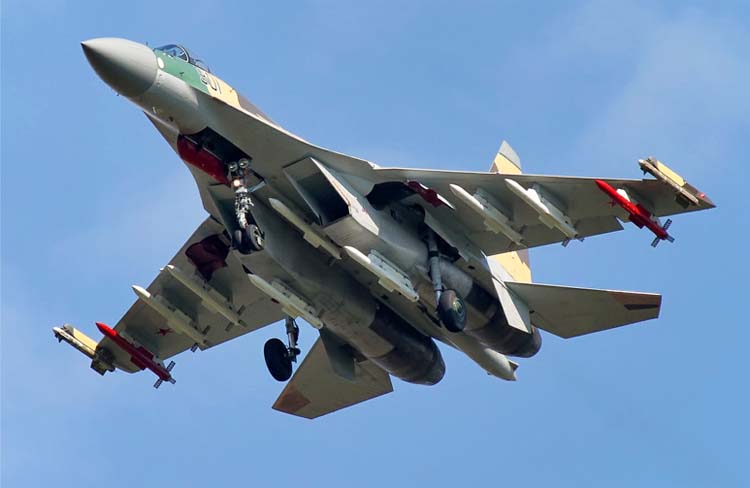
The J-10 is a fourth generation +, the Su-27SK is a simple fouth geneation fighter, the Su-30MKI is a fourth generation ++ like the very good Su-35BM
The J-10 can beat very likely early F-15s, MiG-29s, F-16s and F-18s too, however a F-18E/F or Su-35BM are not easy to beat and are more than a match, the F-16F and F-16I too.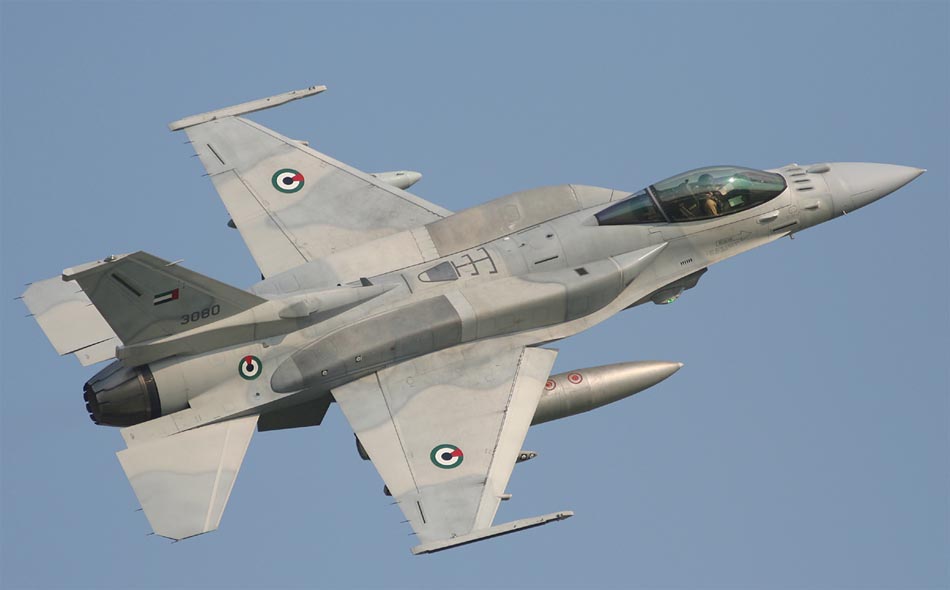
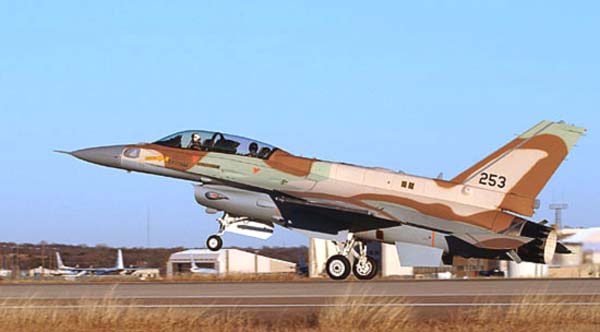
MiG-23MLDnot as significant as you might think. You actually don’t know what the latest seekers China has. For example, latest PL-8B has been mentionned as using IIR seeker
Python 5 is a better missile than PL-9C/PL-8B, I will give you that.
F-16 needs to lock on to J-10 before vice versa. Considering how much less agile C/D is compared to the earlier variants, that’s not going to happen very often.
J-10 wins almost all dogfights against flankers. How well do you think F-15/16s will do against flankers? That’s how maneuverable it is.
AIM-120C, sure. Derby? SD-10 and PL-12 have much more energy, longer range and such.
Man i like that at least you admit realities.
I do agree beating the J-10 might not be easy in fact the F-16 might have some factors against it, i do agree it is said the J-10 is better in terms of agility against early variants of Su-27s, not the Su-35BM or the latest Su-30MKIs, however the main and more numerous variants Su-27 Flanker B is not the more agile than the J-10.
I have even read it in Russian webpages that the J-10 is a pretty agile aircraft.
The PL-9 is more less between the class of early variants of Python 3 or R-73s.
The SD-10 more or less in the class of AIM-120A or Bs.
true the Derby seems to be in the class of 70km-50 kilometers it might not have longer range it is true, however it might be very difficult to jam and it is lighter than the AIM-120 making it less burdensome in performance for the aircraft in fact it is design to be fit it on small aircraft.
The J-10 might have a very good instantaneous turn rate and a good sustained turn rate judging by the Gripen and Rafale i guess and this is speculative of my part but i think the J-10 might have 30 deg/s or 31 deg/s instantaneous and perhaps 20 deg/s or 22deg/s sustained turn rate.
The F-16 might not match those numbers, some earlier F-16 in the Israel air force are heavier than the american F-16s due to a heavy diet of avionics, the Sufa might be a better performer.
A well flown J-10 might be a pretty good aircraft, where i think the F-16/F-15 have the advantage is in the AIM-120C giving them longer range and the first kill capability.
at medium ranges the things might get more or less even up to a level, at short ranges, the J-10 can kill, true is not a dead sitting duck, however it is true if it over passes the F-16s or F-15s or even is behind the F-15s or F-16s it can be shot down if the J-10 does not take advantage of the situation.
The F-16s and F-15s might not be more agile but definitively with the Python V or IV can kill the J-10 with better chances than the J-10 has of making a kill against them.
now the F-16 Sufa against a Gripen well that might be different, the things are pretty much at the same level and perhaps a bit in the JAS-39 side in short raneg but once the gripen gest the Meteor operational well the Gripen will rule
If the J-10 gets similar weapons to the Gripen it will be in the same Level and the Israelies know that, If Iran gets J-10s Israel will need Python 6s and F-35 to keep the advantage.
However China has nothing in the class ofthe Meteor or Python V so the J-10 is still not better than earlier MiG-29s and Su-27s
MiG-23MLDBull. There is something called diminishing returns. It may make a big difference between 30 to 60 deg, but over 60 deg, the benefits compared to the cost of implementation began to seriously diminish especially because the human head, as well the field of view of the radar’s pivot, cannot do the same turn.
Shows you how little you know of missiles. The PL-9 is an all aspect missile, which means it attacks from every direction. Previous to the AIM-9L, all IR missiles are rear aspect, which means every old missile is capable of attacking from any part of the rear quarters.
The only fantasy here is the way how you portray missiles to fight, without addressing IFF concerns or the limitations of radar and human head rotation.
LOL. Datalinks can be jammed, and if another aircraft has one bogie in its radar, that second aircraft would already be attacking the target in the first place, making rear aspect missiles tactically redundant.
Wow, you’re talking as if this is a new innovation. Maybe you don’t know, or even read the old Su-27SK manual, but the R-27s—old missiles—can also be enslaved through the HMS.
More bull from you. The J-10 has a datalink, you can see the large antenna right behind the pilot. So yes, it can do what you say. As a matter of fact, even the J-7s have datalinks. Datalink technology is really old; the Soviets use them to vector fighters under ground control.
Another useless feature. Once your missile can attain 30 to 40G, it can already more than enough to lead target aircraft maneuvering at 9G.
More Flogger idiocy and technical incompentence. The ability to harness over 60 degrees of off boresight is limited by the FOV of the human head and vision, the wings blocking the view of the aircraft, the FOV of the radar, and the FOV of the IFF instruments.
If missiles are so wonderful, figure out why even today, future aircraft are being designed for maximum pointability. Even on the Red Flag exercises, it has been deduced that WOBS and HMS are not the silver bullets they claim to be, that aircraft positioning and pointability are still kings, and that ACM training still has its place.
Yeah yeah Crobato let us analize your fantasies
The third generation PL-9 is better than the fifth generation Python V, the 70Gs hold by the Python V are not an advantage compared to the 35Gs or 40gs hold by the PL-9, the Python V and Python IV`s 180 degrees and 220 degrees field of view are not an advantage compared to the PL-9`s 120 deg.
So the more agile, and with the better seekers and the 360 deg capability are not advantages for the Python V who is talking about fantasies me or you?
Crobato you have to swallow the truth, the PL-9 is a more primitive missile, it is not better and to jamm the seeker or the data link is not easy, the IFF recievers also do recieve information from several sources and in a dogfight the J-10 shape is different to an F-15 or F-16`s and what the pilot of an F-16 only needs to do is turn his head, lock on with the Helmet mounted sight fire the missile and that is it, the Python V allows to its pilot more freedom in terms of cueing even without pointing the airplane nose at the intended target.
Now can a J-10 win some dogfights? probably yes, will it win more often than it loses? probably not if it faces the Python V or IV.
The advantage is in the side that has fifth generation missiles not in the side it has third generation missiles。
See that some people say the Python V has a range in excess of 20 kms
Python 5
Length: 3.096 m
Body diameter: 160 mm
Wing span: 640 mm
Launch weight: 103.6 kg
Warhead: 11 kg HE fragmentation
Fuze: Active laser
Guidance: IR
Propulsion: Solid propellant
Range: 20 miles
sourcehttp://www.waronline.org/forum/viewtopic.php?t=55
Length 3096 mm
Span 640mm
Body 16 cm
Weight 103.6 kg (warhead over 11 kg)
Guidance Type Electro-Optical
Model 1 x spr.
Speed 4 Mach
Range More than 20 km
http://www.israeli-weapons.com/weapons/missile_systems/air_missiles/python/Python5.html
Data link recieves information from several sources and this increases the ability to be jam proof.
Missiles like the Derby or AIM-120C are more advanced and than any SD-10.
The Derby basicly is re-programable in flight and the AIM-120C has a max range of 105 Km, basicly the Python V and Derby are re-programble after launch that is what means Lock On After Launch LOAL
so crobato HMS are not good are they?
One way to improve one’s odds in this environment is to fly a plane with excellent pitch and slew capabilities, allowing the pilot to point at enemy aircraft and quickly get off a shot without having to engage in lengthy maneuvering. The forward canard & delta designs of 4+ generation European fighters, and Sukhoi’s advanced SU-30 family aircraft, are no accident. Neither is the F-22A Raptor’s thrust vectoring capability, a trait shared by Russian SU-30MKI/M planes – and now the MiG-29OVT/MiG-35 as well.
Another approach is to add a helmet-mounted display. If the missile seeker has a wide enough cone, the pilot can simply use his head for the point maneuver, confirming lock-on and firing a SRAAM even at angles that would seem to be outside any threat range based on the position of his aircraft. While aircraft with excellent ‘slew and point’ capabilities plus HMDs offer the best combination, older aircraft with HMDs and better missiles can become extremely effective. Air combat exercises held after the fall of the Soviet Union, in which German MiG-29s with helmet-mounted displays and AA-11 missiles slaughtered American F-16s by the dozens, drove that point home with brutal clarity.
The total value of all JHMCS production contracts since the beginning of low-rate production is over $550 million – a figure that excludes minor contract modifications and unannounced sales. As of October 2007, JHMCS had 19 customers, but it seems likely that VSI counts the US Air Force, Air National Guard, and Navy as separate customers. Customers DID has been able to verify include:
F-15s: USAF, US Air National Guard, South Korea (F-15K); Singapore likely (F-15SG)
F-16s: USAF, Chile, Denmark (F-16 MLU program), Greece, The Netherlands, Norway (F-16 MLU), Oman (F-16 E/F), Pakistan, Poland, Turkey
F/A-18 A-D: Australia, Canada, Finland, Switzerland
F/A-18 E/F: US Navy; Australia likely
In addition, note that VSI partner Elbit Systems is an Israeli company, which means sales to Israel might not need to be announced by the Pentagon; a reasonable assumption is that JHMCS systems supplement the DASH on Israeli Air Force F-16s and F-15s. Announced production stages, amounts, and customers include:
LRIP 1 = $16.7 million (Low-Rate Initial Production begins)
LRIP 2 = $42.1 million
LRIP 3 = $82.9 million
LRIP 4 = $66.7 million
FRP 1 = $99.1 million (Full Rate Production begins, 300+ for USAF F-15/F-16, US ANG F-15, USN F/A-18E/F, F-16s of Poland and Greece; F/A-18A-Ds of Australia, Finland, and Switzerland)
FRP 2 = $87.2 million (401 for USAF F-15/F-16; USN F/A-18 family; F-16s of Oman, Poland, Turkey; F/A-18A-Ds of Australia, Finland, and Switzerland)
FRP 3 = $97 million (400+ for USAF F-15/F-16; USN F/A-18 family; F-16s of The Netherlands, Poland, Turkey; F/A-18A-Ds of Australia, Canada, and Switzerland)
FRP 4 = $68.8 million (321 for USAF F-15/F-16; USANG F-15; USN F/A-18E/F; F-16s of Belgium, Greece, Pakistan, Poland, Turkey; F/A-18A-Ds of Australia, Canada, and Switzerland)
Boeing predicts that the final number of JHMCS units produced will exceed 2,800 for all customers, including those produced during their 4 Low-Rate Initial Production runs. At present, however, funding for JHMCS purchases is scattered across the F-15, F-16, and F/A-18 budgets so this is only an estimate.
Oct 9/07: Boeing delivers the first factory-installed, dual-cockpit F/A-18F Super Hornet JHMCS to the U.S. Navy. The 2-seat variant places a JHMCS helmet on both crew members, giving each the capability to aim weapons and sensors, as well as a visual indication of where each crew member is looking. The inclusion of JHMCS in the aft seat of 2-seat aircraft gives the weapons system officer the same weapons management capabilities as the pilot, vastly reducing the amount of required verbal discussion and improving the ability to react rapidly to targets and/or threats. Phil King, Boeing JHMCS program manager, said that: “The extension of the JHMCS capability into the aft cockpits of F/A-18 Hornets and Super Hornets has been eagerly awaited for several years.”
Boeing delivered the enhanced aircraft to the VX-9 Vampires of Naval Air Weapons Station, China Lake, CA, and is scheduled to deliver 77 of the two-seat JHMCS-equipped aircraft to the U.S. Navy over the next 3 years. As of this date, Boeing’s release says that it has contracted for more than 2,500 systems since 2000 from Vision Systems International, based in San Jose, CA.
Sept 12/07: A contract for $16.1 million, covering Full Rate Production 4 (FRP4) F-15E Strike Eagle retrofit kits and Group B Hardware for the F-15E Strike Eagle. At this time, all funds been obligated (F33657-01-D-0026, Delivery Order 0066).
April 4/07: A $68.8 million indefinite-delivery/ indefinite-quantity, firm-fixed-price contract for Full Rate Production Lot 4 (FRP 4) of 321 JHMCS systems. The systems will be used on USAF F-15s and F-16s, MACH Brooks, the USN’s F/A-18 platforms, and foreign military sales to Poland (F-16s), Belgium (F-16s), Pakistan (F-16s), Greece (F-16s), Royal Australian Air Force (F/A-18s), Switzerland (F/A-18s), and Canada (F/A-18s). At this time, total funds have been obligated. Work will be complete December 2009 (F33657-01-D-0026/Delivery Order 0058
http://www.defenseindustrydaily.com/fighter-pilot-look-shoot-helmets-upgrade-ups-downs-01271/


 Sign In







