 zoot horn rollo
67-18112 was a RU-21A CEFERIM LEADER aircraft and I’ve sent an email to someone who served with the unit that operated it to try and find out more information, particularly on the colour scheme it carried and the details of its demise. I’m not that hopeful of a response in all honesty.
I’ve seen pictures of RU-21s still carrying the brown/white colours when they were eventually disposed off to K&K Aircraft when the mass cull took place but I’ve also (now) seen pictures of RU-21s carrying the overall grey colour scheme as early as 1985.
I asked on another forum for more details of 18112 but what I have posted earlier is all that came back.
One suggestion is that the entry in the ASN database is deliberately wrong to disguise its location given the sensitive nature of its duties at the time.
As I suggested earlier, the crucial markinsg to look out for is the aircraft technical data block. This is what Joe Baugher has to say about it
The three-line fuselage data block was reduced in size to one-inch characters in 1932 and placed on the left hand side of the fuselage near the cockpit. This is known as the Technical Data Block (TDB). The data block not only displayed the full serial number, but also the exact model type and sometimes the aircraft’s home base or the branch of the military with which it served. The TDB eventually became the only place on the aircraft where the serial number was actually displayed. It was often true that the only other sort of identification shown was a unit and base identification code displayed on both sides of the fuselage or on the fin. This made it difficult to identify the actual serial number of the aircraft, leading to a lot of confusion.
The Technical Data Block is still in used today, although it is now called the Aircraft Data Legend, and by the early 1990s it was reduced in size to letters only 1/2 inch high and moved to a new position hear the ground refuelling receptacle.
Here is a picture on the Old Wings website showing the TDB on an old aircraft to give you an idea of what you are looking for
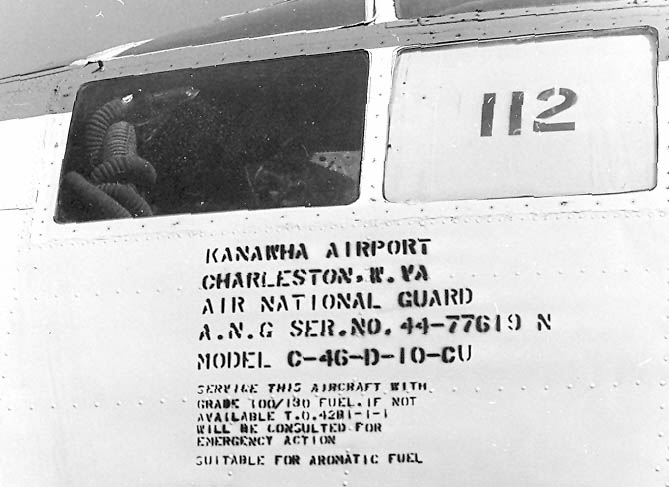
If this is 18112 it should carry the block under the cockpit on the port side (but remember the wreck is upside down on the sea bed)
zoot horn rolloOne thing to look out for (if it is US military) are some markings on the left hand side of the fuselage (when it is right way up) just below the cockpit where there will be some data stenciled on the side including the aircraft type and serial number. Night be worth checking depending on how much fuselage is visible.
zoot horn rolloIIRC, there was some talk of the Russians offering the use of their MiG-25U ejection seat testbed for supersonic ejections.
The aircraft was (is?) operated by LII – the Gromov Flight Research Institute at Zhukovsky……..
Aboard the MiG-25U flying lab, research and tests of dynamics and high-altitude stabilization of the K-36 ejection seat family are carried out
The LII MiG-25U used to open the bi-annual MAKS airshow – but I haven’t seen it for a number of years now – so it is presumably no longer airworthy…. 🙁
Ken
Wasn’t the 1992 (pre-MAKS proper) show opened by a SU-7 used for ejection trials which having carried out a live ejection firing in front of the crowd then went onto crash a few miles on ?
zoot horn rolloThe defence secretary, Liam Fox, has held out the prospect of British troops starting to leave Afghanistan next year as he set out how the government will conduct what he called a “ruthless” and “unsentimental” defence and security review.
In his first speech on the review, he echoed David Cameron’s recent remarks that British troops were in Helmand province “out of necessity, not choice”. Their mission was “vital for our national security”, he said.
However, Fox described the campaign’s aim as creating a “stable enough Afghanistan to allow the Afghan people to manage their own internal and external security”. He continued: “By the end of the year I expect that we can show significant progress, consolidating [Nato-led forces’] hold in central Helmand and accelerating the training of the Afghan national security forces”.
These are limited objectives open to interpretation and the government’s tough language about the importance of the conflict in Afghanistan to the UK’s national security is preparing the way for a cut in the number of British troops in Helmand (now about 9,500) next July, the target Barack Obama has set for US troops starting to come home, defence analysts say.
Fox also said in his speech to the Royal United Services Institute today that Britain needed to be “smarter about when and how we deploy power”. Both Fox and Cameron are deeply sceptical about New Labour’s doctrine of liberal interventionism.
In the defence review, due to be competed by the end of the year, “we must act ruthlessly and without sentiment”, Fox said. It must make a “clean break from the military and political mindset of cold war politics”.
Promising the end of “salami-slicing”, he made it clear that whole projects would be abandoned. However, he warned that decisions were for the medium and long term. “Contractual and structural commitments on personnel and equipment mean that the budget is very heavily committed for each of the next four years, severely limiting our room for manoeuvre,” Fox said.
He said the reason why the government had excluded Trident, apart from “value for money” considerations, was that “there needs to be a deterrent at all times”. In the current state of technology, Trident was “the most cost effective [system] that we want, a continuous-at-sea nuclear deterrent”, he added.
http://www.guardian.co.uk/politics/2010/jun/14/liam-fox-british-troops-starting-leave-afghanistan
zoot horn rolloI’ve asked on the NAMAR forum about this and have turned up a picture of 67-18112 taken in Orlando in 1979 which makes me now think that this is possibly not the wreck in the pictures.
67-18112 was a RU-21A and as such (most likely) carried radar/electronic pods which look like “tip tanks” . I don’t see these on the wings but perhaps you could check the nearby wreckage in case they were knocked off.
Additionally, the picture I have shows that it carried the brown/white paint scheme with the engine covers in particular being in all over brown.
Old copies of BAR don’t give any additional information, and has been pointed out to me, the ASN database is not perfect.
I totally agree with TEEJ’s interpretation that what you think is the cockpit windows are the nose luggage lockers.
What we really need to see is the underside of what is lying there (which is why I made the comment about it being buried in silt). The tail section would be nice to see as well as that is where the makers plate is carried.
I think it is a King Air from the wing shape and the turbine engine in the photograph. Sadly, that might be as close as we get.
zoot horn rolloZoot – don’t forget the Pucara, that’s a twin turboprop with tandem seats – though unlikely to find one so far from home… and the leading edge shape of the wreck is definitely NOT Pucara.
Still looks like a Beech King Air variant to me.
Ah, yes, I’d forgotten about the Pucara. Ok, shades of ‘Life of Brian’ but apart from the Pucara, I can’t think of any tandem seated twins… I’m sure somebody will come along and mention another one.
zoot horn rollome neither.
I wonder what Seawreck has seen to make him identify a tandem seating layout.
Especially given that the wreck is upside and apparently buried in silt
zoot horn rolloASN quote this accident as in the US?:confused:
I asked over on mil-spotters for details of any U-21 accidents involving U-21s in Europe in the 70s and apparently there were only two – this one and one in Turkey.
The US Army used a number of these for communications duties in the 1970s and a number were attached to the local US Embassy. I suspect this was one but I don’t have access to my old copies of BARG to check further but I could ask Martyn Swann.
They were replaced by the t-tailed C-12 and again a number of those were used by US embasssies.
Around the same time US Naval Air Facilities around the world replaced the venerable C-131 by the UC-12B and in Europe places like Naples and Mildenhall saw a t-tailed King Air arrive.
Although the majority of the early U-21 and C-12 fleet were sold off to K&K Aircraft in the States for civilinization, U-21s continue to appear in Europe in the form of later build RU-21 and RC-21 electronic surveillance aircraft festooned with all manner of pods and aerials scabbed onto the airframe.
zoot horn rolloDo you know any turbo prop twins with tandem cockpit seating? I can’t think of any. Single engined turbo or jet, yes. Twin’s props, no.
zoot horn rolloHaving asked elewhere, Beech U-21 67-18112 crashed on approach to Athens 24/7/1985
zoot horn rolloFor the record….I just acquired some information…..which needs cross checking….
Its a Beechcraft King Air C90 (or a T-44) of the US Navy or Airforce which crashed at that site early 70s. The aircraft was based at the former military base of USAF at Hellikon which eventually closed late 80s.
As you all know Hellinikon was the international airport of Greece until 2002.
This accident is not recorded by the Greek authorities. This information is from an aviation mechanic of former Olympic Airways (flag carrier of Greece)
If it crashed in the early 70s then it is not a T-44 or C90 variant of the King Air, it is much more likely to be a Beech U-21 Ute (C90s didn’t come of the production line until later).
I’m looking through Joe Baugher’s pages to see if it is listed. I have looked through the U-21 serial listing and there are a number of U-21 crashes in the 1970s but without locations. I’ll ask elsewhere.
Oh yes, if it is a U-21 then then it is an A90 King Air for the purists and pedants amongst us.
zoot horn rolloObvious question, but needs asking, does it carry any markings on the outer wings? Some countries make it mandatory to carry the registration under the wings.
zoot horn rollo🙂
zoot horn rolloOoh, I wasn’t aware of the Queen Air and Twin Bonanza share the same leading edge design inboard and outboard of the engines.
However, I think the nacelles on the wreck might be too thin for the piston engines of those two models. I’m happy to be proven wrong however.It is entirely possible that with the right ref numbers from the wreck combined with a member of the forum with access to the right database, we could even actualy identify the plane itself. Though, considering the condition of the wreck and the lack of the rear fuselage were any registration or serial number is bound to be, this may not be possible in this instance.
Or a copy of a biz-prop type register which includes write offs. I looked at the LAAS on line corporate prop register but it only lists current aircraft.
zoot horn rollohttp://www.baaa-acro.com/Pays/G/Grece.htm
doesn’t show up any specific references to King Airs but there is a military accident on 25 August 2003 where the type is not specified. However, I have to say that if was a military airframe I would have expected them to have removed the airframe for investigation.
Now, a civil airframe perhaps on some kind of nefarious activity might just be allowed to lie where it went down.


 Sign In







