Did Finnish MiG-21F13 even have guns?:confused:
C-130J cockpit. For IAF’s An-32 and Il-76 pilots, this must be a true dream.
Are you sure? Maybe the pilots prefer the old “steam gauges” on the older aircraft? After all, it’s what they learned to fly on…
Wikipedia can be a good source of information – if they quote reliable and credible sources.
This is what Wikipedia has to say on the question:
Three complete MiG-21F-13 and 20 kits were sent from the USSR to China in 1961; the rest used by the PLAAF were all locally built Chengdu J-7 aircraft.[1] Though only 23 “actual” aircraft were delivered from the USSR to China, they did see active service in the PLAAF and/or PLANAF; on January 3, 1966, a MiG-21F-13 of the PLANAF, flown by Lu Xiangxiao, shot down a USAF AQM-34 unmanned aerial vehicle using 57mm rockets.
http://en.wikipedia.org/wiki/Mikoyan-Gurevich_MiG-21_operators#cite_note-Gordon_2008-0
They were quoting Yefim Gordon.
If I recall, the first complete MiG-21s exported from the Soviet Union were delivered to Yugoslavia in 1962?:confused:
I doubt if the Chinese would have received MiG-21s before then…
Maybe the Soviets didnt consider a (rather basic) MiG-21 a substantial threat to its own security in rellation to the profits they could make of the deal. Its not like they sold the chinese a heavy deep penetration N-striker…
Funny you should say that. Let’s not forget how the USSR helped with the development of China’s nuclear weapons programme in the late 1950s. The Soviet Union was apparently even about to supply the Chinese with an intact nuclear bomb, to be used as a learning tool.
When were the drop tanks available for the F-14? ISTR Iran never received any, so possibly 1980s?
What was the drop tanks fuel capacity. Either 280 or 267 USG?
http://www.tomcat-sunset.org/forums/index.php?PHPSESSID=b2b0c367a4247c6c2284a20dbc2bf242&topic=950.0
Any use to you?
How do the Indian Su 30 loses (3 so far) compare to the Russian ones of Su 27 series ?
Wouldn’t it be interesting to compare the loss rate of the Su-30MKI with that of the F-22? This is the third MKI loss, how many F-22s have been lost, 2 or 3? Both types have been in service since the middle of the last decade, and there’s around 180+ of both types in service…
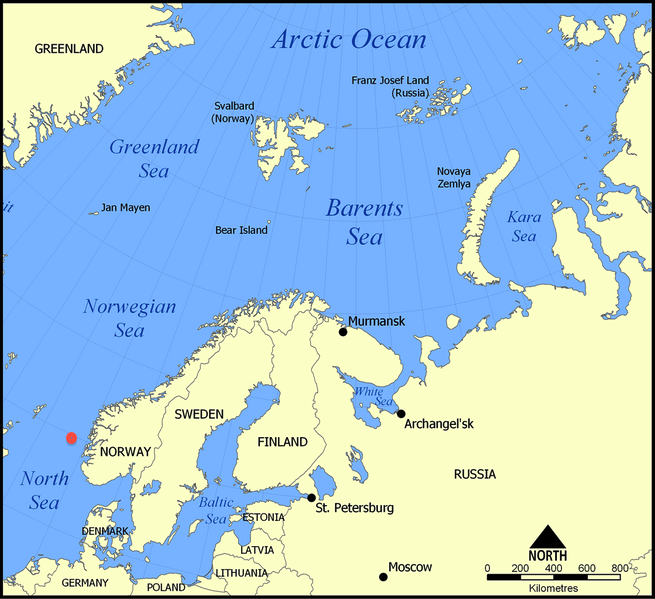
The norweigans sure where happy when ‘friendly’ Russia decidided to park its carrier group in just outside Norways largest gas field (Troll) and hold an exercise in Norways EEZ, shutting down helicopter transportations (food, personel) from and to the platform.
I.e out of all places they decided to park their carrier group for training here:
Similarily, the reemergance of cold-war style russian bombers around the national borders in the Baltics/Scandinavia sure sends a friendly message.
If you think that’s bad, look what the Kuznestov did of the coast of home-sweet-home!!:eek::eek:
well that’s debatable, Sens. There are only so many sacrifices you can expect from the servicemen and women. I don’t think it would have been worth the deaths of 24 men and women just to protect the secrets of technology which the Chinese may already know…
But the question remains, what was the official priority in the USN at that time: keeping secrets, or bringing people back home? What were the USN pilot’s orders in that situation in 2000?
what was the bigger priority, securing the secrets of the EP-3 or securing the lives of all those on board (I think there was around 20 or so, on board?)?
The EP-3 wasn’t ‘forced to land on Hainan’, the crew made a completely inappropriate choice.
Regards
Why do you say that, everybody on the Plane survived, did they not?:confused:
just for a start, USAF Col John Boyd, one of famous combat pilots ever.
copy&paste
Boyd was famous for a maneuver he called “flat-plating the bird.” He would be in the defensive position with a challenger tight on his tail, both pulling heavy Gs, when he would suddenly pull the stick full aft, brace his elbows on either side of the cockpit, so the stick would not move laterally, and stomp the rudder. It was as if a manhole cover were sailing through the air and then suddenly flipped 90 degrees. The underside of the fuselage, wings, and horizontal stabilizer became a speed brake that slowed the Hun from 400 knots to 150 knots in seconds. The pursuing pilot was thrown forward and now Boyd was on his tail radioing “Guns. Guns. Guns.
http://www.aviation-history.com/airmen/boyd.htm
I don’t think Boyd’s experiences flying the F-100 “Hun” with guns only in the 1950/1960s can be directly applied to today’s combat scenarios. I don’t think slowing down to 150 knots is normally recommended by today’s combat instructors.
Can the F-100 perform a “Cobra maneuver”?
But there wasn’t any combat seen by Soviet aircraft during the “Soviet era” except for the Soviet Afghan war of the 1980s, so why would you not be interested in extending the life-span of your aircraft?
In the case of a prolonged war it might make sense to reduce the operating life of hardware, but there was no such war, for either the SU or the USA.
Also, what was the life expectancy of a tactical fighter over Europe, even in a non-nuclear WWIII scenario. I read the average life expectancy of Sturmoviks in 1941 were 13 missions.
Of course a prop plane flying into 88mm flak is an extreme example, but still. (RAF pilots on Malta during WWII lived for 2-3 months on average.) If you’re building for a big peer war, what’s the point of 1000 hours TBO if you expect to lose 70% of your frontline aircraft by that time anyway. You’re going to need new airplanes more than you need replacement engines.
what “big peer” war? In war time the life-span of airframes and engines is not too critical, but most air arms around the world are not at war – thay have to think about life-cycle costs over a typical 30 year life-span of modern aircraft.