pjhydro
Back to topic, anyone watching PMQ’s (quite defence heavy today) and the defence green paper discussion? Can’t decide who is actually advocating a decent defence policy, both shadow/defence ministers seem to be supporting a good idea, but both parties have made statements to the contrary higher up. :S Lib Dems are being their usual (pratty) selves and refusing to accept the Trident decision (one of the few defence issues actually voted on).
But surely saying your going to have a “root and branch” defence review but then saying “oh, but not the 20 Billion pound trident replacement budget” is going about the whole thing pretty badly. If we are going to review Britain’s strategic goals and ambitions that surely must include a proper review of our strategic weapons? Its Eurofighter in SDR all over again- “We will review it all…except eurofighter whether we need 232 aircraft of that type of not.”
pjhydroThank you.That’s very clear so how exactly would a closer and somehow different relationship with “Europe” improve what is already in place with NATO? Forgive me but I am not following the rationale of your argument.
I think the issue with “NATO” as it stands is the almost total reliance on the US for the bulk of its muscle, the majority of its decisions and polictical direction. Many in Europe (and that includes the UK) believe that this is a throw back to Europe’s dependence on the US post World War 2, the fact that the US Army “Occupied” large parts of Central Europe in the cold war and harps back to the days when it was feared the reds would over run the war weakened west.
If Europe is to share the burden of world responsibility it probably needs to shake off much of he NATO alliance with the US and stand on its own feet militarily. If the US wasn’t there to prop it all up then our governments might actually be forced to spend more wisely on defence.
Interesting point made on Radio 4 this morning when they were discusing the new green paper was that the EU has 2 million men and women under arms yet the EU as a collective can only deploy around 30,000 troops on active duty and the majority of them come from the UK and France.
I would add that in an area smaller than the USA, European forces use something like 6 different types each of MBT, IFV and SPG, something like a dozen different Fast jet combat aircraft, though not a single strategic bomber.
Most telling of all is that there are only 47 strategic tanker aircraft in Europe of an amazing 6 different types! most of which are ancient airliner conversions. The US has just shy of 1.5 million people under arms and can muster almost 600 strategic level tankers.
pjhydroAn interesting proposal. How many infantry battalions are we at now? 30 odd? I’d suggest that since we currently seem to need large troop numbers for our current conflict, we should perhaps, not drop numbers as much as you suggest, but alter roles a little. So removing a large number of those troops dedicated to ceremonial duties and re-roling them as infantry. Likewise for a few of the armoured regiments. I can’t see us needing to use more than 100-150 tanks even in the worst case scenario (many of these troops already do serve in Afghanistan as drivers, so it may be useful to train them as far as an infantryman as a matter of routine, thus fewer numbers needed overall but still enough men to perform all roles as needed).
After that i’d cut maybe a couple more battalions and rerole them as TA, less expensive, but there in an emergency and miles better than a conscript.
Yeah I could go for that. though I would suggest more force recce units, very useful, very deployable and have so many capablities including infantry.
I’d also say that if your plan were to be used, it would lead to some increases in expenditure in some areas, like the FAA would require a much larger force for strike role, a large number of which it would be unnecessary (costly) to train in carrier ops.
Yes it would save money overall but some military money would be redistributed. I’m suggesting we get the carriers and F35s as planned but they become the strike force. maybe a few more F35s but overall a reduction as I’ve scrapped the RAfs strike force.
Can’t agree with the nuclear deterrent bit either. If we aren’t going for SLBMs we should get out of the nuke business altogether (no thanks) because any other system is only really for smaller scale tactical strikes which we should need to be making in any case (they nuke us, we end them or they don’t nuke us, we don’t nuke them, what else would we need them for?).
Well I’m torn on deterrent (and your last point can be an arguement against it too), in a cold war scenario I agree that SLBM are where its at, but today they are a very expensive luxury. Maybe TLAM nukes sub based too? could develop a Stormshadow nuke version with more range that can be F35 and Astute fired??? Cheap and flexible and unless you want to nuke Ulan Bator you could hit most of the places you might need to.
Apart from that I agree with the core of your idea that it’s the high end equipment and the highly skilled people we can’t afford to lose even if it seems counter intuitive to lose battalions during an infantry focused war being fought now. Infantry is quicker to recruit and train than a carrier is to build. As long as we keep a stockpile of weapons laying about for them.
Guns are cheap, if we are really desperate we send a few trucks on to Manchester and souff lunden estates and we’ll have enough to equip a corps or two!
That very last point is interesting, i’ll have to take it up with one of my lecturers.
Yeah i’ll have to dig out the article. Its more complicated than that and of course it depends on what you mean by “empire” but it would appear that the cost of building, maintaining and defending the empire paid for itself- so other than tea, curry and people to play cricket against (all good things) you have to ask if it was worth it! (especailly as Palestine, India/pakistan, Afghan, Iraq, Iran, Africa are all ‘our’ messes!)
pjhydro
😀
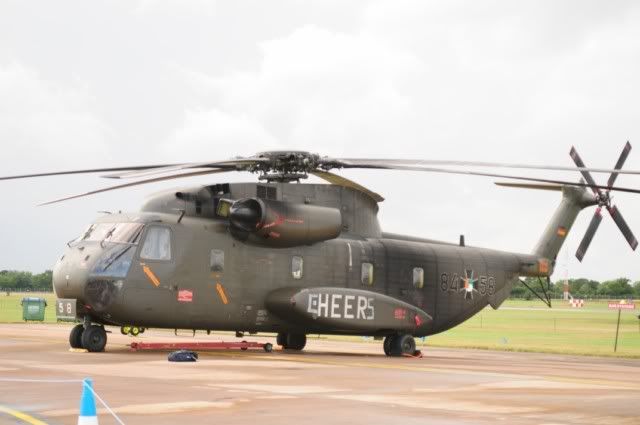
You realise that one CH53 has more lift capability than the whole IAC! Great fun!
pjhydroI am sure the Thetis was designed by a UK firm originally?
pjhydroThanks for the info and clarification, guys. Correct me if I’m wrong, but I would have thought surfaced subs, like the one pasing throug the Suez in the photo, would have permission for the passage and be ‘Known’ or they would be tracked by satellite (America does, does Britain have that capability?), only submerged, hiding subs create arequirement for ASW patrol craft.
Nah the Uk doesn’t have an organic sat recce system, just comms sats. A surfaced sub in the middle of the Ocean would still need a MPA, still a very small target, U-boats spent most of their time on the surface. You are right about suez though!
pjhydroSo what capabilities would you propose Britain lets wither for budget’s sake? And what then happens if we need them to fight a war our EU peers don’t approve of or at least feel they don’t need to contribute to themselves? We go without the capability or worse we have to alter our foreign policy and concede.
Well…he says placing one foot behind the papapet….The largest unilateral war we have fought in the last 50 years was won with a mere 8 Infantry Battalions….so lets keep a “national force” for emergency use of say 24 infantry battalions on top of an enlarged 3Cdo.
Lets place strike in the hands of the FAA and the Carriers and let the RAF concentrate on Multi-role AD/CAS, ISTAR and Transport (so lose the “tornado” sqns). VIP transport complete luxury so bin 32 sqn.
Dare I say nuclear deterrent at the risk of sparking a whole different debate. I would say at least reduce the deterrent, perhaps ALCM-carrier based so we have the option but its far cheaper.
With all the money saved we beef up ISTAR, SF, Commando, RN hull numbers and basically create a modern version of British 18th-19th Century defence policy, supporting our allies with highly trained professional forces that are also able to stand off at sea and hit where they like.
Jumps behind parapet and places fingers in ears.
Seriously though we have money issues in the UK, so what we should consider is keeping the hard skills as i’ve listed, the stuff that takes R&D and shed loads of training and reduce the stuff that can be picked up again in time of crisis. If the Mongol hoarde appeared at Europes gates the army can be bulked out with conscripts that can be turned into decent infantiers in a few weeks, you can’t teach them the skills of ISTAR, SF, Amphib etc quickly though. Just a possible solution to a tough choice.
Actually the empire was much more significant for a large proportion of the last couple of hundred years. Right up until 1973 Australia and NZ both relied on the UK almost totally for trade.
Recent research (and you will have to give me time to dig out the article) suggests that Empire was cost neutral, we got out what we put in which suggests that it was trade outside the Empire that made the UK rich.
pjhydroI think you’re both right in a way. The US is our largest direct investor and vie versa (not sure how the current financial situation has altered that, we always seems to be using data from a couple of years back in lectures), but we trade most with EU members, but they do have the unfair advantage of EU trade laws.
And that deperately unfair advantage of proximity…..’Europe’ has been our chief trading partner since the end of the last ice age, not sure EU trade laws have changed much about where most of our trade comes and goes to and from. To be sure its helped, but Europe is our natural business partner.
pjhydroI think that is feasible. I set out three options, but compromises between them are also possible.
Of course, we don’t have all the EU ISTAR & amphibious lift. There’s a range, with Germany having the least amphibious capability in proportion to its strength, the Netherlands rather a lot, & France, Spain & Italy in between. And the same spread applies elsewhere. While there are specialisms, they’re largely emphases rather than absolutes.
Oh indeed. I reckon it could be a way out for several nations juggling budgets, the UK and Dutch could expand on their Amphib but allow other capabilities to whither and while other nations will maintain ISTAR the UK could maintain and expand its gold standard. No-one else has ASTOR, our ELINT is seen as a leader. We are good at Comms and signals in general so we could provide that service to an EU force. The idea is that UK forces are the specialists you have to have on board in order to ‘ensure’ victory. The UK provides the ‘entry’ force with 3Cdo and then supports the bulk continental armies with recce, SF etc. Gives the UK a big say in events.
Also means we get to have all the cool toys…:D
pjhydroGrim901 – interesting points but in terms of economic relationships the US is our single largest export market and our single largest overseas investment base. So, despite our EU membership, which is a separate debate, our economic ties to the US are very strong. Hence my comments above.
The EU as a whole is by far our largest trade partner… Where do you get your figures from? Of the top ten UK trade 8 are from the EU, the top usually being Germany. Or my set of class atlas’ (Phillips Modern school BTW) are wrong….
Ties to the US are strong, but we do twice as much trade with France and Germany than with the US.
pjhydroTo the USA, we are, & always will be, an auxiliary. That is, a subordinate, a useful assistant.
We have choices in how we structure our forces. We can build the forces the USA would like us to have, i.e. optimised to assist the US forces, but capable of very little independent action. We can build forces capable of a full range of action, but scaled to our budget. Or we can build forces designed to complement those of more or less equal allies, with any dependence on them balanced by their dependence on us.
The first is to permanently accept a considerable loss of independence. The second is my preferred option, but I fear that there is no longer the political will in this country to spend enough for independent action on the scale our politicians wish to act. i.e., politicians want to be able to do things, but not pay the price of being able to do them independently. They’re also unwilling to seek to build complementary capabilities with allies, leaving us dependent on the US for some capabilities. This is OK as long as the USA wants to do the same things as our politicians . . . .
So, what do you prefer? Obedient servants? Proud but expensive independence? Or a fractious, but equal, alliance of peers? I put ‘obedient servants’ last, by a long way.
BTW, in economic terms, our interests are very closely tied to our immediate neighbours, & far less to the USA.
Well said.
I wonder if an affordable and politically useful route would be to have an affordable core force for independent action, for use in protecting UK only interests (perhaps mixed mech/inf division) but then use the bulk of our money to focus on niche activities that the UK is good at and are capabilities allies on both sides of the pond are desperate for. We have the best ISTAR capability in Europe, no EU war could be fought without that. Our SF capability is world leading, Amphibious warfare would be something we could bring to the party as is strategic transport (both sea and air). Use the money to improve and expand each of them at the expense of bulk.
An EU conflict perhaps would see the big army nations like Germany and France providing the bulk force but then the UK providing the ISTAR, Force Recce, SF/Commando and lift.
This would actually fit in with the “British Way in war” and is precisely how we fought conflicts like the Napoleonic wars (just without the E3Ds and Nimrods!!).
pjhydroFair point, so do we know what the foreign policy objectives are for, let’s say the next 10 years, from either party? My reading of previous reviews is that firstly they are service competitive, which is counter productive, and cost driven, which always results in scraping the barrel for resources when we need them.
We do not anticipate events. We have to decide, politically and diplomatically what we want our military capability for. And I thought we all paid vast sums of our money to various advisors and ngos to analyse, assess and advise the government on every aspect of global development. Either their advice is being ignored, in which case we do not need them, or they are not providing any advice. Same conclusion.
Oh agreed. We need to decide what is the UKs place in the world. We still have not quite made our mind ups since we handed the keys back on the old empire. We flit around between world policemen, americas best friend, in EU, out EU, support UN, ignore UN, love France, hate France, etc etc A definative decision is required and from that what the UK armed forces should then be designed to do. Cost unfortunately will play a role, what we can afford to do in the world will be an important part of the decision.
The old SDRs expectation of “two Bosnias” or a “Gulf War and a Bosnia” is far too ambitious for the forces we have at present, perhaps always was even in the Halcyon days of 1998 (who would have thought we would say that!).
pjhydroSea Vixen?
Rolls on floor laughing. I’ll get my coat.
pjhydroAnd another question. Does Britain still patrol all the Atlantic? I would have thought it was done during WW2 to protect shipping lanes, but currently they patrol only national waters and other commercial interests such as the North Sea where they have oil interests.
Its not regular anymore as it is not as necessary as it was up until 1989 in the Cold War. But Nato still keeps track of Soviet..erm I mean Russian subs and ships passing throught the GIUK Gap and that role falls to the Nimrod force and various P3 outfits. When Russia sent out a carrier group not to long ago Nimrods tracked it all the way through this part of the world. There is also the long range SAR role too, you need legs to carry that work out properly.
To quote
http://www.ukshipregister.co.uk
HM Coastguard responds to Search and Rescue (SAR) incidents that occur within the UK SAR region. This region covers some 1.25 million square nautical miles of sea and over 10.5 thousand nautical miles of coastline. The eastern boundary of the UK SAR region joins those of Norway, Denmark, Germany, the Netherlands and Belgium in the North Sea, France in the English Channel. To the west the UK SAR region extends into the North Atlantic to meet those of Canada, Portugal, the Irish Republic and Iceland.
Map attached. So yes “local patrols” that reach across to Canadian waters!
pjhydroI was jokingly referring to the mediterranean as a big lake. You guys on this forum are way too confrontational, and need to chill a little.
True enough!
The fact remains that if you are patrolling for submarines, you will only find small shallow divers in the mediterranean because the entry points are shallow, at gibraltar, suez and the hellespont (sorry I can only recall its hystorical name right now), not the large class american and russian subs.
Dive depths are very misunderstood. Subs don’t go very deep, Seawolf Class will probably go no deeper than 500 metres, the RN sets the Trafalgar class dive depth between 400 and 600 metres (peacetime constraints etc) so the med with an average depth of 1500 metres will happily accomodate the biggest deepest diving nuke subs and does regularly. The RN regularly deploys Trafalgar class subs there. You are right about the choke points but it will only take one or two to slip through (easily done) and you have a difficult hunt on.
Big maritime patrol aircraft are better becuse they give better persistence, carry more kit and weapons and have much lower fatigue factors for the crew. An S3 does not carry a galley, walk in toilet, rest area and bunks, Nimrod does. If you use smaller aircraft you have to send up replacement aircraft more regularly and therefore have breaks in search and spend more time with aircraft in transit from base to the search area. Even if you use inflight refueling you will have to break off from what you are doing in order to join the tanker. A Nimrod/P3/Atlantic/P8 sized craft can often spend up to 8-9 hours on task.


 Sign In