 Jō Asakura
Thanks, interesting stuff B_I_O. Me thinks the US military is biding it’s time whilst the next generation (GaN based) technology matures, before making a decision on service/application- wide standardisation. Much like the Russian military but on a much larger scale.
Without being too specific on details, my best guess would be ‘GaN on Si/PD’ and a ‘system-in-package’ (SiP) approach based on low temperature co-fired ceramic (LTCC) technology – as opposed to the current MMIC/PCB-PA architecture.
B737-700 airframes appear to be the optimal choice for performance and a ‘Wedgetail’ type antenna affords the the greatest array size to range coverage (both air & surface) combined with aerodynamic efficiency. JMTs.
Jō AsakuraBoth the P8 and the triton have active sensors as well and I believe the JSTAR replacement program is currently studying options for adding a new active sensor to the j stars as well
I thought NG’s active MESA on B737-700 airframes would replace J-STARS.
Jō AsakuraSpeaking of the A-100, here’s the probable reason the lead developer of the AESA, ‘OAO Vega’, fired Leninets (mercifully) and hired these guys- the ‘FSUE Rostov-on-Don Radar Research Institute’:
http://www.findpatent.ru/patent/244/2446511.html
Looks like GaN-on-SiC for confirmed S-band (and possibly L-band).
Jō AsakuraIntriguing. When was this announced for the PAK-FA? Sorry to be a party pooper, but that sounds more like wishful thinking.
From the makers of the current NO36’s T/R modules:
ФГУП*”НПП*”Исток”.*Разработка широкополосных усилителей мощности*на*основе гетероструктур нитрида галлия*в*диапазоне частот 0,9*…*18 ГГц.
FGUP NPP ‘Istok’: Research into broadband high-power amplifiers based on gallium nitride substrates, operating in the frequency range 0.9 – 18GHz.
http://mniirip.ru/sites/default/files/articles/razdel-1.docx
Unfortunately, the link is security encrypted, but you can refer to the PAK-FA’s sensor patent which states the multiple functions of the AESA radar(s).
GaN LTCC T/R modules are due to commence series production @ a facility (owned by the russkie maker of the World’s most capable IADS), by 2017. It appears they’re in a race with DARPA, the Europeans (thru lack of funding & political will) have been left behind.
GaN nanophotonics AESA research has already been officially acknowledged and may be a competing tech:
http://kret.com/en/news/3545/ (English).
Jō AsakuraBetween, there was no way the Raf could have been cheaper than a SH. This kind of attitude is what make Fr industry loosing deals: undercutting with no basis of reality and then raising their prices as the “Political” back-up and man to man arrangements fed away with time… Another poor insight from late Dassault officials…Indeed[/SIZE]
PM Modi’s mantra of ‘Make in India’ does not entail ‘at any price’. The *leaked* unit cost of >US$120m makes it easier for the Indian government to kill the deal (blaming both the pompous and disingenuous French and the previous inept Singh govt.) and simultaneously save face… Once again it appears Dassault have clutched defeat from the jaws of victory!
‘In the continued absence of hard information, all we can say is that the possibility space is distressingly large.
If the Russkies offered GaN LTCC broadband (0.9 – 18GHz) radars, some elements being conformal, which incorporate EW/ESM/jammer functions for the ‘Super-30’ upgrade commencing in the early 2020s (because that’s what is slated for the PAK-FA in that time frame) – how the hell’s Rafale T4 going to compete with that?!
Ok lets say 120m… including ToT, training, facilities, initial spare parts etc. Check cost of other deals including 100% or so ToT…
You are not privvy to the unit cost breakdown and are clutching @ straws.
Had FGFA deal been signed, Rafale deal would already be dead.
Obviously Voldermort Putin spun his magic in New Delhi last month with the huge N-reactor & fossil fuel deals (possibly a pipeline?), another SSN lease etc. Even in the West, the notion that large defence deals are standalone and isolated from other major/strategic economic & commercial activity- is a fallacy.
I remember thinking at the time of the Putin/Delhi deals being signed that given their magnitude – may be terminal for Rafale, despite Putin’s hand considerably weakened by the prospects of a recession in Russia as a result of the collapse in the price of crude. The Indians will have earned respect for not overplaying their (strengthened) hand, as they crave long-term energy security.
Jō AsakuraThe attractiveness of this option will depend not only on progress (or lack thereof) with MMRCA, but with FGFA and Super-30 also…
The synergy for PAK-FA/FGFA radar, EW & ESM systems is probably what the Russians plan for the ‘Super-30’ MLU. Along with domestic upgrades for Su-30SM, Su-35S and non-PLAAF ‘Flanker’ exports, the potential economies of scale for these upgrades are positively huge and make their current very expensive R&D programmes (thru to 2020), commercially viable.
Any additional follow-on order for the Su-30MKI would raise a smile in Moscow, and why not? I would highly doubt the Rafale T4 would be a match for the ‘Super-30’ – at least in A2A.
As an aside, Defence Minister Parrikar may have let slip the unit cost of Rafale T4: over $120m!!!!!!!!!!!!
http://www.janes.com/article/47533/indian-defence-minister-admits-complications-in-rafale-talks
Jō AsakuraFrom May 2014:
Jō Asakuradon’t bother. that’s the same tard who thought the APU outlet was super facted and stealthy, and thinks the stains on the engine nacelles are where the blockers are lol.
Ermmm…..this “tard” actually solved the riddle of the intake – a World exclusive.
Thank you for linking that post because it demonstrates even as far back as then I predicted what came to be known as ‘Device 9’ (Устройства 9) was for – waaay before the patent was published. Predictions based on sound mechanics of fluids principles. I forgive your *ignorance* in still calling it a “blocker”.
So, thanks again and my only regret is that the intellectual and academic void between us has been, remains (and alas always will be) – insurmountable.
Jō AsakuraYeah, PLAAF to establish exclusive pretty female Su-35S’ squadron:

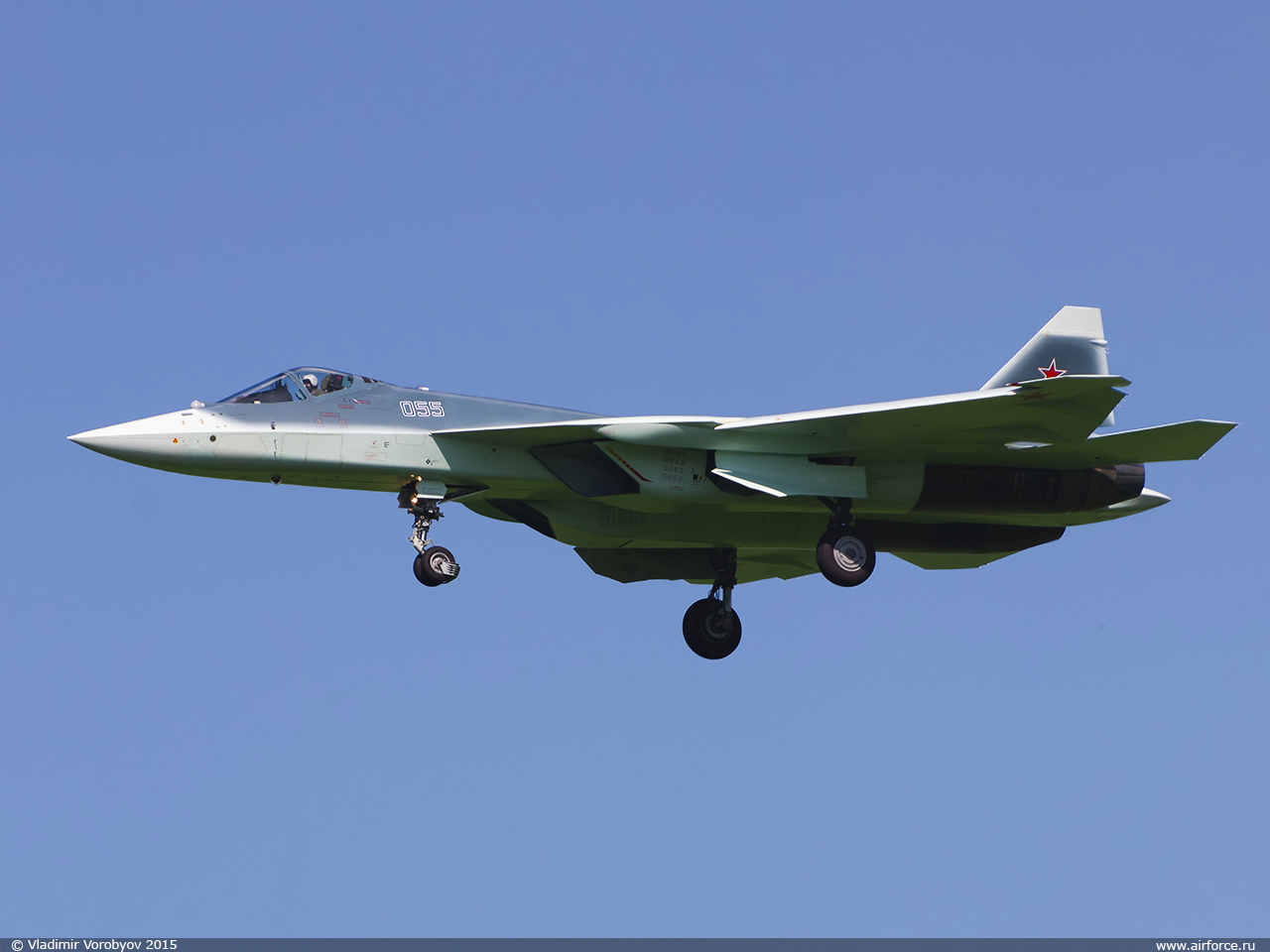
Jō AsakuraWell, I just opened up a simple paint program and drew a box running across the radius of one nacelle and then moved it to the other. They are both the same diameter, so it must be our eyes fooling us. It is easy to replicate, you can try on your own.
Ermmm….. not quite. What we’re looking for is called ‘chord error’ for the approximate segments of the starboard cowling.
I could have easily mapped the port cowling blue circle onto the starboard and behold, they would have matched. The reason I used identical sub-scale blue circles was to highlight the asymmetrical segments visible to the eye (crucially, differences visible on both pics).
The resolution & clarity is simply not high enough to engage in mathematical proofs of chord errors in arc paths for a complex, asymmetrical polygon – which, incidentally, would be a geometry indicative of LO shaping.
Sometime this year we’ll know for sure, so I’ll leave it there…..but I’m pretty confident my eyeballs will be vindicated.
Jō AsakuraLatenlazy, take a circular coin and replicate the following perspective:
Now, which of the two (port or starboard) nearly precisely matches that viewed coin shape and which most certainly does not?
Jō AsakuraThey both look circular to me, I think any difference is the result of the light falling directly on the top of the port nacelle.
I think you’ll find the port won’t port (pun intended):
[ATTACH=CONFIG]234216[/ATTACH]
Jō AsakuraThe differences in shape are directly related to the application of the CNT RAM and I have already demonstrated Lyulka/Saturn’s development and RCS pole testing of this material specifically for the PAK-FA’s cowlings*. Although CNTs on their own afford good radar absorption whilst simultaneously strengthening the polymer matrix composite – it is the infusion of exotic nanoparticles (such as Co & Ni) that greatly enhance the magnitude/efficiency of broadband radar absorption.
However, the infusion of these nanoparticles in the composite has one major drawback – they significantly degrade the mechanical properties of the composite. Herein lies the relevance to the apparent differences in shape on the T-50-7’s cowlings: the port is devoid of LO shaping relying solely on the thickness of the CNT/nanoparticle laminate RAM (probably around 5mm), for broadband radar absorption though at the expense of mechanical strength.
The starboard employs both LO shaping and a CNT/nanoparticle composite, but here the laminate is significantly thinner than the one utilised in the [circular] port cowling. This version will have significantly greater mechanical/shear strength than the port.
Both these full scale versions will have already undergone pole/anechoic chamber testing, but the ‘winner’ (or the one deemed most operationally viable) post static testing, will be the one selected for serial production machines.
Happy New Year!! С новым годом!! 明けましておめでとうございます。
*http://forum.keypublishing.com/showthread.php?126959-The-PAK-FA-News-Pics-amp-Debate-Thread-XXIV&p=2172452#post2172452
*http://www.freepatent.ru/patents/2482149
Jō AsakuraFrom one angle it looks a bit bigger/wider too. It could just be my eyes fooling me.
If there’s general consensus that they are not the same shape and possibly size -and it’s not some optical illusion and/or saggy canvas, then I’ll elaborate on why (and it’s not what I postulated earlier).
Jō AsakuraHuh? The both of the cowlings look circular to me.
R U sure? Look closely:
[ATTACH=CONFIG]234198[/ATTACH][ATTACH=CONFIG]234199[/ATTACH]


 Sign In







